
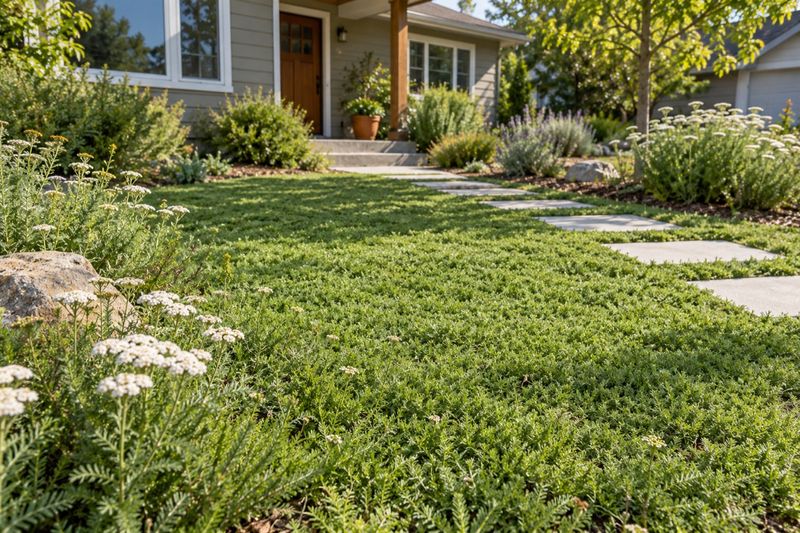
If your shovel bounces off rock-hard ground every August and turns into sticky mud every January, you probably have clay soil. Many California homeowners think they have to haul in sand or build raised beds before natives will grow, but a lot of local plants evolved in exactly this kind of dirt.
Choosing the right ones can save you money, water, and a sore back. Even better, they feed the bees, birds, and butterflies that call your neighborhood home.
1. California Fuchsia (Epilobium canum)
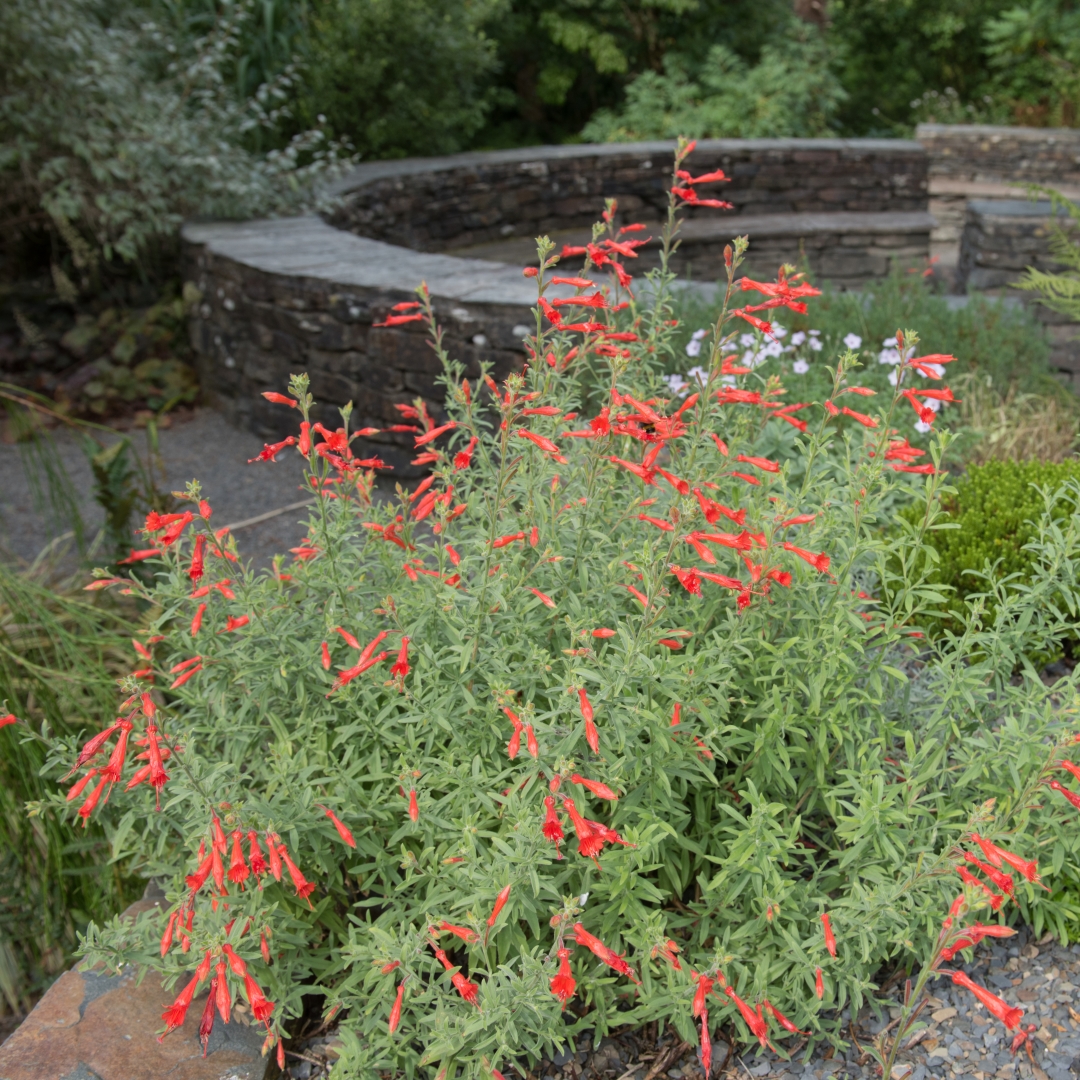
Late August, when most gardens look tired and crispy, California fuchsia suddenly lights up like a string of red party lights. Hummingbirds notice right away.
Many gardeners say it is the plant that made them believe in natives.
Clay does not bother it much, and in heavier soil it tends to stay a bit more compact instead of sprawling everywhere. Give it full sun and water deeply a few times during its first summer.
After that, it can often get by on very little.
Cut it back hard in late fall or winter once flowering ends. New growth pushes out in spring, and the whole cycle starts again.
It suits slopes, curb strips, and hot spots near driveways.
2. Douglas Iris (Iris douglasiana)
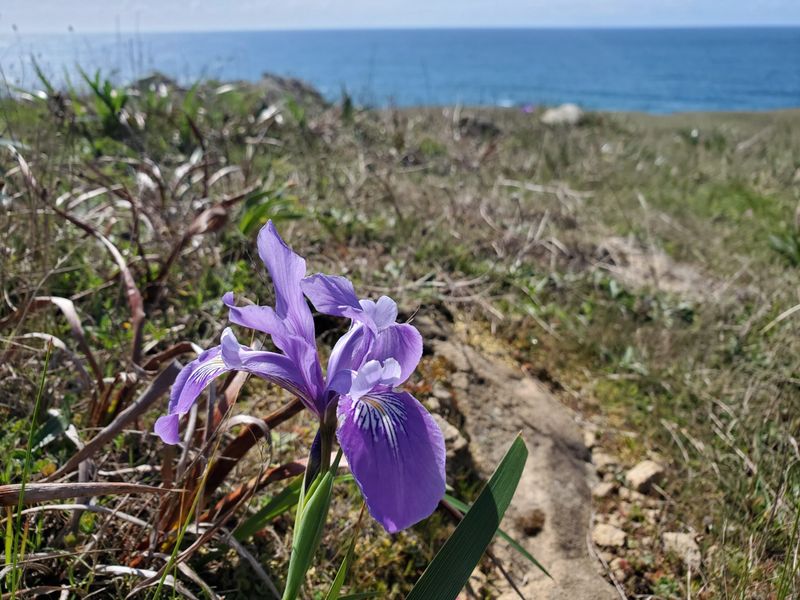
Walk the coastal bluffs of Marin or Mendocino in April and you will see clumps of purple Douglas iris tucked into heavy, wet hillsides. That wild habitat is a big clue.
This iris is built for dense ground that holds winter moisture.
In the yard, it works beautifully under oaks or along a shady north side of the house. It forms neat evergreen clumps with blooms in purple, cream, and soft blue.
Native bees visit the flowers in spring.
Coastal gardens may need almost no summer water once it settles in. Inland valley yards usually do better with afternoon shade and an occasional deep soak.
Divide crowded clumps in fall when the rains return.
3. Deer Grass (Muhlenbergia rigens)
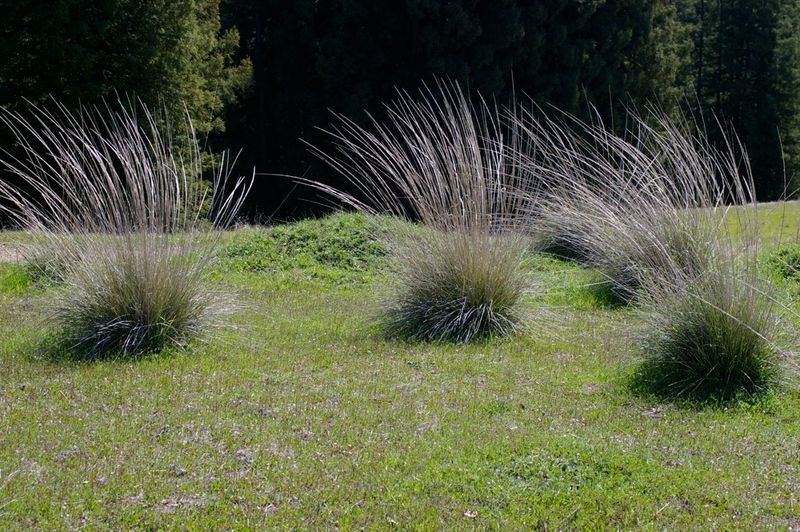
Native basket weavers in California prized the flower stalks of deer grass for coiled baskets. Today it earns its spot in yards for a simpler reason: it looks great and shrugs off tough soil.
Each plant forms a fountain about three to four feet tall and wide. Silvery spikes rise in summer and catch the evening light.
A row of them makes a soft, living fence along a path or property line.
- Best spots: lawn replacement areas, swales, slopes
- Sun: full sun to light shade
- Water: deep and occasional once established
Because it handles both seasonal wet spots and dry spells, it is a smart pick for low areas where rain puddles in winter. Birds may also pick at the seeds and shelter in the clumps.
4. Coffeeberry (Frangula californica)
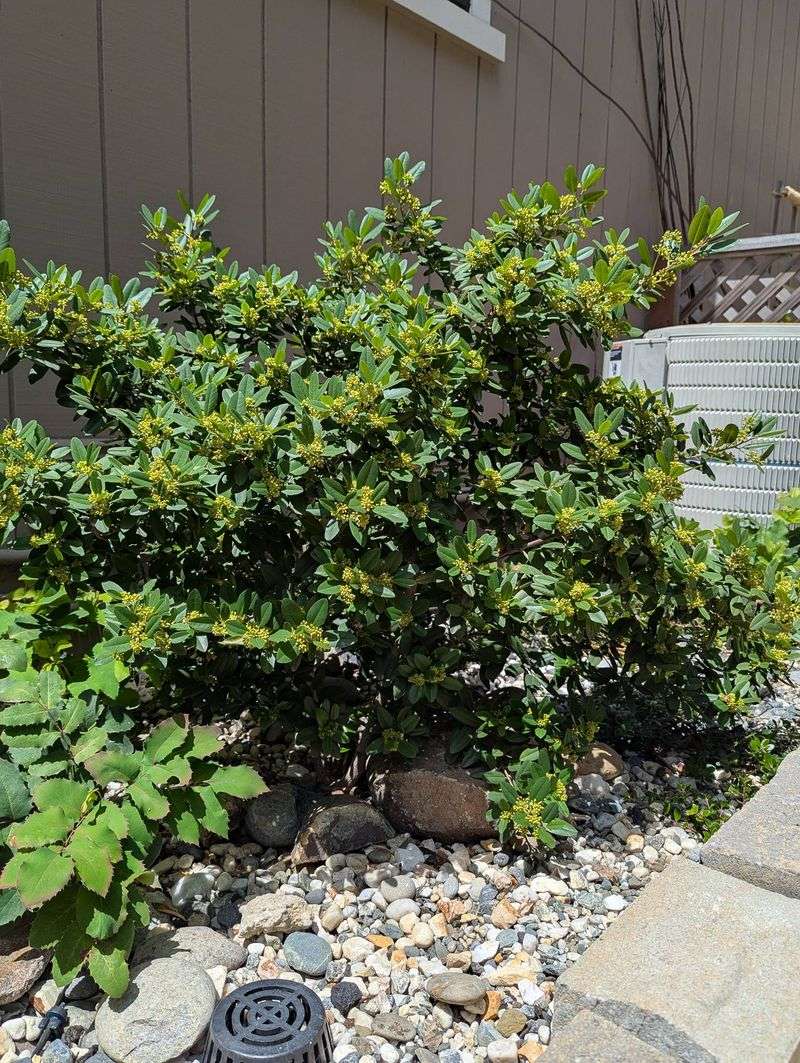
Need a hedge that does not drink like a thirsty lawn? Coffeeberry is one of the most dependable evergreen shrubs for California clay.
It grows naturally on heavy soils from the coast to the foothills.
The leaves stay glossy all year, and berries ripen from green to red to nearly black. Robins, thrushes, and other birds strip them in fall.
The flowers are tiny, but native bees still find them.
Compact types like Mound San Bruno or Eve Case fit smaller suburban yards. Taller forms can screen a neighbor’s window in a few seasons.
Plant in fall so winter rains help roots grow into the clay before summer heat arrives.
5. Narrowleaf Milkweed (Asclepias fascicularis)
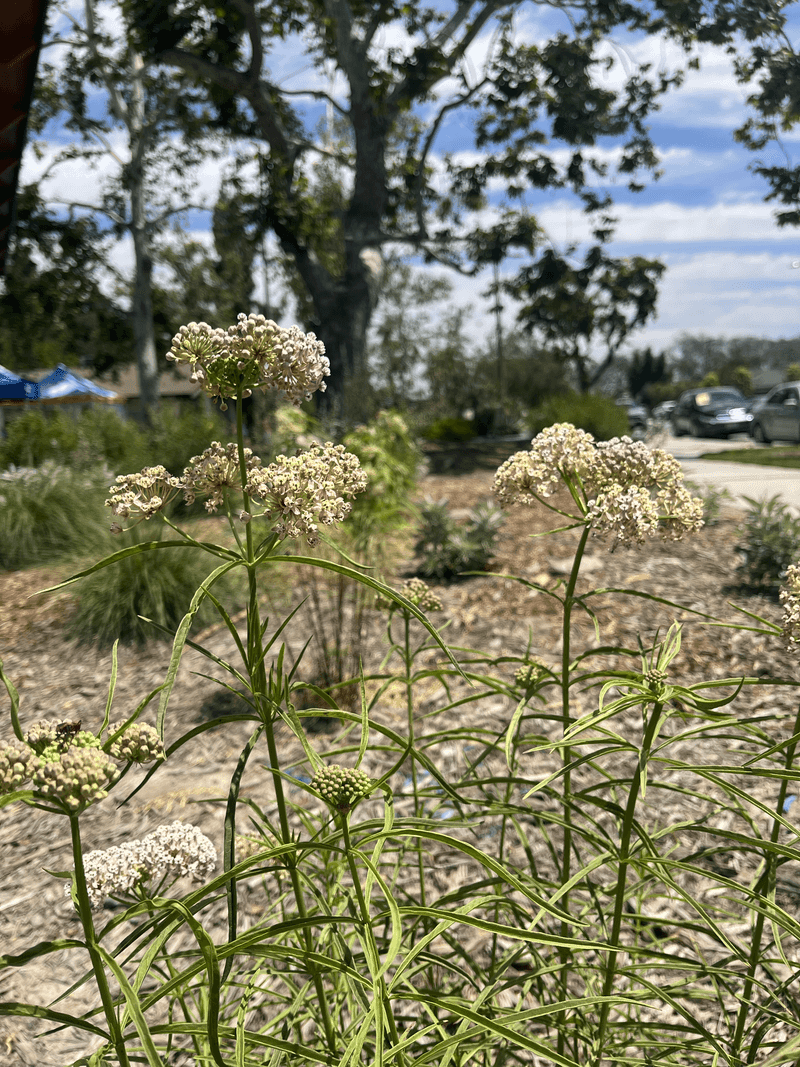
Monarch butterflies in the West have dropped sharply over the past few decades, and many homeowners want to help. Here is a practical way to do it, even with stubborn clay.
Narrowleaf milkweed is a native host plant that monarch caterpillars can eat.
It grows in fields, ditches, and roadsides across much of the state, often in heavy soil. Pale pink flower clusters show up in summer and feed many pollinators.
The plant dies back in winter, so do not panic when it disappears.
One caution matters a lot. Many nurseries still sell tropical milkweed, which is not native and may disrupt monarch migration in coastal areas.
Choosing the native species is the simple fix.
6. Toyon (Heteromeles arbutifolia)
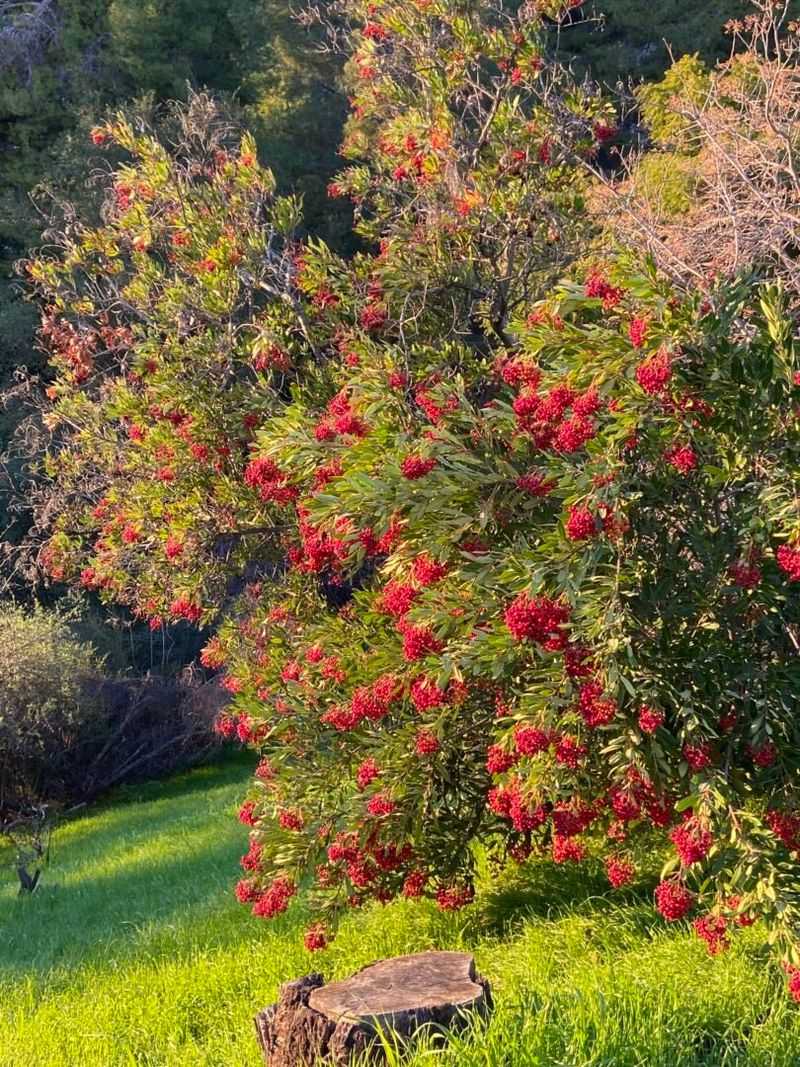
Legend says Hollywood got its name from the toyon, sometimes called California holly, that covered the local hills. True or not, this shrub is pure California through and through.
Toyon is tough. It grows in clay, rocky ground, and sloping lots, and it handles long dry summers once rooted.
In winter it loads up with red berries that cedar waxwings and robins love.
Let it grow into a large shrub or prune it into a small multi-trunk tree. Summer flowers draw a crowd of bees.
In fire-prone areas, keep it well spaced, pruned, and away from structures as part of your defensible-space plan.
7. California Gray Rush (Juncus patens)
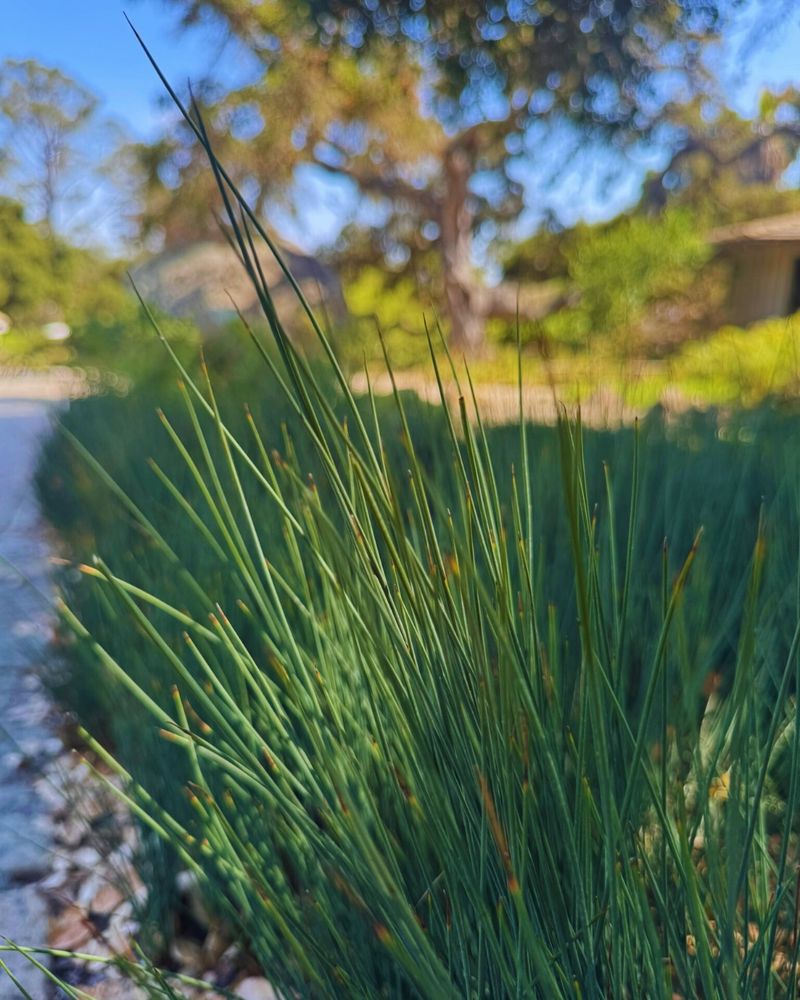
Puddles that sit in your yard for days after a winter storm can feel like a problem. To gray rush, they look like home.
This tidy native thrives in soggy clay and still handles summer dryness better than you might expect.
Its stiff, blue-gray stems stand upright like a bundle of pencils. That clean shape fits modern landscapes, rain gardens, and spots near downspouts.
It also makes a neat edge along walkways.
Inland, a little summer water keeps it looking fresh. Near the coast, it can often coast along on less.
Comb out dead stems in late winter for a sharper look.
8. Hummingbird Sage (Salvia spathacea)
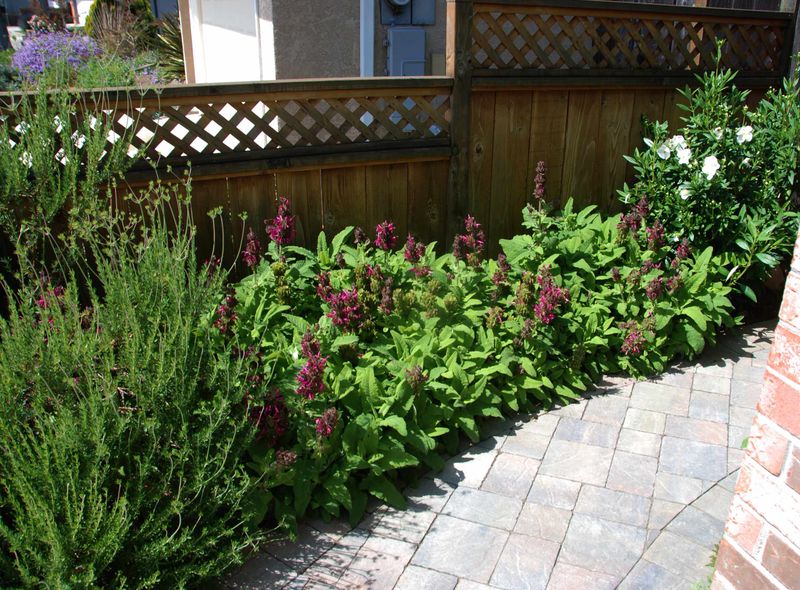
Brush your hand across the fuzzy leaves and a sweet, fruity scent fills the air. That alone wins people over.
Then come the deep magenta flower spikes in spring, and the hummingbirds arrive.
Hummingbird sage is one of the few native sages that does well in shade, and it handles heavier soils better than many cousins. It spreads slowly by underground stems into a leafy groundcover.
That makes it handy under oaks where little else grows.
Skip summer water if it lives under native oaks, since oaks dislike wet summer roots. Elsewhere, an occasional drink keeps leaves greener.
Snip off old flower stalks once they brown.
9. Western Redbud (Cercis occidentalis)
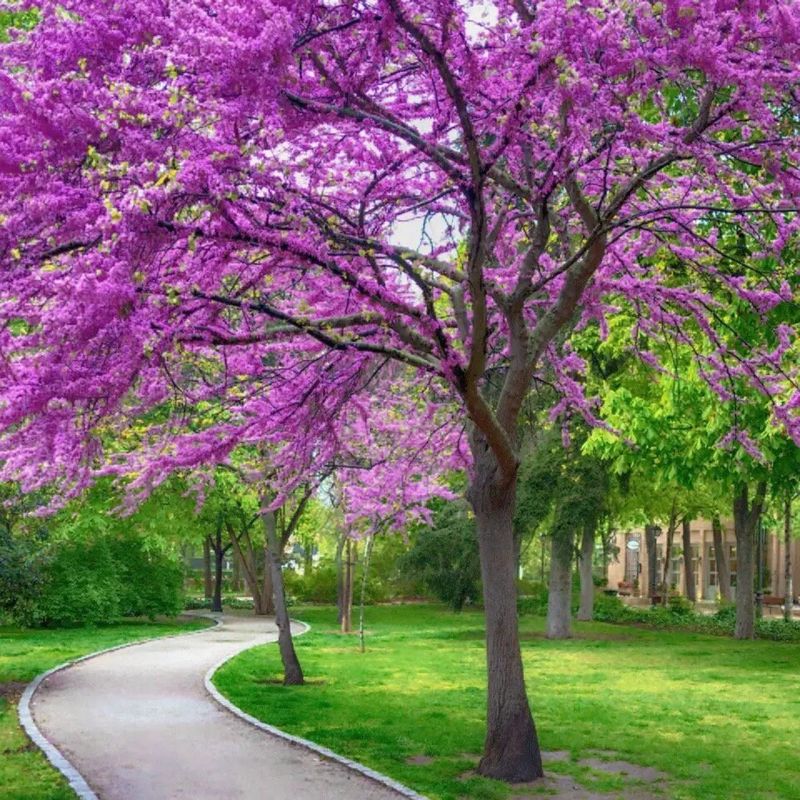
Few sights in the foothills beat a western redbud in March, its bare branches buried in magenta blossoms. Then come round heart-shaped leaves, and later flat purple seed pods that rattle in the wind.
Redbud grows wild on dry, heavy foothill soils. It tends to bloom best where winters get a bit chilly, so inland valley and foothill gardens often see the strongest show.
Coastal yards may get fewer flowers.
At about 10 to 15 feet, it fits small front yards nicely. Native bees and early butterflies work the spring flowers.
Water deeply during its first two summers, then taper off.
10. Yarrow (Achillea millefolium)
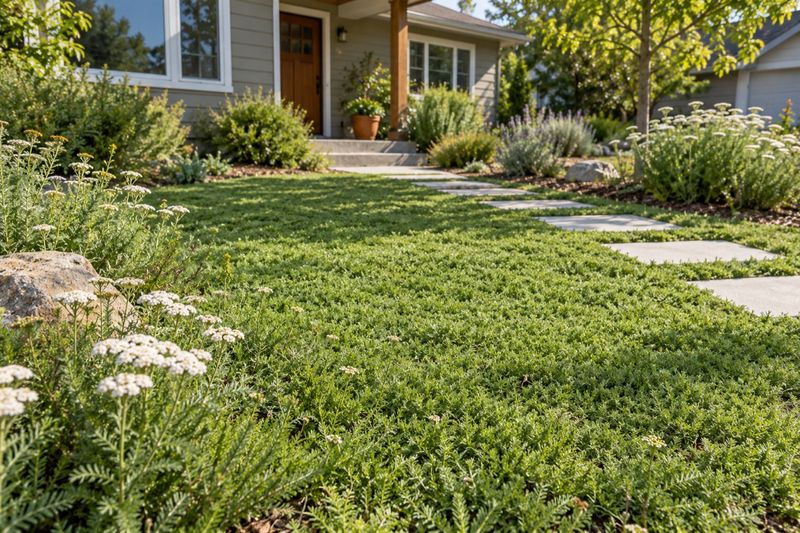
Tired of mowing a thirsty lawn on clay that cracks every summer? Native yarrow can step in as a soft, ferny groundcover.
Some homeowners even mow it a few times a year to keep it low and lawn-like.
It grows nearly everywhere in California, from beaches to mountains, and clay is no deal-breaker. Flat white flower clusters attract small native bees, hoverflies, and butterflies.
Those helpful insects may also prey on garden pests.
Plant plugs about a foot apart in fall, and water through the first dry season. After that, it needs much less than turf.
Pair it with deer grass or California fuchsia for a full, wildlife-friendly yard that never needed a drainage fix.