
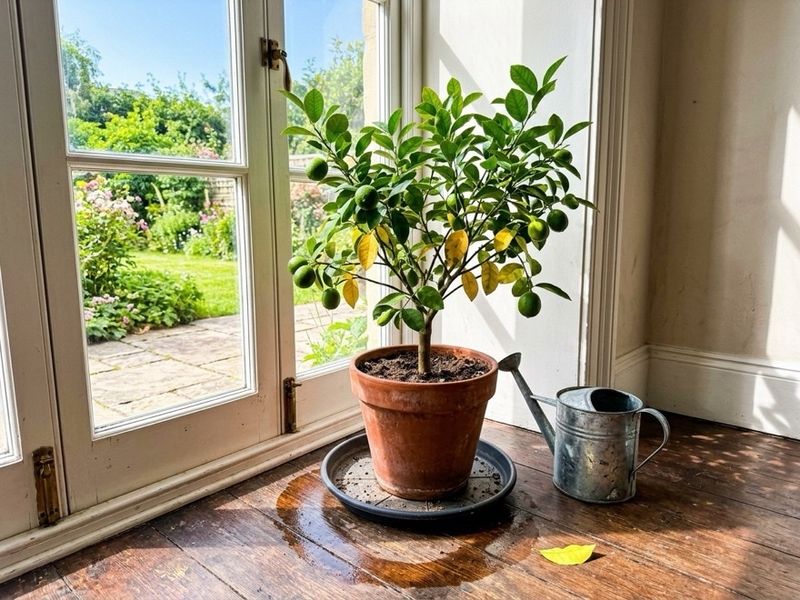
Sticky, shiny leaves on a citrus tree that spent the winter indoors often mean scale insects are hiding on the stems, and a cotton swab dipped in rubbing alcohol can clear the ones you can see. The glossy film is a clue that a tiny pest is feeding on the tree’s sap.
Finding it early keeps the plant stronger and saves you from reaching for harsh sprays. Here is how to check, treat, and follow up so your tree can bounce back.
Sticky residue points to sap-feeding pests
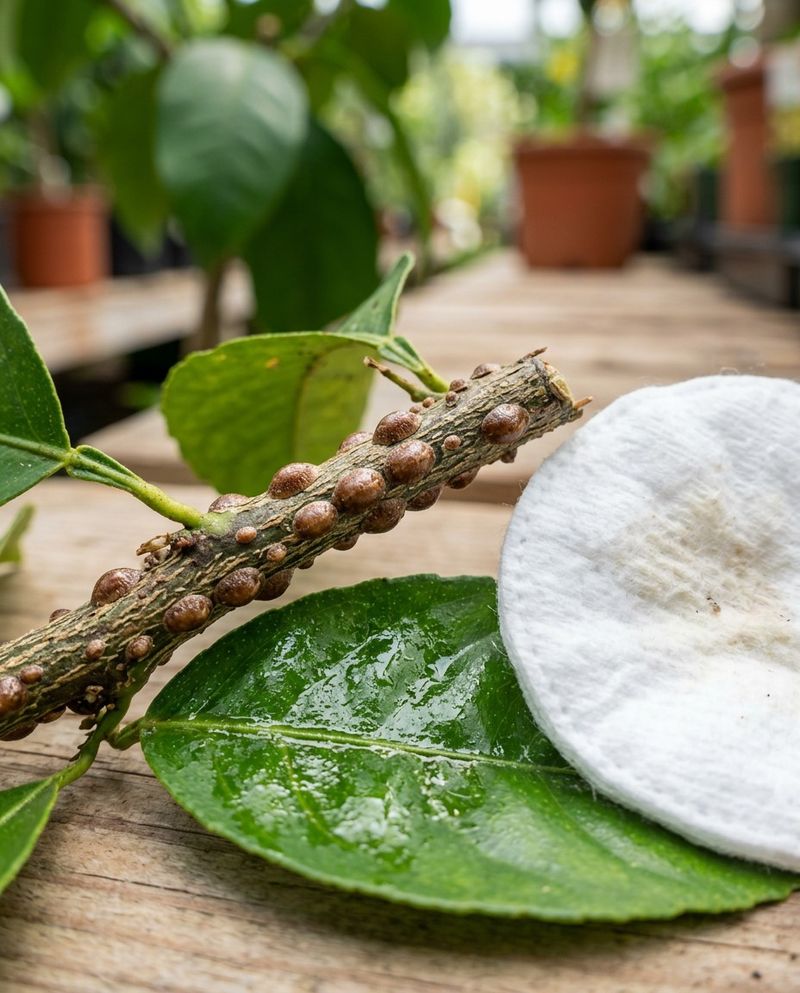
That shiny film is honeydew, a sugary waste produced by insects that feed on plant sap. Soft scale is one possible source on overwintered citrus, but UC IPM citrus guidance notes that other sap feeders leave honeydew too.
Aphids, mealybugs, and whiteflies can all do it, so the stickiness alone does not tell you which pest you have.
The residue is still worth taking seriously. According to University of Maryland Extension, soft scales on citrus can be found on branches and along the underside of leaf veins.
A heavy infestation can weaken the plant and contribute to yellowing, leaf drop, or sooty mold, a dark fungus that grows on the honeydew.
The good news is that a sticky tree is a visible, early warning. Rather than treating the leaves themselves, your next job is to go looking for the insect that made the mess.
A bright light and a few quiet minutes with the plant are all you need to start.
Look closely before calling it scale
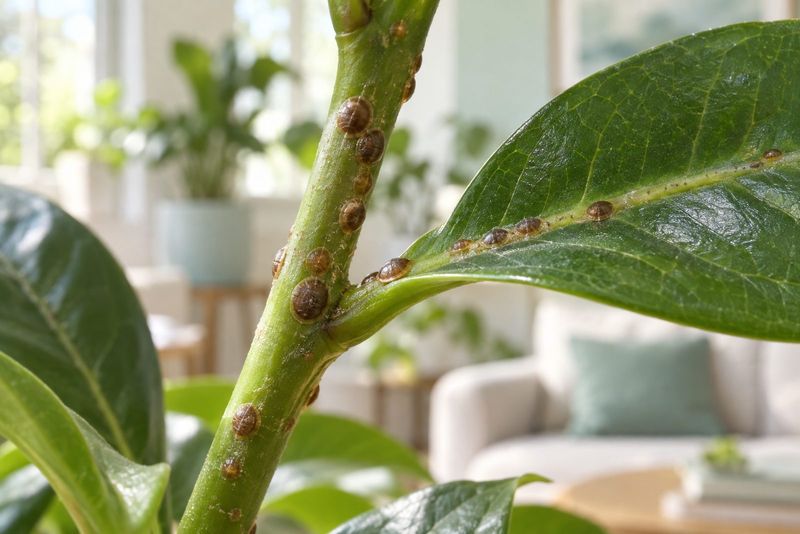
Grab a flashlight and, if you have one, a magnifying glass. Check the stems, the spots where leaves join branches, the main leaf veins, and both sides of the leaves.
Scale often appears as stationary brown or pale bumps that stay put when you brush them lightly.
Treat that look as a clue, not a final answer. Iowa State Extension offers helpful comparisons, and the other suspects look different.
Aphids tend to cluster on tender new growth, mealybugs are often white and cottony, and whiteflies may flutter up in a small cloud when you disturb the plant.
Armored scales are another wrinkle, because University of Minnesota Extension explains that soft scales produce honeydew while armored scales do not. So bumps with no stickiness may be a different story than bumps with a shiny film.
Weigh where the insects sit, how they move, and what the leaves feel like, and look at those signs together.
Use alcohol only on visible scales
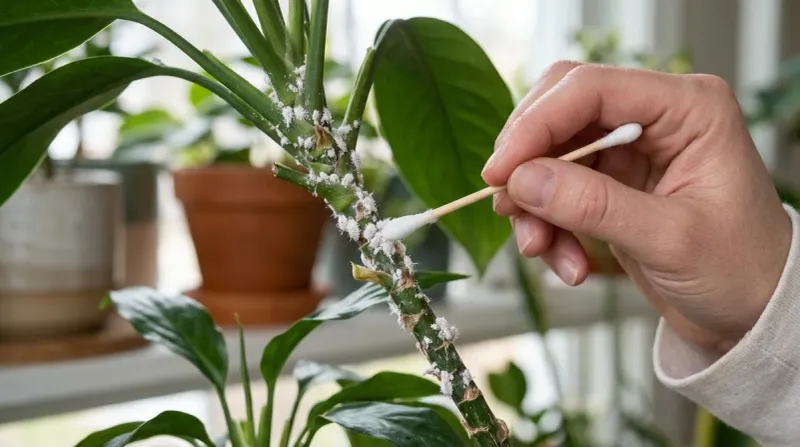
If you find only a handful of scales, this is where the cotton swab earns its place. Dip a swab in rubbing alcohol, then dab each scale directly and rub it loose.
University of Wisconsin Extension suggests a swab or soft toothbrush with 70 percent isopropyl alcohol for lightly infested houseplants.
Keep the alcohol on the pests and do not spray it over the whole tree. Washington State University cautions that alcohol can harm some plants, so touch a small spot on one leaf first and wait a few days to see if it browns or curls.
Set your expectations, too. Swabbing removes the insects you can see, but it may miss hidden scales or newly hatched crawlers tucked into crevices.
Think of it as a good first step that helps, not a guarantee that the infestation is gone.
Keep checking after treatment
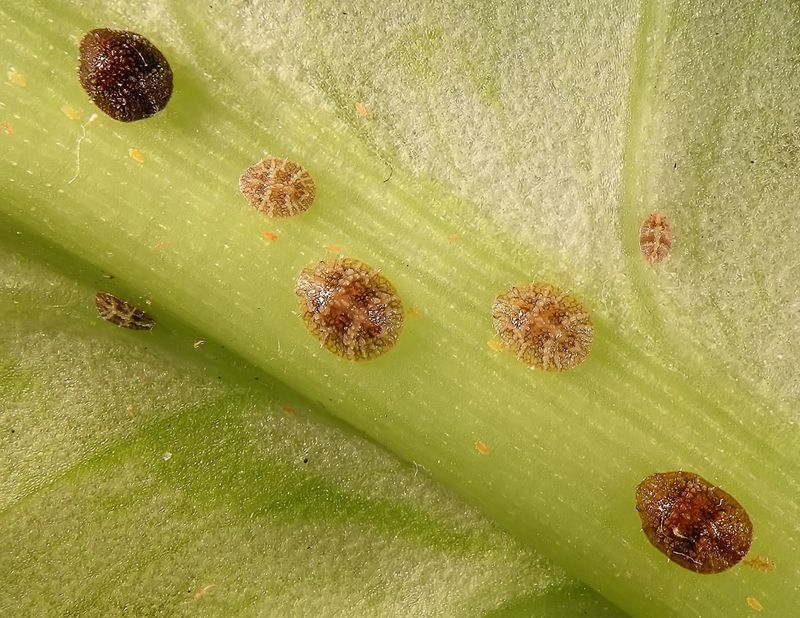
Once you have swabbed, move the tree away from your other houseplants so any survivors cannot wander. UC IPM recommends isolating affected plants and removing heavily infested parts if that is practical.
Then plan a quick weekly inspection and repeat the swabbing whenever you find more live scales.
Do not panic if bumps remain after you treat. Dead scales may stay attached to the stem, so a bump alone does not mean the treatment failed.
Colorado State Extension notes that a living scale may release fluid when crushed, which gives you a handy test.
Judge your progress over several weeks, not after one session. Fresh crawlers can appear after the first cleanup, and the weekly routine described by Wisconsin Extension catches them while they are still easy to remove.
Steady follow-up usually beats one big effort.
When hand removal is not enough
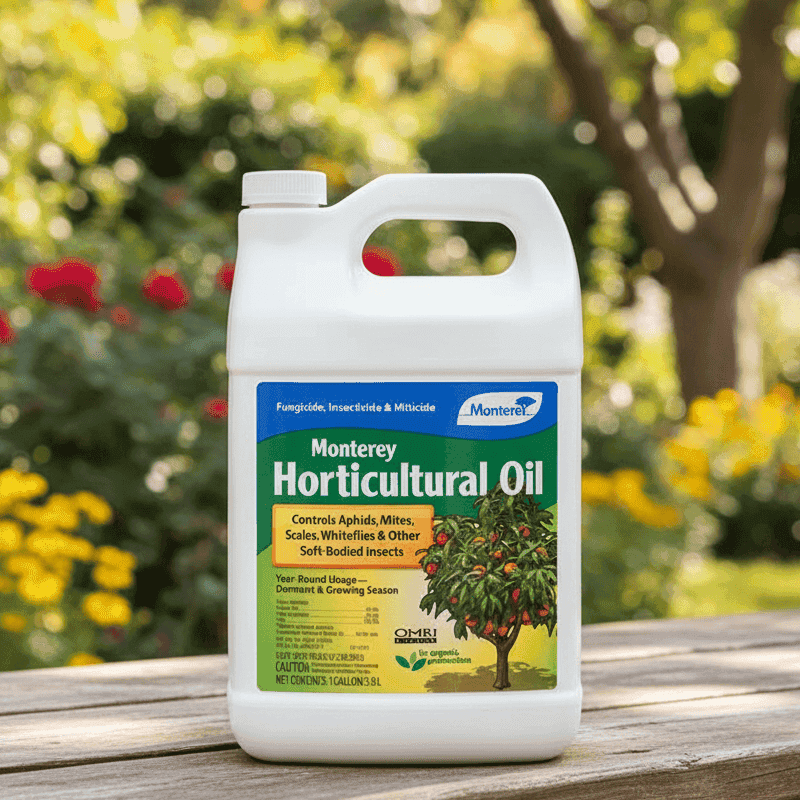
Some infestations are too big or too stubborn for a swab. In that case, horticultural oil may be a reasonable next step, not an automatic one.
University of Maryland Extension recommends it for scale on indoor citrus, with the product label as your guide.
The same source advises treating the tree outdoors on a warm day and bringing it back inside once the spray has dried. It also warns that citrus scale can be difficult to control, so more than one treatment may be needed.
Patience is part of the plan.
Read the label closely before you buy or spray anything. Directions and limits differ by product, and Maryland’s indoor plant guidance notes that systemic products are not labeled for edible indoor plants.
If your citrus is growing fruit, use only a product whose label allows that plant, that pest, and that setting.
Follow a simple inspection and treatment plan
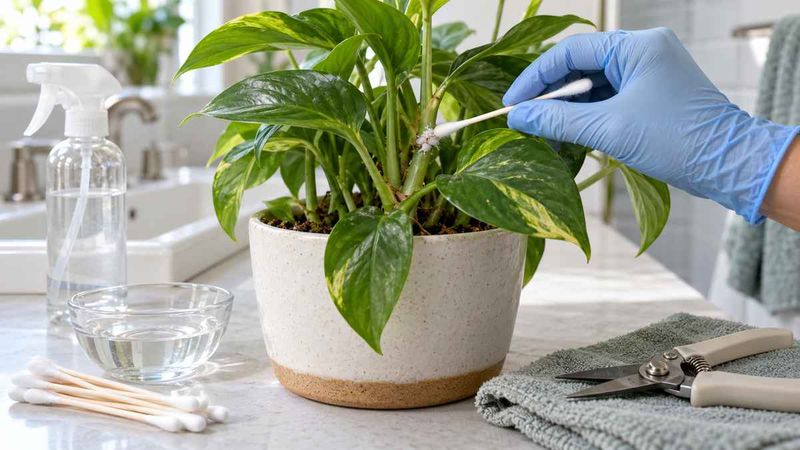
Start by looking for the insects instead of wiping the sticky leaves and hoping for the best. Swab the few scales you can see, isolate the tree, and recheck it weekly for live ones.
If the problem keeps coming back, Maryland Extension describes labeled horticultural oil as the next option.
With fruiting citrus, stick to products whose labels permit the plant, pest, and use setting, as the indoor scale guidance stresses. The UC IPM houseplant page backs that cautious approach.
One swab rarely settles things, and that is normal. A tree that gets steady, patient attention often recovers, and the shine on its leaves fades along with the pests.