
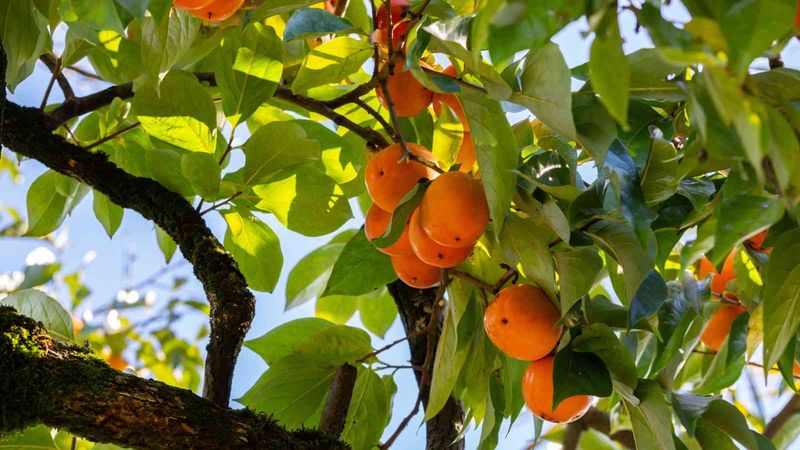
Those orange Fuyus hanging on your tree look tempting, and the birds think so too. Picking too early or waiting too long can cost you fruit.
A few simple clues, mainly color and firmness, can help you decide when to harvest. This guide covers Fuyu persimmons grown in California in general, not only the cultivar named California Fuyu.
Use color as a guide, not a fixed cutoff
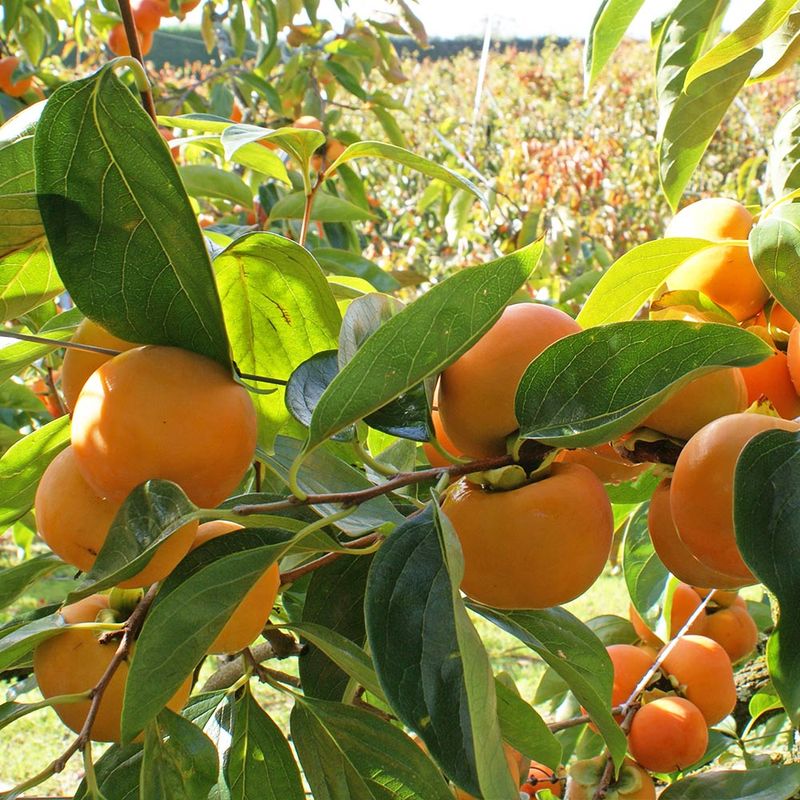
Start with the skin. Fuyu persimmons shift from green toward yellow and then orange as they mature, and UC Marin Master Gardeners describe fruit that turns from green to orange and is firm but sweet at harvest.
There are two different color ideas to keep straight. UC Davis postharvest guidance lists yellowish-green or yellow skin as the minimum maturity for Fuyu.
Yellow-to-orange shows up separately as a quality indicator. In plain terms, a fruit with the first hint of yellow may be mature enough to pick, but that does not mean it has reached its best eating quality.
Treat yellow-to-orange as a useful range rather than a strict rule. One tree may color up a bit differently from another, and your local weather and growing conditions can shift things too.
If most of the green has faded from a fruit and the skin looks warm and orange, it is a strong candidate for picking.
Check your tree label if you still have it. The name Fuyu is often used loosely, but UC Davis lists Fuyu and California Fuyu separately, and UC’s South Coast collection distinguishes California Fuyu from True Fuyu.
If you know your exact cultivar, you can apply color and timing advice with more confidence. If you do not, use color as a guide and let firmness and local conditions fill in the rest.
A mature Fuyu can still be firm
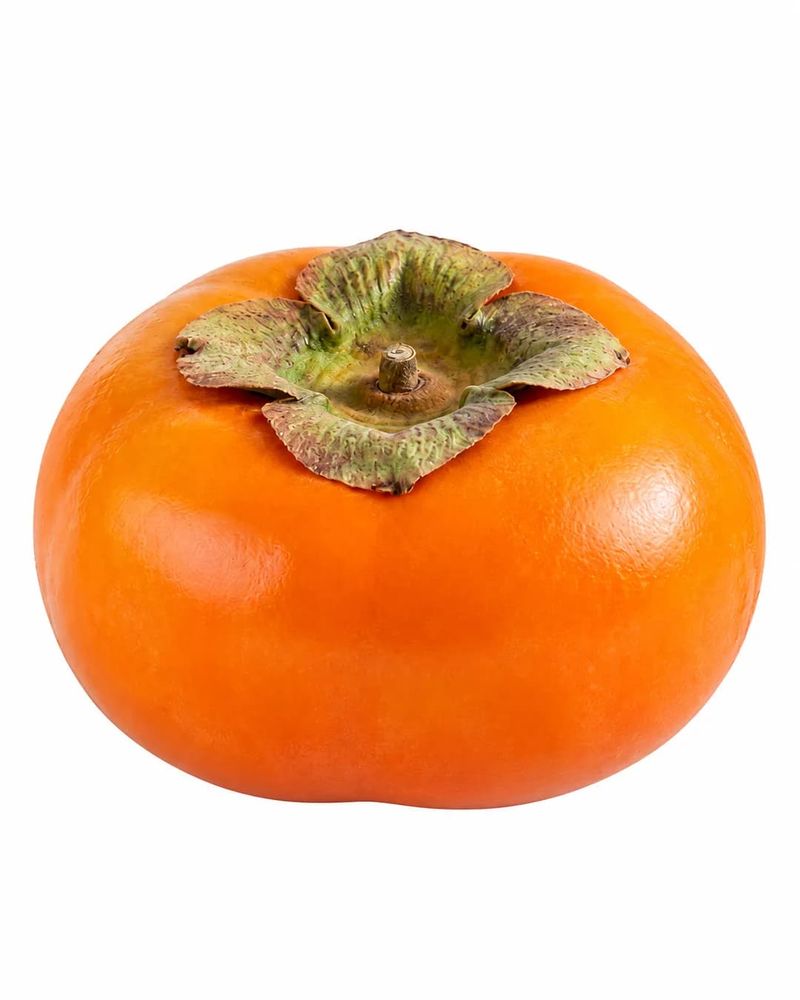
Many gardeners squeeze a persimmon and worry when it feels hard as an apple. For Fuyus, that is normal.
They are non-astringent, which means you can eat them while they are still crisp, and UC Marin guidance describes the fruit as firm but sweet at harvest.
Hachiya persimmons play by different rules. They are astringent, and they are eaten when they turn very soft and jelly-like.
That is where the idea of waiting for mushiness comes from, and it does not carry over to Fuyus.
If you hold off until a Fuyu feels squishy, you give birds and other critters a longer window to get there first. A soft, overripe Fuyu can also bruise easily and be harder to handle.
UF/IFAS Extension treats Fuyu-type persimmons as a non-astringent group that can be enjoyed firm.
So use your thumb for a gentle check rather than a ripeness test. A fruit that is colored up and still firm is behaving the way a Fuyu should.
Save the wait-for-soft routine for Hachiyas, if you grow them.
Color cannot promise a particular sweetness
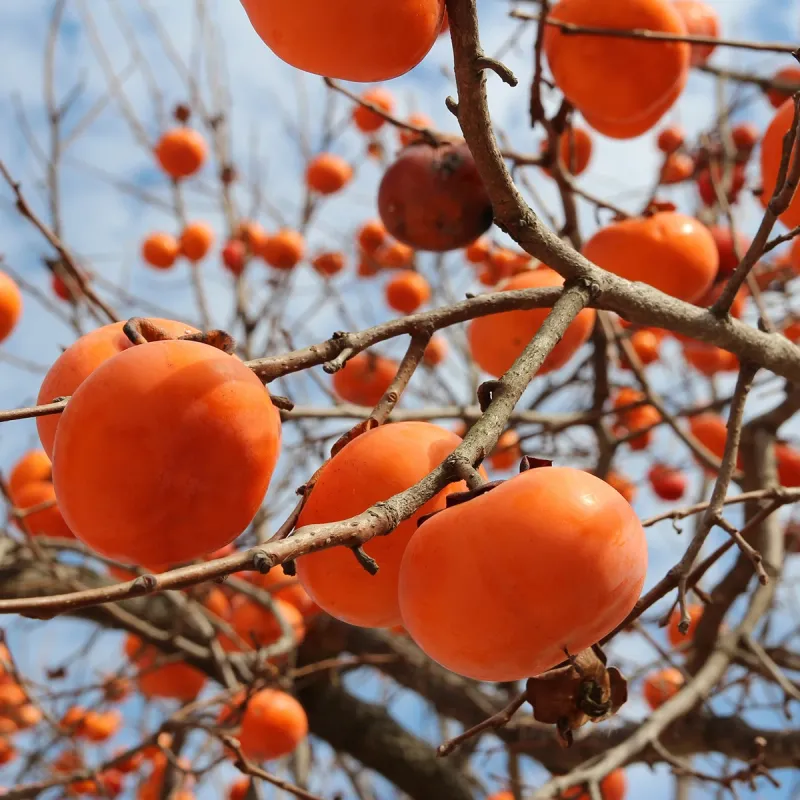
Color tells you about maturity and quality, but it cannot tell you exactly how sweet a fruit will taste. UC Davis lists sugar benchmarks for commercial handling, but those are lab-style measurements, not a backyard test.
Think of color as a strong clue, not a promise.
If birds and weather are not causing trouble, you can leave colored fruit on the tree a little longer. Some gardeners do this hoping for sweeter fruit.
That is a reasonable choice when the crop is safe, though it carries no guarantee.
When birds start pecking, the math changes. UC Master Gardeners of Santa Clara County note that fruit that has turned color on the tree can keep ripening after it is picked.
Bring in the best-colored fruit and let it finish indoors at room temperature.
Do not expect every early-picked fruit to land at the same sweetness. A fruit rescued from the birds is still better than one lost to them.
Taste a few as you go and adjust your timing next season.
Clip fruit carefully and leave the calyx attached
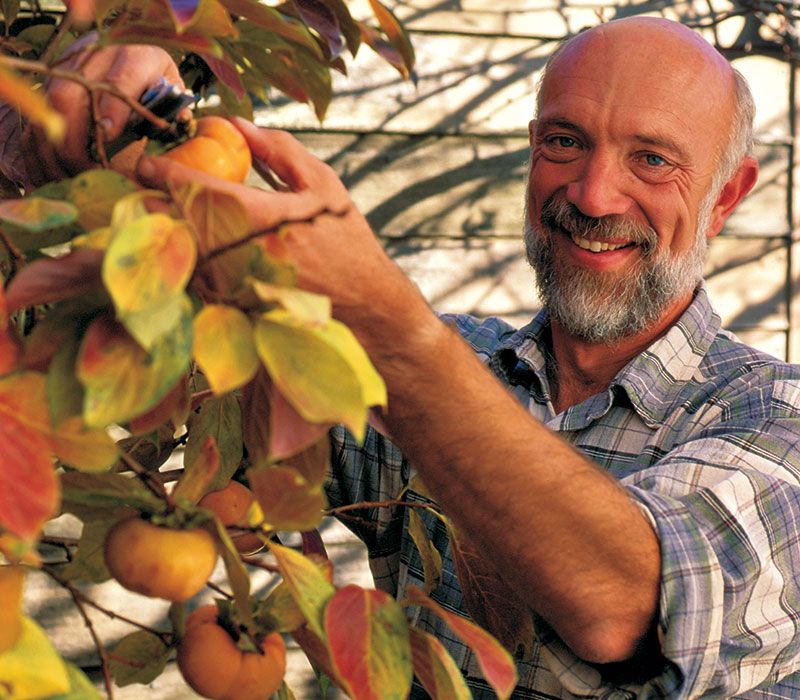
Once a fruit looks ready, grab clean pruning shears rather than pulling with your hand. Cut the stem just above the calyx, the green leafy cap on top of the fruit, and leave the cap in place.
UC Marin Master Gardeners advise cutting above the calyx.
Twisting or yanking can tear the skin or snap small twigs. UF/IFAS Extension recommends clipping to avoid damaging both fruit and branches.
Those branches carry next year’s growth, so a clean cut helps protect your future crop.
Work slowly and hold the fruit in your free hand as you snip so it does not drop. Place each persimmon gently into a shallow basket or box instead of tossing it into a deep bucket.
Fruit stacked high can press on the ones underneath.
Wiping your blades with a clean cloth before you start is a simple habit that keeps things tidy. Pick the most colorful fruit first, and come back for the rest in a few days.
Netting can deter birds when installed safely
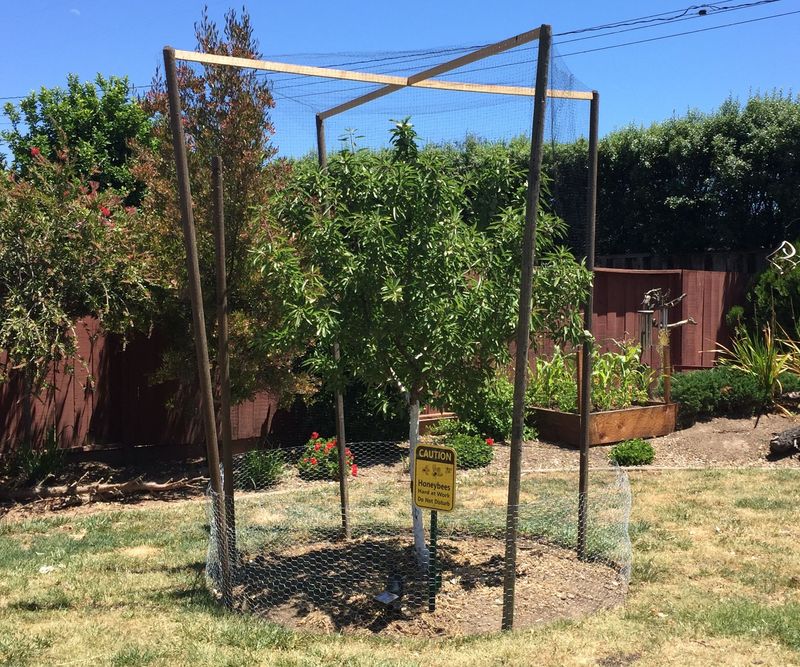
If birds are already damaging your persimmons, netting is one option for small trees. UC Statewide IPM suggests supporting plastic mesh on a frame so it sits away from the canopy, and describes mesh in the quarter-inch to half-inch range.
Skip the quick drape. Loose mesh thrown over a tree can hang in folds, and birds can get tangled in it.
Netting is not harmless, so the way you install it matters.
Wildlife-minded gardeners can follow the guidance from UC Master Gardeners of Alameda County. Keep the netting taut, secure any extra material so nothing dangles, and check it regularly for birds that may have become caught.
A simple frame of stakes or hoops works well around a small tree. Fasten the bottom edge snugly to the ground or trunk so birds cannot slip underneath.
A quick walk-by each morning takes less than a minute and lets you spot trouble early.
Use local timing instead of a universal frost rule
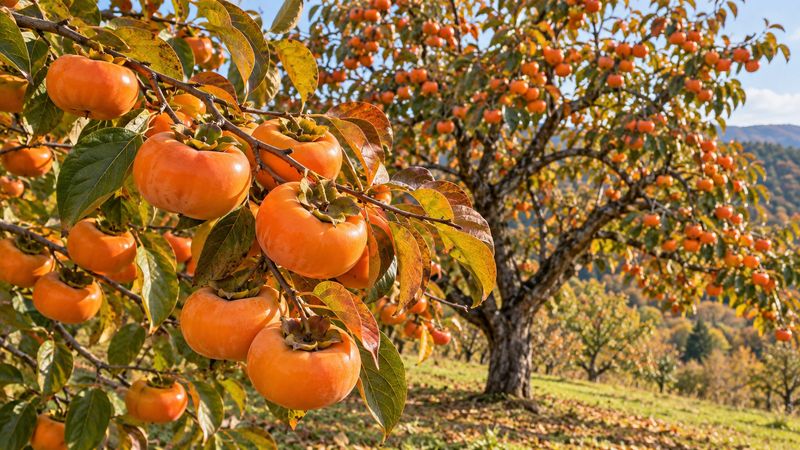
You may hear that persimmons must be picked by mid-October or by the first frost. The mid-October-to-mid-November window comes from UC Marin guidance and is typical for Marin County only.
California is large, and your cultivar and local conditions can move that calendar earlier or later.
Frost needs a careful read too. The guidance gathered for this article does not show that every Fuyu has to be picked before the first frost, or that frost makes the fruit sweeter.
A forecast freeze is a good moment to look over your own crop, but it is not an automatic deadline.
Here is a practical decision rule. Check your cultivar if you can, then look for color that meets the UC Davis maturity guidance, and confirm the fruit is still firm.
If birds are active or a hard freeze is coming, pick the colored fruit. If the tree is quiet and the weather is mild, you can wait a bit longer.
Your own tree is the best calendar you have. Watch it, and let the fruit set the date.