
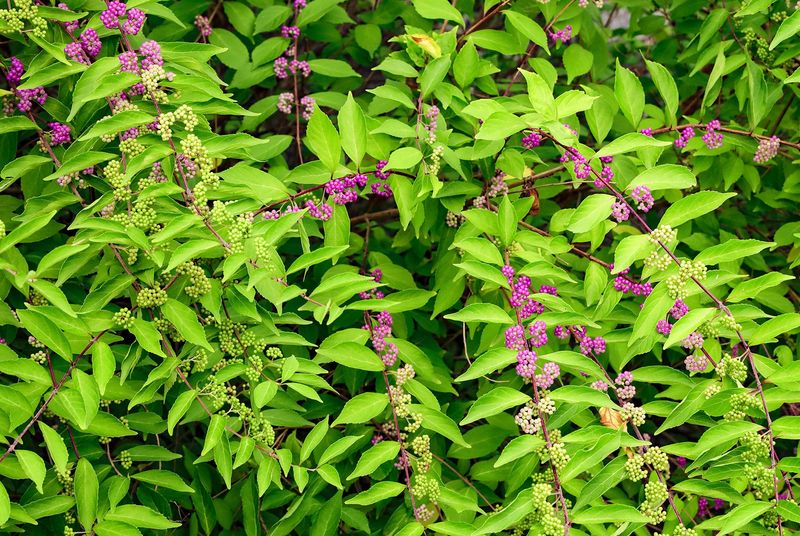
Most North Carolina homeowners have never heard of American beautyberry, but this native shrub quietly earns its keep along wooded yard edges from the Coastal Plain to the Piedmont. It blooms for insects in early summer, loads up with vivid purple berries that birds devour in fall, and its leaf compounds have caught the attention of USDA researchers studying tick repellents.
Knowing what the plant actually does, and what it does not do, helps you put it to work in the right spot without skipping the tick-prevention steps that genuinely protect your family.
American beautyberry offers a suitable native option for North Carolina edges
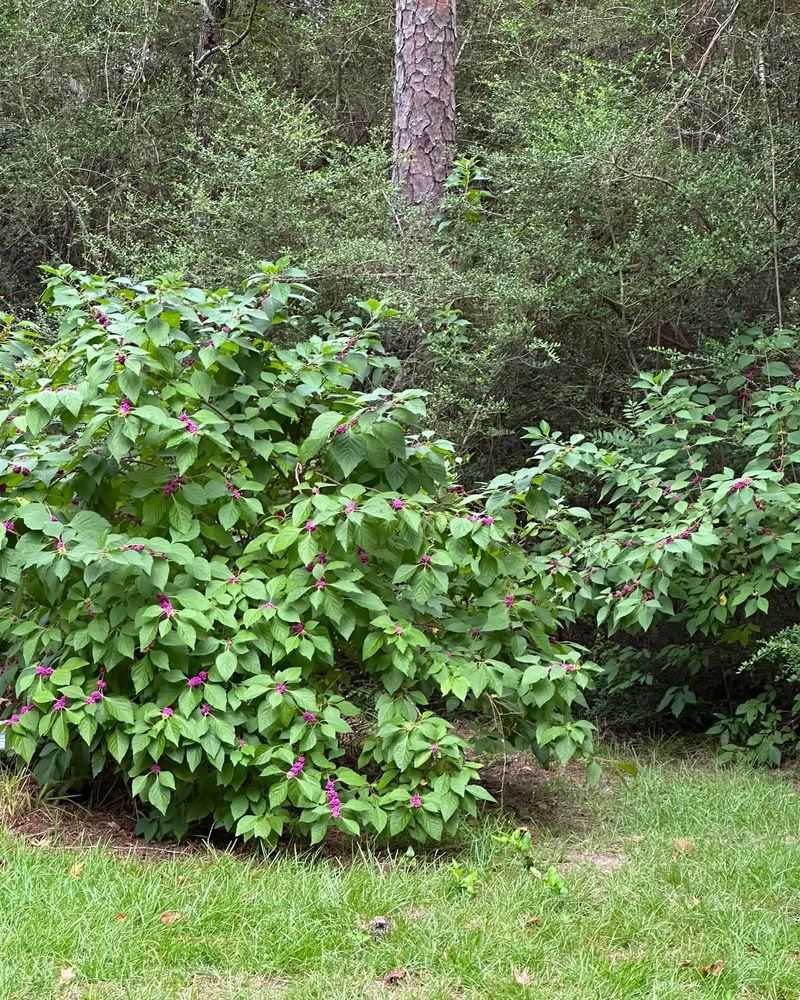
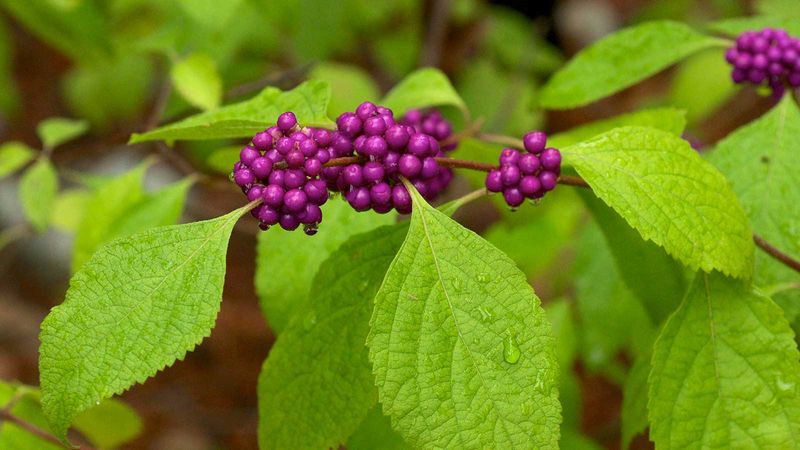
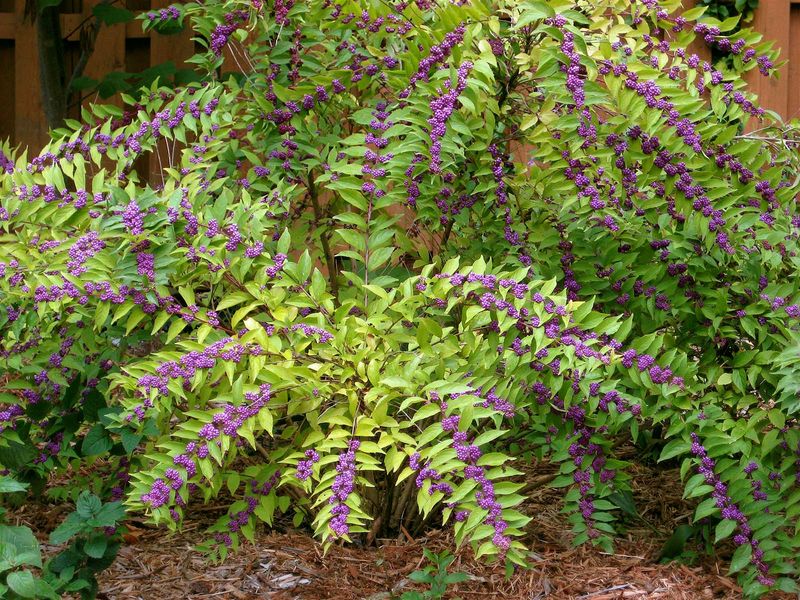
Native to the southeastern United States, American beautyberry (Callicarpa americana) is a woody, deciduous perennial shrub that fits naturally along the kind of sunny-to-partly-shaded wooded edges common across North Carolina’s Coastal Plain and much of the Piedmont. According to the NC State Extension Gardener Plant Toolbox, the plant typically reaches 3 to 8 feet tall and spreads 3 to 6 feet wide, forming an arching, fountain-like form that reads as both ornamental and wildlife-friendly.
Calling it a suitable native option is honest and deliberate. Plenty of native shrubs can anchor a wooded edge, and beautyberry does not outperform every alternative in every category.
What makes it worth considering is the combination of wildlife value, regional nativity, and a tick-repellent angle that sets it apart from most other candidates for this type of planting.
One important distinction: American beautyberry is Callicarpa americanaCallicarpa, a species native to the Southeast. Garden centers also sell Japanese beautyberry and other nonnative relatives that look similar but do not carry the same ecological relationships with local wildlife.
The NC Natural Heritage Program’s vascular plant records specifically distinguish the native species from cultivated exotic relatives, and it is worth confirming the species name on any plant tag before purchasing.
Mountain residents should note that native occurrence thins considerably in the northern and northwestern mountains, where some Piedmont records may also reflect planted rather than naturally established populations. Florida and eastern Texas gardeners can find American beautyberry listed as a regionally native plant, with UF/IFAS guidance placing it in USDA Zones 6 through 10b.
Even so, local suitability varies, so checking with your county extension office before planting makes sense regardless of which state you are in.
Summer flowers and fall berries support wildlife
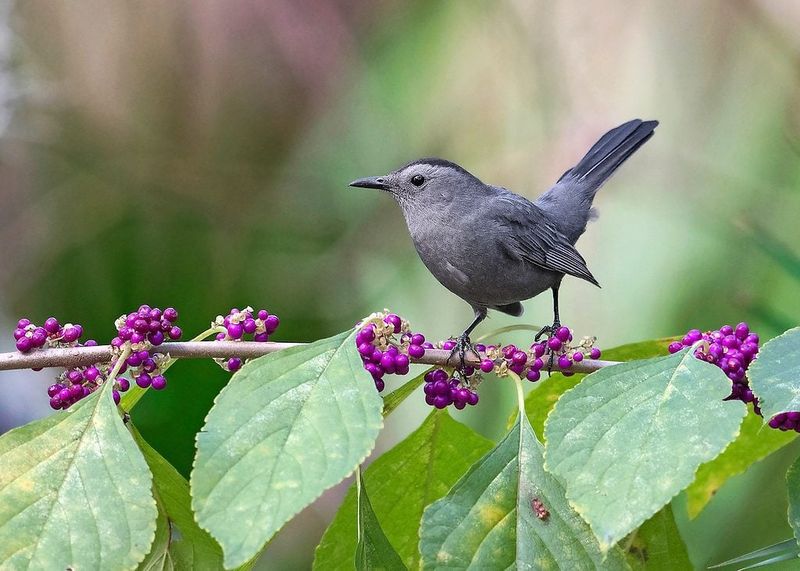
Timing is everything with American beautyberry, and understanding its two-act season keeps expectations realistic. Flowers appear mainly in June and July in North Carolina, clustered in small pink-to-lavender bunches along the stems.
The bloom period is seasonal rather than continuous, so the shrub is not blanketing the yard with flowers from Memorial Day through Labor Day. What it does during those weeks, though, is well worth having.
Field research conducted in a southeastern pine-savanna ecosystem recorded American beautyberry among the plant species receiving the most insect visits, with bees and wasps as especially frequent callers. Butterflies also visit the flowers, and the activity tends to be steady during peak bloom rather than sporadic.
For a homeowner trying to support pollinators without adding a complex planting scheme, a well-placed beautyberry can pull meaningful traffic during those two summer months with little extra effort on your part.
After the flowers fade, the real spectacle begins. Purple berries generally develop from August through October, and clusters can remain on the branches into early winter depending on how quickly local birds find them.
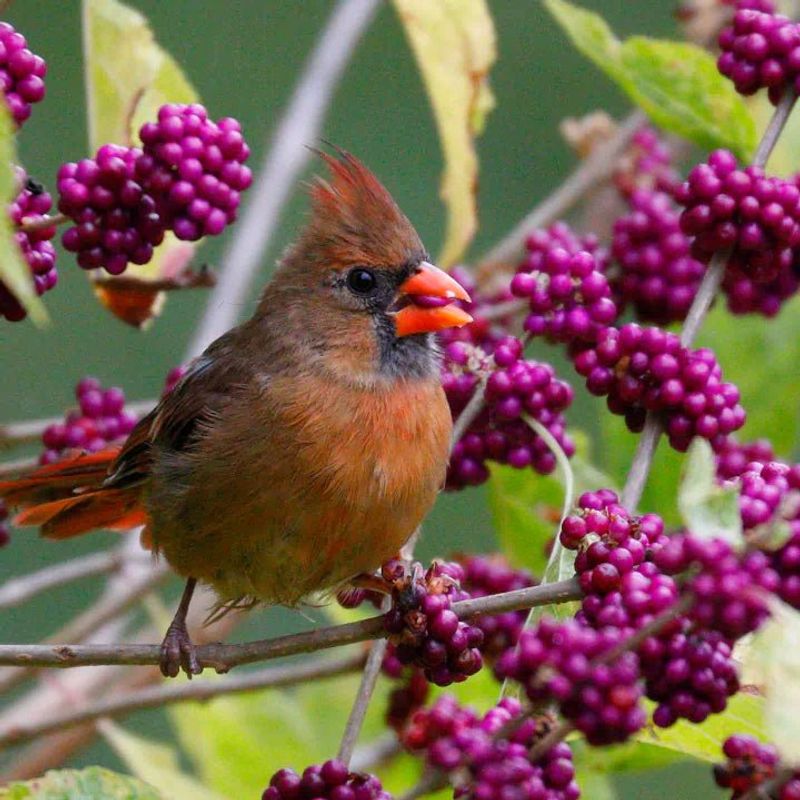
Mockingbirds, brown thrashers, robins, cedar waxwings, and several other species are known to feed on the fruit. Small mammals use the berries as well, which matters for anyone trying to build a yard that supports a fuller food web rather than just one or two charismatic species.
The NC State Extension Gardener Plant Toolbox notes that the more prominent display is the berry crop, not the bloom, and that framing matches what most homeowners notice first when they see the shrub in a neighbor’s yard. Plan for a June-to-July flowering window and a late-summer-through-fall berry show, and you will have an accurate picture of what this plant delivers across the growing season.
Laboratory tests found tick-repellent activity in isolated leaf compounds
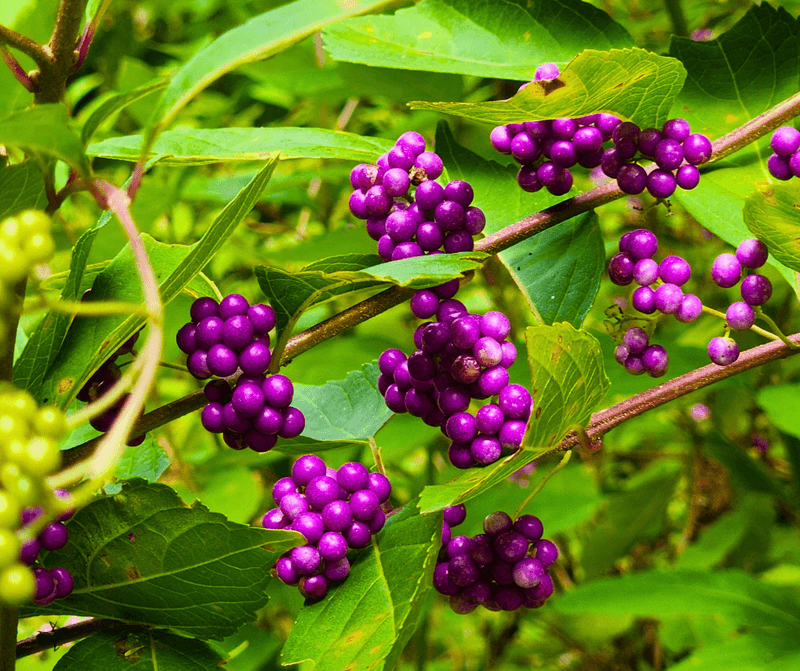
The tick-repellent story around American beautyberry starts with USDA researchers who isolated two compounds from its leaves: callicarpenal and intermedeol. These are not substances you can simply absorb by standing near the shrub.
They were extracted from the foliage, then applied to cloth or other assay materials in a controlled laboratory setting before tick nymphs were introduced to test whether the compounds affected behavior.
The 2007 USDA study found that callicarpenal repelled 100 percent of tested blacklegged tick nymphs at the three-hour mark and 53.3 percent at four hours at the tested dose. Those are striking numbers for a compound derived from a native plant.
The blacklegged tick, Ixodes scapularis, is the primary vector for Lyme disease in North Carolina, so that particular result drew attention from researchers and gardeners alike.
Results against lone star ticks told a different story. Callicarpenal and intermedeol repelled only 20 percent and 40 percent of lone star tick nymphs, respectively, at a higher tested dose.
Lone star ticks are common in North Carolina and can transmit several pathogens, so the weaker numbers matter. Anyone reading a headline about beautyberry and ticks should know that the evidence is not uniform across species.
Equally important is what the research did not examine. No study tested whether an untreated living shrub, naturally damaged leaves, or the simple presence of a beautyberry planting changed tick abundance in a residential yard.
An Extension response from 2026 states directly that no scientific studies demonstrate that the presence of particular plant species effectively repels ticks in a landscape setting. The laboratory findings are genuinely interesting and point toward potential future applications, but they do not translate into a guarantee that growing this shrub makes your yard edge safer from ticks.
Choose a sunny, well-drained site and manage the edge intentionally
Placement decisions for American beautyberry matter more than most gardeners realize, and not just for the plant’s health. Getting the site right also shapes how the shrub interacts with the spaces where your family actually spends time outdoors.
The NC State Extension profile describes American beautyberry as tolerating full sun to part shade, with good drainage as a consistent preference. Deep shade shuts down both flowering and fruiting, so a spot that receives at least a few hours of direct sun daily is worth seeking out.
Naturalized areas, woodland margins, mass plantings, and wildlife gardens are all listed as appropriate uses, which signals that this shrub is designed for the edges of a property rather than a formal bed near the front door.
Mature size shapes how you use the plant. At 3 to 8 feet tall and 3 to 6 feet wide with an arching, somewhat sprawling form, a single beautyberry commands real space.
Leave enough room at planting so the branches can arch naturally without crowding a path or spilling onto a seating area. Multiple shrubs planted in a loose row can create a soft, wildlife-friendly border along a fence line or property edge without requiring precise spacing.
Intentional placement also connects to responsible tick-exposure management. Wooded edges, dense brush, and accumulated leaf litter are exactly the habitat conditions that support tick populations, and a native shrub does not change that dynamic on its own.
CDC guidance recommends keeping a clear separation between lawn and wooded areas and avoiding dense plantings near play areas, paths, and outdoor seating. Positioning beautyberry as an intentional buffer at the far edge of your property, rather than tucking it right next to a patio or children’s play zone, lets the plant do its wildlife work without complicating the exposure-reduction steps you should still be taking.
Keep expectations realistic with basic seasonal care
American beautyberry earns a reputation as a low-maintenance plant, and that reputation is mostly accurate. Mostly.
A few basic practices keep it healthy and productive, and skipping them can mean fewer flowers, a weaker berry crop, or a shrub that outgrows its spot faster than expected.
Watering during establishment is the first priority. Newly planted shrubs need consistent moisture while their root systems expand, which typically means supplemental watering during any dry stretch in the first growing season.
Once established, beautyberry handles drought reasonably well, but prolonged dry conditions in summer can stress the plant during exactly the window when it is trying to develop berries.
Pruning is the other non-negotiable task. Because flowers and fruit form on new growth, a hard cutback in late winter, before new growth begins, resets the plant and encourages vigorous stems that carry the best berry displays.
The UF/IFAS beautyberry profile and NC State guidance both support late-winter pruning as a standard practice rather than an emergency measure. Skipping it for several years in a row typically produces a leggy, open shrub with diminishing fruit production rather than the dense, arching form that makes beautyberry so visually striking in fall.
Spacing is worth revisiting here, too. The plant’s arching form means it will eventually lean into neighboring plants or pathways if crowded at installation.
Allow the full mature width when placing new shrubs, and resist the temptation to fill gaps with other plants too quickly.
Florida and eastern Texas gardeners can apply the same core care practices, though the longer warm season may shift the pruning window slightly earlier and extend the period when irrigation matters. The NC State profile provides the baseline guidance; local extension offices in those states can advise on any regional adjustments worth making.
Use separate, recommended measures to reduce tick exposure
Planting American beautyberry along your wooded edge is a genuinely good decision for native wildlife, and the laboratory research on its leaf compounds is worth knowing about. What the plant cannot do is substitute for the yard-management and personal-protection steps that more directly reduce your family’s contact with ticks.
CDC guidance on tick prevention identifies several landscape practices that make a measurable difference. Removing leaf litter regularly, clearing tall grass and brush near the lawn, mowing on a consistent schedule, and keeping woodpiles stacked neatly in dry locations all reduce the humid, sheltered conditions that ticks prefer.
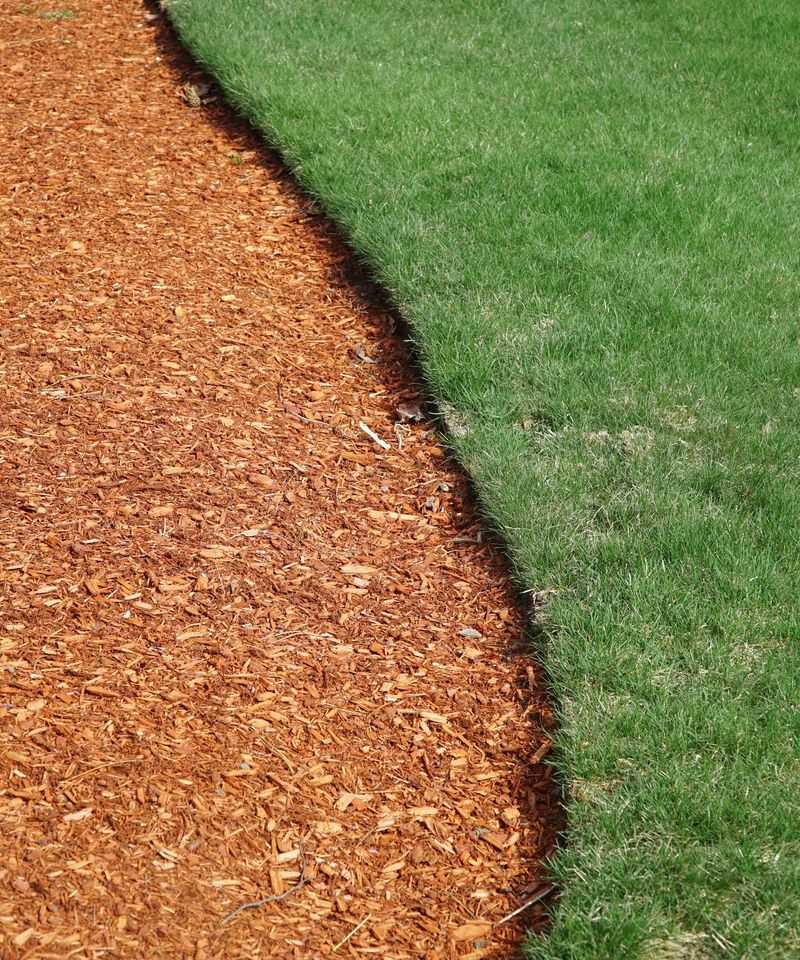
Installing a 3-foot-wide wood-chip or gravel barrier between your lawn and the wooded edge creates a drier transition zone that ticks are less likely to cross. These steps address the physical habitat that supports ticks, and they work whether or not you have a beautyberry planting nearby.
Personal protection matters every time you or your family members move into or near a wooded edge. EPA-registered repellents containing DEET, picaridin, IR3535, oil of lemon eucalyptus, PMD, or 2-undecanone provide documented protection when used according to label directions.
The EPA notes that products intended to repel public-health pests must meet applicable registration requirements and cannot make false or misleading claims. Permethrin-treated clothing and gear add another layer of protection, particularly for extended outdoor work.
Thorough tick checks after any time outdoors remain one of the most reliable ways to catch and remove ticks before they can transmit pathogens.
Pesticide applications can reduce tick numbers in treated areas, but broad spraying can also harm the bees, wasps, and butterflies that beautyberry and other native plants are meant to support. If a targeted acaricide treatment makes sense for your property, a licensed pest management professional can help you apply it in a way that minimizes impact on beneficial insects.
The presence of a beautyberry planting is one more reason to keep any pesticide use as targeted as possible.
Treat beautyberry as a wildlife asset with unproven tick-control potential
A fair summary of American beautyberry is straightforward: it is a suitable native perennial shrub for many North Carolina wooded edges, it supports insects during its June-to-July bloom, it feeds birds and small mammals through fall and into early winter, and compounds isolated from its leaves showed tick-repellent activity in controlled laboratory tests. That combination of qualities is genuinely uncommon, and it earns the plant a place in a thoughtful native planting.
No study has shown that growing beautyberry lowers tick populations in a residential yard or creates a protective barrier along a wooded edge. The living shrub, even one with naturally damaged leaves, has not been tested as a landscape-level tick deterrent, and presenting it that way would overstate what the science actually supports.
The practical takeaway is to plant it for the wildlife value, appreciate the intriguing laboratory findings for what they are, and pair the shrub with CDC-recommended edge management, registered repellents, protective clothing, and careful tick checks after time outdoors. A yard that includes native plants, managed edges, and consistent personal protection is doing more for your family than any single shrub can accomplish on its own.
Beautyberry earns its spot not as a tick solution but as a plant that belongs here and pulls its weight for the wildlife that belongs here, too.