
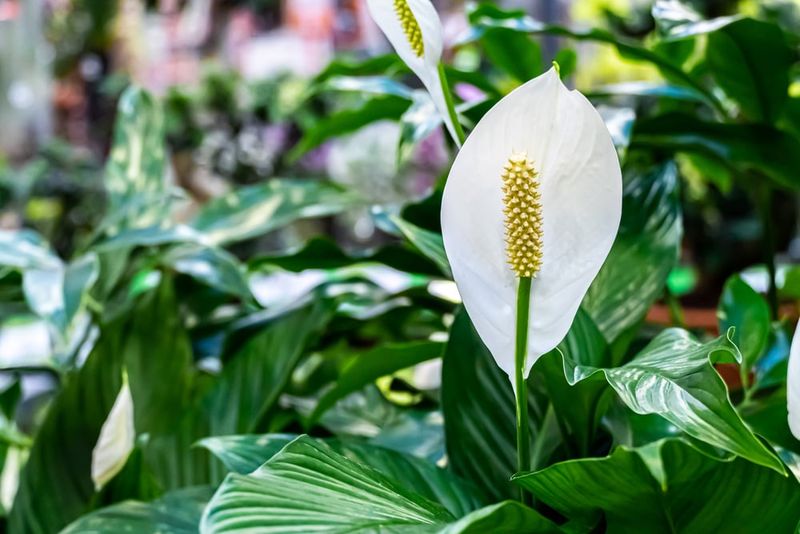
A peace lily that stays full and glossy but never produces a single white flower is one of the most common puzzles for indoor gardeners across Florida and Texas. The plant looks healthy, so something else must be holding it back.
In most cases, the missing piece comes down to light – not the amount your plant needs to survive, but the amount it needs to actually flower. Understanding that gap is the first step toward giving your plant a real chance at blooming again.
Low light can keep a peace lily green without supporting reliable flowering
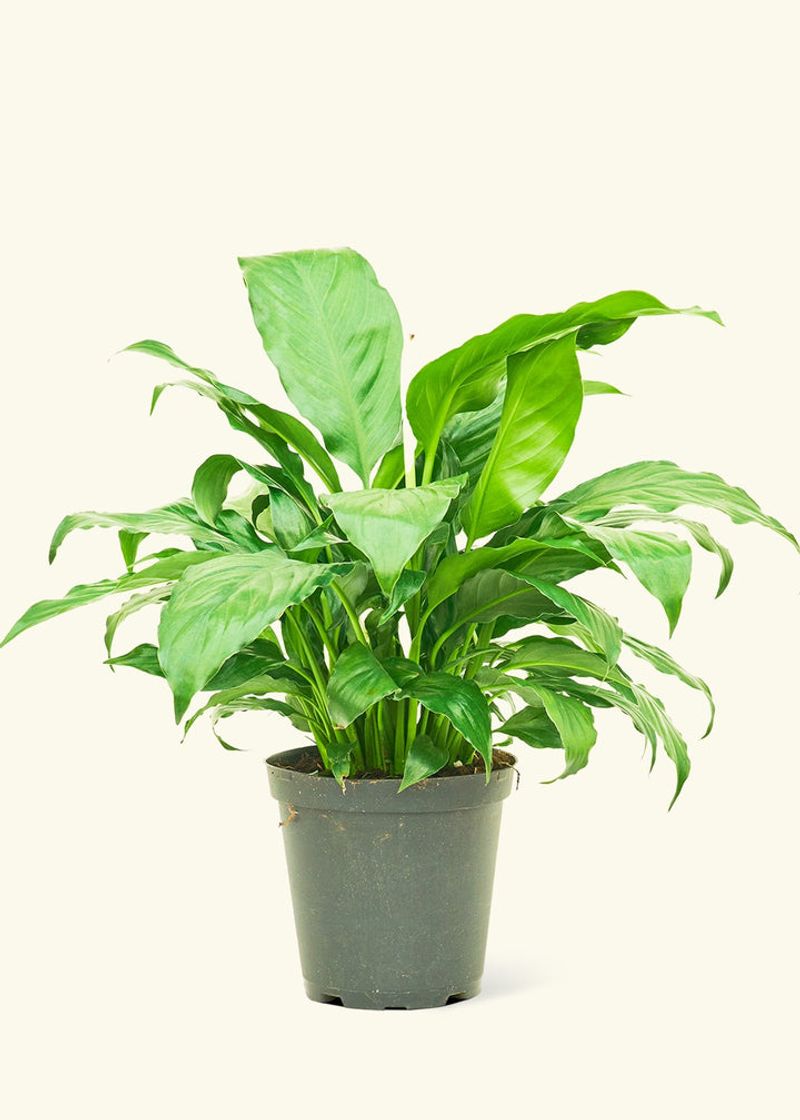
Peace lilies belong to the genus Spathiphyllum, and what most people call their “flower” is actually an inflorescence – a modified leaf called a spathe wrapped around a central spike called a spadix. UF/IFAS extension guidance on Spathiphyllum notes that these structures are quite different from the blooms of true lilies, which belong to an entirely separate plant family.
Knowing this matters because the conditions that trigger an inflorescence are not the same as those that simply keep foliage green.
Spathiphyllum is famously tolerant of low light, and that reputation is well earned when it comes to keeping leaves alive. Illinois Extension’s houseplant lighting guidance draws a clear line between the light level a plant can survive on and the light level that supports better flowering.
A peace lily parked in a dim hallway or a shadowy corner of a room can stay lush for years without ever producing a bloom.
Extension programs in Iowa and Arkansas both distinguish between low-light tolerance and the brighter indirect conditions associated with better flowering. That said, insufficient light is a leading possibility rather than the only explanation.
Cultivar, plant age, season, temperature, and previous commercial treatment can all play a role, so improving light is the best low-risk first intervention – not a guaranteed fix for every situation.
Make the light reset gradually and keep it consistent
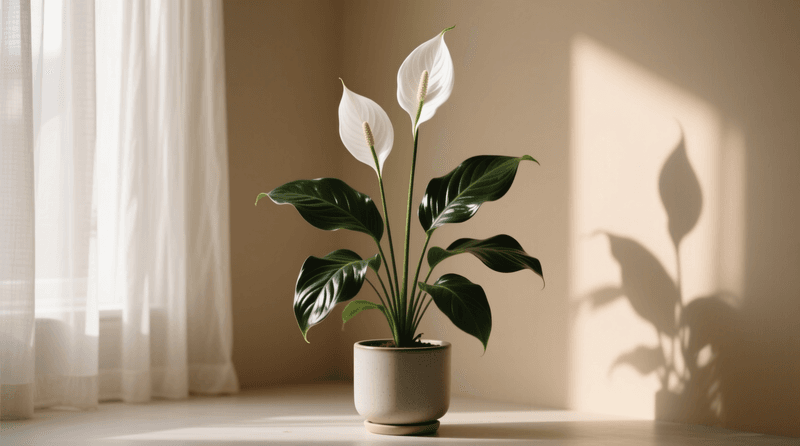
Moving a peace lily from a dim corner to a brighter location is the best-supported low-risk first step you can take, but how you make that move matters almost as much as the move itself. A plant that has spent months in deep shade has foliage adapted to minimal light, and shifting it abruptly into a much brighter spot can cause bleaching or scorching even when no direct sun is involved.
University of Minnesota Extension’s guidance on transitioning houseplants recommends a gradual acclimation rather than a sudden jump in light intensity.
A practical approach is to move the plant a few feet closer to a bright window every few days rather than relocating it across the room in one step. Once it reaches its new spot, use a sheer curtain to soften incoming light, or position the pot beside – rather than directly against – a sun-facing window so the foliage receives brightness without harsh rays hitting the leaves directly.
Clemson Extension’s peace lily factsheet specifically identifies bright, indirect light as the right home-culture target.
Consistency matters here. Repeatedly moving the plant back and forth between a bright spot and a dim one disrupts its adjustment and makes it harder to tell whether the change is helping.
Settle it into the new location, as UF/IFAS recommends for indoor Spathiphyllum culture, and give it time to produce new growth before expecting any flowering response. An immediate bloom after the move should not be expected.
Choose the brightest softened spot your room can provide
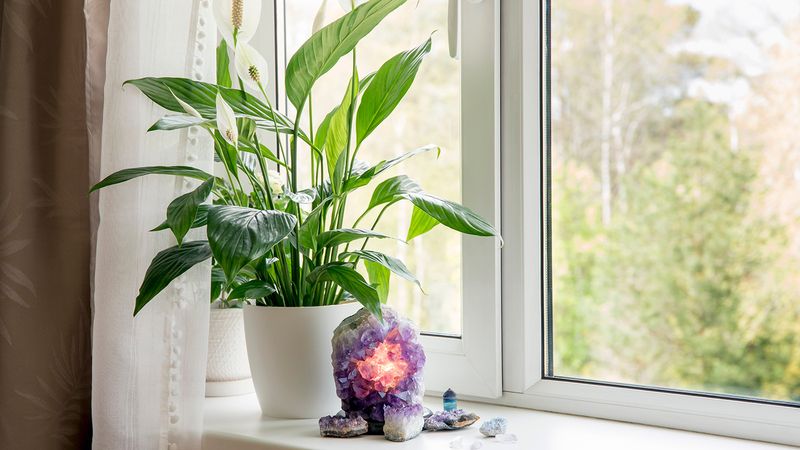
Translating “bright indirect light” into an actual spot in your home takes a little observation. An east-facing window is a common starting point because it delivers gentle morning sun that fades before the hottest part of the day.
A bright north-facing room can also work if it receives enough reflected or ambient light, and placing the plant several feet back from a south- or west-facing window – with a sheer curtain as a buffer – can provide the brightness you want without the heat that burns foliage.
Readers in Florida and Texas face a particular challenge: outdoor and window light in both states can be far more intense than the national average, especially from late spring through early fall. Extension guidance on outdoor houseplant transitions warns that foliage accustomed to indoor conditions can scorch rapidly when exposed to strong Southern sun.
That caution applies equally to indoor windows that receive direct afternoon rays, so the goal is bright and softened – not hot and unfiltered.
The best way to judge a location is to spend time in the room at different hours. UF/IFAS guidance for indoor peace lily culture and Clemson Extension both frame the target as bright filtered or indirect light rather than any single compass direction.
If a spot feels noticeably brighter than your plant’s current location but does not cast harsh shadows or heat the leaves, it is worth trying.
Steady care supports the reset without forcing a bloom
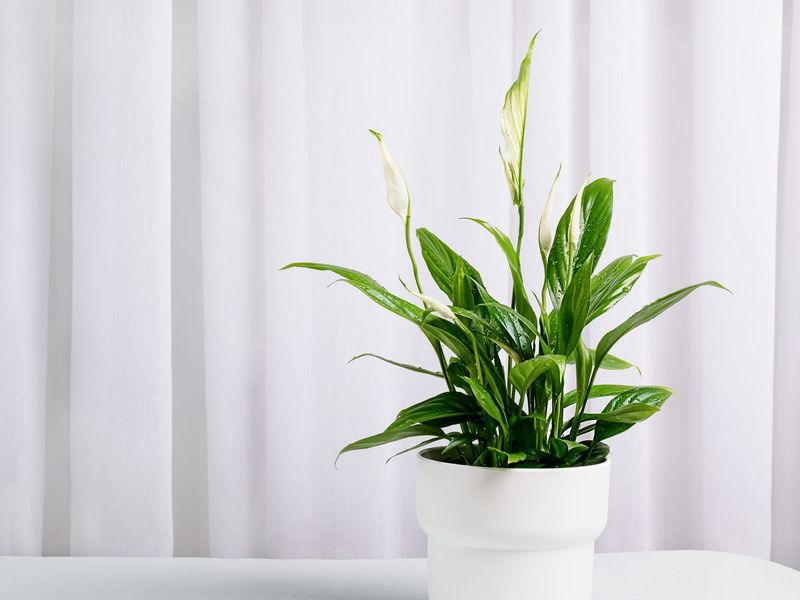
Once the plant is in a better light position, consistent everyday care keeps it healthy while it adjusts. Watering is where many otherwise attentive gardeners run into trouble.
NC State Extension’s Spathiphyllum profile recommends keeping the potting mix moist but not waterlogged – allow the surface or upper portion of the mix to dry slightly between waterings, then water thoroughly until water drains freely from the bottom. Empty any standing water from a saucer or cachepot promptly, because roots sitting in pooled water can deteriorate quickly.
Temperature plays a supporting role as well. Clemson Extension recommends keeping peace lilies between approximately 68 and 85 degrees Fahrenheit during the day and avoiding exposure below about 60 degrees.
Cold drafts from open doors, air-conditioning vents blowing directly on the foliage, and sudden temperature swings can slow growth and damage leaves – concerns that are easy to overlook in Southern homes that run heavy air conditioning through the summer.
Fertilizer is a support measure, not a flowering trigger on its own. Clemson suggests a balanced liquid houseplant fertilizer applied at one-quarter strength every six to eight weeks during spring and summer.
Overfertilizing can burn root tips and produce brown leaf edges, so less is genuinely better here. Illinois Extension also notes that salt buildup from excess feeding can cause tip damage that mimics other problems.
Repotting should be reserved for plants that clearly need it – roots emerging from drainage holes or visibly circling the soil surface are the cues to watch for. When repotting is necessary, choose a container only one to two inches larger than the current one.
An oversized pot holds more moisture than the roots can use, which raises the risk of root rot rather than improving flowering conditions.
Skip bloom boosters, oversized pots, and improvised remedies
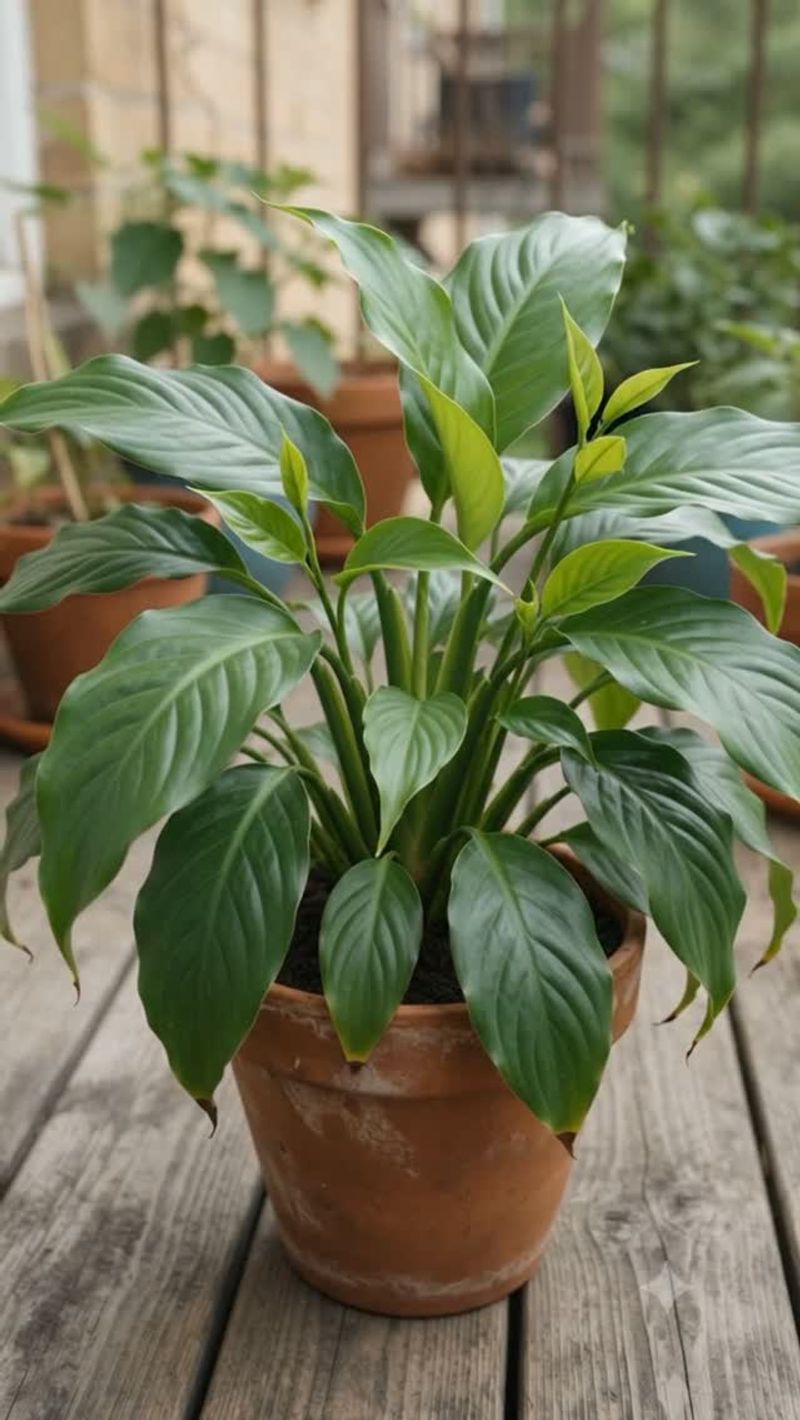
After changing the light, it is tempting to add something else to speed things along. Phosphorus-heavy bloom-booster fertilizers are a popular choice, but Clemson Extension’s peace lily guidance recommends a balanced fertilizer at reduced strength rather than a high-phosphorus formula, and there is no extension-supported evidence that loading up on phosphorus can substitute for adequate light.
Overfertilizing with any formula risks burning roots and causing the brown leaf tips that gardeners often misread as a separate problem.
Repotting into a much larger container is another common impulse when a plant stops blooming, but NC State Extension notes that peace lilies generally tolerate being somewhat pot-bound. Jumping to an oversized container introduces more soil volume than the roots can absorb water from efficiently, keeping the mix wet longer and creating conditions that encourage root problems rather than flowers.
Viral houseplant hacks – coffee grounds for acidity, banana water for potassium, Epsom salt for magnesium, ice cubes for slow watering – circulate widely but lack support from extension research on peace lilies. UC ANR Master Gardener research on common garden remedy myths and University of Maine Extension’s review of coffee grounds both caution that improvised amendments can introduce salt, acidity, or nutrient imbalances that harm rather than help.
NC State Extension’s gardening hacks review reinforces the same point. When the light reset is in place, steady and simple care gives the plant the best chance – additional interventions mostly add risk without clear benefit.
Give the plant time and account for cultivar and retail-history differences
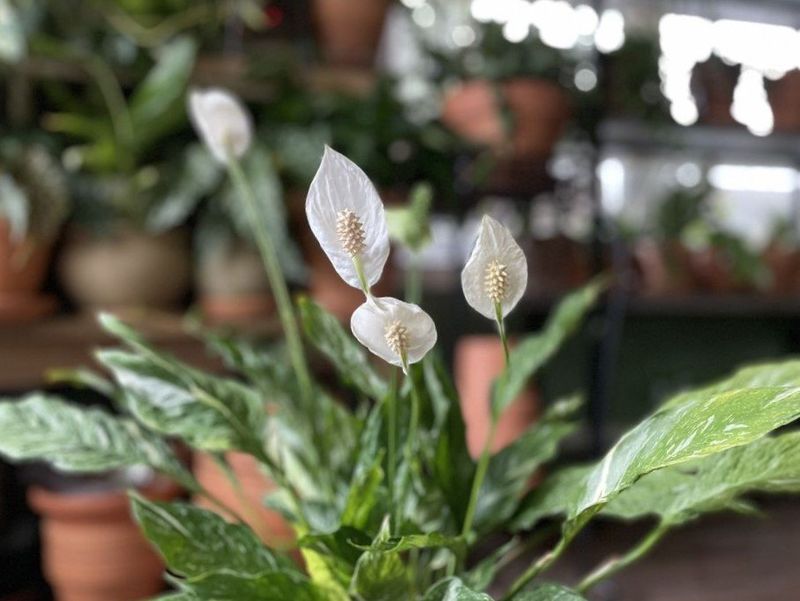
After making the light change and settling into steady care, the most useful thing you can do is wait – and adjust your expectations based on the specific plant you have. Flowering in peace lilies varies with cultivar, plant age, temperature patterns, seasonal light shifts, and conditions the plant experienced before it arrived in your home.
UF/IFAS research on Spathiphyllum production identifies age, genetics, temperature, and photoperiod-related conditions as contributors to flowering response, which means two plants sitting side by side in the same room can behave quite differently.
Some sources mention that many cultivars tend to flower from January through August, but UF/IFAS extension notes on Spathiphyllum frame that range as cultivar- and condition-dependent rather than a universal household schedule. Some cultivars bloom across multiple seasons; others are more restricted.
Treating any month range as a firm deadline will likely lead to frustration.
Commercial growers sometimes use gibberellic acid to synchronize flowering for retail display, which is part of why nursery peace lilies often look spectacular at the point of sale. A study of 31 Spathiphyllum cultivars published in HortTechnology found major differences in flowering response after treatment, underscoring that no single promise covers all plants.
When that retail bloom fades, the plant returns to its own natural rhythm under ordinary household conditions, which may take considerably longer to produce flowers again. Sustained healthy growth in better light is the real marker of progress – a bloom may follow, but it will arrive on the plant’s own schedule.
Keep the brighter location safe for pets and children
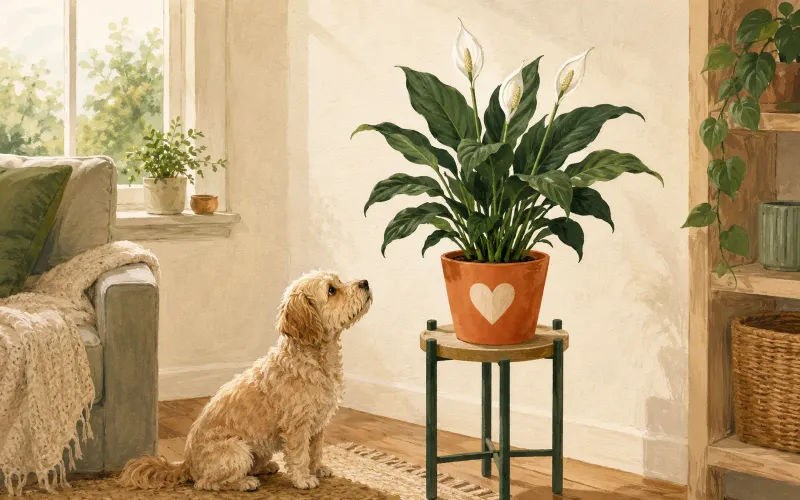
Moving a peace lily to a brighter window or a more open area of the house often puts it within easier reach of pets and young children, so a safety check belongs in the plan. Peace lilies are not true lilies and do not cause the same kidney-failure syndrome linked to Lilium or Hemerocallis species.
The ASPCA distinguishes between true lily toxicity and Spathiphyllum on that specific point. The risk, however, is not zero.
Chewing any part of a peace lily releases insoluble calcium oxalate crystals that can cause immediate mouth pain, drooling, vomiting, and difficulty swallowing. The ASPCA lists peace lily as toxic to cats and dogs for this reason, and the National Capital Poison Center notes that significant swelling or breathing difficulty warrants prompt medical or veterinary attention.
Keep the plant out of reach rather than relying on its bitter taste as a deterrent.
A high shelf, a hanging planter, or a room that pets and small children do not access freely are all practical solutions that let you pursue the light reset without added risk. Improve the light gradually, keep the watering and temperature steady, and give the plant a full growing season to respond before drawing conclusions.
A peace lily that has been well cared for in good light for months – even without a bloom yet – is a plant that has been given a genuine opportunity.