
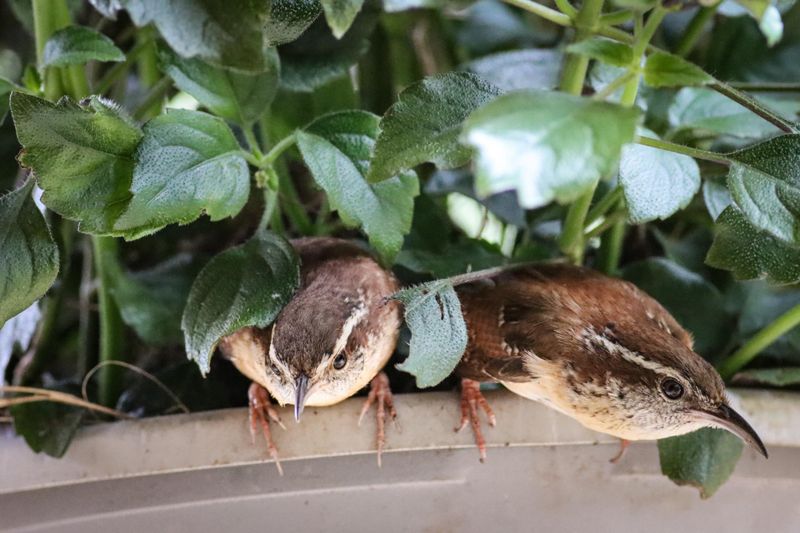
That small, rust-colored bird bobbing in and out of your porch planter is not being random or reckless. Carolina Wrens are sharp, curious foragers, and when one keeps probing your containers, it is worth understanding why.
The behavior could mean hidden insects, a cozy roosting spot, or even a future nest, and knowing the difference helps you respond without harming the bird or your plants.
Hidden prey is one plausible reason for the repeated probing
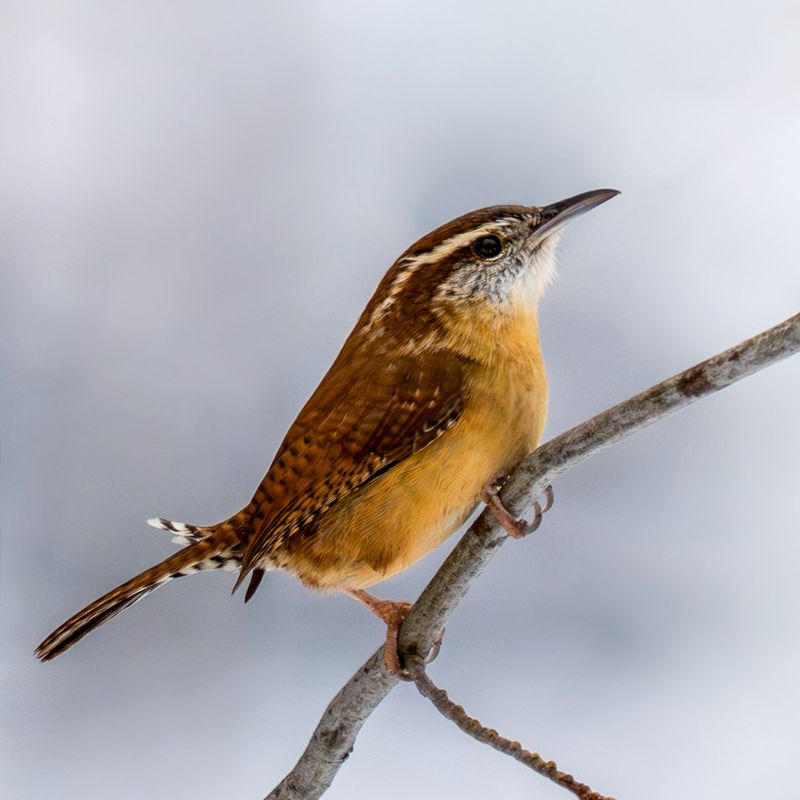
Carolina Wrens are insect-and-spider specialists first. Cornell Lab of Ornithology’s life history profile documents their diet as heavily weighted toward insects and spiders, including caterpillars, moths, beetles, leafhoppers, grasshoppers, crickets, cockroaches, ants, and a wide range of other true bugs.
That curved bill is built for probing, not cracking seeds, and you will see it pushed into rolled leaves, wedged into bark crevices, and swept through loose plant debris with practiced efficiency.
When a wren works your planter methodically, poking into stem joints, pushing through foliage, and nosing along the soil surface, it is doing exactly what the species does in brushy thickets and woodland edges across North Carolina. The container is offering the same concealed microhabitats that wild tangles do.
That said, repeated visits alone cannot tell you with certainty what the bird is after, or whether it found anything at all.
Occasional foods round out the diet but should not be confused with the primary target. Small lizards, frogs, berries, seeds, and other plant matter do appear in Carolina Wren diets, but they are situational additions rather than the main event.
If you are watching a wren work a planter, arthropods are the most plausible explanation for the behavior, while recognizing that the bird may also be checking the space for shelter or as a potential nest site.
Porch planters recreate the places wrens naturally search
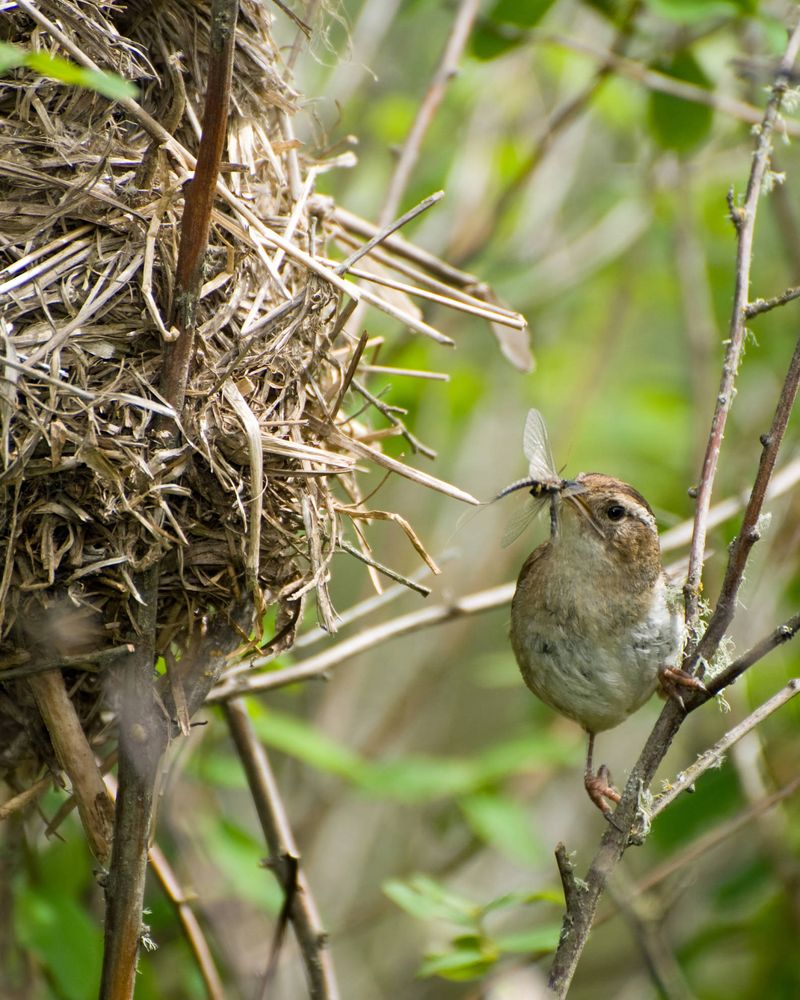
A well-established container plant can look, from a wren’s perspective, like a compact version of the brushy woodland edge it evolved to search. Dense foliage creates overlapping layers where small arthropods rest and hide.
Crowded stems trap fallen leaves and bits of organic debris. Mulch on the soil surface stays damp longer than bare ground, which suits a range of moisture-loving invertebrates that wrens find worth chasing.
Pot rims, drainage holes, and the gap between the container wall and the root ball all function as crevices, and crevices are prime hunting territory for a bird that spends much of its life probing tight spaces. NC State Extension’s container gardening handbook notes that container pests often settle in inconspicuous plant locations, and that fungus gnats, a common container nuisance, live mainly in the soil rather than on visible leaf surfaces.
A wren probing soil and lower stems could plausibly be working those exact zones.
Decaying plant material is another draw. Old flower stalks left in the pot, decomposing lower leaves pressed against the container wall, and waterlogged organic matter near the drainage layer all attract the decomposer community that sits at the base of the food chain wrens tap into.
None of this means the planter is overrun with pests. The connection between a wren’s repeated visits and a specific arthropod population in one container is a reasonable inference based on the bird’s documented foraging style and the conditions containers can create, not a conclusion drawn from a study of Carolina Wrens hunting porch planters specifically.
Read the behavior before deciding what it means
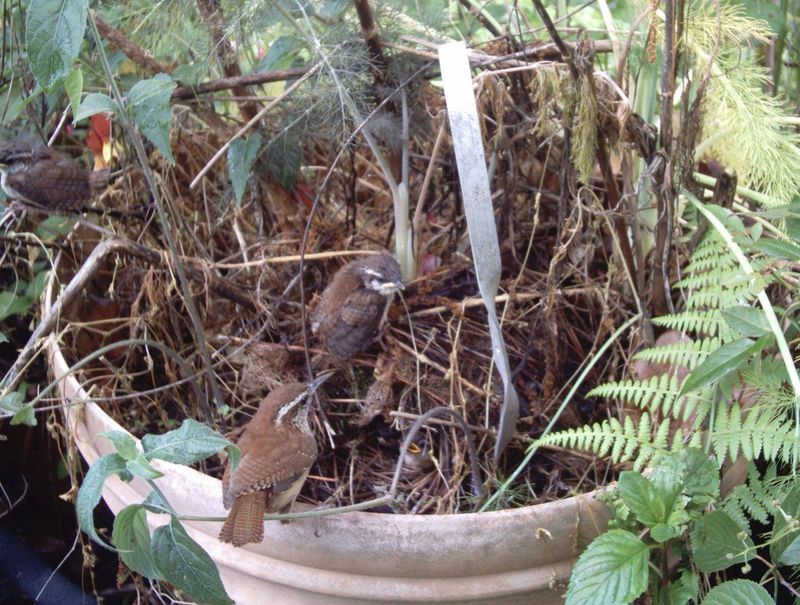
Watching what the bird is actually doing will tell you far more than the simple fact that it keeps coming back. A wren that pushes its bill into leaf debris, works along stem joints, or probes the soil surface is behaving like a forager.
Cornell Lab’s life history account describes Carolina Wrens as birds that forage by probing vegetation, leaf litter, crevices, and decaying plant material, so that kind of purposeful, repetitive poking fits their standard hunting approach.
A wren carrying something into the planter tells a different story. Leaves, dry grass, bark strips, hair, moss, or feathers being transported in the bill point strongly toward nest building rather than hunting.
The bird is gathering material, not searching for a meal. Seeing a wren disappear repeatedly into the same dense spot inside a hanging basket or deep container, without carrying anything visible, may mean it is evaluating the space as a roost or nest site rather than hunting at all.
Feeding, shelter-seeking, and nesting can look nearly identical from a few feet away. A bird that vanishes into dense foliage and reappears a moment later could be catching prey, resting, or measuring the space against its nesting requirements.
The practical takeaway is to observe for a few minutes before reaching into the planter, moving the container, or changing how you water it. Rushing to a conclusion based on one quick glance can lead to an unnecessary intervention that disturbs the bird or misses what is actually happening in the pot.
Inspect for a real plant problem before treating
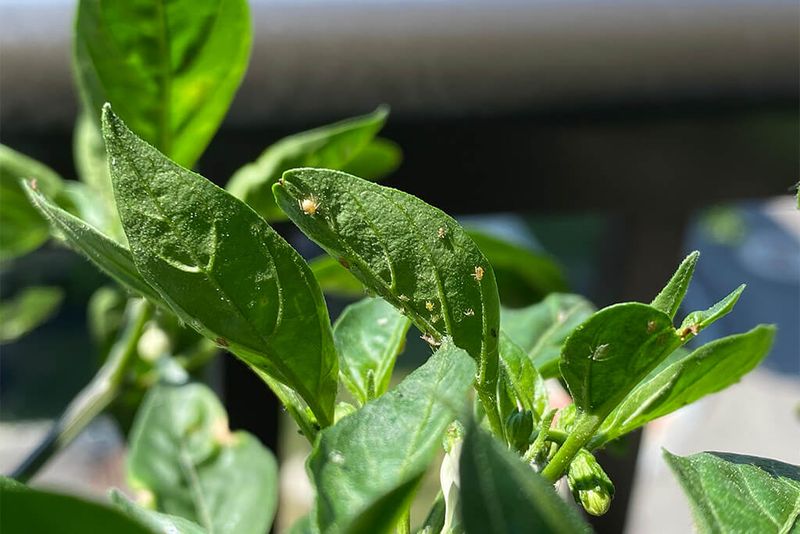
A wren’s interest in your planter is a reasonable prompt to take a closer look at the plant, but it is not a diagnosis. Start at the top and work downward: check growing tips first, since soft new growth is where aphids and mealybugs tend to cluster.
Move to stem joints next, then flower buds and open blooms, which can harbor thrips and small beetles. Flip leaves over at several points on the plant, because NC State Extension’s container plant guidance confirms that many container pests shelter on leaf undersides rather than exposed surfaces.
Work down to the pot rim and the soil surface before finishing. Fungus gnat larvae live in the upper inch or two of potting mix, so look for tiny dark flies hovering near the soil and check for larvae by pressing a piece of raw potato into the surface and checking it after a day.
Fallen leaves collected in the pot are worth examining too, since they can shelter pill bugs, earwigs, and beetle larvae that may or may not be causing plant damage.
Not every arthropod you find is a problem. Many insects and spiders in a container are neutral or actively useful, and the wren may not be targeting plant pests specifically.
Before deciding whether any treatment is necessary, look for clear signs of plant damage: distorted leaves, stippled or yellowed foliage, sticky honeydew residue, or visible feeding marks. An identified pest with meaningful plant damage is a reason to consider action.
A wren visit, by itself, is not.
Choose monitoring and lower-risk controls over automatic spraying
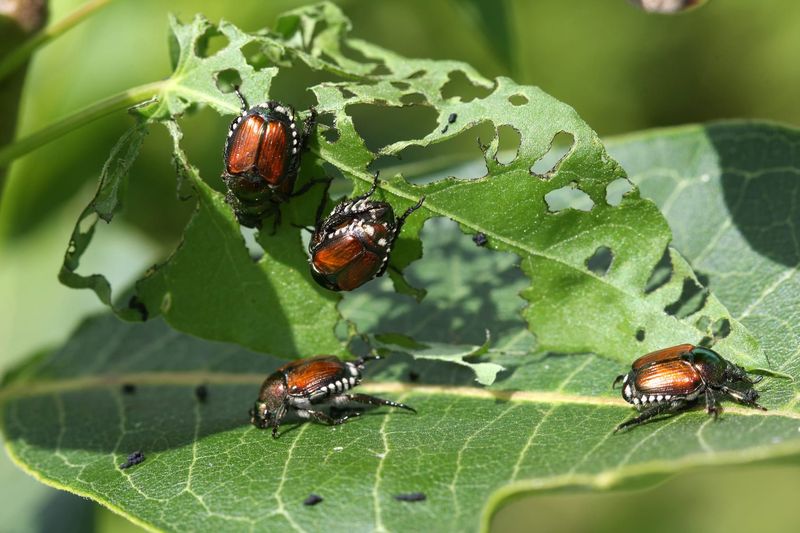
Finding a real pest problem in the planter calls for a measured response, not an immediate reach for a spray bottle. EPA integrated pest management principles lay out a clear sequence: monitor, identify accurately, prevent conditions that favor pests, and use lower-risk controls before moving to targeted pesticide applications.
Skipping the first steps wastes effort and can cause unnecessary harm to the wren and other beneficial wildlife.
For a small number of soft-bodied pests like aphids or mealybugs, start by removing them by hand or with a cotton swab dipped in rubbing alcohol. A firm stream of water rinsed over infested stems and leaf undersides dislodges many soft-bodied insects effectively and leaves no chemical residue.
Improving air circulation around the container, avoiding chronically wet potting mix, and removing spent foliage and fallen leaves reduce the conditions that favor fungus gnats, scale, and other common container pests.
Spraying solely because a wren visits is not a justified response. The bird’s presence does not confirm an infestation, and applying a pesticide or horticultural product to a container where a wren is actively foraging, roosting, or nesting can expose the bird directly or eliminate the prey it depends on.
If a horticultural soap, neem oil, or another product becomes warranted after you have identified a damaging pest, follow the label exactly. Choose a product and timing that minimize contact with birds and other wildlife, and never treat a container where an active nest is present.
NC State Extension’s container guidance supports correcting cultural conditions as a first-line strategy before chemical intervention.
Appreciate the wren without treating it as pest control
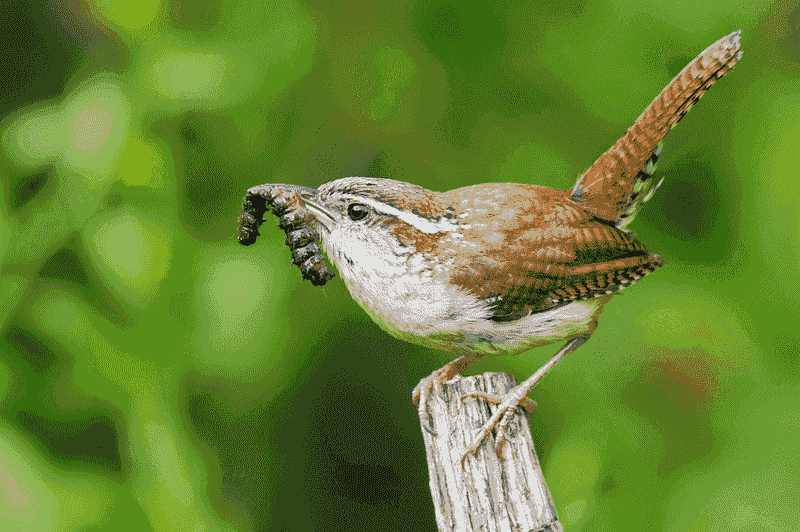
An insect- and spider-heavy diet does make Carolina Wrens possible contributors to natural pest regulation in the spaces they use. A bird that forages through your porch planters, garden beds, and nearby shrubs is consuming arthropods along the way, and some of those will be species that damage plants.
A 2023 meta-analysis in Pest Management Science found that birds can reduce pest abundance in agricultural and forest systems, but effects varied considerably across studies, with many individual observations showing neutral results. That research did not examine Carolina Wrens or porch containers specifically.
Wrens forage opportunistically. They eat whatever arthropods are accessible, which includes organisms that are harmless, beneficial, or only incidentally present in the planter.
Treating a Carolina Wren as a targeted biological-control program misreads what the bird is doing. It is not systematically working through your container pests the way a pesticide application would; it is following its own survival logic, which sometimes overlaps with your gardening interests and sometimes does not.
Claims that go further, such as that a wren will eliminate garden pests, meaningfully reduce mosquitoes or ticks around the home, or lower disease risk in the yard, are not supported by the available species-specific evidence. Cornell Lab’s dietary documentation for Carolina Wrens centers on terrestrial insects, spiders, caterpillars, beetles, crickets, and grasshoppers, with no basis for claiming meaningful control of household mosquito or tick populations.
The wren’s presence says the site may offer food, cover, or nesting opportunity. That is genuinely worth appreciating, without overstating what it means for the health of the planter or the yard.
Treat an occupied planter as a wildlife site, not a pest problem
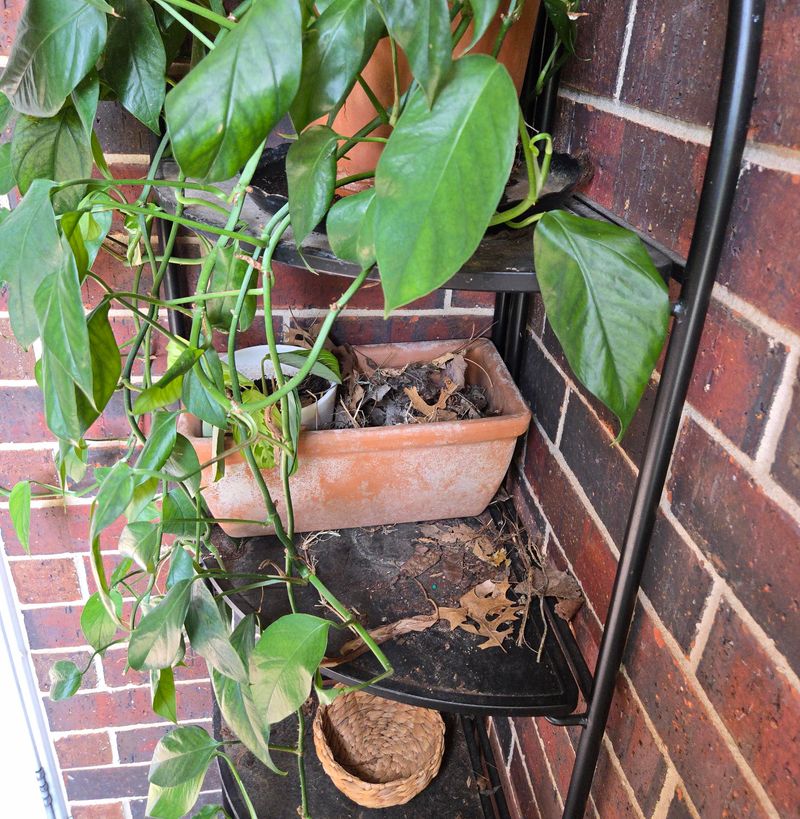
Carolina Wrens are famously creative nesters. Cornell Lab’s life history profile notes that the species commonly uses flowerpots, hanging plants, porch structures, mailboxes, and garages as nest sites, placing their cup-shaped nests in whatever sheltered cavity feels secure.
A planter with dense foliage, a deep hanging basket, or a container tucked under a porch overhang is exactly the kind of site that appeals to a pair evaluating their options.
Once a nest is active, meaning it contains eggs, chicks, or dependent young, the right response is to leave it alone. Do not move the planter, remove nesting material, handle eggs or nestlings, or deliberately disturb the adults.
U.S. Fish and Wildlife Service guidance on bird nests states that most bird nests receive protection and that destroying a nest with eggs or chicks, or harassing dependent young of a protected migratory bird, can be illegal without authorization.
The Service generally advises waiting until a nest is inactive before taking any action, unless an immediate health or safety concern exists.
Legal protection depends on the bird species and the specific circumstances, so it is not accurate to say that every nest in every situation is categorically protected in the same way. Carolina Wrens are migratory birds covered under the Migratory Bird Treaty Act of 1918, which broadly prohibits taking, possessing, or disturbing protected species without authorization.
If you are uncertain about the nest’s status, if the situation involves a genuine safety conflict, or if you need guidance on what actions are permissible, contact the U.S. Fish and Wildlife Service, the North Carolina Wildlife Resources Commission, or a licensed wildlife professional rather than acting on your own.
Water and inspect with the least possible disturbance
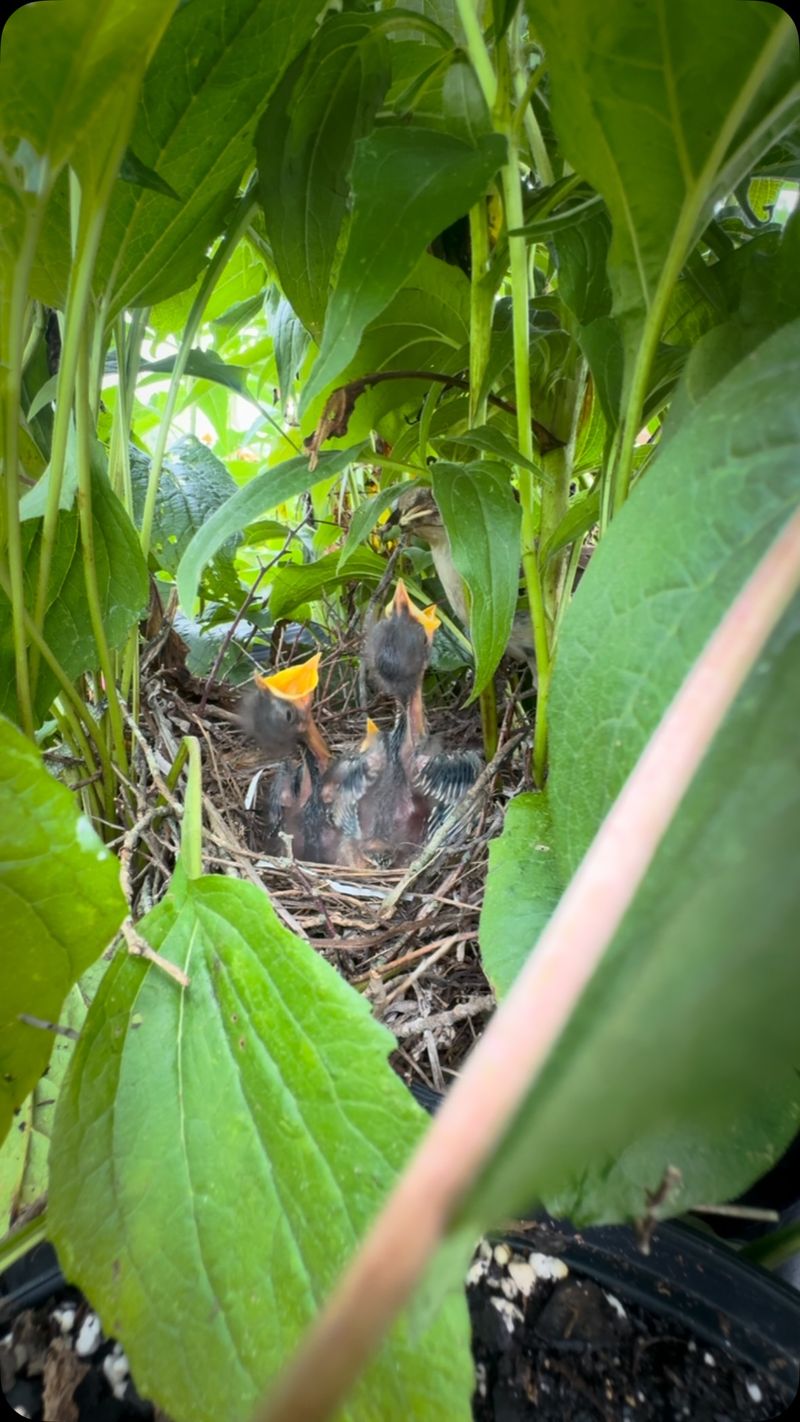
Practical plant care does not have to stop when a wren settles into a planter, but it does need to slow down and become more deliberate. Avoid picking up the container, shifting its position, or reaching into the foliage near the nest.
Even well-intentioned handling stresses nesting birds and can cause adults to abandon eggs or chicks.
Keeping the plant alive while a nest is active is manageable with a little adjustment. Extension guidance on birds nesting in flower containers recommends minimizing disturbance while maintaining the plant where practical.
Water from the side of the pot or below it using a long-neck watering can or a drip method that keeps moisture away from the nest itself. Avoid overhead watering that saturates the nest cup.
Skip fertilizing, repotting, and deadheading until the nest is inactive. FWS guidance reinforces that waiting until a nest cycle is complete is the standard recommendation when no urgent safety issue is present.
The broader sequence is straightforward: observe first, inspect only when it can be done without disturbing the bird, identify any actual plant problem before deciding whether action is needed, and choose the least disruptive response available. A Carolina Wren raising a brood in your porch planter is a short-term inconvenience measured in weeks, and a reminder that the right yard can become genuinely useful habitat with very little effort on your part.