
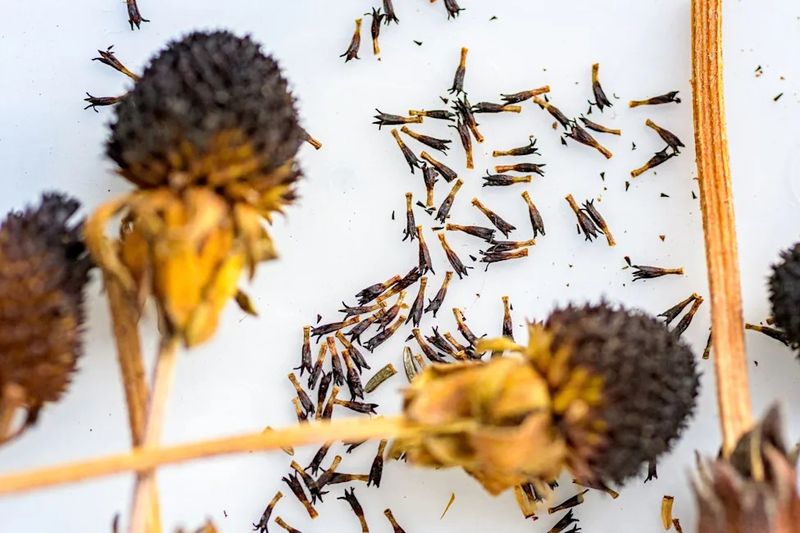
Those fading brown cones on your black-eyed Susans are not a sign of failure. They are actually a signal that free plants for next season may be within reach, if you catch the seed at the right moment.
This guide walks Southern gardeners through spotting a truly mature seed head, harvesting and drying it properly, and giving saved seed the best shot at producing new plants next year.
Identify the Rudbeckia before you save its seed
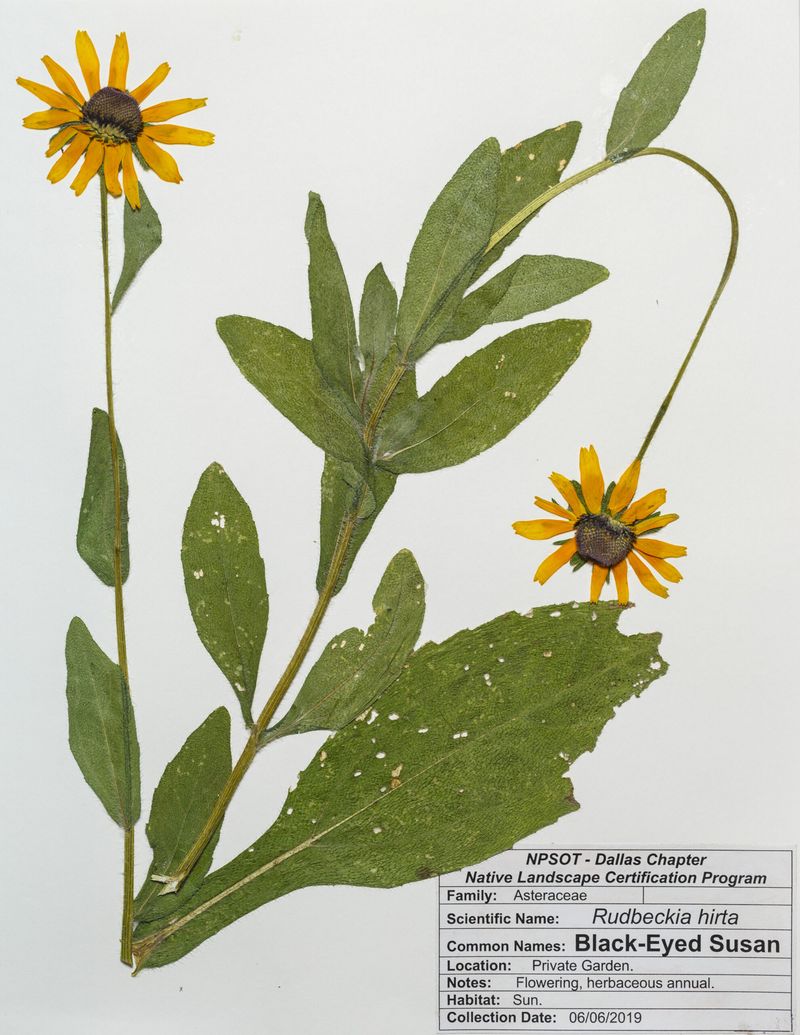
Not every plant sold as a black-eyed Susan belongs to the same species, and that difference matters before you collect a single seed head. The common name can refer to Rudbeckia hirtaR. fulgidaR. triloba, , , and other relatives, each with its own life cycle, bloom timing, and germination behavior.
The USDA plant guide for R. hirta describes it as annual, biennial, or short-lived perennial depending on conditions and location, which means the plant you are harvesting from may not return as a perennial even if you do everything right.
Focusing on R. hirta is the safest starting point because it is the species most commonly grown from seed in Southern gardens and the one with the most widely available propagation guidance. UF/IFAS extension records for R. hirta treat it as a distinct plant from other Rudbeckia species, and that distinction carries real consequences for how you sow and what you expect to grow.
Cultivar identity adds another layer of uncertainty. Iowa State University Extension explains that named cultivars, especially those with double flowers, unusual colors, compact habits, or hybrid parentage, may produce seedlings that look quite different from the original plant.
If you know you are growing a straight species, your chances of getting recognizable offspring are much better than if your source plant came in a labeled pot with a trademarked name.
Let the seed head set the harvest date
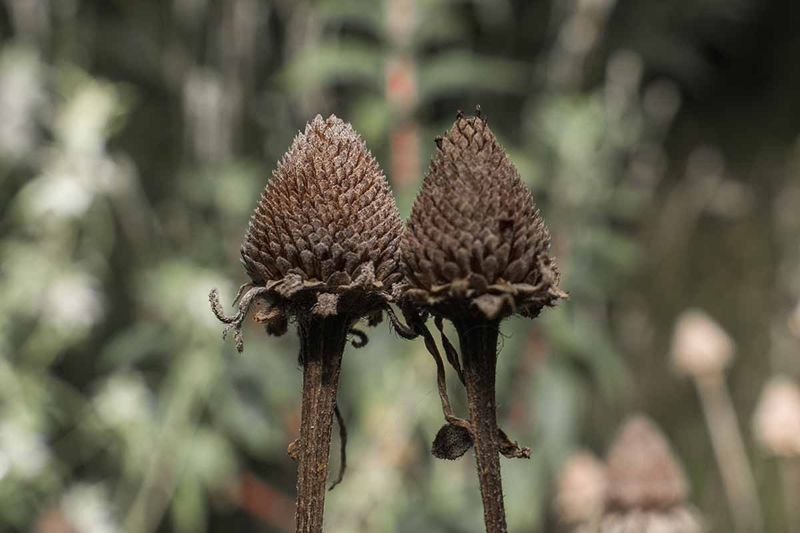
Forget picking a date on the calendar and marking it as harvest day. The seed head itself is the only reliable indicator of when to collect, and it will tell you clearly if you know what to look for.
For Rudbeckia hirta, the right moment arrives when the ray petals, those familiar yellow outer petals, have dried or dropped away, the central cone has turned brown and feels dry to the touch, and the whole head has taken on a brown, woolly texture.
The USDA plant guide for R. hirta notes that the species ripens over an extended period, so a single walkthrough of your garden will rarely capture every ready head at once. Plan on checking your plants every few days and making several collection passes rather than one big harvest.
For Southern gardeners, late summer into fall is a reasonable general window, but the timing shifts with your latitude, your local weather, and when each individual plant first bloomed. University of Georgia Cooperative Extension recommends collecting when flower heads turn brown in fall, which in parts of Georgia and the Carolinas may mean September or October rather than late August.
Some plants in your yard may have mature cones right now while others are still producing fresh flowers, and Ask Extension guidance on black-eyed Susan seed collection reinforces that a fading or browning bloom is not automatically ready. A cone that is still soft or greenish inside contains immature seed that will not germinate reliably.
Cut mature heads on a dry day
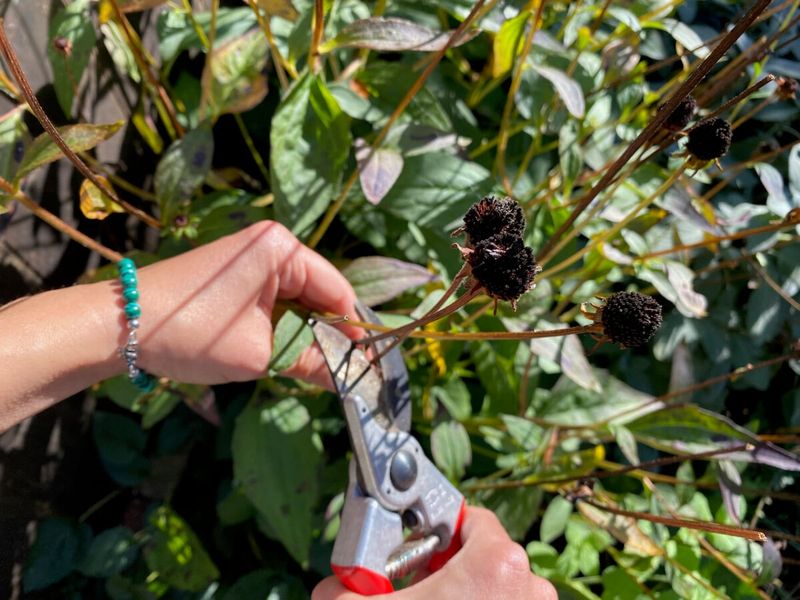
Once you have spotted a head that passes the brown, dry, woolly test, timing the cut correctly keeps you from losing seed to weather or wildlife. Choose a morning after any dew or recent rain has fully evaporated from the surface of the cone.
Surface moisture trapped inside a paper bag can encourage mold, so a genuinely dry head at the moment of harvest protects the seed quality you worked to preserve.
Use clean scissors or pruners and cut the stem a few inches below the head so you have something to hold. Ask Extension seed collection guidance encourages harvesting promptly once a head has dried, because Rudbeckia hirta seed begins to scatter on its own shortly after the cone reaches full maturity.
Waiting an extra week after the head is ready can mean losing much of the seed to wind or birds before you ever pick up your scissors.
Bird pressure is real, and it is also worth welcoming rather than fighting entirely. If goldfinches and chickadees are working your patch, USDA guidance on R. hirta supports collecting a portion of the heads once the petals have fallen and the stem just below the cone begins to turn brown, or protecting selected heads with a small square of fine mesh tied loosely around the cone.
The goal is to collect enough seed for your purposes while leaving a meaningful share of heads for wildlife and natural reseeding. Stripping every head is unnecessary and removes a food source that birds rely on through fall and winter.
Finish drying the heads before you release the seed
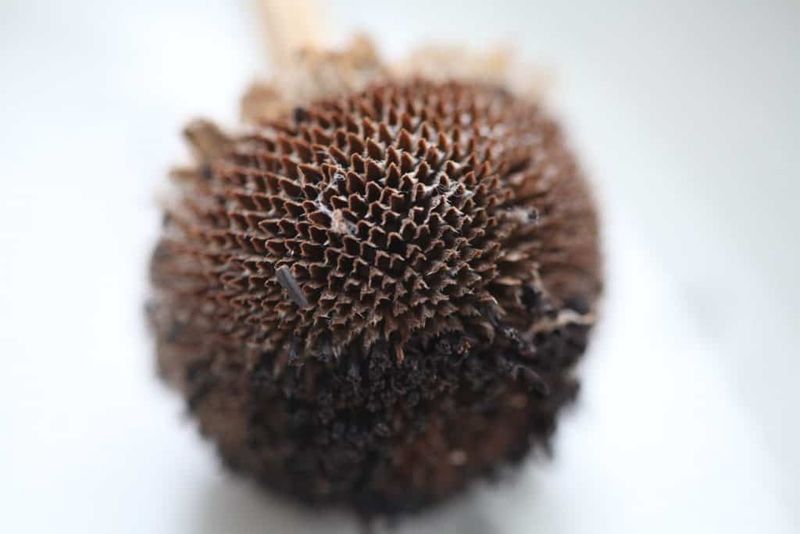
Cutting the heads from the plant is only the first step. Freshly cut cones, even ones that looked dry outdoors, often still hold enough internal moisture to cause problems if they are sealed up immediately.
Place each cut head into a labeled paper bag, or spread them on a single layer of paper in a dry indoor room with reasonable air circulation. Paper allows moisture to escape; plastic traps it and can turn a promising seed harvest into a moldy disappointment.
Let the heads sit indoors for one to two weeks. University of Georgia Cooperative Extension recommends this kind of indoor finishing step to ensure seed quality before storage.
A warm, dry spot away from direct sun works well; avoid damp basements or humid garages, especially in the South where late-summer humidity can be persistent.
When the heads feel completely dry and brittle, shake or rub them over a clean sheet of paper. The small, four-sided achenes, which are the actual seeds, will fall free along with pieces of the cone and chaff.
The USDA plant guide for R. hirta and Rutgers native plant seed propagation guidance both describe these small achenes as the viable seed unit. Pick out the largest bits of cone and chaff by hand or blow gently across the paper to separate lighter debris from heavier seed.
Perfect cleaning is not necessary for a small home planting, so do not let imperfect separation stop you from moving forward.
Label fully dry seed and store it cool and dry
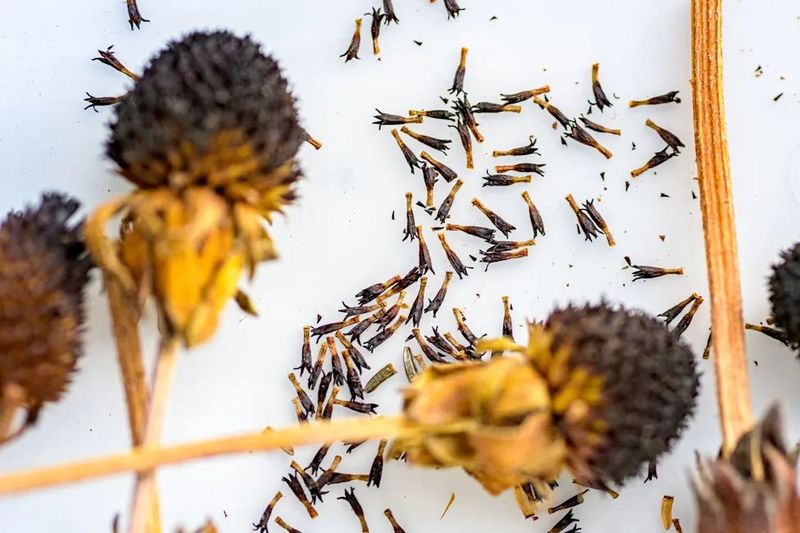
Seed that is stored without a label quickly becomes a guessing game, and guessing costs you a whole growing season if you plant the wrong thing at the wrong time. Before the seed goes into any container, write the plant name, the specific cultivar if you know it, and the collection date on a small piece of paper or directly on the envelope.
That label matters most if you are storing multiple species or planning to share seed with a neighbor.
Keep the seed in a cool, dry location once it has finished drying completely. University of Georgia Extension recommends dry storage at around 40 degrees F for R. hirta, which for most Southern households means a refrigerator rather than a kitchen counter.
An airtight container can help protect seed during longer storage, but only after the seed has dried thoroughly. Sealing damp seed in an airtight jar accelerates the same mold risk you were trying to avoid indoors.
N.C. Cooperative Extension seed-saving guidance and USDA data on R. hirta both note that germination percentages vary considerably among seed lots and storage conditions.
Save more seed than you think you will need. Sowing extra across several spots gives you better odds of getting at least some seedlings to establish, which is a more realistic target than a guaranteed full stand.
Choose fall sowing or a later planting window
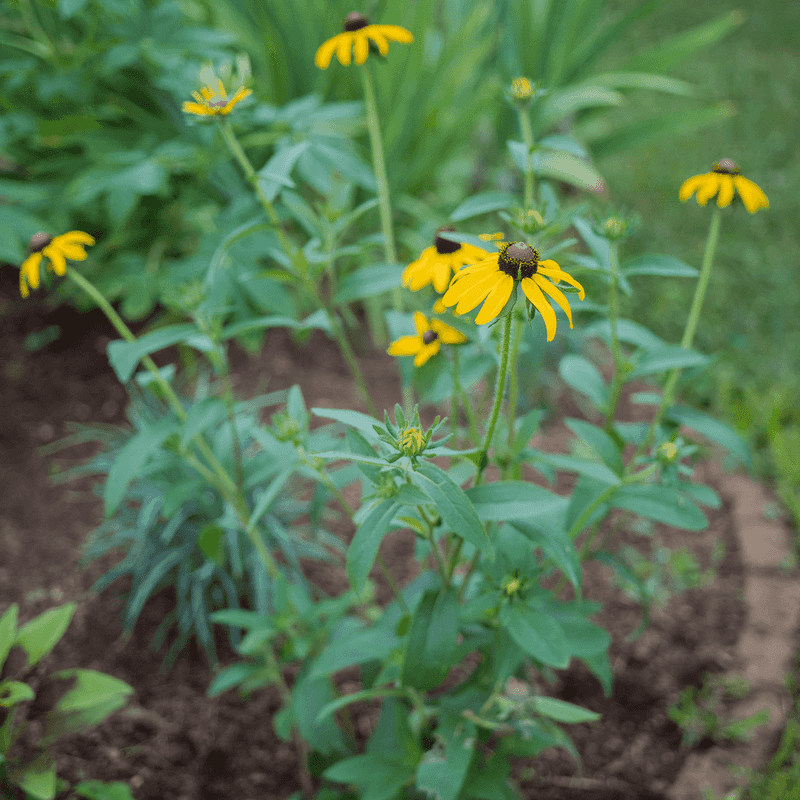
Saved seed gives you two practical routes to a new planting, and the right one depends largely on where you garden and how much you want to manage the process. Scattering seed lightly outdoors in fall is the simpler approach.
You press it into a prepared, weed-free bed in full sun, cover it only barely or not at all, and let natural seasonal conditions handle whatever winter exposure the seed may benefit from. This sidesteps the question of whether cold stratification is required, because you are letting the weather answer that for your specific seed lot and location.
University of Georgia Extension recommends sowing stored R. hirta seed in February or March and covering it lightly, noting that light and warm temperatures support germination. That is a useful target for gardeners across much of Georgia, Alabama, and the Carolinas who store their seed through winter.
UF/IFAS records for R. hirta in Florida support direct sowing with germination at approximately 70 to 75 degrees F and seed barely covered, and note planting windows that extend into October and November for Zone 10 and 11 gardeners. A single spring-sowing instruction does not fit every Southern state.
Whichever window you choose, site preparation matters. NC State Extension and Penn State Extension both emphasize full sun and well-drained soil as baseline requirements.
Press seed into the surface or cover it only lightly, because burying these small achenes too deeply reduces emergence. Keep the seedbed evenly moist during the germination period, which in warm Southern conditions can mean daily attention during a dry spell.
Rutgers native plant propagation guidance reinforces that propagation protocols differ among species and seed sources, so treat any single set of instructions as a starting point rather than a fixed rule.
Expect variable seedlings and uncertain returns
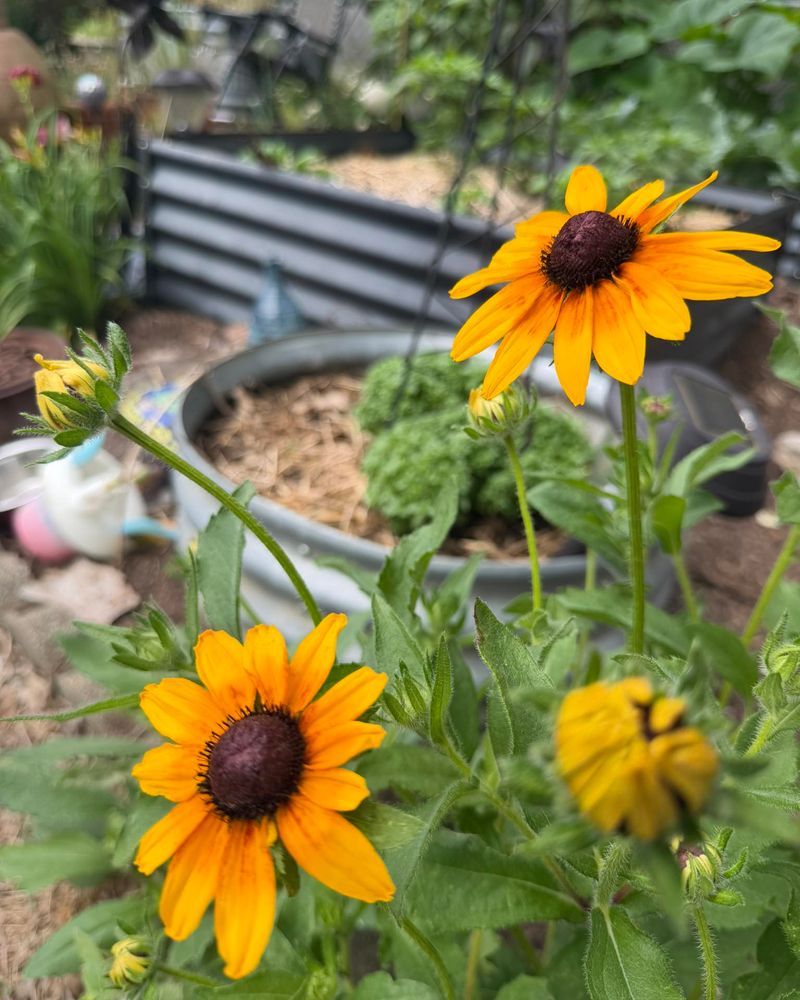
Saving seed is genuinely worthwhile, but managing your expectations going in makes the whole process less frustrating. Seedlings grown from saved R. hirta seed can vary in flower color, plant height, bloom timing, and overall vigor, even when the parent looked perfectly uniform.
That variability increases sharply when the source plant is a named cultivar, a double-flowered selection, or a compact hybrid. Iowa State University Extension explains that cultivars are maintained through vegetative propagation or controlled crossing, so seed-grown offspring may revert toward something quite different from the parent.
Ask Extension guidance on R. hirta seed collection and the USDA plant guide both note that germination percentages vary considerably with seed maturity, storage, seed lot, and growing conditions. There is no single reliable germination rate to quote, which is exactly why saving more seed than you think you need and spreading it across several small patches or a few containers is a smarter approach than concentrating everything in one spot.
The question of whether your original plant will return is also more complicated than it might seem. University of Georgia Extension and USDA both describe R. hirta as capable of behaving as an annual, biennial, or short-lived perennial.
A plant that appears in the same spot next year may be a seedling from a head you left on the stem rather than the original root system surviving. That is still a win, but it is a different kind of win than a guaranteed perennial return, and understanding the difference helps you plan your garden more accurately.
Leave some heads for birds and natural reseeding
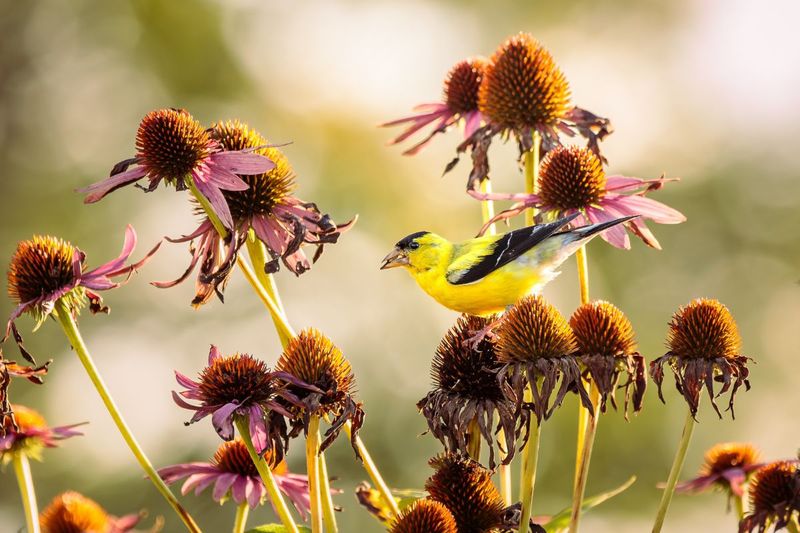
A practical seed-saving routine for black-eyed Susans does not require stripping every head from the plant. Collect only the cones that have reached the dry, brown, woolly maturity stage, finish drying them indoors on paper, label and store the seed once it is thoroughly dry, and sow it lightly in a sunny, well-drained site at a time that fits your region.
That is the complete process, and it leaves room to share the harvest.
Mature Rudbeckia seed heads are a reliable food source for birds through fall and winter. Mississippi State University Extension guidance on backyard wildlife habitat supports leaving seed-bearing native plants standing through the cold months, and N.C.
Cooperative Extension seed-saving guidance echoes the value of allowing some seed to drop naturally for reseeding. Goldfinches in particular work these heads heavily, so a garden that keeps half its mature cones intact is doing double duty as both a seed bank and a feeding station.
One final note for anyone gathering seed beyond their own property: Illinois Extension guidance on wildflowers recommends obtaining permission from the landowner and checking any applicable local rules before collecting from public or shared spaces. The best seed for your Southern garden is often the seed that grew nearby, but collecting it responsibly keeps wild populations healthy for everyone who comes after you.