
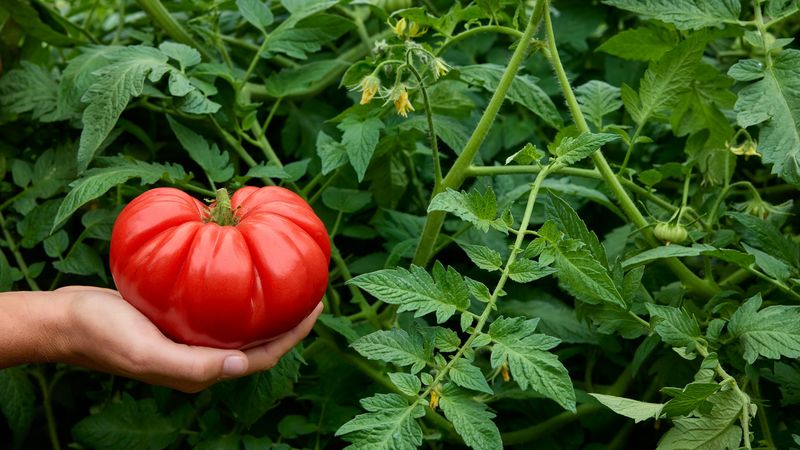
Tomato plants can look completely healthy one week and then stop setting fruit, drop their flowers, and stall out the next – right when you expect the biggest harvest of the season. For gardeners in Florida, Texas, and across the Southern U.S., late-summer heat is often the reason, and knowing what is actually happening inside the plant changes how you respond.
Some popular fixes genuinely help protect your crop, while others burn your time and energy without moving the needle. Understanding the difference can mean saving what is left of your harvest before the season slips away.
Late-summer tomato stalls often begin with heat-impaired reproduction
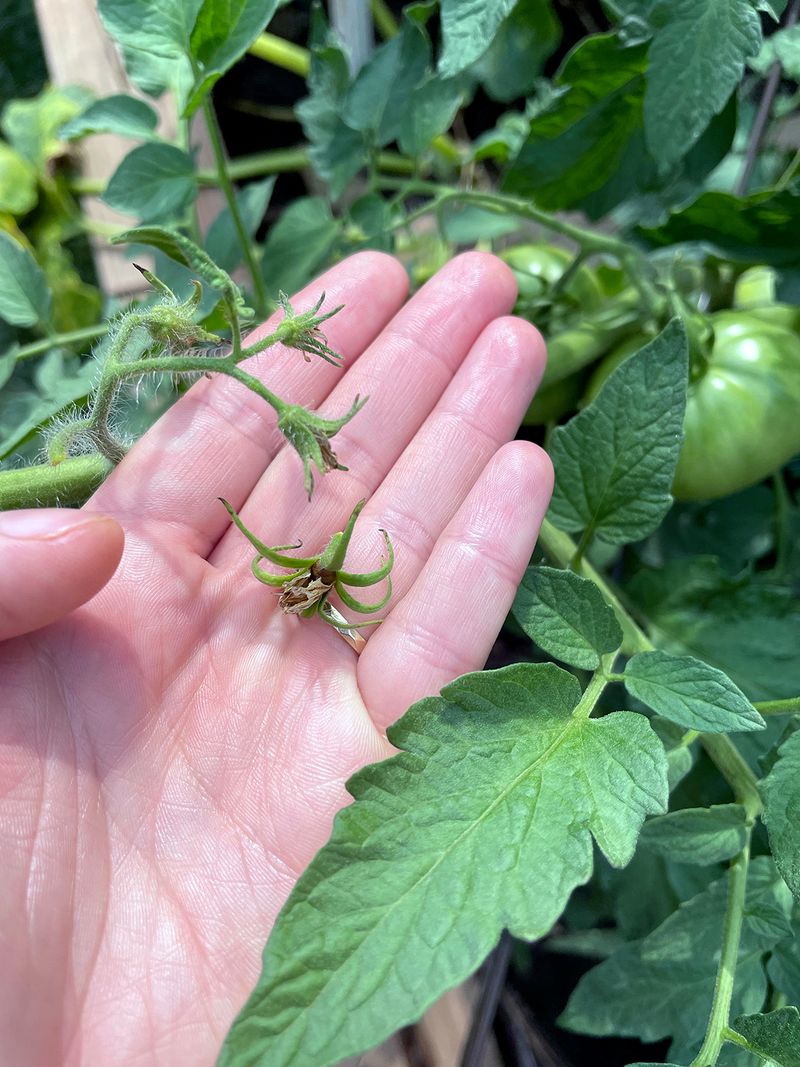
Sustained heat does something that most gardeners do not expect: it interferes with the tomato plant’s ability to reproduce, not just its ability to grow. When daytime temperatures hold above roughly 90 to 92 degrees Fahrenheit and nighttime temperatures climb above approximately 70 degrees Fahrenheit, the plant can experience heat-reduced pollen viability and function, meaning pollen may not release properly, may not germinate on the flower’s stigma, or may simply fail to do its job.
The result is blossom drop, reduced fruit set, and a garden that looks fine from a distance but produces almost nothing.
Those temperature thresholds are approximate warning points, not universal cutoffs. Cultivar, humidity, how long the heat lasts, and whether the plant is also dealing with drought stress all shift where the real trouble begins.
A heat-tolerant variety under moderate humidity might hold on a few degrees longer, while a drought-stressed plant in full afternoon sun may start dropping flowers before temperatures even reach 90 degrees.
Flowers that were exposed during the worst of the heat event are the ones most likely to fail. Fruit that has already formed, though, tells a different story.
Tomato maturation is favored by temperatures around 68 to 77 degrees Fahrenheit, and the red pigments that give ripe tomatoes their color are inhibited above roughly 85 degrees, so green fruit on the vine may stay green longer than usual. That fruit is often still edible – it is simply waiting for cooler conditions to finish coloring.
Later flowers, meanwhile, may set fruit successfully once temperatures moderate, provided the plant remains healthy enough to carry them.
Heat can temporarily stall reproduction without killing the plant. The goal during a heat event is to protect what is already there and keep the plant alive and functional for the cooler weather ahead.
Check for disease and root trouble before blaming the weather
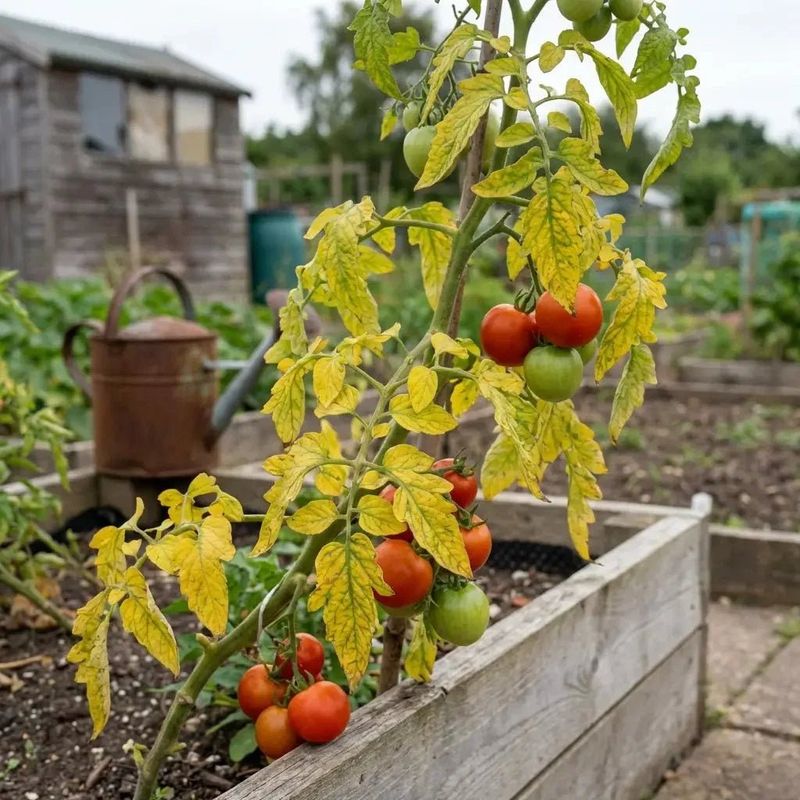
Before applying any heat-rescue care, take a few minutes to look at the plant carefully. Not every wilted, yellowing, or unproductive tomato is reacting to temperature.
Treating a diseased plant as if it were simply heat-stressed delays real diagnosis and can make things worse.
One of the most common points of confusion is physiological leaf roll. During intense heat, tomato leaves sometimes curl inward as a protective response, reducing the surface area exposed to sun and cutting down on water loss.
This type of leaf rolling does not automatically signal underwatering and may not significantly affect yield on its own. A plant showing this response with otherwise normal color and firm stems is likely managing heat, not signaling a crisis that requires immediate intervention.
The symptoms that do warrant closer attention are a different pattern entirely. Progressive decline that does not ease with cooler overnight temperatures, wilting that affects only one side of the plant, brown or discolored tissue inside the stem when you cut it, severe distortion in new growth, or widespread spotting across multiple leaves all point beyond heat stress.
In Florida especially, Fusarium wilt, root-knot nematodes, whitefly-transmitted viruses, and bacterial diseases can produce symptoms that look a lot like heat damage but require completely different responses.
Check the root zone while you are at it. Compacted, waterlogged, or damaged roots can prevent water uptake even when irrigation is adequate, making the plant appear drought-stressed regardless of how often you water.
A plant that needs diagnosis – not just more shade or water – is better identified early, before you invest more effort in a rescue plan that cannot address the real problem.
Stabilize soil moisture instead of chasing curled leaves
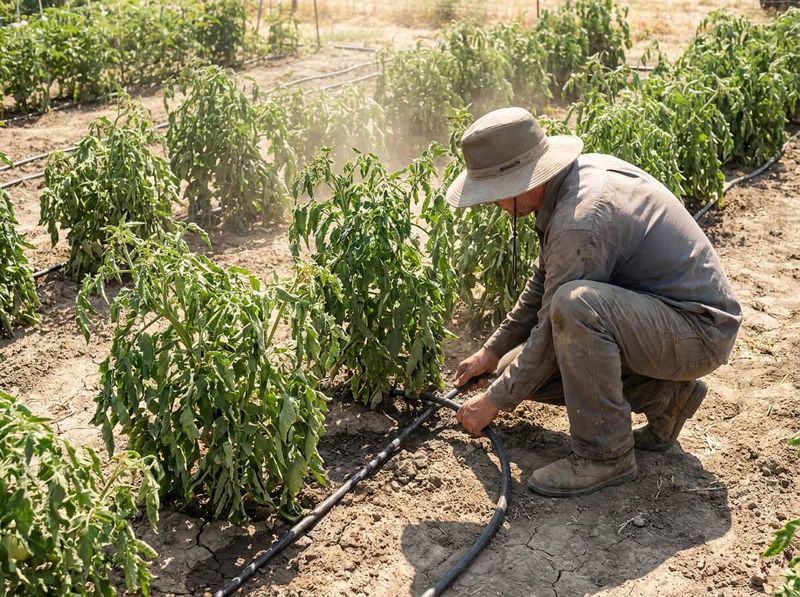
Root-zone moisture is the most direct lever a gardener has during a heat event. Before reaching for the hose, though, dig down several inches near the plant’s root zone or use a soil probe.
Heat can cause leaves to curl or wilt even when the root zone still holds adequate moisture, so leaf appearance alone is not a reliable guide. Base watering decisions on what the soil actually tells you.
When the root zone is drying out, water thoroughly enough to reach the full root depth rather than applying a series of shallow sips. Shallow watering encourages roots to stay near the surface, where they are most exposed to heat and drying.
Consistent, deep moisture also reduces the risk of blossom-end rot and fruit cracking, both of which become more likely when soil moisture swings between wet and dry extremes. Drip irrigation or a soaker hose delivers water directly to the root zone while keeping foliage drier, which can help reduce some disease risk over time.
Morning watering is often efficient because it gives wet foliage time to dry before evening, reducing conditions that favor fungal disease. That said, a plant that is genuinely wilting during a heat wave should receive water as soon as reasonably possible rather than waiting until the next morning’s scheduled run.
Apply water to the soil, not routinely over the leaves, and focus on what the plant needs rather than what the clock says.
Mulch is a useful partner to good irrigation. An organic mulch layer helps moderate evaporation and reduce soil-temperature swings, keeping the root zone more stable during the hottest parts of the day.
Keep the mulch a few inches away from the main stem to reduce moisture buildup against the bark. Extension recommendations for home-garden mulch top-ups commonly range from roughly one to three inches, depending on the material and what is already in place.
Container plants and those growing in sandy soils typically need more frequent irrigation than in-ground plants in heavier soils, so adjust your schedule to match your specific setup.
Use temporary shade and preserve the leaves that protect fruit
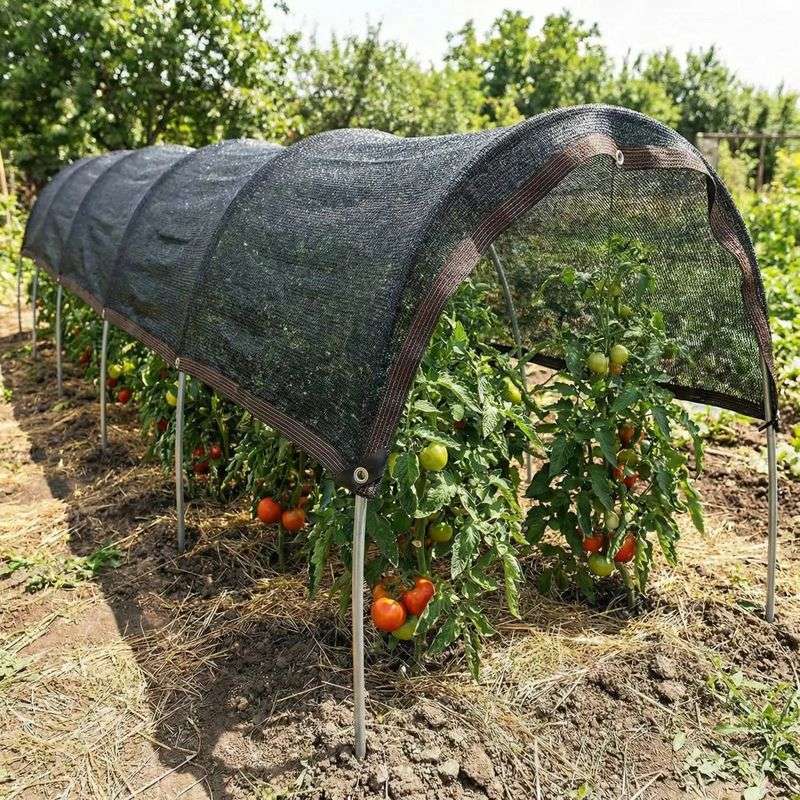
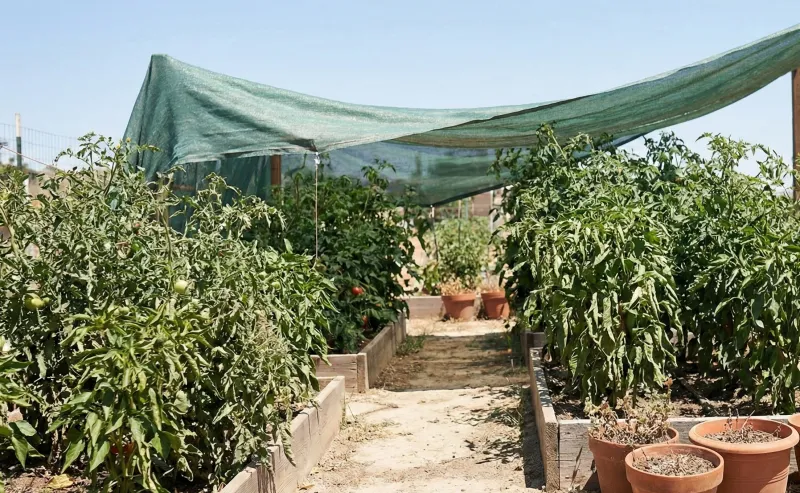
Shade cloth is one of the more practical tools available during a Southern heat wave, but how you use it matters as much as whether you use it. The goal is to reduce heat load and protect developing fruit from sunscald during the hottest, brightest afternoon hours, not to create a permanently dimmer growing environment.
A 30 percent shade cloth is a practical starting point supported by extension trials, with 20 to 40 percent being a common home-garden range. In unusually extreme conditions, 50 percent shade may offer more protection, but heavier shade left in place for extended periods can reduce photosynthesis, slow growth, and cut into productivity.
Suspend the cloth above the plants rather than draping it directly on the foliage. Air circulation matters during hot weather, and fabric resting on leaves can trap heat and moisture rather than relieving either.
Remove or roll back the cloth during cooler mornings and overcast days so the plant can take full advantage of gentler light. Sunscald on exposed fruit is a real risk when foliage is missing or thinned out, and shade cloth can help fill that gap when the plant’s own canopy has been reduced.
That brings up canopy management, which works hand in hand with shade. The plant’s own leaves are its first line of defense against sunscald on developing tomatoes.
Removing dead, diseased, or severely damaged leaves is appropriate and helpful, but stripping healthy upper foliage during hot, bright weather exposes fruit that was previously shaded and increases sunscald risk. Maintaining a healthy leaf canopy helps protect fruit quality through the heat period.
Prune with a specific reason in mind, not as a general heat-response strategy.
Skip emergency fertilizer, calcium, and blossom-set products
When tomatoes stop setting fruit, the instinct to add something – more fertilizer, a calcium spray, a blossom-set hormone – is understandable. Most of those additions, though, do not address what heat actually did to the plant’s reproductive process, and some can create new problems on top of the existing ones.
Extra nitrogen is one of the most common emergency moves and one of the least helpful during a heat stall. Excess nitrogen encourages lush foliage growth at the expense of flowering and can interfere with calcium uptake, which raises the risk of blossom-end rot.
If the plant was fertilized correctly earlier in the season and the foliage looks reasonably green, an emergency nitrogen dose is not a reliable fix. Add fertilizer only when plant symptoms, crop needs, and ideally a soil test support it.
Blossom-set hormone sprays are sold as a way to encourage fruit set, but extension guidance is clear that these products have little effect on high-temperature blossom drop. They may have some relevance in low-temperature situations, but heat-related flower abortion is a pollen-function problem, not a simple hormone gap that a spray can bridge.
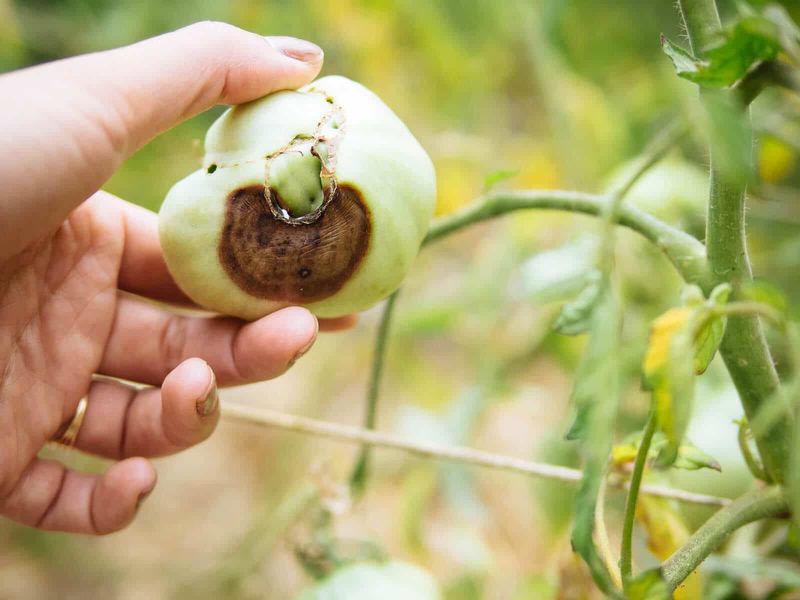
Blossom-end rot deserves a closer look too. Blossom-end rot is a calcium-distribution problem, not automatic proof that the soil lacks calcium.
Fluctuating moisture, root damage, excessive nitrogen, salt buildup, and drainage issues can all prevent calcium from reaching developing fruit even when soil calcium levels are adequate. Correcting irrigation consistency is generally more effective than automatically adding calcium, and foliar calcium sprays often perform poorly because the transport problem is in the plant, not the soil surface.
One more myth worth correcting: midday watering does not burn tomato leaves. The stronger guidance is to apply water to the root zone and water a genuinely stressed plant promptly, rather than delaying care because of a rigid schedule.
Water the soil, not the leaves, and the timing concern largely takes care of itself.
Protect existing fruit and keep scouting as heat continues
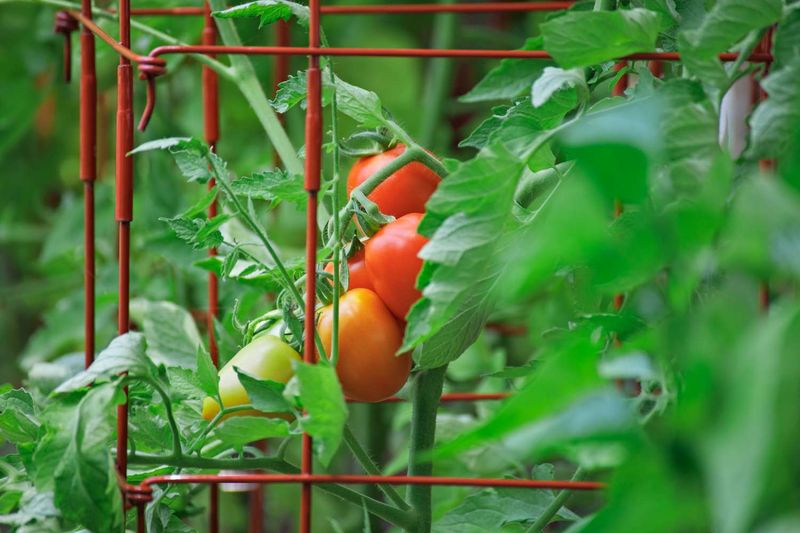
Green tomatoes already on the vine are worth protecting even when new flowers are stalling. Getting stems and fruit off the soil is one of the most straightforward steps available.
Cages, stakes, and trellises improve air movement around the plant and reduce the risk of fruit rotting where it contacts the ground. They also make it easier to see what is happening inside the plant, which matters when you are watching for early signs of disease or pest activity.
Support structures do not correct heat-impaired pollen function, but they help protect the crop that is already there.
Scouting should continue throughout the heat period rather than tapering off because the plant looks stable. Heat stress and disease or pest problems can appear simultaneously, and a plant that seems to be holding steady one week can decline quickly if an insect infestation or fungal problem goes unnoticed.
Regular plant inspection makes it easier to catch problems while they are still manageable rather than after significant damage has occurred.
Set realistic expectations for the fruit that is already on the plant. Red pigment development in tomatoes is inhibited at temperatures above roughly 85 degrees Fahrenheit, so green fruit may stay green longer than usual even when it is otherwise healthy and maturing normally.
Once temperatures moderate, coloring often catches up. Patience with the ripening timeline is a practical part of late-summer tomato management, not a sign that something else is wrong.
Let cooler weather—not frantic treatment—determine the next harvest
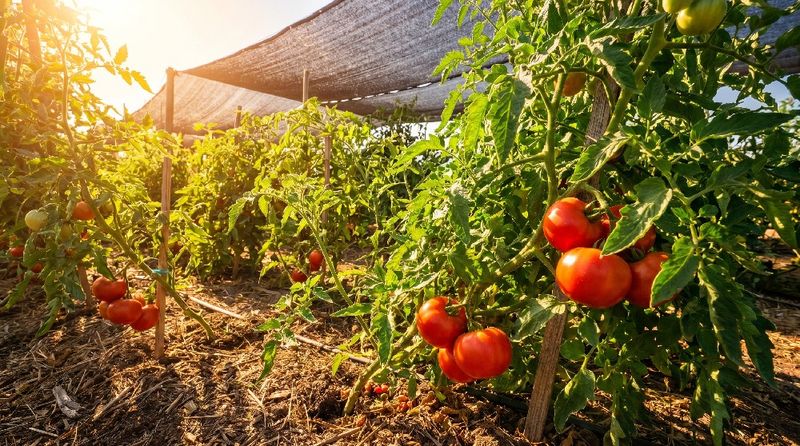
Recovery after a heat event is possible, but it follows the plant’s timeline, not the gardener’s. Pollen production and release can recover after several cooler days to roughly two weeks, depending on the cultivar and how long and severe the heat exposure was.
Flowers that open after temperatures moderate have a real chance of setting fruit, provided the plant is still healthy enough to support them. That is the case for protecting a struggling plant: keeping it alive and functional so it can take advantage of better conditions when they arrive.
Planning the next planting requires regional specifics, not general rules. Florida gardeners considering summer or early-fall transplants need to account for more than just temperature.
Fall tomato crops in Florida face substantial pressure from whiteflies, viruses, bacterial leaf spot, target spot, and other diseases, which means cultivar selection and pest management matter as much as timing. Hot-set or heat-tolerant cultivars, including some developed specifically for Florida conditions, may hold better fruit set under high temperatures, but heat tolerance does not make a variety immune to heat, drought, disease, or sunscald.
Texas planning follows a different framework. Texas extension guidance recommends timing fall transplants roughly 100 days before the first expected frost, which varies considerably by region across the state.
A general late-summer planting recommendation would not be safe without local frost-date information. Check with your county extension office for cultivar suggestions and timing specific to your area, and treat heat-tolerant varieties as potentially useful tools rather than guarantees of a second crop.
Follow a measured rescue plan and accept what heat cannot fix
A practical rescue sequence starts with inspection, not intervention. Look at the whole plant before reaching for any product or tool.
Check the soil moisture at root depth, then water thoroughly if the zone is drying out. Apply or refresh mulch to moderate evaporation and soil temperature, keeping it back from the main stem.
Add temporary afternoon shade using a 20 to 40 percent shade cloth suspended above the foliage, and remove it during cooler or overcast periods. Protecting the plant from additional stress is the most reliable action available during an ongoing heat event.
Remove dead or diseased tissue, but leave healthy upper leaves in place to shade developing fruit. Support stems and fruit off the soil with cages or stakes.
Skip emergency fertilizer, calcium sprays, and blossom-set hormones unless plant symptoms, soil testing, and crop needs clearly support them. Keep scouting for disease, pest, and root problems that heat stress alone cannot explain.
The central distinction worth holding onto is the difference between reducing stress and forcing fruit set. Heat is a reproductive and pollen-function problem, and no garden product can reverse damage to flowers that were already exposed during the hottest period.
What these steps can do is preserve existing fruit, keep the plant viable, and improve its prospects when temperatures ease – and sometimes, that turns out to be enough.