
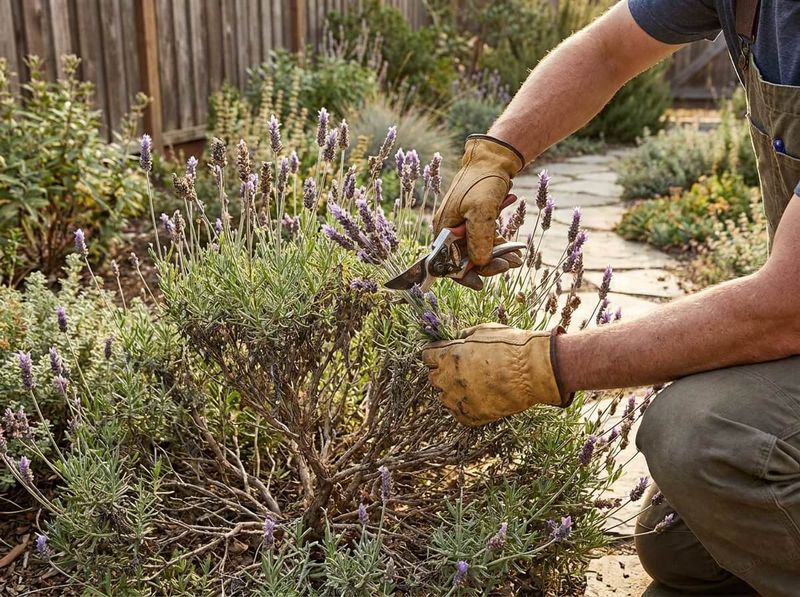
Lavender is one of those plants that feels like a small victory to grow, so watching it turn woody and gray in the Southern heat is genuinely discouraging. The good news is that a woody base does not automatically mean the plant is done.
A careful, conservative prune can give a still-viable lavender a real second chance, but only when the timing is right and the plant still has healthy green growth to work with.
First decide whether the plant still has living growth
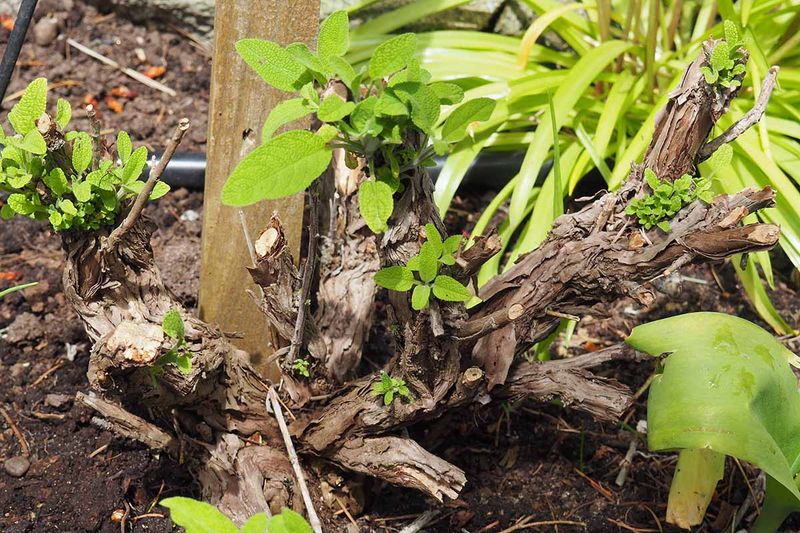
Lavender develops a woody base naturally as it ages, and that gray, bark-like lower stem is not automatically a sign of failure. The key question is whether the plant still has flexible stems, green leaves, or living shoots above that woody section.
RHS growing guidance confirms that mature lavender can become straggly over time but may still respond to selective pruning when healthy green tissue remains.
A plant that has green growth above the old wood is in a fundamentally different position from one that is brown throughout. Squeeze a stem gently near the tip – if it bends without snapping and shows green when scratched lightly, the tissue is alive.
A stem that is brittle, snaps cleanly, and shows no green underneath is dead wood, and no amount of pruning will change that.
Before reaching for the pruners, University of Maine Cooperative Extension guidance notes that widespread browning, no living buds, and serious root damage are signs that a plant may not recover from cutting alone. The renovation prune described in this article applies only to lavender that passes this basic check – visible green growth, flexible leafy stems, and roots that appear intact.
Treating it as a guaranteed resurrection for any woody lavender, regardless of condition, is a mistake that can cost you the plant entirely.
Wait out peak heat before making a major cut
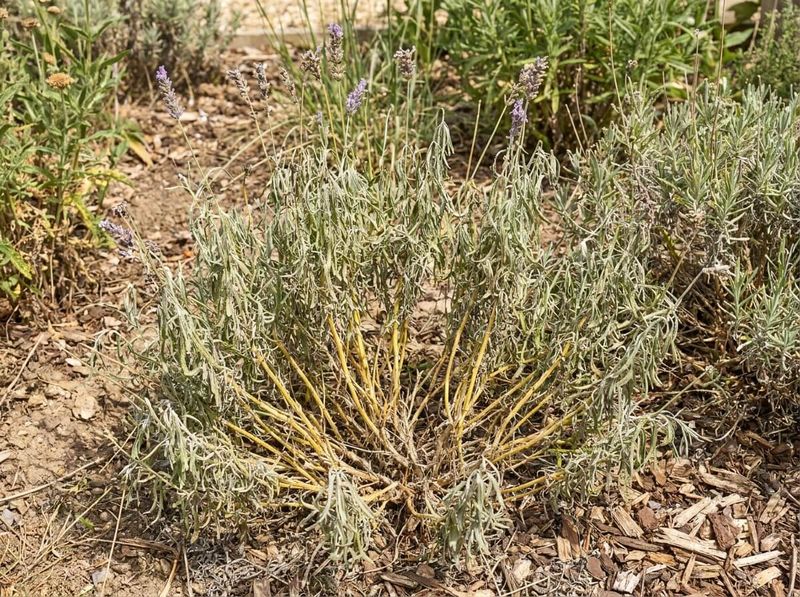
Reaching for the pruners the moment a lavender looks rough in a Texas July or a Florida August is an understandable impulse, but it can backfire. Pruning during peak heat adds stress to a plant that is already working hard just to stay alive, and a major cut at the wrong moment can push a marginally viable plant over the edge.
UC Cooperative Extension guidance on woody lavender makes clear that timing matters: the appropriate window for a renovation cut is after flowering or during a cooler growth period, not at the height of summer stress.
Before touching the plant at all, check the soil moisture and drainage. Push a finger or a wooden dowel a few inches into the root zone.
Dry, powdery soil suggests the plant needs water; soggy, dense soil that stays wet for days points to a drainage problem. Both conditions can cause wilting and decline, but the remedies are opposite, and watering a plant that already has waterlogged roots makes things worse.
UC IPM cultural tips for lavender emphasize that saturated soil and poor drainage are major contributors to root and crown disease. Stabilize the moisture situation first, then wait for a cooler stretch – a run of milder mornings, a post-flowering lull, or the arrival of early fall – before making any significant cut.
Use the green-growth rule, not a fixed cut line
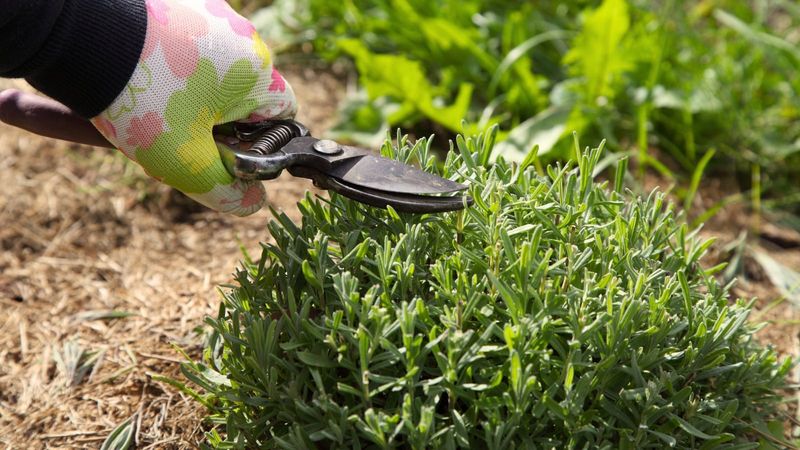
One of the most common pruning mistakes with lavender is treating a specific measurement or a fixed point on the stem as a universal safe line. There is no such line.
What matters is the character of the tissue you are cutting into, not how many inches from the ground you happen to be.
Green, leafy stem tissue is the zone where new growth can emerge. Brown, leafless wood lower on the plant is largely inert in most lavender types, and extension trimming guidance is consistent on this point: do not count on old wood to sprout new shoots.
Some cultivar-specific or regional resources describe more aggressive cuts for particular English lavender varieties, but for a general home-gardening situation, the safer rule is to stay above the leafless section and preserve any green nodes or foliage you find along the stem.
A commonly cited benchmark is removing roughly one-third of the green growth after flowering, but treat that as a flexible starting point rather than a firm prescription. UC ANR pruning guidance and Texas A&M AgriLife Extension both caution that cutting too aggressively into woody lavender can kill it.
If your plant has only a modest amount of healthy green growth, reduce the cut accordingly. The goal is to remove enough to encourage branching and reduce legginess, while leaving the plant with enough healthy tissue to actually recover.
Make one conservative renovation prune
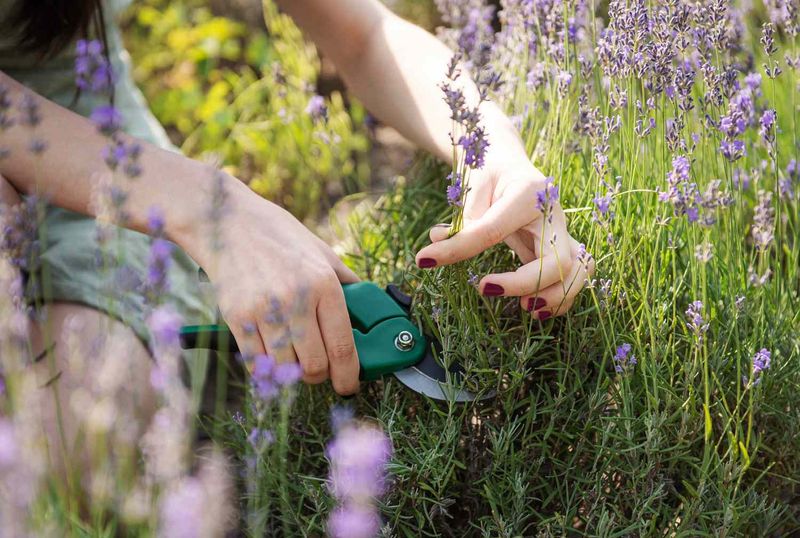
Sharp, clean tools are the starting point, not an afterthought. Dull blades crush stem tissue instead of cutting it cleanly, and contaminated tools can introduce disease from plant to plant.
Wipe the blades with a dilute bleach solution or isopropyl alcohol before starting, and again if you move to a different plant. Extension pruning guidance specifically recommends disinfecting tools between plants to reduce disease spread.
Begin by removing the spent flower stalks entirely, cutting them back to where the stem meets the leafy growth below. Next, look for any dead, diseased, or damaged stems and remove those separately, cutting back to healthy tissue.
UC Master Gardener guidance notes that dead and damaged material should be cleared before any shaping begins, so you can see exactly how much healthy green growth you have to work with.
Once the spent and damaged material is gone, shorten the remaining green stems, staying above the old leafless wood and preserving any green nodes or foliage along the way. Aim for a rounded, mounded shape rather than a flat-topped ball.
Keeping the center of the plant slightly higher than the outer edges helps maintain a compact, natural form and reduces the risk of the center collapsing inward. RHS guidance reinforces that the objective is reduced legginess and encouraged branching, not a severe chop that leaves the plant exposed and struggling.
Support recovery without overwatering or fertilizing
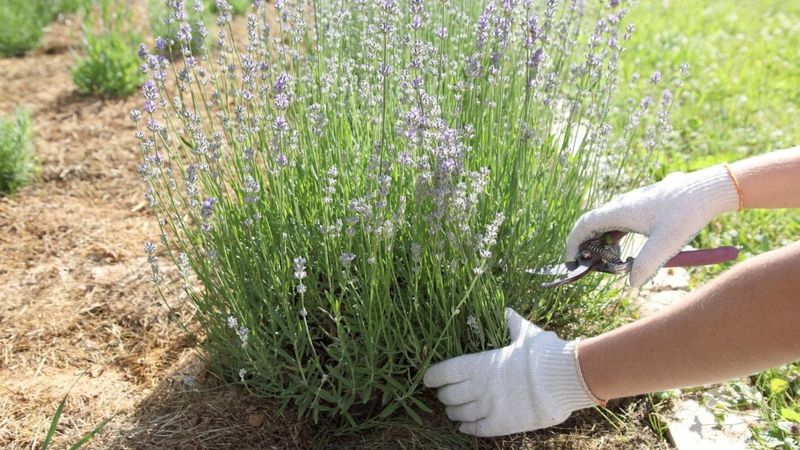
After a conservative renovation prune, a lavender with viable roots and healthy green tissue may gradually develop a more compact outline and produce new branching from the cut points. That response, when it comes, is encouraging, but it does not happen overnight and it does not mean the plant is out of danger.
Pruning addresses structure. It cannot cure root rot, crown rot, or a serious fungal infection.
If the plant continues to decline after the cut, the problem is almost certainly in the root zone or the soil, not in the stems you removed. UC IPM guidance is specific: water at the soil line, avoid wetting the foliage, and do not maintain constantly damp soil.
Overhead irrigation and wet crowns are reliable pathways to the fungal problems that kill lavender in humid Southern climates.
Established lavender generally does better with deep, infrequent watering than with frequent shallow drinks. A newly planted lavender or one growing in a container during extreme heat may need more frequent checks, because containers dry out faster and young root systems have less buffer.
Iowa State University Extension notes that lavender has low fertility needs, and adding fertilizer as a rescue move can produce soft, leafy growth, fewer flowers, and a weaker plant overall. Skip the fertilizer and let the plant recover on its own terms.
If yellowing persists or wilting continues despite reasonably moist soil, shift your attention to the root zone before assuming more water or nutrients will help.
Fix the root environment that made the plant decline
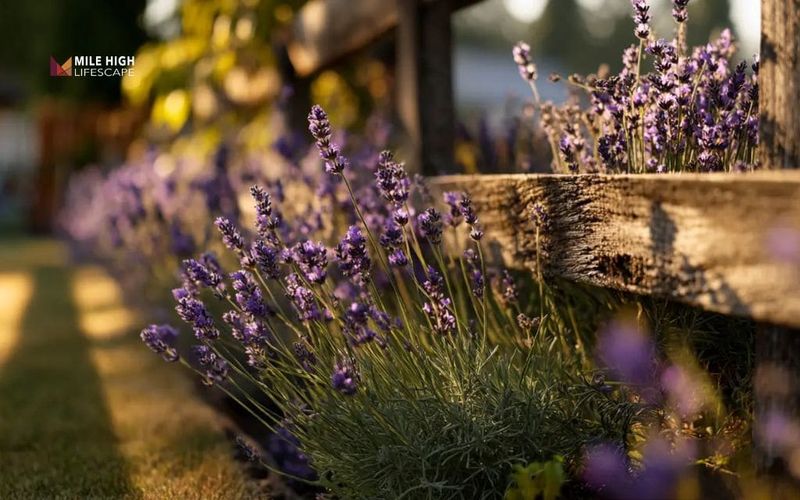
A conservative prune can improve structure and branching, but it cannot fix the conditions that caused the plant to decline in the first place. If the site is wrong, the lavender will struggle again regardless of how carefully you cut it.
Full sun is non-negotiable. Lavender needs at least six to eight hours of direct sunlight daily, and a shaded or partially shaded spot in a humid Southern garden will undermine the plant regardless of any other care.
Air movement matters too. Dense plantings, walls that trap moisture, and crowded beds all reduce the airflow that helps foliage dry quickly after rain or irrigation.
UC IPM cultural guidance points to saturated soil, heavy clay, poor air movement, and overhead irrigation as the primary environmental contributors to the root and crown diseases that kill lavender.
For gardeners in Florida and Texas, site adjustments can make the difference between a plant that survives and one that repeatedly fails. UF/IFAS Extension guidance for Florida points to raised beds, containers, gravelly or fast-draining media, and adequate plant spacing as practical strategies for managing the humidity and rainfall that make in-ground lavender difficult in many parts of the state.
If you use mulch, keep it thin and pull it away from the crown entirely, because moisture-retentive material piled against the stem can accelerate rot in a humid climate. Gravel or coarse grit around the base is a safer option than organic mulch in high-humidity situations.
Know when pruning cannot solve the problem
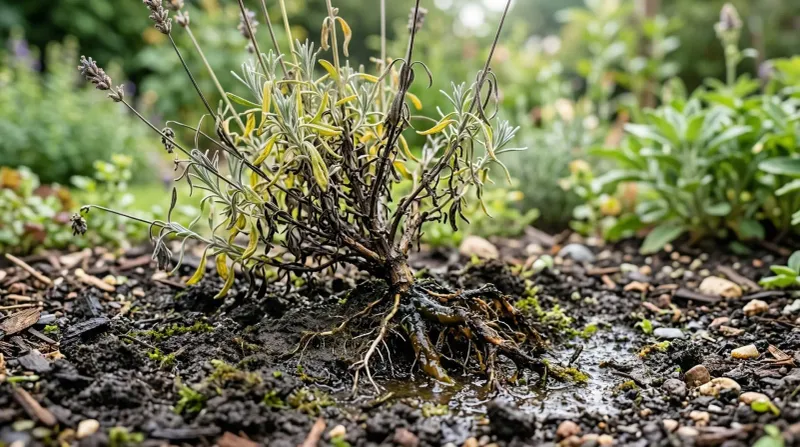
Some lavender plants have passed the point where a renovation prune can help, and recognizing that honestly is part of being a good caretaker. A plant that is mostly bare, shows widespread browning with no green shoots anywhere, or has roots that smell foul and feel mushy has almost certainly suffered damage that cutting stems cannot repair.
Other warning signs include persistent yellowing that does not improve with adjusted watering, stem collapse at the crown, and soil that stays soggy for days after rain. These point to root rot, crown rot, or a drainage failure that pruning will not address.
Extension guidance on browning and yellowing lavender consistently redirects attention to the root zone when surface symptoms persist despite reasonable care.
When a plant is too old, too bare, or too damaged to recover, propagation from healthy green stem cuttings is a more reliable path forward than trying to force new growth from old wood. Extension guidance on lavender propagation describes taking semi-ripe cuttings from healthy growth as a practical way to preserve a cultivar you value without gambling on a failing plant.
Climate and cultivar fit also matter enormously in the South. English lavender, Lavandula angustifolia, can struggle badly in hot, humid regions, and UF/IFAS Extension notes that Florida is not climatically uniform – advice that works in the Panhandle may not apply to central or southern parts of the state.
UF/IFAS Extension Panhandle guidance cautions that even heat-tolerant cultivars like ‘Phenomenal’ may not reliably overwinter in the southernmost Florida zones. Texas A&M AgriLife Extension similarly emphasizes drainage, soil choice, and cultivar selection as the foundation of success in Texas.
NC State Extension identifies Spanish, French, sweet, and lavandin types, including cultivars such as ‘Grosso’ and ‘Provence,’ as better adapted to heat and humidity than standard English lavender – worth considering if repeated decline suggests a climate mismatch rather than a simple care problem.
Treat the reset as a chance, not a promise
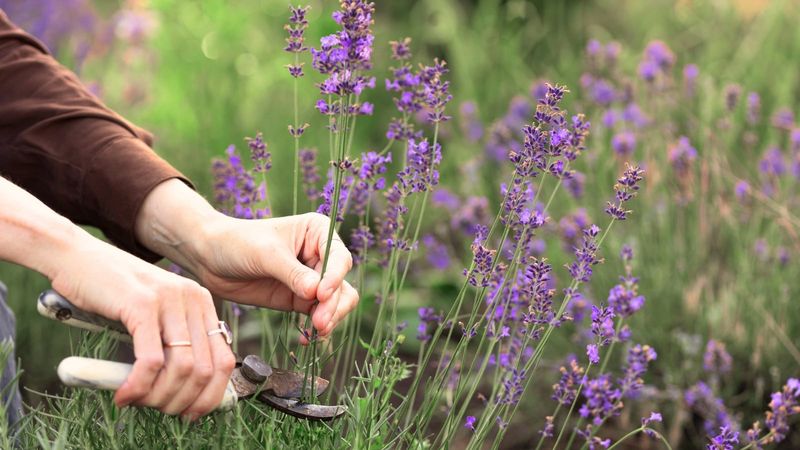
A woody lavender with visible green shoots, flexible stems, and intact roots is a candidate for a careful renovation prune. Confirm the living growth is there, address any moisture or drainage problems before cutting, and wait for a cooler or post-flowering window rather than pruning at the peak of Southern summer heat.
When you do prune, remove spent flower stalks and any dead or damaged wood first, then shorten only the green growth you can spare, staying above the old leafless base and preserving every green node you find. RHS guidance and UC Cooperative Extension experience with woody lavender both support this conservative approach as the most defensible reset for a still-viable plant.
A lavender with dead roots, serious disease, a chronically wet site, or a fundamental climate mismatch needs a different answer – a better-adapted cultivar, a site correction, propagation, or replacement. The prune is a real opportunity, not a guaranteed outcome; the plants most likely to respond are the ones that still have something green left to work with.