
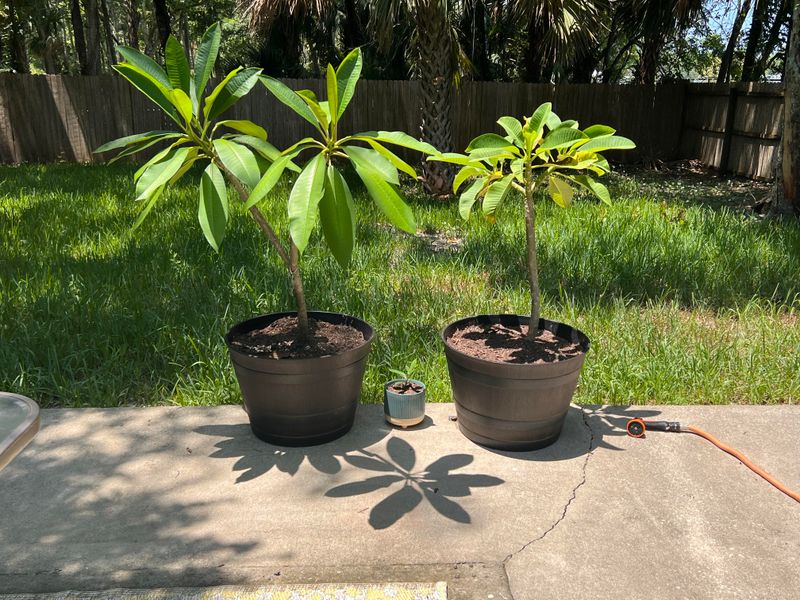
Plumeria in pots can keep blooming and pushing new leaves well into late summer, but the window to support that growth closes faster than most California gardeners expect. Once local nights start cooling, the wrong move, whether that is overwatering, skipping a pest check, or leaving a pot exposed to rain, can set a healthy plant back fast.
The good news is that a quick look at your plant, your pot, and your overnight forecast tells you almost everything you need to know about what to do next.
Healthy leaves and new growth show that the plant is still in season
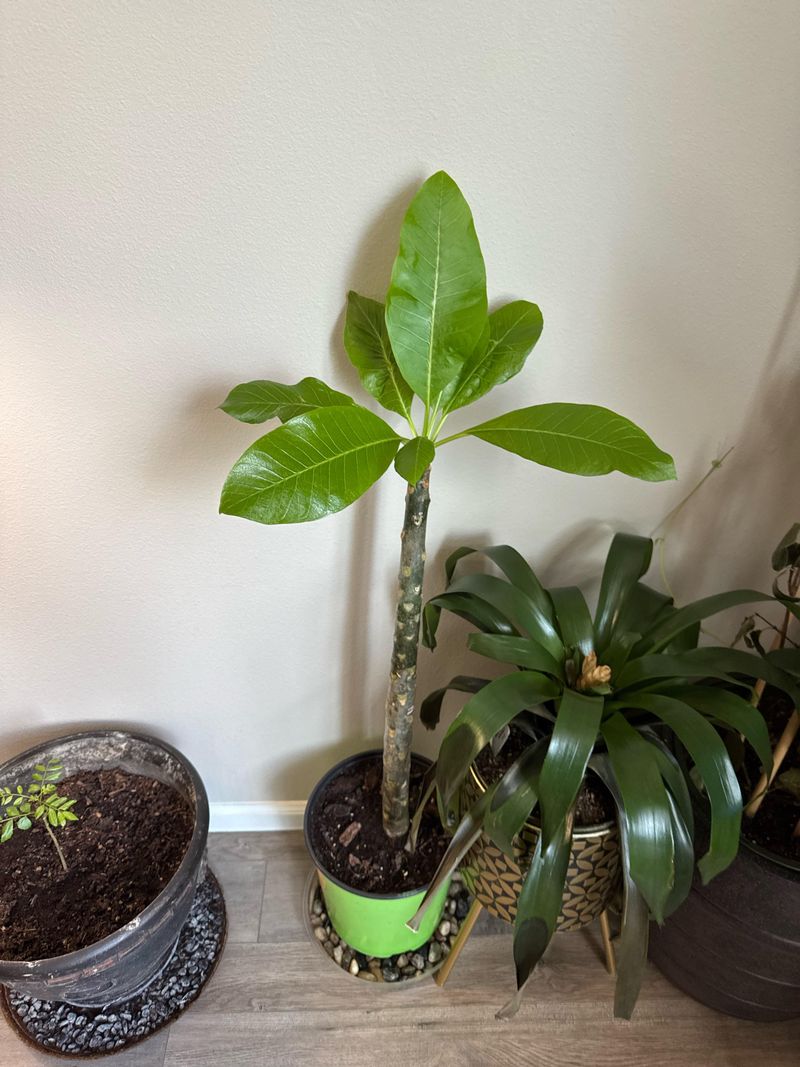
A plumeria still pushing new leaves, flower clusters, or growing tips is telling you something useful: treat it as an actively growing plant, not one that needs to be wound down. That status matters more than any date on a statewide calendar.
Before adjusting light, water, or feeding, look at what the plant itself is doing right now.
Start at the growing tips. Fresh leaf buds or flower buds emerging from branch ends confirm the plant is still in an active phase.
Healthy leaves that are firm, fully expanded, and green also signal that growth is continuing. A plant showing all of these signs can still benefit from the full active-care routine: strong light, good drainage, and water timed to the pot’s drying cycle.
Yellow leaves deserve a closer look before you reach for fertilizer. UC IPM’s houseplant problem guide identifies overwatering, root damage, cool temperatures, pests, and disease as causes of leaf yellowing, not just nutrient shortfalls.
A single yellowing lower leaf on an otherwise healthy plant is less alarming than widespread yellowing paired with soft stems or a wet, poorly draining pot.
Leaf drop by itself is not a death sentence. Many plumeria cultivars shed their leaves as part of normal seasonal dormancy, particularly as nights cool.
The distinction worth making is between leaves that fall cleanly and a plant with soft, black, or collapsing stem tissue that may smell foul. UC Master Gardener guidance on plumeria confirms that seasonal dormancy is expected, but soft or rotted tissue is a different problem requiring immediate action.
The rule is straightforward: let the plant’s condition set the pace. Healthy leaves and new growth mean active care continues.
Slowing growth with no new tips and clean leaf drop means the transition to dormancy has started. Soft, dark, or foul-smelling tissue means something has gone wrong and the plant needs inspection, not just a schedule change.
Give the container the light and drainage that support continued growth
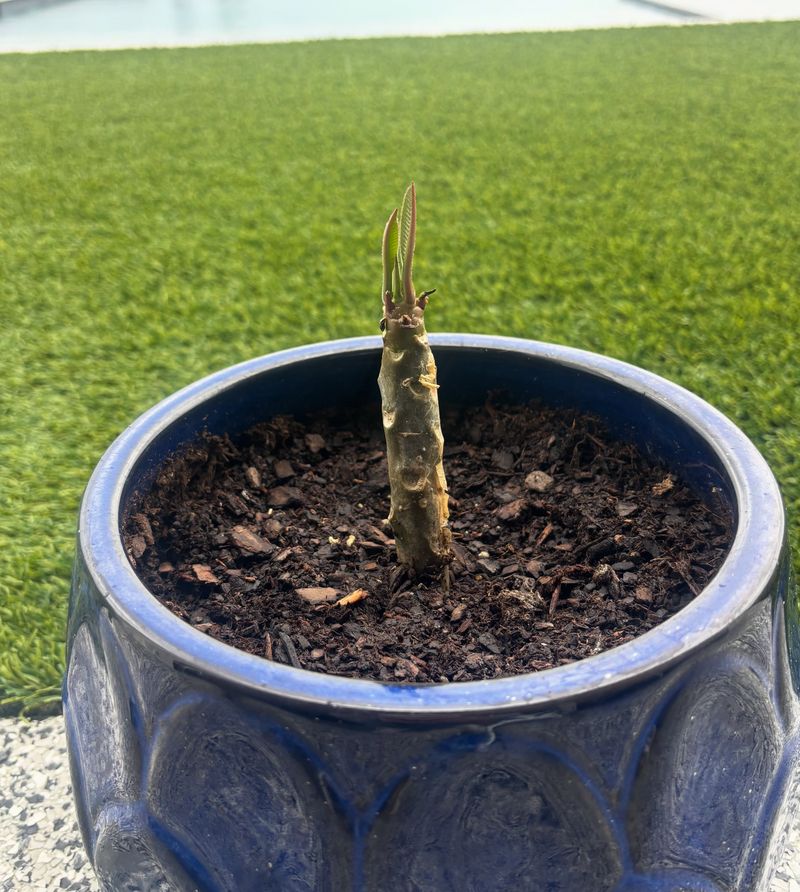
Physical setup is the foundation of everything else. A plumeria that cannot get enough direct sun or cannot shed excess water will struggle no matter how carefully you time your watering or feeding.
Getting these two things right before the season shifts gives the plant its best shot at finishing the growing period strong.
Light comes first. UF/IFAS extension guidance on plumeria identifies full sun as important for both growth and flowering.
The Southern California Plumeria Society’s care page puts the practical target at roughly six to eight hours of direct sun daily for good blooming. If your pot has drifted into shade from a fence, overhang, or neighboring plant as the sun’s angle has shifted, move it back into open sun while the growing season holds.
Drainage is equally non-negotiable. UC Master Gardener guidance recommends a coarse, fast-draining potting mix, such as a cactus blend amended with pumice or perlite, paired with unobstructed drainage holes.
Check that nothing is blocking those holes right now. A mat of roots, compacted mix, or a pot sitting flat on a solid surface can all trap water below the root zone even when the top of the mix looks dry.
Standing water in a saucer is a quiet problem. Empty it after each watering.
A pot that sits in pooled water defeats the purpose of a fast-draining mix because roots at the base stay saturated.
Wet roots become a serious risk once cooler temperatures slow how quickly the mix dries out. University of Wisconsin Extension’s plumeria article notes that drying speed depends on the amount of light a plant receives.
A pot in a hot, sunny, windy inland or desert location may still dry quickly in late summer even as nights cool, while a pot moved to a shadier or more sheltered spot will retain moisture longer. Know your site before you assume the pot is drying at the same rate it did in July.
The Southern California Plumeria Society’s winter care guidance specifically flags cold, wet potting mix as a rot risk as the season shifts. Good drainage and a well-chosen mix are not just summer concerns; they are the structural defense against root problems when the weather changes.
Water by the pot’s drying speed, not by a weekly rule
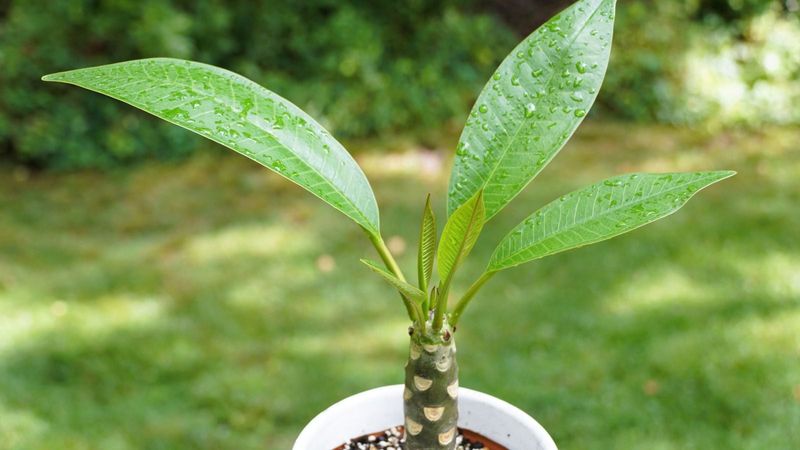
Watering a potted plumeria well comes down to reading the pot, not watching the calendar. Water deeply so moisture reaches the full root zone, then wait until the mix has partly dried before watering again.
That cycle, deep watering followed by partial drying, is the approach UC Master Gardener guidance identifies as the right baseline for container plumeria. Keeping the pot constantly wet is one of the most reliable ways to cause root damage.
How fast a pot dries changes with every variable around it. A small terracotta pot sitting in full afternoon sun in the San Fernando Valley on a hot, windy August day may need attention every two or three days.
The same plant in a large plastic nursery container on a partly shaded coastal patio in Santa Cruz might hold moisture for a week or longer. University of Wisconsin Extension’s plumeria resource confirms that drying speed depends on light exposure, pot size, mix type, and local conditions rather than a fixed schedule.
The more sun and heat the plant receives, the faster it uses water; the cooler and stiller the air, the slower the pot dries.
To check moisture without guessing, push a finger or a wooden skewer two to three inches into the mix. If it comes out with damp soil clinging to it, wait.
If it comes out clean and the mix feels dry at that depth, water thoroughly until it drains freely from the bottom.
As nights cool and growth begins to slow, the plant’s water demand drops. That does not mean watering stops immediately.
A plant still holding healthy leaves in September or October may still need occasional deep watering, especially in hotter inland areas where daytime heat continues. The key shift is to extend the interval between waterings rather than cutting them off all at once.
Watch the pot’s actual drying speed rather than applying a summer schedule to fall conditions.
Resist the temptation to water on a routine day of the week regardless of what the pot feels like. A fixed schedule made sense when summer heat was consistent.
As conditions become more variable, the pot itself becomes the most reliable guide.
Feed only a healthy plumeria that is still actively growing
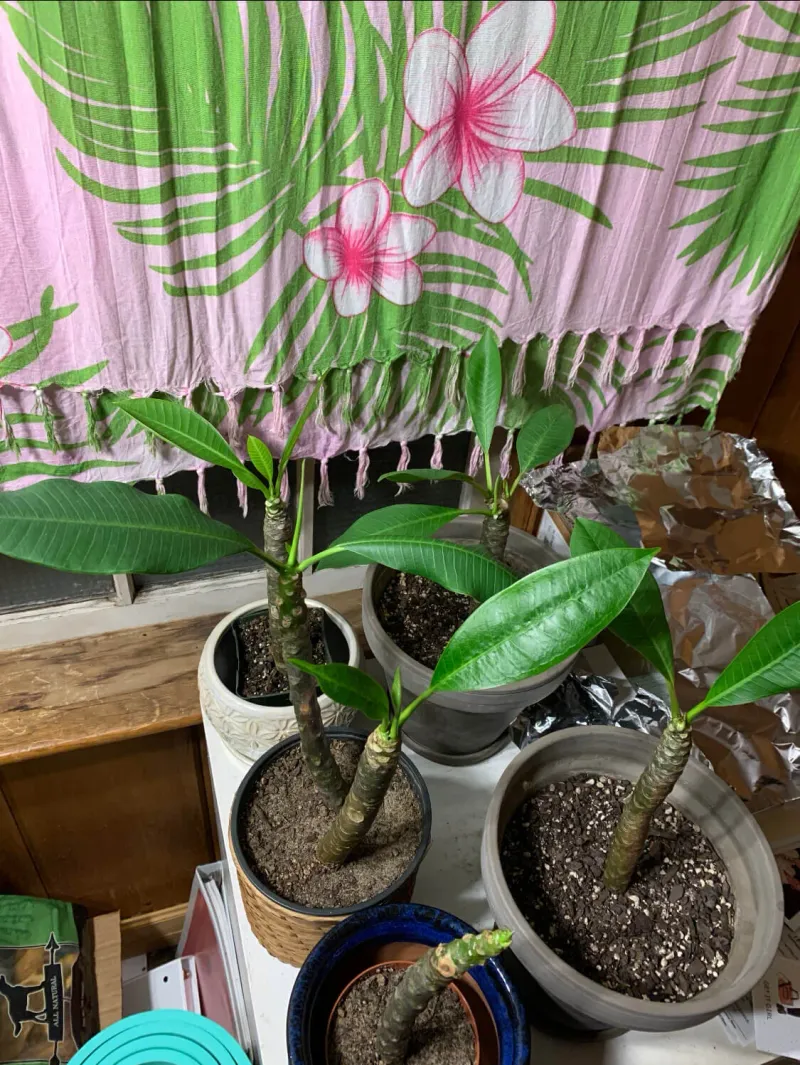
Late-season fertilizing makes sense for a plumeria that is actively pushing new growth, holding healthy leaves, and showing no signs of stress or decline. For a plant that is already slowing down, dropping leaves, or sitting in soggy soil, adding fertilizer does more harm than good.
The first question is not which product to use but whether the plant is actually in a condition to benefit from feeding at all.
UC Master Gardener guidance flags excess nitrogen as a specific risk: too much can push leafy growth at the expense of flowers. That means a heavy late-summer application of a high-nitrogen fertilizer on a plant that is still trying to bloom could work against you.
University of Wisconsin Extension’s plumeria article supports feeding during active growth and withholding fertilizer once dormancy begins. Follow the product label for rate and frequency, and do not exceed it hoping for faster results.
High-phosphorus bloom-booster products are widely marketed for flowering plants, but the picture is more complicated than the label suggests. UC Marin Master Gardener fertilizing guidance and University of Massachusetts Extension research on phosphorus in flower gardens both caution against unnecessary phosphorus applications, citing environmental runoff concerns and the reality that most California soils and potting mixes already contain adequate phosphorus.
One late-summer feeding will not guarantee more blooms before fall. Flowering depends on cultivar genetics, accumulated light, plant maturity, and temperature, not a single fertilizer application.
If the plant qualifies for feeding, apply a balanced, label-directed product at the recommended rate, water the plant before and after application, and do not feed again once growth visibly slows or nighttime temperatures drop consistently into the low 50s. A healthy, actively growing plant fed once at the right time is a reasonable choice.
A declining plant fed heavily in hopes of a late-season boost is a gamble that rarely pays off.
Inspect leaves and growing points before bringing the pot under cover
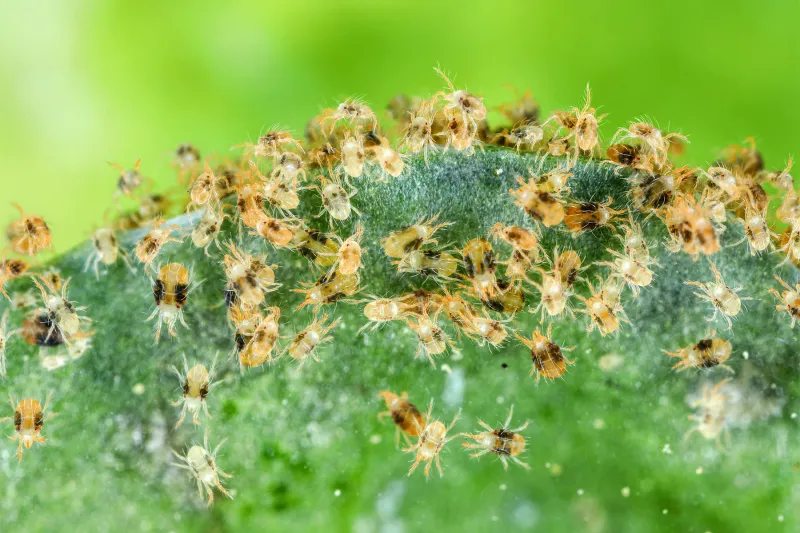
Before a plumeria moves under an overhang, into a garage, or indoors for the cooler months, spend ten minutes doing a thorough health inspection. Bringing a pest or disease problem under cover concentrates it in a confined space and can turn a manageable issue into a serious one by spring.
Sixspotted spider mites are the main pest concern for California plumeria growers. UC IPM’s resource on sixspotted spider mites on plumeria describes them as a significant pest in California and lists their symptoms clearly: stippling and bronzing on leaf surfaces, distorted new leaves, premature leaf drop, damaged bloom clusters, and shoot-tip dieback.
Use a hand lens or a magnifying glass of 10x or better to examine the undersides of leaves, the midribs, and the growing points at branch tips. Look for fine webbing, which is a reliable sign of a mite colony that has been active for a while.
Not every yellow or spotted leaf is a mite infestation. Confirm the diagnosis with the hand lens before treating.
If you find mites, UC IPM lists horticultural oil and insecticidal soap as possible controls, but both products come with important conditions: water the plant thoroughly before spraying, do not apply in excessive heat or direct sun, and follow the product label for rates, timing, and safety precautions. Labels are legally binding and product formulations change, so read the current label each time.
Disease cleanup matters too. UC Master Gardener guidance identifies plumeria rust as a foliage problem in California and recommends removing diseased and fallen leaves, improving airflow around the plant, and avoiding splash irrigation that can spread spores.
Collect any fallen leaves from the soil surface and dispose of them rather than composting them.
Wear gloves throughout this process. Plumeria sap contains irritants that can affect skin and eyes, and handling cut stems, damaged tissue, or treated foliage without protection is not worth the risk.
Keep children and pets away from the work area until treated surfaces have dried completely.
Use the local overnight forecast to time cold and rain protection
California does not have one climate, and potted plumeria across the state do not face the same risks on the same dates. A plant on a south-facing patio in coastal San Diego in late September is in a very different situation from one sitting on a porch in a Fresno cold-air basin or at a foothill elevation north of Sacramento.
UC ANR’s climate zone reference and UC ANR’s microclimate guide both describe the substantial differences among marine coastal zones, inland valleys, thermal belts, cold-air basins, and desert regions. Using your actual overnight forecast rather than a statewide calendar is the only reliable way to make this decision.
A conservative preparation benchmark is to begin planning protection as local overnight temperatures approach the low-to-mid 50s Fahrenheit. UF/IFAS cold protection guidance for foliage plants explains that tropical plants can experience chilling injury below about 50 degrees F, and UF/IFAS landscape cold protection guidance recommends moving tender tropical plants before temperatures fall into the 40s.
Treat this range as a risk-management signal rather than a precise damage threshold. Cultivar, plant size, wind, duration of cold exposure, and soil moisture all influence how a specific plant responds.
University of Maryland Extension guidance on winterizing plumeria recommends storing dormant plants above roughly 40 to 55 degrees F, reinforcing that the protective range spans a zone rather than a single number. Avoid freezing conditions in all cases.
A sheltered spot near a building wall can moderate temperature swings, but that does not equal frost protection. Containers are more exposed than in-ground roots, and cold air drains into low spots, making inland valleys and cold-air basins particularly risky on clear, calm nights.
Move the pot under cover or indoors before a forecast cold event, not after.
Rain protection matters as much as cold protection in California’s Mediterranean climate. Southern California Plumeria Society winter care guidance specifically flags cold, wet potting mix as a rot risk for dormant plants.
Once the plant enters dormancy, keep it dry as well as warm.
Let dormancy change the routine instead of treating leaf drop as a crisis
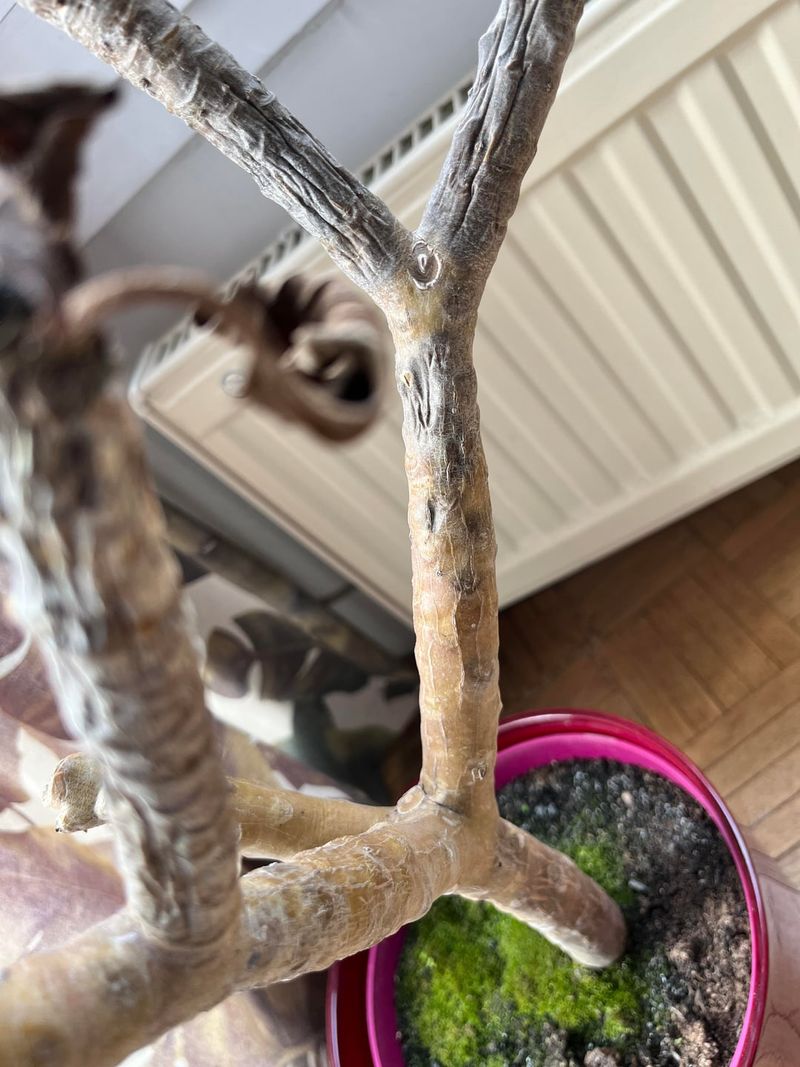
When active growth clearly winds down, the care routine changes with it. A plant that has stopped pushing new leaves, whose older leaves are falling cleanly, and whose potting mix is staying moist longer than it did in summer is signaling the start of dormancy.
The right response is to reduce attention gradually rather than maintain a summer schedule or panic at the sight of bare branches.
Extend the interval between waterings as growth slows. Once the plant is fully dormant and leafless, UC Master Gardener guidance supports stopping irrigation entirely and resuming only when new growth appears in spring.
An occasional check to make sure the stems remain firm and the mix is not bone-dry for months at a time is reasonable, but routine watering of a dormant, leafless plant invites root problems.
Mild coastal Southern California sometimes allows a potted plumeria to remain outdoors through winter, but that possibility needs to be assessed plant by plant and site by site. UF/IFAS plumeria guidance notes that container roots are more exposed than in-ground roots, and winter rain combined with cold temperatures can promote rot even in climates that rarely freeze.
Southern California Plumeria Society’s winter care page emphasizes keeping dormant potted plumeria dry and protected from rain, which in California’s wet-winter pattern is a real and recurring risk.
Bare branches in January are not a reason to assume the worst. Feel the stems: firm and slightly pliable means the plant is resting normally.
Soft, dark, or sunken tissue with a bad smell is a different matter and warrants closer inspection for rot or cold injury. RHS guidance on Plumeria rubra confirms that this genus naturally loses its leaves in cooler or drier conditions, which is expected behavior rather than evidence of failure.
One last practical note: wear gloves whenever you move, prune, or handle a plumeria. The sap that flows from cut or broken stems can irritate skin and eyes, and keeping it away from children and pets is worth the extra step of pulling on a pair of gloves before you start.
The plant, pot, and forecast set the schedule
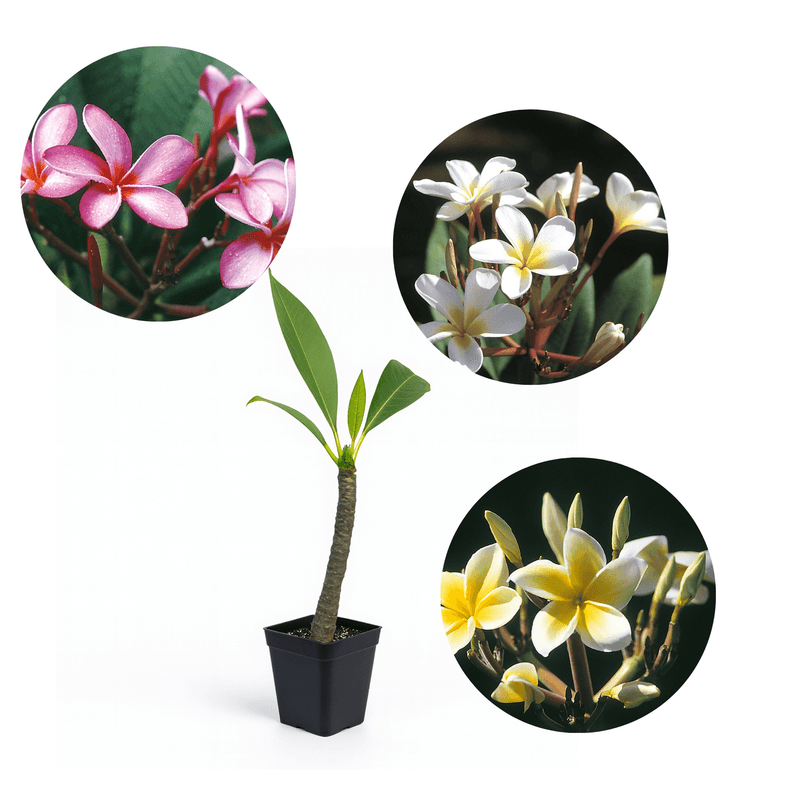
Three things together tell you what your plumeria needs right now: the plant’s own condition, the pot’s setup and drying speed, and your local overnight forecast. A plumeria still holding healthy leaves and active growth gets strong direct sun, a fast-draining container with clear drainage holes, and deep watering timed to when the mix has partly dried.
That is the active-care baseline, and UC Master Gardener guidance supports each part of it.
Inspect the plant before sheltering it. Check leaf undersides for mites, remove diseased foliage, and address any pest or disease issue before the pot moves under cover.
Feed only a healthy, actively growing plant at label-directed rates, and stop feeding once growth slows or the plant begins dropping leaves heading into dormancy.
Watch your local overnight forecast rather than a statewide date. As temperatures approach the low-to-mid 50s, start planning protection.
UC ANR’s microclimate guidance and UF/IFAS cold protection research both reinforce that a sheltered wall moderates but does not eliminate cold risk, and that containers need to move before a cold event, not after. Protect dormant plants from winter rain as well as cold.
Dormancy arrives on its own timeline and varies across California’s many microclimates. A bare plant resting in a dry, frost-free spot is doing exactly what it should.
The gardeners who get the best results are the ones who let the plant lead the conversation.