
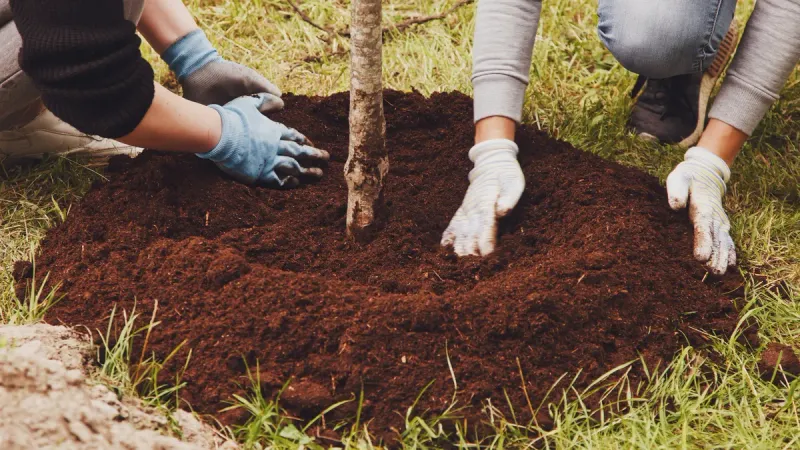
Southern California homeowners who are planning to swap out their lawns for water-wise landscaping may be eligible for an extra payment of up to $500 just for including qualifying trees in the project. The money comes through a regional program most people never hear about until after they have already torn out their grass, which is exactly when it is too late to apply.
Getting the full amount requires following a specific sequence of steps, starting well before any shovel hits the ground.
The documented incentive is a Southern California lawn-replacement add-on
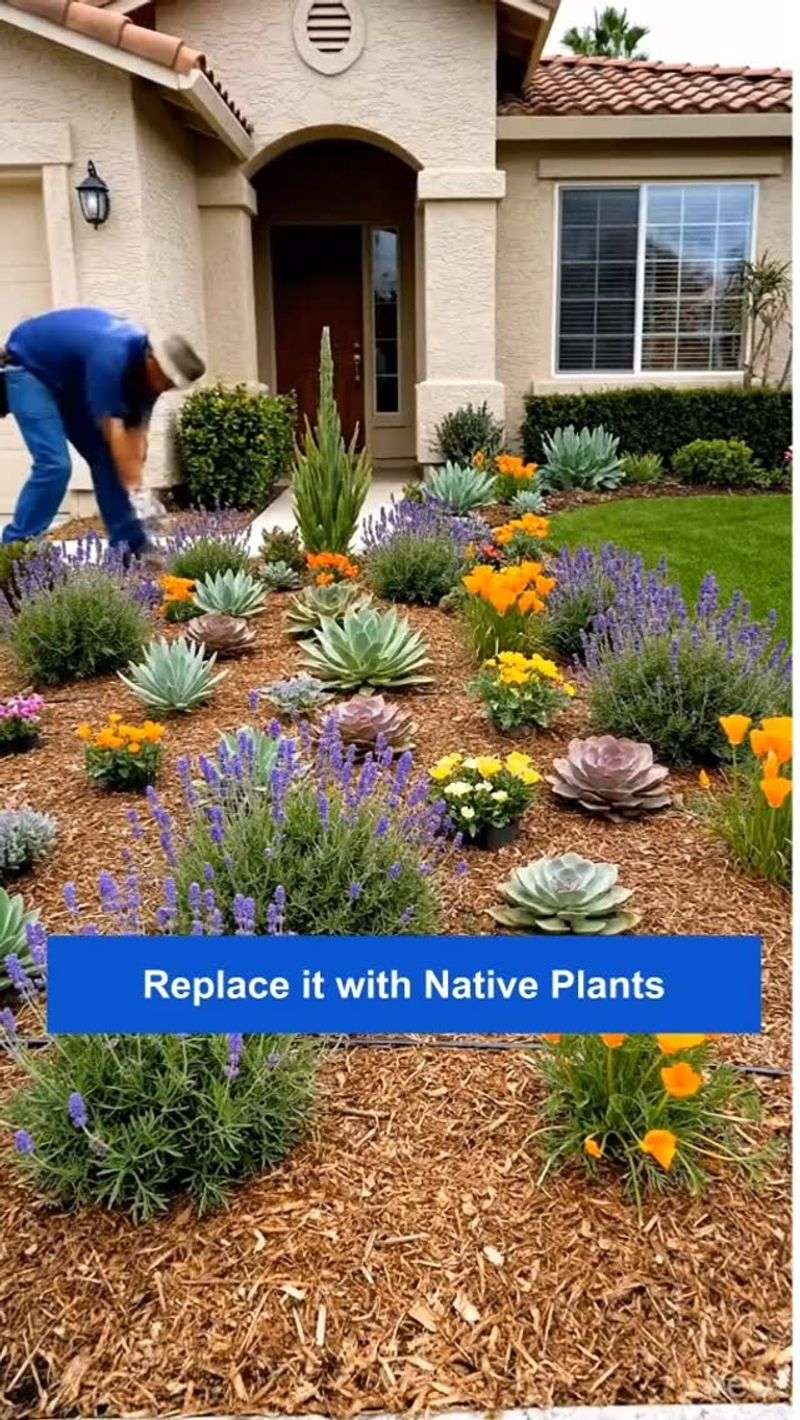
Since March 4, 2024, the Metropolitan Water District of Southern California has offered an additional $100 for each qualifying tree planted as part of an approved turf-replacement project through the SoCal Water$mart Turf Replacement Program. The tree payment caps at five trees, or $500, per approved turf-replacement application.
That ceiling matters: no matter how many trees a homeowner plants, the program will not pay more than $500 in tree incentives on a single project.
Each qualifying tree also counts as three plants toward the project’s required plant density, with a maximum of 15 plant credits coming from trees. That double benefit, cash plus plant-count credit, can make the tree add-on especially useful for homeowners who want to anchor their new landscape with canopy rather than filling every square foot with ground cover or perennials.
One critical point to understand from the start: this is not a statewide California tree rebate, and it is not a stand-alone payment for buying or planting a tree. The tree incentive only exists as part of a qualifying turf-replacement project.
According to the program’s terms and conditions, the program is regional, covering portions of Los Angeles, Orange, San Diego, Riverside, San Bernardino, and Ventura counties within Metropolitan’s service area.
Homeowners outside that footprint are not eligible, and even homeowners inside it must confirm that their specific water agency participates and that funding is currently available. The tree rebate detail page explains which tree types qualify and how the incentive connects to the broader conversion project.
Verifying eligibility before designing the project is the only way to know whether the add-on applies to a specific address.
Approval must come before the lawn makeover
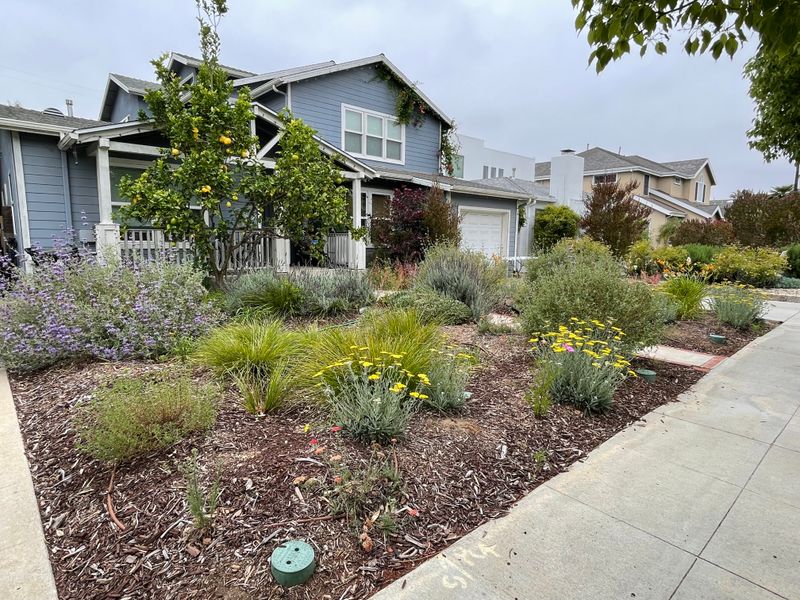
Of all the rules attached to this program, the one that disqualifies the most projects is also the most avoidable: the reservation approval must be in hand before any turf is removed or project work begins. A yard that has already been converted, stripped to bare dirt, or partially replanted generally cannot support a retroactive claim.
The program terms are explicit that existing turf must be present and documented at the time of application.
This rule is the reason timing matters so much. A homeowner who pulls out the lawn during a heat wave, then looks up rebates afterward, has almost certainly lost eligibility for the base turf payment and the tree add-on.
The sequence cannot be reversed after the fact.
Receiving approval does not mean the money is guaranteed. A reservation holds an opportunity to seek the rebate, but the final payment depends on several factors that are only confirmed after the work is done: the measured area of converted turf, whether the completed project meets all program requirements, available funding at the time of final review, and the participating water agency’s rules.
According to the program FAQs, an estimate or reservation is not a promise of payment.
A useful way to think about it: approval is a green light to proceed with the project while remaining eligible, not a check in the mail. The final amount could be lower than the estimate if the completed project area is smaller than planned, if some elements do not meet requirements, or if funding changes between approval and final review.
Treat the reservation as a conditional opportunity, not a contract, and plan accordingly.
Confirm the address, water agency, and eligible turf area
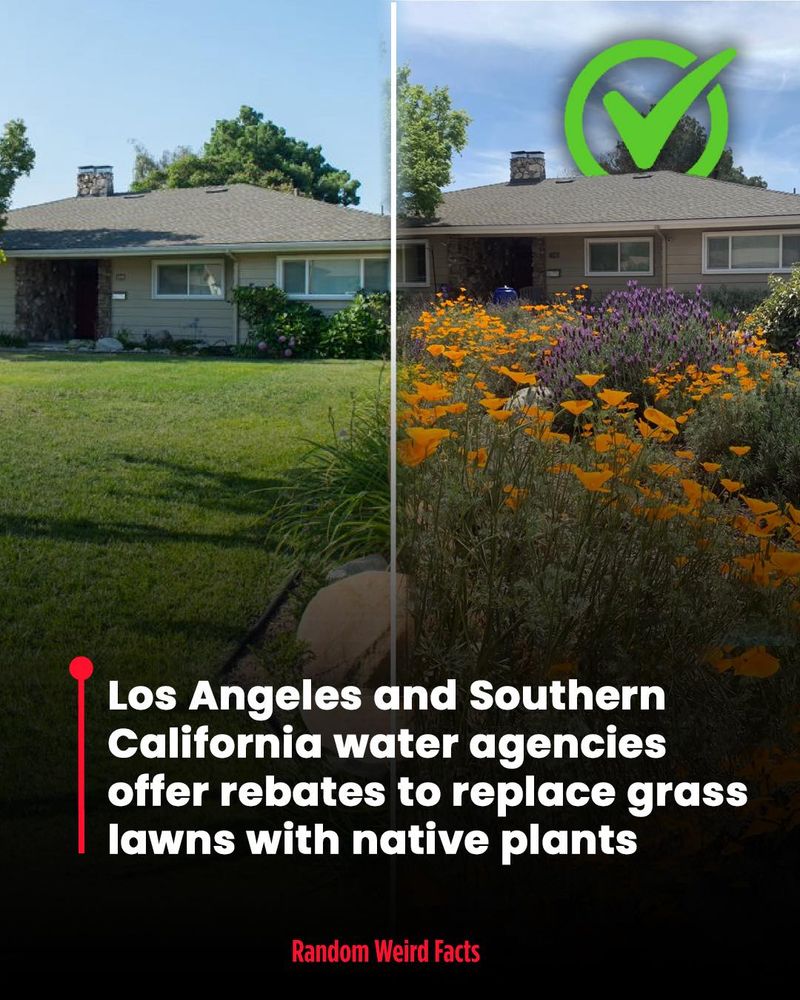
Before committing to a design or purchasing any materials, the first practical step is checking whether the property address falls within a participating water agency’s service area. The rebate estimator tool allows homeowners to enter their address and get a preliminary picture of eligibility and potential rebate range.
If the address does not return a result, the local water agency can clarify whether participation is current and whether funding is available.
The general threshold for the turf-replacement project is at least 250 square feet of existing turf. There is an exception for properties where the total turf area is smaller than 250 square feet; in those cases, the entire turf area can still qualify.
Homeowners should measure the actual irrigated lawn area carefully, because the final rebate is calculated based on verified square footage, not the applicant’s estimate.
According to the SoCal Water$mart program page, the residential base rebate is currently listed at $2 per square foot for up to 5,000 square feet of converted turf. That number can shift depending on the participating agency’s rules, available funding, and the final measured area approved after project completion.
An estimator result showing $4,000 is not a guarantee of $4,000.
Measuring carefully before applying also helps avoid a common surprise: homeowners sometimes overestimate their turf area by including driveways, patios, or planter beds that are not irrigated lawn. Only actual irrigated turf counts toward the eligible area.
A tape measure, a sketch of the yard, and some arithmetic will produce a more reliable number than a visual guess. Per the program terms, the final measured area confirmed at project review is what determines payment, so starting with an accurate number reduces the chance of a lower-than-expected outcome.
Prepare the application before changing the site
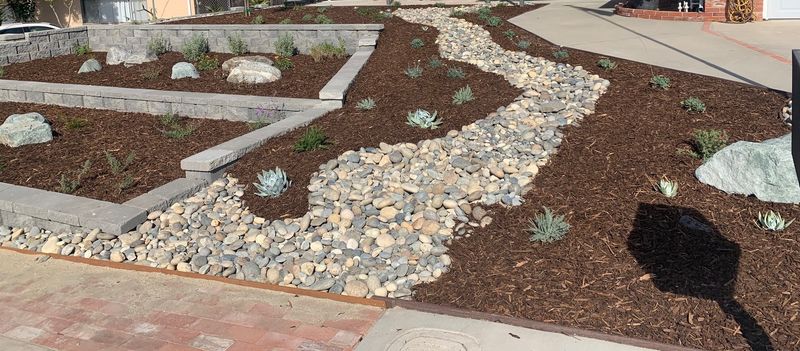
Getting the application ready is mostly a documentation job, and it has to happen while the lawn is still intact. The program requires at least five color photographs of the existing turf, taken from far enough away to show the property context, not just a close-up of the grass.
According to the program FAQs, online images and Google Street View photos are not acceptable substitutes for original before photos taken by the applicant.
Along with the photos, applicants need a recent water bill showing the service address and account number, and a simple landscape plan drawn to show what the converted area will look like. The plan does not need to be a professional drawing, but it should clearly show the converted areas, where plants will be placed, what mulch or permeable surfaces will cover the ground, how irrigation will be changed or removed, and where the required stormwater-retention or infiltration feature will be located.
Once the photos, water bill, and landscape plan are assembled, the application goes in online. The how-to-apply page walks through the submission steps.
After submitting, the next step is waiting for the reservation approval notice before touching the lawn. No turf should be removed and no installation should begin until that approval arrives.
As a practical risk-avoidance step, consider holding off on purchasing trees and other plants until after approval is confirmed. The program does not explicitly prohibit buying materials before approval, but purchasing before knowing whether the project qualifies adds financial risk if the application is denied or if the address turns out to be ineligible.
The eligibility requirements page outlines what the completed project must include, which makes it useful reading before finalizing the plant list or irrigation plan.
Design a landscape that satisfies the program and the site
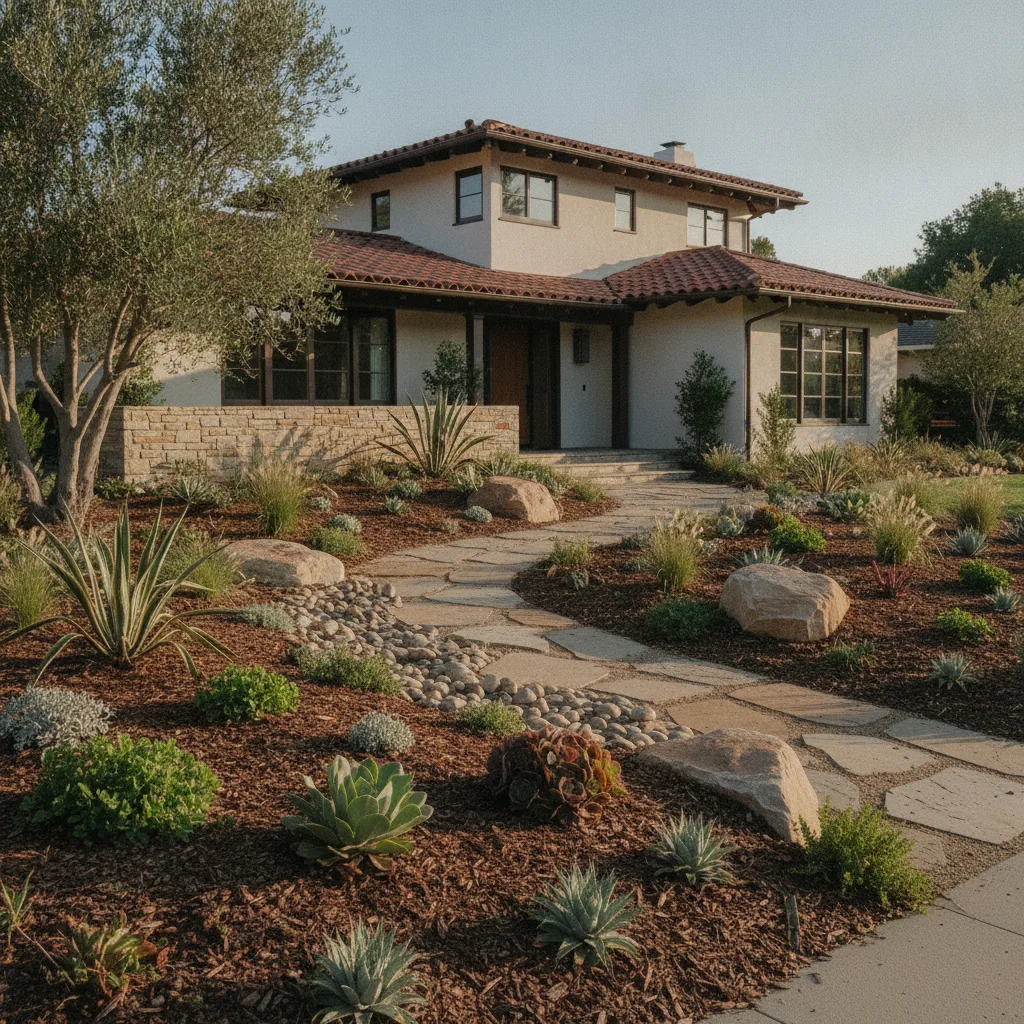
The conversion project has to meet several physical requirements to qualify for any rebate, including the tree add-on. According to the SoCal Water$mart program page, the converted area must include at least three plants per 100 square feet, a stormwater-retention or infiltration feature such as a bioswale or rain garden, permeable surfaces rather than solid impermeable hardscape, and modification or removal of the existing overhead spray irrigation.
Synthetic turf is not eligible as a replacement surface.
Trees must be purchased and planted at a minimum 15-gallon container size to qualify for the $100-per-tree add-on. For non-fruit trees, the program expects the species to reach at least 15 feet tall and 10 feet wide at maturity.
Fruit trees are eligible for residential projects. Several categories are excluded entirely: invasive species listed by the California Invasive Plant Council, palms, hedges, and trees with narrow or non-spreading canopies such as Italian cypress.
The tree rebate page lists the full qualifying criteria.
Beyond the program checklist, the design needs to work for the actual site. The California Department of Water Resources recommends mapping sun exposure, shade patterns, soil type, slope, drainage, and mature tree size before finalizing plant locations.
Underground utilities are a real concern when planting trees: calling 811 before digging is the standard step to locate buried lines and avoid a dangerous and potentially costly mistake.
Mature tree size deserves careful attention at the design stage. A tree that looks manageable at 15 gallons can eventually shade out neighboring plants, lift hardscape, or crowd a structure.
Choosing species whose mature width and height fit the available space, the soil conditions, and the site’s drainage avoids problems that can take years to appear but are expensive to correct once the tree is established.
Screen trees for fire, power lines, and establishment needs
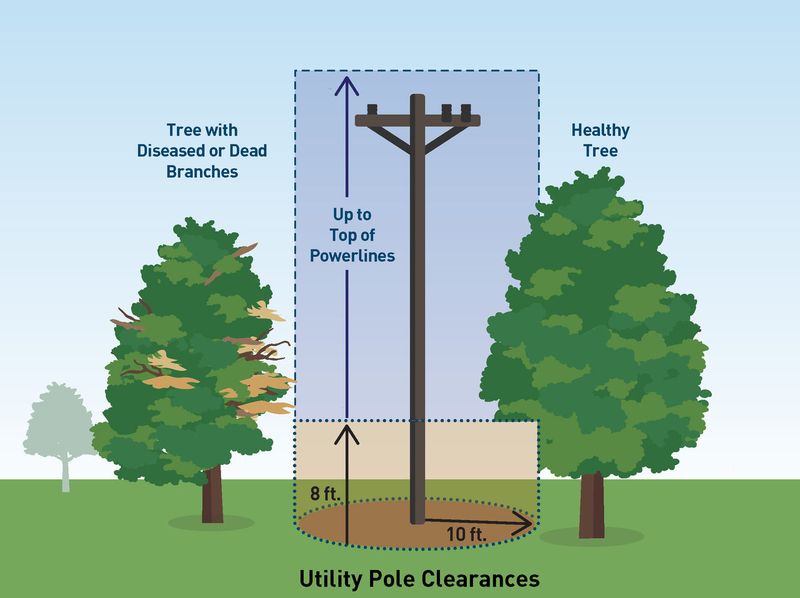
Choosing a tree that qualifies for the rebate is only one part of the decision. Placement relative to structures, power lines, and fire risk zones can determine whether a tree that looks good on paper is actually safe to plant on a specific property.
In fire-prone areas, CAL FIRE defensible-space guidance recommends keeping the first five feet around structures free of combustible bark and mulch, removing dead vegetation, and maintaining separation between trees and shrubs so fire cannot easily travel from plant to plant. Local jurisdictions sometimes impose stricter rules than the state baseline, so checking with the city or county fire authority before finalizing placement is a useful extra step.
Power lines require a different kind of planning. The California Public Utilities Commission advises choosing species whose mature height will remain at least 10 feet below the nearest power line, and warns homeowners never to prune trees near electric lines on their own.
A tree planted under or near lines that eventually grows into contact with them creates a serious hazard and will likely be removed by the utility, negating the rebate investment.
Labels like “native” and “drought tolerant” do not tell the whole story about water needs or site suitability. UC Statewide IPM guidance notes that both overwatering and underwatering can seriously damage trees, and that new plantings require consistent establishment care even when the species is described as low-water.
Additionally, UC Agriculture and Natural Resources points out that some California natives from cooler, wetter regions can struggle in hotter, drier inland areas without summer irrigation, especially during the first few years after planting. Matching the species to the local exposure, soil type, drainage, and realistic water availability is a more reliable guide than any single label.
Complete the approved project within 180 days
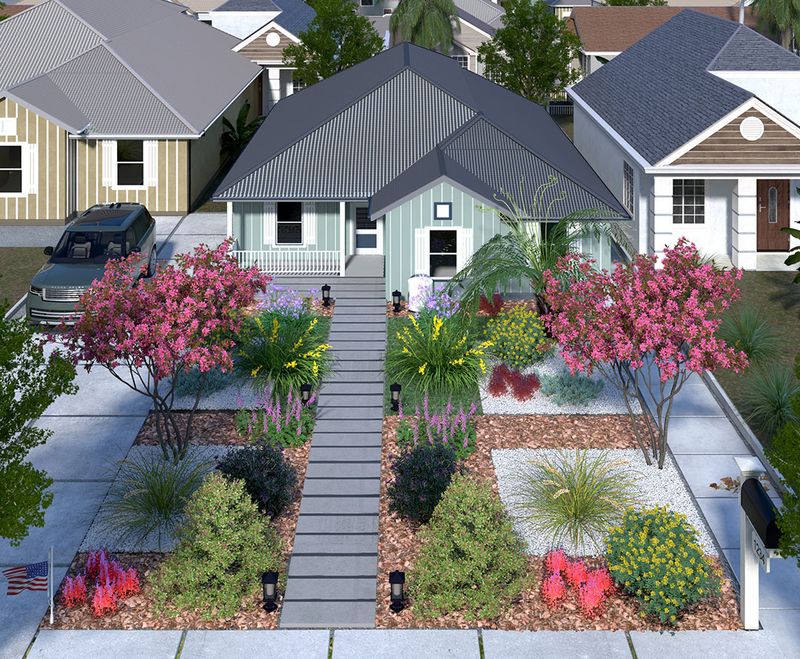
Once the reservation approval arrives, the clock starts. Applicants generally have 180 days to complete the turf conversion and submit the post-project request for payment.
That window sounds generous, but coordinating tree delivery, irrigation modifications, the stormwater feature, and the full plant installation can take longer than expected, especially during busy seasons when contractors and nurseries are stretched. Building a realistic schedule at the start helps avoid a scramble at the end.
Documentation during installation is just as important as the before photos. Per the tree rebate requirements, receipts and invoices for qualifying trees must identify the species and container size, not just the price.
Generic nursery receipts that list only a dollar amount or a vague plant description may not be accepted. If a contractor or landscaper is doing the installation, their invoice should specifically name the eligible trees and confirm the 15-gallon minimum size.
Keeping these records organized from the day of purchase avoids a documentation scramble at submission time.
The landscape must remain a permanent conversion. According to the program terms, the agency may inspect completed projects, and it can require repayment if the conversion cannot be verified after the fact.
Replanting turf or removing the installed landscape after receiving payment puts the homeowner at risk of having to return the money.
Local requirements do not pause during the project. City, county, water-agency, HOA, easement, fire-zone, and utility rules all still apply.
Parkway areas, which are the strips between the sidewalk and the street, may require a separate permit or waiver before planting there. The program FAQs note that meeting rebate requirements does not automatically satisfy local codes, so checking with the relevant agencies before installation avoids a situation where a completed project passes the rebate review but fails a local inspection.
Submit complete proof and verify the payment details

The final submission requires at least eight color photographs showing the completed project: each converted area, the trees and other plantings, the stormwater-retention or infiltration feature, and the irrigation changes. According to the program FAQs, review of the post-project request may take up to two weeks, and payment can arrive approximately eight to ten weeks after approval of the final submission.
Both of those timelines are estimates and can shift depending on program volume and individual project circumstances.
Along with the photos, the submission package should include all required project records: receipts and invoices that identify the qualifying trees by species and size, documentation for the broader landscape conversion, and any other materials the program requests. The tree rebate page specifies what proof of purchase and installation must show, so reviewing that list before assembling the package helps avoid a rejection for missing details.
The program terms confirm that the final payment amount is determined at this stage and may differ from the original estimate.
Tax treatment requires careful attention. Recipients whose total rebate reaches $600 or more may receive a Form 1099 from the program.
California legislation created a state income tax exclusion for qualifying turf-replacement rebates, but as noted on the California Governor’s Office announcement and confirmed by the Franchise Tax Board’s expiring provisions list, that exclusion is scheduled to expire December 31, 2026. Federal tax treatment depends on individual circumstances.
The rebate is not universally tax-free, and a tax professional is the right resource for advice specific to any homeowner’s situation.
The full claim path in order: verify the address and water agency, photograph the intact turf, measure carefully, prepare the landscape plan, apply and wait for approval, complete the conversion within 180 days with proper documentation, and submit the final package with all required photos and receipts. A tree planted in a well-planned, approved landscape does more than earn a rebate credit, it can provide decades of shade, habitat, and cooling that no check fully captures.