
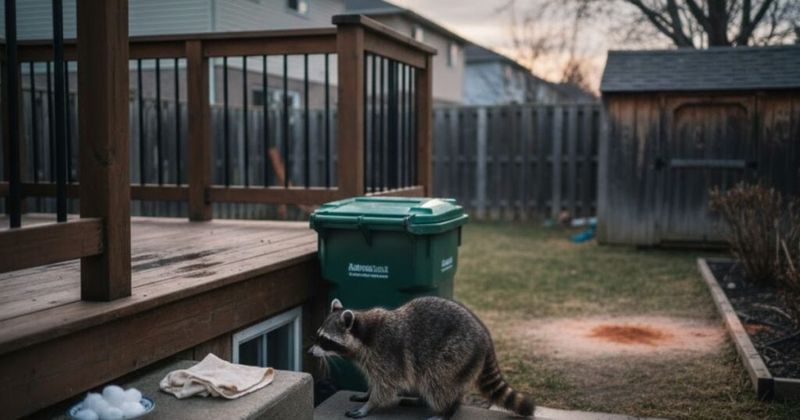
Raccoons are smart, adaptable animals that have figured out Southern yards offer a reliable supply of food, water, and shelter. If yours keeps showing up after dark, the fix is probably not a stronger smell – it is removing whatever keeps pulling them back.
Strong odors may briefly interrupt a raccoon’s investigation, but they rarely convince an animal to give up on a yard where real rewards are waiting. Understanding what actually brings raccoons in, and how to take it away, is where lasting results begin.
Raccoons return when food, water, prey, or access remains available

Most yards do not attract raccoons because they smell inviting – they attract raccoons because they are genuinely useful to an animal that eats almost anything. According to Florida Fish and Wildlife’s raccoon profile, raccoons commonly forage from late afternoon through the night, though food availability can shift that schedule.
Garbage, pet food left outside, birdseed on the ground, fallen citrus or other fruit, compost, standing water, eggs, and plant material all qualify as reasons to return.
The damage pattern often points to the attraction. A raccoon rolling back sod or digging shallow, scattered holes across a lawn is likely chasing grubs, earthworms, or other soil-dwelling prey, as Iowa State Extension’s guide on lawn damage confirms.
A raccoon working a garden bed at night is more likely exploiting ripe crops or freshly disturbed soil. Shelter under decks, in brush piles, or in dense shrubs can also anchor an animal to a property even when food is temporarily removed.
University of Florida guidance notes that raccoons will often ignore strange odors when desirable food is available. Matching the response to the actual attraction – rather than reaching for the nearest spray – gives any deterrent a far better chance of working.
Capsaicin may briefly discourage investigation, but it will not clear the yard
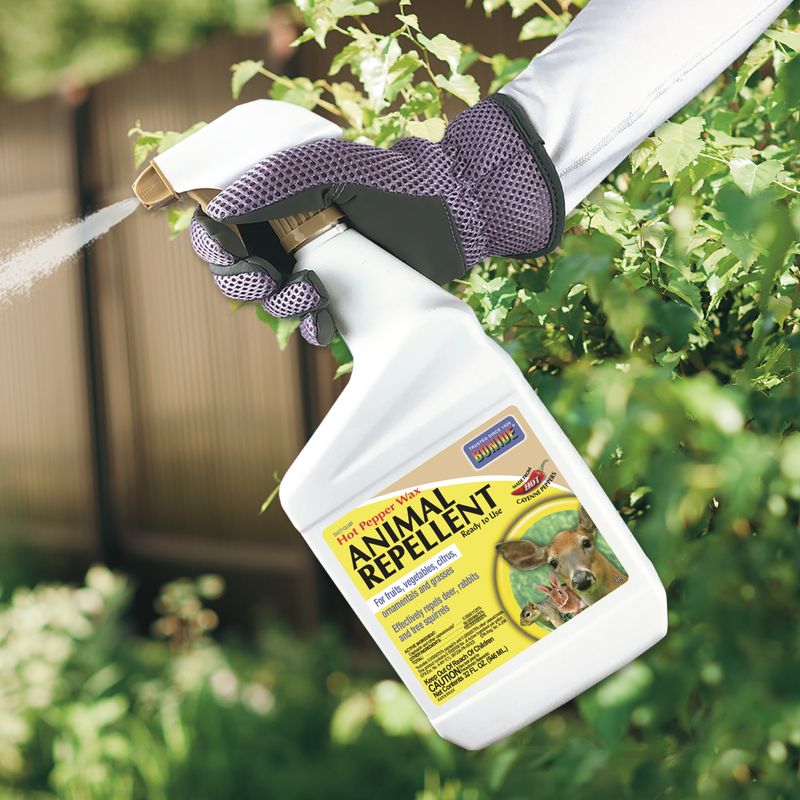
Among all the scent and taste options that circulate online, capsaicin-based, commercially labeled wildlife repellents have the strongest practical backing. They are not a guarantee, but they are the most defensible starting point if a scent product is part of your plan.
University of Florida IFAS guidance on raccoons notes that cayenne pepper can temporarily deter raccoons investigating freshly disturbed soil, typically for roughly three to four days or nights.
That window matters. Capsaicin is most likely to be useful when a raccoon has just started investigating a treated area and has not yet committed to it as a regular food source.
Once an animal is motivated by a ripe crop or a known prey patch, the irritant effect is easier to push through. The UF/IFAS publication on raccoon damage prevention treats scent products as a supporting layer rather than a perimeter shield.
Virginia Cooperative Extension reinforces the same point: repellents work inconsistently and are not a stand-alone solution. Skipping a homemade spray recipe is also the right call here.
Without a standardized concentration, a DIY mixture may irritate plants, contaminate produce, or simply fail to match the conditions under which any effect was observed.
Remove the nightly buffet and other reasons to visit

Cutting off the food supply is the first practical step, and it addresses the reason raccoons visit rather than simply trying to overpower their sense of smell. Trash cans are a common entry point: the Internet Center for Wildlife Damage Management recommends tight-fitting, secured lids and storing cans in a garage or shed when possible.
In Southern yards where outdoor living is year-round, the list of attractants tends to be longer than in cooler climates.
Pet food and water bowls left outside overnight are a reliable draw. Bringing them in before dark is one of the highest-return habits a homeowner can build.
Fallen fruit under citrus, fig, or peach trees should be picked up regularly, and spilled birdseed beneath feeders needs the same attention. Compost bins benefit from a secure lid or a hardware-cloth enclosure, especially when food scraps are added frequently.
Standing water in saucers, birdbaths, or low spots also keeps raccoons coming back. Florida Fish and Wildlife’s coexistence guidance lists water source elimination as part of a broader habitat-modification strategy.
Removing household food sources is a strong foundation, though it may not stop a raccoon that is digging for grubs – that attraction lives beneath the soil and requires a different response.
Block the route with fencing, mesh, and other physical exclusion
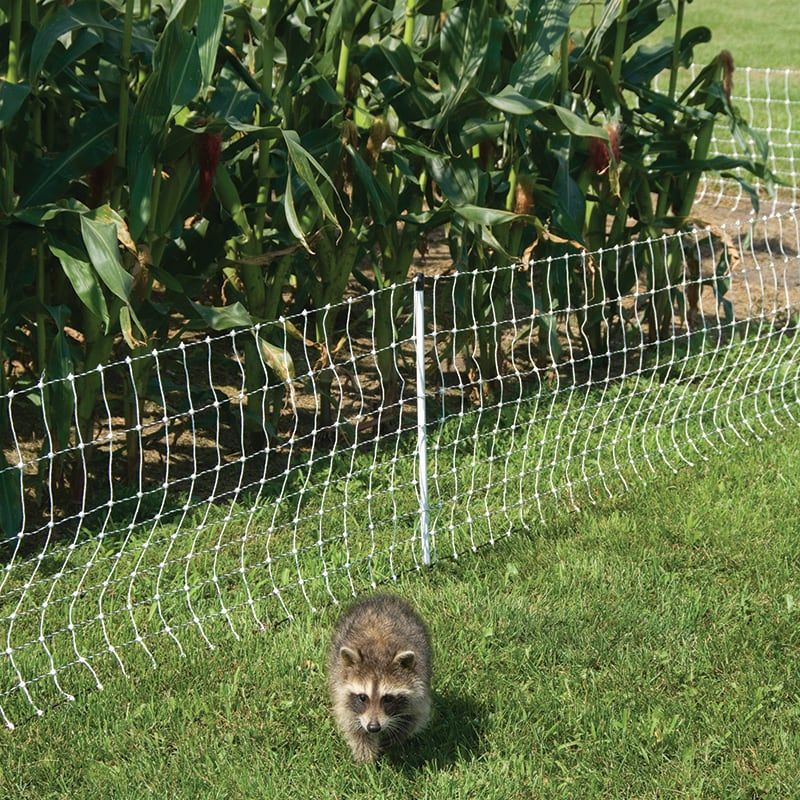
Physical exclusion works differently from a repellent: instead of making an area unpleasant to approach, it makes the target harder to reach. That distinction matters because a motivated raccoon can push past an unpleasant smell, but a well-secured barrier requires it to find another route.
UF/IFAS guidance on raccoon damage prevention identifies exclusion as the most reliable physical defense for vegetable beds, ponds, and other high-value areas.
Hardware cloth, chicken wire, and bird netting can all reduce access when they are anchored securely to the ground. Loose or lightly staked mesh is less effective because raccoons are strong enough to lift or push under barriers that are not fixed at the edges.
For lawn areas being dug up repeatedly, Iowa State Extension recommends pressing mesh or netting tightly to the soil surface over affected patches, making digging awkward and less rewarding.
For gardens and ponds, UF/IFAS describes an electric fence option: one strand placed about 6 to 8 inches above the ground, or two strands positioned at roughly 2 and 7 inches, operated from dusk to dawn. Before installing any electrified wire, check local ordinances and HOA rules, confirm the charger is rated appropriately, keep vegetation trimmed away from the wire, and consider access by children and pets.
These dimensions are a starting point, not a universal installation guarantee – local conditions, charger type, and site layout all affect performance.
Use a labeled repellent as a supporting layer, not the main defense
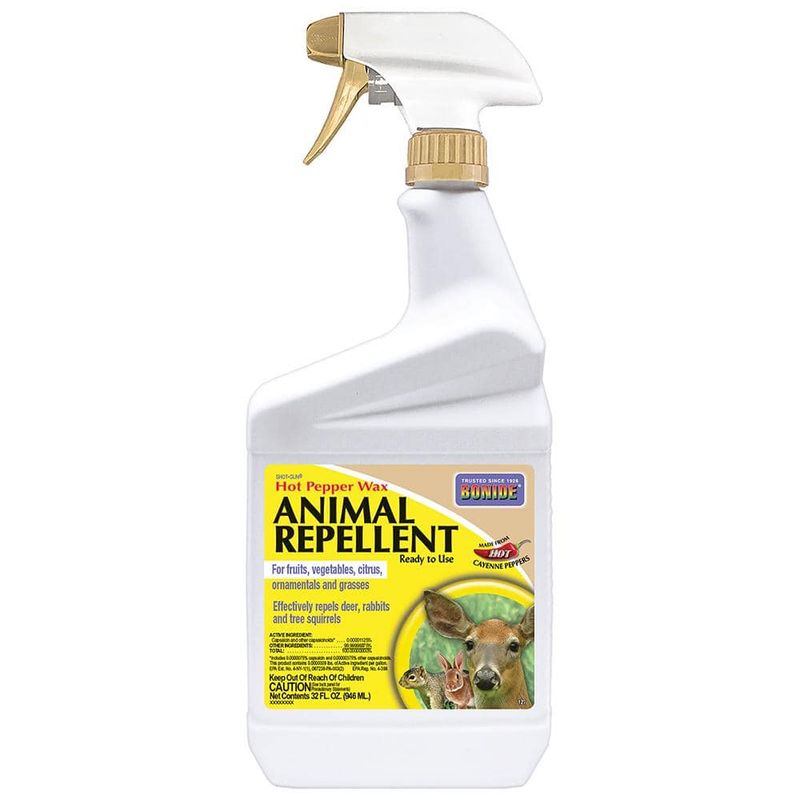
Once attractants are reduced and barriers are in place, a commercially labeled repellent can serve as a useful supplementary layer – particularly on treated surfaces that raccoons are just beginning to investigate. The key word is labeled.
EPA guidance on pesticide labeling makes clear that a product must be applied only to the sites, target animals, and uses listed on its label. Choosing a product that specifically covers raccoons, the application site, and edible or non-edible crops is not optional – it is a legal requirement.
Commercial wildlife repellents may contain capsaicin, mustard, garlic, egg solids, castor oil, or other active ingredients. The presence of an ingredient in a store-bought product does not mean a homemade version will perform the same way.
Concentrations matter, and a DIY spray has no standardized formulation. Virginia Cooperative Extension cautions against homemade chemical deterrents for this reason.
Reapplication after rain is necessary for most products, and animals can acclimate or become more motivated by food over time, reducing effectiveness. The Internet Center for Wildlife Damage Management notes that repellents generally need to be combined with other methods to produce meaningful results.
One more important distinction: labeled naphthalene wildlife-repellent products are not the same as ordinary mothballs. The EPA warns that using standard mothballs outdoors, along fence lines, or in gardens is inconsistent with their registered label and may be unlawful – they also pose real poisoning risks to children and pets.
Stick to products designed and labeled for outdoor wildlife use.
Skip household odors and scare devices that promise too much
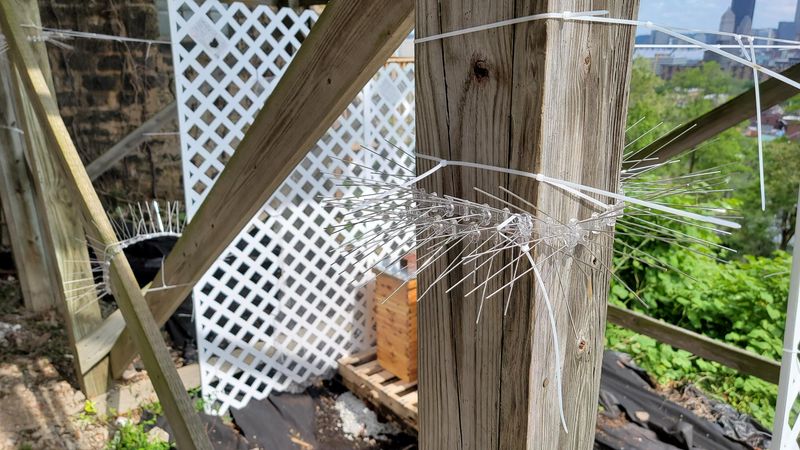
A long list of household smells gets recommended online as raccoon cures: peppermint oil, white vinegar, citrus peels, Irish Spring soap, and similar items. None of these have meaningful research support as reliable raccoon controls.
They may produce a brief reaction, but there is no consistent evidence that they protect a yard, garden bed, or food source over time.
Ammonia deserves a specific note. Virginia Cooperative Extension advises against ammonia-soaked rags as a raccoon deterrent, pointing out that ammonia is not a registered wildlife-control product and that concentrated fumes can irritate eyes and airways, creating a hazard for people and pets rather than a solution for raccoons.
Predator urine products also carry less weight than their marketing suggests. A laboratory study on commercially available predator odors found only insubstantial changes in raccoon presence and foraging behavior.
That finding does not mean every product fails in every yard, but it argues strongly against treating predator urine as a dependable deterrent.
Frightening devices – motion lights, radios, scarecrows, and ultrasonic repellers – are similarly limited. Wildlife damage management sources and Missouri Extension describe these as temporary at best, with raccoons habituating to repeated stimuli fairly quickly.
Motion-activated sprinklers may add some supplementary pressure, but they work best alongside exclusion and attractant removal rather than as a replacement for those steps. UF/IFAS raccoon guidance also treats frightening devices as a short-term supporting tactic, not a primary control.
Match the response to the damage pattern beneath your feet
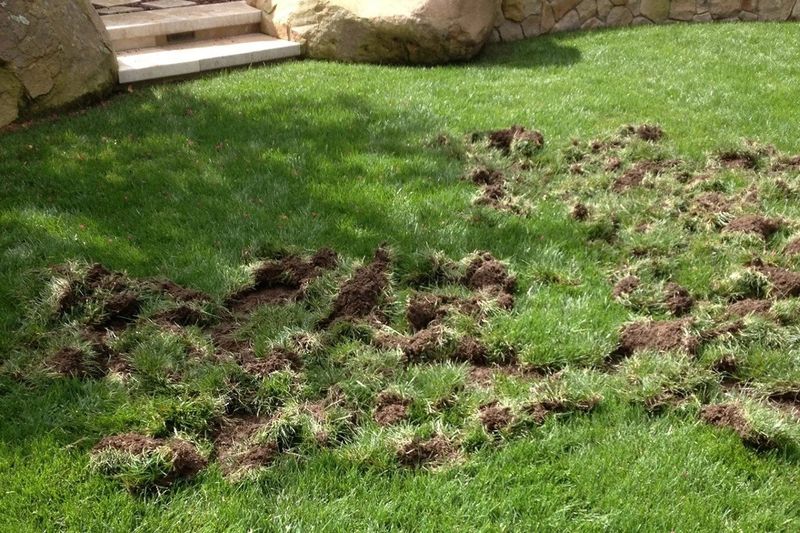
Before choosing a deterrent, spend a few minutes reading the damage. Shallow, scattered holes and sections of rolled-back sod across a lawn are the signature of a raccoon hunting underground prey – grubs, earthworms, and other soil-dwelling insects.
A scent applied to the surface does not touch the food source in that situation, which is why odor-only responses often fail on lawns. Iowa State Extension notes that castor-oil products may mask prey odors, but also describes scent repellents as typically not very effective at preventing additional lawn damage when grubs or worms are the draw.
Freshly turned vegetable beds, ripe crops, exposed compost, and backyard ponds present a different picture. These are surface-level food sources that physical exclusion can address directly.
Hardware cloth pinned tightly over a new planting, bird netting secured at the edges of a raised bed, or a properly installed electric fence strand around a pond are each matched to the specific target rather than applied broadly to the yard.
Wildlife damage management guidance consistently points to site-specific exclusion as more reliable than broad-area deterrence. Diagnosing whether the problem is above-ground food, below-ground prey, water access, or shelter before selecting a response makes the chosen method more likely to reduce damage – without creating a false sense of security about areas that were never treated.
Layer the controls and get help when safety or local law enters the picture
A realistic action sequence looks like this: start by removing food and water attractants, identify whether underground prey or shelter is also part of the problem, protect the specific target area with a securely installed physical barrier, and add a labeled capsaicin-based repellent as a temporary supplement only where the product label permits it. Combining these steps can improve the likelihood of reducing visits and damage.
No combination guarantees that a garden will remain untouched, but layering controls addresses more of the reasons raccoons visit than any single measure can.
State rules matter before trapping, relocating, or installing electric fencing. Florida Fish and Wildlife’s frequently asked questions outline what homeowners can and cannot do under state law, and Texas Parks and Wildlife addresses nuisance wildlife rules for Texas residents.
Self-relocation is not the right call – it creates legal, welfare, and disease risks that vary by state. Any raccoon that appears sick, injured, unusually aggressive, or active in full daylight should be left alone.
Contact local animal control or your state wildlife agency, because CDC rabies prevention guidance is clear that unusual animal behavior warrants professional assessment.
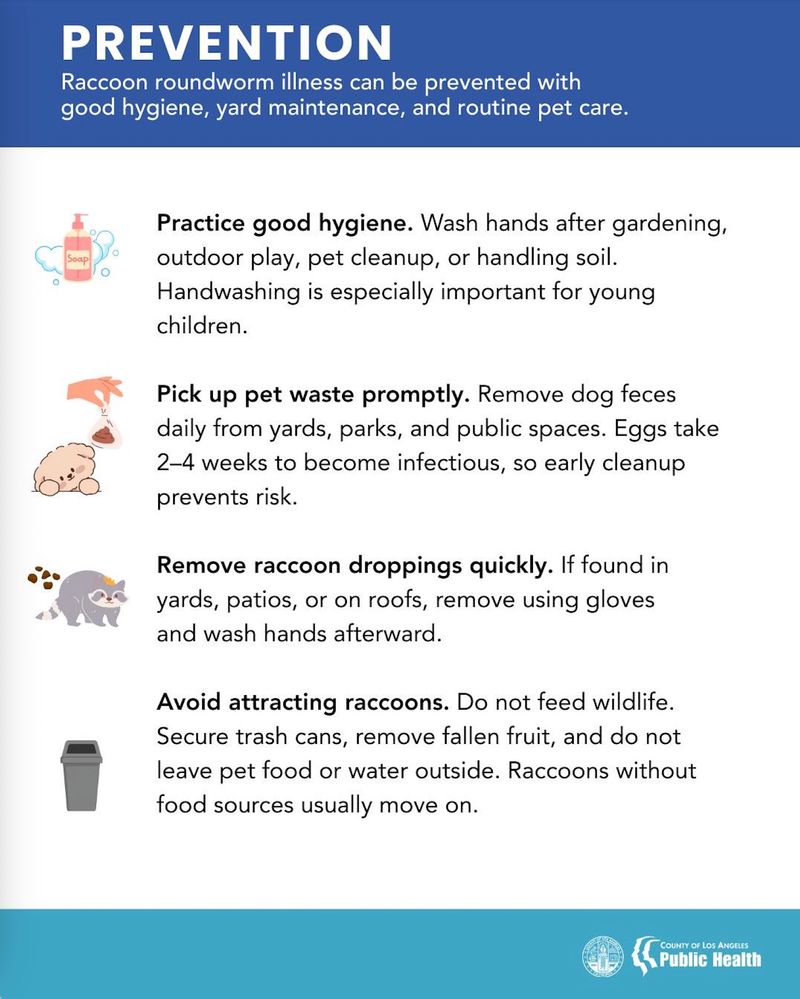
Raccoon latrines require a separate precaution. CDC guidance on Baylisascaris recommends wearing gloves, lightly dampening contaminated material before removal to limit dust, and using additional respiratory protection in enclosed or confined spaces.
Cleanup is a health step, not an emergency – but skipping it is not worth the risk, especially in yards where children play. A yard that is harder to exploit is always more appealing to the homeowner than to the raccoon.