
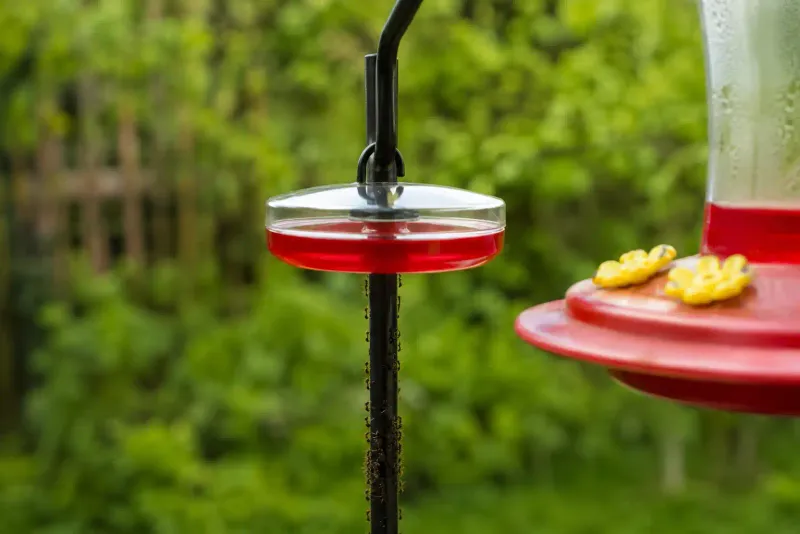
Every summer, Southern gardeners hang out a fresh hummingbird feeder only to find it crawling with ants within days. The tiny insects zero in on the sugar water like clockwork, clogging ports and making the feeder unappealing to the birds you were trying to attract.
The good news is that a few targeted steps – starting with a simple water moat – can keep ants from reaching the nectar while your maintenance routine stays consistent. The catch is that no single fix works forever on its own, so this guide will show you exactly what to do and what to skip.
Why ants gather at hummingbird feeders
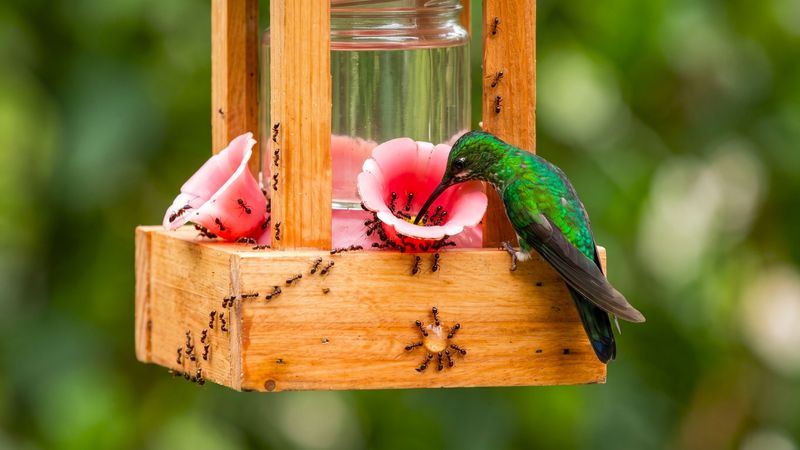
Sugar water is one of the easiest meals an ant colony can find in a Southern backyard. The nectar itself draws them in, but what really sets off the feeding frenzy is the residue – drips, spills, and sticky film that collect on the outside of the feeder after every visit by a hummingbird or a gust of wind that tips the reservoir.
Ants follow scent trails left by scouts, so once a few workers locate the source, hundreds more arrive quickly.
According to Cornell Lab of Ornithology guidance on ant exclusion, the combination of an accessible food source and an unobstructed path to the feeder is what makes the problem so persistent. The ants are not there because of the hummingbirds – they are there because sugar water drips and the wire or hook above the feeder gives them a direct walking route.
What ants do not do, under normal circumstances, is pose a direct lethal threat to healthy hummingbirds. Iowa State University Extension characterizes them as nuisance pests that contaminate nectar, clog feeding ports, and may discourage birds from using the feeder at all.
That framing matters, because the solution is about physical exclusion and consistent upkeep – not about eliminating every ant from your property.
Install a plain-water moat first
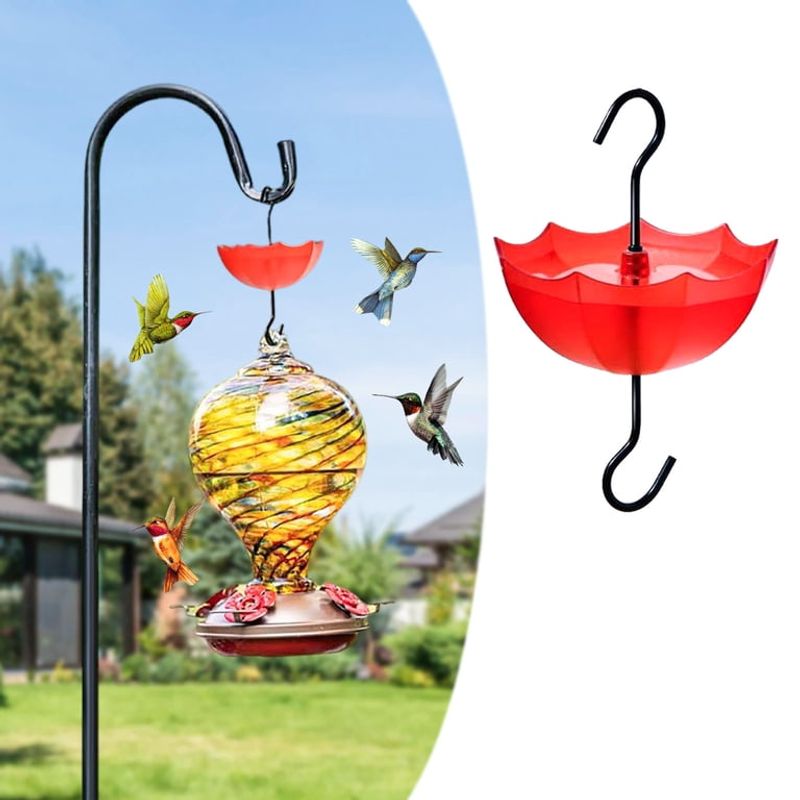
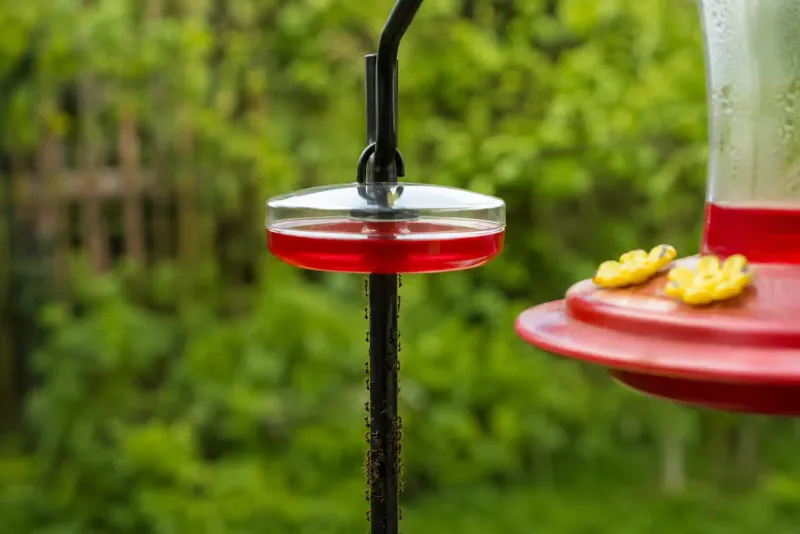
A plain-water ant moat is a widely recommended, practical first-line barrier that puts a small pool of water directly in the ant’s path before it can reach the feeder. The moat sits between the hanging hook or support and the feeder itself, so any ant walking down the wire hits the water and cannot cross.
Many feeders now include a built-in moat at the top; if yours does not, attachable ant guards are sold at most garden centers and bird supply shops.
Texas Parks and Wildlife recommends filling the moat with plain water and keeping it topped up, noting that a homemade moat works well at roughly one inch of water depth. That one-inch guideline is source-specific practical advice for a DIY setup rather than a strict engineering rule, but it gives you a useful starting point if you are fashioning your own guard from a small cup or bottle cap.
Plain water is the preferred fill for several reasons. It is completely safe if a hummingbird contacts the moat, it is easy to refresh, and it avoids the feather-contamination concerns associated with oil-based fills.
The moat works reliably as long as it holds water, stays clean, and ants have no alternate route around it. Check it every day during hot weather – water evaporates fast in Florida and Texas summers, and a dry moat is no barrier at all.
Cornell Lab also recommends ant moats as a go-to solution, reinforcing that this approach has broad support among wildlife and bird organizations.
Find and remove every ant bridge
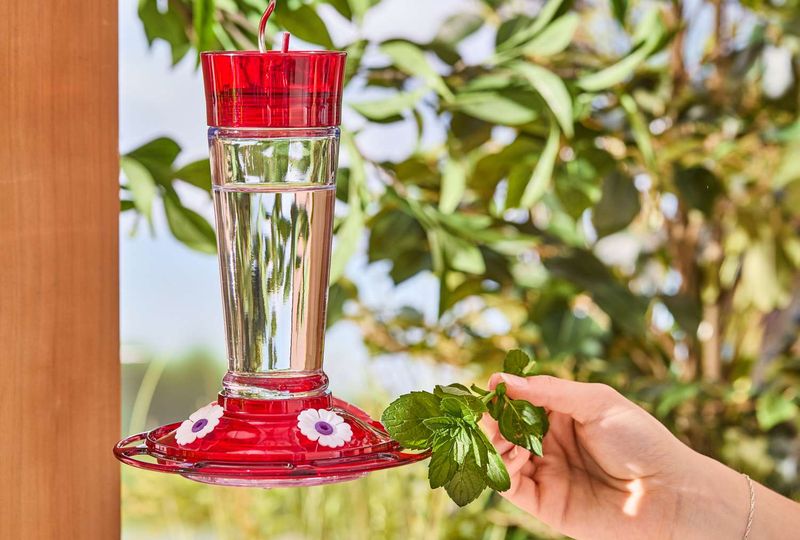
Even a perfectly filled moat fails the moment an ant finds another way onto the feeder. Before you call the problem solved, walk around the hanging spot and look at everything touching or nearly touching the wire, the hook, the feeder body, and the chain or cord above it.
Branches, vines, fence rails, walls, porch columns, electrical wires, and plant stems can all serve as ant highways that completely bypass the water barrier.
Gallatin, Tennessee’s hummingbird gardening guidance specifically warns that ant guards work only when ants cannot reach the feeder by an alternate route – a point that is easy to overlook once the moat is in place and you assume the job is done. Trim any branch or vine that comes within a few inches of the feeder, and make sure the feeder hangs freely so it does not swing into contact with nearby surfaces.
Moving the feeder to a new location can help when the current spot has too many contact points to clear, but relocation alone is not a cure. Cornell Lab notes that the stronger fix is removing the contact routes and maintaining the moat, not simply shifting the feeder a few feet.
After any move, repeat the full inspection – ants are resourceful and will scout the new location just as quickly as the old one.
Stop leaks, drips, and sticky residue
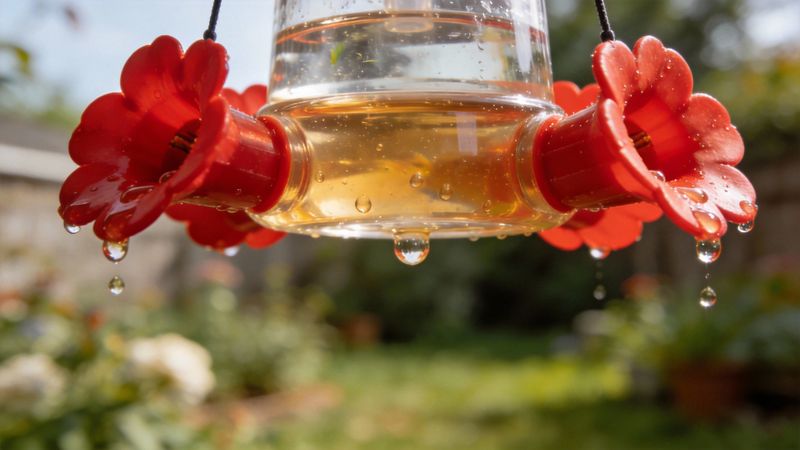
Nectar residue on the outside of the feeder is what keeps ants coming back even after you have installed a moat and cleared the bridges. Drips from feeding ports, overflow from a slightly tilted reservoir, and splashes from hummingbirds hovering at the flower openings all leave a sugary film that ants can detect from a surprising distance.
Wiping the feeder body and ports with a damp cloth every time you check the nectar removes that signal before it builds up.
Bottle-style feeders are especially prone to leaking in direct sun. Heat warms the air inside the reservoir, which expands and pushes nectar out through the ports even when the feeder is upright and undisturbed.
Placing the feeder in a shaded spot – under a tree canopy, a porch overhang, or a shade sail – reduces that pressure and slows the rate at which nectar spoils. Cornell Lab’s hummingbird feeding guidance advises keeping feeders out of direct sun where possible and away from locations where rain can dilute the nectar, both of which also reduce the residue that accumulates on the outside.
Shade alone does not prevent ant problems or spoilage entirely, but it reduces two of the main contributing factors at once. Keep the feeder level so nectar does not pool around the ports, and inspect the gaskets or seals on older feeders – worn rubber rings are a common source of slow drips that are easy to miss until you see ants lined up at the base of the feeder.
Refresh nectar before Southern heat spoils it
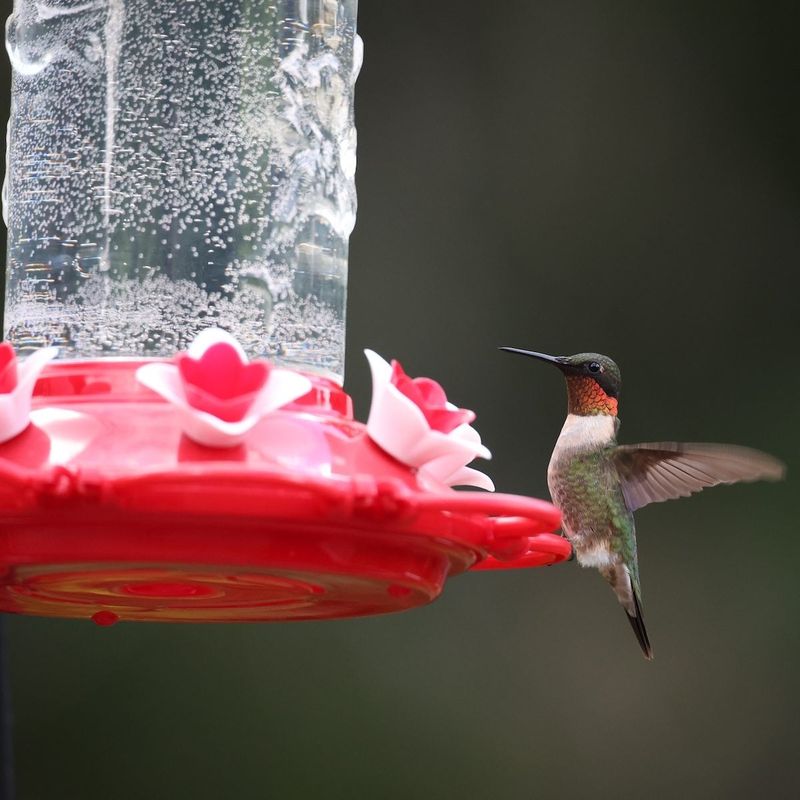
Fresh nectar is less attractive to ants and bacteria than nectar that has started to ferment or cloud over. Getting the recipe right and replacing it on the correct schedule are both part of keeping the feeder clean and the birds safe.
Use plain white table sugar mixed with water at a ratio of one part sugar to four parts water by volume – nothing else. UF/IFAS guidance on Florida hummingbirds confirms this 1:4 ratio and cautions against honey, brown sugar, artificial sweeteners, and other substitutes, all of which can promote harmful bacterial or fungal growth or provide the wrong nutritional profile.
Red dye is also unnecessary. The red components on the feeder itself provide the visual cue hummingbirds use to find the food source, and natural flower nectar is clear.
Adding dye introduces an unneeded chemical with no benefit to the birds.
In the Southern heat, nectar can spoil faster than most guides written for northern climates suggest. Clemson Extension recommends replacing nectar daily when temperatures exceed 90 degrees Fahrenheit, which describes a large portion of the summer season in Florida and Texas.
On cooler days, inspect the nectar every day and replace it as soon as it appears cloudy, smells fermented, or shows any sign of mold – do not wait for a fixed calendar interval. If you make nectar in batches, store the extra in the refrigerator and bring it to room temperature before refilling.
Cornell Lab reinforces that frequent replacement in warm conditions is one of the most important things a feeder owner can do for bird health.
Clean the feeder whenever you refill it
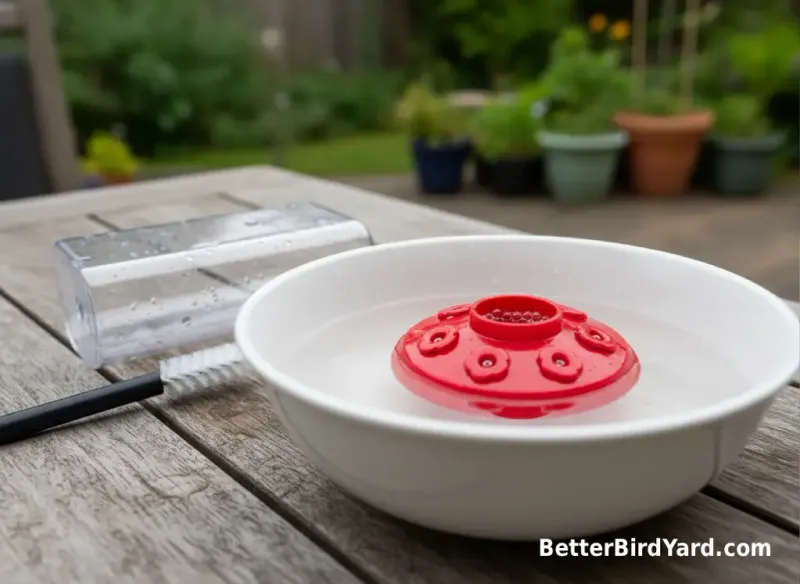
Cleaning is not a separate chore from refilling – treat them as one task. Every time you empty the feeder to replace nectar, rinse and scrub all parts before putting fresh sugar water back in.
Mold, yeast, and bacteria grow quickly in a warm feeder, and even a thin biofilm on the interior walls can contaminate a fresh batch of nectar within hours in Southern summer conditions.
Hot water and a dedicated bottle brush are the workhorses of a safe cleaning routine. A brush reaches the corners and crevices of the reservoir and the narrow necks of bottle-style feeders where residue hides.
Audubon’s hummingbird feeding FAQ recommends rinsing extremely well after any cleaning agent is used, and notes that sources differ on whether soap or diluted bleach are appropriate. Rather than picking a side in that debate, the safest practical approach is hot water with a brush, or a properly diluted white vinegar solution, followed by a very thorough rinse and complete air-drying of all parts before reassembly.
Clemson’s bird feeder washing guidance and UF/IFAS hummingbird guidance both emphasize thorough rinsing as non-negotiable regardless of what cleaning method you choose. A feeder that smells faintly of soap or vinegar can deter hummingbirds from feeding.
Disassemble every part the feeder allows – ports, flower inserts, reservoirs, and base plates – because hidden crevices are where mold colonies establish first and where ants find the residue that draws them back.
Avoid sticky barriers and pesticide sprays
Some ant-deterrent suggestions circulating online involve smearing petroleum jelly, cooking oil, Tanglefoot, or similar sticky or greasy substances on the feeder hanger. The idea is that ants get stuck or turn back.
The problem is that hummingbirds can contact those surfaces too, and several university and bird-organization sources warn that greasy or sticky materials on a feeder hanger can transfer to feathers, where they interfere with insulation and the bird’s ability to regulate body temperature.
Penn State Extension’s hummingbird guidance and Texas Parks and Wildlife both mention the risk of feather contamination from exposed greasy materials. Sources genuinely disagree about whether these substances are safe in practice, which is itself a reason to favor the water moat – it carries no such risk.
If you have seen petroleum jelly recommended elsewhere, treat it as a disputed method rather than a safe shortcut.
Pesticide sprays are a harder line. University of Maine Extension explicitly advises against using insecticides to manage insects at hummingbird feeders, and the EPA cautions that pesticides can harm non-target birds, pollinators, and other wildlife.
Do not spray any insecticide on the feeder, the ports, the hanging wire, or any nearby vegetation where birds may contact residue. If an ant colony elsewhere in the yard needs treatment, UF/IFAS ant management guidance describes targeted baits and treatments for specific situations – but keep any treatment well away from the feeding station, follow the product label carefully, and never let it reach nectar, water, or surfaces birds touch.
Treat bees and wasps as a separate problem
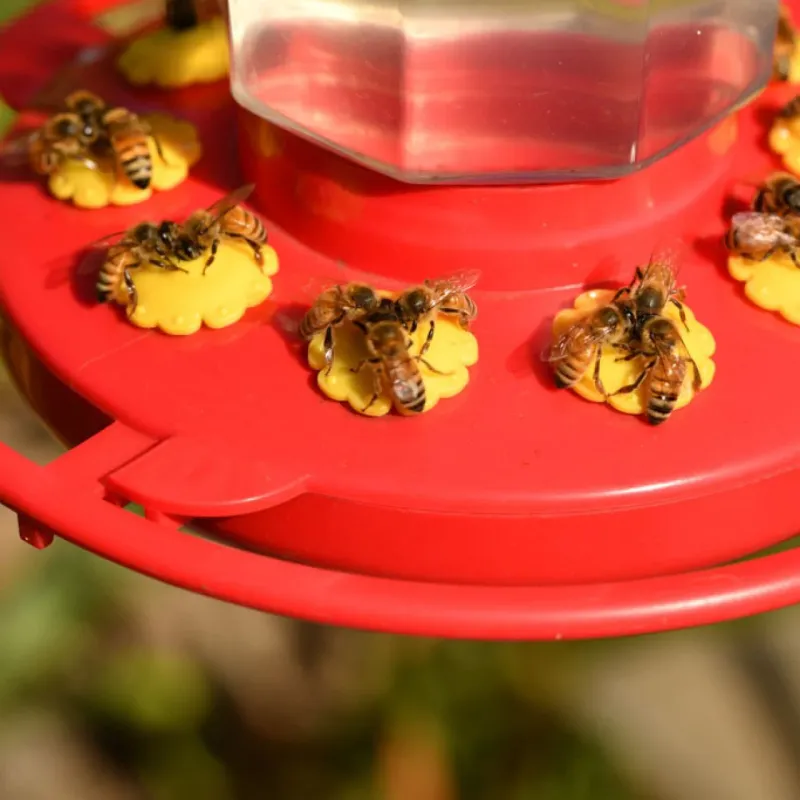
Bees and wasps at hummingbird feeders are a frustrating but distinct problem from ants, and the solutions overlap only partially. Bee guards – small mesh or plastic screens that fit over feeding ports – may reduce access for insects with shorter mouthparts, but they do not block ants and are not effective against all bee and wasp species.
Iowa State University Extension notes that yellow feeder parts tend to attract bees and wasps, so choosing a feeder with red components and no yellow accents is a simple preventive step.
The most broadly useful actions for both flying insects and ants are the same ones already covered: wipe nectar residue from the feeder exterior, correct any drips or leaks promptly, and clean the feeder on a regular schedule. Residue is what draws insects in from a distance, and a clean feeder is a less attractive target for all of them.
University of Maine Extension confirms that cleaning and leak prevention are the foundation of insect management at hummingbird feeders across species. If bees or wasps become a serious problem despite a clean feeder, try moving the feeder to a different spot or temporarily taking it down for a day or two – flying insects tend to abandon a food source faster than ants do when it disappears.
Return the feeder after a brief absence and keep the exterior dry and residue-free to reduce re-attraction.
Maintain the barrier and support wild hummingbirds
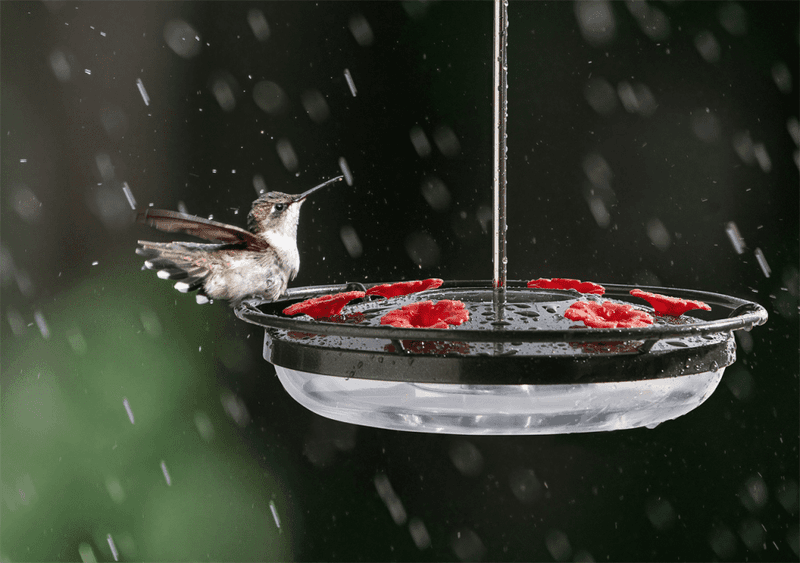
Keeping ants from reaching the feeder is an ongoing routine, not a one-time fix. Run through a short checklist each time you visit the feeder: refill the moat with clean water if it has dropped or become discolored, scan for any new branches or vines that have grown close enough to serve as a bridge, wipe any drips from the ports and body, and assess the nectar – replace it immediately if it looks cloudy or smells off, and replace it daily during periods of extreme heat regardless of appearance.
Texas Parks and Wildlife and Cornell Lab both frame the moat as effective when correctly maintained, not as a permanent solution. Ants will find the feeder again if the water evaporates, the moat overflows and gets contaminated, or a new contact route appears.
The realistic goal is a feeder that ants cannot reach while your routine stays consistent – not a yard free of ants.
Feeders do important work, but they work best alongside native nectar-producing plants and the natural insect prey that hummingbirds also rely on. UF/IFAS guidance notes that sugar water supplements rather than replaces a hummingbird’s full diet.
A yard with flowering plants and a clean, well-maintained feeder gives hummingbirds more reasons to stay – and fewer reasons for ants to take over.