
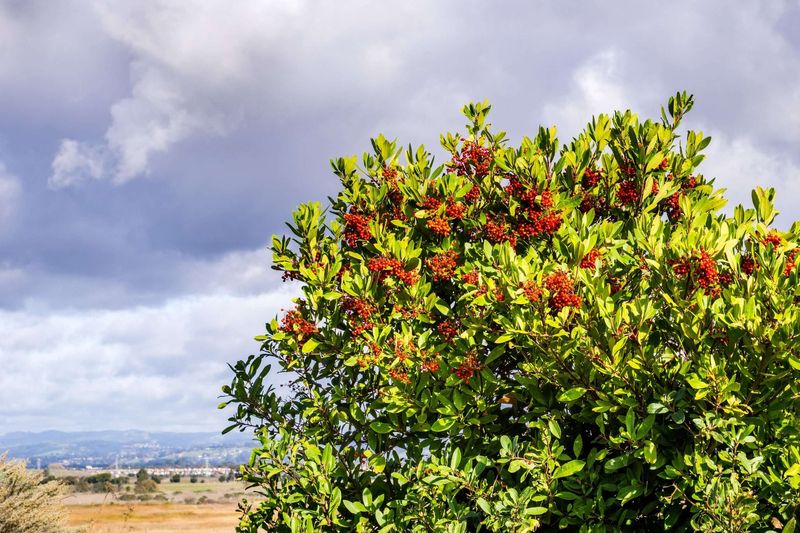
A native California shrub called toyon has been catching the attention of homeowners who want year-round greenery along their property lines without the cost and upkeep of a wooden fence. Toyon grows dense, stays evergreen through every season, and supports birds and pollinators at the same time.
But the idea that it replaces fences outright or never needs any care deserves a closer look before you start digging. Here is what toyon can realistically do for your yard, and where its limits are.
Toyon is the likely evergreen shrub behind the privacy claim
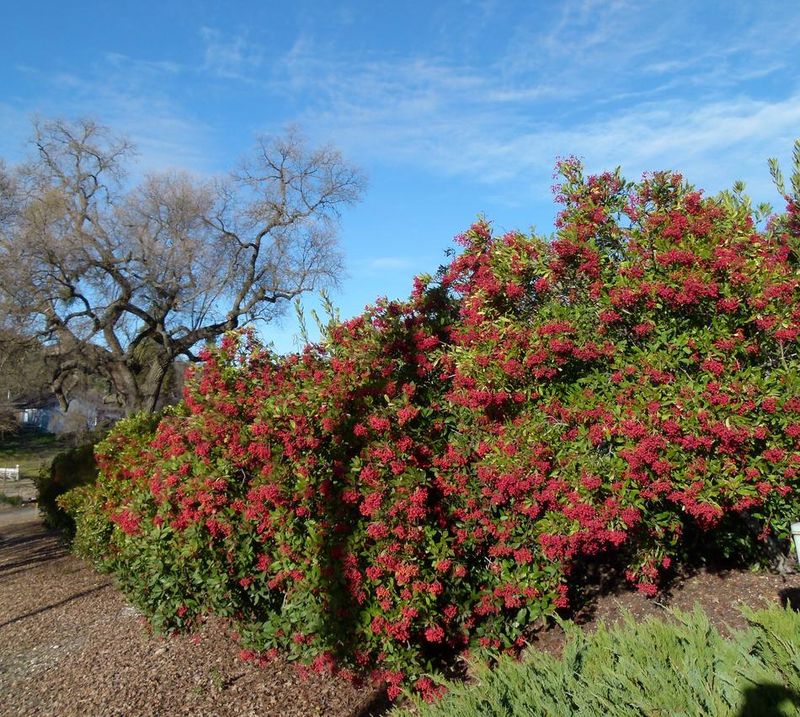
When a headline talks about a native California shrub forming a backyard privacy screen, the plant most likely being described is toyon, scientifically known as Heteromeles arbutifolia. That identification is an inference, not a certainty, since the shrub is not named in the original claim.
Even so, the description fits toyon closely: it is a California native, evergreen, dense-branching, wildlife-friendly, and documented by the California Native Plant Society as suitable for privacy hedges and screening.
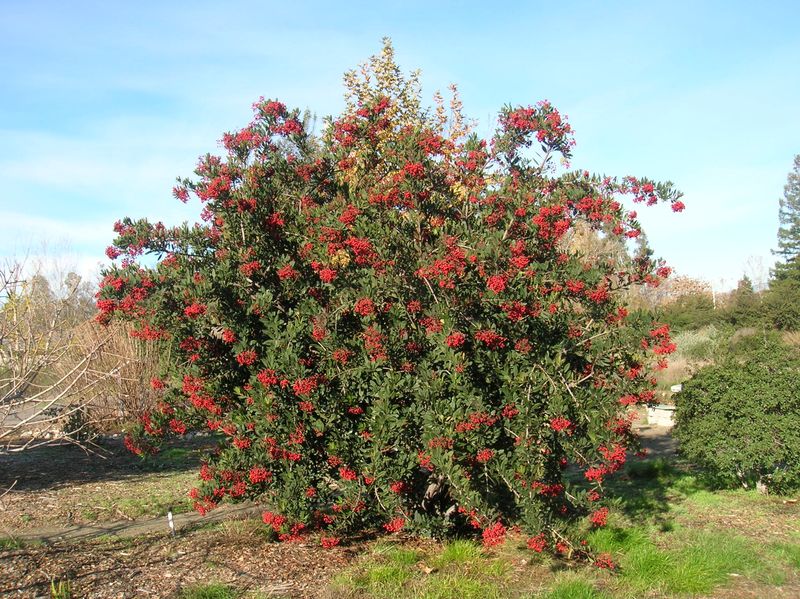
Toyon holds its foliage year-round, which is the quality that makes it useful as a visual screen. Its leaves are thick, leathery, and dark green, giving them a polished look even in summer heat.
The branching fills in progressively as the plant matures, eventually creating the kind of layered density that can block sightlines from a neighboring yard or street.
Beyond its screening potential, toyon also earns its place in a California garden through seasonal interest. Small white flower clusters appear in summer and attract bees and other native pollinators.
By fall and into winter, those flowers give way to clusters of bright red berries that draw cedar waxwings, robins, towhees, mockingbirds, quail, and western bluebirds. According to UC Master Gardener Program of Sonoma County, the plant functions well as a background planting, hedge, or wildlife corridor anchor.
Toyon is also called California holly or Christmas berry, names that reflect its festive winter berry display. Its combination of evergreen coverage, pollinator support, and bird habitat makes it one of the more versatile native shrubs available to California homeowners.
Calling it a widespread fence replacement or a zero-care plant would overstate the case, but as a long-term visual screen with genuine wildlife value, the identification holds up well.
Toyon creates privacy gradually and occupies real space
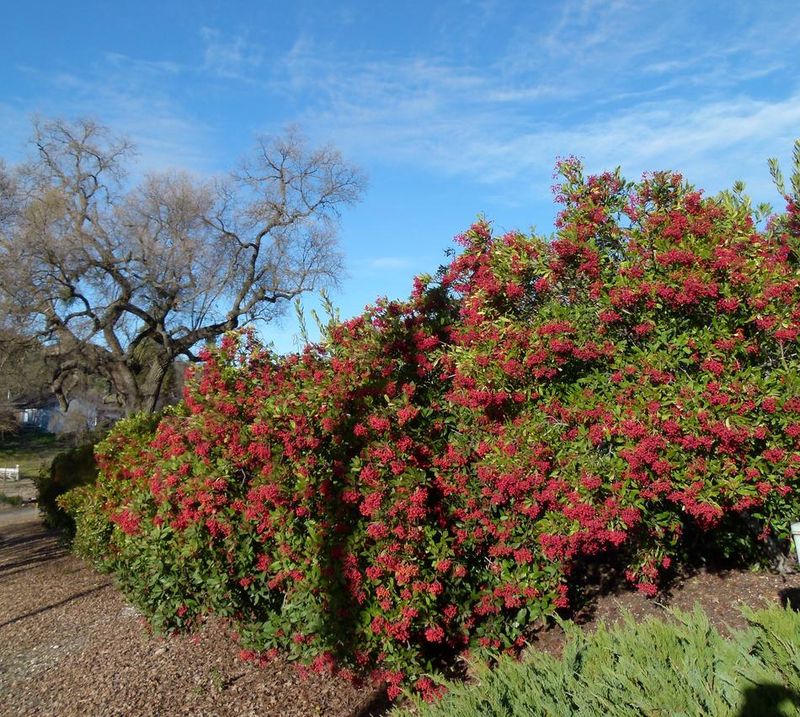
Patience is the real cost of a toyon privacy screen. Unlike a fence panel you install on a Saturday, toyon builds its screening density over several years as it fills out its natural branching.
The payoff is a living wall of dark green foliage that stays in place through every season, but the timeline is measured in years, not weeks.
For planning purposes, expect mature toyon to reach roughly 6 to 15 feet tall and equally wide, depending on site conditions, water availability, and local climate. Favorable specimens can grow substantially larger, sometimes reaching 20 to 25 feet or more.
UC Master Gardener Program of Sonoma County describes toyon as a large shrub or small multistemmed tree, and that framing matters for yard planning. Treating it like a narrow hedge plant will lead to disappointment or overcrowding.
The width question is especially important when deciding how many plants to place along a property line. A common mistake is spacing plants too close together to create an instant visual barrier.
UC ANR guidance on toyon recommends planning for the plant’s full mature dimensions rather than its nursery-pot size. Crowded plants compete for water, light, and soil nutrients, and they can develop disease problems as air circulation drops.
A practical approach, also supported by California Department of Water Resources turf-replacement guidance, is to accept open gaps between young plants during the first year or two and let them fill in naturally. Placing plants at least 8 to 10 feet apart, or wider if you want large specimens, gives each one room to develop the branching density that makes toyon useful as a screen in the first place.
The gaps close on their own as the plants grow.
Choose sun and drainage before you choose the screen
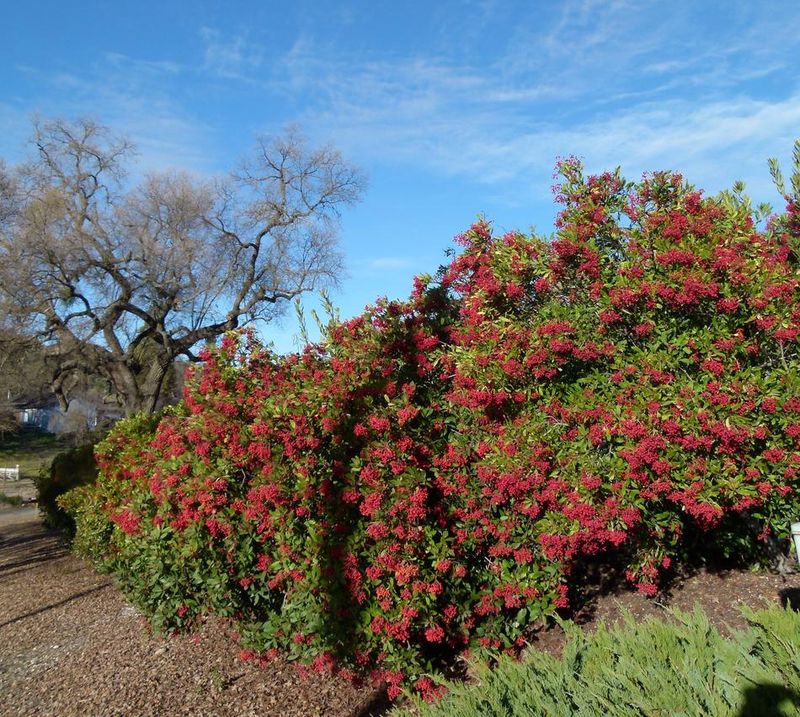
Before buying a single toyon plant, walk the planting area at different times of day and check two things: how much direct sunlight it receives and whether water drains away after rain. Those two factors will determine whether your toyon grows into a dense, healthy screen or a leggy, disease-prone disappointment.
Toyon performs best in full sun to partial shade. A spot that gets at least six hours of direct sun daily tends to produce the tightest branching, the most prolific flowering, and the best berry set.
Move into heavier shade and the plant responds predictably: stems stretch toward available light, branching becomes looser, and flower and berry production drops off. UC Master Gardener Program of Sonoma County specifically notes that heavy shade can reduce the ornamental and wildlife value that makes toyon worth planting in the first place.
Soil drainage is equally non-negotiable. Toyon is adapted to the well-drained slopes, chaparral edges, and oak woodland margins of California, not to low spots where water pools after a storm.
Persistently wet or poorly drained soil creates exactly the conditions that favor root rot and crown rot, both of which can kill established plants or open gaps in an otherwise healthy screen.
A simple drainage check: dig a hole about 12 inches deep and fill it with water. If it drains within an hour, the site is likely acceptable.
If water is still sitting there several hours later, that location needs amendment or raised planting before toyon goes in. According to USDA Forest Service research on Heteromeles arbutifolia, the plant’s natural range is dominated by slopes and ridges with fast-draining soils, which explains its sensitivity to prolonged wet feet.
Matching the site to the plant’s natural preferences is the single most reliable way to reduce problems later.
Establish the roots before relying on drought tolerance
Toyon’s reputation for drought tolerance is real, but it applies to established plants, not to shrubs fresh out of a nursery container. Skipping irrigation in the first year because you heard toyon is drought-tolerant is one of the fastest ways to kill a new planting before it ever has a chance to form a screen.
Fall or early winter is the preferred planting window in California’s Mediterranean climate. Cooler air temperatures reduce stress on newly disturbed roots, and seasonal rainfall can do some of the irrigation work for you.
California Native Plant Society guidance on establishing native gardens consistently recommends fall planting for this reason. A shrub planted in October or November enters its first dry season with several months of root development already behind it, which meaningfully improves its odds of surviving summer.
During the first several months after planting, the goal is to keep the root ball moist but not waterlogged. CNPS watering guidance for native plants recommends checking soil moisture a few inches below the surface rather than watering on a fixed schedule, since conditions vary by site, season, and soil type.
As roots extend outward into surrounding soil, you can gradually shift to deeper, less frequent watering to encourage the roots to follow moisture downward.
Supplemental irrigation may still be needed for one to three years, depending on your site, soil, and rainfall patterns. Hot inland valleys typically require more hand-holding than cooler coastal locations.
Once toyon is genuinely established, occasional summer irrigation can keep the plant looking greener and fuller, especially in areas with intense summer heat. However, excessive warm-season watering, particularly when combined with poor drainage, raises the risk of root and crown problems.
The transition from regular irrigation to a lighter touch should be gradual and guided by how the plant looks, not by a fixed calendar date.
Let natural growth reduce pruning, not eliminate care
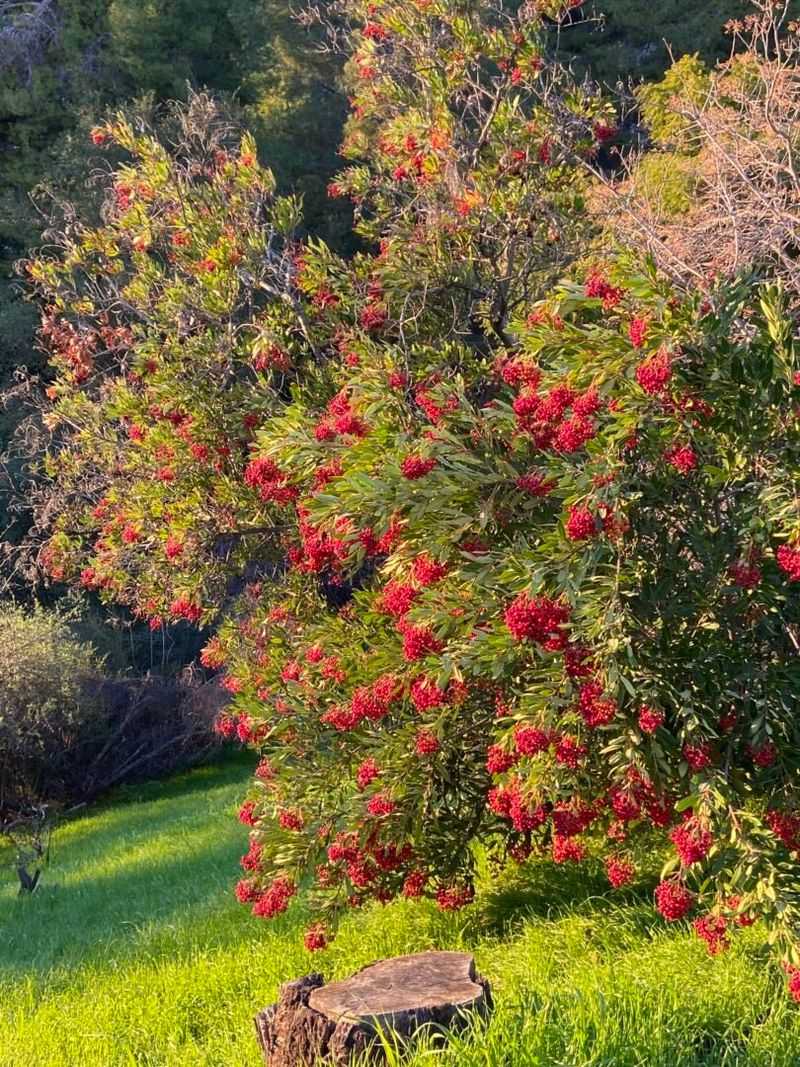
One of toyon’s genuine advantages is that it does not demand the kind of regular clipping that a formal hedge requires. Left to grow in its natural form, a healthy toyon mostly takes care of its own shape.
That lower routine demand is worth appreciating, but it is not the same as no care at all.
When shaping or size control becomes necessary, late summer is the recommended window. UC Marin Master Gardeners’ guidance on pruning toyon identifies August or September as the appropriate time for structural cuts.
The trade-off is real: pruning in that window removes the developing berry clusters for that season, so you sacrifice the fall and winter bird display in exchange for size or clearance control. If berry production matters to you, plan pruning selectively and consider doing it only in years when growth has pushed the plant into a problematic area.
Severe or repeated coppicing, cutting toyon back to near the ground to force regrowth, is not a sound practice for a plant intended as a privacy screen. It stresses the plant, disrupts the branching structure that creates screening density, and can take years to recover.
Minor corrective cuts to remove crossing branches, dead wood, or stems growing into walkways are far more appropriate.
Mulch is helpful for moisture retention and weed suppression, but placement matters. UC Master Gardener drip irrigation guidance warns against creating wet conditions around the plant base.
Keep mulch pulled back a few inches from the crown and stems to avoid trapping moisture against the bark.
Even a well-sited, well-watered toyon can run into problems. UC Statewide IPM’s toyon pest and disease guide lists fire blight, entomosporium leaf spot, root rot, crown rot, and various insect pests as potential issues.
Deer browsing can remove new growth and set back young plants significantly. Any of these problems can create gaps in the screen, just as a damaged fence board creates a gap in a fence.
Monitoring the plant occasionally and addressing problems early is the honest version of low-maintenance care.
A living screen cannot perform every job of a fence
Mature toyon can absolutely block a sightline. Stand behind a well-established plant and a neighbor’s yard disappears behind a wall of dark green foliage.
That visual separation is real and genuinely useful. But visual separation and physical enclosure are two different things, and conflating them leads to poor planning decisions.
A constructed fence stops a dog from leaving your yard. Toyon does not.
A fence keeps a toddler from wandering into the street. Toyon does not.
A fence can deter casual intruders, block a vehicle from cutting across a corner of your property, and prevent livestock from entering a garden bed. A mature toyon hedge provides none of those functions reliably.
California Department of Fish and Wildlife guidance on fence alternatives frames living hedgerows as a practical option specifically when physical containment or exclusion is not the primary need. The distinction is built into the recommendation.
There are also timing differences that matter. A fence provides immediate privacy from the day it goes up.
Toyon provides visual screening after it matures, which takes years. If you move into a new home and need privacy from neighbors right away, toyon is not the right first move on its own.
For some homeowners, the best answer is a combination: a modest fence or wall for physical security and containment, with toyon planted along it to soften the hard edge, add wildlife value, and eventually reduce the visual prominence of the structure. Others may find that toyon alone works perfectly if their only goal is blocking a sightline across a large, open yard where pets and children are managed separately.
Knowing which category your yard falls into before you plant saves a lot of frustration later.
Check fire, toxicity, and regional suitability before planting
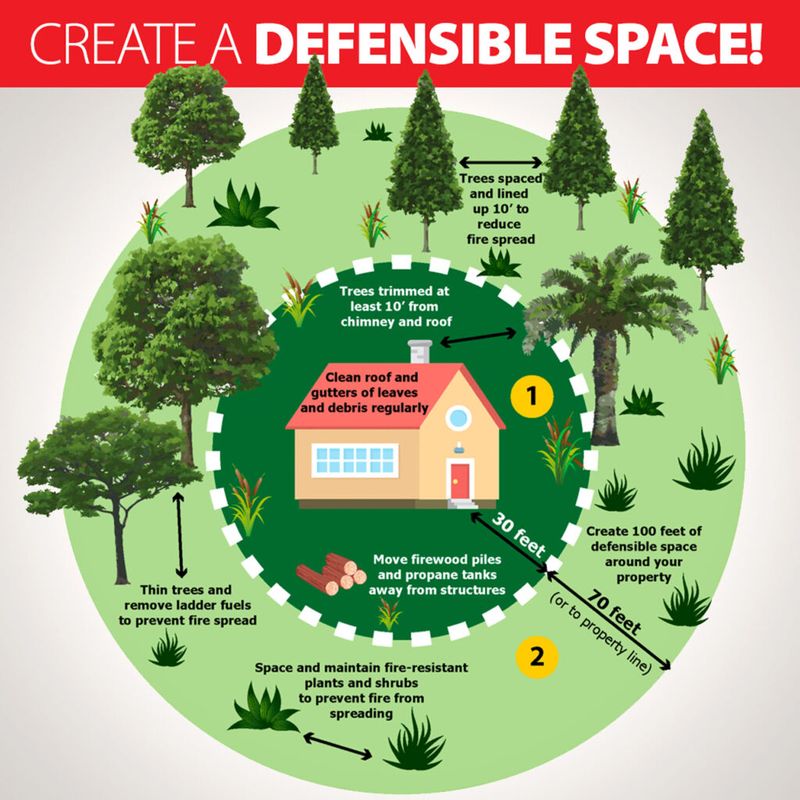
Three topics tend to get glossed over in enthusiastic native-plant coverage, and all three matter before toyon goes into the ground: fire behavior, berry toxicity, and regional climate fit. Skipping any of them can lead to real problems.
On fire, toyon is sometimes described as fire-resistant or relatively low in flammability, and a peer-reviewed flammability study published in Landscape and Urban Planning found low-to-moderate flammability under its test conditions. That finding is useful context, but it does not make a dense toyon hedge fireproof or automatically appropriate next to a home in a fire-prone area.
Flammability depends on plant moisture content, accumulated dead material inside the canopy, spacing between plants, proximity to structures, local weather conditions, and maintenance history. CAL FIRE defensible space guidance requires specific vegetation clearances and spacing rules that apply regardless of species.
Check current local fire-authority requirements for your zone before planting any dense shrub near a structure.
On toxicity, the berries attract birds in impressive numbers, and that wildlife value is genuine. However, bird consumption does not establish safety for people or domestic animals.
UC Master Gardener guidance notes that unripe fruit and seeds contain cyanogenic compounds. The safest approach is to treat toyon berries, seeds, and foliage as not for human consumption and to keep plant trimmings away from children, pets, and livestock.
On regional suitability, toyon’s evidence base is firmly rooted in California and comparable summer-dry Mediterranean climates. USDA Forest Service species review data for Heteromeles arbutifolia confirms that its native range is California and Baja California, adapted to dry summers and mild, wet winters.
Florida’s year-round humidity and summer rainfall pattern, and the varied climates across Texas, present very different growing conditions. Readers outside California should contact their local cooperative extension service or consult a regional native-plant database before selecting toyon as a privacy screen.
Treat toyon as a long-term screen, not a no-care fence
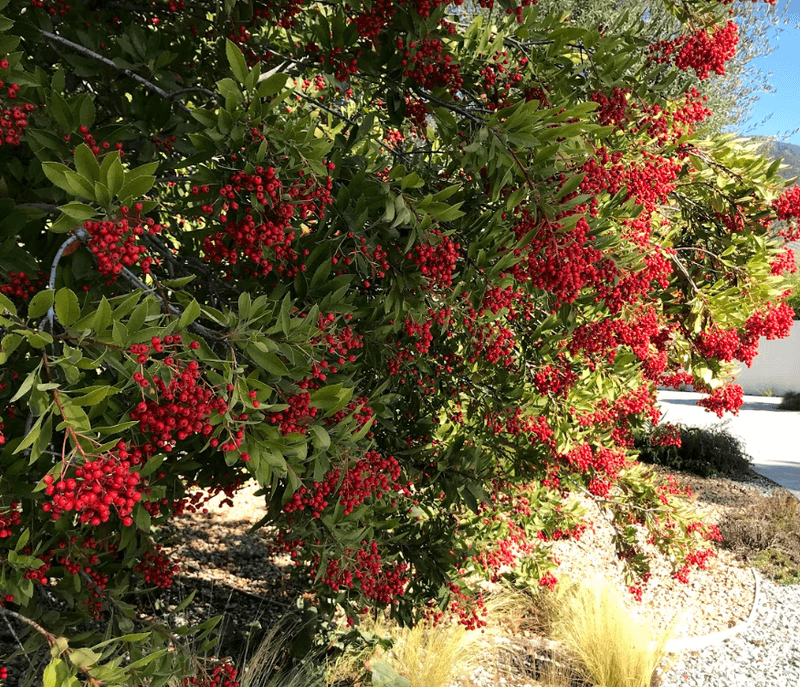
Toyon earns a place in California yards when the homeowner goes in with accurate expectations. If you can wait several years for mature screening, provide consistent water during establishment, allow 8 to 10 feet or more of lateral space per plant, and accept that you will need to monitor for pests and do occasional corrective pruning, toyon can deliver genuine long-term value as a visual privacy screen.
The supported benefits are real. Established plants in suitable California sites can get by with relatively little supplemental irrigation.
The evergreen foliage stays dense year-round without seasonal gaps. The summer flowers bring in pollinators, and the winter berries attract a long list of native birds, as documented by UC Master Gardener Program of Sonoma County.
For a homeowner whose main goal is blocking a sightline while supporting backyard wildlife, toyon delivers on that promise better than most alternatives.
Where toyon falls short is equally clear. It does not provide physical security or containment, it is not an instant solution, and it is not appropriate for every region or every yard.
As California Department of Fish and Wildlife fence-alternative guidance makes plain, a living hedgerow suits situations where visual separation is the goal and physical enclosure is handled another way.
Before planting, confirm your site with local resources. Your county cooperative extension office, local fire authority, and CNPS watering and establishment guidance can all help you avoid the most common mistakes.
A toyon screen planted thoughtfully and maintained honestly is one of the more rewarding things a California homeowner can put in a yard – and in twenty years, it will still be there, feeding birds while a wooden fence would have needed replacing twice over.