
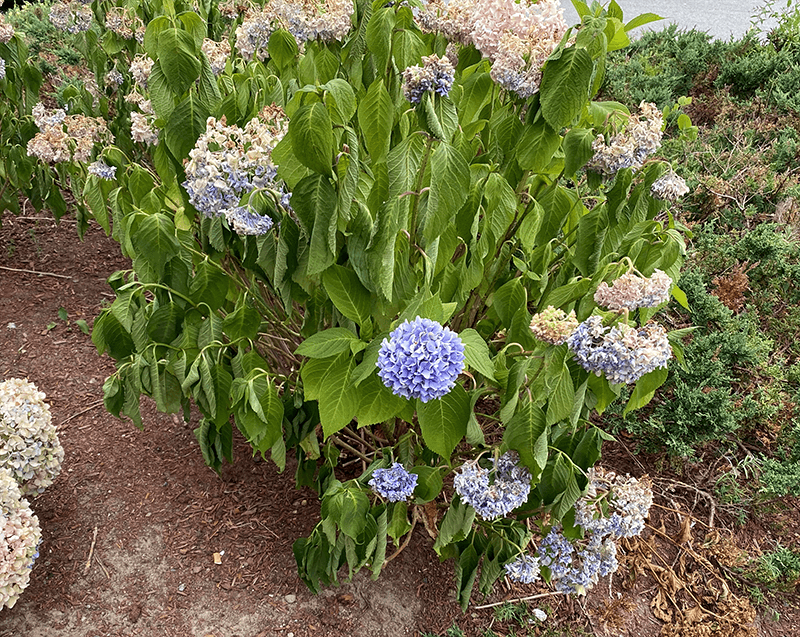
Watching a hydrangea collapse in the August heat is enough to make any gardener reach for the hose in a panic. Before you flood the roots, though, knowing why the plant is drooping matters more than acting fast.
Late-summer wilt in hydrangeas is often a heat response rather than a cry for water, and treating them the same way can make the problem worse. A quick, calm check of the plant and its soil puts you in a much better position to help it recover.
Compare the afternoon plant with its morning self
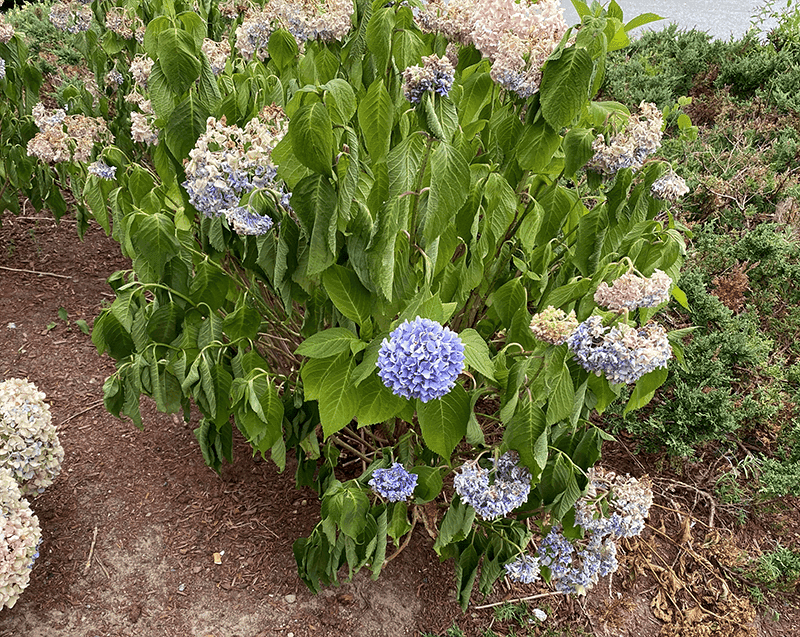
Walk out to your hydrangea first thing in the morning, before the heat builds, and take a close look at the leaves. If they are firm and upright in the early hours, then droop during the hottest stretch of the afternoon, that pattern tells you something useful: the plant is responding to heat, not necessarily running out of water.
UGA Extension field reporting notes that wilted leaves are not always a sign that a plant needs water, and that recovery by the next morning often points toward a temporary heat response rather than dehydration.
Bigleaf hydrangeas are especially prone to this. Their large, soft leaves lose moisture to the air faster than smaller-leaved plants, and on a hot Southern afternoon they can look thoroughly defeated even when the root zone holds plenty of moisture.
The key question is not what the plant looks like at two in the afternoon but what it looks like at seven in the morning.
A shrub that stays wilted through the morning, especially when the soil feels adequately moist, is sending a different signal entirely. UMD Extension guidance on drought and heat stress explains that persistent morning wilt suggests something beyond a simple afternoon heat response, whether that is root injury, drainage problems, disease, or transplant stress.
Afternoon wilt that resolves overnight calls for restraint; morning wilt that does not resolve calls for a closer investigation.
Check the root zone that actually matters
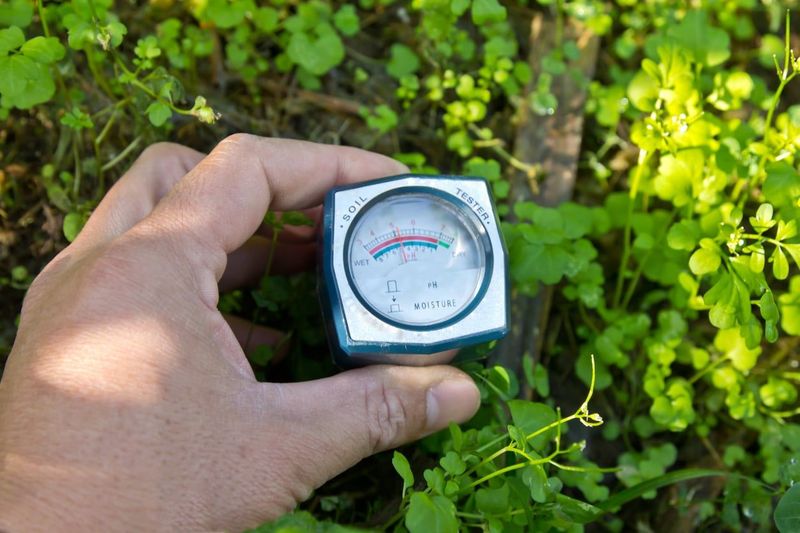
Judging a hydrangea’s water needs by the look of the surface soil is one of the most common mistakes in late-summer care. The top inch or two can dry out within hours on a hot day while the root zone several inches down stays perfectly moist.
For an established in-ground hydrangea, UGA Extension’s watering guidance recommends checking soil moisture at roughly 4 to 6 inches below the surface rather than following a watering calendar. Dry, crumbly, or powdery soil at that depth supports a decision to water; soil that still feels cool and holds together suggests the plant does not need more water right now.
You can use a finger, a wooden dowel, or a simple soil probe to check. Push it in, pull it out, and note what you feel and see.
This takes about thirty seconds and replaces a lot of guesswork.
Containers and recently planted hydrangeas need a different approach. UMD Extension points out that transplanted shrubs can have a dry nursery root ball even when the surrounding soil is moist, because the compact root mass does not always exchange moisture freely with the surrounding ground.
Check both the root ball itself and the medium around it at a representative root-zone depth. These plants may need more frequent attention during establishment, but adequate drainage still matters.
A soggy nursery root ball sitting in poorly draining soil creates a different problem than drought, and the solution is not simply adding more water.
Water a dry hydrangea slowly and deeply
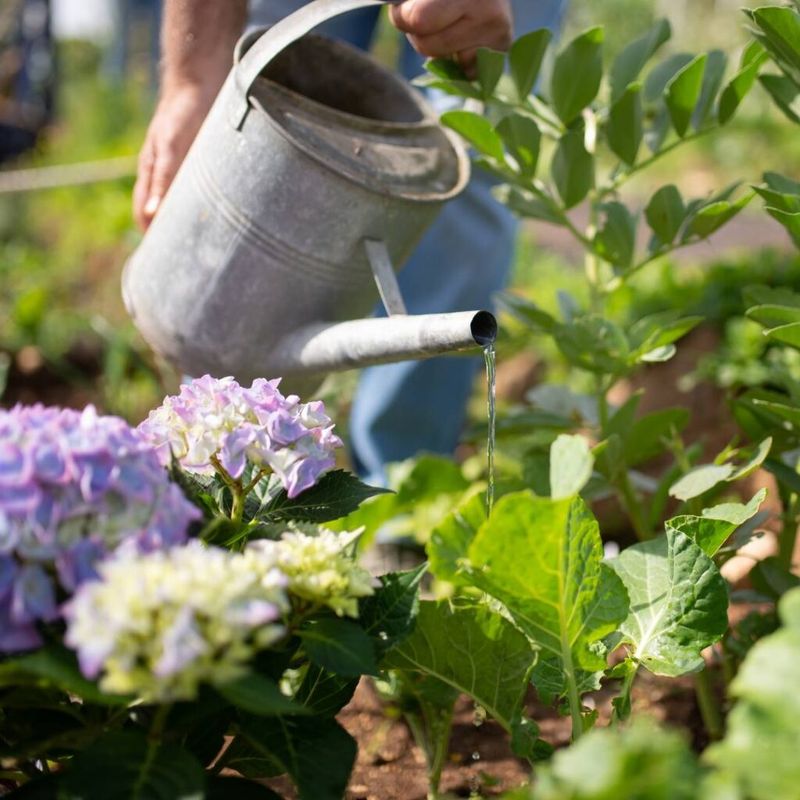
Once you confirm the root zone is genuinely dry, the rescue approach is straightforward: apply water slowly and steadily across the active root zone rather than giving the plant a quick splash from above. Texas A&M AgriLife Extension’s water-efficiency guidance recommends wetting soil deeply enough to reach the active root zone, since light surface sprinkling can wet only the top layer and evaporate before roots benefit.
Early morning is the best time to water. The plant gets moisture before peak heat arrives, and the foliage has time to dry during the day, which reduces the risk of fungal leaf-spot diseases.
A drip irrigation line, soaker hose, or a watering wand held low and aimed at the soil base works better than an overhead sprinkler for this reason. The goal is getting water to the roots, not rinsing the leaves.
Resist the urge to water every afternoon or twice a day just because the plant looks distressed. UGA Extension cautions that even during a heat wave, overwatering is a real risk.
Saturated soil pushes oxygen out of the root zone, which can injure or kill roots, and a hydrangea with damaged roots will droop and brown in ways that look almost identical to drought stress. Check the soil before each watering decision, and hold off if the root zone is still moist from the last session.
How often a given plant needs water depends on its species, age, soil type, container size, sun exposure, and recent rainfall, so no single schedule fits every situation.
Reduce evaporation and afternoon heat
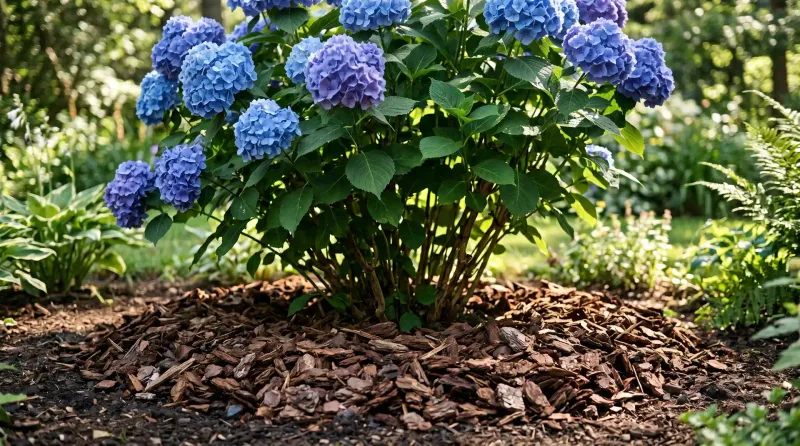
After correcting the moisture situation, the next priority is slowing how fast that moisture disappears. Organic mulch is one of the most practical tools available for Southern gardeners dealing with late-summer heat.
Spread around the base of the shrub, it slows evaporation from the soil surface and moderates soil temperature so roots are not baking between waterings. UGA Extension’s water-wise landscape guidance recommends mulching as a key strategy for reducing irrigation needs and protecting root zones during heat stress.
Common landscape guidance suggests approximately 2 to 3 inches of organic mulch for most shrubs, though some UGA ornamental guidance recommends 3 to 5 inches depending on the material and the specific situation. Whatever depth you use, keep the mulch a few inches away from the hydrangea’s stems and crown.
Mulch piled against the base traps moisture against the wood, which can encourage rot and disease over time.
Temporary afternoon shade can also help, particularly for newly planted shrubs or those in full-sun positions. A piece of shade cloth or a temporary structure positioned to block the harshest afternoon sun reduces heat load on the leaves.
Make sure any temporary cover allows air to move through freely, because poor airflow in humid Southern summers can encourage fungal problems. University of Arizona Extension guidance on extreme heat supports temporary protection for heat-stressed plants while being clear that it is a short-term measure.
If a site is fundamentally too hot, too dry, and too exposed for the hydrangea growing there, temporary shade and mulch can help but will not fully substitute for a better location.
Match the response to the hydrangea type
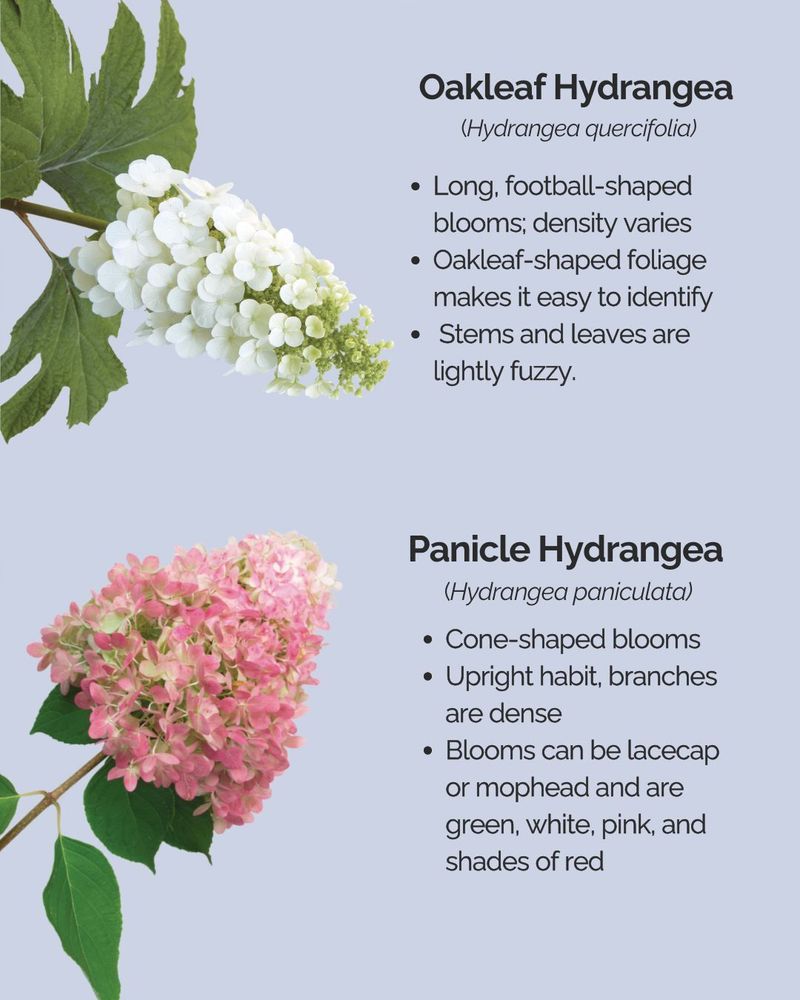
Not every hydrangea handles Southern summer heat the same way, and the type you are growing changes what kind of help it needs. Bigleaf hydrangeas, the classic mophead and lacecap varieties with large, soft leaves, are the most sensitive to afternoon heat.
UGA Extension’s bigleaf hydrangea guide specifically advises against planting them in hot, dry, or exposed locations, and recommends morning sun with afternoon shade and consistently moist but well-drained soil. When a bigleaf hydrangea droops on a hot afternoon despite adequate moisture, it is often doing exactly what its biology predicts in a tough exposure, not failing.
Panicle hydrangeas, which produce cone-shaped flower clusters, are considerably more sun-tolerant than bigleaf types and handle heat with more composure. They bloom on new wood, which also changes how and when you prune them.
If your hydrangea has survived a sunny spot without constant wilt complaints in past summers, there is a reasonable chance it is a panicle type.
Oakleaf hydrangeas occupy a middle ground worth discussing carefully, especially for Florida gardeners. University of Florida IFAS Extension identifies oakleaf hydrangea as a Florida-native-region plant with moderate drought tolerance that can grow in full sun or partial shade, though it still performs best in rich, moist soil.
Full sun and partial shade are not interchangeable here: flowering, leaf stress, and water needs all shift with exposure. The point is not that oakleaf hydrangea is a universal solution for every hot Southern yard, but that understanding which species you have changes both the diagnosis and the realistic expectations for recovery.
UMD Extension’s hydrangea problem guide reinforces that species differences matter when troubleshooting wilt and other symptoms.
Persistent morning wilt needs a deeper diagnosis
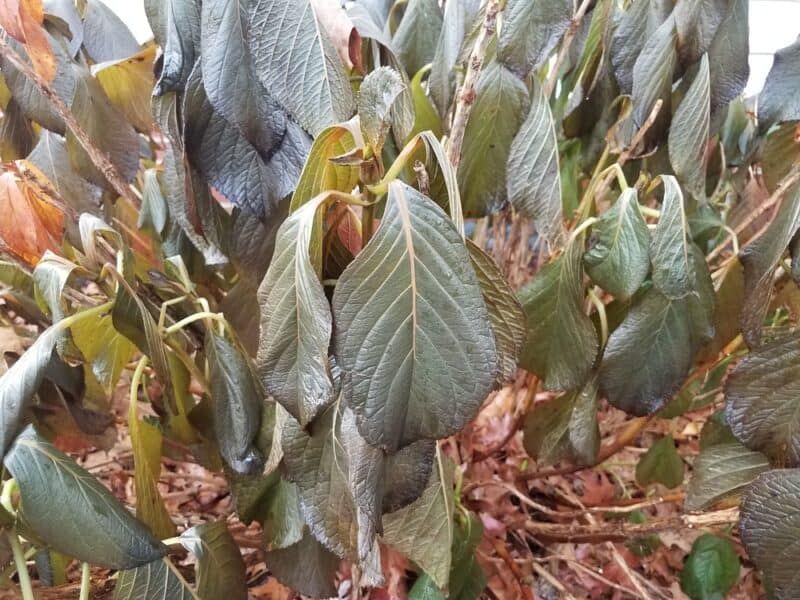
A hydrangea that perks up overnight after a hot day is usually telling you something manageable. One that is still drooping when you step outside in the morning, especially when the soil is not bone dry, is telling you something different, and adding more water is unlikely to be the answer.
Persistent morning wilt despite adequate soil moisture is a reason to look more carefully at what is happening at and below ground level. UMD Extension’s hydrangea problem resource points to root injury, poor drainage, disease, and transplant stress as possibilities when wilt does not resolve with normal care.
Check the drainage around the shrub: does water pool and sit after rain or irrigation? Soggy soil, yellowing lower leaves, dark or mushy roots, or a foul smell near the crown can indicate root rot or oxygen deprivation rather than drought.
Ask Extension guidance on overwatered and root-damaged plants notes that overwatered roots can produce drooping and leaf symptoms nearly identical to underwatering.
Recently planted hydrangeas deserve special attention here. The nursery root ball can dry out quickly in summer heat even when surrounding soil feels moist, but the plant still needs adequate drainage to avoid root problems.
Monitor these plants more closely during their first season.
Separate cosmetic damage from evidence of whole-plant failure before drawing conclusions. Browned or scorched flowers, scattered leaf spots, or a few crispy leaf edges are not the same as widespread stem dieback, crown lesions, or rapid collapse across the entire shrub.
UConn Extension’s hydrangea disease factsheet and Penn State Extension’s hydrangea disease guide both note that leaf spots are often cosmetic, while root, crown, and whole-plant decline symptoms warrant a professional diagnosis rather than a DIY remedy.
Avoid late-summer fixes that create new damage
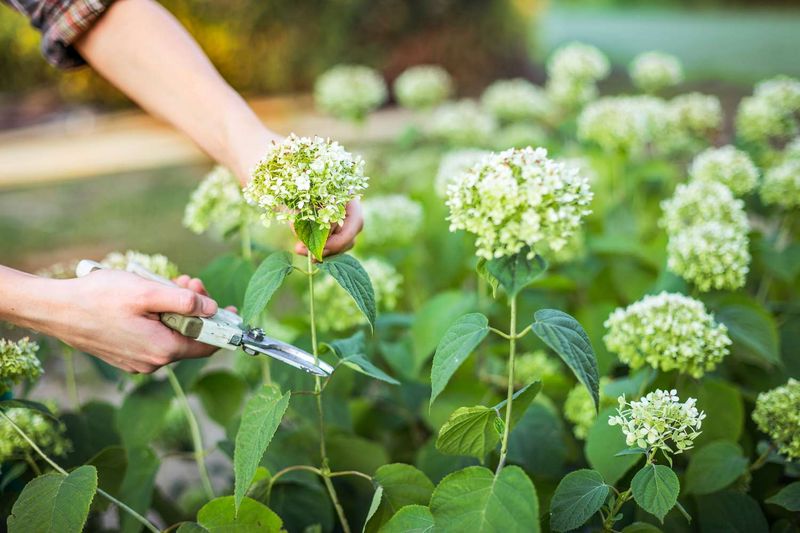
Panic pruning is one of the most common and most costly mistakes a gardener can make when a hydrangea looks stressed in late summer. Grabbing the shears and cutting back a declining plant feels productive, but it can strip away next year’s flowers before they ever open.
UMD Extension’s pruning guide explains that bigleaf and oakleaf hydrangeas set their flower buds on older wood from the previous season. Hard pruning in late summer removes those buds, and the plant may leaf out the following spring without blooming at all.
Panicle and smooth hydrangeas are the exceptions: they bloom on new wood produced in the current season and are generally pruned in late winter or early spring. UGA Extension’s hydrangea identification and pruning timing resource makes clear that identifying the type before making any cuts is the non-negotiable first step.
If you are not certain what you have, hold the shears and remove only obviously dead material.
Fertilizer should also stay on the shelf during a heat emergency. Ask Extension guidance on hydrangea fertilization notes that excess fertilizer can injure roots, and high nitrogen encourages leafy growth at the expense of blooms.
It is not a rescue treatment for wilt.
A few popular home remedies, including ice cubes, cold water applications, coffee grounds, and Epsom salt, have no reliable extension support as emergency wilt treatments. Skip them and focus on the soil check, correct watering, and reducing afternoon heat exposure.
On the topic of wetting leaves: Ask Extension does not support the idea that water droplets in sunshine burn hydrangea leaves. The more defensible concern is that prolonged leaf wetness from overhead irrigation can increase the risk of fungal leaf-spot disease, particularly in humid Southern summers, so directing water at the soil base remains the better practice.
Use a measured rescue plan and watch the trend
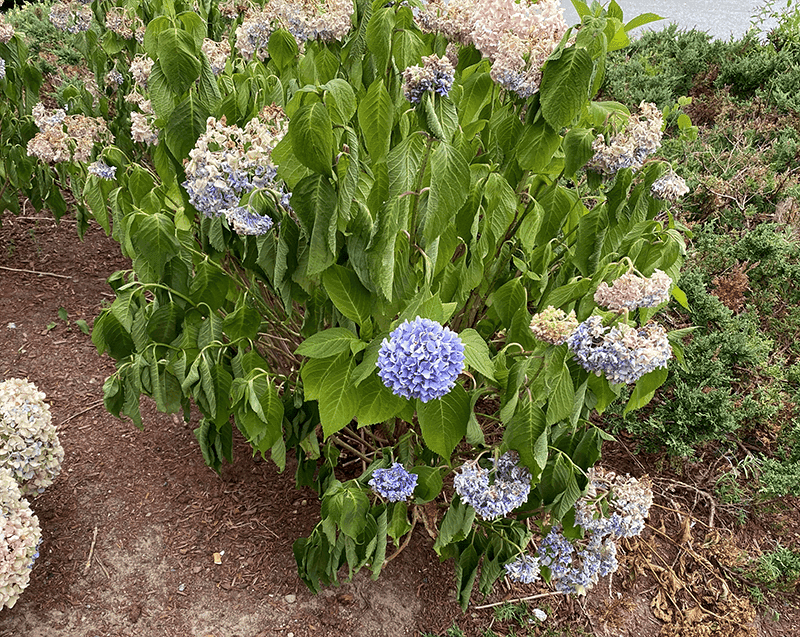
The rescue sequence is simple enough to remember on a stressful August morning. Check the plant early, before the heat of the day, and note whether the leaves have firmed up overnight.
Then test the root zone at a representative depth for your plant type: approximately 4 to 6 inches for an established in-ground shrub, or the root ball and surrounding medium for a container or recently transplanted hydrangea. UMD Extension and UGA Extension both ground this kind of soil-first decision-making as the safest approach during heat stress.
Water slowly and deeply only when that zone is dry. Add correctly placed mulch to slow evaporation, and consider temporary afternoon protection if the site is punishing.
Then monitor the trend over the next few mornings rather than reacting to every afternoon droop.
Many short-term heat-wilt episodes do improve once moisture and shade are addressed. Persistent morning wilt, root or crown damage, serious disease, severe scorch, or advancing dieback can move beyond what a watering correction alone can reverse.
Catching the real problem early gives a struggling hydrangea its best realistic chance, and sometimes the most useful thing a gardener can do is read the plant honestly rather than fight the heat one bucket at a time.