
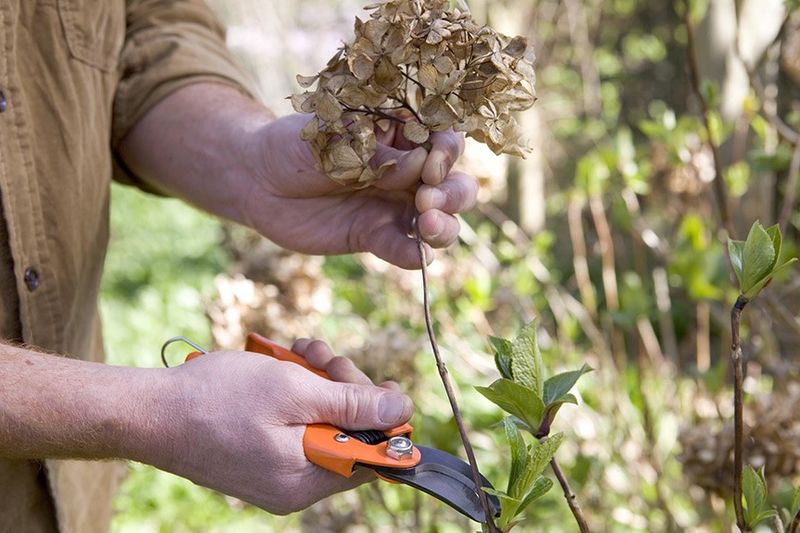
Watching your hydrangea push out leaf after leaf while producing almost no flowers is genuinely frustrating, especially when the plant looks otherwise healthy. For many Southern gardeners in Florida and Texas, the culprit may have shown up months before summer even started.
A pruning cut made at the wrong time of year can quietly remove the very buds that would have opened into this season’s blooms. Understanding why that happens, and how to prevent it going forward, can make a real difference in how your plant performs next year.
A pruning cut months ago may explain this summer’s sparse display
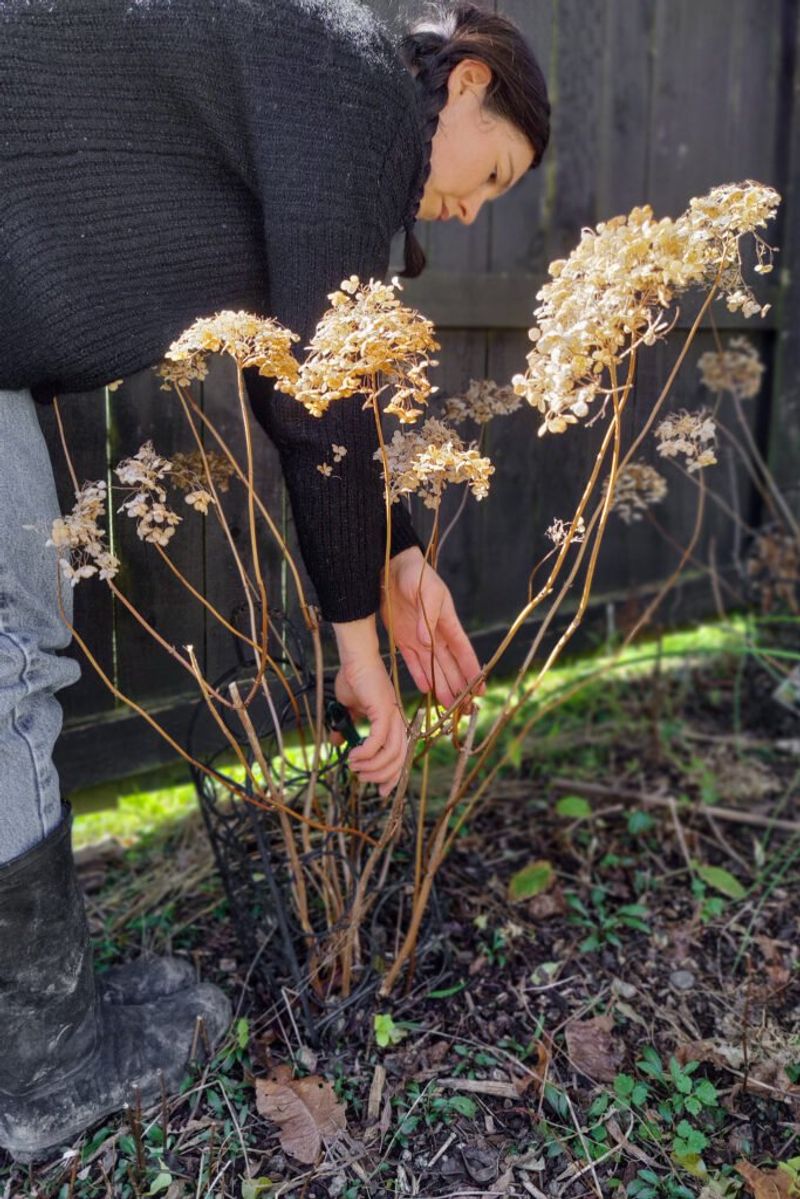
Bigleaf, oakleaf, and mountain hydrangeas share a trait that surprises a lot of gardeners: they generally form their flower buds on stems produced during the previous growing season. Those stems are called “old wood,” and the buds sitting on them in late fall and winter are the same buds that should open into flowers the following summer.
Prune those stems away before the buds get a chance to open, and you remove the flowers along with them.
That timing mismatch is why a pruning cut made last October, January, or even April can show up as a near-flowerless plant this July. University of Georgia Extension guidance on bigleaf hydrangeas consistently points to mistimed pruning as one of the most common reasons established plants fail to bloom.
The mechanism is straightforward: no old wood means no stored buds, and no stored buds means no flowers that season.
That said, mistimed pruning is a common and important possibility, not a proven explanation for every sparse plant. Penn State Extension’s guide on hydrangea bloom failures makes clear that freeze injury, deer browsing, excessive shade, drought, and other factors can produce the same symptom.
Some sources describe reduced or even absent flowering after bud loss, but none establish a universal percentage reduction that applies to every plant. Treating mistimed pruning as a likely starting point for diagnosis is reasonable; treating it as the guaranteed answer is not.
Identify the hydrangea before you reach for the pruners
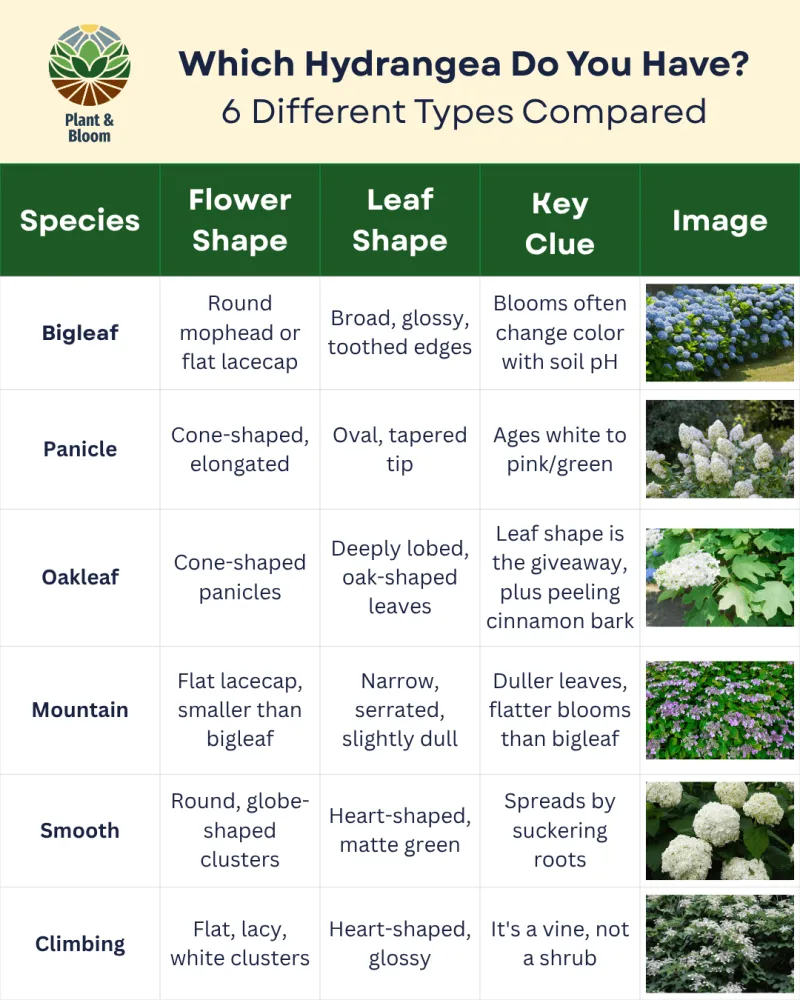
Knowing your hydrangea species is the single most useful thing you can do before making any pruning decision. Common names are unreliable guides here because several very different plants get sold simply as “hydrangeas” at garden centers across Florida and Texas.
Bigleaf or French hydrangeas (Hydrangea macrophylla) are among the most widely planted in the South. They come in mophead forms with large, rounded flower clusters and lacecap forms with flat, open blooms ringed by showy petals.
Oakleaf hydrangeas (H. quercifoliaH. serrata) are identifiable by their deeply lobed, oak-shaped leaves and elongated cone-like flower heads; they are native to the Southeast and well-suited to many Southern landscapes. Mountain hydrangeas () closely resemble bigleaf types but tend to be smaller and slightly more cold-hardy.
All three of these generally bloom on old wood, which means pruning timing matters a great deal. UGA Extension Forsyth County’s identification guide walks through these distinctions clearly and connects species identity directly to pruning timing.
Smooth hydrangeas (H. arborescensH. paniculata), including the popular ‘Annabelle’ variety, and panicle hydrangeas (), which produce large cone-shaped clusters, both bloom on new wood grown during the current season. University of New Hampshire Extension’s pruning fact sheet confirms that these types are far more forgiving of late pruning because their flower buds have not yet formed when you cut.
When in doubt, combine the plant label, leaf shape, flower form, and growth habit rather than relying on a common name alone.
Stop trying to repair an old-wood pruning mistake with another hard cut
Finding out you pruned an old-wood hydrangea at the wrong time can feel like a problem that needs fixing right away. The instinct to cut again, hoping to stimulate new growth or somehow reset the plant, is understandable but usually makes things worse.
The right response is to leave healthy surviving stems exactly where they are. Penn State Extension explains that a plant which lost its old-wood buds to mistimed pruning may still push out plenty of foliage but will likely produce few or no flowers for that season.
That is a normal, if disappointing, outcome. Removing more stems in an attempt to correct the situation just eliminates whatever bud potential may still remain on the plant.
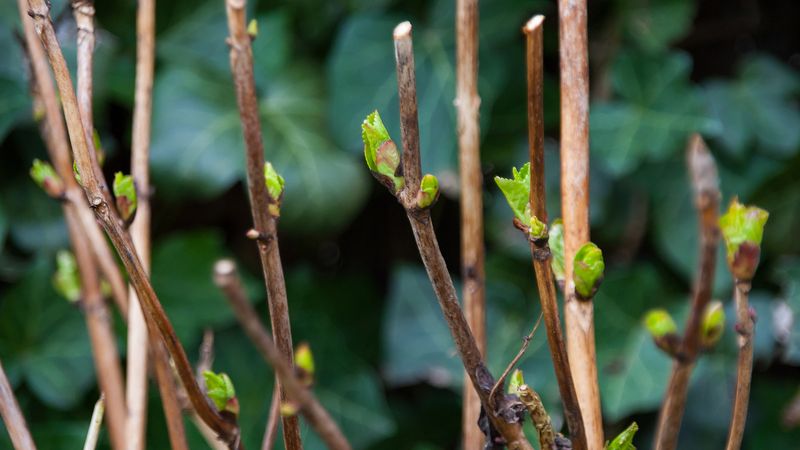
What you can safely remove is wood that is clearly dead or damaged. A simple tissue check makes this straightforward: scrape or cut into a stem and look at the inside.
Green tissue means the wood is alive; brown or tan tissue throughout indicates it is dead. UGA and UNH Extension both recommend waiting until spring growth begins when possible before removing suspected dead stems, because living buds on bigleaf hydrangeas can appear on stems that look dead from the outside through winter.
Patience at this stage protects viable wood and gives the plant its best chance to recover on its own schedule.
Prune old-wood types soon after flowering, not by a blanket calendar rule
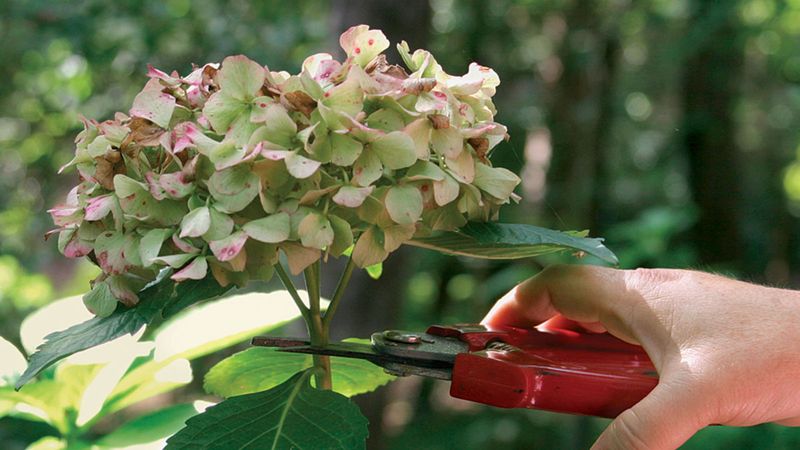
For bigleaf, oakleaf, and mountain hydrangeas, the safest and most productive pruning window opens shortly after the flowers fade. The goal at that point is modest: remove spent flower heads, cut out any dead or crossing stems, and leave the new green growth that has been emerging from the base and along older canes.
Those new stems are already building the buds that will carry next summer’s flowers.
UGA Extension Paulding County advises finishing pruning on old-wood bigleaf hydrangeas no later than around early to mid-August as a Georgia-based guideline, because bud development on new stems begins relatively soon after flowering. That timing is a useful regional reference point, not a fixed deadline for every garden in Florida or Texas, where heat, moisture, cultivar differences, and local growing conditions all shift the picture.
The more reliable anchor is the end of flowering itself: once your plant has finished blooming and you can see healthy new growth developing, that is the window to work in.
UGA Extension recommends light pruning for oakleaf hydrangea and pruning bigleaf hydrangeas immediately after flowers fade, emphasizing selective cuts over hard renewal cutbacks. Clemson Cooperative Extension similarly distinguishes between light, targeted pruning and heavy cuts that sacrifice the following season’s buds.
For a gardener looking at an established plant in late August after flowering has ended and new growth is well underway, a hard cut is generally not the right move. Selective removal of dead or finished stems is the safer choice at that stage.
New-wood hydrangeas can follow a later pruning schedule
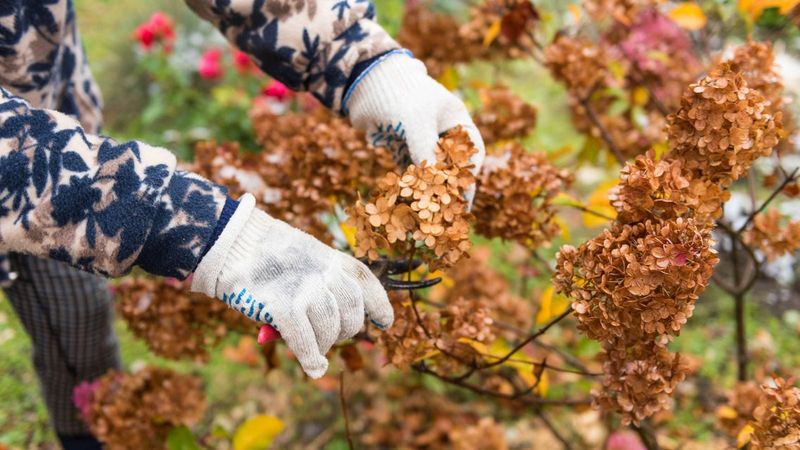
Smooth and panicle hydrangeas operate on a completely different schedule from their old-wood cousins, and treating them as if they share the same pruning rules can cause unnecessary frustration. Both types set their flower buds on current-season stems, which means last year’s wood does not carry the blooms.
Cutting them back in late winter or early spring, before new growth begins, does not remove any flower potential because those buds have not yet formed.
University of New Hampshire Extension confirms that smooth and panicle hydrangeas can tolerate harder pruning during the late-winter window, and many gardeners use that flexibility to manage plant size and encourage robust new growth. Penn State Extension reinforces that species identity determines pruning timing, which is why identifying the plant before picking up the shears matters so much.
Reblooming bigleaf cultivars, including those sold under the Endless Summer brand and similar remontant lines, sit in a separate category worth understanding on their own terms. Clemson Extension notes that these cultivars can produce flowers on both old and new wood, which gives them some ability to recover bloom after losing old buds to pruning or cold injury.
Even so, they are not fully immune to timing mistakes: their first flush of the season, which comes from old wood, can still be reduced or lost if stems carrying those early buds are removed. Reblooming types are a partial exception, not a no-consequences option.
Check freeze, light, water, browsing, and fertilizer before blaming the shears
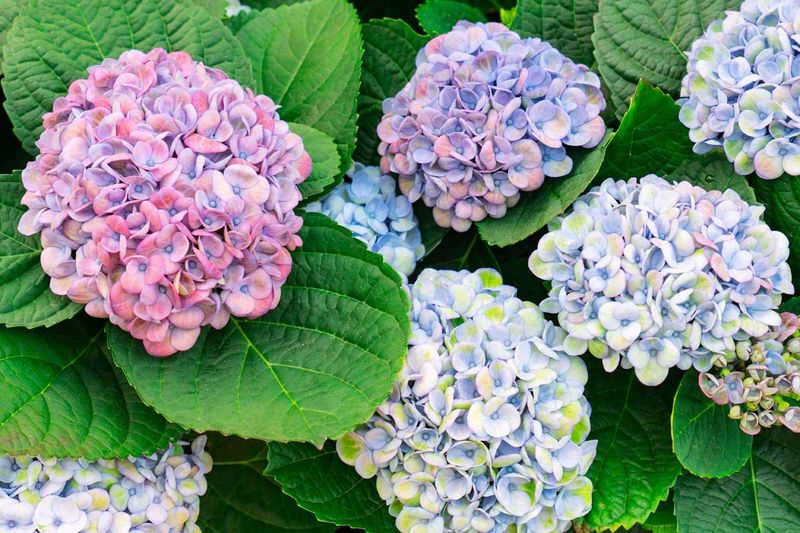
Pruning is not the only reason an established hydrangea might show up with sparse flowers in summer. Several other factors can produce the same symptom, and some of them are more likely than a pruning mistake depending on your specific site and winter conditions.
Winter and late-spring freeze injury ranks high on that list for much of the South. Bigleaf hydrangea buds are relatively cold-sensitive, and a hard freeze after buds have begun to swell can kill them even when the gardener did everything correctly.
Penn State Extension identifies severe winter injury and late frosts as significant causes of few or no flowers, distinct from any pruning issue. Deer browsing is another frequently overlooked culprit; deer will eat the tender stem tips where buds are forming, producing a result that looks almost identical to pruning damage.
University of Maryland Extension lists deer browsing alongside freeze injury as common causes of bloom failure that gardeners sometimes misattribute to their own care practices.
Light and moisture conditions also shape flower production in meaningful ways. UGA Extension guidance on bigleaf hydrangeas notes that they generally perform best with morning sun, afternoon shade, moist but well-drained soil, and protection from hot, dry exposure.
Too much shade, however, can reduce flowering just as excessive heat and drought stress can. Poor drainage stresses roots and limits the plant’s ability to support bloom production.
Fertilizer deserves its own caution. Mississippi State University Extension warns that excess nitrogen can push a hydrangea toward lush, dark-green foliage at the expense of flowers.
Fertilizer should not be used as a reflexive bloom booster; a soil test and product-label guidance are better starting points. Altering soil pH is similarly limited in scope: it affects flower color in responsive bigleaf cultivars but does not restore buds that were never formed or were killed by cold or pruning.
Use a simple seasonal plan to protect next year’s flowers
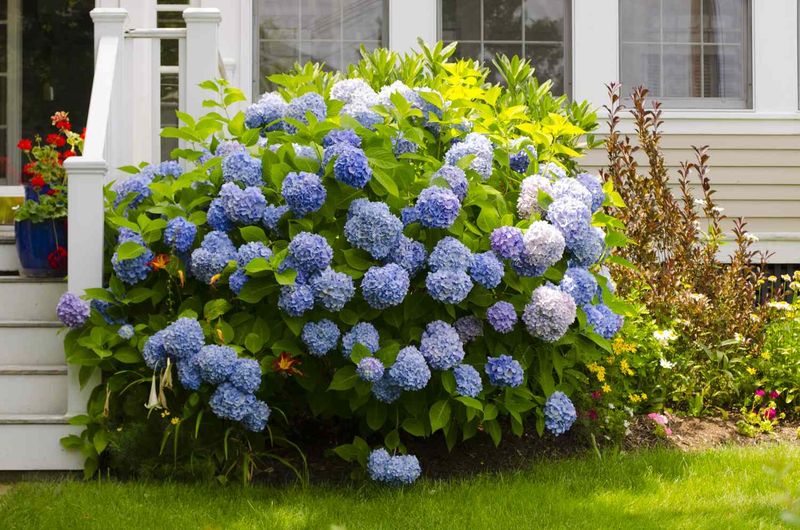
Protecting next summer’s flowers starts with knowing what you are growing. Confirm the species or cultivar before the season ends, and note it somewhere accessible so the information is there when pruning time arrives.
A plant tag, a photo of the flower form, or a quick comparison against an identification guide can save a lot of guesswork later.
From there, the plan stays simple. Record when your old-wood types finish flowering, then do any light pruning, spent flower head removal, and dead wood cleanup shortly afterward.
UGA Extension Forsyth County ties pruning timing directly to the end of flowering rather than to a fixed calendar date, which is the more reliable guide across different cultivars and Southern microclimates. Reserve late-winter or early-spring pruning for smooth and panicle types only.
UGA’s bigleaf hydrangea guidance emphasizes consistent moisture and suitable site conditions as ongoing factors in bloom performance, not just one-time fixes.
A plant affected by mistimed pruning may need a full growth cycle to recover, and that is a normal part of the process. UNH Extension notes that persistent sparse flowering after correcting pruning habits should prompt a broader review of site conditions, freeze history, browsing pressure, and cultivar suitability rather than more cutting or untested amendments.
The most reliable route to better blooms is a consistent, species-appropriate routine – not a dramatic intervention made in frustration.