
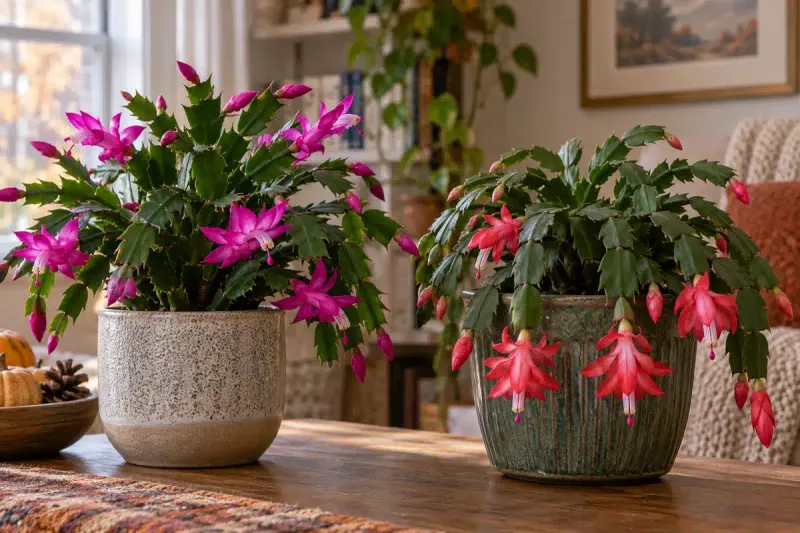
You waited all season for those little buds, and now they are landing on the windowsill. It feels like a small disaster, especially when the plant looked so promising a week ago.
The cause is not always obvious, and a move is only one of several things worth checking. Here is how to look at your plant calmly and give it steadier conditions.
A move is a clue, not a diagnosis
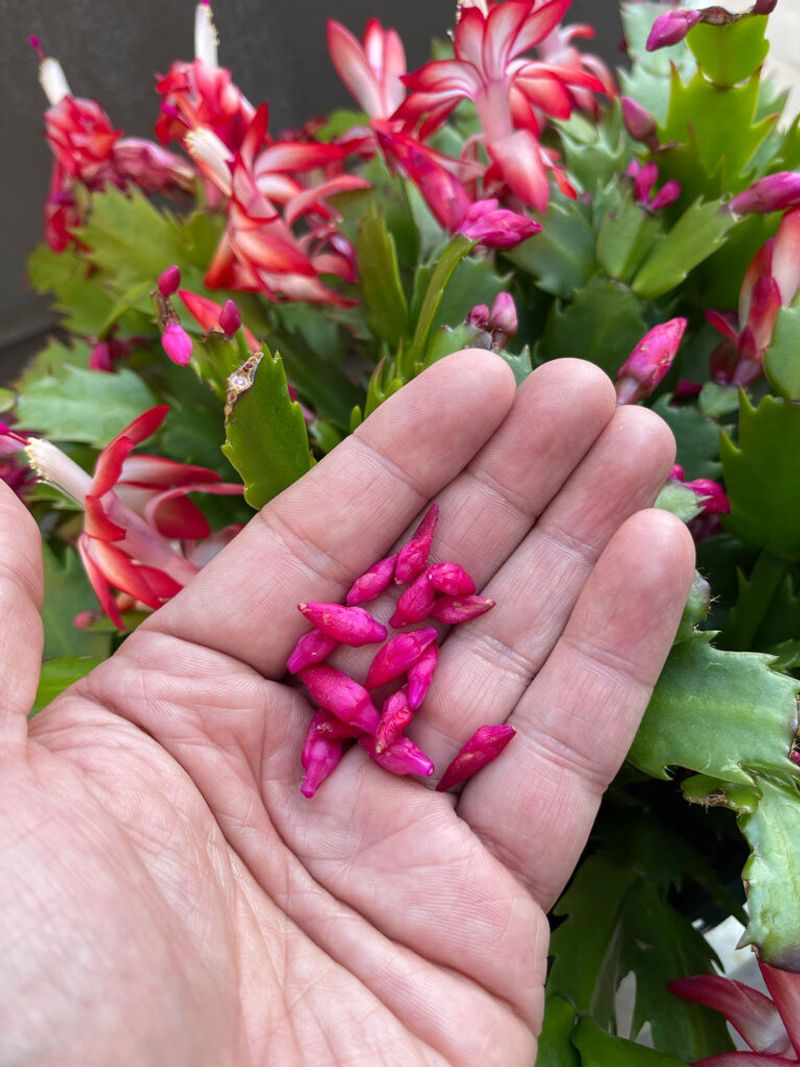
Buds on the floor right after you carried the plant to a new spot make a move look guilty. It may be a clue, but it is not proof.
Bud drop by itself cannot tell you the cause, because several different problems look exactly the same.
Thanksgiving cactus is Schlumbergera truncata, and its care profile is outlined in North Carolina State Extension’s plant profile. Much of the advice you will find covers holiday cacti as a group, including Christmas cactus, so treat the guidance as closely related rather than studied on this one species alone.
The more useful question is what changed around the move. Iowa State Extension suggests avoiding relocation while buds develop, and Minnesota Extension says drafts and sudden temperature or humidity shifts can trigger drop.
Neither one says the move itself is the usual culprit, so the next sections walk through temperature, drafts, light, humidity, and watering.
Look for the change a move introduced
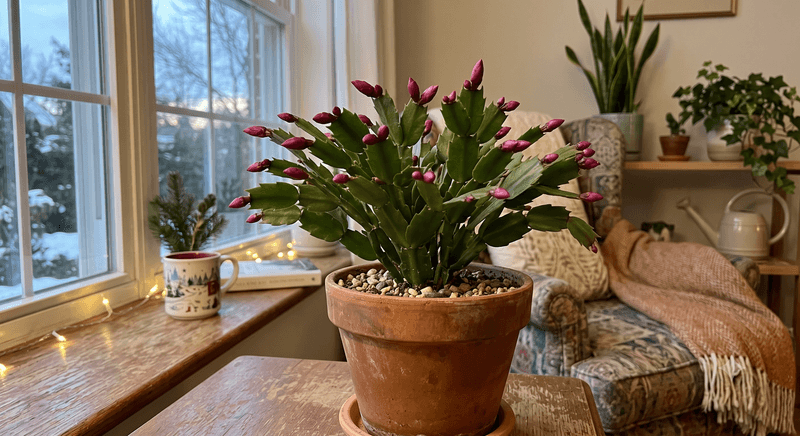
Think back to the day the buds started falling. Did the plant land near an air-conditioning vent, a door that opens all day, or a window that gets hot afternoon sun?
In Southern homes, those spots can swing the temperature, airflow, and light in a hurry.
Bringing a plant in from the porch counts too. In a UF/IFAS Extension Nassau County response, a Christmas cactus moved indoors from a porch lost buds, and the agent suspected the temperature change.
That is one case, not proof that temperature is always behind it.
Temperature limits vary by source. Missouri Extension says nights above 70°F can inhibit flowering and cause existing buds to drop, while Iowa State gives a somewhat different range.
Treat these as guideposts, not a single cutoff for every home. Also note humidity and watering, since a new spot may dry the soil faster than the old one.
Choose a steady spot for developing buds
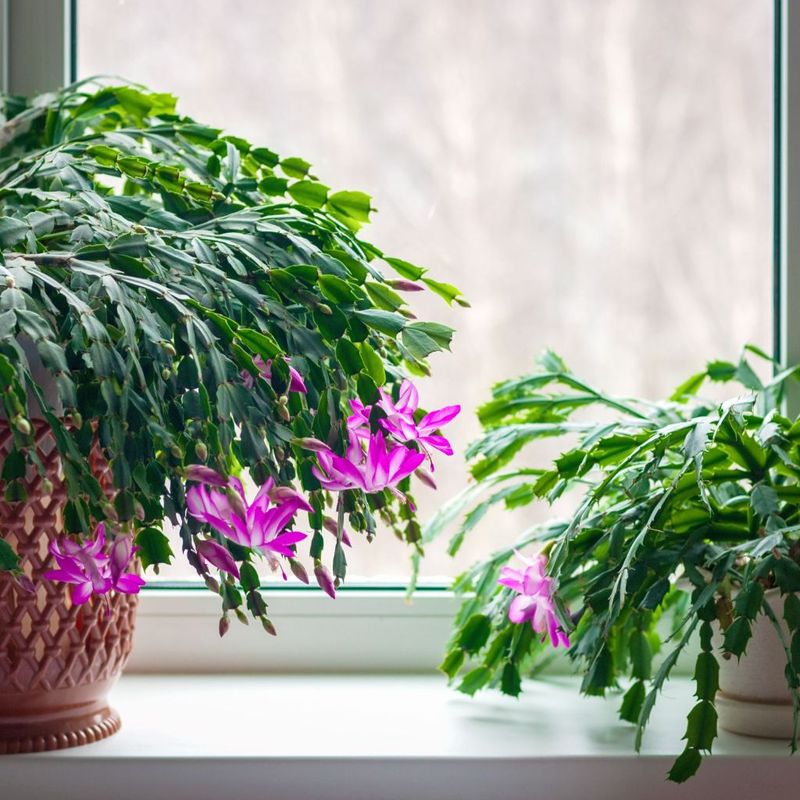
Bright, indirect light works well for most holiday cacti. Look for a spot away from drafts, heating or cooling vents, and spots where the temperature jumps through the day.
A bright room with a steady feel often beats a perfect window that gets blasted by the air conditioner.
Iowa State suggests roughly 60 to 70°F as a suitable indoor range, and Minnesota lists daytime temperatures of 65 to 70°F with nights of 55 to 65°F for flowering. Think of these as general care ranges, not a promise that your buds will hold.
Sources differ on relocation. Iowa State advises not moving the plant during bud development, while Minnesota says that if it is headed to a warmer room, move it when buds first appear.
A practical middle path is to pick the intended spot early when you can and skip unnecessary moves.
If a move cannot be avoided, make it once. The UF/IFAS response cautions against shuttling a plant back and forth, since that could add another shock.
Water by the soil’s condition, not a calendar
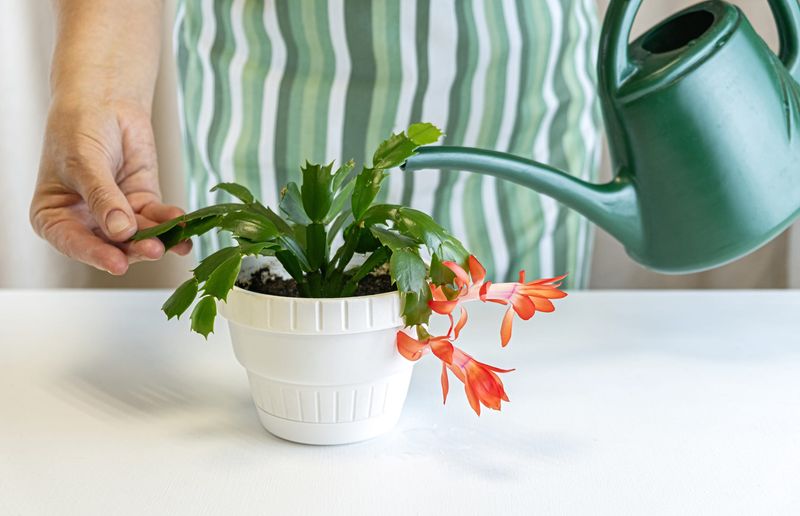
Soil that stays bone dry and soil that stays soggy can both cause trouble once buds form. Iowa State recommends evenly moist soil during budding and flowering and warns that dryness can lead to bud drop.
Minnesota cautions that excess water can cause bud drop, wilting, and root rot.
Instead of watering every Saturday, press a finger into the mix. If the top feels dry and the pot feels light, it is likely time for a drink.
If it still feels damp, wait a day or two and check again.
Drainage matters as much as timing. Empty the saucer or decorative pot after watering so the roots are not sitting in a puddle.
Because dry soil and wet soil can both end with fallen buds, you cannot tell which one happened just by looking at the buds on the floor. Check the pot, the mix, and the drainage before deciding anything.
A few dropped buds may not mean you did something wrong
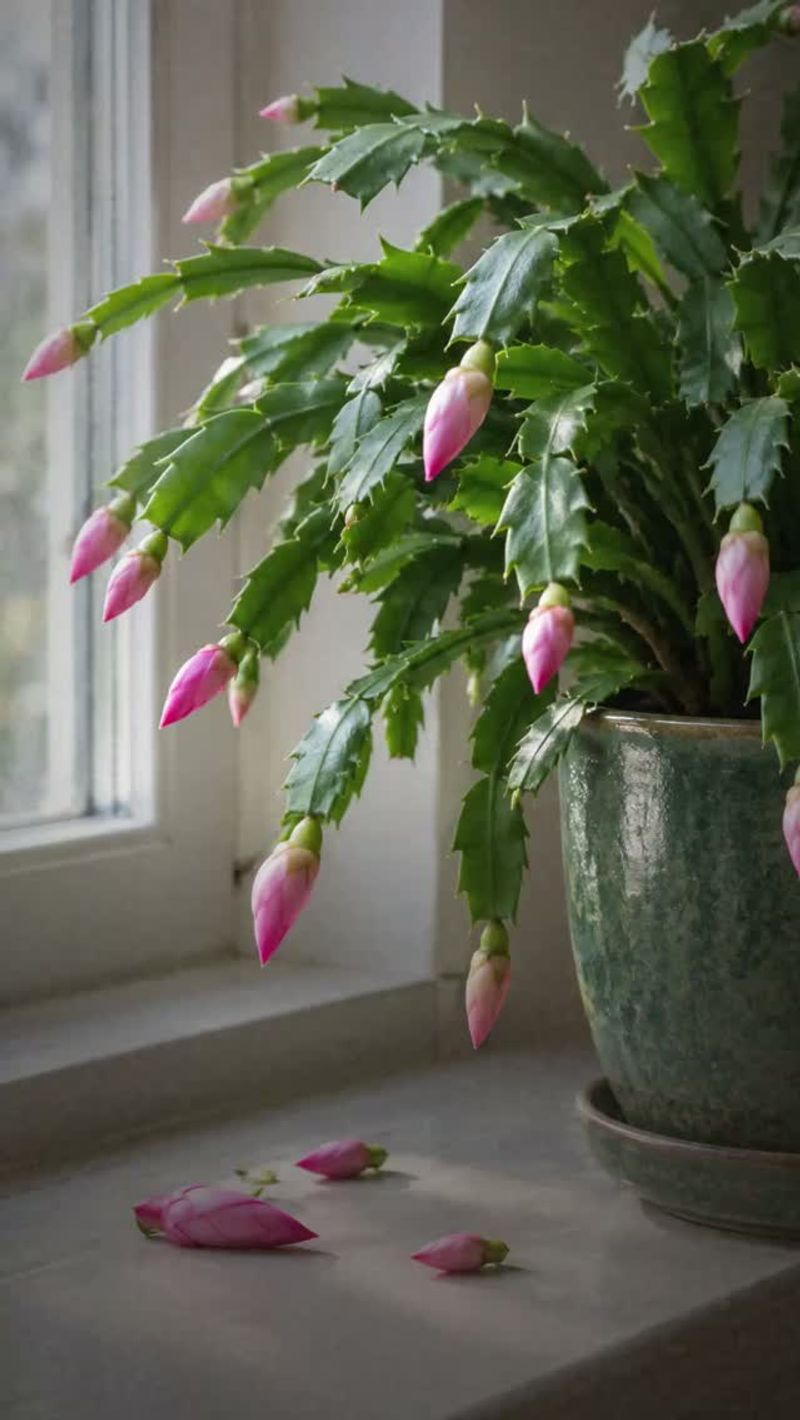
Sometimes the plant is simply editing itself. Minnesota Extension notes that a holiday cactus may shed some buds when it sets more than it can support, a kind of self-pruning.
That is reassuring, but keep it in proportion. Self-pruning does not rule out stress from drafts, temperature swings, or watering, and nobody can confirm it for your individual plant.
A few buds on the saucer while the plant looks otherwise healthy is a very different picture from a steady stream of buds falling day after day. Notice how many have dropped, whether the stems look firm, and whether the loss is slowing or speeding up.
One or two fallen buds do not mean you mishandled the plant. Watching for a pattern gives you better information than worrying over every bud.
Stabilize conditions when bud drop starts
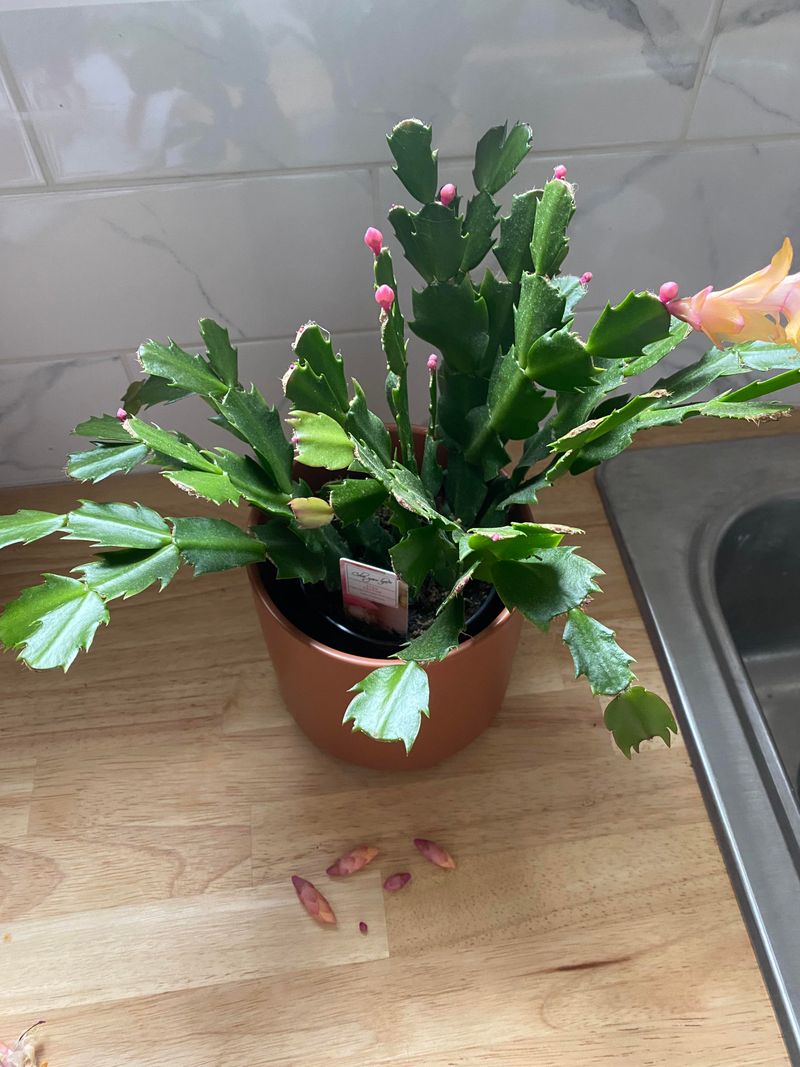
Start by holding the plant still. Skip unnecessary moves and rotations while you look things over, since each change adds another variable.
Next, check for drafts and abrupt temperature changes, such as a vent, an exterior door, or a hot window. Then check the soil and drainage.
Iowa State and Minnesota both point to dryness and excess water as possible problems, so let what you find guide you.
If one clear issue turns up, fix that one thing. Changing light, water, and location all in one day makes it hard to tell what helped, and it can stress the plant more.
If you must relocate it, as in the UF/IFAS porch example, make a single move and avoid shuttling it back and forth. Steadier conditions may reduce further stress, but they cannot promise the remaining buds will stay or that fallen ones will return.
Set up the next bloom before buds form
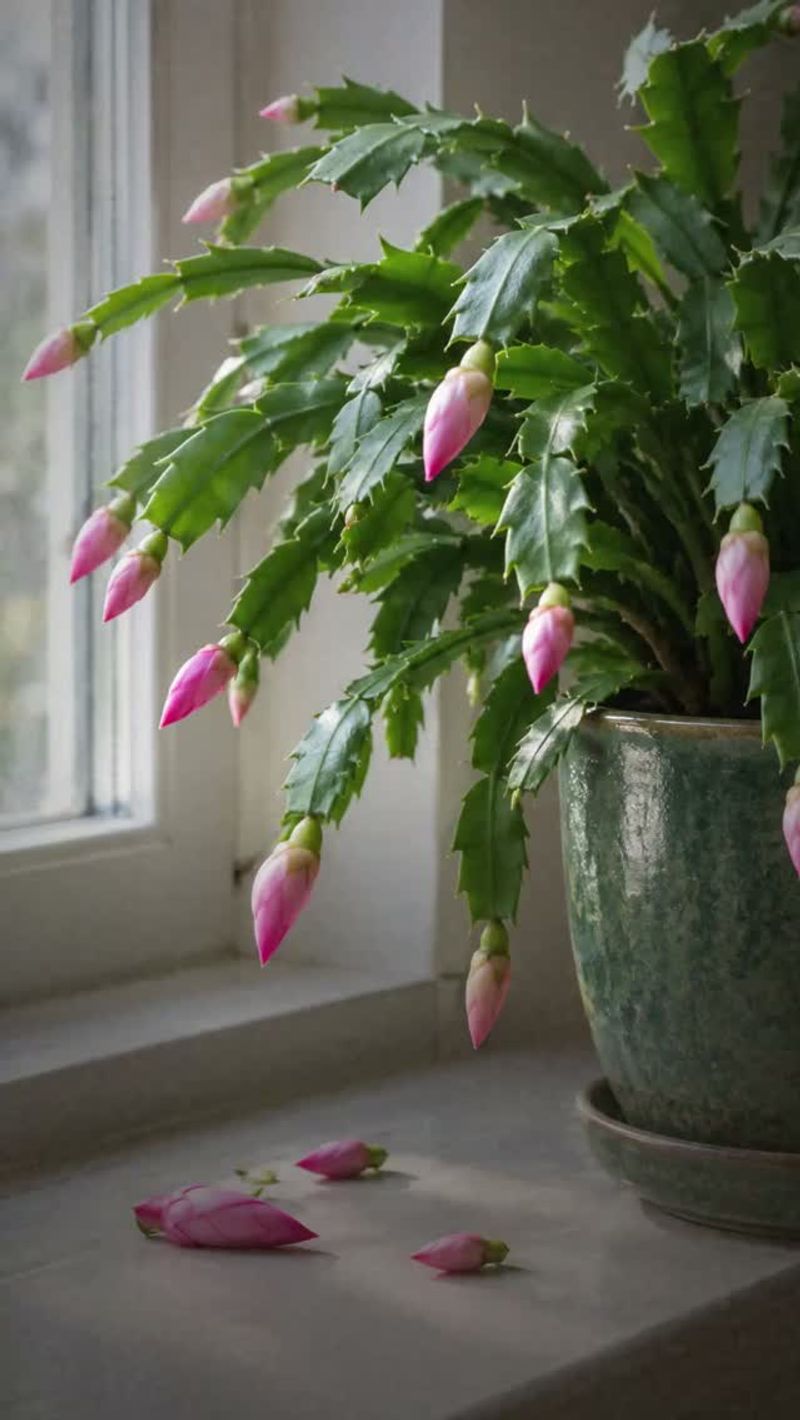
Getting buds started is a separate job from keeping them. Bloom initiation depends on short days and cool nights, and neither cue explains why buds that already formed are dropping.
Iowa State and Minnesota Extension both point to roughly 12 or more hours of uninterrupted darkness as a flowering cue. Exact needs vary with the cultivar and your conditions, so use this as a starting point.
In a Southern home, the practical version is a spot where lamps, TV glow, and porch lights do not interrupt the night in the weeks before buds appear. Cooler nights can help as well, though warm Florida and Texas autumns may make that harder indoors.
Plan the final location at that stage, before buds form, so you will not need to move the plant later. A plant that has settled in has the best chance to put its energy into flowers.