
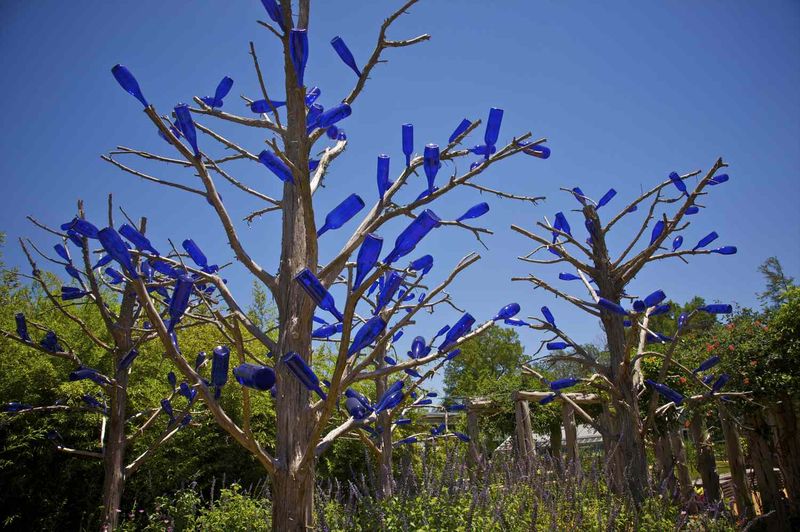
Maybe you spotted glowing blue bottles on a crepe myrtle down the road and wondered what they were about. Bottle trees are a familiar sight in Southern yards, and they carry a long and layered story.
The people who keep them have different reasons, from honoring family to simply liking the color. Here is what the history says, what it leaves unsettled, and how to enjoy one safely.
A bottle tree can mean more than one thing
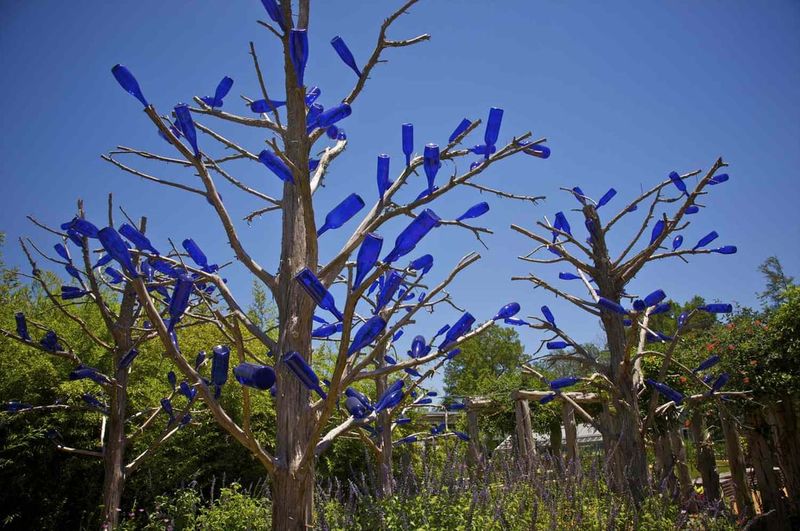
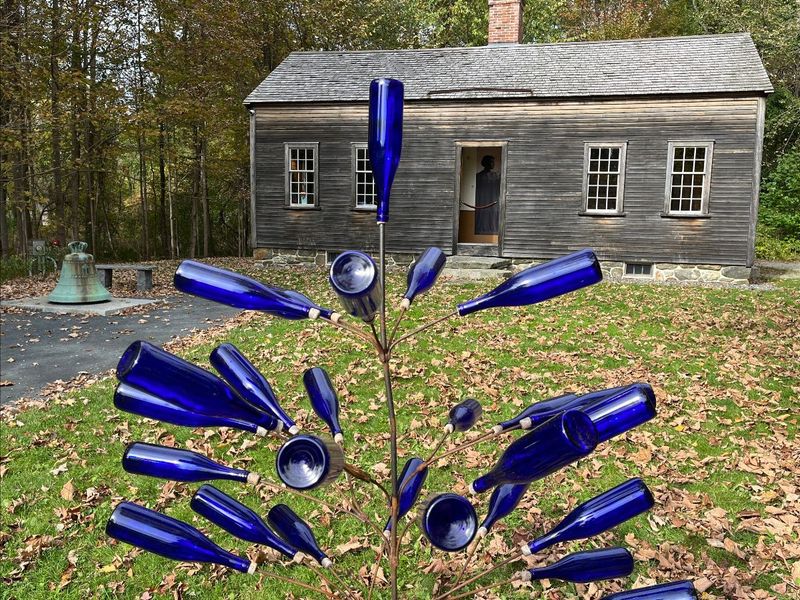
A bottle tree is a simple idea. Glass bottles are placed on the branches of a tree or on a purpose-built frame, usually a metal pole with several arms.
Smithsonian Gardens notes that both tree-mounted and metal-frame versions exist, and that the form has taken on different cultural and aesthetic meanings over time.
That variety is the key point for any curious neighbor. Some people keep bottle trees as spiritual protection for the home.
Others treat them as memorials for a loved one, as a link to family or cultural heritage, or just as colorful garden art.
Portia Cobb, an artist and filmmaker writing for the College of Charleston’s Avery Research Center, describes contemporary meanings that include protection, memorial, and adornment. Her account shows that two displays that look almost the same can mean very different things to the people who made them.
So the bottles alone cannot tell you what a particular neighbor has in mind. A tree full of blue glass may be a family tradition, a tribute, a gift from a relative, or a bargain-hunting decorating project.
Nothing about the look of it settles the question.
It helps to separate two things. One is the documented tradition, the folklore and history that researchers and writers have recorded.
The other is the personal meaning of the display in your neighbor’s yard, which only your neighbor can explain. The next sections cover the first so you can respect the second.
The haint story describes a protective folk belief
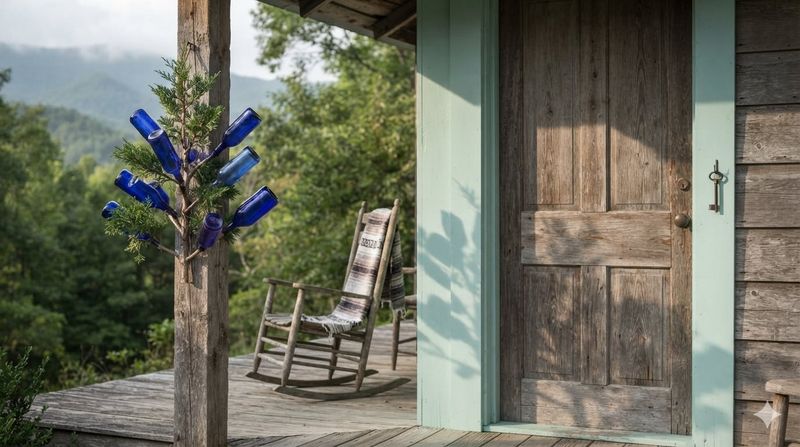
The best-known explanation for bottle trees comes from Southern folklore. In one common tradition, spirits, often called haints, are drawn into the bottles at night and become trapped inside.
The belief holds that this protects the home and the people living there.
Some versions of the story add a second step. When morning comes, sunlight is said to destroy the trapped spirits.
Smithsonian Gardens describes this belief as part of the bottle tree’s story.
It is a belief, not a demonstrated effect. Nobody has shown that bottles capture spirits, and the stories are best understood as part of a spiritual and cultural tradition.
The Mississippi Encyclopedia likewise reports these ideas as folk belief.
The story also helps explain why the custom has lasted. A bottle tree gives a household a visible, hands-on way to express a wish for safety and peace.
For people who hold the belief, that meaning is real and personal.
That does not mean every owner shares it. A neighbor with a bottle tree might know the haint story well, might enjoy it as a family tale, or might never have heard it.
Treating the folklore as one possible meaning keeps you from guessing at someone else’s beliefs.
The history points to African traditions, but not one settled origin
Writers commonly link bottle trees to African and African American culture. Smithsonian Gardens connects the custom to Kongo practices, then to its development in the Americas during the era of the transatlantic slave trade, with the familiar form likely taking shape among Creole communities in the Americas.
That is a meaningful thread, but it is not a straight, proven line. The Mississippi Encyclopedia says plainly that the exact origin is unknown.
It presents an African funerary practice as the most probable beginning, which is a reasoned proposal rather than settled fact.
You may see confident claims online that bottle trees began in a specific century or place. Those are too certain.
Historians have not documented an unbroken chain from one African practice to every bottle tree standing in an American yard today.
What can be said fairly is this. The tradition is strongly associated with African and African American communities, Kongo practices are a commonly cited influence, and the form changed as it moved and was reshaped in the Americas.
Exactly how, when, and by what route it reached the modern yard remains uncertain.
That uncertainty is worth keeping in mind. It reminds us that folk traditions often travel through families and communities without leaving tidy paper trails, and that the honest answer is sometimes that we only know part of the story.
North Carolina has evidence of ritual bottles, not proof of bottle trees
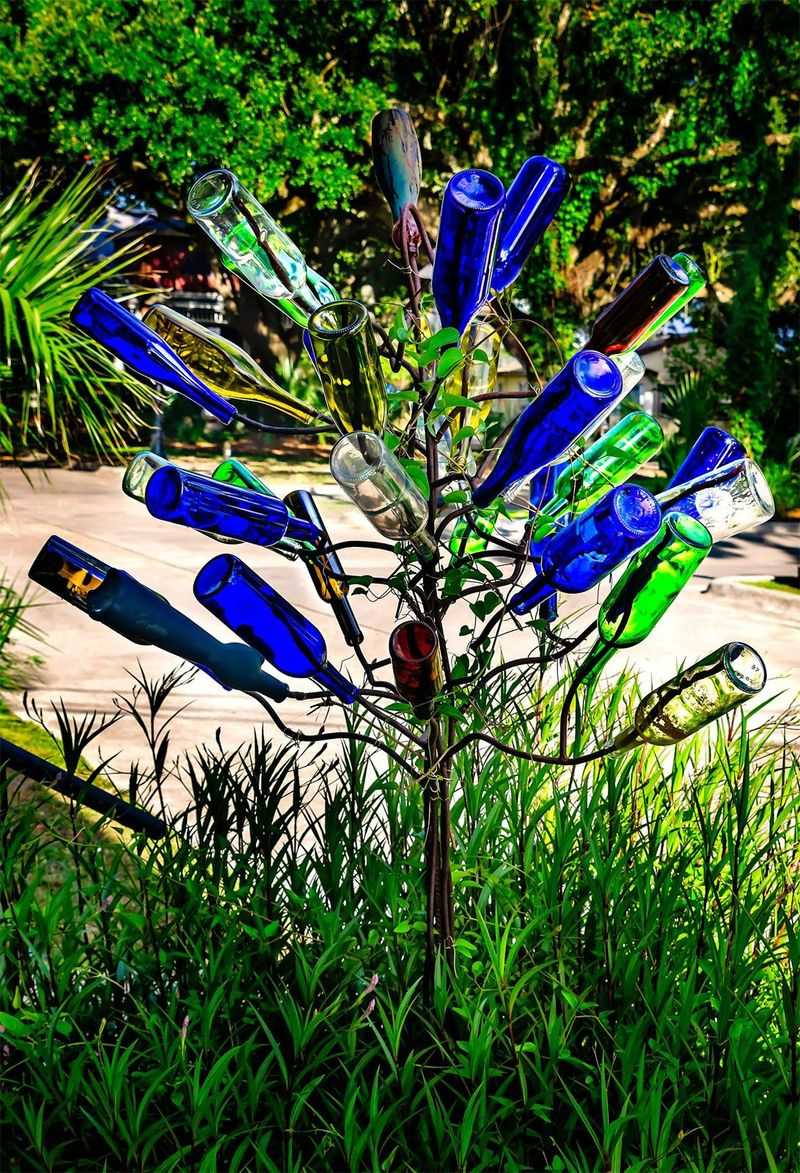
North Carolina has its own documented history of African American spiritual practice. NCpedia describes conjure as a tradition among free and enslaved Black North Carolinians, a body of belief and practice tied to healing, protection, and spiritual power.
Archaeology adds a physical clue. An archaeological synthesis reports that Patricia Samford identified conjure bottles at North Carolina slave sites.
These finds show that bottles were used in ritual settings in the state.
Here is the catch. A conjure bottle found in the ground is not the same thing as a bottle tree standing in a yard.
They are related practices that share glass and spiritual purpose, but they are not identical.
So these discoveries cannot be used to claim that bottle trees were widespread in North Carolina, or that any specific site once had one. The evidence supports a narrower and more careful statement: ritual bottle use is documented here, while the outdoor bottle-tree form is a separate question.
If you enjoy local history, that gap is a good reason to look closer. A neighbor’s bottle tree may reflect family ties to other parts of the South, personal taste, or a tradition brought here in more recent generations.
Blue is familiar, but bottle trees have no single fixed look
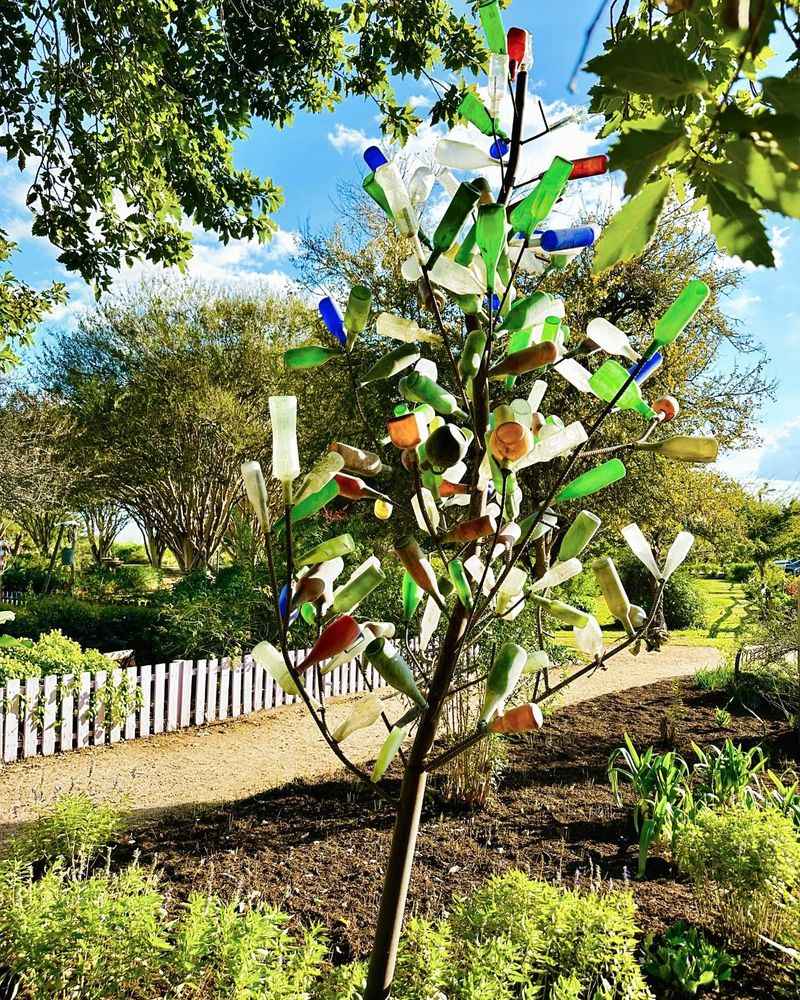
Blue is the color most people picture, and the association is strong. Cobalt glass catches light beautifully, and blue bottles are closely tied to the custom in many accounts.
Still, blue is not required. Both Smithsonian Gardens and the Mississippi Encyclopedia describe green and other colored bottles, and the form and meaning of bottle trees have changed over time.
The structure varies too. Some bottles sit on the branches of a living tree, such as a crepe myrtle or a cedar.
Others are on a metal frame built for the purpose, which is a common modern choice.
For a curious neighbor, here is a practical clue. If you see red, amber, clear, and blue bottles mixed together, that tells you the owner likely values the look or the memories attached to each bottle, though it still does not reveal their beliefs.
Color is a poor decoder. A blue bottle does not mark someone as believing in haints, and a green one does not mean the opposite.
Variety is part of how the custom has lived and grown.
A freestanding frame avoids putting hardware into a living tree
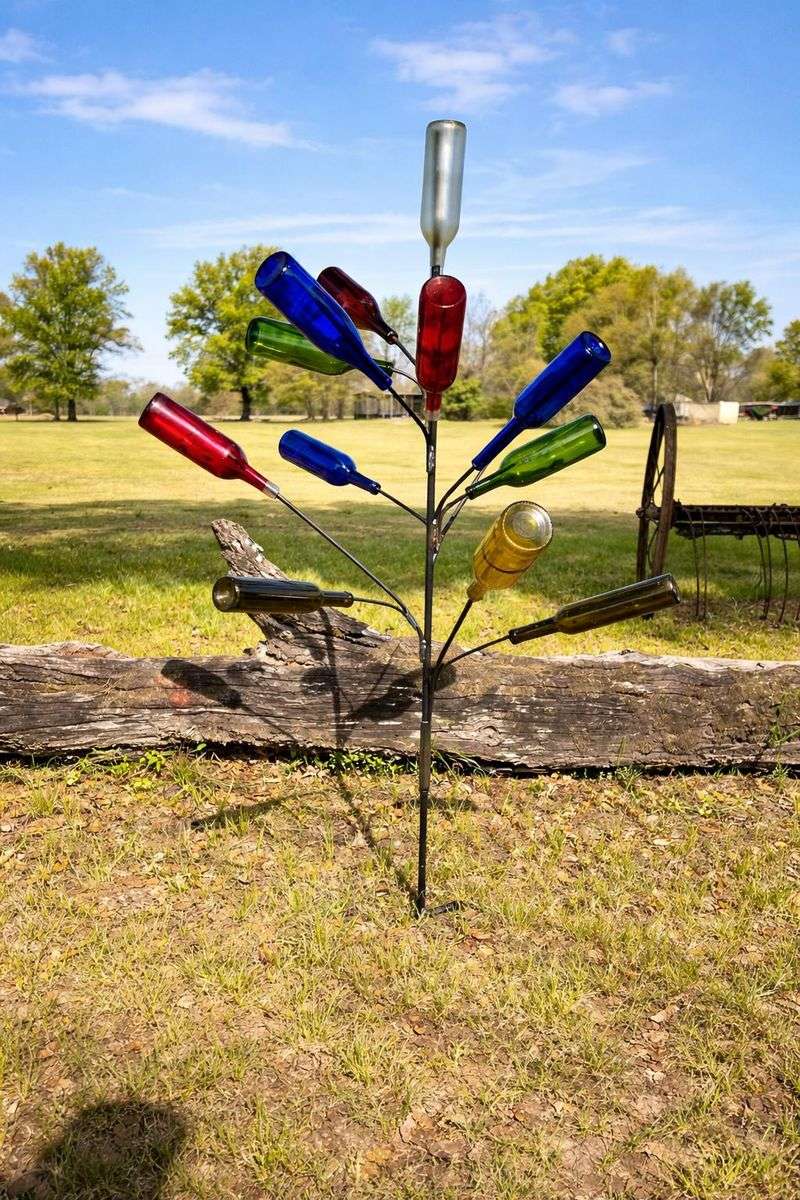
If you are thinking about making your own display, start with the tree. A freestanding frame is the lower-impact option because nothing has to be attached to a living tree.
A metal pole with arms, set in a garden bed, does the job well.
Hanging bottles from a tree has risks. University of Illinois Extension guidance on nails and screws explains that driving hardware into a tree creates wounds.
Avoid nails and screws where possible.
Tight wire and ties can cause trouble as well. Tennessee forestry guidance on mechanical damage lists punctures and constricting materials as sources of injury, since branches keep growing and can be squeezed.
Glass safety matters too. Place the display away from walkways and play areas, and secure each bottle so wind or a bump cannot knock it loose.
Collect any broken glass promptly. The Virginia Department of Health lists broken glass among hazards to remove from children’s play areas.
These are basic yard-safety habits, not a special North Carolina rule. A quick check after a storm, when winds can loosen bottles, is a good weekend habit.
The display alone cannot tell you what your neighbor believes
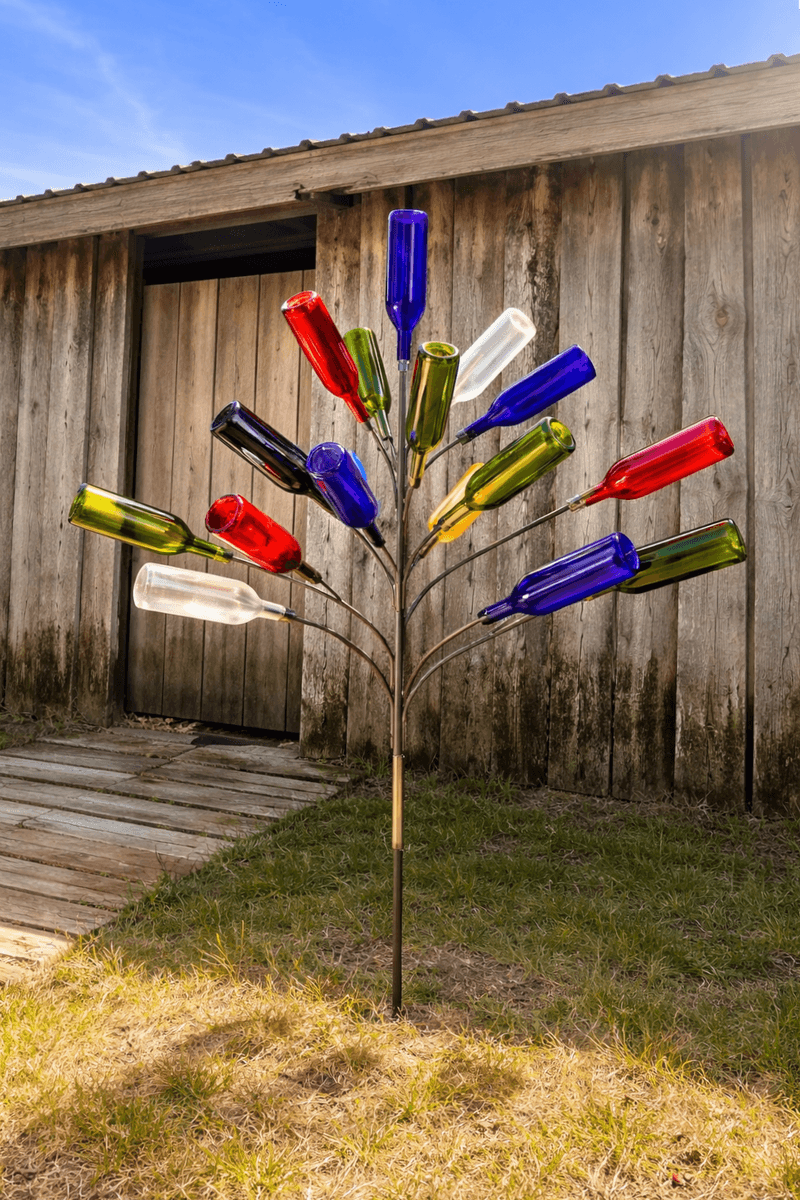
Bottle trees carry layered history and several documented modern meanings, including protection, memorial, heritage, and decoration, as Cobb’s account shows. Blue glass by itself cannot tell you which one applies next door.
The shared history belongs to many people. The meaning of one particular tree belongs to the person who set it up.
If you are curious, a friendly compliment and a simple question will tell you more than any guess.
Sometimes a row of bottles is just a row of bottles, and sometimes it holds a whole family’s story.