
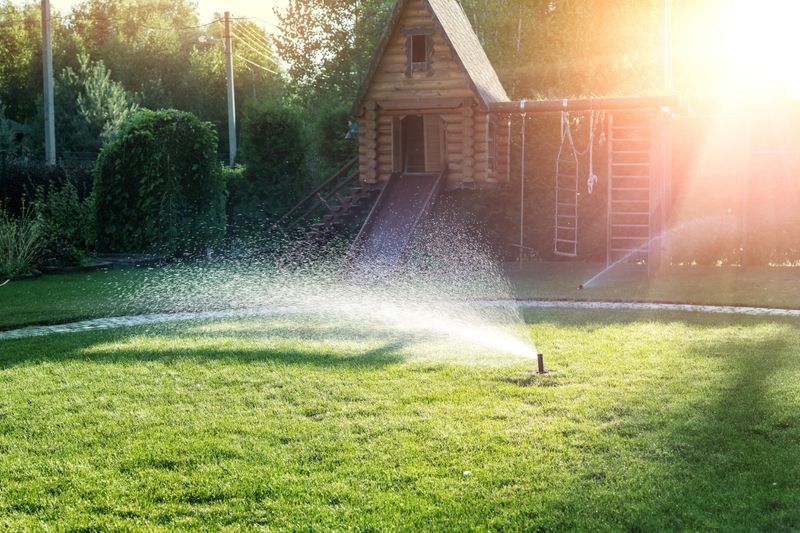
Every summer, Florida and Texas homeowners watch a once-green lawn develop spreading brown patches that refuse to respond to extra watering. The frustrating truth is that no single mistake explains every case, but one problem is common enough, and easy enough to test, that it deserves your attention first.
Your irrigation timer can run on schedule every morning while broken, clogged, or poorly aimed sprinkler heads leave parts of your lawn bone dry. Before you add more water or reach for a bag of fertilizer, spend fifteen minutes finding out where your water is actually landing.
The timer can run normally while the lawn dries out
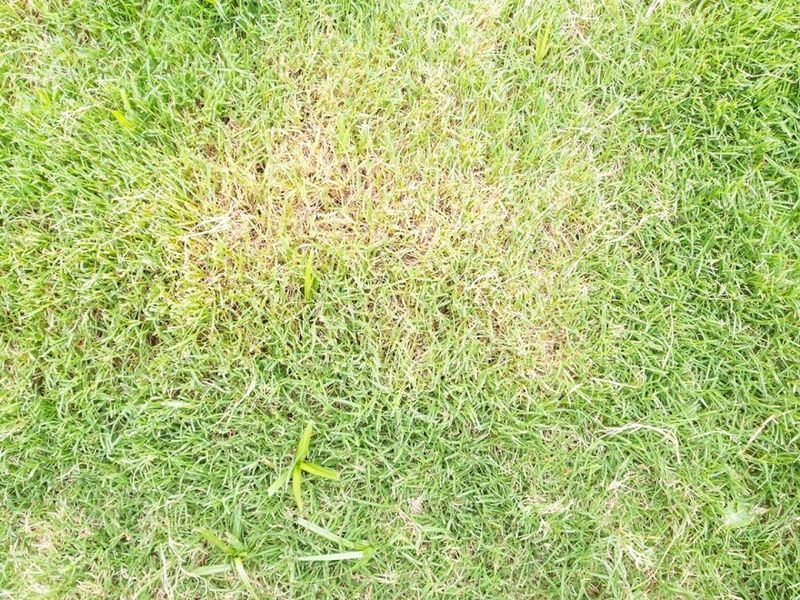
A working timer and a working irrigation system are not the same thing. Your controller can fire every zone on schedule while individual sprinkler heads sit clogged, broken, sunken below the turf, or aimed at a fence instead of your grass.
The result looks exactly like drought stress, but adding more minutes to your timer will not fix it.
This is a common and readily testable explanation for patchy summer browning in Florida and comparable warm-season regions, though it is not the only one. UF/IFAS guidance on watering Florida lawns identifies uneven irrigation coverage as a frequent cause of dry spots and warns that repeatedly increasing watering time can worsen overwatering in already-wet zones, encourage disease, leach nutrients from the soil, and promote shallow rooting without ever reaching the dry areas.
Think of it this way: if half your sprinkler heads are delivering full coverage and the other half are blocked, raising the runtime floods the working zones while the problem zones stay dry. You end up with one part of the lawn drowning and the other still thirsty.
Causes that go beyond irrigation, including mowing stress, shade, insects, drainage problems, and disease, can all produce similar-looking patches. Uneven irrigation is simply the most practical place to start because you can measure it yourself in about fifteen minutes.
Use the patch pattern as a clue, not a verdict
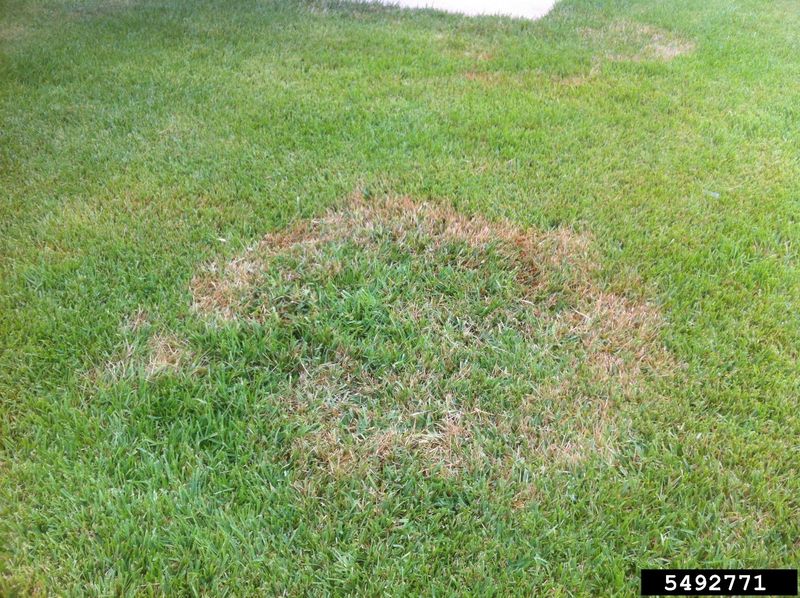
Before touching the controller, walk the lawn and sketch where the damage sits. The shape and location of brown areas can point you toward the right investigation, even though no pattern alone can confirm a diagnosis.
Recurring dry strips that follow the same path every summer, or dead areas that consistently appear near the outer edge of a sprinkler zone, are worth treating as an irrigation hypothesis first. UF/IFAS notes that shade from turf, trees, shrubs, or fences growing over pop-up heads can interrupt coverage in predictable geometric patterns season after season.
Circular or semicircular patches, on the other hand, may suggest a disease pattern worth investigating separately. Irregular, expanding dead areas in a sunny section of St. Augustinegrass are a different signal entirely.
Texas A&M AgriLife guidance on chinch bugs in St. Augustinegrass describes this kind of spreading damage in hot, dry, open areas as a pattern that warrants a closer insect inspection rather than more water. UF/IFAS irrigation research reinforces that patch shape is a screening tool, not a final answer.
Use what you observe to decide which test to run next, not to skip the testing step.
Measure irrigation coverage with catch cans
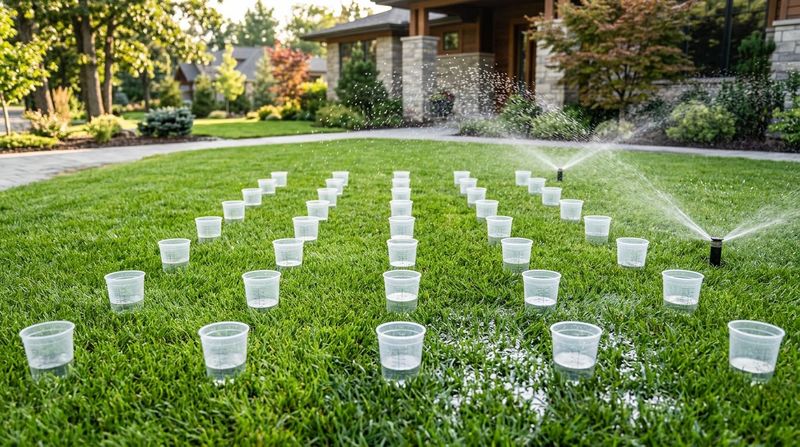
Straight-sided cans are the most practical tool for finding out whether your sprinkler zones apply water evenly. Tuna cans, pet food cans, or any container with vertical sides and a flat bottom all work.
The goal is to collect what each part of your zone actually receives during a single run.
Place several cans throughout one zone before you run it, positioning some close to the sprinkler heads and others near the far edges of coverage. Run the zone for fifteen minutes, then collect every can and compare the water levels.
Unequal amounts across the zone confirm that some areas are receiving significantly more or less water than others, regardless of what the timer says.
UF/IFAS catch-can guidance provides a useful reference point: if you collect roughly one-quarter inch in fifteen minutes, it would take approximately thirty to forty-five minutes of runtime to deliver one-half to three-quarters inch, assuming the application rate stays consistent. That calculation is a planning tool, not a universal prescription.
How much water your lawn actually needs per event depends on your grass species, soil type, local rainfall, shade, weather, and any water restrictions your utility or county imposes. The catch-can test tells you what your system delivers; what your lawn needs is a separate question addressed after you confirm the system is working correctly.
Repair the sprinkler system before changing the schedule
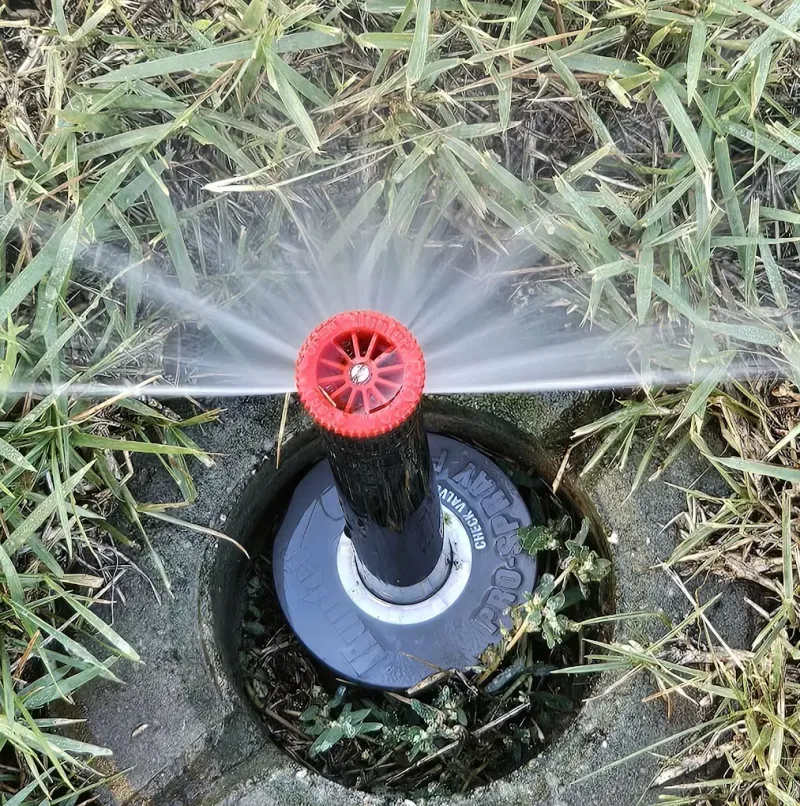
An uneven catch-can result means your hardware needs attention before your schedule does. Running the zone longer will not fix a head that is clogged, sunken, tilted, or blocked by overgrown turf.
Work through a physical inspection of each head in the problem zone before you change a single timer setting.
UF/IFAS Extension Orange County outlines the most common hardware failures to check: clogged or broken heads that restrict or misdirect flow, heads that have sunk below the turf surface and no longer pop up fully, leaking seals that reduce pressure at downstream heads, spray patterns aimed at pavement or structures instead of grass, and incompatible sprinkler types sharing the same zone. Rotary heads and fixed spray heads operate at different flow rates and should generally not run on the same zone together.
Obstructions matter just as much as hardware faults. Turf that has grown over a pop-up head, a shrub branch that has spread into the spray arc, or a fence post that sits directly in the pattern can all block coverage in a consistent strip or corner.
Cleaning a nozzle, repositioning a head, or trimming nearby vegetation may resolve a localized defect entirely. Pressure problems that affect an entire zone, or system design issues where heads are spaced too far apart, may require help from a licensed irrigation professional.
EPA WaterSense sprinkler guidance recommends inspecting your system at least once per season for exactly these kinds of faults.
Set watering by measured output and actual need
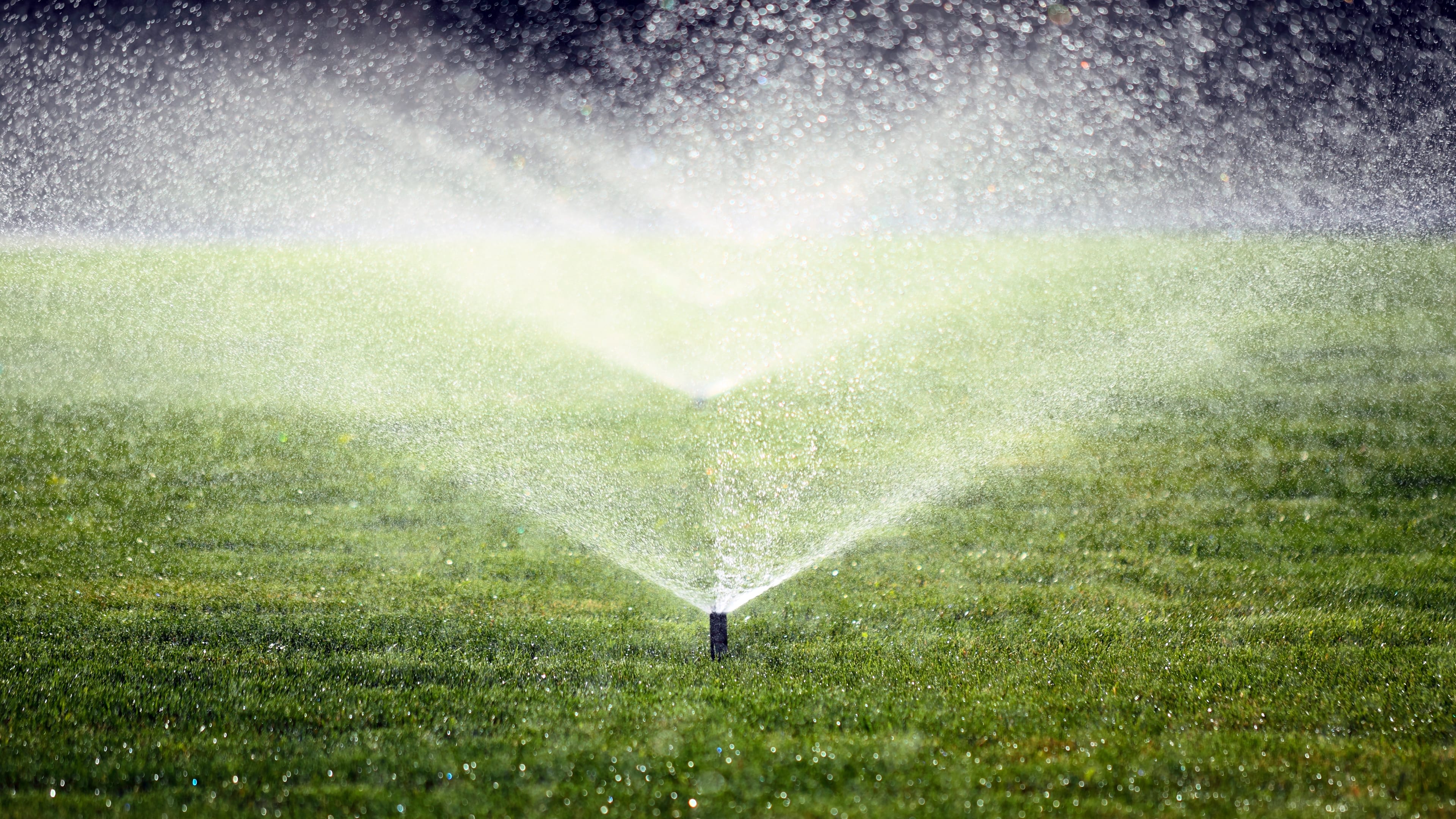
Once your sprinkler hardware is functioning correctly and your catch-can results show consistent coverage, you can set a schedule that reflects what your lawn actually receives rather than what the timer assumes it delivers. The starting point for established Florida turf is roughly one-half to three-quarters inch of water per week under ordinary conditions, but that figure describes a weekly total, not an event prescription.
UF/IFAS research on proper irrigation techniques recommends watering established turf deeply and less frequently rather than running shallow cycles every day. A practical check: after irrigating, push a long screwdriver or soil probe into the ground.
If it penetrates easily to about six to eight inches, the water has reached the root zone. Daily irrigation of established lawns is generally unnecessary in Florida and can encourage shallow rooting and conditions that favor disease or nutrient loss.
Your catch-can measurement tells you how long to run each zone to deliver a target depth during a single event. Rainfall counts toward your weekly total, so check a rain gauge or a weather station before scheduling the next cycle.
EPA WaterSense watering guidance cites approximately one inch per week, including rainfall, as a broad landscape benchmark. UF/IFAS commonly recommends lower figures for established Florida turf.
Neither figure applies universally. Grass species, soil texture, shade, local water restrictions, and whether your turf is newly established or mature all shift what the right schedule looks like for your specific yard.
Reduce summer stress without calling maintenance a cure
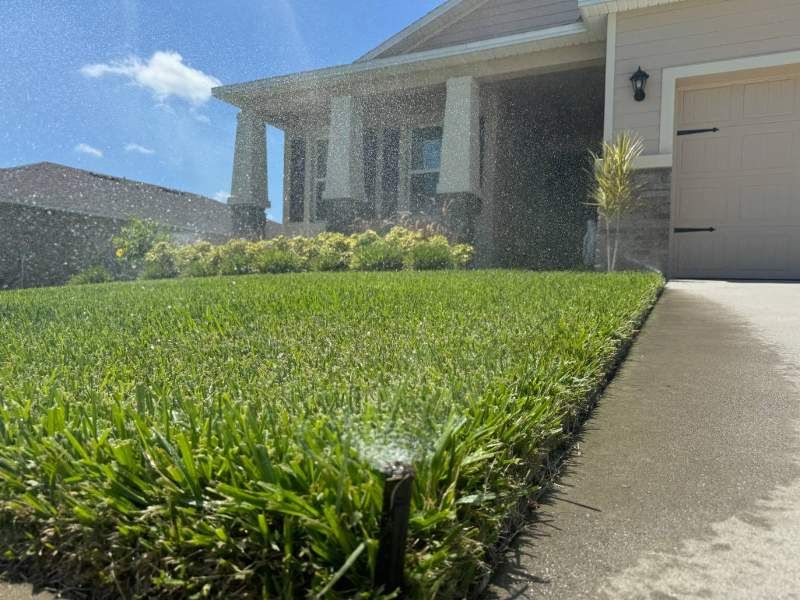
Correcting your irrigation coverage is the foundation, but a few maintenance habits can reduce the additional stress that summer heat places on recovering turf. These practices support the work your irrigation fix is doing; they do not replace it.
Watering early in the morning reduces evaporation compared with midday irrigation and allows the grass blades to dry before evening. UF/IFAS Extension Osceola County notes that prolonged overnight leaf wetness can encourage disease, making morning the preferred window for Florida lawns.
If rainfall has already delivered adequate moisture, skip the scheduled cycle rather than adding more on top.
Mowing height is the other variable worth adjusting. UF/IFAS guidance for St. Augustinegrass recommends maintaining standard cultivars at approximately 3.5 to 4 inches during periods of heat stress, while dwarf cultivars such as Seville or Captiva have different requirements.
Other warm-season grasses, including bermudagrass, zoysiagrass, bahiagrass, and centipedegrass, each have their own appropriate height ranges. UF/IFAS advises removing no more than one-third of the leaf blade at any single mowing.
Cutting too aggressively during summer heat increases stress, reduces the leaf area available for photosynthesis, and can make already-weakened turf more susceptible to pests and drought. Mowing at the right height helps the grass recover; it cannot repair a sprinkler system, eliminate an insect infestation, or resolve a disease problem on its own.
Investigate insects, disease, shade, and drainage when the clues do not fit
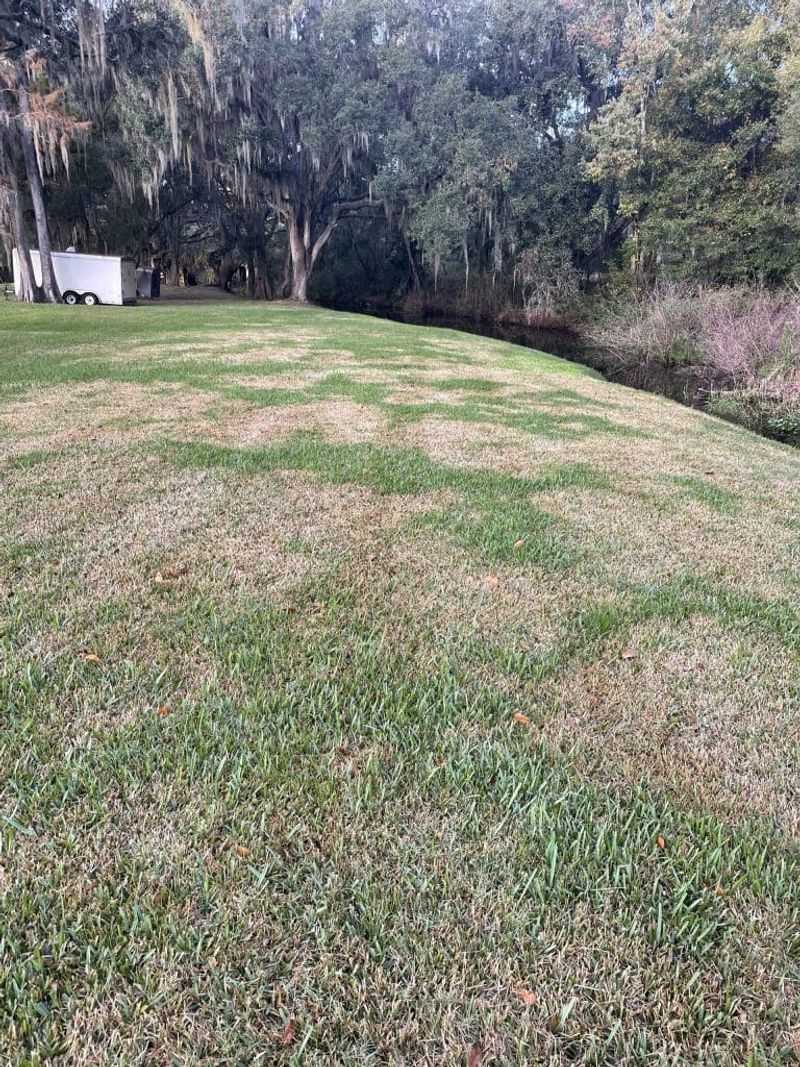
Not every brown patch in a Florida or Texas summer traces back to an irrigation problem. When the patch pattern does not match your sprinkler layout and your catch-can results show even coverage, the investigation needs to move in a different direction.
Irregular, expanding dead areas in a sunny section of St. Augustinegrass are a recognized signal for chinch bugs. Texas A&M AgriLife chinch bug guidance recommends a coffee-can flotation test: remove both ends of a large can, press it several inches into the soil at the edge of the damaged area, fill it with water, and watch for small insects floating to the surface over five to ten minutes.
Texas A&M lists approximately 25 bugs per square foot as a treatment threshold before intervention is warranted.
Wet soil, excessive irrigation, or poor drainage create a different set of problems. UF/IFAS associates Pythium root rot and take-all root rot with waterlogged conditions, excessive rainfall or irrigation, and poor site drainage.
These diseases can produce yellowing, browning, thinning, and declining vigor that superficially resembles drought stress but worsens with added water.
Brown or black areas that appear after a period of drought may have acquired secondary saprophytic fungi on the dead leaf tissue. UGA Cooperative Extension notes that these fungi colonize already-dead material rather than causing the original damage.
If the stress conditions persist, address the underlying drought or heat problem rather than assuming the fungi are the primary cause.
Shade is a separate failure mode. Turf under mature trees or in areas with persistent shade may have different water requirements or may simply be unsuited to the site.
UF/IFAS notes that heavily shaded areas may be better served by a groundcover other than turfgrass. Grass species also change the picture significantly.
UF/IFAS mowing guidance reflects how different warm-season species vary in drought tolerance, disease risk, and recovery capacity, so advice written for St. Augustinegrass does not automatically transfer to bermudagrass or centipedegrass.
Diagnose before applying a pesticide
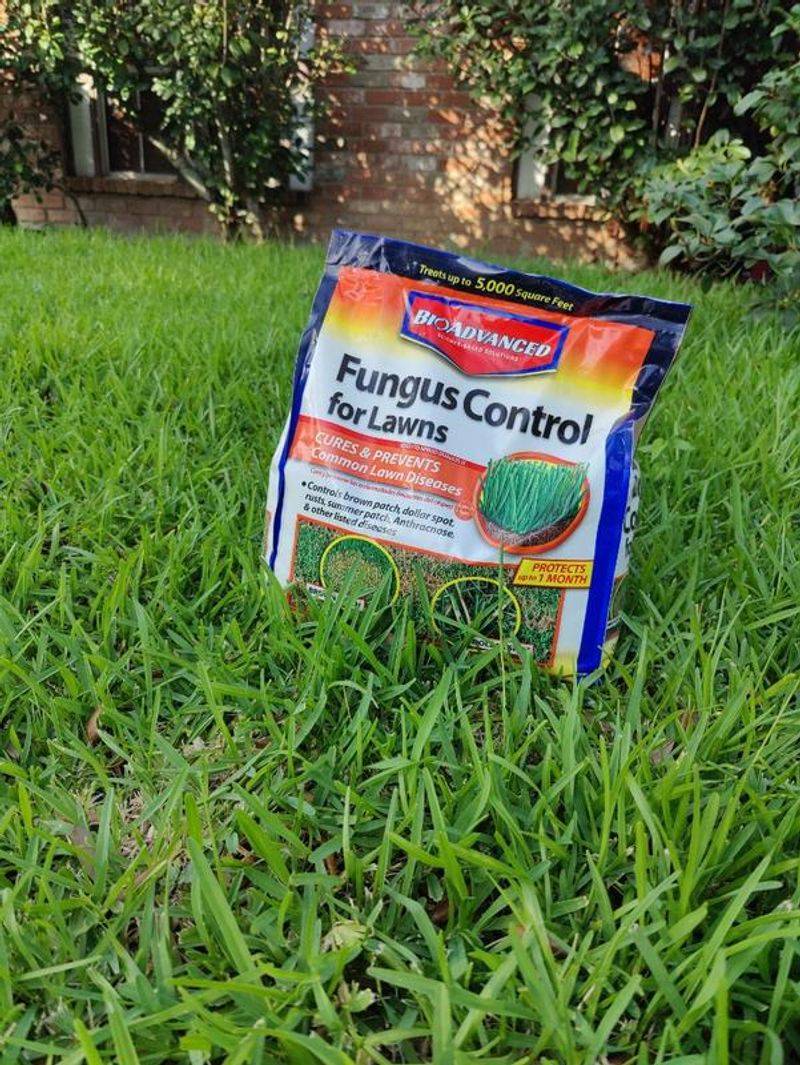
A clear sequence keeps you from spending money on treatments that miss the actual problem. Start by observing the patch pattern, then run a catch-can test on the affected zone, inspect and repair any hardware faults you find, and reset your watering schedule based on measured output and recent rainfall.
Give the turf time to respond before drawing conclusions about what else might be wrong.
If the damage persists after irrigation is corrected and mowing stress is addressed, a confirmed insect or disease problem requires a targeted response, not a precautionary one. UF/IFAS fungicide guidance states that correct diagnosis is necessary because fungicide recommendations differ substantially among diseases.
Applying a product for the wrong pathogen wastes money and leaves the actual cause untreated.
Blanket pesticide applications across an entire lawn can harm beneficial organisms, create unnecessary chemical exposure for people and pets, and contribute to runoff. EPA guidance on pesticide safety requires matching any application to the confirmed problem, the approved use site, the label rate, appropriate protective equipment, reentry restrictions, and environmental precautions.
Spot-treating a confirmed issue is always preferable to treating the whole yard as a precaution. A lawn that browns every summer is telling you something specific; the job is to find out what that is before you respond.