
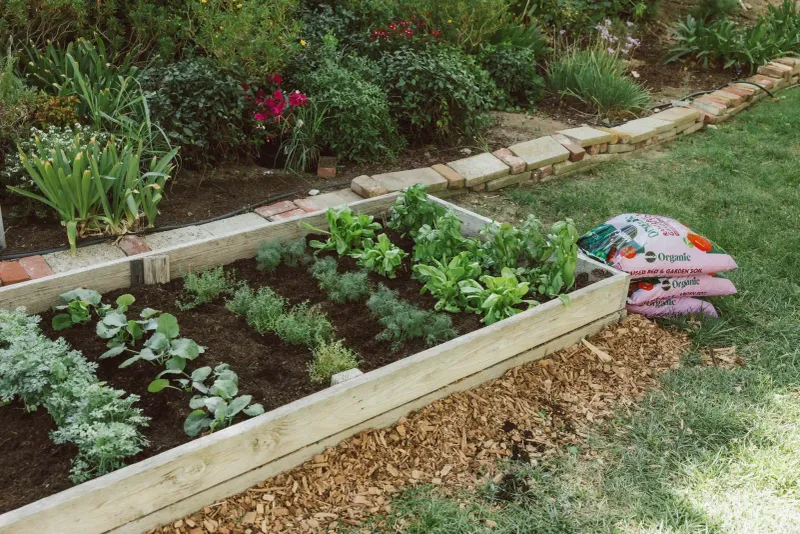
Plenty of Southern gardeners have stared at a stunted tomato or a cucumber that just refuses to take off and wondered what they did wrong. The bed looks fine from the outside, but something underground is quietly holding the crop back.
Most of the time, the problem is not the plant you chose or the way you planted it. Roots have a short list of real requirements, and when even one of those is out of balance, the whole bed can underperform.
Roots need a balanced root zone, not just a raised frame
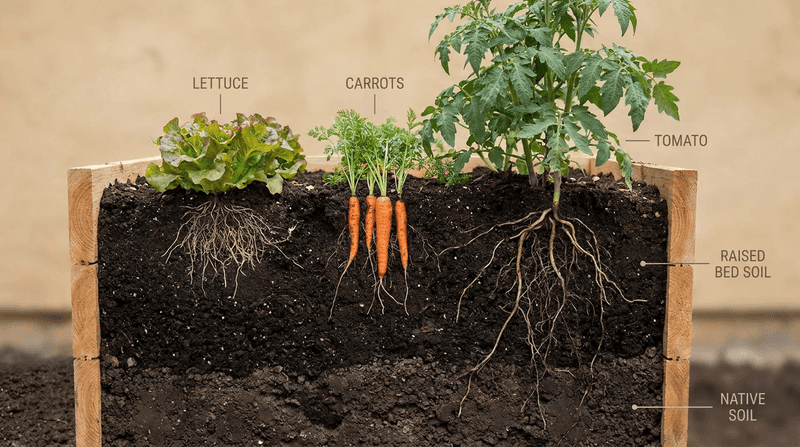
Building a raised bed is a great start, but the frame itself does not guarantee that roots will thrive. What roots actually need is a balanced environment underground: enough pore space for both air and water to move freely, consistent moisture without prolonged saturation, accessible nutrients, a suitable pH, and enough uncompacted volume to expand as the plant grows.
When any one of those conditions is seriously off, the plant above ground will show it, even if everything else looks right.
Pore space is where the work happens. Tiny gaps between soil particles carry oxygen down to root cells and allow water to drain after rain or irrigation.
University of Minnesota Extension research on soil compaction explains that when particles are pressed together, pore space shrinks, oxygen movement slows, drainage stalls, and roots physically cannot push through. Persistently saturated soil compounds the problem by displacing air entirely, which stresses root tissue and raises the risk of crown and root diseases.
The practical takeaway is that poor growth in a raised bed is a root-zone or site diagnosis first, not proof that you picked the wrong crop. Related Minnesota Extension guidance on reducing tillage intensity reinforces that protecting soil structure, rather than repeatedly disturbing it, keeps pore space intact so roots can do their job.
Start by asking what the root zone is actually experiencing before reaching for amendments or pulling the plant.
Compaction and drainage determine whether the bed can breathe
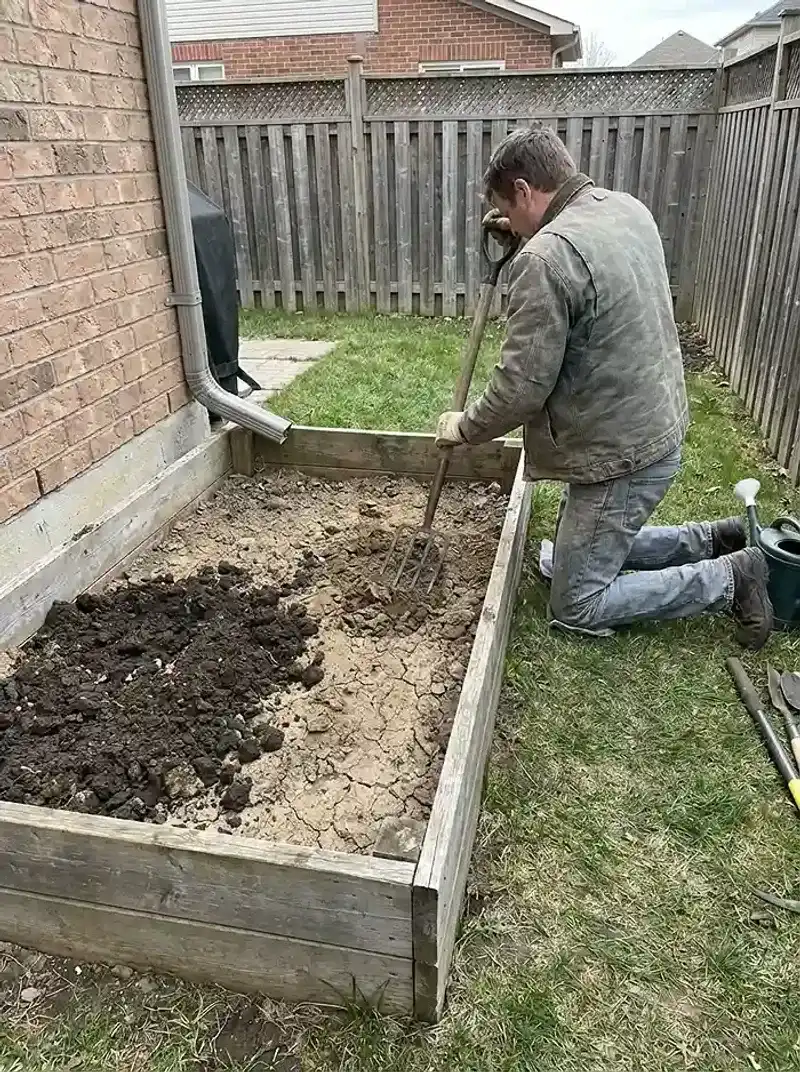
Compaction is one of the most common and least visible problems in a raised bed. When soil particles are squeezed together, whether from foot traffic, working the soil while wet, or a mix that settles too tightly over time, the pore space that roots depend on disappears.
Minnesota Extension guidance on soil health notes that compaction restricts root penetration, slows infiltration, and interferes with the nutrient and water uptake that plants need to grow. A bed can look perfectly watered from the top while roots below are struggling to breathe or push forward.
Never judge moisture or drainage from the surface alone. Dry mulch or a crusty topsoil layer can make a bed look thirsty when the root zone a few inches down is still saturated.
Before planting or when diagnosing a struggling bed, UGA Extension heat-wave watering guidance recommends checking moisture several inches below the surface rather than relying on what you see at the top.
A simple preliminary drainage check is worth doing before planting in any new bed: dig a hole roughly one foot wide and one foot deep, fill it with water, and watch whether it drains within about eight hours. This is a screening step, not a complete soil diagnosis, but a hole that stays full well past that window signals a drainage problem that adding more soil will not fix on its own.
UGA best management practices for landscapes support addressing drainage at the site level before planting. Protect what pore space you have by keeping foot traffic off the bed and avoiding soil work when the medium is wet.
A compost-heavy mix can create a different kind of failure
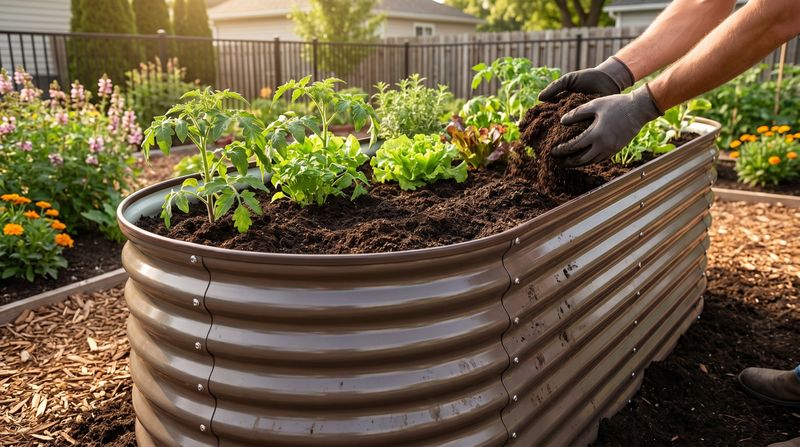
A productive raised-bed mix has to do several things at once: provide structural stability, hold enough moisture for roots, drain excess water, allow air movement, and supply adequate but not excessive fertility. Finished compost is a valuable part of that picture, but it works best as one component among several, not as the entire medium.
Penn State Extension’s raised-bed soil health guidance recommends a mix of roughly 70% soil and 30% compost as a starting framework, while noting that the right balance depends on the materials and site. Penn State’s potting media guidance adds that a good growing medium must provide aeration, water retention, and structural support together, not just organic richness.
Different Extension programs give different proportions because they are addressing different materials and situations. Minnesota Extension describes a mix of roughly half to two-thirds topsoil with one-third to half plant-based compost.
Lincoln County UGA Extension guidance recommends no more than 20% topsoil for raised beds and containers using a soilless-style mix. These are not interchangeable formulas.
Treat any named recipe as a situation-specific starting point and test before making big changes.
Heavy or repeated compost applications, especially from animal-based sources, can quietly build phosphorus, potassium, calcium, or soluble salts to levels that interfere with plant growth and water management. Utah State Extension’s guidance on sustainable manure and compost application and Minnesota Extension’s overview of problems from excess compost and manure both document how nutrient imbalances and salinity issues develop over time in beds that receive more organic matter than the crop can use.
More compost is not a universal fix, and a bed that gets a heavy dose every season may eventually develop its own chemistry problems.
Testing replaces guesswork about pH and nutrients
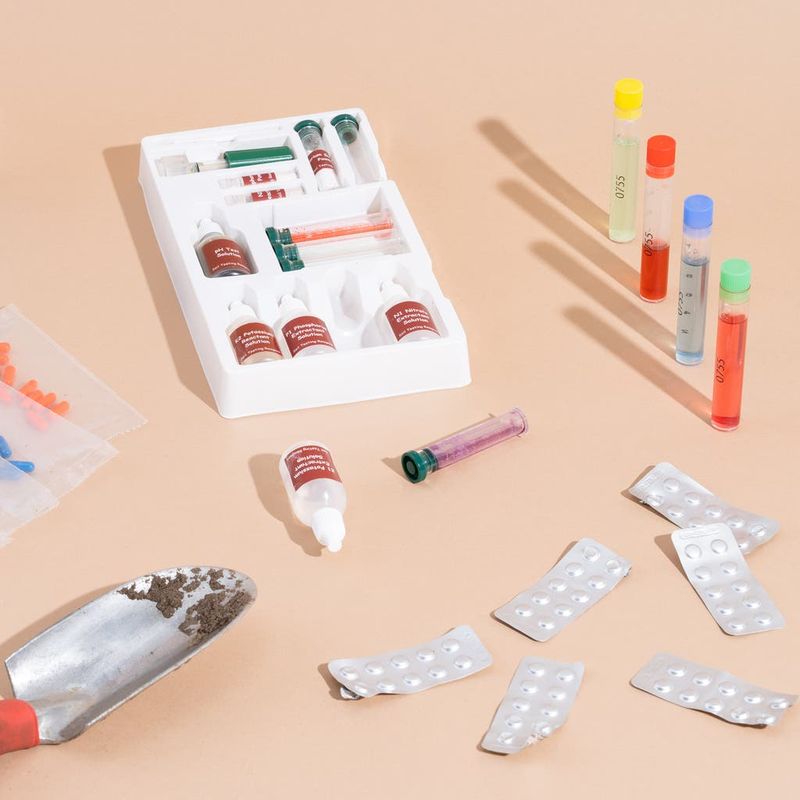
Yellow leaves and weak growth are easy to misread. Those symptoms can come from a dozen different root-zone problems, including water stress, root damage, disease, pests, compaction, or nutrient excess, and they cannot reliably point to a single cause on their own.
The most useful first step is a soil or growing-medium test, done before adding lime, fertilizer, or any major amendment. Testing tells you the actual pH, phosphorus, potassium, and other nutrient levels in your bed so you can make a targeted correction rather than a guess.
Texas A&M AgriLife’s Soil, Water and Forage Testing Laboratory offers testing for Texas gardeners and others across the continental United States. UGA Cooperative Extension’s home gardening publication and regional Extension offices across the South provide comparable services with local amendment recommendations built in.
For most vegetables, a slightly acidic pH in the range of approximately 6.0 to 6.5 supports good nutrient availability, as outlined in UGA’s vegetable gardening in Georgia guide. UF/IFAS’s Florida vegetable gardening guide notes that lime requirements in raised beds depend on the specific components used in the mix, which is another reason not to add lime automatically.
A test result gives you a number to work from; without one, you may correct a problem that does not exist while missing the one that does.
Bed height is not the same as usable root depth
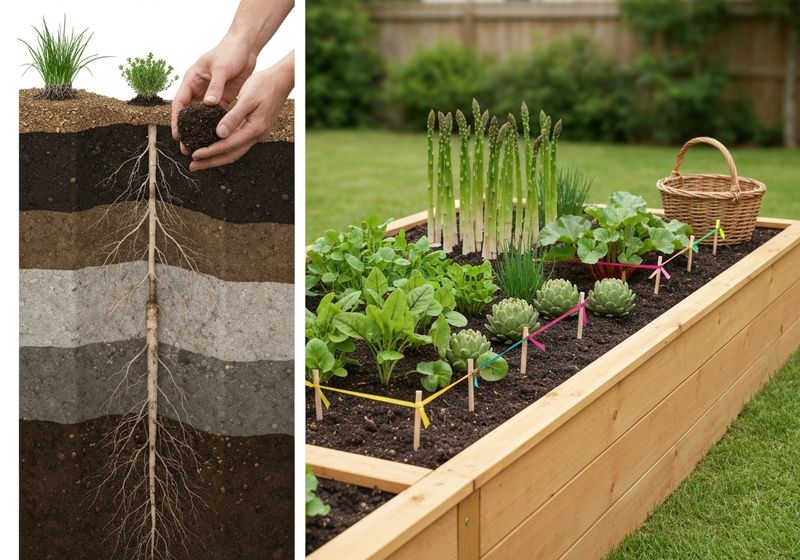
A frame that stands twelve inches tall does not automatically give roots twelve inches of usable growing space. What matters is the quality of the growing medium throughout the profile and what the roots encounter when they reach the bottom.
A 6- to 12-inch bed filled with a well-structured mix can support most common vegetable crops, but the depth requirements vary considerably by plant. Utah State University Extension’s raised-bed gardening guide distinguishes between relatively shallow-rooted crops like peppers and leafy greens and deeper feeders like tomatoes, cucumbers, squash, and melons, which need more soil volume to develop a productive root system.
When a shallow, bottomless bed sits on loosened native soil, roots can continue downward, which effectively extends the root zone. That only works if the soil beneath is actually loose, well drained, and free of contamination.
Compacted subsoil, clay that stays wet, or fill material of unknown origin can stop roots as effectively as a solid bottom. USU’s vegetable irrigation guidance reinforces that root depth directly affects how much water and nutrient access a plant has, so a restricted root zone limits the whole crop regardless of what happens above ground.
If the subsoil beneath the bed is compacted, loosening it before filling can make a real difference. Where drainage is the problem, the underlying cause needs to be addressed rather than simply buried under more soil.
If the site raises any concern about lead or other contamination from an older building, a heavily trafficked road, or unknown fill material, Illinois Extension’s urban soil lead exposure guidance recommends testing the soil directly rather than assuming a barrier or clean imported mix eliminates the risk. A clean imported medium in a properly lined elevated bed can reduce exposure, but testing first tells you what you are actually dealing with.
Water established plants deeply while matching each crop’s stage
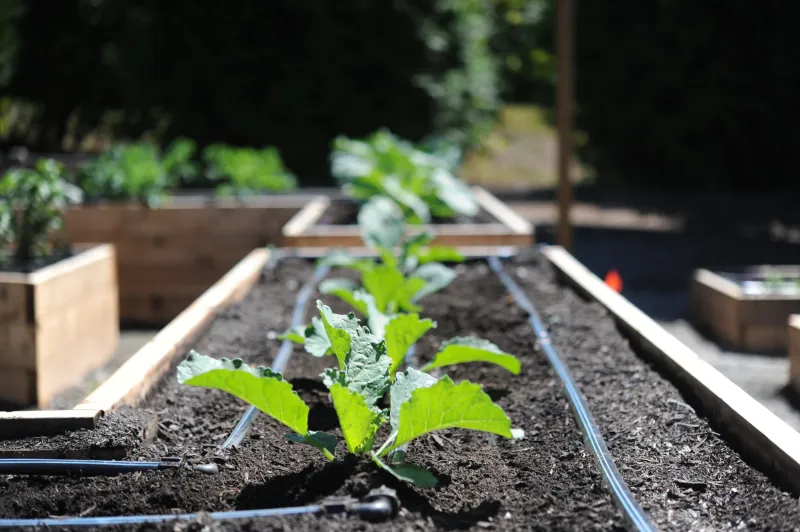
Irrigation in a raised bed is not a set-it-and-forget-it schedule. The goal is to wet the active root zone thoroughly and then allow the soil to begin drying appropriately before watering again.
UGA Cooperative Extension’s guide to conserving water in the vegetable garden recommends roughly 1 to 1.5 inches of water per week as a general vegetable guideline, adjusted for rainfall, soil type, crop, temperature, and growth stage. That target is a reference point, not a rigid rule, and raised beds in the Southern heat may need more frequent attention because they can dry out faster than in-ground soil.
Established plants benefit from deep watering that reaches 6 to 8 inches into the root zone, followed by a period of partial drying that suits the crop and the medium. Seeds and newly transplanted starts are a different situation: they may need more consistently moist surface conditions until roots are established, so the deep-and-dry approach applies mainly once plants are settled in.
UGA Extension’s heat-wave watering guidance is clear that even in high summer temperatures, overwatering saturated soil causes its own damage, promoting shallow roots, leaching nutrients, and increasing disease pressure.
Never judge moisture by the surface alone. Dry mulch or a cracked topsoil crust can look urgent while the root zone a few inches down is still adequately moist.
Check by pressing a finger or a thin rod 4 to 6 inches into the bed. UGA Extension’s Georgia vegetable garden guidance and UF/IFAS soil and fertilizer management guidance for Florida both support moisture-based decisions over calendar-based ones.
Drip or soaker irrigation keeps water at root level and foliage dry, which UGA disease management guidance links to reduced risk of some foliar diseases. A 2- to 4-inch layer of organic mulch around plants, kept back from stems, slows evaporation and buffers temperature swings between waterings.
Repair the limiting condition before rebuilding the whole bed
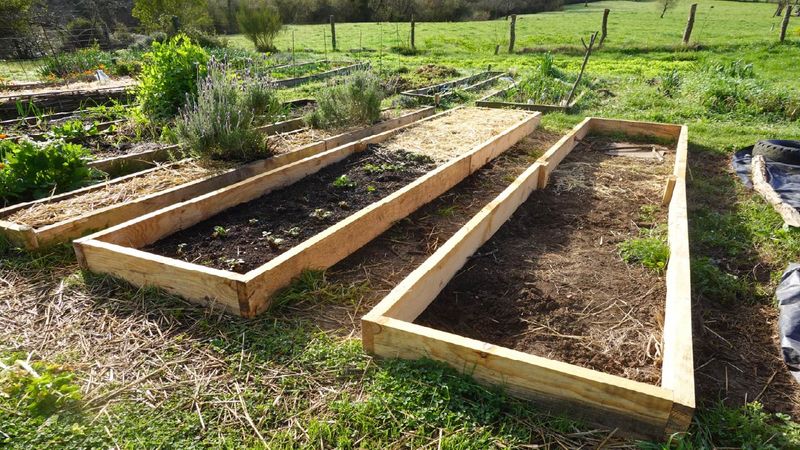
When a bed is underperforming, the instinct to add something, whether lime, fertilizer, compost, sand, or a drainage layer, can make things worse if the actual limiting condition has not been identified first. A more reliable approach moves through a short inspection sequence: check root-zone moisture at depth, evaluate drainage, look for compaction, test the mix for pH and nutrients, and assess usable depth and the quality of the soil beneath the bed.
Only after that inspection does targeted correction make sense.
Penn State Extension’s garden myth-busting guidance explains that placing coarse material such as gravel or rocks beneath a finer growing medium can actually worsen drainage by creating a perched water zone rather than improving it. Illinois Extension’s analysis of sand and clay drainage warns that mixing insufficient sand into clay can produce a dense, concrete-like texture rather than improved structure.
These are common additions that can backfire without a clear diagnosis first.
Animal-based amendments deserve specific caution. Use only finished, reputable compost.
Minnesota Extension food-safety guidance on animal-based compost cites waiting at least 90 days before harvesting crops that do not contact the soil and 120 days for crops that do, when untreated or inadequately processed animal amendments are used. Fully treated commercial products may carry lower risk, but follow the product label and supplier documentation.
If the site is near an older building, a trafficked road, or unknown fill, Illinois Extension’s food garden lead testing guidance recommends testing the soil for lead or other contaminants before growing food. Finally, if the root zone checks out and the bed still struggles, look outward: UGA vegetable gardening guidance recommends approximately 8 to 10 hours of sun for most vegetable gardens, and heat, pest pressure, disease, crop timing, and irrigation equipment failures can all drive poor growth even when the soil is sound.
A successful raised bed starts with diagnosis, not a magic recipe
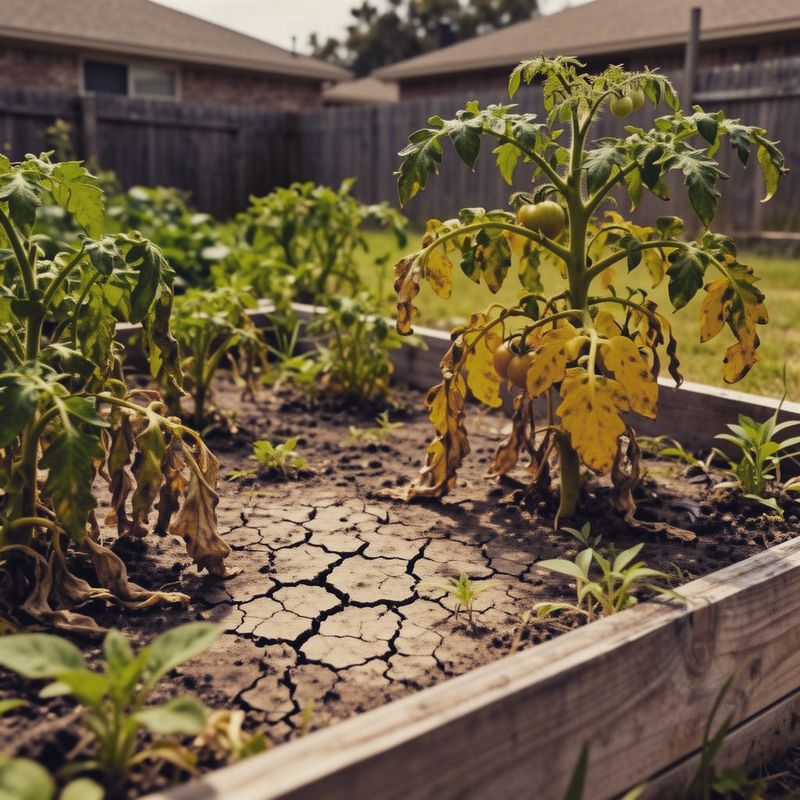
A struggling bed is not an indictment of the crop you chose or the effort you put in. Raised beds can and do underperform when root-zone conditions are off, but the cause is usually specific and fixable once you know what to look for.
Penn State Extension’s raised-bed soil health overview and Minnesota Extension’s compaction research both point to the same core priorities: protect pore space, balance air and water movement, and test before amending.
The repair that actually helps depends on the specific bed, its materials, its site, and the crop. Confirming usable root depth, checking what the soil beneath the bed is doing, and irrigating based on root-zone moisture rather than a fixed calendar are all part of the same diagnostic mindset.
Utah State University Extension’s raised-bed gardening guide reinforces that no single formula works for every situation.
The gardener who inspects before adding, tests before adjusting pH or fertility, and matches water to the crop’s actual stage will almost always get further than one who rebuilds the whole bed from scratch. A raised bed that gets the root zone right rewards you with the kind of growth that made you want to garden in the first place.