
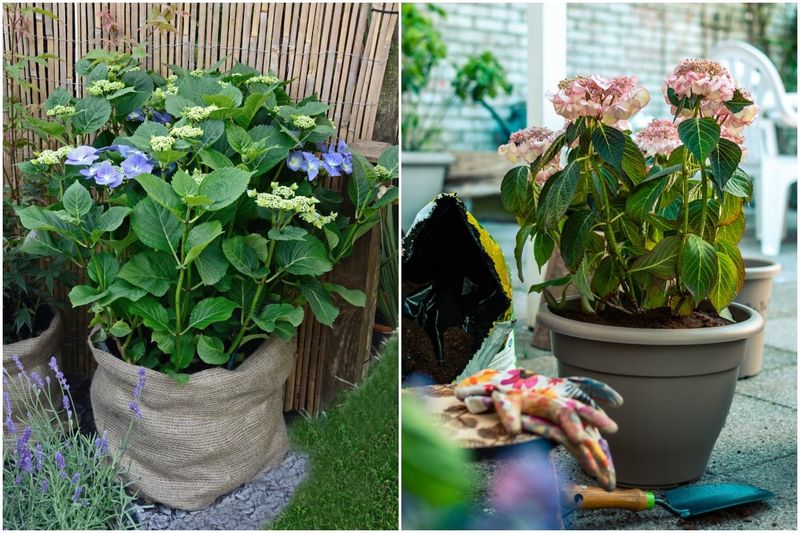
Watching a hydrangea droop in a pot you just watered is one of the more confusing problems in container gardening. The soil feels wet, you did everything right, and the plant still looks like it’s giving up.
What’s happening beneath the surface often has less to do with how much water you added and more to do with where that water goes afterward. Poor drainage is a common and recognizable container mistake, but heat, drought, root-bound roots, and other stressors can look almost identical, so getting the diagnosis right is the first real step.
A Common Container Mistake, Not the Only Cause
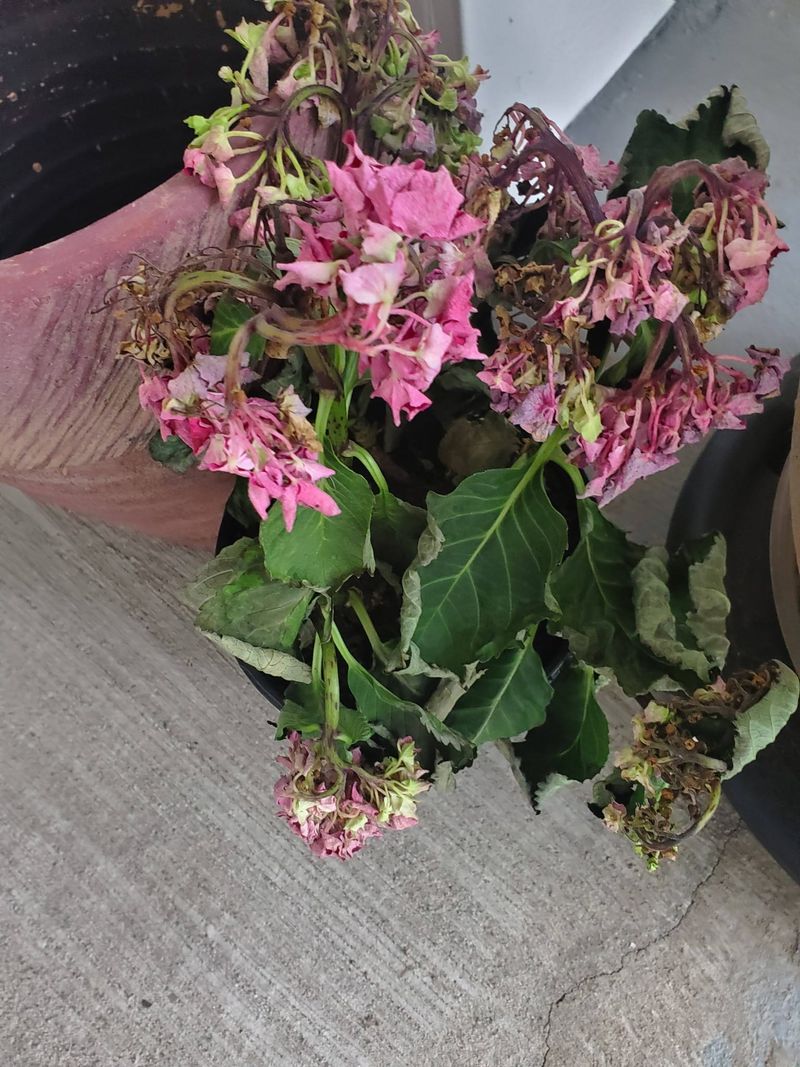
Plenty of hydrangeas sold at garden centers arrive in a plain nursery pot tucked inside a pretty decorative container. The outer pot looks great on a porch or patio, but it often has no drainage holes at all.
When excess water has nowhere to go, it collects at the bottom of that outer container and the inner growing pot ends up sitting in a puddle, sometimes for days at a time.
That setup is one of the most recognizable container mistakes that can cause a hydrangea to collapse fast. UGA Cooperative Extension’s container gardening guidance emphasizes that the growing container must have unobstructed drainage holes and that excess water must be able to exit freely after each watering.
When it cannot, the root zone stays saturated far longer than the plant can tolerate.
The first question to ask is not “did I water enough?” but “where is the excess water going?” Blocked holes, permanently attached saucers, and decorative cachepots without drainage are all worth checking before drawing any other conclusions. That said, poor drainage is a common cause of rapid decline, not the only one.
Heat, dry soil, strong wind, transplant shock, and root-bound conditions can all produce a wilted hydrangea, so the container setup is the starting point for diagnosis, not the automatic verdict.
Why Wet Soil Can Still Produce Wilt
Roots need oxygen to function. When a container stays saturated, water fills the air spaces in the potting mix and the roots are essentially suffocating.
Over time, oxygen-deprived roots begin to break down, and once that damage is significant enough, the plant loses its ability to move water from the soil up into the leaves, no matter how wet the mix feels to the touch.
That is why a hydrangea can look severely thirsty while sitting in soggy soil. The leaves wilt because water transport has broken down at the root level, not because the soil is dry.
Virginia Cooperative Extension’s guidance on watering container plants notes that both overwatering and underwatering can produce similar wilt symptoms, which is exactly why the soil-moisture check alone is not enough to identify the problem.
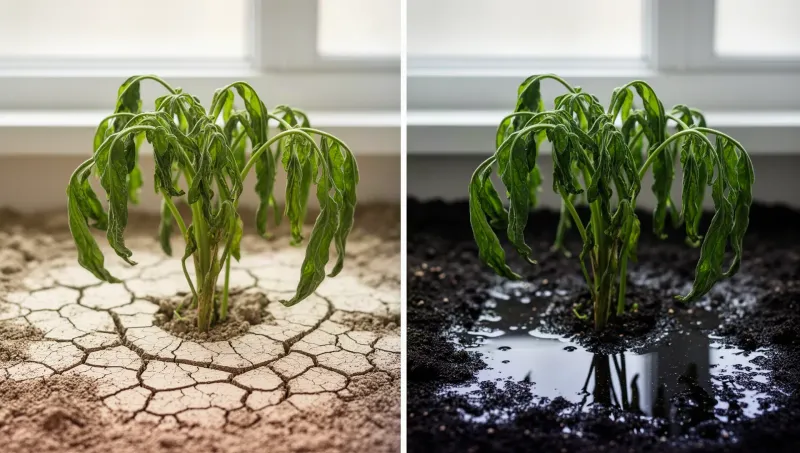
Underwatering dries the mix out and starves the roots of moisture directly. Waterlogging keeps the mix soaking wet while starving the roots of oxygen.
Both outcomes damage the root system, and both show up as drooping leaves. Pressing a finger two or three inches into the mix before reaching for the watering can is a simple habit that helps separate the two situations.
If the mix is wet and the plant is still wilted, adding more water is likely to make things worse rather than better.
Inspect the Inner Pot and Outer Container
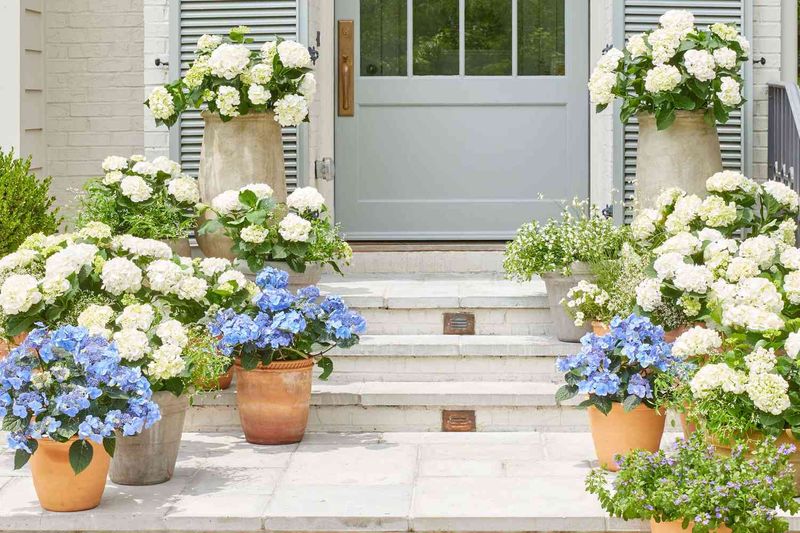
Start the inspection at the bottom of the growing pot. Confirm that drainage holes exist and that none of them are packed with roots, debris, or compacted soil.
A hole that looks open from above can still be blocked at the contact point where the pot rests on a surface, so lift the pot and check underneath.
Next, check what is collecting beneath the pot. Saucers, decorative outer containers, and permanently attached bases can all hold standing water.
Illinois Extension’s container drainage guidance is clear that excess water should be removed from saucers and outer containers after watering, not left to accumulate. If the inner pot is resting directly in that collected water, the roots are getting the same result as a pot with no drainage at all.
Using a decorative outer container is fine as long as the draining inner pot stays elevated above any water that collects at the bottom. UGA Extension recommends a double-potting approach: grow the hydrangea in an inner pot with open drainage holes, then set that inner pot inside the decorative container.
The key is keeping the inner pot above the waterline, not submerged in it.
One fix that does not work: putting a layer of gravel in the bottom of the growing pot itself. Research and extension guidance consistently show that gravel in the base of a growing container causes water to perch above the gravel layer rather than draining through it.
Gravel has a legitimate role only in the base of a separate outer decorative pot, where it physically lifts the draining inner pot above collected water.
Choose Between a Setup Correction and Repotting
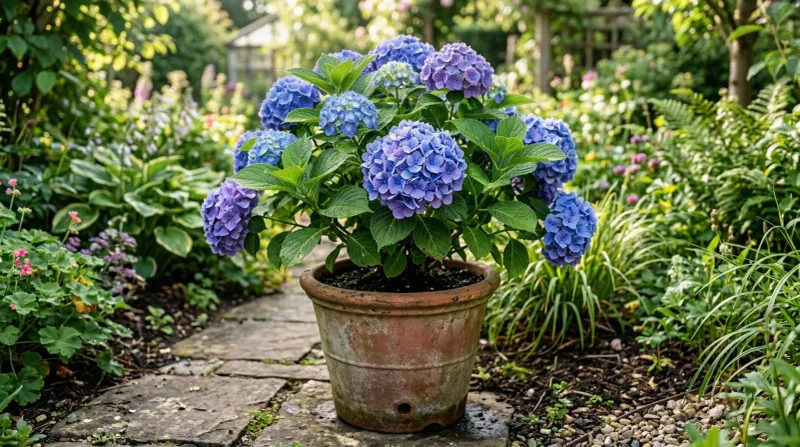
Not every drainage problem requires pulling the plant out of its pot. If the growing container has open, unblocked holes and the only issue is that it has been sitting in collected water inside an outer container, the fix can be as simple as removing that standing water and elevating the inner pot.
Give the root zone time to dry slightly between waterings and monitor the plant over the following days before doing anything more disruptive.
Repotting becomes the right move when the growing container itself cannot drain, when the potting mix has become dense and compacted so that water pools on the surface and drains slowly, or when the plant shows ongoing decline even after the drainage setup has been corrected. UGA’s container gardening publication recommends using a commercial soilless potting mix rather than straight garden soil, because soilless mixes are designed to hold moisture while still allowing air to move through the root zone.
Garden soil compacts in containers, holds too much water, and restricts the oxygen that roots depend on.
When repotting is necessary, choose a container with clear drainage holes and use a fresh commercial container mix. Illinois Extension cautions that plants rarely recover from advanced root rot, so repotting is not a guaranteed cure.
It corrects the structural problem and gives the plant a better environment to recover in, but the outcome depends heavily on how much root damage has already occurred. Treat repotting as one possible intervention, not as a sure fix for every struggling hydrangea.
Check for Other Root-Zone Problems
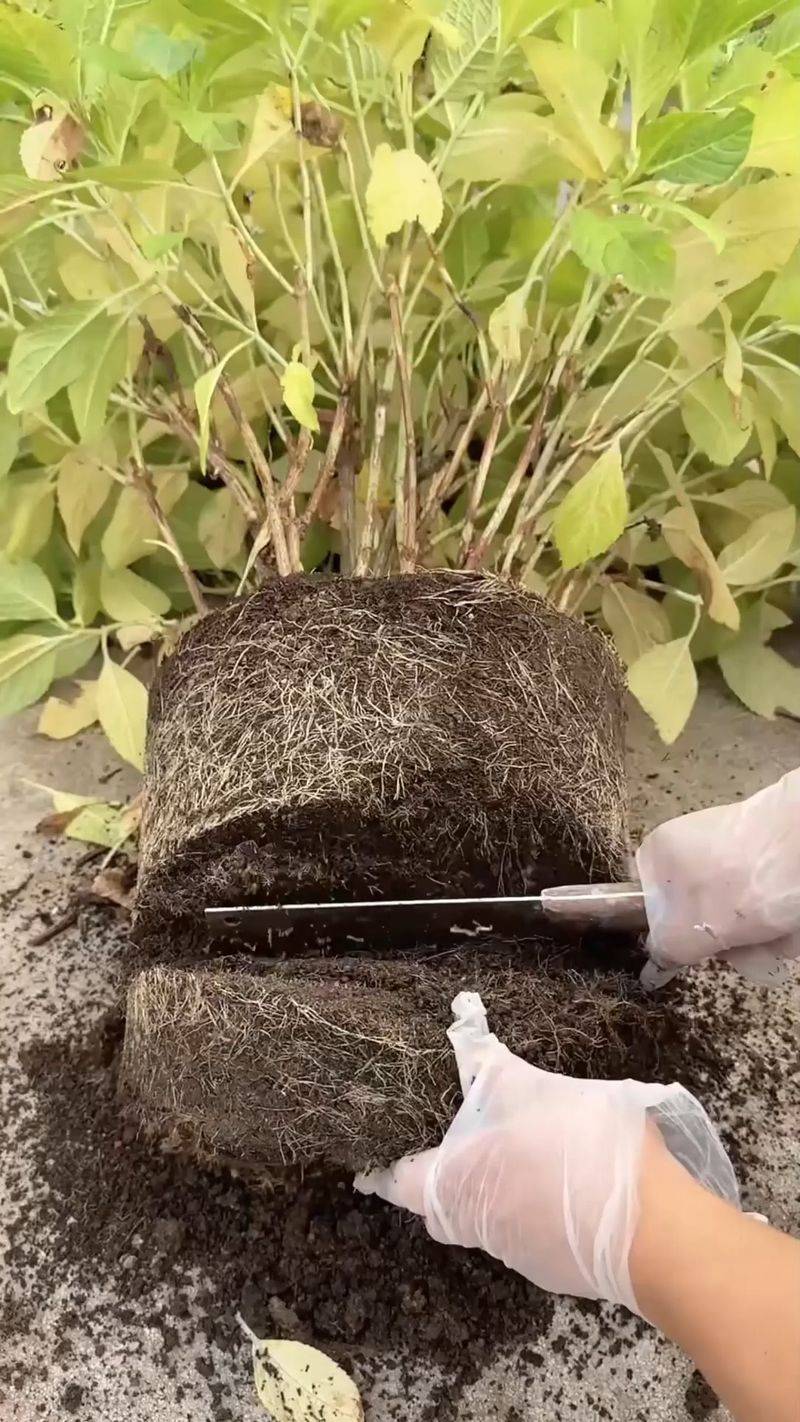
Correcting drainage does not always stop the decline. When a hydrangea continues to wilt in wet media even after the setup has been fixed, a closer look at the root zone can help clarify what is happening.
Gently sliding the plant out of its pot and examining the root ball gives useful information that the soil surface cannot.
Root-bound conditions are worth checking alongside drainage. When roots have filled the container, circled tightly against the walls, or begun pushing out through the drainage holes, the plant may be drying out unusually fast even in a correctly draining pot.
A severely root-bound hydrangea can struggle to absorb water efficiently because the root mass has become so dense that water runs through the container without being taken up. Illinois Extension notes that plants in this condition often show drought stress symptoms even with regular watering.
Advanced root decay presents a harder situation. When roots have broken down significantly from prolonged waterlogging, the plant may not be able to recover regardless of what changes are made to the container setup.
UGA Extension’s container guidance reinforces that healthy root function is what connects soil moisture to leaf hydration. Early correction of drainage problems gives the plant the best chance, but a hydrangea with extensive root damage may be beyond rescue even with the right steps.
Read the Weather and Hydrangea Type Before Watering
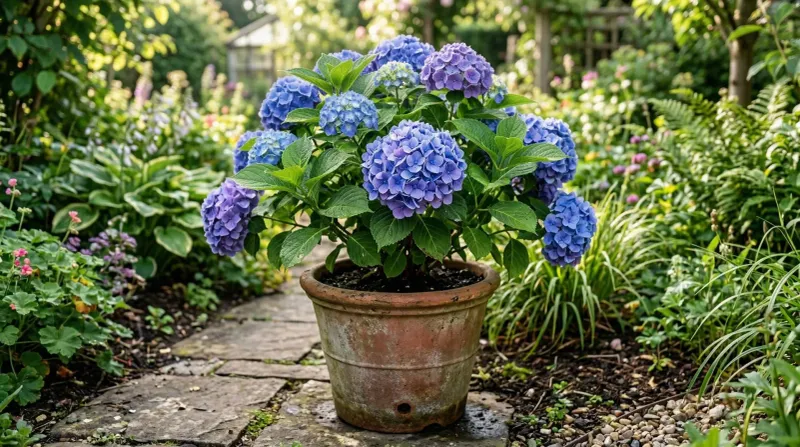
Midday drooping does not automatically mean a drainage problem. Bigleaf hydrangeas have large, thin leaves and high water demand, and University of Tennessee Extension’s hydrangea care guidance specifically notes that bigleaf types may wilt during hot summer afternoons even when they have been adequately watered.
If the plant perks back up once temperatures drop in the evening or by the following morning, and the potting mix is still moist, heat stress is the more likely explanation.
Adding water to a plant that is already sitting in moist soil and wilting from heat does not help and can worsen root problems. The more useful response is to observe the pattern: a plant that collapses at 2 p.m. and looks fine at 7 a.m. is probably reacting to temperature and sun exposure, not a drainage failure.
University of Maryland Extension’s hydrangea problem guide recommends checking both the time of day and whether recovery happens before concluding that more water or a container change is needed.
Hydrangea species make a real difference in how much sun and heat a container plant can handle. UGA’s bigleaf hydrangea publication describes this type as performing best with morning sun and afternoon shade, especially in hot Southern climates.
Panicle hydrangeas tolerate considerably more direct sun and tend to handle heat better in an exposed setting. UGA Extension Forsyth County’s pruning identification guide offers a practical way to tell the two types apart if you are unsure what you have.
Florist hydrangeas and plants recently moved from a nursery or indoor setting add another layer. A hydrangea sold in bloom indoors may already be root-bound, accustomed to lower light levels, or ill-suited to a hot exposed patio.
Transplant shock can produce wilting that looks almost identical to drainage failure or heat stress, and in those cases, the plant may need time and a sheltered location more than any container change.
Use a Moisture-Based Rescue Sequence
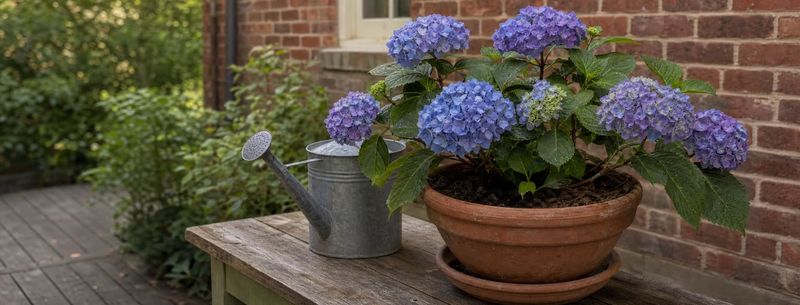
When a potted hydrangea is struggling, work through the situation in order rather than reaching for the watering can first. Move the plant out of harsh afternoon sun temporarily, especially if it is a bigleaf type on a hot exposed patio.
Then check the drainage setup: empty any standing water from saucers or outer containers, confirm that holes are open, and make sure the pot is not resting in collected water.
After the drainage check, assess the mix itself. Push a finger two to three inches into the potting mix.
If it feels dry at that depth, water thoroughly until water runs freely from the drainage holes, then discard what collects beneath the pot. UGA Extension’s mixed container guidance describes this thorough-water-then-drain approach as the correct standard, not a fixed schedule of daily or weekly watering.
If the mix already feels wet and the plant is still wilted, investigate drainage and roots rather than adding more water.
Repot only when the container evidence calls for it: blocked holes, compacted or unsuitable mix, or signs of root damage or root-bound crowding. Virginia Cooperative Extension’s container watering guidance reinforces that monitoring should respond to actual soil conditions and local weather rather than a calendar.
Southern summers in Florida and Texas shift quickly, and a container that needs water every day in July may need it far less often after a rain or during a cooler stretch. The underlying principle stays constant: hydrangeas need moisture and oxygen around their roots at the same time, and a container setup that delivers both gives the plant its best chance to recover.