
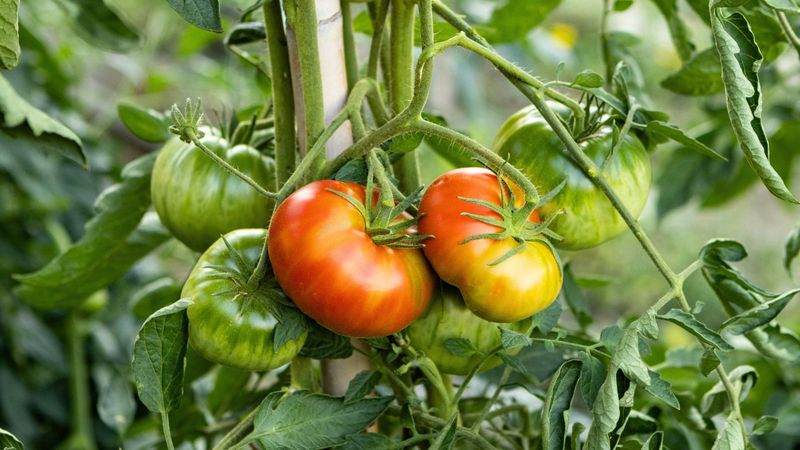
Late summer in Florida and Texas can leave gardeners staring at vines loaded with full-sized green tomatoes that simply refuse to turn red. Before reaching for another bag of fertilizer, it helps to know that two very different problems can produce the same frustrating sight.
Excess nitrogen is one real culprit, but summer heat is often the bigger obstacle, and treating the wrong cause can make things worse rather than better.
Before blaming fertilizer, define what “not ripening” means
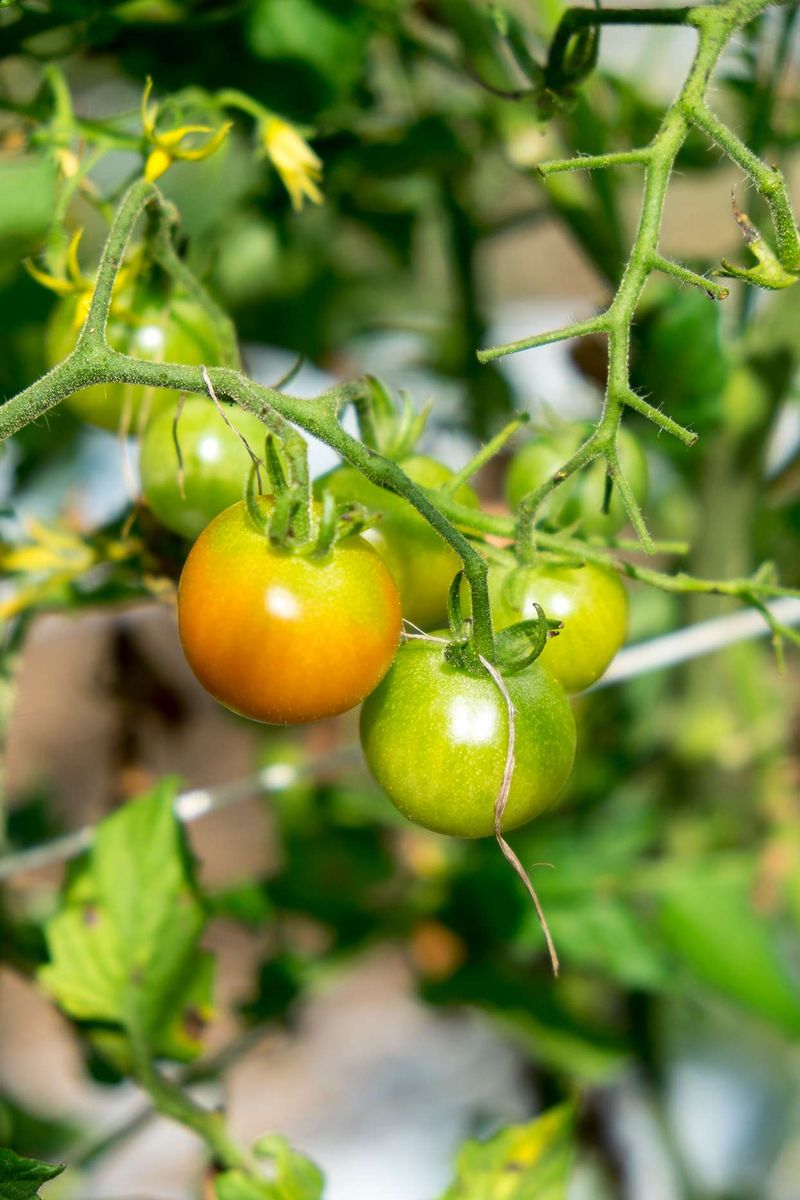
Green tomatoes on the vine can mean two completely different things, and mixing them up leads gardeners to the wrong fix. The first situation is a plant that produces few flowers, sets little fruit, or carries tomatoes that stay small and underdeveloped.
The second is a plant loaded with full-sized fruit that simply will not change color. Those two problems rarely share the same cause.
A tomato that has reached full size is often already physiologically mature, even when it looks entirely green. University of Minnesota Extension guidance on heat and vegetable performance notes that color development and actual fruit maturity are separate processes, meaning a full-sized green tomato can continue ripening after harvest while a small, underdeveloped fruit pulled too early may never soften or color properly indoors.
Before drawing any conclusions, walk the plant and take stock of what you actually see. Check whether the foliage is unusually dark and dense, whether flowers appeared on schedule, whether the fruit load looks reasonable for the plant’s size, and how hot the past few weeks have been.
The calendar date and the color of the fruit are not enough information on their own to point toward a solution.
When excess nitrogen points to a feeding problem
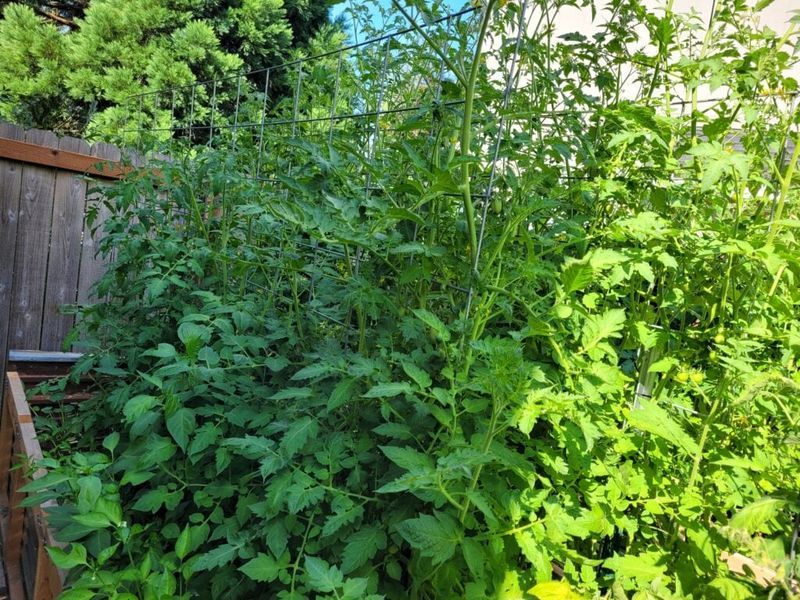
Excess nitrogen is a real fertilizing mistake, but it shows up most clearly in the plant’s growth pattern rather than in the color of existing fruit. A tomato that has been overfed with nitrogen tends to look almost too healthy: unusually vigorous, deeply dark green, and thick with foliage relative to the number of flowers or fruit it carries.
Purdue Extension’s tomato production guide specifically warns that high-nitrogen fertilizers can promote luxurious foliage while delaying flowering and fruiting, which reduces how much the plant actually produces.
Texas A&M and Georgia Cooperative Extension both identify excessive nitrogen as a contributor to poor fruit set and overly vegetative growth. The mechanism is straightforward: nitrogen strongly favors leafy, green tissue, and when it is applied too generously, the plant channels energy into stems and leaves rather than into flowers and developing fruit.
What nitrogen excess does not reliably explain is why a full-sized tomato already attached to the vine refuses to turn red. A greenhouse study on nitrogen rates and tomato carotenoid content found that effects on maturation differed between growing years and conditions, making the relationship between nitrogen and fruit color change mixed and context-dependent rather than a settled rule.
Reserve the nitrogen diagnosis for plants that are lush and leafy with disappointing fruit production, not simply for fruit that remain green during a heat wave.
Why late-summer heat can delay color on healthy fruit
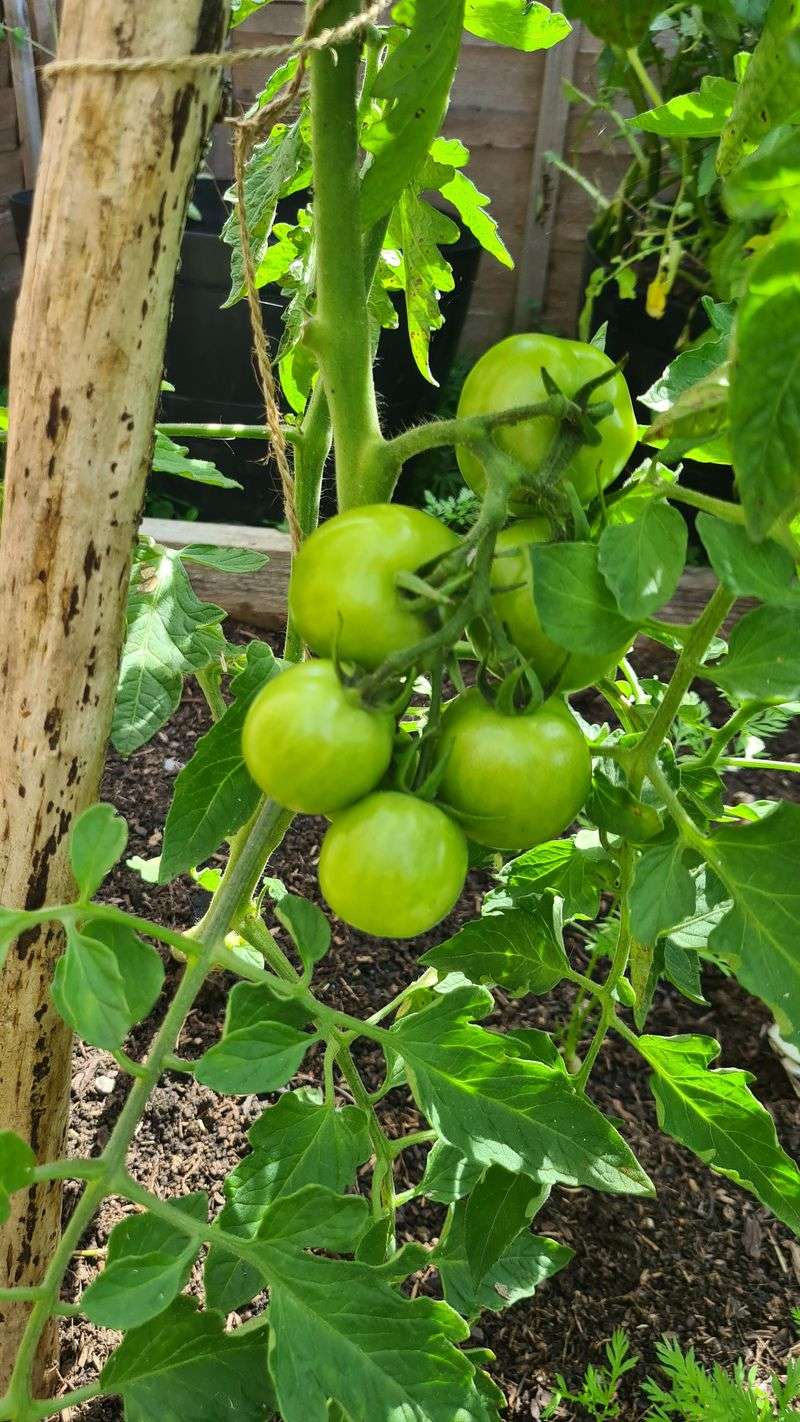
For Southern gardeners with full-sized fruit hanging on otherwise healthy plants, summer heat deserves more attention than the fertilizer bag. Red pigment formation in tomatoes depends on temperature, and when fruit tissue gets too hot, the process slows or stalls.
Research going back to classic plant physiology work, including early studies on temperature inhibition of carotene synthesis in tomatoes, established that high temperatures interfere with the pigment pathways responsible for red color development.
The range commonly associated with inhibited red-pigment formation is roughly 85 to 86 degrees Fahrenheit, but that figure is approximate, not a universal on-off switch. Fruit tissue temperature can run meaningfully higher than air temperature when the tomato is exposed to direct afternoon sun, so a day that feels like 90 degrees to the gardener may be considerably hotter at the surface of the fruit.
More recent research on temperature and lycopene regulation during postharvest ripening confirms that temperature tends to dominate light as the controlling factor in red-pigment development, reinforcing why a fruit can sit in full sun and stay stubbornly green through a heat wave.
Cultivar, humidity, night temperatures, plant health, and fruit exposure all influence how a given tomato responds. Hot nights can slow the overall maturation timeline even when daytime fruit temperatures are not extreme.
When cooler nights return in early fall, many full-sized green tomatoes resume normal color development without any change to the feeding program.
Pause blind feeding and test before adding nutrients
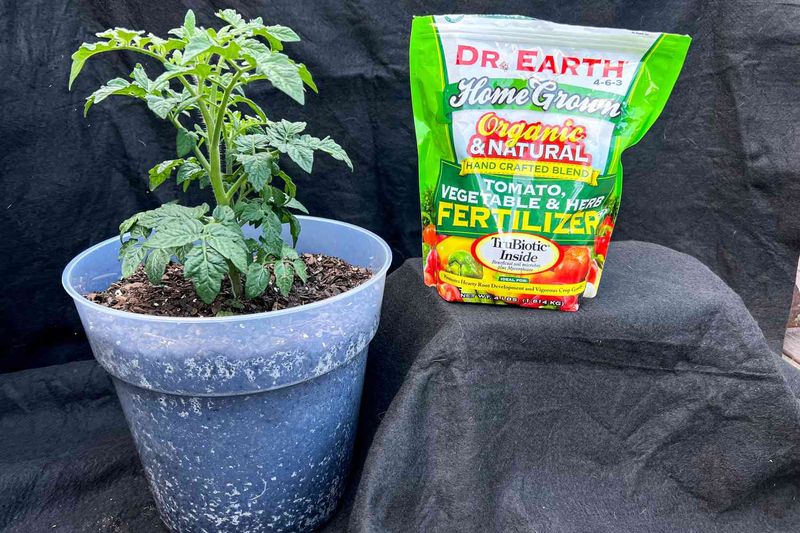
Reaching for more fertilizer when tomatoes stay green is one of the most common mistakes in the summer garden, and it can create new problems faster than it solves the original one. Applying lawn fertilizer, manure, compost, or repeated nitrogen-heavy feedings simply because fruit remain green adds nutrients the plant may not need and can cause salt stress, nutrient imbalances, and runoff losses.
UF/IFAS guidance on organic vegetable gardening in Florida recommends soil testing before adding any nutrients or amendments, a step that removes the guesswork and prevents gardeners from compounding an existing imbalance.
If the plant is already excessively leafy, stop nitrogen-heavy feeding until the growth pattern changes or a soil test confirms a need. Phosphorus and potassium do play roles in tomato production and fruit quality, but adding them without documented deficiencies will not override heat-inhibited color development.
A UF/IFAS summary of nitrogen, phosphorus, and potassium research with Florida tomatoes shows that phosphorus and potassium recommendations are adjusted based on soil-test results rather than applied uniformly, because soil type and existing nutrient levels vary enough to make a one-size formula unreliable.
When feeding genuinely is needed, follow the product label and any locally appropriate extension guidance rather than a generic tablespoon-per-plant formula. Florida fertigation research divides nutrient applications over the season and adjusts rates based on soil conditions, reflecting how much nutrient needs can differ across soils, cultivars, and production systems.
Treating a heat problem with fertilizer is not just ineffective; it can leave the plant worse off heading into fall.
Protect roots and foliage without forcing the crop
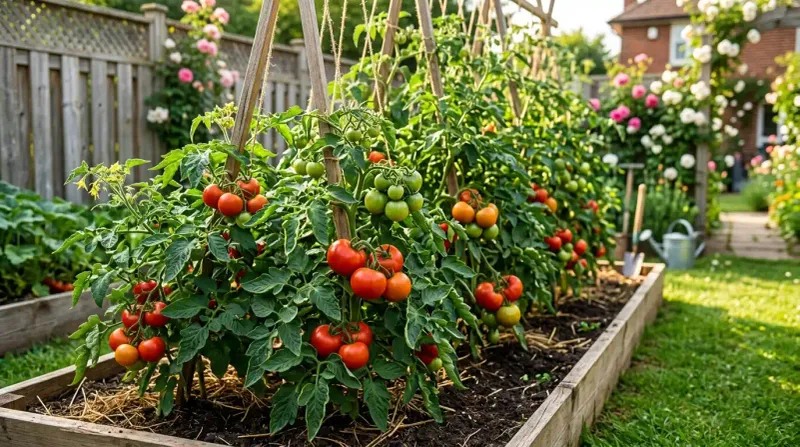
Steady soil moisture is one of the most practical things a gardener can do for heat-stressed tomatoes, and it costs nothing beyond consistent attention. Irregular watering during hot spells stresses roots, impairs the plant’s ability to move nutrients from soil into tissue, and increases the risk of blossom-end rot, a disorder that shows up as a dark, leathery patch on the bottom of the fruit.
Purdue Extension’s tomato guide connects irregular watering with multiple fruit-quality problems, including cracking and poor overall condition.
Mulching around the base of the plant helps even out soil temperature and reduces how quickly the top layer of soil dries between waterings. A two- to three-inch layer of straw, shredded leaves, or wood chips can make a meaningful difference during stretches of 90-plus-degree days.
Purdue’s tomato FAQ cautions that deliberately reducing water to stress the plant into ripening can cause wilting and further impair fruit development, making chronic drought a shortcut that backfires.
Foliage management follows the same logic. Removing large amounts of leaf cover to expose fruit to more sunlight sounds like it should speed color development, but it actually increases sunscald risk.
Purdue notes that ripe and ripening fruit are more vulnerable to sunscald when foliage is stripped away, so the goal is to maintain reasonable leaf cover rather than prune aggressively in hopes of forcing the crop to finish faster.
Separate delayed reddening from look-alike disorders
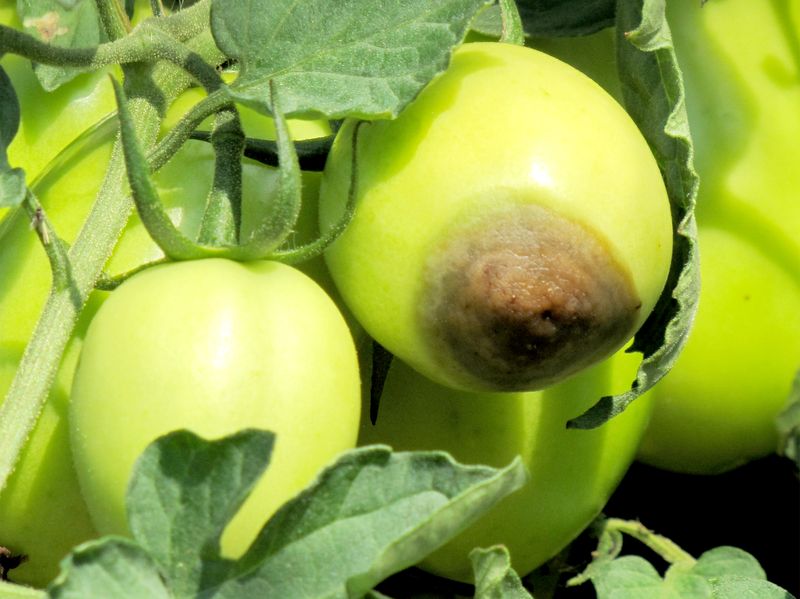
Not every tomato problem that looks like stalled ripening actually is stalled ripening. Blossom-end rot produces a dark, sunken, leathery lesion on the bottom of the fruit, which is the blossom end, and it has nothing to do with whether the rest of the tomato will eventually turn red.
Oregon State University Extension’s fact sheet on blossom-end rot explains that the disorder is linked to calcium transport and moisture stress rather than a simple calcium shortage in the soil, which is why adding calcium alone is not a reliable fix and why consistent watering matters more than any single amendment.
Potassium-related problems present differently still. Low potassium in the soil can be associated with blotchy ripening, yellow shoulders, gray wall, or internal whitening, symptoms that look unusual but are distinct from an otherwise normal green fruit that simply has not changed color yet.
Purdue Extension lists these potassium-associated ripening disorders separately from heat-related color delay, because the causes, appearances, and responses differ.
Treating a potassium problem requires confirming it first. Florida’s tomato nutrient research consistently adjusts potassium applications to soil-test results because potassium levels in Florida soils vary considerably and adding more without a confirmed deficiency can throw other nutrients out of balance.
Soil or tissue testing before treating any suspected deficiency is the step that prevents one problem from being traded for another.
Harvest mature fruit before heat or damage takes it
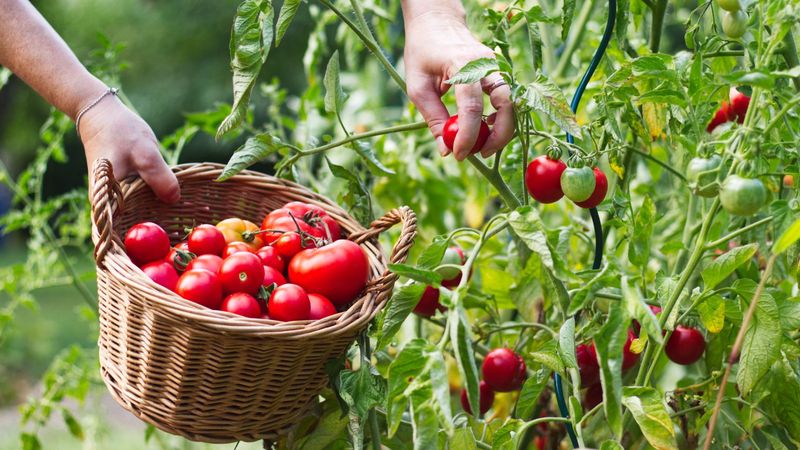
Waiting for every tomato to fully redden on the vine is not always the right call, especially when heat, cracking, sunscald, or pest pressure is already threatening the fruit. Tomatoes are climacteric, meaning they continue ripening after they leave the plant, and fruit that has reached the breaker or pink stage, when the first blush of color appears at the blossom end, will finish indoors without any help from the vine or from sunlight.
A warm, shaded location is the right place for harvested fruit. Direct sun on a windowsill is not needed and can actually push surface temperatures high enough to interfere with the same pigment formation that heat stalls outdoors.
Purdue Extension’s tomato guide states directly that light is not necessary for further ripening after harvest, and that excessive direct sun increases sunscald risk on harvested fruit just as it does on the vine.
For green tomatoes that must come off the plant before they show any color, size and maturity matter enormously. A full-sized mature-green tomato that has completed its internal development can ripen successfully at around 65 to 70 degrees Fahrenheit indoors.
Small, underdeveloped fruit that were pulled too early are unlikely to ripen well regardless of storage conditions. University of Minnesota Extension harvesting guidance reinforces that physiological maturity at harvest is the key variable for successful off-vine ripening across climacteric crops.
Use a simple diagnosis before deciding what happens next
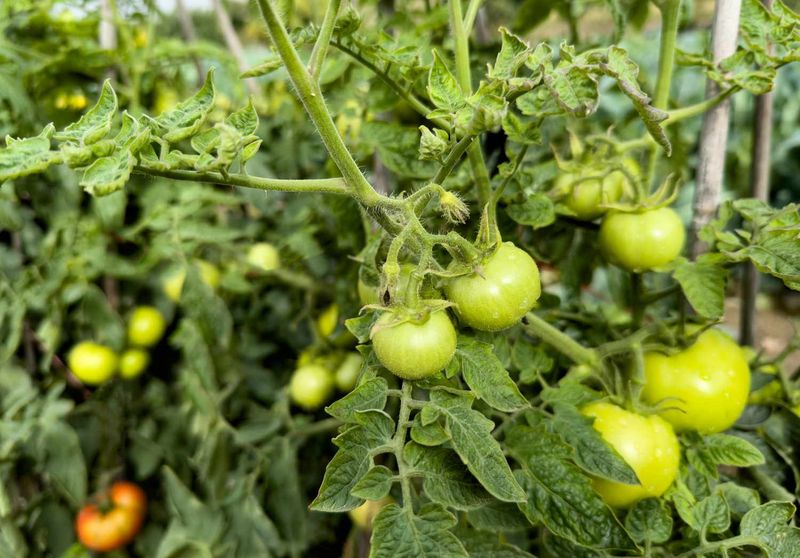
A quick plant assessment answers most of the guesswork. Lush, dark foliage with delayed flowering, sparse fruit set, or a fruit load that seems small for the plant’s size makes excess nitrogen worth investigating.
Full-sized green fruit appearing during a stretch of hot weather on a plant that otherwise looks healthy and productive points much more strongly toward temperature-delayed color development. Lesions, unusual ripening patterns, or internal discoloration call for separate diagnoses entirely.
From there, the practical path is straightforward: keep soil moisture even, hold off on additional fertilizer unless a soil test or clear deficiency pattern supports it, and let cooler fall conditions do the work when heat is the likely driver. University of Minnesota Extension notes that tomatoes commonly resume normal color development once temperatures ease.
When fruit is threatened by damage or disease, harvest mature-green or breaker-stage tomatoes and ripen them indoors rather than gambling on the vine.
UF/IFAS soil and fertility guidance and Purdue Extension both anchor their recommendations in what the plant and soil actually show rather than in calendar timing or fruit color alone. The most useful habit a Southern tomato grower can build is reading the plant first and reaching for a solution second.