
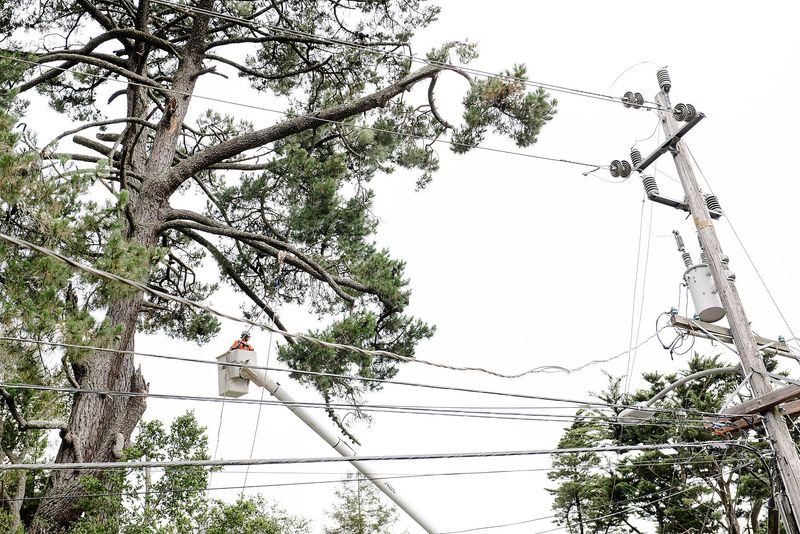
Most California homeowners never look up and wonder whether a tree in their yard could start a fire or knock out power for the whole block. But overhead power lines and nearby vegetation are a combination that California fire-safety and utility authorities take seriously, especially during dry, windy fire seasons.
Understanding the real hazard, and the safe steps to address it, can protect your home, your neighbors, and the crews who maintain the grid.
Why a tree near a power line can become a real hazard
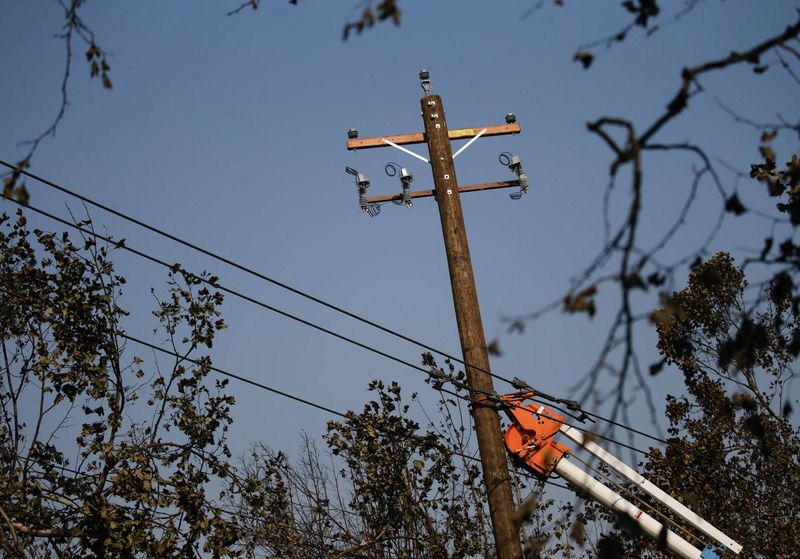
Overhead power lines and nearby trees are not automatically a disaster waiting to happen, but the combination deserves a clear-eyed look. CAL FIRE’s Office of the State Fire Marshal identifies vegetation contact with electrical lines as a source of arcs and sparks that can ignite fires, while the CPUC cites public safety, fire prevention, and grid reliability as the core reasons utilities must manage vegetation near high-voltage facilities.
Those are two distinct agencies with different roles: the Office of the State Fire Marshal focuses on utility wildfire mitigation planning, while the CPUC regulates investor-owned utility safety requirements and publishes guidance homeowners can use.
The hazard is not limited to branches already resting on a wire. Wind can push a branch into a line that seemed safely distant on a calm day.
Conductors sag in summer heat, narrowing the gap from below. A dead limb weakened by disease or drought can snap and fall across a line without warning.
A leaning tree whose root system has been compromised can bring the entire trunk down onto conductors, creating a fire, an outage, and an electrocution risk for anyone who approaches the downed wire.
What the hazard does not mean is that every tree growing anywhere near a utility corridor is an emergency or a legal violation. Risk depends on the type of line, its voltage, how close the vegetation actually is, whether the tree or its limbs could realistically contact or fall onto the conductors, and the condition of the tree itself.
A healthy, well-sited tree that poses no realistic threat is a different situation from a rotting eucalyptus leaning toward a transmission line on a fire-prone hillside. The goal of this article is site-specific management, not reflexive removal of every tree in sight.
California does not use one universal tree-to-wire distance
One of the most common misconceptions about power-line vegetation is that California enforces a single, simple rule, such as “keep every tree 10 feet from every wire.” The actual framework is more nuanced, and understanding that nuance protects homeowners from both over-reacting and under-reacting to what they see in their yards.
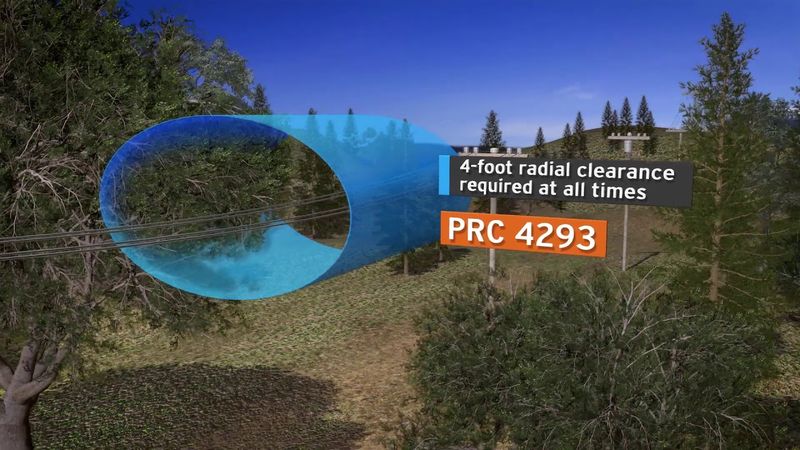
California’s Public Resources Code establishes minimum clearances for certain electrical transmission and distribution lines in mountainous, forest-covered, brush-covered, or grass-covered areas. According to the Office of the State Fire Marshal, those minimums are 4 feet for lines operating at 2,400 to under 72,000 volts, 6 feet for lines at 72,000 to under 110,000 volts, and 10 feet for lines at 110,000 volts or more.
Critically, those clearances must account for conductor movement caused by temperature, wind, line sag, and vegetation sway, not just the static position of a branch on a still afternoon.
These figures are statutory context, not a measuring guide for homeowners standing in their yard. CPUC General Order 95, Rule 35 also governs utility line clearances and contains its own distinctions and exceptions, including provisions that apply differently depending on facility type, voltage, and whether a line serves distribution or transmission purposes.
The applicable rules for any specific wire are determined by the utility conducting a site assessment, not by a homeowner with a tape measure.
Utility-specific requirements can be more restrictive than the statewide statutory minimums, and fire-threat designation adds another layer. A line running through a High Fire-Threat District may be subject to additional requirements beyond what the base statute requires.
The practical takeaway for homeowners is that the relevant clearance for the wire outside your window depends on factors you cannot determine from the ground, which is precisely why contacting the utility is the correct first step rather than trying to calculate compliance yourself.
Inspect from the ground and stay well away from the wires
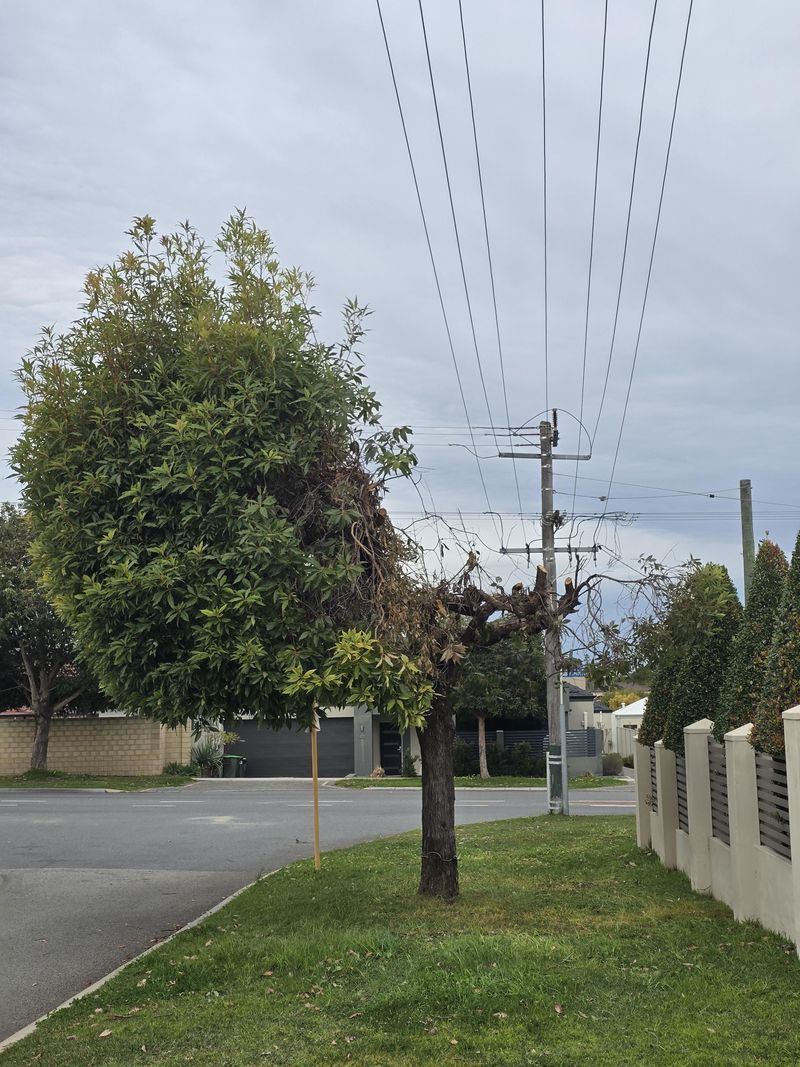
Before calling anyone, a homeowner can do one genuinely useful thing: look. A careful visual inspection from the ground, without approaching the lines or climbing anything, can reveal warning signs that tell you how urgently to act and what information to give the utility when you call.
Standing at a safe distance, scan for branches that are already resting on or touching a conductor. Look for limbs that hang close enough that a strong gust could swing them into the wire.
Check whether any tree in the yard is leaning noticeably toward the lines, or whether the canopy is large enough that a whole-tree failure could bring it across the conductors. Dead limbs are a particular concern because they can break without the warning signs a living branch might show, such as bending or cracking under load.
Discolored bark, mushroom growth near the base, a hollow sound when the trunk is tapped, or visible decay are signs worth noting and reporting to a qualified arborist.
The CPUC recommends annual visual inspections and consulting an ISA Certified Arborist for questions about tree health or structural risk. An ISA credential reflects genuine expertise in tree biology, structure, and condition assessment, and a certified arborist can tell you whether a tree is healthy, declining, or structurally compromised.
What an arborist credential does not automatically cover is the specialized training, equipment, and safety procedures required for work near energized overhead lines.
OSHA defines line-clearance tree trimming as a specialized category of work requiring trained and equipped personnel following specific approach-distance and safety procedures. Telling yourself that 10 feet of distance is always sufficient is not accurate; the safe approach distance varies with line voltage and work conditions, and only qualified line-clearance personnel should determine and maintain those distances.
Never climb the tree, use a ladder near the lines, or handle any tool or equipment that could bridge the gap between you and an energized conductor.
Call the utility before you call a tree trimmer
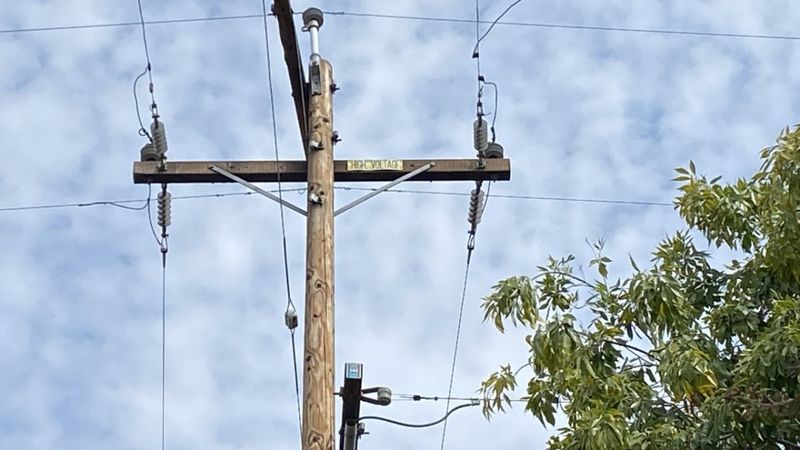
Once you have completed a ground-level inspection and identified a concern, the next step is a phone call to your electric utility, not to a tree service. That sequence matters more than most homeowners realize, and skipping it can cost money, create liability, and result in work that does not actually solve the problem.
Utilities operating in California have vegetation-management obligations under state law and CPUC oversight. When branches are touching or threatening their facilities, the utility may be responsible for performing or arranging the required clearance work.
The CPUC advises homeowners to contact their local utility first when vegetation is touching or close to a power line, and notes that some required trimming or removal may be performed without an additional charge to the customer, depending on the circumstances and service territory. That is not a guarantee, and coverage varies by utility, line type, easement, and the specific hazard involved.
When you call, be ready to describe what you observed: which lines appear to be involved, which trees or limbs are the concern, and whether you noticed any immediate danger such as a branch already resting on a wire. Ask the utility to clarify who will perform the work, whether they need access to your property, what portion of the work they will cover, and whether any maintenance responsibility remains with you after their work is complete.
The CPUC’s vegetation management consumer guidance notes that refusing utility access can carry legal and liability consequences, so cooperating with scheduled inspections and work access is in a homeowner’s interest.
One point that cannot be overstated: turning off the power inside your home does not make overhead utility lines safe. A household service disconnect interrupts power inside the structure but has no effect on the energized conductors running along the street or across your yard.
OSHA’s line-clearance guidance is unambiguous that work near energized lines requires specialized training, equipment, and procedures. DIY pruning or removal near utility lines is not a safe option, regardless of what a homeowner believes about the power status of the wire.
Qualified professionals decide whether to prune, retain, or remove
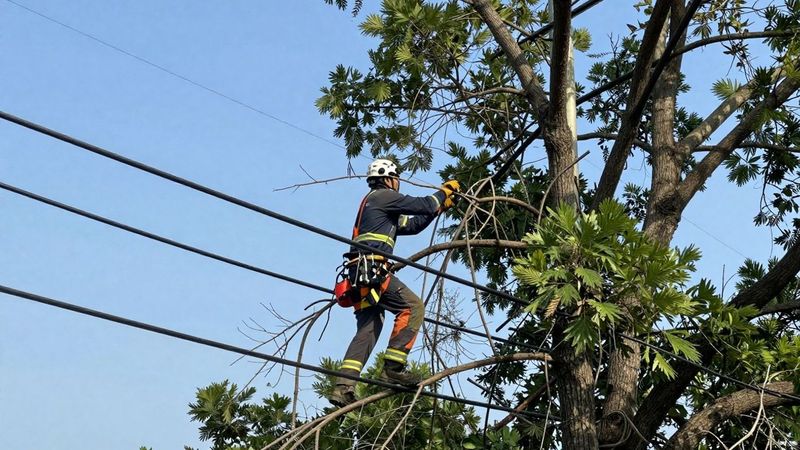
Not every tree that prompts a utility call ends up removed. Professional assessment, not automatic removal, is the appropriate response to most vegetation-and-line concerns, and understanding who does what helps homeowners ask the right questions and hire the right people.
UC Agriculture and Natural Resources notes that tree hazard depends on a range of factors including species, structural condition, canopy size, slope, wind exposure, surrounding fuels, and proximity to structures and lines. A healthy, well-sited tree that a professional determines poses no realistic contact or fall risk may be retained with routine maintenance.
A dead, diseased, rotten, or structurally defective tree leaning toward conductors is a different story and may require removal regardless of how much the homeowner values it.
The distinction between tree-health assessment and line-clearance work is important. An ISA Certified Arborist brings genuine expertise to evaluating whether a tree is structurally sound, declining, or dangerous, and that assessment is valuable input for any decision.
But as OSHA’s line-clearance guidance makes clear, actual trimming or removal work performed near energized conductors requires personnel with specialized electrical-safety training, appropriate equipment, and procedures governing how close workers can approach the lines. An arboricultural credential alone does not establish those qualifications.
When coordinating professional work, confirm with the utility which contractor is authorized or approved for work near their facilities, and verify that any contractor you hire independently holds the appropriate line-clearance qualifications for the voltage involved. The CPUC recommends working through the utility to ensure that clearance decisions are made by people who understand the full picture: the line’s voltage, the facility type, the applicable rules, and the tree’s actual risk profile.
Choose future trees by mature size and utility rules
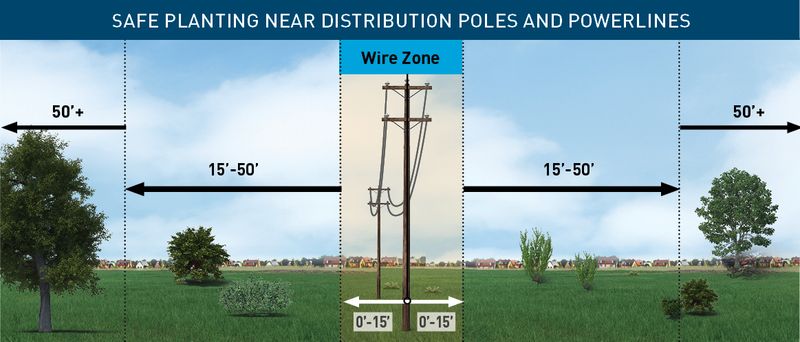
The most effective way to avoid a vegetation-and-line conflict is to prevent one from developing in the first place. Choosing the wrong tree for a spot near utility infrastructure is a mistake that can take a decade or more to become obvious, by which point removal is far more disruptive and expensive than a better planting decision would have been.
The CPUC recommends that any tree planted near power lines have a maximum mature height at least 10 feet below the nearest line. That figure is practical planting guidance, not a universal horizontal-distance law.
It does not mean a tree can be planted 10 feet sideways from a pole regardless of canopy spread, slope, wind, line sag, or the distance the tree could travel if it fell. Canopy movement and fall distance matter as much as static height.
PG&E’s right-tree-right-place guidance illustrates how individual utilities can be more restrictive than the statewide baseline. PG&E advises against plants that exceed 10 feet at maturity within its distribution wire zone, applies stricter limits in high-fire-threat districts, and requires taller trees to be planted farther from distribution or transmission lines.
That guidance applies to PG&E service territory and is included here as an example of how utility-specific rules work, not as a statewide standard. Homeowners should check the published planting guidance for their own utility before buying a single tree.
Before digging, always call 811 to locate underground utilities. Nursery labels list current container size, not mature dimensions, so verify the tree’s full-grown height and canopy spread through the species description before purchase.
Low-growing ornamentals, native shrubs, and groundcovers are often better choices for spots beneath or near lines, and they can still provide habitat, shade, and visual interest without growing into a future hazard.
Defensible space and power-line clearance address different hazards
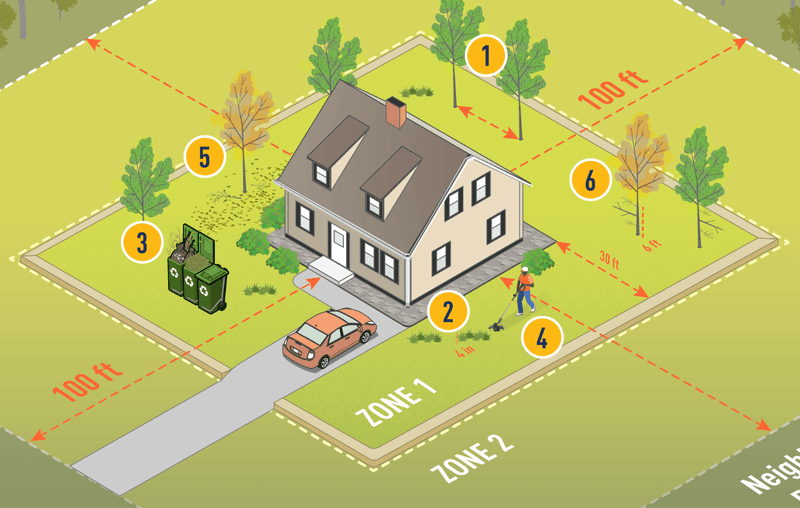
Homeowners in fire-prone parts of California often hear two sets of vegetation-related instructions: one about defensible space and one about power lines. Both matter, but they address different hazards through different frameworks, and treating them as interchangeable leads to confusion about what is actually required and why.
Power-line clearance is about protecting electrical infrastructure and the public from fire, outage, and electrocution hazards. It is driven by utility obligations under state law and CPUC oversight, and the work near energized lines must be performed by qualified personnel.
The Office of the State Fire Marshal addresses utility wildfire mitigation as a distinct program from the broader defensible-space guidance that applies to structures.
Defensible space, by contrast, focuses on reducing combustible fuels around a home so that firefighters have a better chance of defending it and so that embers are less likely to ignite the structure. CAL FIRE’s defensible-space guidance generally calls for maintaining up to 100 feet around structures, or to the property line, with dead material removed, annual grasses kept short, and appropriate horizontal and vertical spacing between vegetation layers.
Whether those rules apply to a specific property depends on its jurisdiction and fire-hazard designation, so homeowners should check with CAL FIRE and their local fire authority rather than assuming a universal duty.
Defensible space does not require clearing every living plant from the yard. The focus is on combustible fuels: dead wood, dry grasses, ladder fuels that could carry a surface fire into the tree canopy, and dense plantings against the structure.
The Board of Forestry’s zone guidance describes a graduated approach, with the most intensive management closest to the home. Completing defensible-space work does not substitute for contacting your utility about a line-clearance concern, and vice versa.
Use the safe sequence before changing the yard
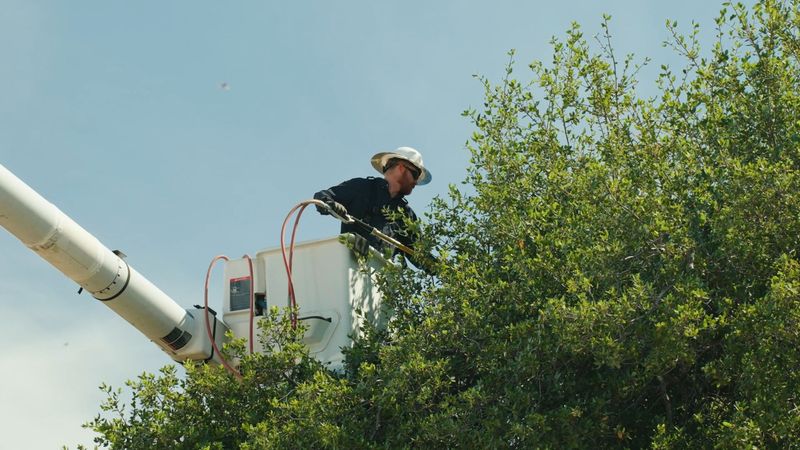
Managing the relationship between your trees and nearby power lines comes down to a reliable sequence, applied before anyone picks up a chainsaw or calls a tree service. Start with a ground-level visual inspection, looking for branches already touching lines, limbs that could swing into conductors, leaning trees, dead wood, and canopies large enough to fall across the wires.
Stay well away from the lines and never climb or use tools near them.
If you spot a concern, contact your electric utility before arranging any work. Confirm who holds responsibility for the clearance, whether the utility will perform or cover the work, and what access they need.
The CPUC advises working through the utility to ensure that any clearance work is performed by appropriately qualified line-clearance professionals. An ISA Certified Arborist can assess tree health and structure, but actual work near energized lines requires specialized training and equipment beyond a standard arboricultural credential.
Evaluate the tree rather than removing it automatically. OSHA’s line-clearance guidance and UC ANR research both support the principle that removal is appropriate for hazardous trees, not for every tree that happens to grow near infrastructure.
When you are ready to plant something new, check your utility’s mature-height guidance and call 811 before digging. Right-tree-right-place planning keeps healthy trees in the landscape where they belong, and keeps future hazards from taking root.