
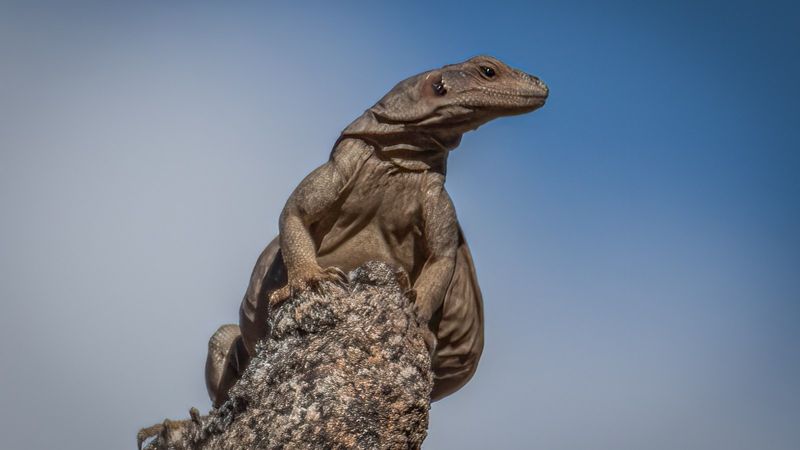
Step outside on a scorching California afternoon and you might find your stucco wall, wood fence, or garden retaining wall covered in small, quick-moving lizards, each one seemingly frozen in place until you get too close. It can look dramatic, even a little alarming, but there is a straightforward explanation rooted in everyday reptile behavior.
Understanding what is actually happening, and what limited benefit it may offer your yard, can turn a startling scene into something worth appreciating from a safe distance.
The wall may be hosting western fence lizards
Picture a sun-drenched afternoon in a California suburb: a dozen or more small, brown-gray lizards clinging to the exterior wall of a house, spaced a few feet apart, each one stock-still until a shadow passes. The scene can look like something out of a nature documentary, but for many California homeowners, it is simply a backyard wildlife sighting they have not learned to name yet.
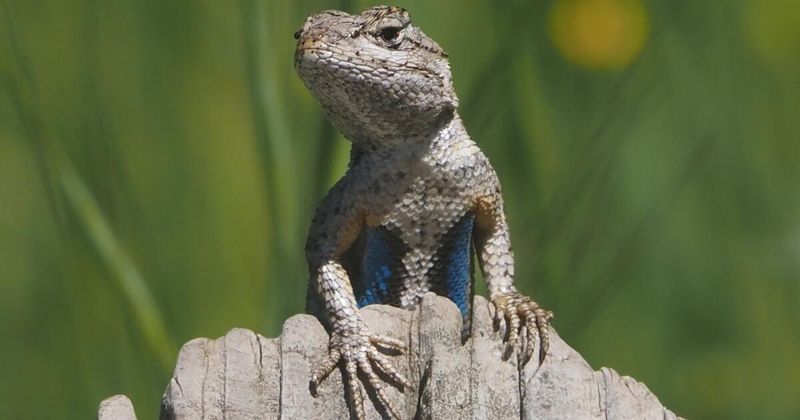
The most likely candidate for those small, spiny figures is the western fence lizard (Sceloporus occidentalis). California Department of Fish and Wildlife species data identifies this lizard as widespread and common across most of the state, and building walls rank among its recognized basking and perching habitats.
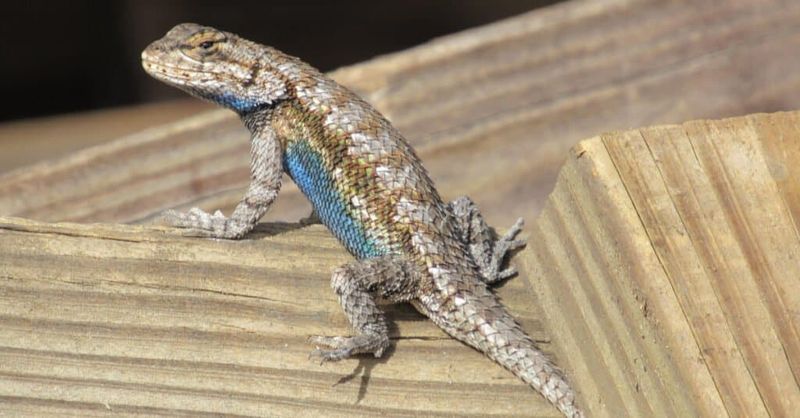
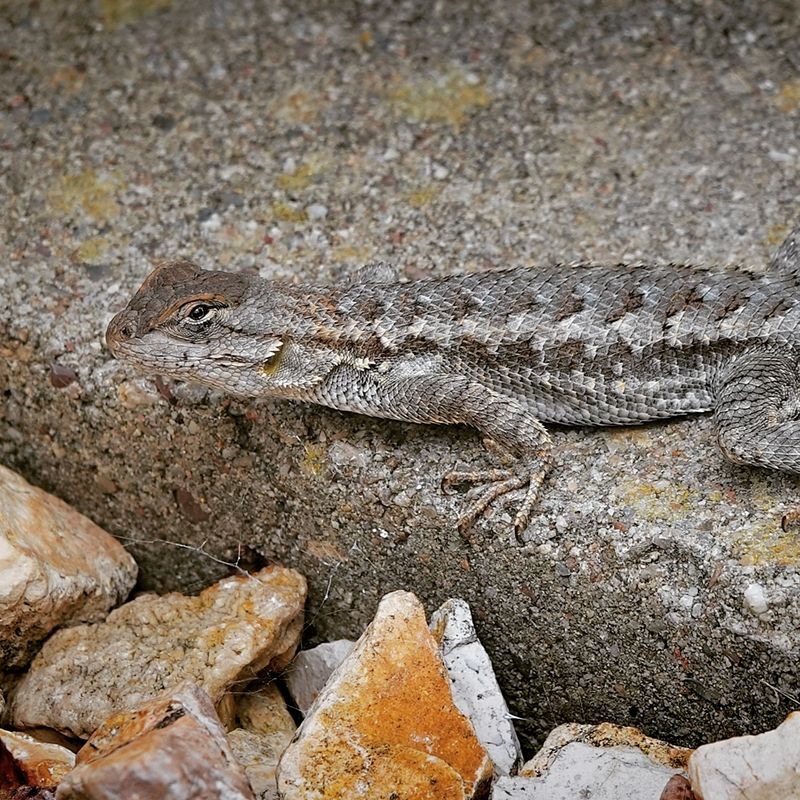
Males often display bright blue patches on the sides of the belly and throat, which can catch a homeowner’s eye on a bright day. Females and juveniles tend to look plainer, showing tan or gray-brown scales with darker crossbands along the back.
That said, a visual match from across the yard is not the same as a confirmed identification. California yards also host alligator lizards, side-blotched lizards, skinks, geckos, and other species, as California Herps’ guide to commonly encountered lizards makes clear.
Some of those species share the same brown-and-gray color palette, so what looks like a uniform crowd may actually be a mix.
The reassuring part is that none of California’s common yard lizards pose a threat to your home, garden, or family when they are outside. UC IPM’s lizard guidance describes these animals as generally harmless and notes no measurable damage to garden plants.
A wall covered in lizards is a wildlife event, not a warning sign.
A vertical surface gives a lizard more than warmth
Lizards cannot generate their own body heat the way mammals do. They rely entirely on the environment around them to warm up, and basking on a sun-exposed surface is how they reach the temperatures needed for normal movement, digestion, immune function, and reproduction.
National Park Service guidance on reptiles and amphibians explains this dependence on external heat sources as a defining feature of reptile biology, not a crisis response.
A wall, though, offers more than a warm surface. Elevation matters.
When a lizard climbs a few feet off the ground, it gains a broader line of sight across the yard, which means a better chance of spotting insects and other small prey before they disappear into leaf litter. Joshua Tree National Park’s lizard overview notes that elevated perches give lizards a tactical advantage for both hunting and predator detection.
For male western fence lizards, the social stakes are even higher. According to California Department of Fish and Wildlife species data, males use elevated perches to watch for rivals, locate potential mates, and perform the push-up displays that signal territorial ownership.
A prominent wall in a sunny yard can function as prime real estate during the active season, drawing multiple males to the same structure.
A herpetofaunal survey of the Baldwin Hills urban greenspace found that vertical and structural features in developed areas remain important habitat elements for lizard populations in California’s urban and suburban landscapes. The Presidio of San Francisco’s western fence lizard profile similarly describes walls and fences as recognized components of the species’ urban habitat.
Taken together, the evidence points to a wall congregation as normal use of a convenient structure, not a special behavioral response triggered by a heat wave.
Why do they appear all at once?
Seeing ten lizards where you usually see one or two can feel like a sudden invasion, but the population in your yard probably has not doubled overnight. What often changes is visibility.
On warm, active days, lizards that normally scatter into leaf litter, wood piles, or dense shrubs may instead congregate on open, sunny surfaces where they are easy to spot. The lizards were always nearby; the conditions just made them easier to count.
Seasonal timing adds another layer. UC IPM reports that western fence lizard eggs are generally laid from May through August, with young typically hatching from July through September.
A late-summer wall gathering that seems unusually crowded may simply reflect a new cohort of juveniles becoming active for the first time, spreading out from their hatching sites and exploring available structures. Juveniles tend to be small, quick, and numerous, which can make a normal population look larger than expected.
A temporary concentration of insects near a wall, perhaps attracted by outdoor lighting the night before or by plant material along the foundation, can also draw more lizards to a specific spot. Prey availability shapes where lizards choose to perch, so a wall that happens to sit above a good foraging zone may see heavier traffic on any given afternoon.
Hot weather plays a more complicated role than it might seem. Channel Islands National Park’s fence lizard profile notes that fence lizards are generally active when temperatures are warm but become inactive during periods of extreme heat.
Moderate warmth encourages activity; extreme heat pushes lizards toward shade, crevices, or underground refuges. A wall crowded with lizards on a hot afternoon is more likely a sign of warm-but-manageable conditions than evidence that the animals are responding to a heat emergency.
California Department of Fish and Wildlife species data reinforces that wall use is a feature of normal daily activity, not a distinct heat-wave behavior.
The potential garden benefit is limited but real
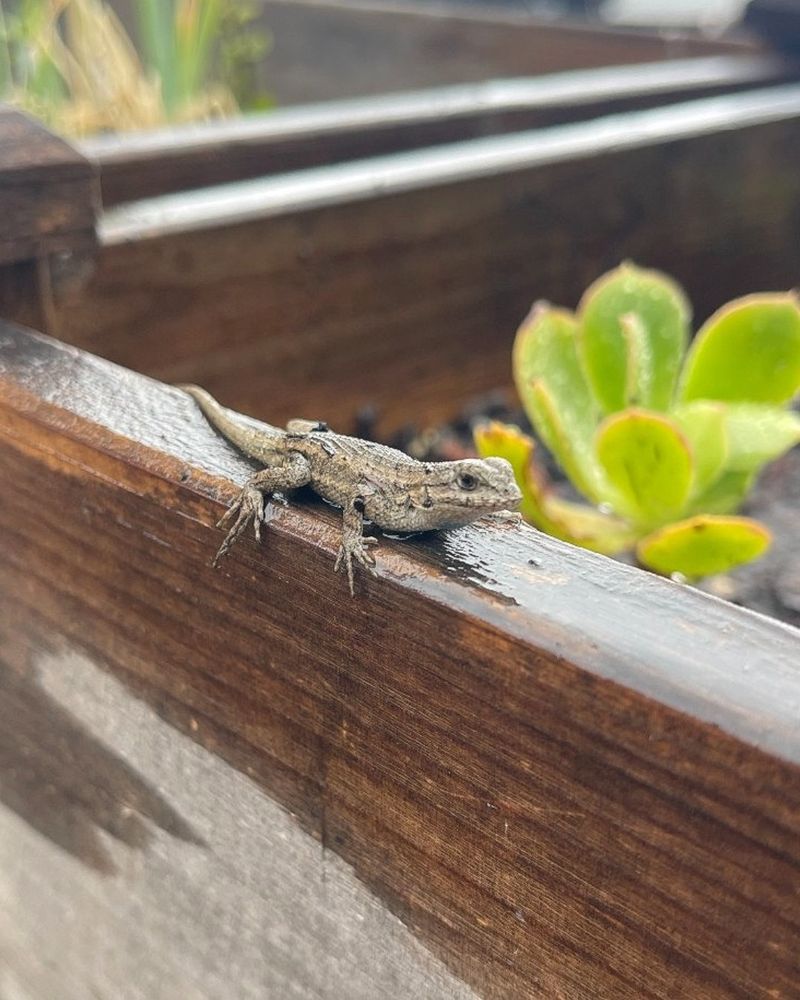
Here is the honest good news: common California yard lizards eat a wide variety of arthropods. UC IPM’s lizard resource lists beetles, ants, aphids, grasshoppers, wasps, spiders, ticks, and scorpions among the prey items consumed by lizards commonly found in California yards.
That is a broad menu, and it covers several insects that gardeners regularly deal with.
UC IPM also states clearly that these lizards cause no measurable damage to garden plants. They do not chew foliage, dig up bulbs, or disturb root systems.
A yard full of lizards is a yard that has gained a group of small, self-sufficient hunters without losing anything from the garden bed in return.
The qualifier matters, though. A wall congregation does not guarantee that any particular pest will be noticeably reduced.
Lizards eat what is available and accessible, and their feeding alone is unlikely to eliminate a serious aphid infestation or clear out a mosquito population. Think of their presence as one possible thread in a larger food web, not a standalone pest-control service.
The value is real but proportional.
Their presence also tells you something practical about your yard at that moment: the animals are finding enough structure to perch on and enough prey to make the location worth visiting. That is a modest but useful piece of information.
A yard that supports foraging lizards has at least some of the physical features, vertical surfaces, cover, and invertebrate activity, that small wildlife needs. Whether that reflects deliberate habitat planning or just a fence and a few bugs is a separate question, and lizards alone cannot answer it.
A lizard-covered wall cannot diagnose your yard
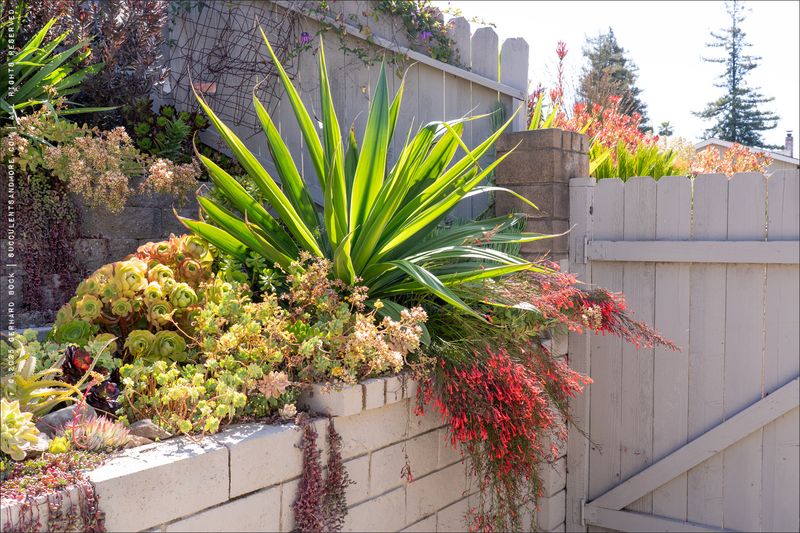
A wall covered in lizards is a striking sight, and it is tempting to read meaning into it beyond what the evidence actually supports. Some gardeners take it as confirmation that their yard is pesticide-free, ecologically balanced, or drought-resilient.
The sighting does not establish any of those things.
What the animals are doing, at that moment, is using available conditions. They found a structure they can climb, temperatures they can tolerate, and possibly some prey nearby.
That is the full extent of what their presence confirms. UC IPM’s lizard guidance does not describe a lizard congregation as a yard health indicator, and treating it as one risks drawing conclusions the observation cannot support.
The same caution applies to folk interpretations of lizard behavior. A sudden gathering on the wall does not predict rain, signal an approaching earthquake, or indicate that the animals sense a weather change.
No California wildlife authority or peer-reviewed source reviewed for this article supports those connections.
One practical point deserves direct mention: do not attempt to trap lizards on a wall or move them onto a surface you think might be warmer. Channel Islands National Park notes that lizards retreat from extreme heat rather than seeking it out, and surfaces in direct California sun can become dangerously hot for an animal that cannot easily escape.
The safest interpretation of the scene is also the simplest one: these are lizards doing ordinary lizard things on a convenient structure, and the most accurate response is to watch them without intervening.
What should homeowners do outside?
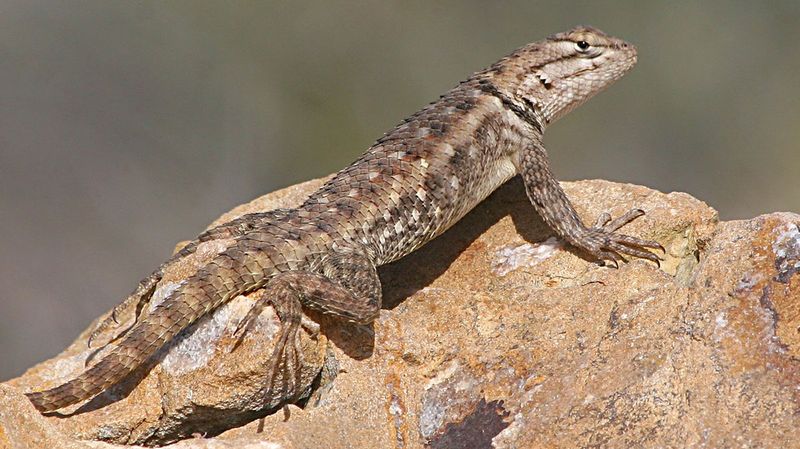
The simplest and safest response to a healthy outdoor lizard congregation is to leave the animals alone. Healthy wild lizards do not need supplemental food, water dishes, or a custom enclosure.
Feeding them can attract other wildlife, alter natural foraging behavior, and create dependency on a food source that may disappear. Watering them directly is unnecessary and can stress the animals.
Capturing or relocating them removes individuals from established territories and can expose both the lizard and the handler to avoidable harm.
If you want to make your yard more hospitable over time, the approach is restrained rather than engineered. California Department of Fish and Wildlife species data points to climbable vertical structures, rocks, logs, and woody vegetation as habitat features that western fence lizards use.
Retaining existing rocks along a slope, leaving a log pile in a corner, or keeping some native shrubs with a rough bark surface can provide the cover and basking spots lizards already seek. You do not need to build a lizard garden; you mostly need to avoid removing the features that already work.
Pesticide choices also matter in a background way. UC IPM’s insectary plant guidance notes that broad-spectrum insecticide use can reduce the invertebrate populations that lizards and other beneficial wildlife depend on for food.
Reducing unnecessary pesticide applications keeps the prey base intact without requiring any direct lizard management.
UC IPM does not recommend handling, capturing, or relocating healthy outdoor lizards, and that guidance reflects both animal welfare and human safety. Habitat support works best when it is passive: keep some structure, reduce chemical interference, and let the animals make their own choices about where to perch.
Indoor visitors call for exclusion, not poison
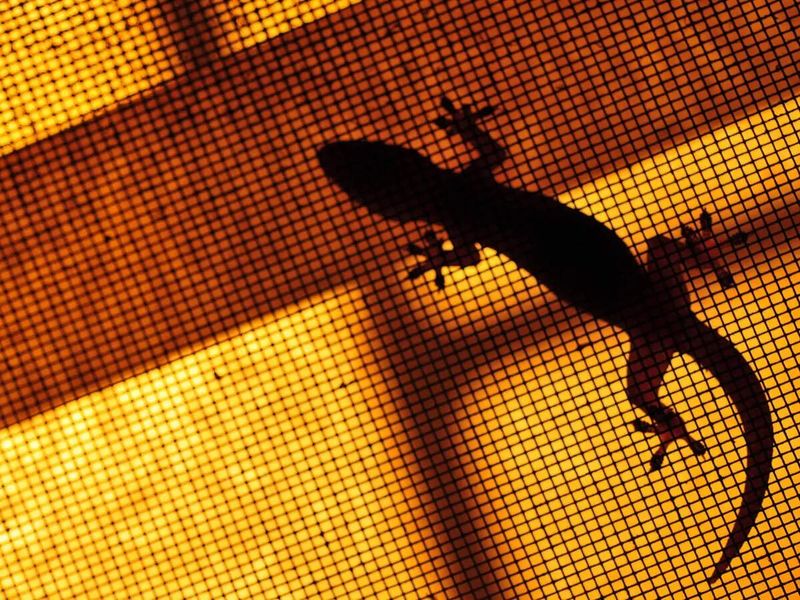
An outdoor wall congregation and an indoor lizard are two separate situations, and they call for different responses. When a lizard finds its way into a garage, hallway, or living space, the right tool is exclusion, not a chemical product.
Start by identifying how the animal got in. UC IPM recommends sealing openings about one-quarter inch and larger, including gaps under doors, around window frames, along pipe penetrations, near vents, and at utility entry points.
Weatherstripping, door sweeps, caulk, and mesh screening handle most of these gaps without requiring any product applied to the lizard itself. UC IPM also states clearly that no toxicants or repellents are registered in California for killing or repelling lizards, so any commercial product claiming to do so is not a legally recognized option.
Homemade repellent recipes circulating online carry the same problem: no evidence supports their effectiveness, and some ingredients can harm other wildlife or contaminate soil.
The health dimension of indoor lizard contact deserves straightforward attention. Wild reptiles can carry Salmonella bacteria without appearing sick, and a study published in CDC Emerging Infectious Diseases found reptile exposure linked to human salmonellosis cases across multiple settings.
A CDC Salmonella outbreak investigation also documented transmission through contact with reptiles kept in domestic settings. Rough handling adds physical risks: a frightened lizard may bite, scratch, or shed its tail as a defense response.
CDC guidance on reducing Salmonella risk from reptiles specifically advises that children younger than 5, older adults, and people with weakened immune systems should not handle wild reptiles. For everyone else, washing hands thoroughly with soap and water after any contact with a lizard or a surface it has occupied is the appropriate precaution.
If you need to guide an indoor lizard back outside, use a container rather than bare hands, and wash up immediately after.
The safest meaning to take from the scene
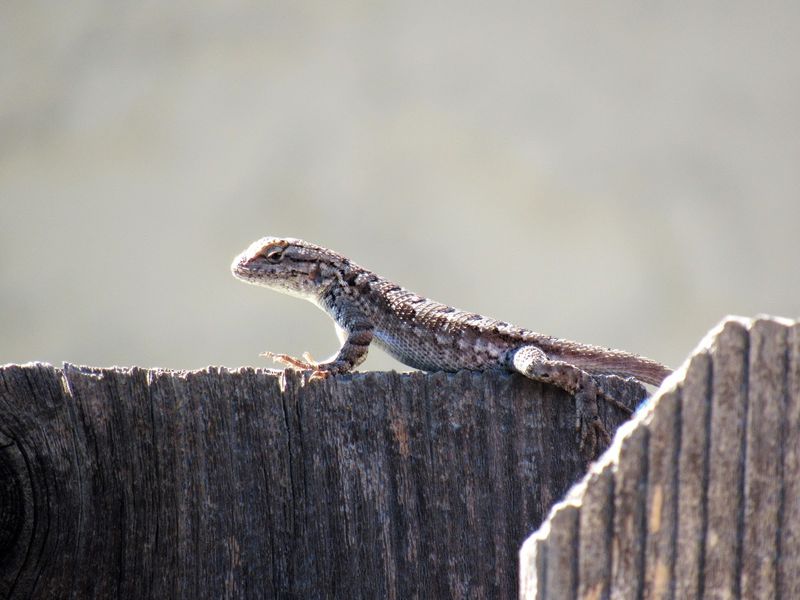
A California wall covered in small lizards on a hot afternoon most likely signals one thing: these animals found a convenient structure that offers a warm surface, an elevated view, and probably some nearby prey, and they are using it the way they use walls, fences, and rock faces across the state every active season. That is the ordinary explanation, and ordinary explanations tend to be correct.
The limited benefit is worth acknowledging without overstating it. UC IPM confirms that common California yard lizards eat a broad range of arthropods and cause no measurable garden damage, which puts them on the useful side of the ledger without making them a guaranteed pest solution.
California Department of Fish and Wildlife data supports the wall as recognized habitat, not as evidence of an unusual behavioral event tied to the heat wave itself.
The proportionate homeowner response is straightforward: watch from a distance, preserve the structural and vegetative features that make the yard usable, avoid unnecessary pesticide use that depletes their food supply, and seal building openings if the lizards start coming indoors. No special intervention is needed, and none is recommended.
A yard that lets small lizards go about their business quietly is already doing most of what the evidence supports.