
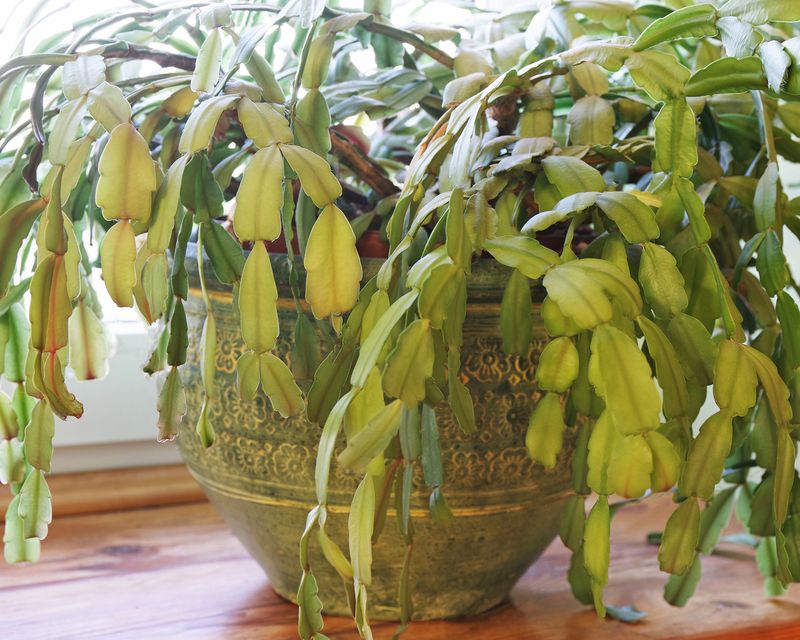
If your Christmas cactus is sitting there looking soft, floppy, or pale right now, you are not alone – summer is when these plants tend to confuse their owners the most. Many people assume a limp cactus just needs more water or a sunnier spot, but those fixes can actually make things worse.
The real answer starts with a quick diagnosis before you change anything about your routine.
Summer growth should not look limp and depleted
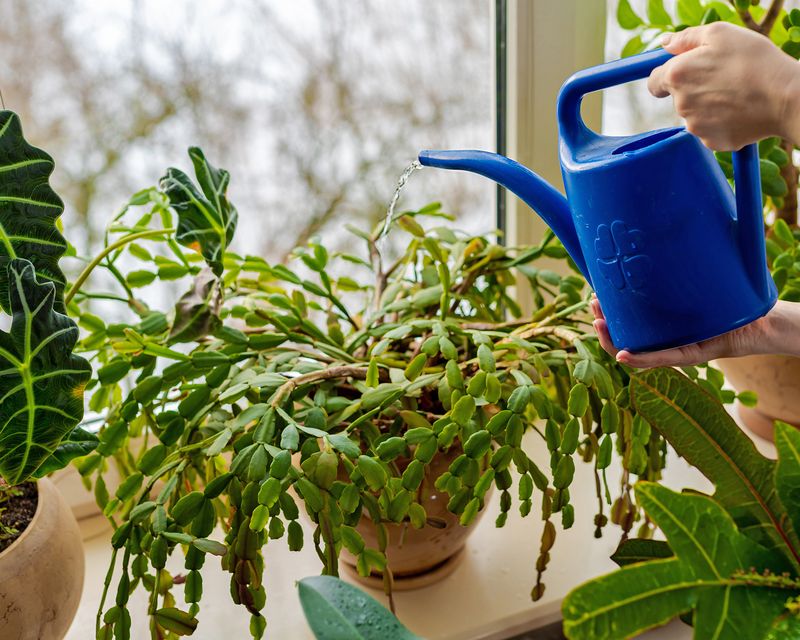
Soft, floppy segments are hard to miss, and for many Southern gardeners, summer is exactly when a Christmas cactus starts looking its worst. Segments may appear puckered, pale, stretched, or simply limp – and the plant that bloomed beautifully last December suddenly seems to be wasting away.
What makes this frustrating is that the same tired appearance can come from several completely different problems.
Holiday cacti are rainforest epiphytes, not desert plants. Iowa State University Extension explains that these plants grow vegetatively during the long days of summer, meaning summer is actually an active growth season – not a rest period that calls for bone-dry soil.
Treating them like a desert cactus and letting the mix stay completely dry for extended stretches can cause real stress and shriveling.
At the same time, University of Minnesota Extension notes that excessive sunlight, chronically wet soil, drought, or root damage can all produce weak, limp, or shriveled segments that look nearly identical. Before changing your watering schedule or moving the plant to a new spot, check the soil moisture level, look at the color and texture of the segments, and consider whether the roots may be compromised.
That three-part check – soil, light symptoms, and root health – determines which response actually helps.
Also worth knowing: many plants sold as Christmas cactus are actually Thanksgiving cactus (Schlumbergera truncata) or hybrids. The care is broadly similar, though bloom timing and segment shape differ.
For the purposes of summer recovery, the distinction matters less than the diagnosis.
Separate sun damage from weak, stretched growth
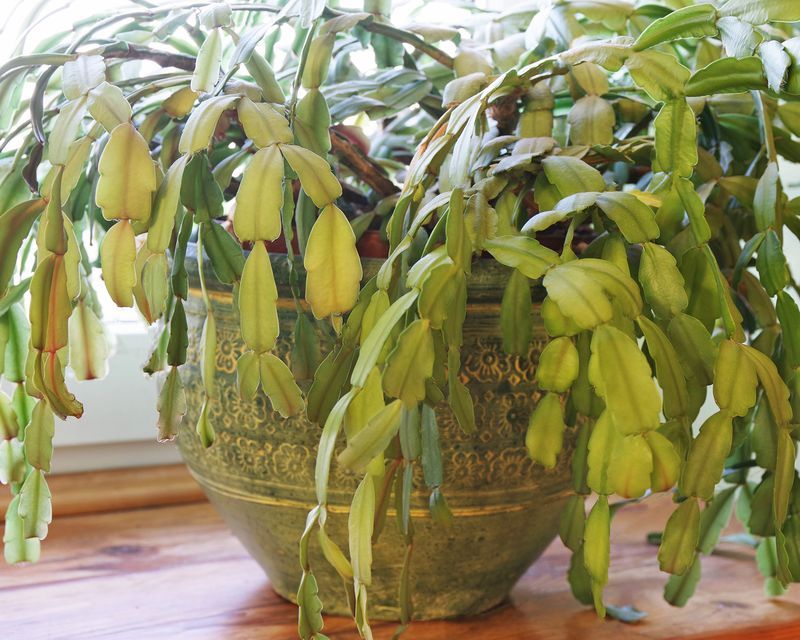
Not all pale or sad-looking segments point to the same problem, and treating sun damage the same way you treat light starvation will set the plant back further. The first step is a close look at what the new growth actually looks like.
Bleached, scorched, or reddish-tinged segments – especially on the side of the plant facing the strongest light – suggest the plant is getting too much direct sun or was moved too quickly into brighter conditions. University of Maryland Extension confirms that excess light can cause tissue damage in indoor plants, and Christmas cactus is particularly susceptible to strong summer sun.
An abrupt move from a dim interior to a sunny porch can scorch segments within days.
Stretched, sparse, or weak new growth tells a different story. When segments grow long and thin rather than compact and firm, the plant is often reaching for more light than it is getting.
Pale growth can overlap with both patterns, so soil moisture and other causes should always be checked alongside the light diagnosis.
The safest placement for most situations is bright indirect light indoors or filtered light and light shade outdoors. Penn State Extension recommends avoiding direct midday sun and acclimating the plant gradually if you are moving it to a brighter location.
University of Wisconsin Extension similarly advises part shade or filtered light for outdoor summer placement. Move the plant in stages over one to two weeks rather than all at once.
Let the potting mix decide when to water
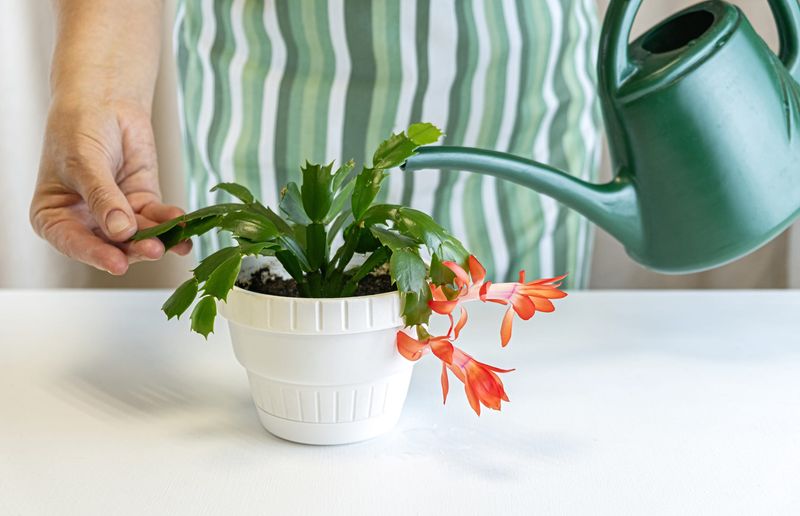
Calendar-based watering is one of the most common reasons a Christmas cactus ends up in trouble. How fast a potting mix dries out depends on the pot size, the material of the container, the temperature, the humidity, and whether the plant is sitting indoors or on a porch – so a fixed weekly schedule will either overwater or underwater depending on conditions that change week to week.
A more reliable approach is to check the mix directly. University of Florida IFAS guidance recommends watering thoroughly when the mix has dried, then allowing excess water to drain completely before the pot goes back to its usual spot.
Do not leave the container sitting in a saucer of standing water, because the roots will stay wet even after the top of the mix looks dry. Iowa State Extension reinforces that holiday cacti need a wet-dry cycle during active growth, not prolonged drought and not constant saturation.
Dry, puckered segments paired with dry soil are a fairly clear signal of insufficient water for a normally functioning plant. Wilted segments in a pot where the mix feels wet or soggy are a different situation entirely and should not be treated with more water before you figure out what is happening to the roots.
There is also an important exception for severely shriveled plants. UConn Extension advises that a plant with badly desiccated or damaged roots may not absorb a sudden heavy drenching efficiently.
In that case, smaller and more frequent waterings while the roots recover tends to work better than one large pour that the root system cannot process.
Wet soil can create a thirsty-looking plant
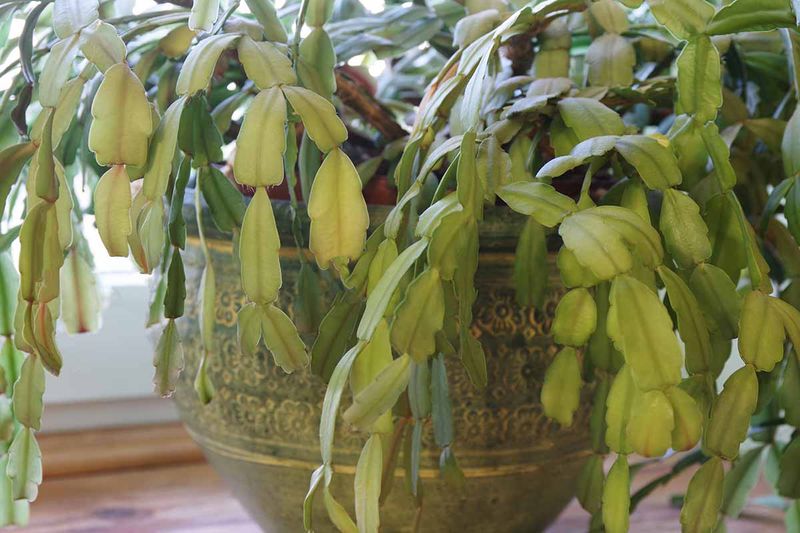
A Christmas cactus sitting in waterlogged or poorly drained potting mix can look exactly like a plant that desperately needs water. The segments go limp, the plant stops growing, and the instinct is to water more – which makes the underlying problem worse.
What is actually happening is that the roots have been damaged or destroyed by oxygen-starved, saturated soil, leaving the plant physically unable to move water up through its stems.
University of Minnesota Extension identifies overwatering and poor drainage as primary causes of holiday cactus decline, and University of Wisconsin Extension advises unpotting a severely stressed plant, inspecting the roots, removing dead or diseased tissue, and repotting in fresh well-drained mix. Healthy roots are typically light-colored and firm; dark, mushy, or slimy roots indicate damage that watering cannot fix.
Before adding more water to a plant that has not responded to appropriate care, check the drainage holes to make sure they are not blocked, squeeze or press the mix to feel how wet it actually is, and look at the color of the roots if you can see them at the pot’s edge. If the mix smells sour or the roots look brown and soft, drainage and root health are the real issue.
When repotting is warranted, choose a container only slightly larger than the root ball. Iowa State Extension notes that holiday cacti tolerate being somewhat pot-bound and generally do not benefit from an oversized container, which holds more moisture than the roots can use and prolongs the wet conditions that caused the problem in the first place.
Feed modestly and prune for future fullness
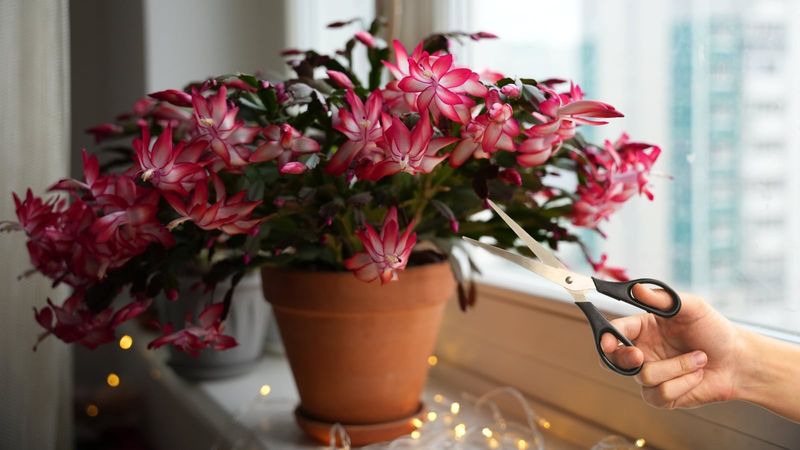
Once the light and moisture situation is on track, a light feeding schedule can support the active vegetative growth that summer naturally encourages. A balanced houseplant fertilizer applied at half the recommended strength once a month during active growth is a commonly recommended approach.
Penn State Extension and University of Minnesota Extension both suggest reducing or stopping fertilizer as fall bud formation begins, since the plant’s needs shift at that point. Feeding is not a cure for wilting – it is a supplement for a plant that is already functioning reasonably well.
Pruning is sometimes suggested as a way to firm up a weak Christmas cactus, but the timing and purpose matter. Pinching or cutting segments at a joint after flowering and through late spring or early summer can encourage the plant to branch from that point, which gradually produces a fuller, denser appearance.
UConn Extension notes that one or two new segments may develop at each cut point over time. That is a long-term shaping strategy, not an immediate fix for floppy segments.
By midsummer, the window for major pruning is closing. University of Florida IFAS guidance recommends completing any pinching before August so the plant has time to develop new growth before the fall flowering cycle begins.
Cutting segments too late in the season can reduce blooms. If the plant is still recovering from stress, hold off on pruning entirely and focus on stabilizing the light and watering routine first.
Protect a Southern porch from heat and rain
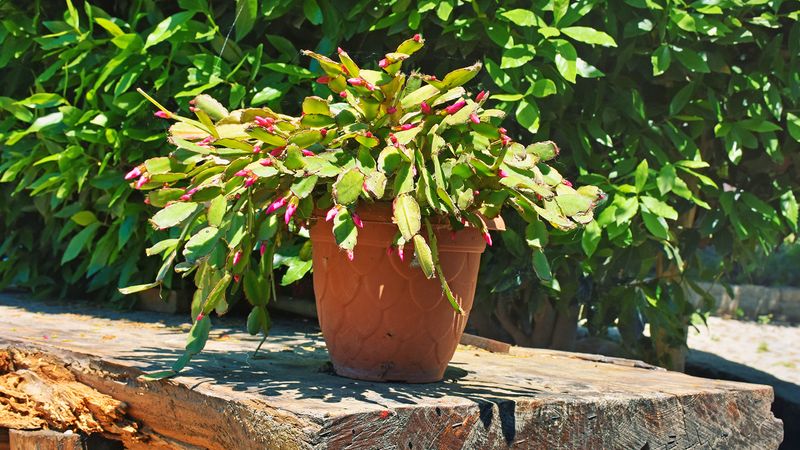
Moving a Christmas cactus outside for the summer can genuinely help in the right conditions, but the Southern summer is not automatically friendly to this plant. In Florida, Texas, and similar climates, the combination of intense midday sun, radiant heat from concrete or brick surfaces, and heavy seasonal rainfall creates hazards that can damage the plant faster than neglect would.
University of Florida IFAS advises placing the plant in a shaded or filtered-light outdoor spot rather than full sun, and making sure the container can drain freely after heavy rain. A covered porch or a spot under a tree canopy that blocks direct afternoon sun works well.
Avoid placing the pot directly on a south- or west-facing surface that reflects and holds heat, since root temperatures in a dark-colored container sitting on hot pavement can climb well above the air temperature.
An indoor plant should be acclimated gradually before moving it outside. Start with a shaded, protected spot for a week or two before shifting to any brighter location.
University of Illinois Extension and University of Georgia Extension both note that nighttime temperatures approaching 50 degrees F signal it is time to bring the plant back indoors. The immediate goal through summer is healthy vegetative growth, not flowering – fall conditions handle that separately.
Know when routine care is no longer enough
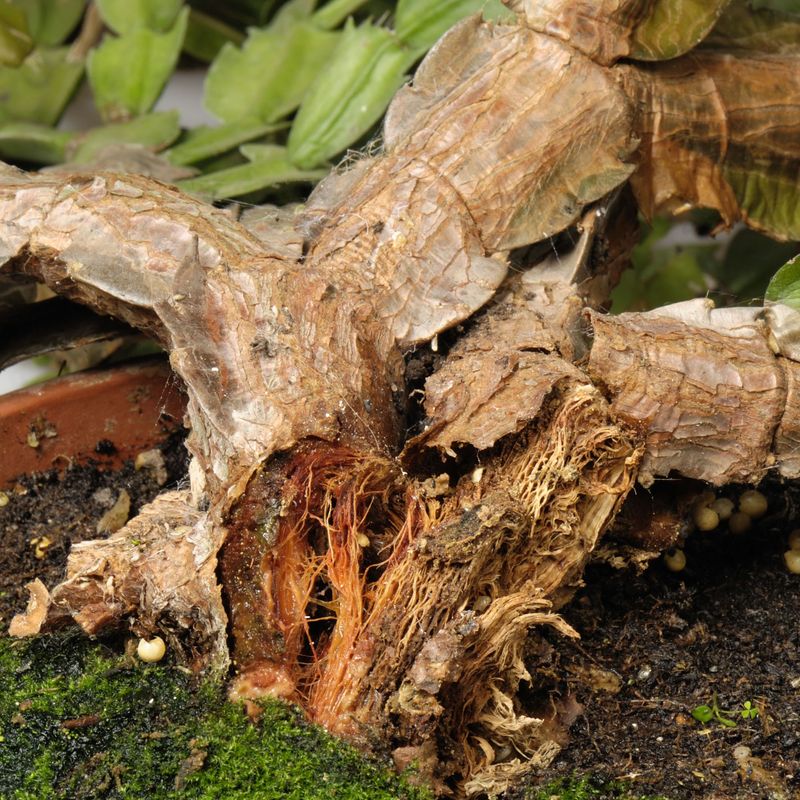
Some symptoms on a Christmas cactus go beyond what better watering or brighter light can fix. Learning to recognize those warning signs early can save healthy cuttings and prevent a problem from spreading to other plants in the house.
Black, wet, or slimy lesions beginning at the soil line are a red flag. Penn State Extension identifies bacterial soft rot as a potential cause of this pattern, and it is not a watering problem.
Gray-green foliage, mushy dark roots, progressive stem collapse, or tissue that continues to deteriorate despite correct care may indicate fungal root or stem diseases. UMass Amherst’s commercial production guidance flags these conditions as serious pathogen issues rather than cultural problems that respond to routine adjustments.
When a plant remains persistently wilted after appropriate watering and light correction, unpotting it for a closer look is the right next step. University of Wisconsin Extension recommends removing dead or diseased roots, repotting into fresh well-drained mix, and taking healthy cuttings as an insurance measure before the plant declines further.
Cuttings from firm, healthy segments can root in a well-drained mix and give you a replacement plant if the original cannot be saved.
Extra water, fertilizer, Epsom salt, or misting will not reverse rot, bacterial infection, or significant root loss. These are not solutions for the symptoms described above, and applying them to an already-struggling plant can accelerate the damage.
When in doubt about whether a lesion or collapse is disease-related, err on the side of removing infected tissue and isolating the plant.
Use the diagnosis to reset the routine
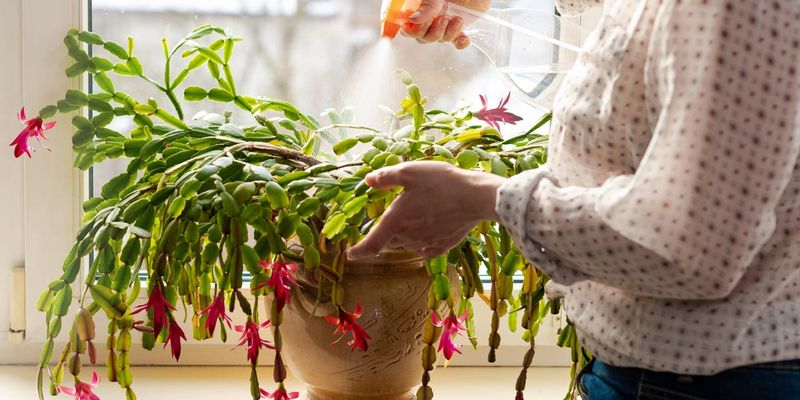
The most useful thing you can do right now is check the potting mix before doing anything else. If the mix is dry and the segments are puckered, water thoroughly and let the excess drain completely.
If the mix is wet and the plant is still limp, stop watering and inspect the roots before adding more moisture.
From there, the reset follows a straightforward sequence: provide bright filtered light or light shade, water based on soil dryness rather than a schedule, and apply a balanced fertilizer at half strength once a month during active growth. University of Florida IFAS and Iowa State Extension both support this general framework.
This conditional reset can support healthier summer growth, but it cannot guarantee that existing limp segments will firm up overnight – recovery takes time and depends on how much root function remains.
Keep the fall plan separate from the summer recovery. Iowa State Extension notes that bud initiation requires cool nights, shortening days, and uninterrupted darkness – conditions that have nothing to do with fixing summer wilt.
Get the plant stable and growing well now, then shift the routine in early fall. A plant that spends summer in the right light with the right moisture is simply better prepared for whatever comes next.