
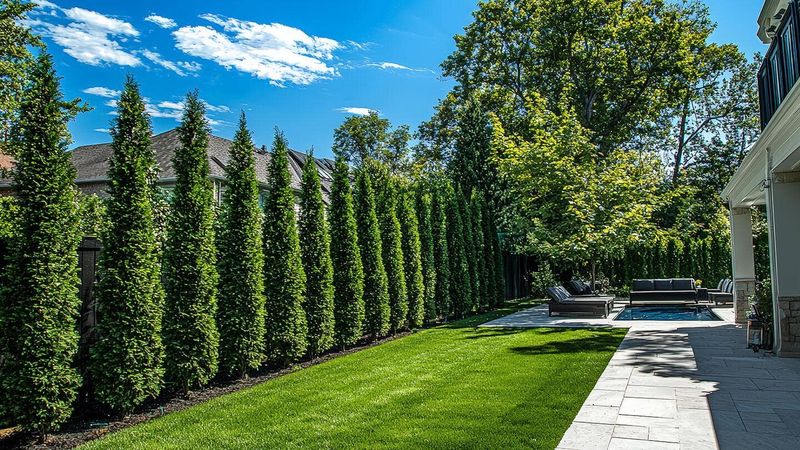
California summers can bake a yard until half your plants look crispy and sad. But a handful of tough privacy plants actually love the heat and grow thicker and greener while everything around them struggles.
These are the screens that give you shade, block nosy neighbors, and sip very little water once they settle in. Here are seven heat-loving choices that stay full through the long, dry California summer.
1. Hopseed Bush (Dodonaea viscosa)
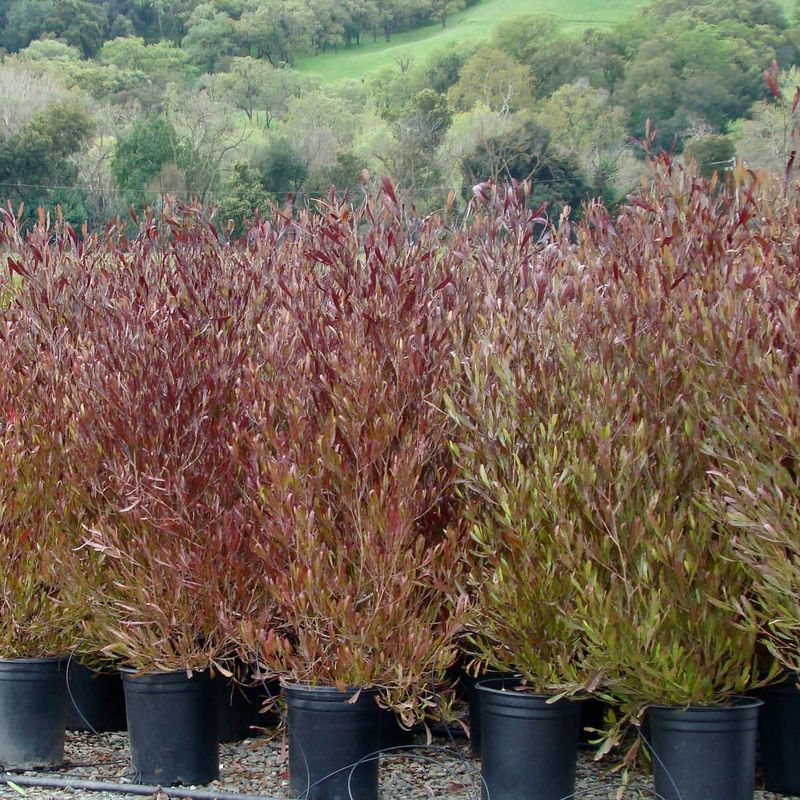
Ask any inland California gardener what shrugs off a heat wave, and hopseed bush usually comes up fast. It puts on new growth exactly when temperatures climb, filling in gaps while thirstier plants wilt.
The narrow leaves come in green or a moody purple-bronze, and both hold color through drought. Space a few plants a couple feet apart and they knit into a dense 10 to 15 foot screen in a surprisingly short time.
Once established, it wants almost no summer water, which fits water-restriction rules across most CA zones. It also handles wind and poor soil, making it a solid pick for hillside and fire-adjacent lots where fussy plants fail.
2. Bougainvillea
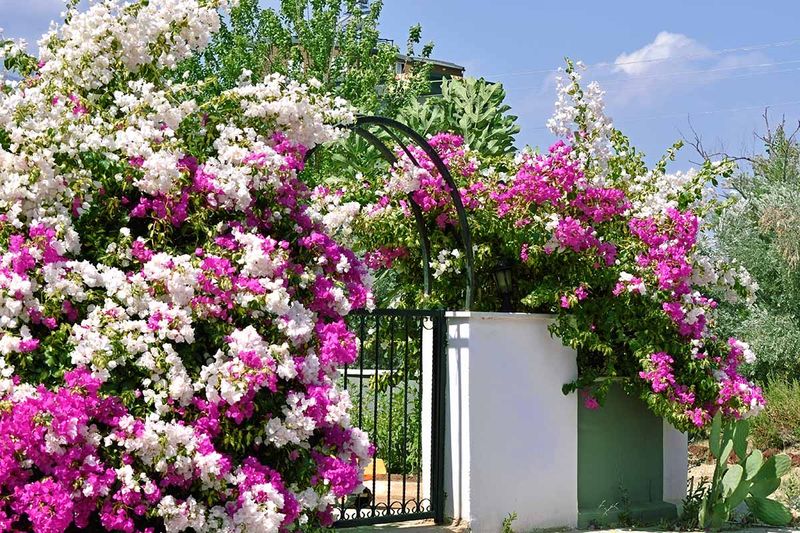
Nothing says a California summer is winning quite like bougainvillea in full bloom. The hotter and drier it gets, the more those papery magenta, orange, and purple bracts explode across the vine.
Trained along a fence, trellis, or wall, it becomes a living privacy curtain that blocks views and adds serious curb appeal. Overwatering actually makes it lazy about blooming, so it rewards the water-wise gardener.
Do keep the thorns in mind and plant it away from walkways where kids and pets brush past. Give it full sun and a warm spot, and it will happily reach for the sky all season long.
3. Texas Privet (Ligustrum japonicum)
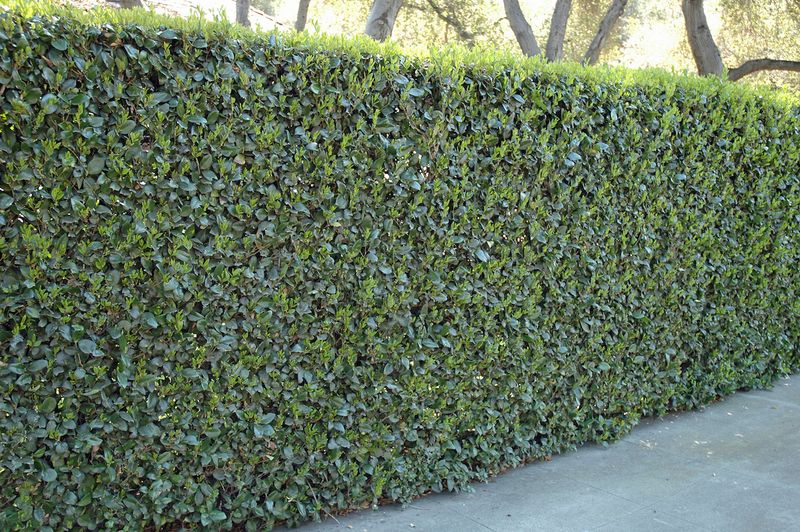
Homeowners who want a classic clean green wall keep coming back to Texas privet. Its glossy leaves stay deep green through July and August when heat-stressed plants turn dull and pale.
It grows fast, takes shearing well, and forms a solid screen 8 to 12 feet tall that hides fences, AC units, and neighbors in one shot. A little shaping twice a year keeps it tidy and thick from top to bottom.
Worth a heads-up: privet can spread beyond the yard in some regions, so check local invasive lists and deadhead spent flowers if you want to be careful. Chosen responsibly, it delivers dense evergreen cover with very little fuss.
4. Oleander
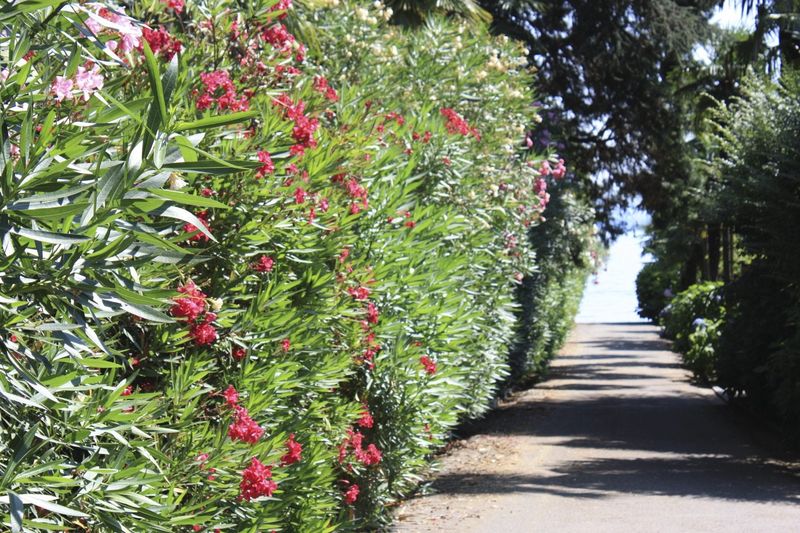
Drive any California freeway in August and you will spot oleander blooming its heart out in the median, unwatered and unbothered. That roadside toughness is exactly why it makes such a reliable backyard screen.
It laughs at reflected heat, poor soil, and long dry stretches, pushing pink, white, or red flowers all summer. A hedge fills in tall and dense, giving you privacy plus color where most flowers would have quit weeks ago.
One serious caution: every part of oleander is toxic if eaten, so skip it around young children, curious pets, or vegetable beds. For a low-water, sun-blasted spot where nothing else thrives, though, few plants match its stamina.
5. Italian Cypress (Cupressus sempervirens)
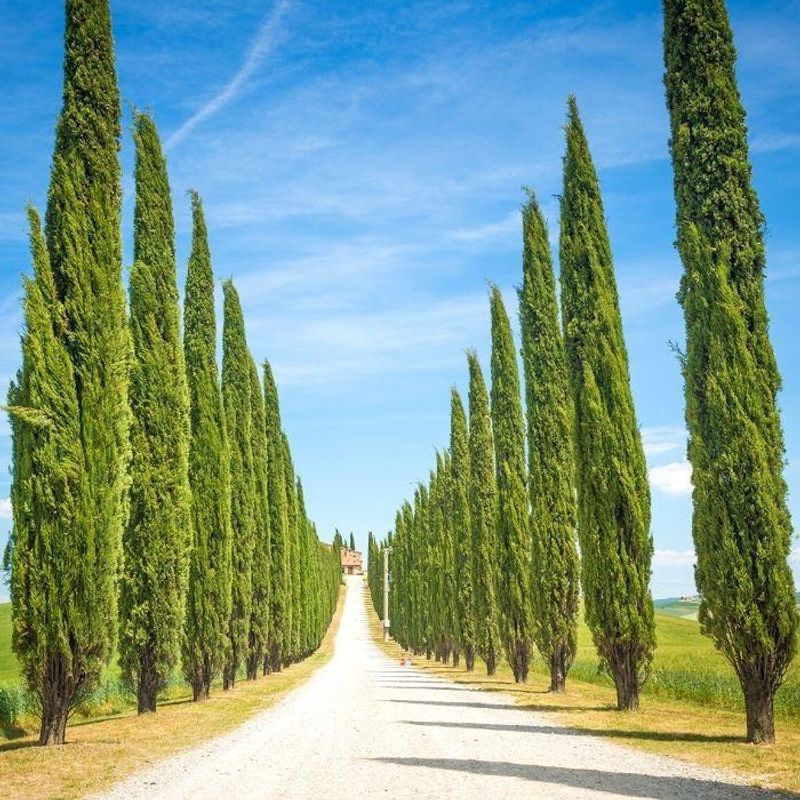
For a vertical screen that reads as pure California-Mediterranean, Italian cypress is hard to beat. These skinny green columns rise 30 to 40 feet while taking up almost no ground space, perfect for tight side yards.
Heat is where they shine. The Mediterranean climate they come from mirrors our dry summers almost exactly, so they stay firm and green while sprinklers run dry.
Plant them in a line to block a two-story neighbor or frame a driveway with formal drama. Give them well-drained soil and good spacing for airflow, and they demand next to nothing once their roots go deep.
6. Pineapple Guava (Feijoa sellowiana)
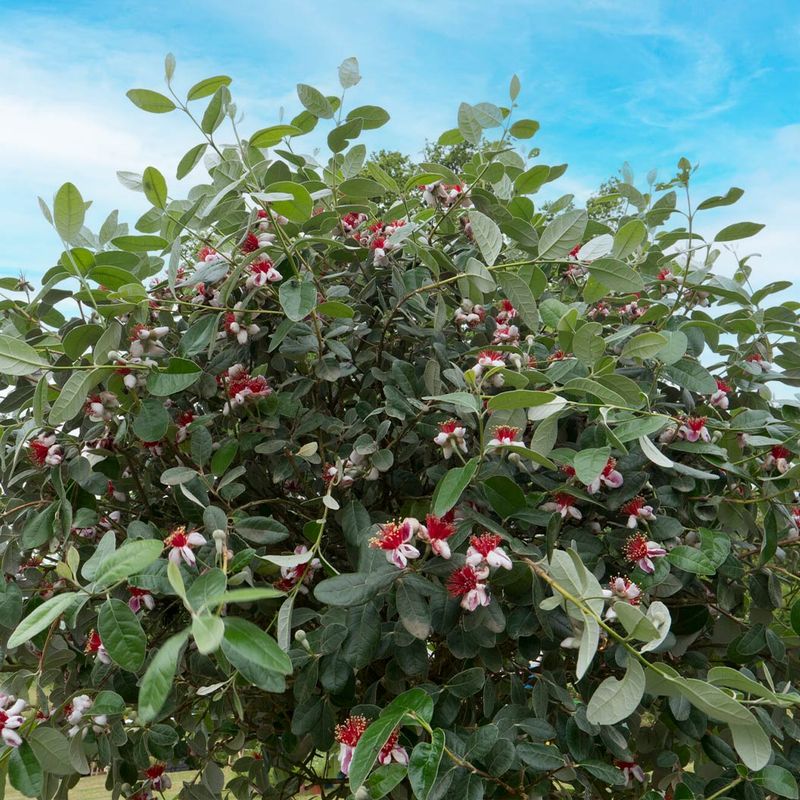
Here is a screen that feeds you and the pollinators at the same time. Pineapple guava carries silvery-green leaves and flashy red-and-white flowers whose petals are edible and beloved by bees and hummingbirds.
Heat and drought barely register once it is established, and it keeps a soft, full shape without constant trimming. Left alone it grows into a rounded 10 to 15 foot hedge; sheared, it makes a neat formal wall.
Later in the season it drops tasty green fruit that tastes like a mix of pineapple and mint. A privacy plant that supports native pollinators and hands you snacks is a rare and genuinely useful combo.
7. Toyon (Heteromeles arbutifolia)
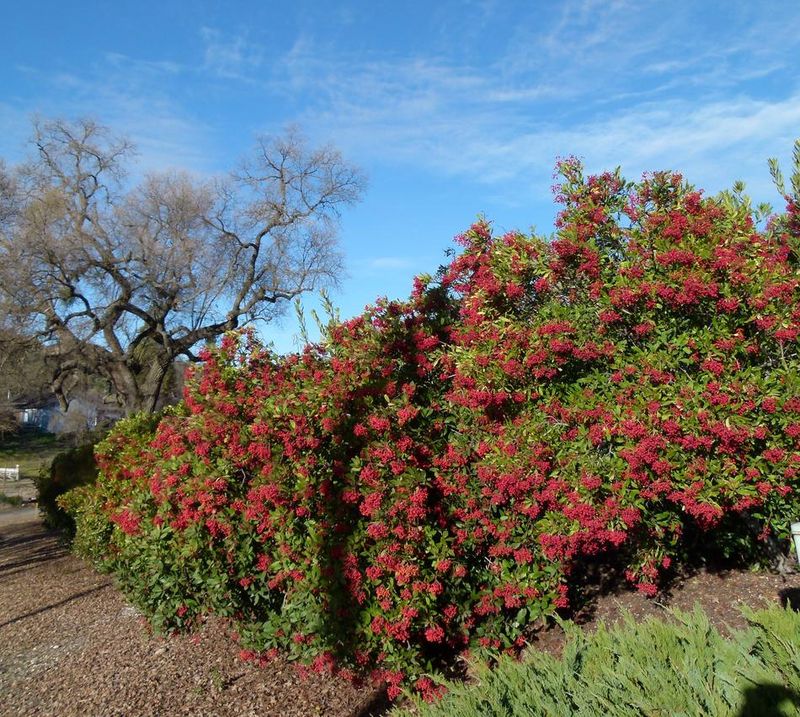
If you want to block a view and support local wildlife at once, toyon is the California native that earns its keep. This is the very plant Hollywood was named after, thanks to its bright winter berries.
Built for our dry summers, it stays evergreen and full while non-natives crisp up, needing little to no summer water once rooted. Birds feast on its red berries, and its early flowers pull in native bees and beneficial insects.
Grown as a loose hedge it reaches 8 to 15 feet, offering solid screening with a natural, unclipped look. For fire-zone and hillside homeowners, it pairs well with defensible-space planning while keeping the yard alive and habitat-friendly.