
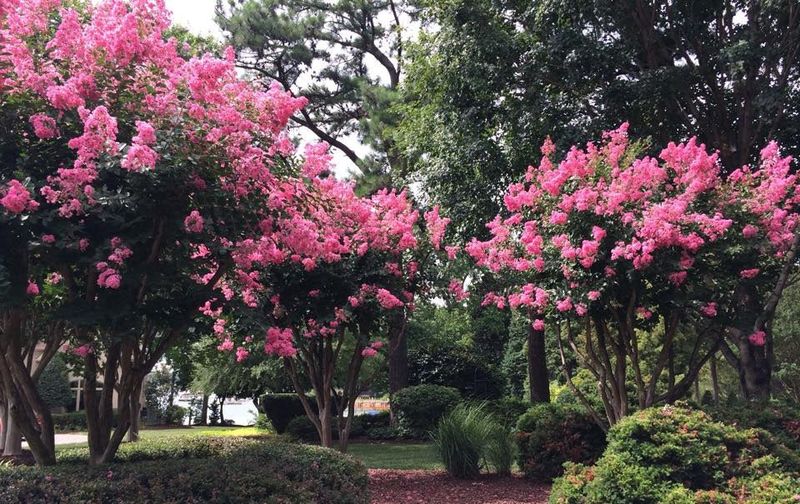
Crape myrtles are one of the most rewarding flowering trees in California yards, putting on a vivid summer show that can stretch across months if conditions cooperate. When that first wave of blooms fades, many homeowners assume the display is simply over for the year.
A light, well-timed cut on spent flower clusters may encourage another flush, but the opportunity depends on your specific tree, cultivar, and local climate rather than a single statewide deadline. Understanding what to look for, and what to leave alone, makes the difference between a smart optional task and an unnecessary one.
Treat the faded first flush as an opportunity, not a deadline
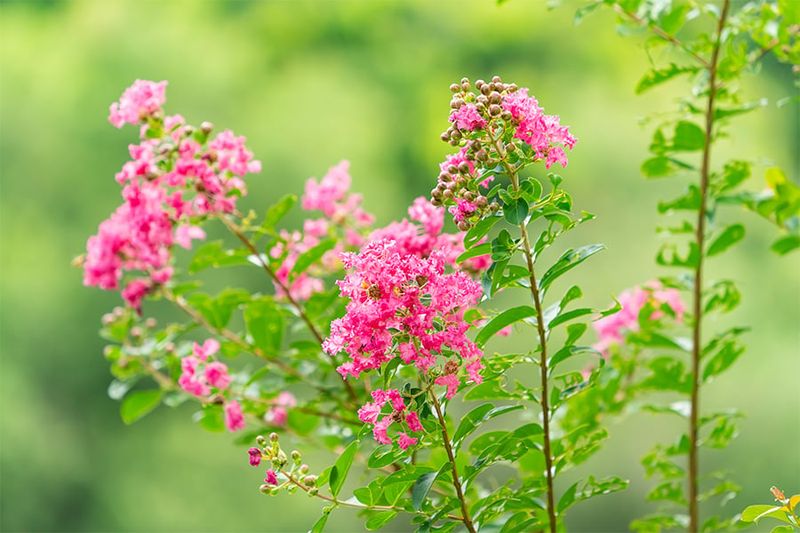
Spent crape myrtle flowers do not look dramatic when they fade. The clusters shift from vivid pink, red, lavender, or white into papery, brownish husks that droop slightly at the tips of each branch.
If you spot that shift on your tree while new leaves are still pushing out and the stems feel pliable and green, you are looking at an optional opportunity, not a missed deadline.
UC Cooperative Extension guidance on crape myrtle pruning describes removing spent flowers after the first bloom as a practice that may allow a second flush, particularly in California’s Mediterranean climates where the growing season runs long. That conditional framing matters.
The guidance does not say every tree in every California yard needs this task, and it does not name a single date by which homeowners must act.
Before reaching for pruners, take a slow walk around the tree. A faded flower cluster looks dry and crinkled, with petals gone and tiny green seed capsules beginning to form at the base of where the bloom sat.
Fresh flowers still hold color and soft texture. Unopened buds are tight, pointed, and often a slightly different shade than the leaves around them.
Cutting into fresh flowers or buds by mistake wastes the tree’s current display, so the visual check is worth a minute of your time.
A healthy, well-sited crape myrtle can also simply be left alone after the first flush. Trees growing in full sun with adequate room often rebloom on their own schedule without any intervention.
University of Georgia Cooperative Extension notes that results from summer pruning practices vary by cultivar and timing, reinforcing that this is a calculated choice rather than a universal requirement.
What the evidence says about a possible second flush
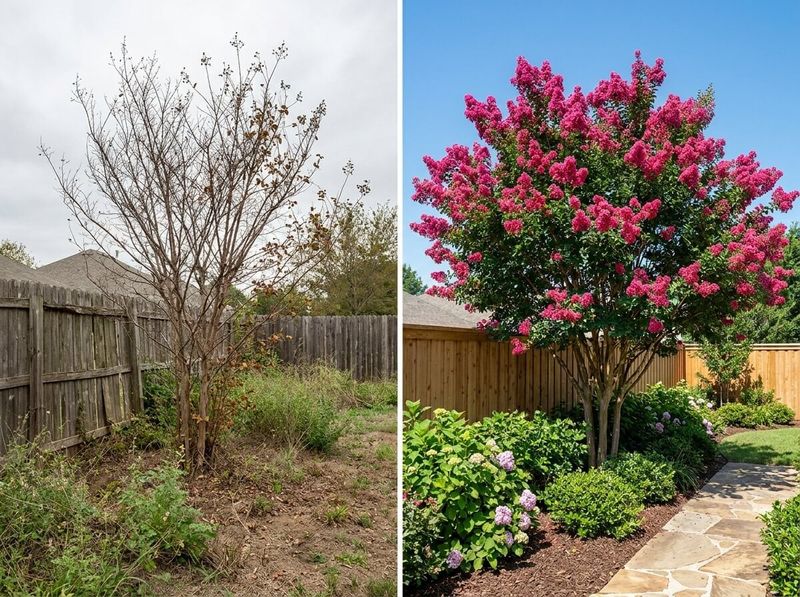
Crape myrtles flower on new wood, meaning each season’s blooms develop on growth the tree produces during the current year. That biology is why any late-season flower management focuses on encouraging the plant to push fresh growth after the first display fades, rather than protecting old wood the way you might with a rose or a lilac.
UC Cooperative Extension specifically reports that removing dried previous-year blooms can promote greater summer flowering, and that a second bloom may be possible in Marin’s Mediterranean climate when spent flowers are removed after the first flush. The UC guidance uses conditional language throughout, describing what may happen rather than what will happen.
That distinction reflects real variability in outcomes across different cultivars, microclimates, and individual plants.
A related but different practice, summer tip-pruning, involves cutting small outer one-year-old branches rather than just the spent flower heads. University of Georgia Extension notes that tip-pruning can produce a late-season flush on some cultivars, especially earlier-blooming types, but describes results as inconsistent.
Deadheading the spent flower cluster and removing its developing seed capsule is a lighter, more targeted action than tip-pruning whole branch tips.
Research summarized by University of Florida IFAS on crapemyrtle pruning found that increasing pruning severity generally reduced flower numbers and that unpruned trees sometimes produced the greatest number of flowers overall. That finding does not contradict the light deadheading recommendation, but it does firmly undercut the broader claim that more pruning reliably produces more blooms.
Keep the scope narrow, the cuts light, and the expectations realistic.
Make one light deadheading cut at a time
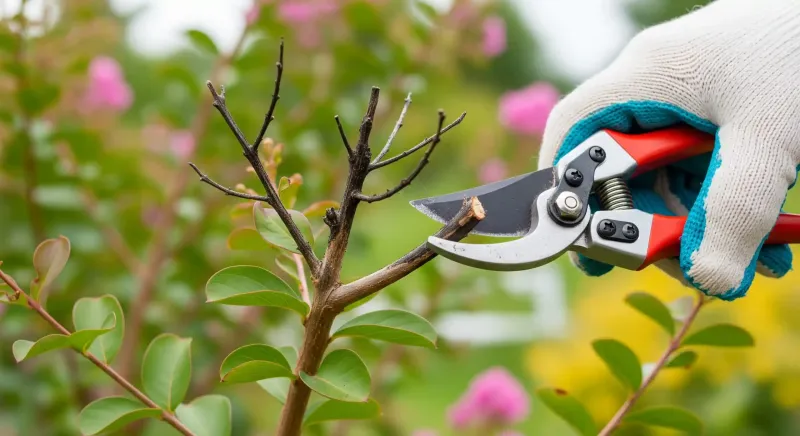
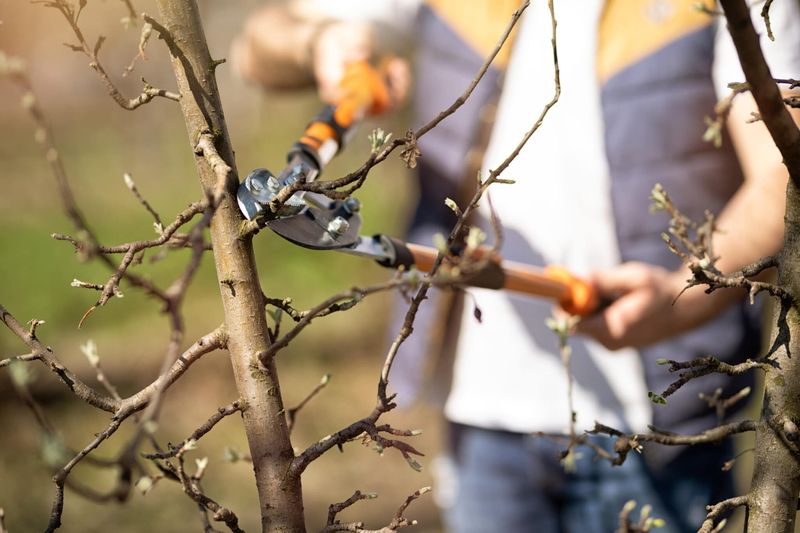
Good tools make this task faster and cleaner. Choose a pair of sharp bypass hand pruners rather than anvil-style pruners, which can crush small stems and leave ragged edges that heal more slowly.
Wipe the blades clean before you start, and check that the pivot screw is snug so the blades close precisely without wobbling.
Locate a faded flower head and trace the stem back toward the nearest leaf junction, small lateral branch, or visible bud. University of Georgia Extension guidance on crape myrtle culture advises cutting just above where a leaf joins the stem or just above a lateral bud when removing spent seedheads.
That placement encourages the new growth that may carry the next flower cluster, and it avoids leaving a bare stub that dries out and looks untidy.
Work through the outer canopy one spent cluster at a time. If a small developing seed capsule has already formed at the base of the old bloom, you can remove it along with the flower stalk in the same cut.
UF/IFAS describes tip pruning as cuts through pencil-sized or smaller one-year-old branches on the outer canopy, and that scale is the right mental limit for this task. If the branch you are considering is thicker than a pencil, stop and leave it.
Tool hygiene matters more when disease is present. If you notice powdery white coating on leaves or any other visible disease symptoms, clean and disinfect the blades before moving to a different plant.
UC Master Gardeners of San Diego County recommend cleaning garden tools to prevent spreading pathogens between plants. A quick wipe with a diluted bleach solution or a registered disinfectant between cuts on visibly diseased tissue is enough.
Skip pruning sealants entirely; they are unnecessary and can trap moisture.
Finally, keep the session short and focused. Deadheading a crape myrtle is not a full canopy overhaul.
Remove what is faded, leave everything else, and step back when you are done.
Stop before deadheading becomes topping
Removing a spent flower cluster takes seconds and leaves the tree’s structure completely intact. Topping a crape myrtle takes a chainsaw or loppers, removes large-diameter wood, and causes lasting harm that no amount of subsequent care fully undoes.
The two actions look nothing alike, yet the impulse to keep cutting once pruners are in hand can blur the line faster than most homeowners expect.
UF/IFAS research on crapemyrtle pruning found that increasing pruning severity generally reduced flower numbers, delayed flowering in some cultivars, encouraged excessive sprouting from the cut sites, and weakened the tree’s natural form. That research also found unpruned trees sometimes produced the greatest number of flowers, which is a useful reminder that intervention is not always an improvement.
Hard summer pruning carries an additional California-specific risk. Severe cuts during active growth can stimulate a flush of tender new shoots that may not harden off before cooler temperatures arrive in inland valleys and foothill communities.
Those soft shoots are also more attractive to aphids and other opportunistic insects.
Any cut aimed at reducing the tree’s height, removing a limb thicker than your thumb, or reshaping the main framework belongs in winter or early spring, not late summer. UC Cooperative Extension guidance places structural pruning during dormancy, when the tree is not actively growing and the branch architecture is easy to read without foliage in the way.
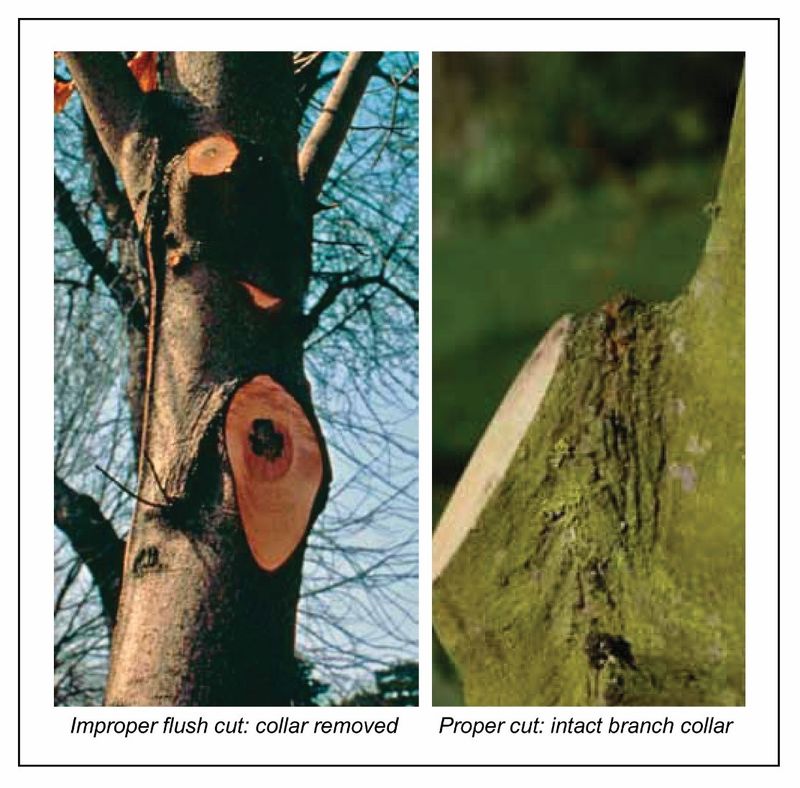
When structural work is genuinely needed, such as removing a dead, damaged, diseased, crossing, or rubbing branch, make the cut just outside the branch collar. That slightly raised ring of tissue at the base of every branch is where the tree’s natural healing response begins.
Cutting through it or leaving a long stub both interfere with that process. A clean cut just outside the collar, at the correct angle, gives the wound the best chance of closing cleanly over time.
Check the cultivar, climate, and remaining warm season
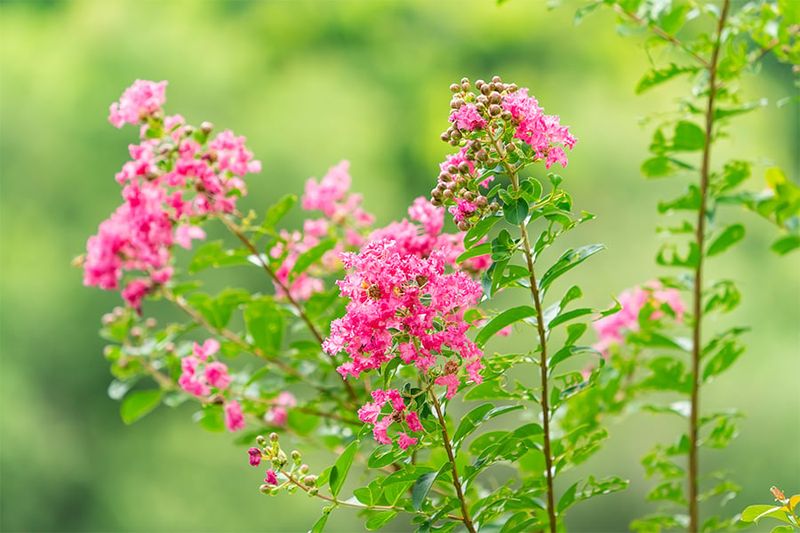
Not every crape myrtle in California is an equally good candidate for a second flush. Cultivar matters more than most homeowners realize, and the specific variety growing in your yard shapes whether light deadheading after the first bloom is likely to pay off before cooler weather arrives.
University of Georgia Extension specifically warns that a second bloom may be difficult to encourage on cultivars that begin flowering after mid-July. Earlier-blooming types have already built up more growing-season energy by the time their first flush fades, and they have more warm weeks ahead to push a second round of new growth and flowers.
A cultivar that opens its first buds in late July or August is working against the calendar from the start.
Climate zone adds another layer. California’s coast typically stays warm well into fall, giving coastal gardeners more runway for a second flush than a gardener in a foothill community where nights cool sharply by mid-September.
Inland valleys often have the heat but can also see abrupt seasonal shifts. Knowing your local pattern, rather than assuming a statewide rule applies, helps you make a more accurate call about whether the remaining season is worth the effort.
Tree size is a practical limit that often goes unmentioned. UF/IFAS notes that tip pruning is time-consuming and impractical for large plants.
A mature crape myrtle that has grown to fifteen or twenty feet presents a real physical challenge. Reaching the upper canopy safely requires proper equipment, and climbing an unstable ladder to deadhead high branches is not a reasonable risk for a cosmetic outcome.
On large trees, focus only on the lower and mid-canopy sections you can reach safely from the ground or from a stable step stool, and leave the upper portions alone.
Treat the decision as a calculated possibility. If your cultivar bloomed early, your local climate stays warm through October, and the tree is a manageable size, the conditions favor trying.
If several of those factors point the other way, leaving the spent flowers in place is a perfectly sound choice.
Choose between another flush and late-season seedheads
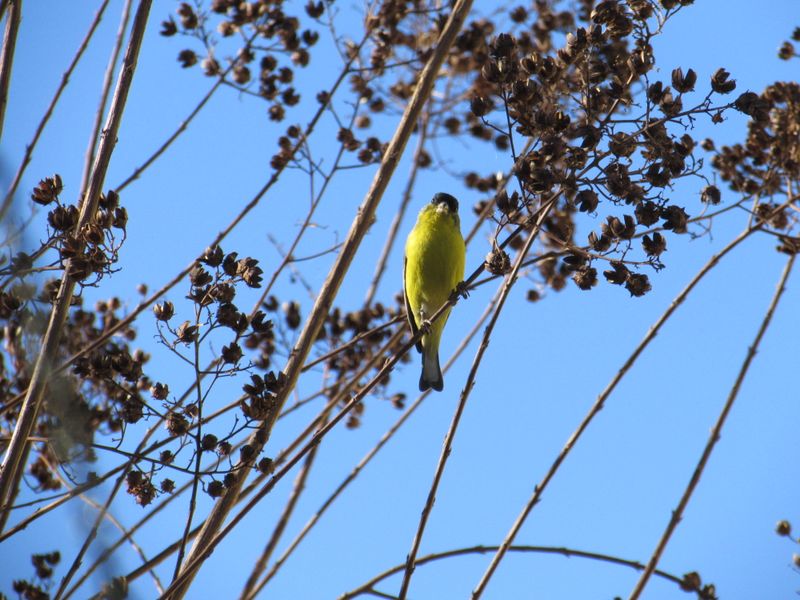
Deadheading the first flush and leaving the final late-season flower clusters to mature into seed balls are not contradictory choices. They are two stages of the same season, and you can do both deliberately rather than treating every seedhead as something to remove.
UC Cooperative Extension notes that the final blossoms on a crape myrtle can be left to develop seed balls that provide food for birds in winter. For California homeowners focused on supporting wildlife in their yards, that is a meaningful payoff, particularly in neighborhoods where natural seed sources are limited.
Finches and other small seed-eating birds will work through crape myrtle seed balls during the months when other food is scarcer.
A practical approach is to deadhead the first flush when the tree is still growing vigorously, watch for a second flush if conditions favor it, and then stop cutting when the season winds down. Those final flower clusters can develop into seed balls without any further intervention from you.
Leaving them in place is not a pruning mistake; it is a yard-management decision with a legitimate wildlife benefit.
This also reinforces a broader point about crape myrtles that gets lost in seasonal pruning discussions. A well-sited tree in full sun with adequate growing room may need little or no routine pruning from year to year.
Deadheading after the first flush is optional grooming, not a maintenance requirement. If it becomes an annual chore you feel obligated to complete regardless of conditions, the task has drifted away from its original purpose.
The goal is a second display when the tree and season are genuinely ready for it, not a calendar obligation that overrides what the tree is actually doing.
Use a local decision sequence instead of a statewide date
Rather than tracking a statewide deadline that does not exist, run through a short local checklist before picking up your pruners. First, confirm that the first flush has clearly faded: look for dry, crinkled flower husks and no remaining color in the cluster.
Second, check that the tree is still actively growing by looking for fresh leaf growth and pliable green stems at the branch tips.
Third, decide whether another flower display matters more to you than leaving the final seedheads for birds. If you want both, deadhead the first flush now and plan to leave the last late-season clusters alone.
Fourth, assess whether the tree is a size you can safely reach from the ground or a stable step stool. UC Cooperative Extension guidance and University of Georgia Extension both frame this as a light, targeted task, and neither recommends unsafe climbing to reach high branches.
If the checklist clears, make light cuts with sharp bypass pruners just above a leaf junction or lateral bud, keep every cut on pencil-sized or smaller growth, and stop when the spent clusters are gone. UF/IFAS research is a useful reminder that the possible reward is a second bloom under favorable conditions, not a guaranteed outcome.
Any structural pruning, reshaping, or removal of larger branches belongs in winter when the tree is dormant and the work can be done safely and accurately. The crape myrtle that gets the most out of a California summer is usually the one whose owner knows when to act lightly and when to simply walk away.