

Crape myrtles are one of the most recognizable summer-flowering trees in Central Texas yards, and nearly every homeowner has an opinion on how to prune them. The trouble is that a lot of that advice points in the wrong direction, especially when it comes to cutting at the wrong time of year.
Knowing when to hold back and when to act can mean the difference between a tree that keeps its natural form and one that struggles with weak growth and fewer flowers. This guide explains exactly what to do now, what to skip until winter, and how to make the right cut when the time comes.
What should you cut in Central Texas right now?
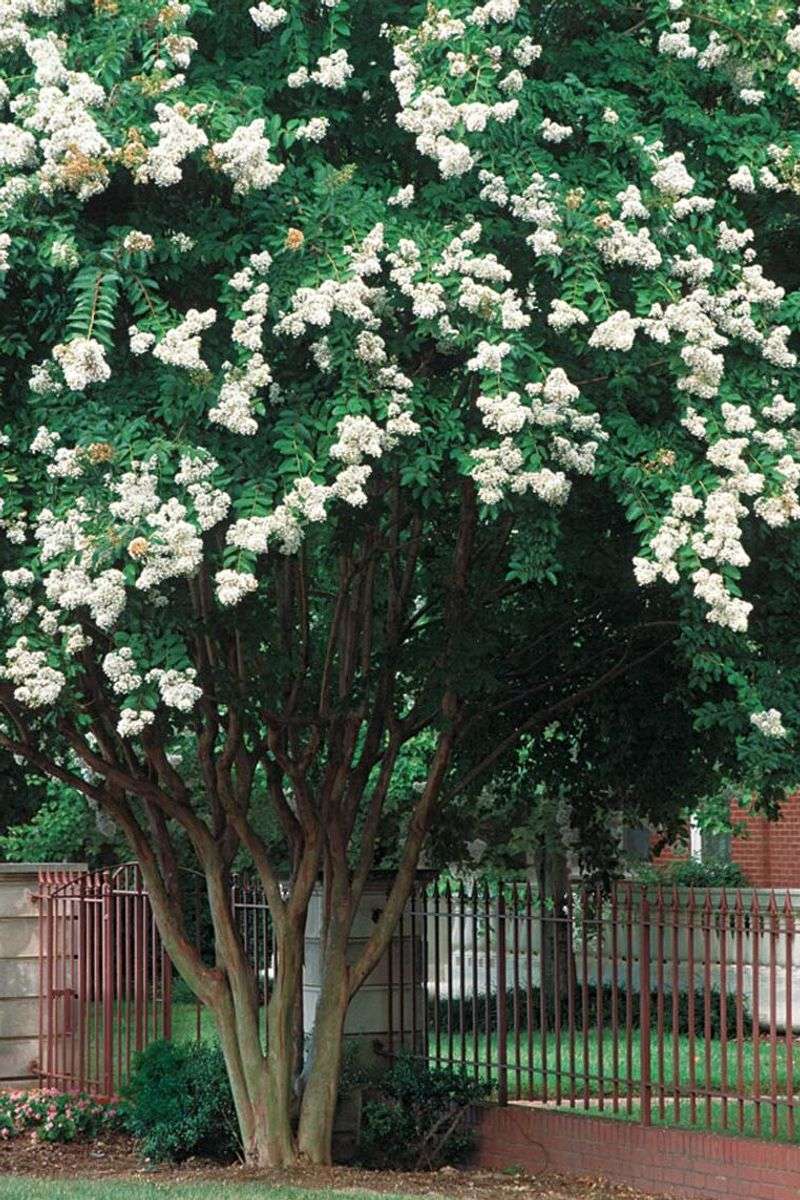
Put the pruning saw down for now. If your crape myrtle is carrying healthy, live branches, the best action you can take this late in summer is to leave them exactly where they are.
Texas A&M AgriLife guidance for Travis County places summer-flowering trees like crape myrtle squarely in the January and February dormant-season pruning category, not the late-summer one. Cutting healthy live wood now will not improve next summer’s bloom, and it may cause problems you will not see until winter.
That said, there are branches you should remove right now regardless of the calendar. Dead wood, broken limbs, branches showing signs of disease, and anything that poses a safety hazard to people or structures can come off any time of year.
UGA Extension’s guidance on fall pruning makes this point clearly: seasonal timing is secondary when a branch is dangerous or already dead. If a limb is rubbing a roofline or cracked after a storm, do not wait until January to deal with it.
For everything else, patience is the right move. Routine structural work belongs in the dormant window, generally January or February in Central Texas, after the tree has dropped its leaves and before new growth pushes in spring.
At that point the branch framework is fully visible, the tree is not actively growing, and you can make informed decisions about what actually needs to go. UGA Cooperative Extension’s crape myrtle culture guide supports this timing, noting that pruning before new growth begins avoids removing developing flower potential.
Right now, healthy branches deserve to stay put.
New growth explains winter pruning—not late-summer pruning
Crape myrtles produce their flowers on new growth that develops each spring and summer. Because the tree builds fresh flowering wood every season, pruning during late winter before that new growth begins does not remove next summer’s flower buds.
Texas A&M AgriLife’s Earth-Kind pruning guidance identifies this growth habit as the reason late-winter or early-spring pruning works well for summer-flowering trees. The key is timing the cut before the plant breaks dormancy, not after growth is already underway.
Some homeowners read that fact and conclude that late-summer pruning must be equally safe, since the tree will produce new flowering wood next year anyway. That reasoning skips an important step.
When you cut live branches in late summer or early fall, the plant often responds by pushing out a flush of tender new growth. UGA Cooperative Extension warns against early-fall pruning before the first frost specifically because it can interfere with the tree’s natural progression toward dormancy.
A separate extension source from the University of Tennessee Institute of Agriculture notes that pruning crape myrtles from August through December can reduce cold hardiness. That tender growth stimulated by a late-season cut has not had time to harden off, leaving it vulnerable if an early or hard freeze arrives.
Central Texas winters are variable enough that this is a real concern, not a theoretical one. The fact that crape myrtles flower on new wood is the biological reason winter pruning works.
It is not a reason to treat late-summer pruning as a safe shortcut.
The January-or-February thinning plan
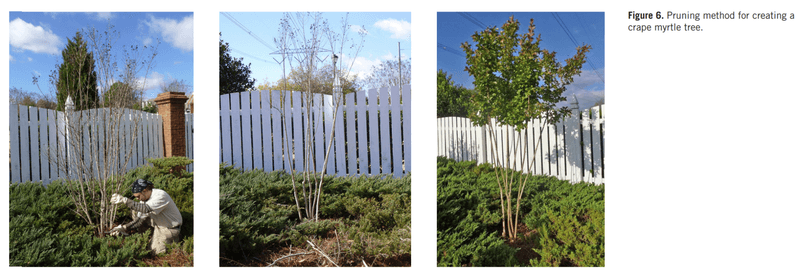
Once your crape myrtle has dropped its leaves and gone fully dormant, usually sometime in January or February in Central Texas, you have a clean window to do structural work. The bare framework makes it far easier to see what actually needs to go and what should stay.
Start at the base before you look at anything higher up.
Basal suckers are the thin, fast-growing shoots that sprout from the root zone or low on the trunk. Remove them first by cutting them flush with the soil or trunk surface.
After the suckers are gone, work your way upward and look for dead or damaged wood. Dead branches are usually easy to spot even without leaves: the bark may be shriveled, the wood dry and brittle, or the tips obviously lifeless.
Cut those back to healthy wood or to their point of origin. UGA Cooperative Extension’s crape myrtle guide recommends this base-to-canopy sequence as the practical order for working through the plant.
Next, look for branches that cross or rub against each other. Friction wounds create entry points for disease and weaken bark over time.
Choose the branch that fits the natural structure better and remove the other one entirely back to its origin. Then address crowded branches growing inward toward the center of the canopy, which block air circulation and light.
Travis County AgriLife guidance is clear that selective thinning means removing whole unwanted branches, not shortening every branch to the same height. The goal is an open, well-spaced framework that preserves the tree’s natural shape.
Mississippi State University Extension echoes this point, distinguishing careful structural thinning from the kind of heavy cutting that leaves trees misshapen and prone to weak regrowth. When you finish, the tree should look like a cleaner version of itself, not a collection of stubs.
Make the cut at the branch’s origin
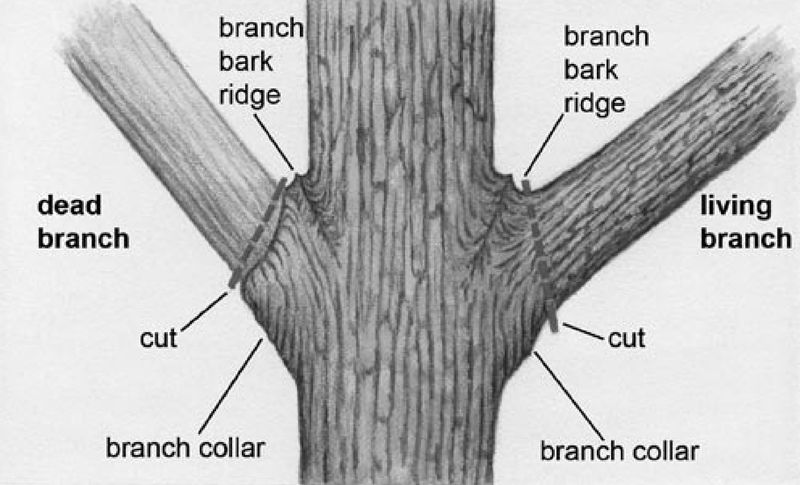
Where you place the cut matters as much as which branch you remove. The right cut is a thinning cut: you remove the entire unwanted branch back to its point of origin on the parent branch or trunk, leaving the branch collar intact.
The branch collar is the slightly swollen ring of tissue at the base of every branch where it meets the parent wood. That collar contains specialized cells that close over a wound and protect the tree from rot and disease.
Texas A&M AgriLife’s explanation of how trees compartmentalize wounds makes the case plainly: trees do not heal the way skin heals. They wall off damage and grow new tissue around it.
A flush cut that removes the collar destroys the tree’s best defense at that wound site and leaves a larger, slower-closing opening. Cut just outside the collar, not through it, and not leaving a long stub that will die back and invite decay.
A thinning cut is different from a heading cut. A heading cut shortens a branch partway, leaving a stub that has no natural terminal bud to direct growth.
Heading cuts on crape myrtles produce clusters of fast-growing, weakly attached shoots from just below the cut, which is part of what makes repeated topping so damaging to the tree’s structure over time.
Tool choice affects cut quality directly. Mississippi State University Extension advises using hand pruners for small twigs, loppers for medium branches, and a pruning saw for anything larger.
Sharp tools matter because dull blades crush and tear bark rather than cutting cleanly. A ragged cut edge takes longer to close and gives pathogens more surface area to exploit.
UGA’s ornamental pruning guide reinforces the importance of clean cuts and properly sized equipment for every branch diameter you encounter.
Tree form and shrub form need different pruning goals
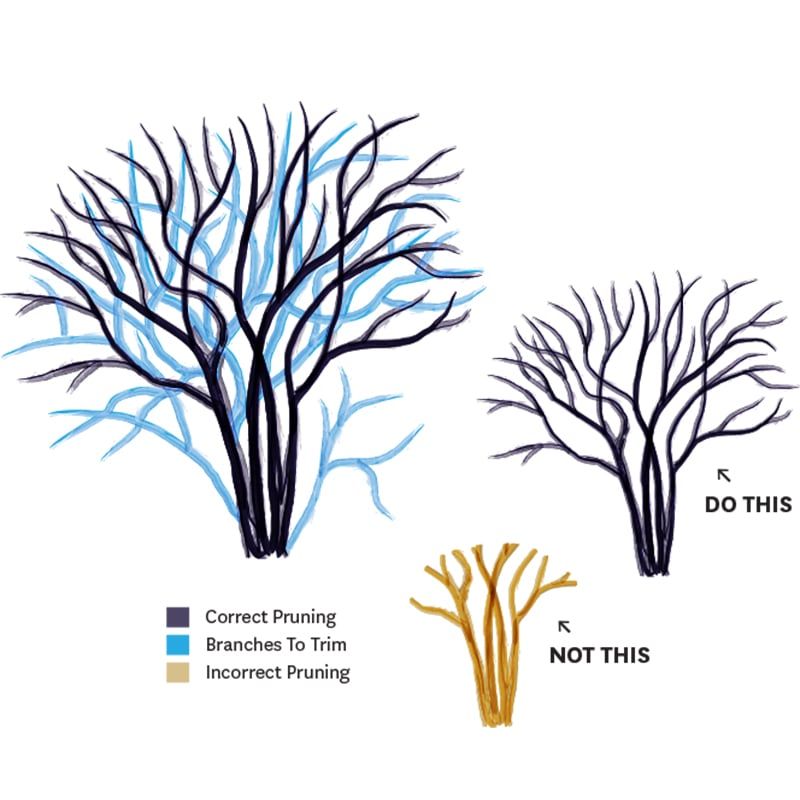
Before you decide what to cut, you need to know what you are managing. Crape myrtles come in a wide range of sizes and growth habits, and the pruning approach that makes sense for a twenty-foot tree-form specimen is not the same one you would use on a four-foot dwarf cultivar planted along a foundation.
Tree-form crape myrtles are generally maintained through selective thinning that preserves the main trunks and keeps the canopy open. Many homeowners want to expose the attractive smooth, exfoliating bark on the trunks, and lower branches can be removed gradually over several seasons to achieve that look.
The operative word is gradually. Removing too many lower branches at once shifts the weight distribution and alters how the crown develops.
UGA Cooperative Extension’s crape myrtle guide recommends working incrementally when lifting the canopy, removing the lowest branches only when exposing the trunks fits the intended design for that space.
Shrub-form cultivars are a different situation. Compact varieties bred to stay small can tolerate more renewal pruning and may respond well to deliberate size control if they have outgrown their spot.
Even so, repeatedly cutting a shrub-form crape myrtle back to the same arbitrary height every year produces dense, unnatural regrowth and the same knobby stubs that make topping so problematic on larger trees.
Mississippi State University Extension’s crape myrtle publication draws a clear line between thinning and cutting back, recommending cutting back only for shrub-form plants when that size-control method is intentional and consistent. Dormant-season timing is the right window for both forms, but the goals are different.
Knowing which type you have helps you make decisions that fit the plant’s natural growth pattern rather than working against it.
A summer cleanup affects this season, not next summer

Removing spent flower clusters from a crape myrtle in late summer is a different task from structural pruning, and the two should not be confused. Deadheading, which means cutting off the dried flower heads and seed clusters after a bloom flush ends, is optional grooming.
It tidies up the tree’s appearance and, on some cultivars, may encourage a second flush of flowers before the season ends.
UGA’s ornamental pruning guide notes that removing spent clusters, sometimes along with limited thinning of new growth at the same time, can prompt a rebloom on certain cultivars. UGA’s crape myrtle culture publication adds that this tactic is less reliable for cultivars that begin their flowering cycle after mid-July, since those plants may not have enough warm season left to produce a meaningful second flush.
If your tree was still opening new flowers in August, a late-summer deadhead is unlikely to produce much of a rebloom before cooler weather arrives.
Deadheading does not set or guarantee next summer’s bloom. The two events are separated by an entire dormant season, and next year’s flowering depends on growth the tree has not yet produced.
UGA’s broader ornamental care guidance also points out that seedheads are not automatically a problem that needs correcting. They can remain on the tree through fall and winter, providing late-season food for birds.
Whether to remove them is a choice between appearance and wildlife value, not a requirement for next summer’s performance.
Topping creates the problem homeowners are trying to solve
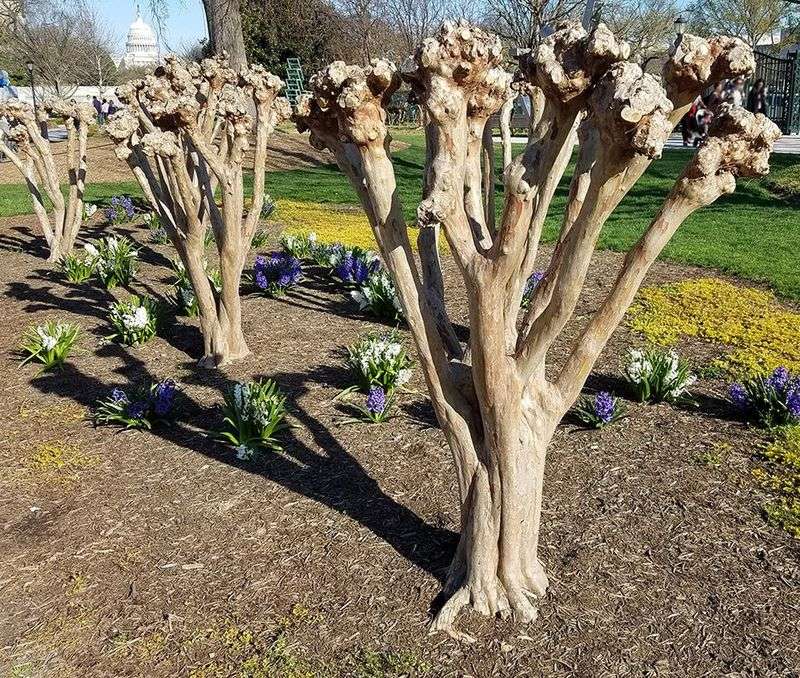
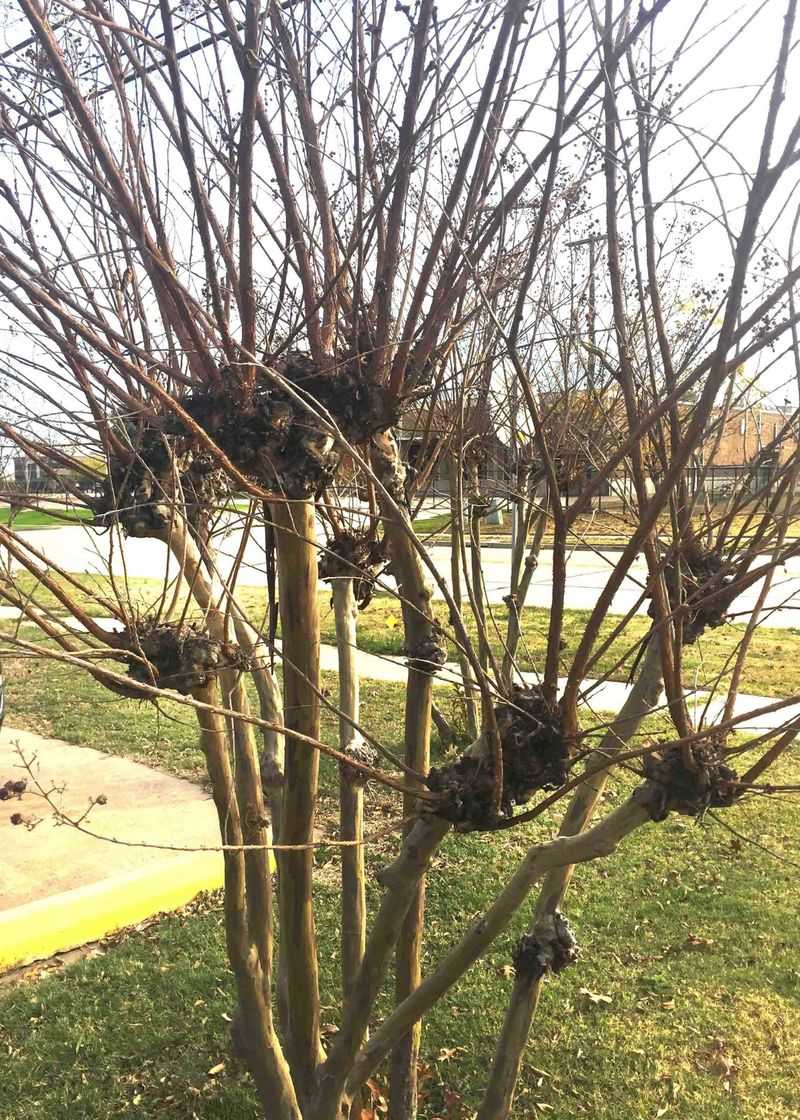
Cutting every trunk back to three or four feet, shortening all major branches to the same height, or pollarding a crape myrtle year after year is sometimes called “crape murder” by horticulturists, and the label fits. The practice is widespread in Texas neighborhoods, partly because it looks intentional and partly because the trees do eventually leaf out and flower again.
But the research tells a different story about what topping actually does to flowering and structure.
UF/IFAS research on crape myrtle pruning found that flower number decreased as pruning severity and cut diameter increased. Topping or pollarding delayed first flowering in some test plants, meaning the tree spent more of the growing season recovering from the wound rather than producing blooms.
The shoots that do emerge from a topped stub are vigorous but weakly attached, growing from surface callus tissue rather than from a proper branch union. Those shoots are more likely to split under the weight of flowers and foliage or during a summer storm.
Large wounds from topping cuts also close slowly. Related UF/IFAS research summaries document the structural damage that accumulates from repeated heavy cuts, including decay at wound sites and progressive loss of the tree’s natural form.
Over several years, topped trees develop a recognizable knobby silhouette at the cut points that no amount of subsequent pruning can fully reverse.
If a crape myrtle has genuinely outgrown its space and substantial canopy reduction is necessary, stage the work rather than removing most of the live growth at once. University of Arizona Cooperative Extension pruning guidance and Texas Forest Service guidance via PlantAnswers both reflect the general principle of limiting live canopy removal to roughly one-quarter to one-third per season, depending on the plant and situation.
That is general guidance for staged reduction, not a fixed prescription for every crape myrtle. The better long-term answer is to choose a cultivar sized for the space so heavy reduction is never necessary.
Pruning cannot replace sun, water, and plant health
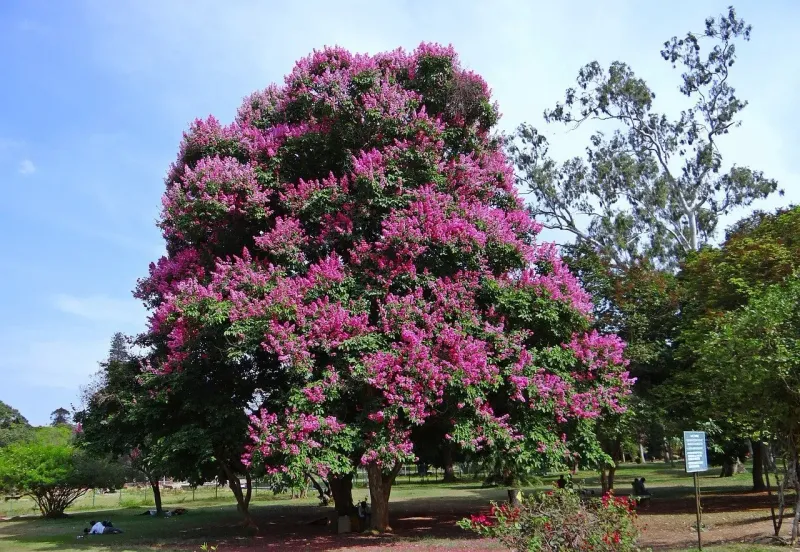
When a crape myrtle produces fewer flowers than expected, pruning is often the first thing homeowners blame or credit. The reality is that pruning is one piece of a larger picture, and in many cases it is not the most important one.
Several other factors have a direct influence on how abundantly a crape myrtle flowers in any given summer.
Full sun is one of the biggest. Crape myrtles are sun-demanding plants, and specimens growing in partial shade consistently produce fewer flowers than those in open, unobstructed light.
If a tree is shaded by a building, a fence, or larger trees nearby, no amount of structural pruning will compensate for that deficit. UGA Cooperative Extension’s crape myrtle culture guide lists full sun as a primary requirement for strong flowering performance.
Moisture during bloom formation also matters. A crape myrtle stressed by drought during the period when it is setting flower buds and opening blooms will not perform the way the same tree would in a year with more reliable rainfall or irrigation.
Cultivar selection plays a role too: some varieties are simply heavier bloomers than others, and choosing a cultivar that fits your space and climate gives the tree a better foundation than pruning alone can provide.
Texas A&M PlantAnswers guidance acknowledges that pest pressure, disease stress, and overall plant health all affect flowering. A tree dealing with aphid infestations, powdery mildew, or compacted, poor-draining soil is working against its own bloom potential regardless of how well it was pruned.
Selective dormant-season thinning can maintain structure and avoid compromising flowering potential, but it is not a dependable way to increase flower quantity. Good growing conditions set the stage; pruning just keeps the structure sound.
The best end-of-season cut is restraint

Central Texas gardeners who want the best outcome for their crape myrtles this season have a clear action plan: remove anything dead, broken, diseased, or hazardous right now, and leave every healthy live branch alone. That is not inaction.
That is the right call for late summer.
Come January or February, when the tree is leafless and dormant, return with sharp tools and a clear sequence. Start at the base, clear the suckers, work upward through dead and damaged wood, then address crossing, rubbing, and crowded inward-growing branches.
Texas A&M AgriLife Travis County guidance and UGA Cooperative Extension’s crape myrtle recommendations both point to this dormant window as the appropriate time for selective structural work. Each cut should remove a whole unwanted branch back to its origin while preserving the branch collar.
Topping is not a route to heavier flowering; the research shows it tends to reduce flower number and delay blooming.
No single cut controls the entire bloom outcome. Sun, water, cultivar, and plant health all contribute, and a well-timed, selective thinning job mainly keeps the tree’s structure sound and avoids compromising what it would have flowered anyway.
The best pruning decision you can make right now costs nothing: put the saw away and let the tree finish the season on its own terms.