
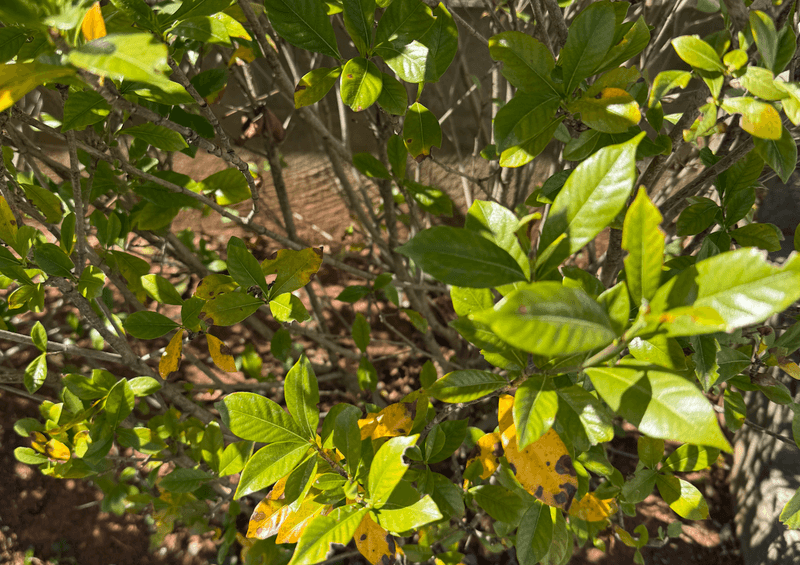
Your gardenia has brown, crispy leaves and you want to know if the late-summer heat killed it or if there is still time to save it. The good news is that visible leaf damage does not automatically mean the plant is gone.
What matters most right now is what is happening beneath those scorched leaves, inside the stems and down in the root zone, because that is where recovery or failure actually begins.
Start with a living-tissue check
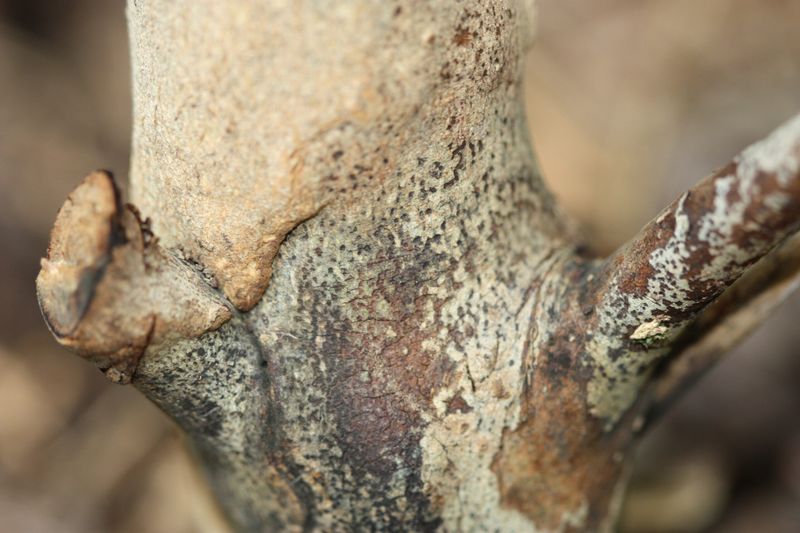
Brown, crisp foliage on a gardenia is alarming, but the leaves themselves are not the right place to start your assessment. Several different problems, including drought, too much water, root rot, high soil pH, salt injury, pest pressure, disease, transplant shock, and intense afternoon sun, can all produce overlapping symptoms like brown margins, wilting, yellowing, and leaf drop.
Assuming the damage came from heat or sun alone before checking the plant’s internal condition can lead you toward the wrong response at exactly the wrong time.
The most useful first step is a scratch test on several stems across the plant. Use your thumbnail or a small knife to lightly scrape through the outer bark on a few branches, starting with the ones that look worst and then checking a couple that appear more intact.
Extension guidance on stem assessment describes living tissue as moist and bright with a visible green rim just beneath the surface, while dead tissue appears dry, shrunken, and darkened with no green layer. Work your way from the branch tips back toward the main stem and note where living tissue begins.
What you find in those stems tells you a great deal about what is actually possible. A plant with several green stems and living wood closer to the base still has a foundation to work from.
A plant where even the main stems show dry, dark tissue throughout has far less to offer, and extension plant recovery guidance is clear that dried or scorched leaves will not rehydrate regardless of what you do next.
The rescue goal from this point forward is to protect what is still alive, reduce any ongoing stress, and give the plant conditions that allow new growth to emerge later. Restoring the plant’s former full, lush appearance quickly is not a realistic target.
Recovery depends on how much living tissue remains, how intact the root system is, and whether the conditions that caused the damage can be corrected.
Check soil moisture before choosing an irrigation response
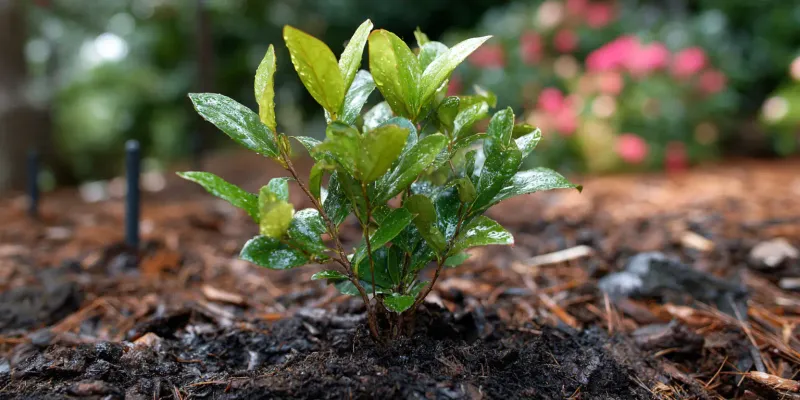
Wilted or brown leaves feel like an obvious signal to water, but appearance alone is not a reliable guide. Heat stress can cause leaves to lose water faster than the roots can replace it even when the soil is already adequately moist.
Conversely, a plant sitting in soggy soil can wilt just as severely because waterlogged roots lose the ability to take up water at all. Watering by appearance rather than by what is actually in the soil is one of the most common ways a stressed gardenia gets pushed further into trouble.
Before you reach for the hose, probe the soil several inches down near the root zone. Texas SmartScape shrub guidance recommends watering when the upper 4 to 5 inches of soil are dry, with the target being moist soil, not wet soil.
Push a finger or a wooden dowel into the ground close to the plant’s drip line and pull it out to check what it tells you. If the soil at that depth feels dry and the stick comes out clean, the plant needs water.
If the soil feels damp or the stick carries moist soil, hold off.
When the root zone is genuinely dry, water slowly and thoroughly at the base of the plant rather than giving it a brief daily sprinkle. Texas A&M AgriLife drought and irrigation guidance advises soaking the root zone to approximately 5 to 6 inches for landscape situations, adjusting frequency for soil type, plant size, and recent rainfall.
Shallow daily watering wets only the surface and encourages roots to stay near the top where they are most vulnerable to heat and drying.
If the soil is already moist or soggy, adding more water will not help and may actively harm the roots. Shift your attention to shade, drainage, and root inspection instead.
For container gardenias, the situation has an added wrinkle: a pot sitting in direct Texas sun can dry out much faster than in-ground soil, but a container with poor drainage or a full saucer beneath it can keep roots in standing water even while the top inch of soil looks dry. Container plant guidance from extension specialists emphasizes that functional drainage holes and the absence of standing water in saucers are non-negotiable for root health, regardless of how hot the weather is.
Reduce heat load and protect the root zone
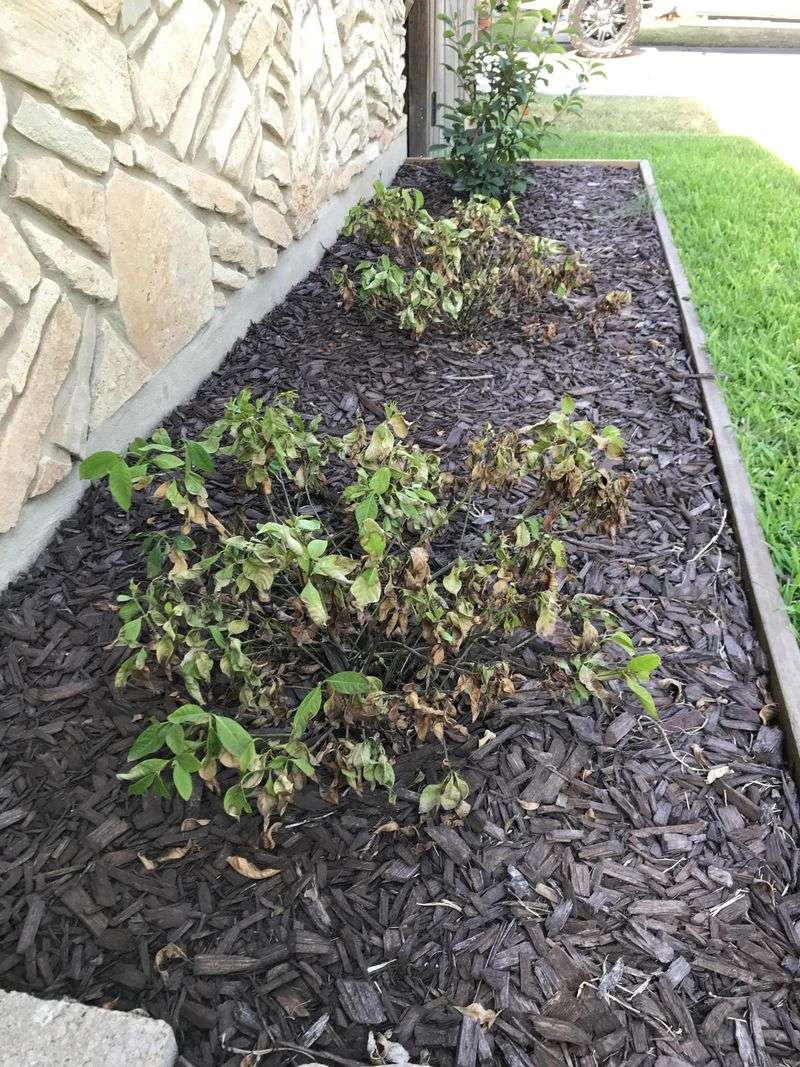
Once you have assessed the soil and responded appropriately to what you found, the next priority is reducing the additional stress the plant is absorbing during the hottest part of the day. One practical step is to shift irrigation to the morning hours when practical.
UGA Extension best management practices for landscapes recommend applying water to the soil rather than routinely wetting the foliage, which limits evaporative loss and avoids the prolonged leaf and stem wetness that can encourage fungal disease under warm, humid conditions.
For in-ground gardenias and landscape beds, a layer of organic mulch around the root zone makes a meaningful difference. Texas A&M AgriLife raised bed and landscape guidance commonly recommends approximately 2 to 3 inches of organic mulch to moderate soil temperature and slow evaporation.
Keep the mulch pulled back from direct contact with the trunk and main stems to avoid creating a moist environment that promotes rot right at the base. Do not pile it against the bark.
For container gardenias, the priority is different: ensure the pot has working drainage holes, keep it out of standing water, and consider moving it to a surface that does not reflect additional heat upward, like concrete or metal in full sun.
Temporary afternoon protection is worth considering when a plant is showing repeated scorch, particularly for a container gardenia or one that was recently moved into a sunnier spot. Positioning a shade cloth or moving a pot out of direct afternoon exposure from roughly 1 p.m. to 5 p.m. can reduce the heat load on leaves that are already compromised.
UF/IFAS gardenia culture guidance notes that gardenias can grow in sun, partial shade, or shifting shade, though prolonged deep shade tends to reduce flowering over time. The goal here is temporary relief during a heat event, not a permanent move into dense shade.
Shade will not correct poor drainage, root rot, high pH, or pest problems, and those issues need their own response.
Prune only what the plant cannot use
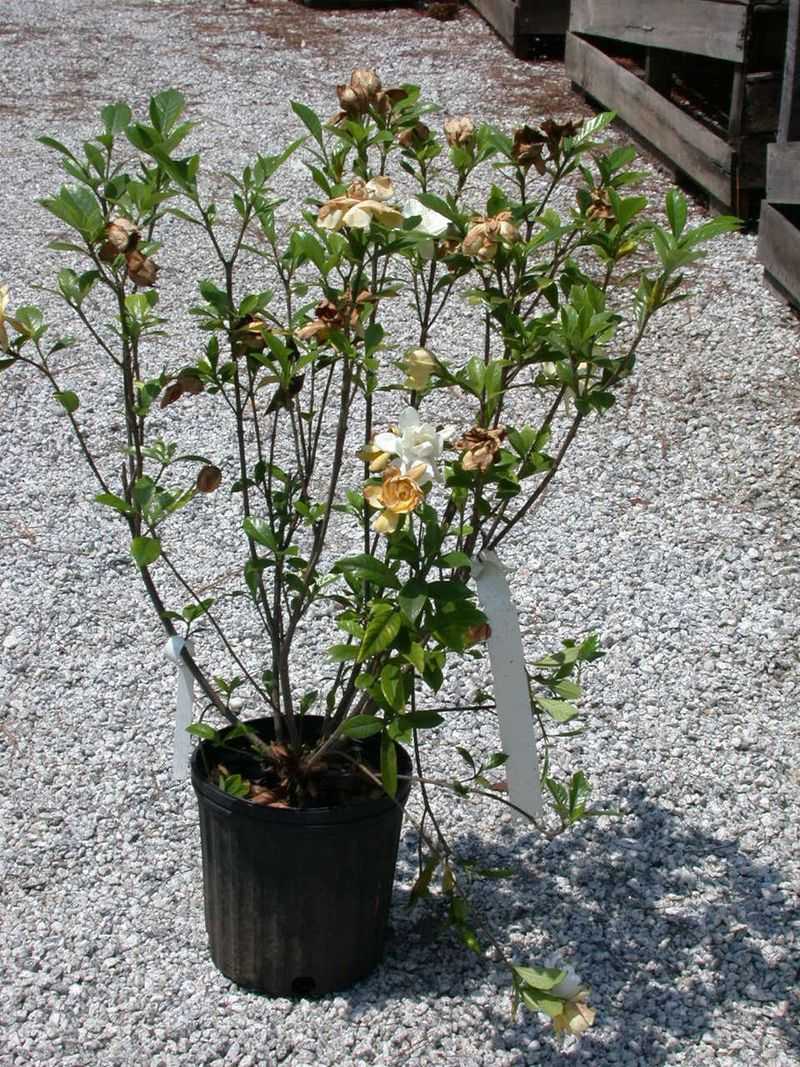
After completing the moisture check and reducing heat exposure, it can be tempting to cut the plant back hard in hopes of triggering fresh growth. Resist that impulse.
A gardenia under active summer stress is not in a position to recover from aggressive pruning, and removing large amounts of living wood adds a second source of stress on top of the first one.
What is appropriate right now is removing only wood that is clearly dead, broken, or showing signs of disease. Use the scratch test results from your earlier assessment to guide those cuts.
Snip back to where you found living green tissue, making clean cuts just above a leaf node or lateral branch. UGA Extension guidance on pruning stressed shrubs supports removing confirmed dead wood while leaving any living stems intact to preserve the plant’s stored energy and photosynthetic capacity.
Brown leaf margins and dried leaf edges will remain on the plant and will not become attractive again, but those leaves should stay unless they are on branches confirmed dead all the way back to the base.
Major shape pruning and renovation cuts belong in a different window entirely. Clemson Extension’s gardenia factsheet advises pruning gardenias after flowering in summer, and UF/IFAS gardenia publication guidance warns that hard pruning after October 1 can reduce the following year’s bloom.
A stressed plant in peak summer heat is not the moment for either renovation or late-season shaping. Once temperatures ease and the plant has stabilized, you can reassess what a light cleanup cut might accomplish.
For now, less is genuinely more.
Investigate roots, pests, soil, and salt when moisture is not the answer
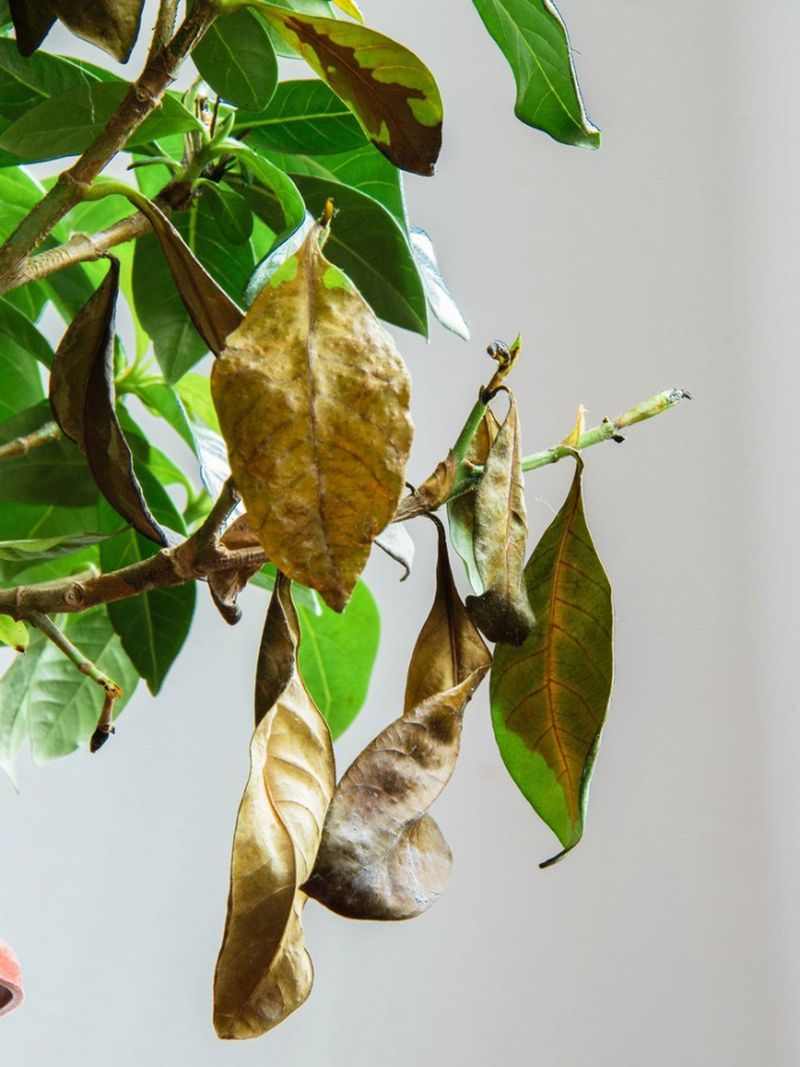
Not every brown or yellow leaf on a gardenia traces back to heat or dry soil. When a plant stays wilted despite moist soil, when one side is declining faster than the other, or when the soil stays persistently soggy, the roots themselves are worth a careful look.
Healthy gardenia roots should include white or light-colored feeder roots. Clemson Extension’s gardenia disease and problems factsheet describes brown, decaying roots whose outer cortex slips away from the central strand as consistent with root rot, which is favored by poor drainage, overwatering, and planting too deeply.
For a container plant, you can tip the root ball out carefully for a direct look. For an in-ground plant, use a trowel to expose a section of root near the drip line and examine what you find.
Pest pressure is another cause of decline that overlaps with heat symptoms. Flip leaves over and examine the undersides and any new growth carefully for scale insects, whiteflies, aphids, thrips, or spider mites.
Clemson’s gardenia insect factsheet identifies these as common gardenia pests, and sooty mold, that black powdery coating sometimes seen on leaves and stems, typically follows honeydew-producing insects like scale or whiteflies rather than being a primary disease on its own. Treating the mold without addressing the insect source will not solve the problem.
Soil chemistry matters too, particularly in Texas where alkaline soil and alkaline irrigation water are common. Gardenias perform best in acidic conditions, generally around pH 5.0 to 6.5.
NC State Extension’s gardenia profile notes that alkaline soil can cause iron chlorosis, which shows up as yellow new leaves with distinctly green veins. Concrete foundations, mortar, lime applications, or naturally calcareous soil can all push pH upward over time.
Salt in irrigation water is worth flagging as an edge case rather than a default assumption. UF/IFAS gardenia guidance notes that gardenias do not tolerate high salt levels, including water from softened systems, some reclaimed sources, or salt-intruded wells.
If you suspect pH or salt as a contributing factor, a soil test through your county extension office is the appropriate next step before reaching for any corrective amendment. Guessing at the cause and adding products without a diagnosis can make conditions worse rather than better.
Do not fertilize or improvise a chemical rescue
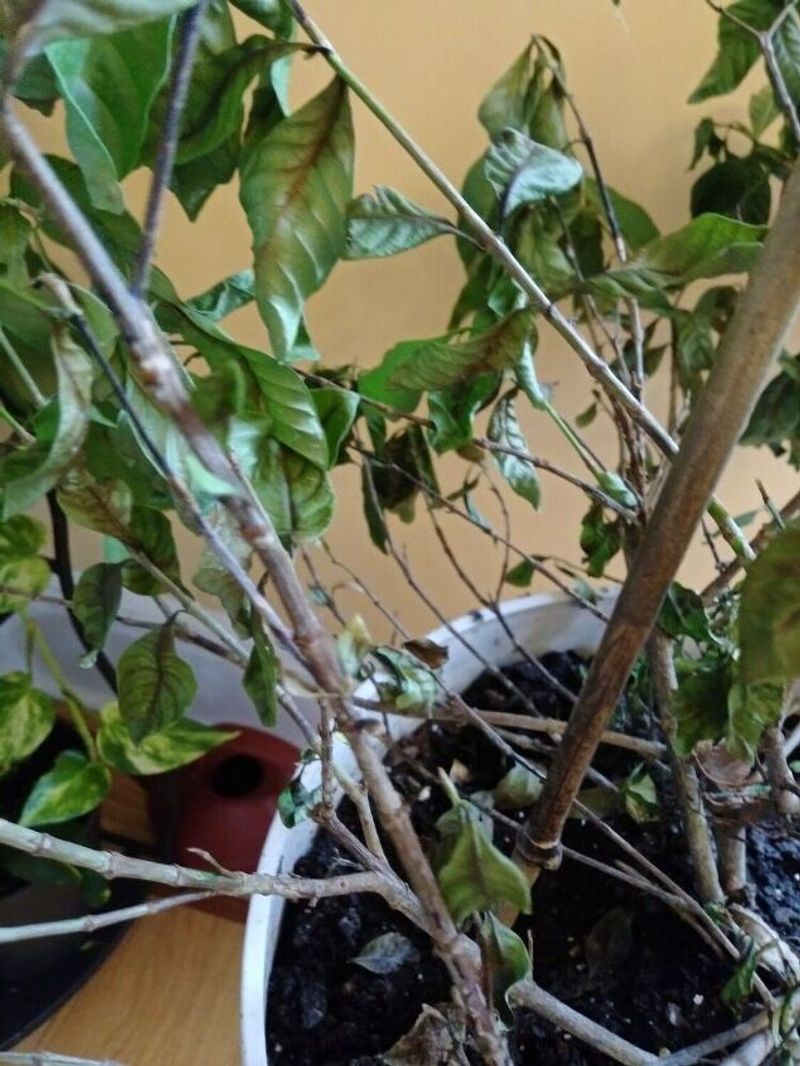
When a plant looks bad, the urge to feed it something is understandable. With gardenias in late-summer heat, fertilizer is almost always the wrong move.
A plant under active drought or heat stress is already struggling to move water and nutrients through its system. Adding fertilizer during that period can push the plant to attempt new growth it does not have the resources to support, and the salts in fertilizer products can add stress to roots that are already compromised.
UGA Extension landscape management guidance recommends avoiding fertilizer applications during high temperatures or drought conditions for exactly this reason.
The same logic applies to popular home remedies. Iron supplements, Epsom salt, coffee grounds, vinegar, and similar products get suggested frequently for gardenias, but none of them address an undiagnosed rescue situation.
UF/IFAS Polk County guidance on keeping gardenias healthy emphasizes that yellowing from high pH or iron unavailability requires proper diagnosis before any corrective product is applied. Pouring iron chelate on a plant that is actually wilting from root rot or dry soil will not help and could contribute to additional salt load in the root zone.
Clemson Extension’s gardenia factsheet on diseases and problems reinforces that correcting chlorosis or nutrient imbalance requires identifying the actual cause first, whether that is high pH, root damage, pest interference, or water stress. The stabilization steps described in earlier sections, correcting moisture, improving drainage, reducing heat load, and removing dead wood, come before any nutritional intervention.
Once the plant has stabilized, temperatures have eased, and you have a clearer picture of what caused the decline, a soil test can guide whether and how to amend.
Measure recovery by new growth and stable conditions
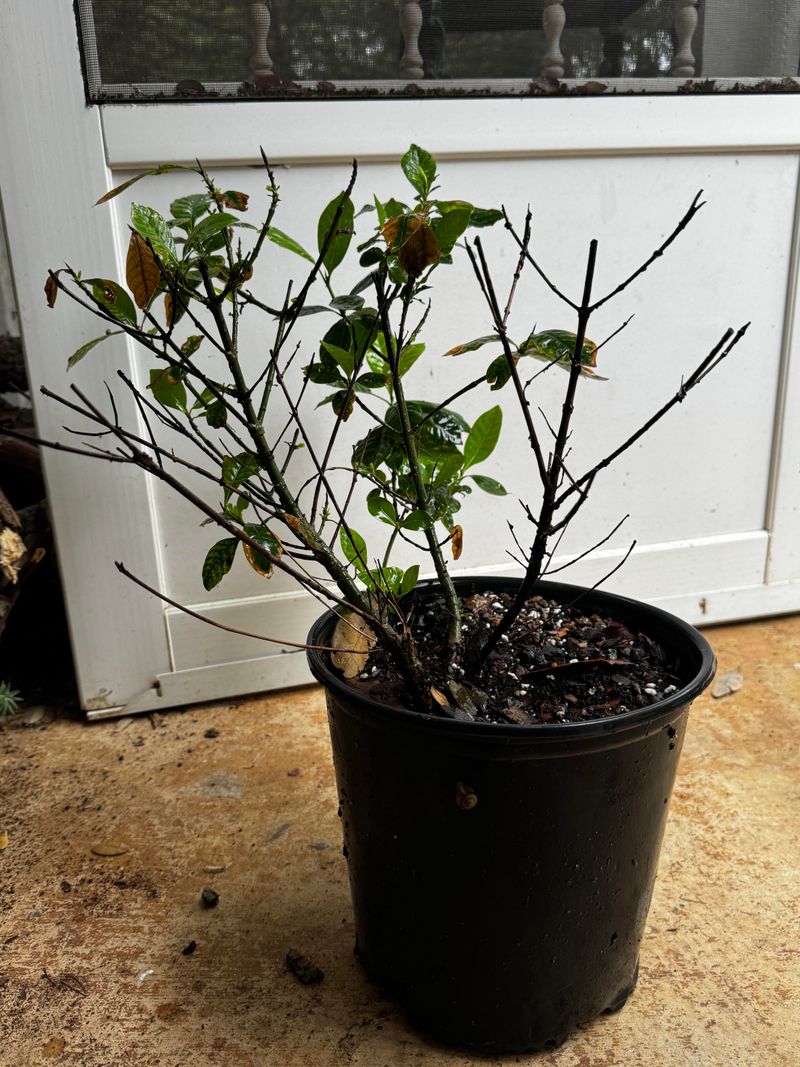
Recovery from heat or drought stress is not measured by how quickly the plant regains its former appearance. Scorched leaves and brown margins will remain exactly as they are.
The first milestone worth watching for is the absence of new decline: no additional wilting, no new brown tips spreading to previously healthy stems, and stable soil moisture without sogginess. That stabilization, quiet as it looks, is meaningful progress.
After stabilization, the next signal is retained green stems. Living wood that holds its color through the remainder of summer and into fall still has the stored energy and root connection needed to push new growth.
Extension guidance on plant recovery is consistent on this point: improvement shows up as new growth emerging from living stems, not as a restoration of damaged leaves. Expect that process to take time.
Recovery timing depends on how much root and stem damage occurred, how much stored energy the plant retained, and what temperatures do over the coming weeks.
UGA Extension drought impact guidance notes that plants stressed during summer can continue to show decline even after conditions improve, because root damage may not be fully apparent right away. Keep monitoring rather than declaring success or failure too early.
If the plant continues to wilt despite consistently moist soil, if decline is spreading rather than slowing, or if root inspection reveals extensive rot, those are signs that the problem goes beyond what surface-level care can correct.
A gardenia with severe root damage from rot, nematodes, compaction, salt, or prolonged drought may not recover even when a few stems remain green. Clemson’s factsheet on gardenia diseases and problems acknowledges that some decline patterns warrant professional diagnosis rather than continued home treatment.
Knowing when to call in a Texas Master Gardener or certified arborist is part of realistic plant stewardship, not a sign of failure. The gardenia that does pull through will show you with new leaves, and that first flush of healthy growth is worth the careful, patient work it took to get there.