
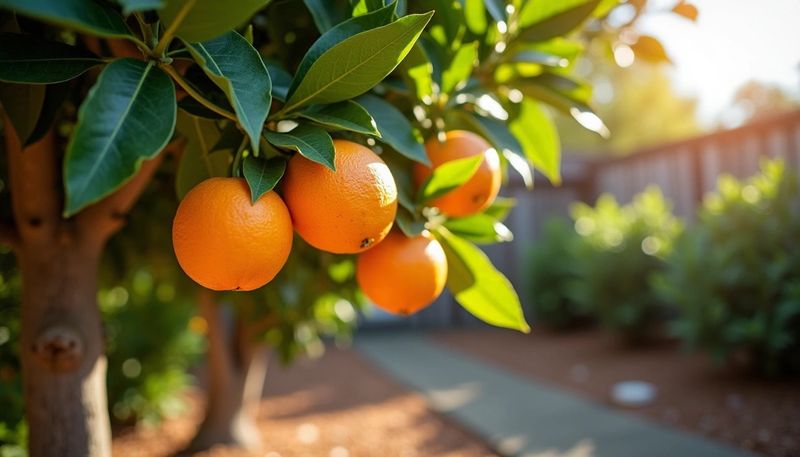
You water it, you fertilize it, and the leaves are as green as ever, yet come harvest time your citrus tree gives you almost nothing. This is one of the most frustrating puzzles in California backyard gardening, and it happens to well-tended trees all the time.
The good news is that a lush canopy does not mean the tree is doing everything right, and most of the real causes are things you can actually check and correct.
Start by identifying what the tree actually does
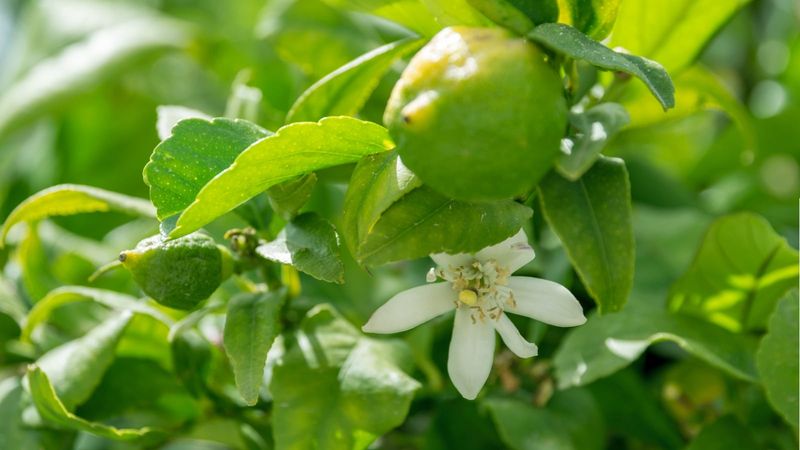
Before changing anything about how you care for your tree, spend a few minutes watching what it actually does through the growing season. The single most useful question is not “why isn’t there fruit?” but rather: does the tree flower at all, does it flower and then show no fruit, or does it form small fruit that falls off before it matures?
Each of those patterns points toward a different set of causes, and mixing them up leads to fixes that miss the mark entirely.
A tree that never produces blossoms is telling you something different from a tree that blooms freely but ends the season with bare branches. Absent or very sparse flowering usually points to conditions that prevent the tree from reaching or maintaining a fruiting state.
Inadequate light is one of the most common reasons a mature, leafy backyard citrus tree skips bloom. Other possibilities include a tree that is still in its juvenile phase, excessive vegetative vigor driven by too much nitrogen, cultivar-specific heat requirements, or environmental stress such as an unusually cold or dry winter.
A tree that flowers and then seems to set no fruit, or sets fruit that disappears within weeks, is a different situation. UC IPM’s fruit drop guidance makes clear that citrus naturally sheds a large proportion of its young fruits after bloom, so some drop is completely normal and not a sign of failed pollination or disease.
What causes drop beyond that natural level includes water stress, sudden heat, cold snaps, wind, inadequate nutrition, ill-timed pruning, pest pressure, and disease.
Getting this distinction right early saves a lot of wasted effort. UC Master Gardeners’ citrus guide and UC ANR’s citrus FAQ both treat failure to flower and post-bloom fruit drop as separate diagnostic paths.
Write down what you observe this season, including approximate dates for bloom, the size of fruit when it drops, and any weather events that coincide with heavy drop. That record will make every other step in this guide more productive.
Check sunlight before changing anything else
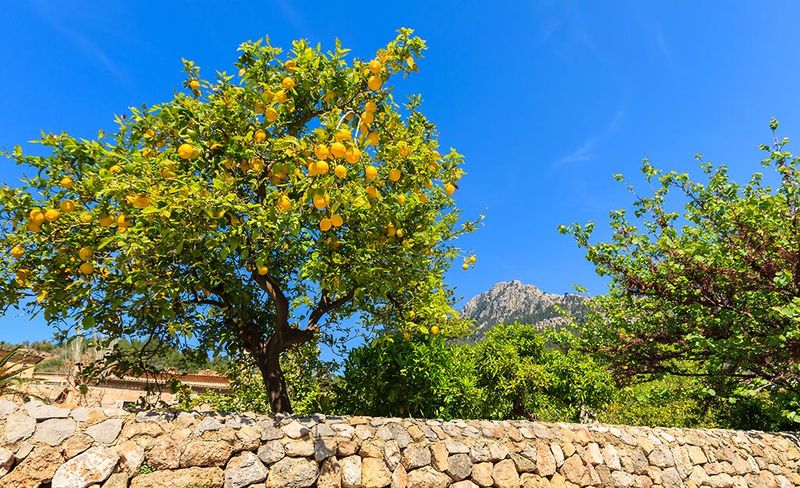
Sunlight is the first thing to assess, and it costs nothing to check. Many homeowners reach for fertilizer or start researching a second tree before they have ever measured how many hours of direct sun their citrus actually receives.
That order of operations is backwards.
Citrus performs best in the sunniest, warmest spot available. UC Cooperative Extension guidance on citrus production specifically identifies excessive shade as a common reason a mature, leafy backyard tree produces little fruit, and UC Master Gardeners recommend at least approximately 6-8 hours of direct sunlight for strong productivity.
A tree can grow a full, dark-green canopy in partial shade and still lack the light energy needed to produce a good crop of flowers and fruit.
Shade sources are not always obvious. A fence or wall that lets morning light through may block the intense afternoon sun that citrus needs most in cooler coastal zones.
A neighboring tree that was small when your citrus was planted may now cast a shadow for most of the day. Even your own citrus canopy can become so dense that interior branches are effectively shaded out, reducing the number of productive flowering sites.
UC ANR’s garden sunlight overview notes that shade patterns shift significantly with the seasons, so a spot that looks sunny in summer may receive far fewer hours of useful light in winter and early spring when many citrus varieties are setting flower buds.
To get an honest count, track the tree’s sun exposure on a clear day during the period when your citrus typically blooms. Note when direct sun first hits the canopy and when it disappears.
If the total is consistently below six hours, that alone may explain the poor harvest. Relocating a small tree or selectively removing a competing branch from a nearby shade source can make a real difference, though more sun by itself will not solve problems rooted in irrigation, age, or disease.
Protect flowers and young fruit from water stress
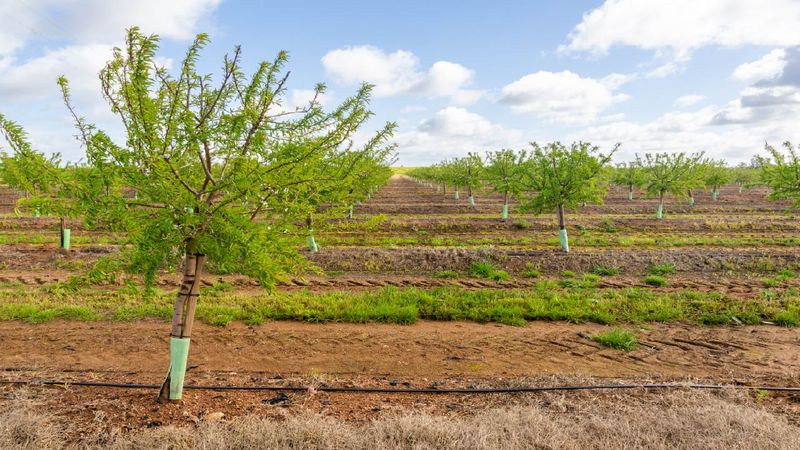
Water management during bloom is one of the most overlooked factors in backyard citrus production, and it is where well-meaning care can quietly cause problems. Many California homeowners either water too shallowly and too often, or they cut back on irrigation during a warm dry spell just when the tree needs reliable moisture most.
Flowering and early fruit development are the most water-sensitive periods in the citrus calendar. UC ANR research on regulated deficit irrigation identifies these stages as times when water stress can meaningfully increase flower and young-fruit drop.
When dry soil combines with a sudden heat spike, even a tree with green, healthy-looking leaves can shed flowers or drop pea-sized fruit within days. The leaves stay green because the tree prioritizes its own survival, offloading reproductive effort first.
For established in-ground citrus, the right approach is deep and infrequent watering rather than light, frequent applications. UC IPM cultural tips for citrus recommend letting the top 3-6 inches of soil dry before watering, then applying water slowly and deeply beneath the full canopy and slightly beyond the drip line.
Keep the trunk itself dry; wet bark near the crown invites disease. A general midsummer benchmark of roughly 4-6 inches of water per month gives you a starting point, but that figure needs adjustment for your soil texture, local weather, recent rainfall, and tree size.
UC ANR’s citrus FAQ notes that clay soils hold moisture longer and need less frequent irrigation, while sandy soils drain quickly and may require more frequent deep watering. Coastal California gardens may go weeks without supplemental water during a cool foggy spring, while an inland or desert-zone tree in the same month may need irrigation every week or two.
UC IPM’s fruit drop resource confirms that drought stress is among the conditions that push drop beyond the normal natural range. Check soil moisture by pushing a screwdriver or probe six inches into the ground under the canopy; if it slides in easily and the soil feels damp, hold off on watering.
Verify the tree’s age, origin, and cultivar
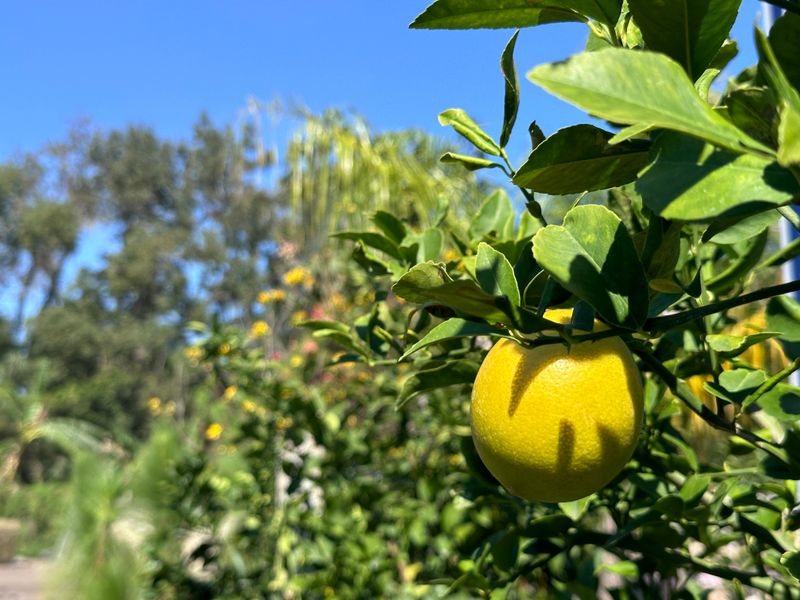
Knowing where your tree came from and how old it is can instantly explain a poor harvest without pointing to any care mistake at all. Two trees that look the same size and health can have very different fruiting timelines depending on how they were propagated.
A grafted tree from a reputable nursery typically begins producing fruit within three to four years of planting, though it may fruit lightly at first. UC Master Gardeners note that young grafted trees often set modest crops in their early years before production increases as the tree matures.
A seed-grown tree is a very different story. UC Cooperative Extension’s guide to citrus budding and grafting explains that seedlings can take many years to reach fruiting age and that the resulting fruit may not resemble the parent variety at all.
If your tree was started from a seed or came from an unknown source, patience or top-working may be more realistic than any amount of fertilizer or pruning.
Once you have confirmed the tree is a grafted specimen of fruiting age, cultivar identification becomes the gateway to sensible pollination advice. Most citrus, including the majority of oranges, lemons, limes, kumquats, and many mandarins, is self-fruitful, meaning it can set a crop from its own pollen.
UC IPM’s citrus overview confirms that planting a second tree is not a universal solution. However, certain mandarins and mandarin hybrids are exceptions.
UC ANR research on citrus sex and seedlessness identifies Clementine, Minneola, Orlando, Page, and W. Murcott/Afourer types as cultivars that may produce significantly better with compatible cross-pollination from another citrus variety.
If your cultivar falls into that group, the specific compatible partner matters; not just any citrus next door will do. Also worth knowing: cross-pollination that boosts yield in these types can also increase seed count in what is otherwise a nearly seedless fruit.
That is a tradeoff worth considering before you plant a second tree.
Pollinators such as bees carry pollen between flowers, but they cannot supply pollen that does not exist. A self-incompatible mandarin needs a compatible citrus cultivar nearby as the pollen source, not simply more bee activity.
To support whatever pollinators are present, avoid applying insecticides during bloom. EPA pollinator protection guidance and California DPR’s bee-friendly IPM guidance both emphasize avoiding treatment of blooming plants when possible, following product labels carefully, and preventing drift onto flowers.
Avoid pruning and nitrogen mistakes that favor leaves over fruit
Two of the most common responses to a leafy, unproductive citrus tree are to prune it hard and to feed it more nitrogen. Both can make the problem worse if applied without thinking through what the tree actually needs.
Citrus trees carry fruit on wood that has had time to mature and harden. Removing large amounts of foliage reduces the tree’s ability to produce the energy needed to support a crop, and heavy pruning often stimulates a flush of fast, soft vegetative growth that delays flowering.
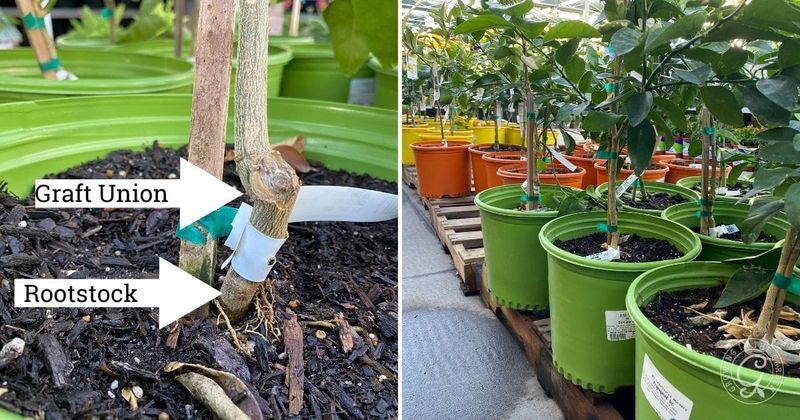
UC IPM’s cultural tips for citrus describe the appropriate approach as light structural pruning: remove dead, crossing, crowded, or excessively vigorous shoots and any suckers growing from below the graft union. That union is typically visible as a slight bend or change in bark texture low on the trunk; growth from below it belongs to the rootstock, not the fruiting variety, and should be removed as soon as it appears.
Timing matters too. UC IPM places the best general pruning window shortly before bloom or shortly after fruit set, but local climate and cultivar affect that timing.
Pruning during or just after bloom can remove flower-bearing wood at the worst possible moment. If you are unsure of your cultivar’s bloom timing, observe the tree for a full season before making any cuts beyond the obvious dead or damaged wood.
The nitrogen question is equally important to get right. A lush, dark-green canopy on a tree that will not fruit is sometimes a sign that nitrogen is already adequate or even excessive.
UC ANR’s nitrogen management guidance for citrus notes that excess nitrogen promotes vigorous vegetative growth and can reduce fruit yields in subsequent seasons. Adding more fertilizer to a leafy, non-fruiting tree without knowing why it is not fruiting is a common and counterproductive step.
UC Master Gardeners recommend timing nitrogen applications around January or February before bloom, with possible follow-up in May and June, and UC ANR extension writing on June drop reinforces that rates should be based on tree age, fertilizer analysis, and site conditions rather than a fixed dose by volume.
Recognize normal thinning and serious warning signs
Seeing dozens of tiny fruits on the ground beneath your citrus tree in spring can feel alarming, but it is often completely normal. California citrus routinely sheds a large proportion of its young fruits after bloom, and that natural thinning can continue from late March into early July depending on the variety and location.
UC IPM’s fruit drop resource is clear that this process is not proof of failed pollination, disease, or a care problem. The tree is regulating its own crop load, and what remains after natural thinning is often what the tree can actually support to maturity.
That said, not all drop is normal. UC IPM’s cultural care guidance and UC ANR’s citrus FAQ both describe conditions that push drop beyond the natural range: a sudden heat wave when soil is dry, a late frost during bloom, persistent wind, nutrient deficiency, ill-timed heavy pruning, or pest and disease pressure.
If drop is unusually heavy and coincides with one of those events, address the underlying condition rather than assuming the tree is permanently impaired.
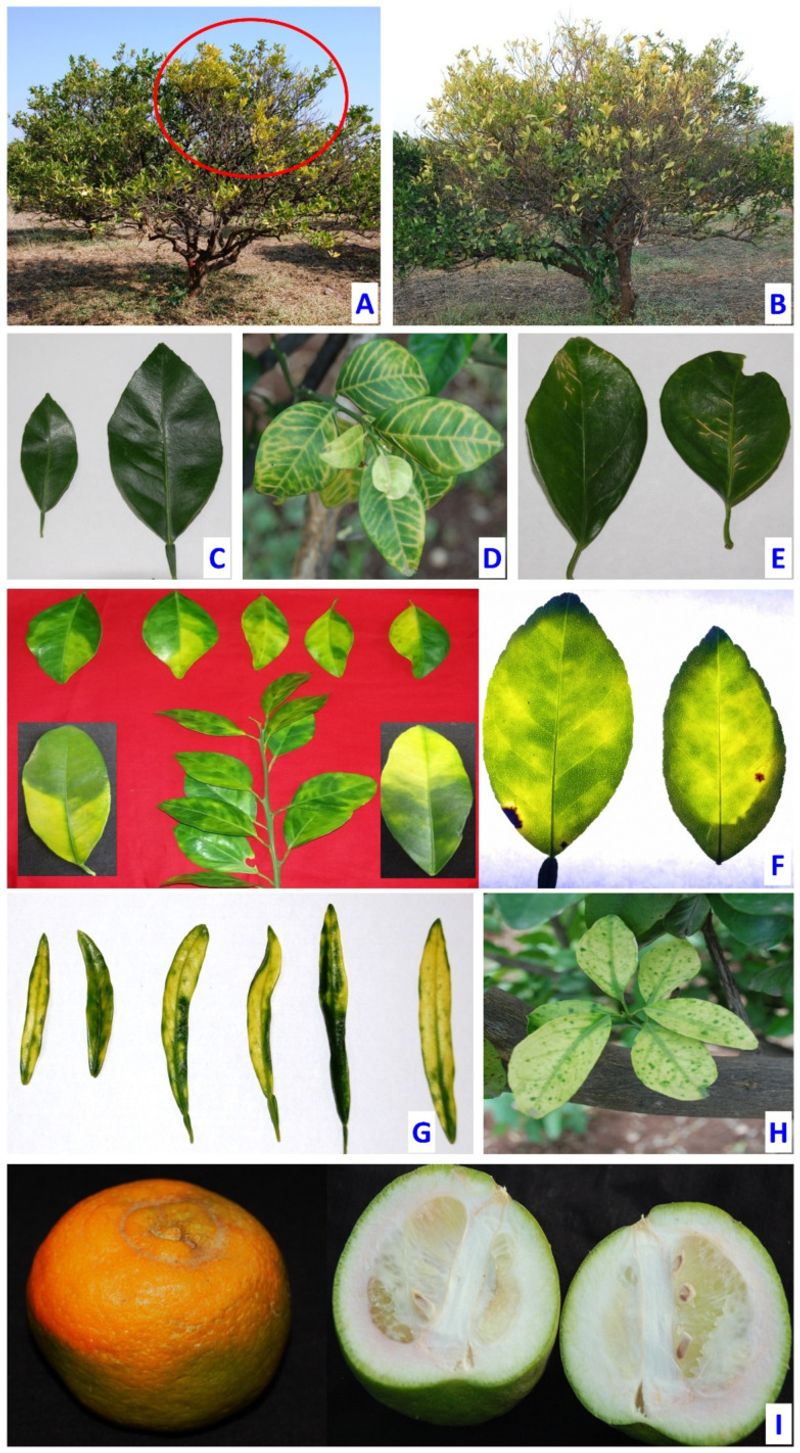
The more serious warning to watch for in California is Huanglongbing, commonly known as HLB or citrus greening, which is spread by the Asian citrus psyllid. HLB is present in California and poses a genuine threat to backyard citrus.
The symptoms can be subtle at first and are sometimes confused with nutrient deficiency or normal variation. Warning signs include blotchy, asymmetrical yellow mottling on leaves that does not follow vein lines, yellow shoots on otherwise green branches, stunting, twig dieback, and fruit that is small, lopsided, poorly colored, and bitter or off-tasting even when it appears ripe.
If your tree’s declining production is accompanied by any combination of those symptoms, do not attempt to treat it with fertilizer, pruning, or any home remedy. CDFA’s HLB pest profile states plainly that there is no curative treatment for this disease.
USDA APHIS guidance on citrus greening directs growers to official plant-health assessment and reporting channels. Contact your UC Cooperative Extension office or the California Department of Food and Agriculture if you suspect HLB; early reporting matters for containing its spread.
Make one informed correction and monitor the next crop
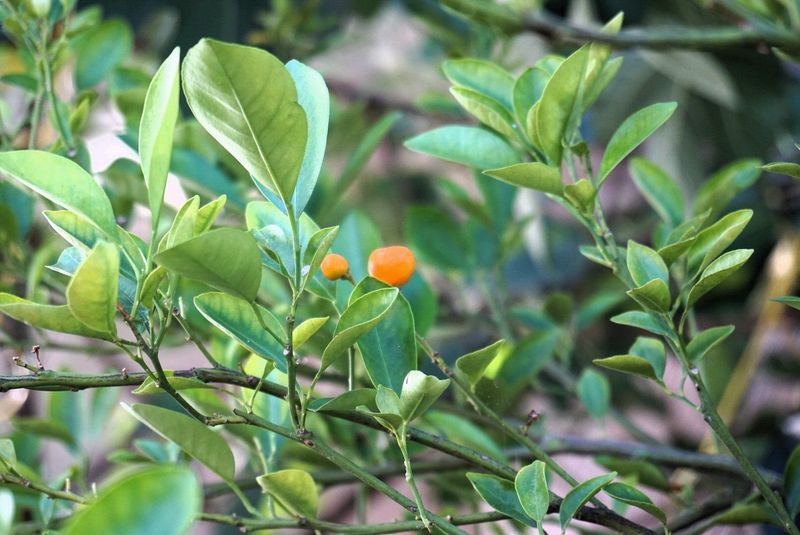
After working through the checks above, you should have at least one likely candidate for why your tree is underproducing. The most productive next move is to address that single most probable cause and then watch what happens over the next full flowering and fruit-set period before changing anything else.
Adjusting multiple variables at once makes it nearly impossible to know what actually helped.
A practical sequence looks like this: record whether the tree flowers and when, measure actual daily sun hours during the bloom window, inspect soil moisture at six inches depth throughout flowering and early fruit development, confirm the tree’s age and cultivar, and review whether recent pruning or fertilizer applications were timed and dosed appropriately. UC IPM’s cultural tips for citrus and UC Master Gardeners’ citrus guide together cover each of these steps in detail and are worth bookmarking for reference through the season.
If the tree is a young grafted specimen still in its first few years, patience combined with correct site management is usually the right answer. If it is a seed-grown tree of uncertain age or quality, UC Cooperative Extension’s guide on budding and grafting citrus explains top-working as a realistic option for converting a poor seedling to a proven variety.
A tree in deep shade that cannot be relocated or freed from competing growth may need a larger site correction rather than any amount of fertilizer or pruning.
Persistent decline, especially when paired with the leaf and fruit symptoms described in the previous section, calls for expert eyes rather than another home fix. Contact your local UC Cooperative Extension office or report concerns through CDFA’s HLB reporting channels if HLB is a possibility.
A healthy-looking tree that still will not fruit after one full season of corrected care is giving you information worth acting on, and the right next step is a conversation with someone who can see the tree in person.