

Spotting a black widow in your California garden can stop you cold, and the fear that follows is completely understandable. But one spider in the yard does not mean your outdoor space has been taken over, and knowing what that sighting actually signals can help you respond calmly and safely.
Whether you garden around a woodpile, a patio, or a cluttered shed corner, the steps you take in the next few minutes matter more than the spider itself.
What one black widow sighting actually tells you
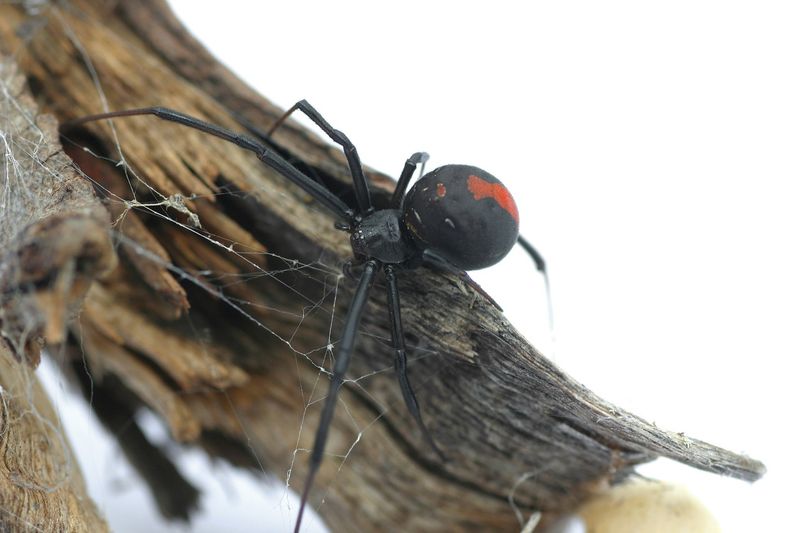
Finding a single black widow in your garden tells you one thing with confidence: somewhere nearby there is a sheltered, relatively undisturbed spot with enough insect prey to keep a spider fed. That is the full extent of what one sighting proves.
It does not tell you how many spiders share the property, how long the spider has been there, or whether the garden is headed toward an infestation.
According to UC IPM’s guidance on widow spiders, western black widows are reclusive animals that generally bite only in self-defense when trapped or disturbed. A spider sitting in a corner of the shed or tucked under the rim of a flowerpot is not patrolling your yard looking for conflict.
It found a place that met its basic needs and settled in.
Common spots where gardeners encounter black widows include woodpiles, rock walls, the undersides of outdoor furniture, trash-can handles, irrigation equipment housings, and cluttered corners of garages or storage areas. These are not signs of an unusual invasion.
They are simply the kinds of spaces a reclusive spider prefers anywhere in California.
The most useful thing you can do with that information is give the spider room. Back away slowly, resist the urge to chase or disturb it, and resist the even stronger urge to reach in and grab it.
If you want a record of what you saw, a clear photograph taken from a safe distance is plenty. Chasing, trapping, or handling the spider raises your risk of a bite without adding anything useful to your response.
Why sheltered spaces around California homes suit widow spiders
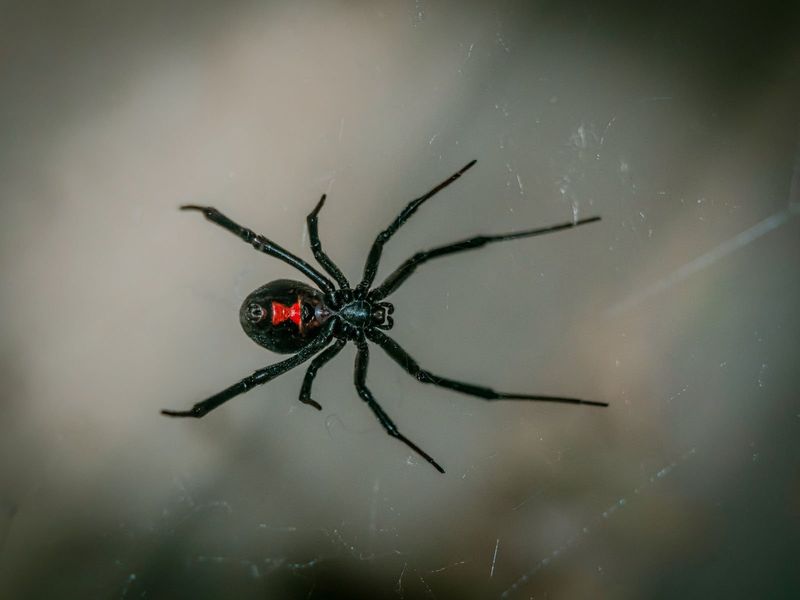
Western black widows are not drawn to gardens by any particular plant. What attracts them is a combination of physical conditions: darkness, low foot traffic, dry air near the ground, and a reliable supply of insects.
California’s long dry summers and mild winters mean those conditions persist outdoors for much of the year, making the state a natural fit for the species.
The structures people keep around their homes create exactly the right microhabitat. A Journal of Medical Entomology study on widow spider prevalence in urban Southern California found that black widows and brown widows concentrate in human-made objects and structures rather than in ornamental plantings.
Think of the gap between stacked firewood logs, the hollow space under an overturned pot, the dark channel behind a fence board, or the recessed handle cavity on a plastic trash can.
Sheds, garages, and storage areas rank among the highest-risk spots because they combine shelter, low disturbance, and proximity to insects that gather near light or decomposing organic material. Rock walls, raised garden beds with open undersides, and irrigation valve boxes present similar conditions.
Even outdoor furniture left against a wall for weeks can become an attractive retreat.
None of this means your garden is uniquely dangerous or badly managed. These are ordinary features of California residential yards.
The practical takeaway is that before you reach into any dark, enclosed, or cluttered space, gloves are your best protection. Shake out gloves, shoes, boots, hats, and any clothing left in a shed or garage before putting them on, because a spider seeking warmth or shelter may have moved inside while you were not looking.
Moving stored materials carefully and deliberately, rather than quickly, gives any resident spider time to retreat rather than feel cornered. That small habit change reduces encounter risk considerably without requiring any chemical treatment at all.
How to assess a suspected widow without handling it
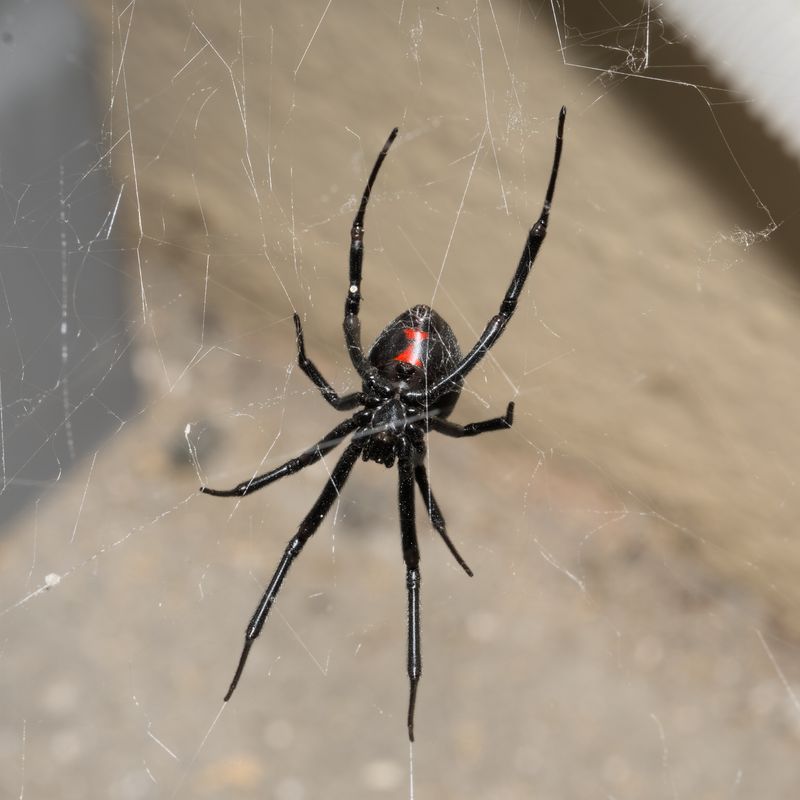
California’s principal spider of medical concern is the western black widow, Latrodectus hesperus. Adult females are typically shiny black with a rounded, globe-shaped abdomen and a marking on the underside that is often described as an hourglass shape.
That marking can be red, orange, or so faint it barely shows, and in some individuals it is divided or atypical. Relying on a quick color check from a single angle is not reliable identification.
The picture gets more complicated with juveniles and males. Young female black widows can be patterned with tan, brown, or white markings that make them look nothing like the glossy adult most people picture.
Males are smaller, often lighter in color, and carry their own variation in patterning. UC IPM’s spider identification resource notes that quick visual identification is unreliable, especially for non-specialists looking at a spider from a cautious distance.
California also has brown widows, particularly in urban parts of Southern California. Brown widows are commonly confused with immature black widows, and their bites are generally considered less toxic than those of adult female black widows, though any suspected widow bite still warrants a call to Poison Control.
The point is not to encourage you to sort out which species you found before seeking help – it is to explain why you should not feel confident identifying any spider from color or a red mark alone.
If identification might help with treatment decisions, a clear photograph taken from a safe distance is the right move. Do not flip over rocks, pots, or boards to get a better look at the underside, and do not attempt to capture the spider in a container.
As clinical guidance on black widow toxicity from NCBI Bookshelf makes clear, medical evaluation generally does not require a specimen, and risking a second bite while trying to collect one is not worth it. The photograph is enough.
A messy, tangled, irregular web near the ground, often with debris caught in it, is a behavioral clue associated with widow spiders, though other species also build irregular webs. Treat any spider in that kind of web with the same caution you would give a confirmed black widow.
The first steps after a suspected bite
Move away from the spider first. Once you are clear of the area, the sequence of steps is straightforward and supported by public-health guidance.
Start by washing the bite site thoroughly with soap and water. This basic step removes surface contamination and gives you a moment to look at the area before any swelling begins.
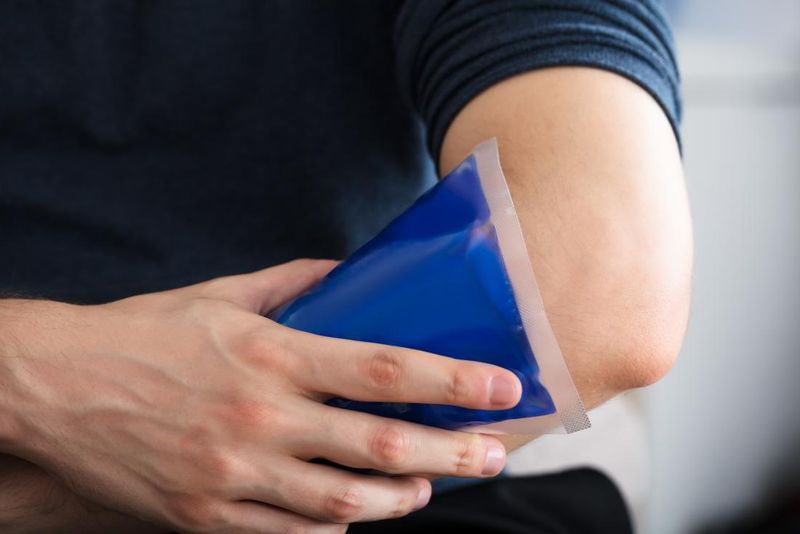
Next, apply a cold compress. Wrap ice or a cold pack in a cloth – never directly against skin – and place it over the bite intermittently to ease pain and limit local swelling.
CDC guidance on venomous spiders recommends a cold pack as part of the immediate response, along with staying calm and seeking medical advice promptly.
If the bite is on a hand, wrist, or arm, remove rings, bracelets, or tight clothing near the area before swelling increases and makes removal difficult or painful. Keep the affected limb as still as possible and, when you can do so comfortably, elevate it slightly.
Both steps help limit the spread of discomfort and manage swelling while you arrange next steps.
Call Poison Control at 1-800-222-1222 as soon as you have done the above. Specialists there can walk you through what to watch for, assess your situation, and tell you whether an in-person evaluation is needed right away.
MedlinePlus guidance on black widow bites reinforces that prompt contact with medical professionals is important even when the bite seems mild at first, because symptoms can worsen over time.
A few things to skip entirely: do not cut the bite site, do not try to suck out venom, and do not apply a tourniquet or wrap the limb tightly. Do not reach for essential oils, poultices, or any improvised home remedy.
None of these approaches help and some cause additional harm. The steps above, wash, cool, keep still, remove jewelry, and call Poison Control, are the ones that actually support your recovery while you wait for professional guidance.
Watch for symptoms that develop over the next several hours
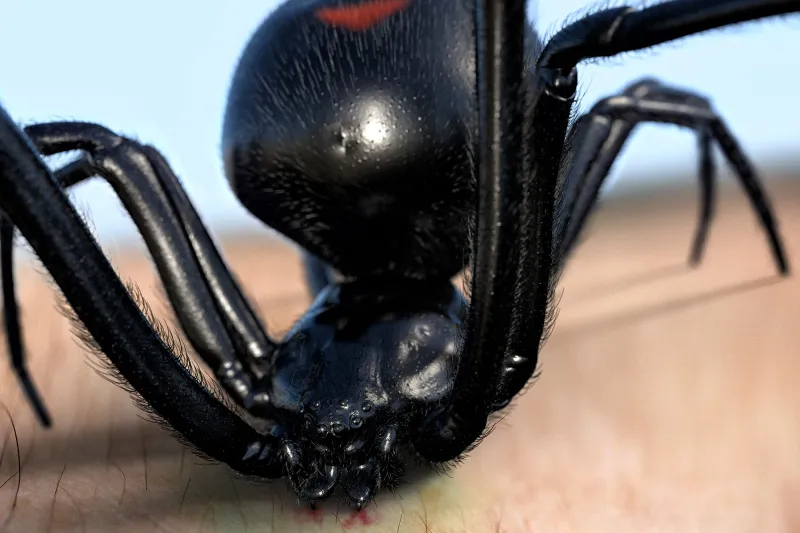
Black widow venom is primarily neurotoxic, meaning it targets the nervous system rather than causing immediate tissue destruction at the bite site. One of the most important things to understand is that the initial bite may feel like a mild pinprick, a small sting, or occasionally nothing at all.
Feeling reasonably okay in the first few minutes is not a reliable sign that everything is fine.
Symptoms can develop or intensify over the course of one to several hours. MedlinePlus describes the characteristic pattern as pain that spreads from the bite site, followed by muscle cramping or rigidity, particularly in the abdomen, back, chest, or thighs.
Accompanying symptoms can include sweating, nausea, vomiting, headache, elevated blood pressure, and general weakness. The muscle cramping associated with black widow envenomation can be severe enough to mimic a surgical emergency, which is one reason prompt medical evaluation matters.
Keep watching for those signs over the next several hours even if you felt fine after the initial bite. If pain begins spreading, if muscle cramps develop, or if you notice sweating, vomiting, or a feeling of pressure in the chest or abdomen, contact a medical professional or go to an emergency room without delay.
Do not wait to see if symptoms resolve on their own once they have started progressing.
Certain people need a lower threshold for seeking care immediately. Children, older adults, pregnant people, and anyone with heart disease, high blood pressure, or other significant medical conditions should be evaluated promptly after any suspected widow bite, even if symptoms seem mild.
Clinical toxicology literature on black widow envenomation notes that pregnancy-related contractions, chest pain, or major muscle spasms after a bite should be treated as urgent.
Call 911 immediately for trouble breathing, seizures, collapse, or if the person cannot be awakened. These are emergency signs that require paramedic response rather than a drive to urgent care.
Fatal outcomes from black widow bites are rare, and most exposures are survivable with appropriate care, but the window for effective treatment narrows if serious symptoms are ignored or explained away.
A dark or worsening sore does not prove a spider bite
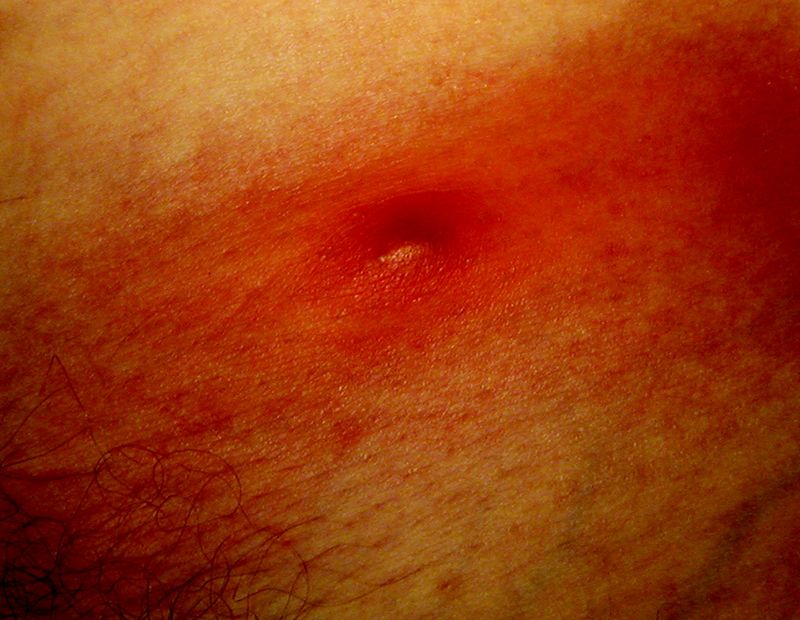
Many skin problems get blamed on spiders, but most of the time a spider was never involved. In an emergency-department study of patients who came in reporting spider bites, only 3.8% actually received a clinical diagnosis of a spider bite.
The large majority were diagnosed with skin and soft-tissue infections, including conditions like MRSA that can produce painful, darkening, and enlarging lesions that look alarming and feel like something must have bitten the person.
A sore that is spreading, darkening, or developing a necrotic center does not, by itself, confirm a black widow bite. Black widow venom is associated primarily with pain and muscle symptoms rather than the tissue-destruction pattern that people often picture when they hear the word spider bite.
If a lesion is worsening and no bite was witnessed, a bacterial infection or another skin condition is a more common explanation than a spider.
This distinction matters because the right treatment for an infection is very different from the management of envenomation. Assuming a sore is a spider bite and waiting for it to resolve, or treating it with home remedies, can allow an infection to worsen significantly.
Any new or worsening skin lesion that is spreading, increasingly painful, or accompanied by fever should be evaluated by a medical professional, regardless of whether a spider was seen.
Antivenom for black widow bites exists and can be effective for serious cases, but it is a hospital treatment considered by clinicians based on a patient’s specific presentation. Mayo Clinic notes that antivenom can cause allergic reactions and is not needed for every confirmed bite.
Those decisions belong to the treating team, often in consultation with Poison Control or a medical toxicologist, not to the patient at home.
Reduce encounters without spraying the whole yard
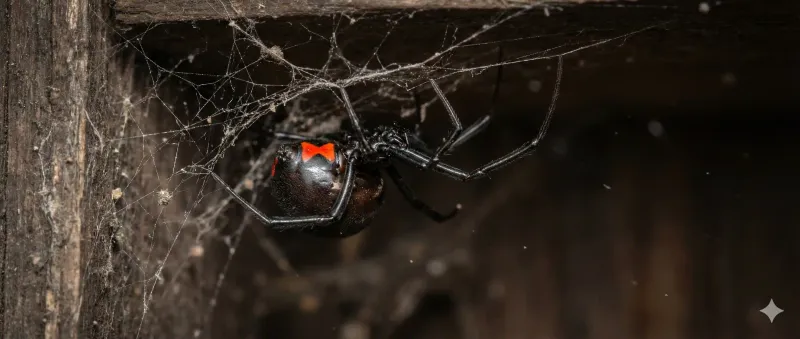
Broad-spectrum pesticide spraying across an entire yard is a poor response to a black widow sighting. UC IPM recommends habitat modification and targeted web removal as the primary approach for managing widow spiders around homes.
Wide-area spraying kills beneficial predators and pollinators, can harm garden ecosystems, and will not eliminate every spider living outdoors anyway.
The more effective strategy starts with removing or reorganizing the conditions that make your yard attractive in the first place. Clear clutter from around foundations, porches, sheds, and work areas.
Store seasonal items, including holiday decorations, sports equipment, and garden supplies, in sealed plastic bins raised off the floor rather than in open cardboard boxes on the ground. Seal cracks in foundation walls, gaps around door frames, and openings where pipes or wires enter the structure.
Make sure screens on windows and vents fit tightly with no tears or gaps.
Remove webs from areas you use regularly. A stiff brush, a long-handled broom, or a vacuum with a hose attachment works well for this without requiring you to get close to any resident spider.
Web removal disrupts the spider’s established retreat and reduces the chance of an accidental contact during normal yard activity.
Personal protective habits matter just as much as physical changes to the yard. Poison Control advises wearing gloves whenever you move firewood, mulch, pots, lumber, rocks, or stored equipment.
Shake out gloves, shoes, boots, hats, and any clothing left in a garage, shed, or outdoors before putting them on. A spider seeking warmth may have moved into a boot overnight, and a quick shake takes two seconds.
If chemical treatment is being considered for a specific, localized area, use only a product registered in California for the intended site and pest, and follow the label exactly. The label is a legal document, and applying a product in ways the label does not authorize is both ineffective and potentially harmful.
Avoid treating flowering plants or areas frequented by pollinators. Targeted spot treatment of a known web site is very different from spraying the perimeter of the entire yard.
Use a calm, prepared response
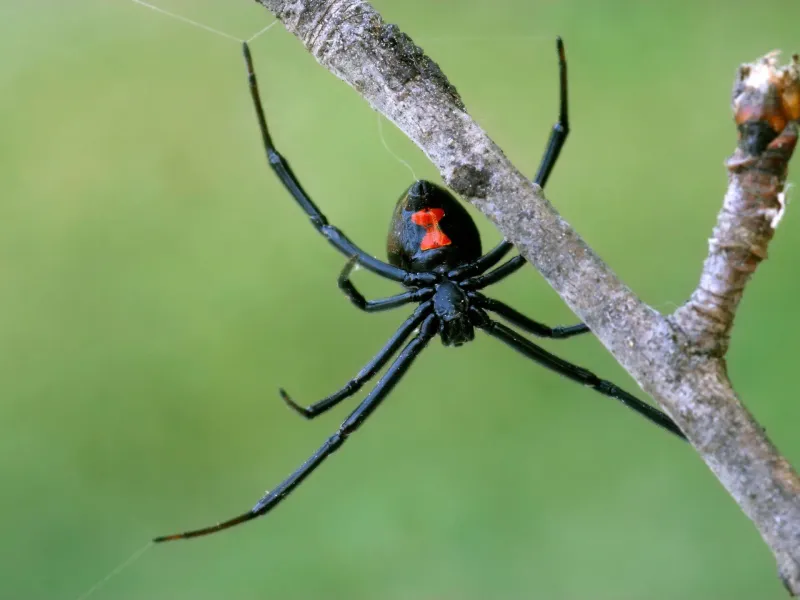
A black widow spotted in a California garden is a habitat clue, not a crisis. The spider found a sheltered, undisturbed space with available prey, and that tells you something useful about your yard that you can act on.
One sighting does not establish an infestation, confirm a population size, or require emergency intervention.
Give the spider space. If identification seems relevant, photograph it from a safe distance.
Then turn your attention to the practical sequence: clear clutter, seal gaps, store items in closed containers, wear gloves when moving stored materials, and remove webs from high-use areas. Those steps address the conditions that made the spot attractive in the first place.
After a suspected bite, the priorities are washing, cooling, keeping the limb still, removing tight jewelry, and contacting Poison Control at 1-800-222-1222 or a medical professional promptly. Watch for symptoms over the following hours, and call 911 without hesitation if breathing problems, seizures, or collapse occur.
Most exposures are manageable with appropriate care, and the gardeners who do best are the ones who know the steps before they ever need them.