
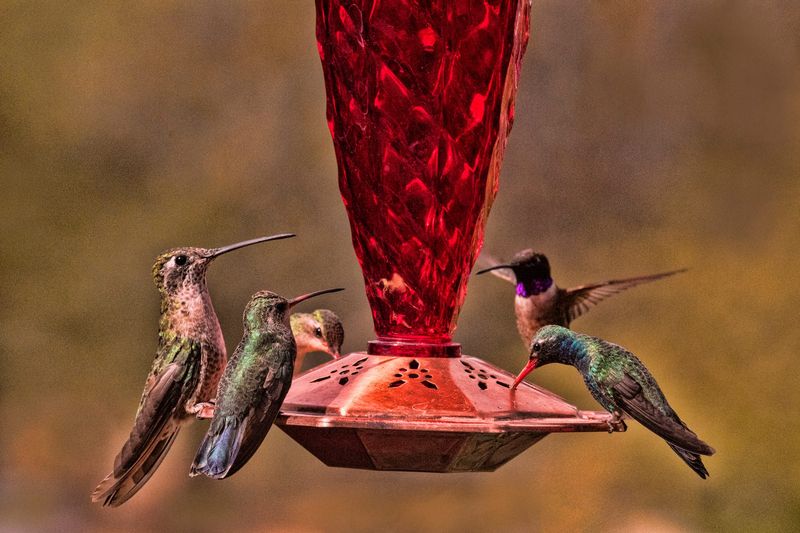
Every summer, well-meaning California homeowners fill their hummingbird feeders and feel good about helping wildlife. But one easy-to-overlook habit can quietly create a hygiene risk for the birds stopping by.
Leaving too much sugar water sitting in heat or direct sun for too long allows microbes to grow and nectar to ferment. The good news is that a simple maintenance routine can fix this without giving up your feeder entirely.
Why California homeowners may keep feeders out in late summer
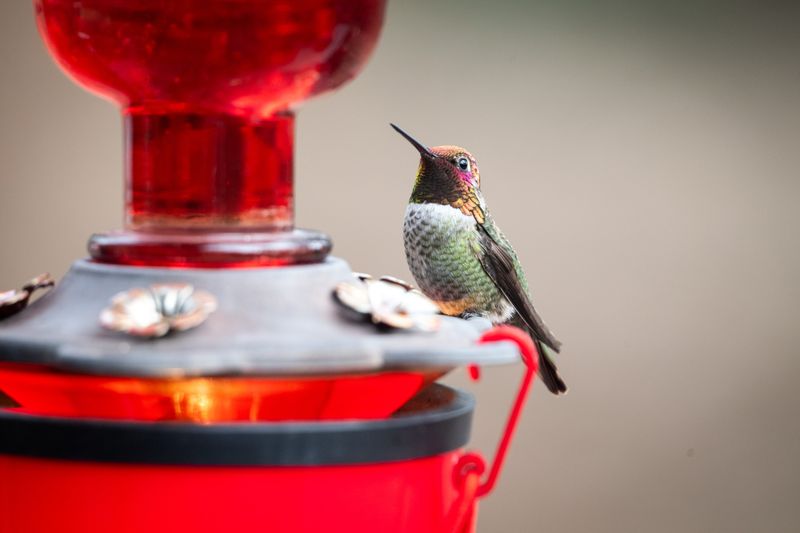
Anna’s Hummingbirds are one of the most familiar backyard birds along the California coast, and unlike many hummingbird species that migrate south after summer, Cornell Lab’s overview of Anna’s Hummingbird confirms they commonly occur year-round along the Pacific Coast. That means a California homeowner who puts out a feeder in spring may see little reason to take it down as August arrives.
The birds keep visiting, the feeder stays up, and the routine continues right through the hottest stretch of the year.
That year-round presence is part of what makes late-summer maintenance so easy to let slide. A feeder that worked fine in mild spring weather can become a hygiene concern once temperatures climb and the sun shifts to longer afternoon angles.
The risk is not that feeding is wrong, but that a feeder left to run on autopilot in heat creates conditions very different from those in cooler months.
Feeders are optional supplements, not a survival lifeline. California has enough flowering plants and insect life to sustain hummingbirds without artificial nectar, and Cornell’s summer feeding guidance from ornithologist David Bonter frames supplemental feeding as a choice that comes with a maintenance responsibility rather than a necessity.
Choosing to keep a feeder running through late summer is perfectly reasonable, but it means agreeing to check and refresh it more often than you might in October.
California is also not one climate. Coastal residents in San Diego or Santa Cruz deal with very different afternoon temperatures than homeowners in the Central Valley, the Inland Empire, or the Sierra Nevada foothills.
A feeder in Fresno on a 105-degree afternoon spoils nectar far faster than the same feeder in Half Moon Bay on a 68-degree foggy morning. Any guidance on replacement frequency has to account for that range, which is why local conditions matter more than any single statewide rule.
The risk begins when sugar water sits too long
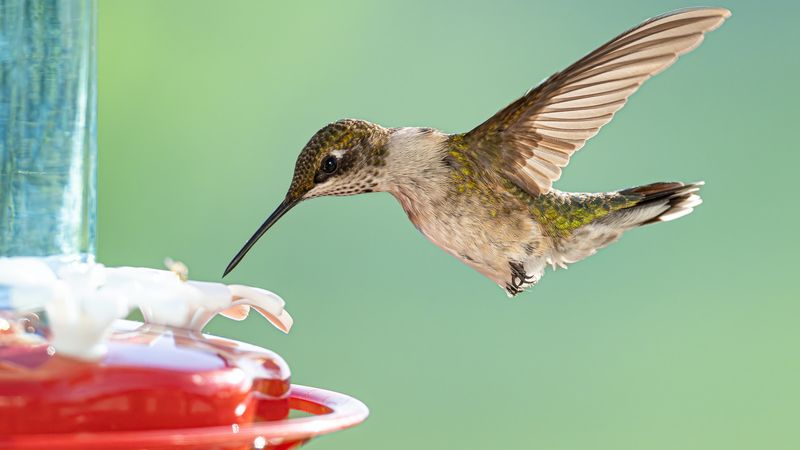
The central mistake is not filling a feeder. It is filling a feeder with more nectar than the visiting birds will drink before the solution starts to change.
In California’s late-summer heat, a reservoir of sugar water left in direct afternoon sun can begin to ferment and cloud in less time than most homeowners expect. The problem is not a single bad decision but a gradual drift: the feeder gets topped off instead of emptied, the nectar sits a day longer than it should, and warm conditions do the rest.
Warm temperatures accelerate the growth of bacteria, yeast, and mold in sugar solutions. A peer-reviewed study published in the Proceedings of the Royal Society B found that microbial communities in hummingbird feeders are distinct from those in natural floral nectar, and that bird visitation influences which microbes take hold.
The researchers identified abundant microbial populations in feeder solutions, though most of the microbes found were not known hummingbird pathogens and the health consequences for the birds remain uncertain. That uncertainty is worth holding onto: the evidence establishes a hygiene concern, not a reliable estimate of how often contaminated feeders injure or kill birds.
What the research does make clear is that feeder nectar should not be treated as equivalent to the fresh nectar inside a flower. Floral nectar is produced continuously inside a living plant, while feeder nectar is a static solution sitting in plastic or glass, exposed to air, sunlight, and the beaks and tongues of multiple birds.
Those are very different conditions, and they call for different habits.
Cornell Lab’s hummingbird feeding guidance specifically warns that direct sun causes sugar solution to spoil more rapidly and can also cause bottle-style feeders to leak as trapped air expands with heat. Cloudiness in the nectar is a reliable warning sign of fermentation.
Visible mold, floating debris, or a sour smell are additional signals that the solution has gone past the point of being useful and should be discarded immediately.
Build a late-summer feeder routine around small batches
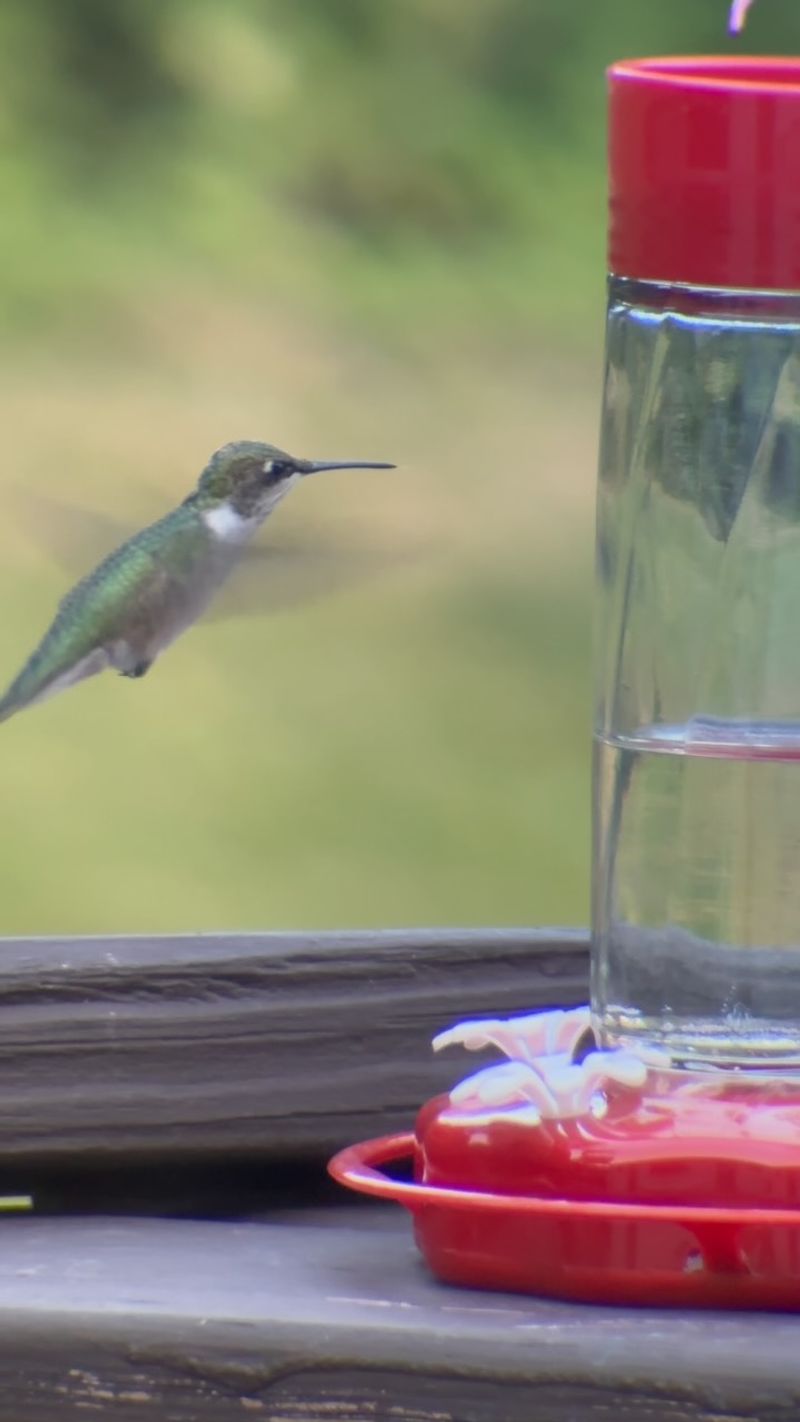
Starting with a smaller amount of nectar is the single most practical adjustment a California homeowner can make in late summer. When you fill the reservoir only partway, less solution sits unused, and you are naturally forced to refresh it more often.
A feeder that holds four ounces and gets a third of that volume at a time will almost always have fresher nectar than a fully loaded eight-ounce feeder that gets topped off once a week.
Cornell Lab recommends changing nectar daily in very hot weather, and Audubon’s hummingbird feeding FAQ advises emptying and cleaning feeders every day or every other day during hot conditions. These are conservative risk-management guidelines, not precise scientific temperature thresholds.
A homeowner in a coastal California city with mild August afternoons may find that every-other-day replacement works fine, while someone in an inland valley with regular triple-digit heat should treat daily replacement as the default. The right schedule depends on your local temperatures, how much direct sun the feeder receives, and how quickly you notice signs of spoilage.
Placement makes a real difference. Hanging the feeder in a spot that gets morning light but is shielded from direct afternoon sun slows the rate at which nectar heats up and degrades.
A covered porch, a north-facing eave, or a spot under a tree canopy are all good options. Moving an existing feeder a few feet can meaningfully extend how long the nectar stays fresh.
For unused nectar, UC Agriculture and Natural Resources’ guide to attracting hummingbirds recommends refrigerating any extra solution and using it within a day or two. Let refrigerated nectar come back to roughly room temperature before refilling the feeder, since cold liquid can cause condensation inside the reservoir and may temporarily deter visiting birds.
Making only what you need for one or two refills at a time keeps the batch fresh and reduces waste. Clean the feeder every time you refill it during hot weather, not just when it looks dirty, because microbial growth can begin before it becomes visible to the eye.
A UC ANR feeder cleaning guide recommends disassembling the feeder and scrubbing all ports, the reservoir, and any seams or crevices with hot water and a bottle brush each time you refresh the nectar in warm conditions.
Use the standard recipe and skip risky shortcuts
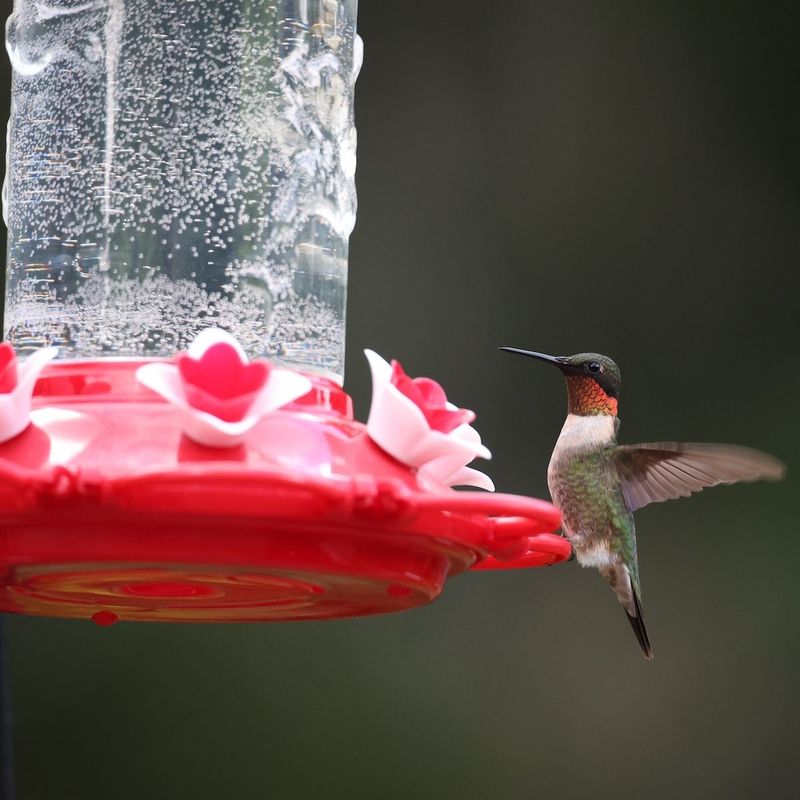
The standard nectar recipe is one part refined white sugar dissolved in four parts water, which works out to one-quarter cup of sugar per cup of water. That ratio is not a rough estimate.
Cornell Lab identifies the 1:4 formula as the consistent recommendation across major bird-feeding authorities because it approximates the sugar concentration found in many natural flower nectars. You can mix it with hot tap water to help the sugar dissolve, then let it cool before filling the feeder.
There is no need to boil the water unless you plan to store the batch for more than a day or two; boiling is a reasonable precaution for larger stored quantities but does not make nectar safe to leave in a hot feeder indefinitely.
Hot weather is not a reason to increase the sugar concentration. Some homeowners assume that a stronger mixture gives birds more energy when temperatures are high, but that logic does not hold up.
A more concentrated solution spoils faster, can be harder for birds to process, and departs from the natural nectar composition the birds are adapted to. Stick with 1:4 regardless of the forecast.
Several common substitutes belong nowhere near a hummingbird feeder. Honey can encourage rapid fungal growth and has been associated with health problems in hummingbirds.
Molasses, brown sugar, and raw sugar all contain minerals and compounds absent from refined white sugar that can stress the birds’ kidneys. Artificial sweeteners provide no usable energy at all.
Nutritional supplements and vitamin additives are not needed and may cause harm. Red food coloring is unnecessary because natural nectar is clear, and the red color on the feeder itself provides all the visual signal the birds need.
UC ANR’s hummingbird attracting guide echoes this guidance, noting that plain white sugar and water is all that belongs in the feeder.
Treat cloudiness and mold as reasons to start over
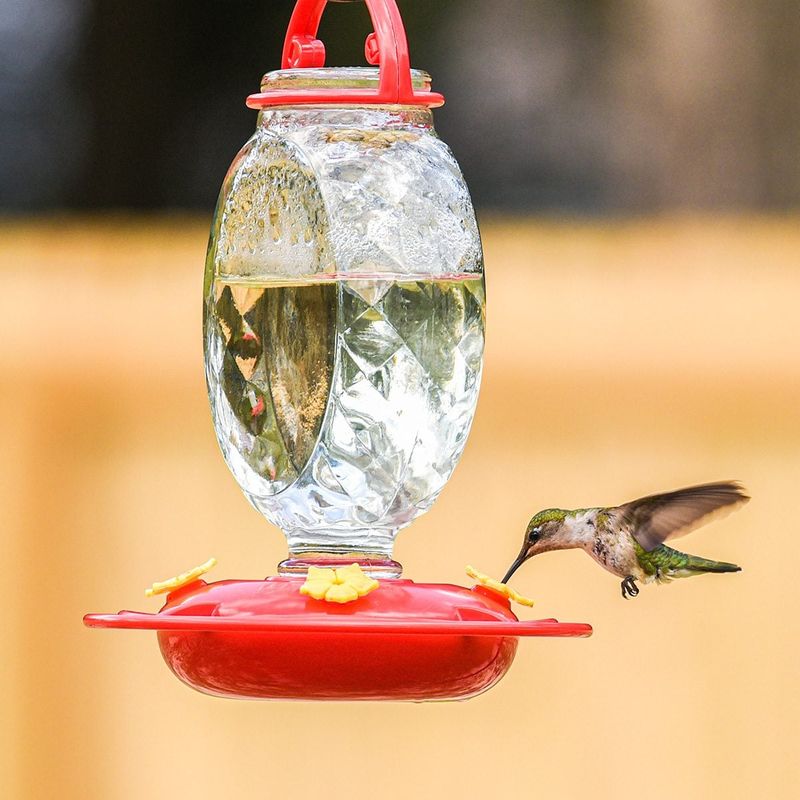
When you pull the feeder down to check it, you are looking for a few specific things: nectar that has turned cloudy or yellowish, a sour or fermented smell when you open the port, floating white or black specks, visible mold on the inside walls or around the feeding ports, or any dark residue that did not rinse off during the last cleaning. Any one of these is enough reason to empty the feeder completely and start over.
Do not try to salvage questionable nectar by diluting it with fresh solution or by adding more sugar. Cornell’s summer feeding Q&A identifies cloudiness as a sign of fermentation that calls for immediate discard.
Once fermentation or mold has begun in a batch, topping it off does not reverse the process; it just adds fresh sugar water to an already compromised solution. Pour it out, rinse the reservoir, and clean before refilling.
Cleaning after a spoilage event means more than a quick rinse. Disassemble every part of the feeder, including the base, ports, and any internal dividers.
Scrub all surfaces with hot water and a bottle brush, paying special attention to the feeding ports and any seams where residue can accumulate. UC ANR recommends thorough mechanical scrubbing and complete rinsing as the foundation of safe feeder hygiene.
If you choose to use a dilute bleach solution or vinegar for a deeper clean, rinse the feeder multiple times with plain water afterward and never combine bleach with soap or other cleaning products. The goal is a feeder with no residue, no smell, and no visible film before fresh nectar goes back in.
Taking these signs seriously is a precautionary step, not a diagnosis. As the Lee et al. study on feeder microbial communities makes clear, the health consequences of contaminated nectar are not fully established.
Discarding cloudy or moldy nectar is simply the right call when the cost of caution is low and the alternative is offering birds something you would not want them to drink.
Flowers and insects support more than sugar water can
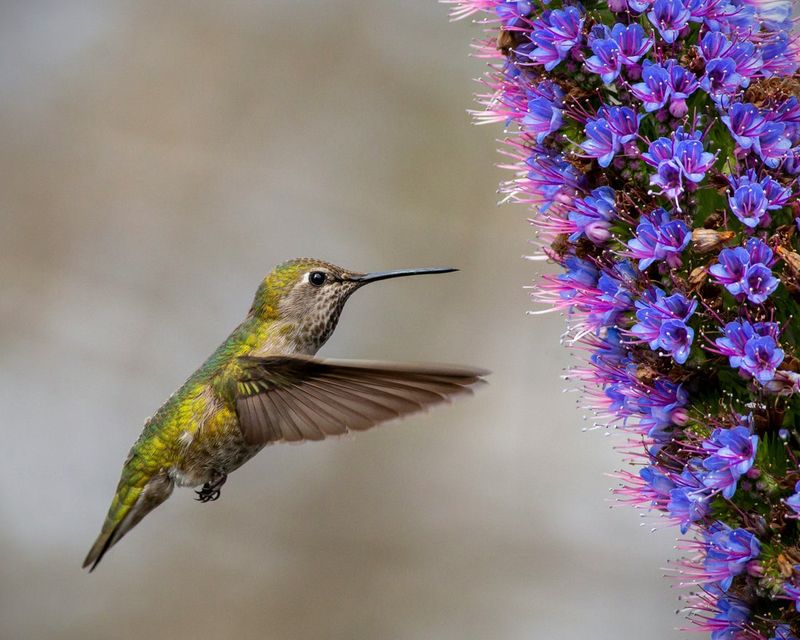
Sugar water covers one part of a hummingbird’s diet, but it leaves out most of the rest. Cornell’s Anna’s Hummingbird overview notes that the species feeds heavily on insects and spiders in addition to nectar, using them as a primary protein source.
A yard with a feeder but no flowering plants and no insect life is providing a fraction of what a hummingbird actually needs to stay healthy through the summer.
The life history account for Anna’s Hummingbird at Cornell describes gleaning insects from foliage, catching them in midair, and even raiding spider webs, sometimes eating the spider along with trapped prey. That foraging behavior is not a backup plan when nectar is scarce; it is a regular part of how the birds meet their nutritional needs.
Routine insecticide use around a hummingbird garden removes that food source, which is a meaningful trade-off worth considering before reaching for a spray bottle.
California native plants offer a practical and lower-maintenance path to supporting hummingbirds. Species such as California fuchsia, salvia, monkeyflower, and penstemon bloom across a range of California climate zones and provide nectar that is continuously renewed inside the flower rather than sitting in a reservoir between visits.
UC Master Gardeners’ guide to creating hummingbird gardens in the coastal Bay Area highlights native plantings as a foundation for hummingbird habitat that requires far less daily attention than a feeder in summer heat.
A flower-rich yard does not replace a feeder if you want to keep one, but it does reduce the pressure on the feeder to be the birds’ main food source. When hummingbirds have access to blooming plants, insects, and supplemental nectar, a day or two without a perfectly timed feeder refill is far less consequential than it would be in a bare yard where the feeder is the only food source in sight.
Know when to stop handling and seek wildlife help
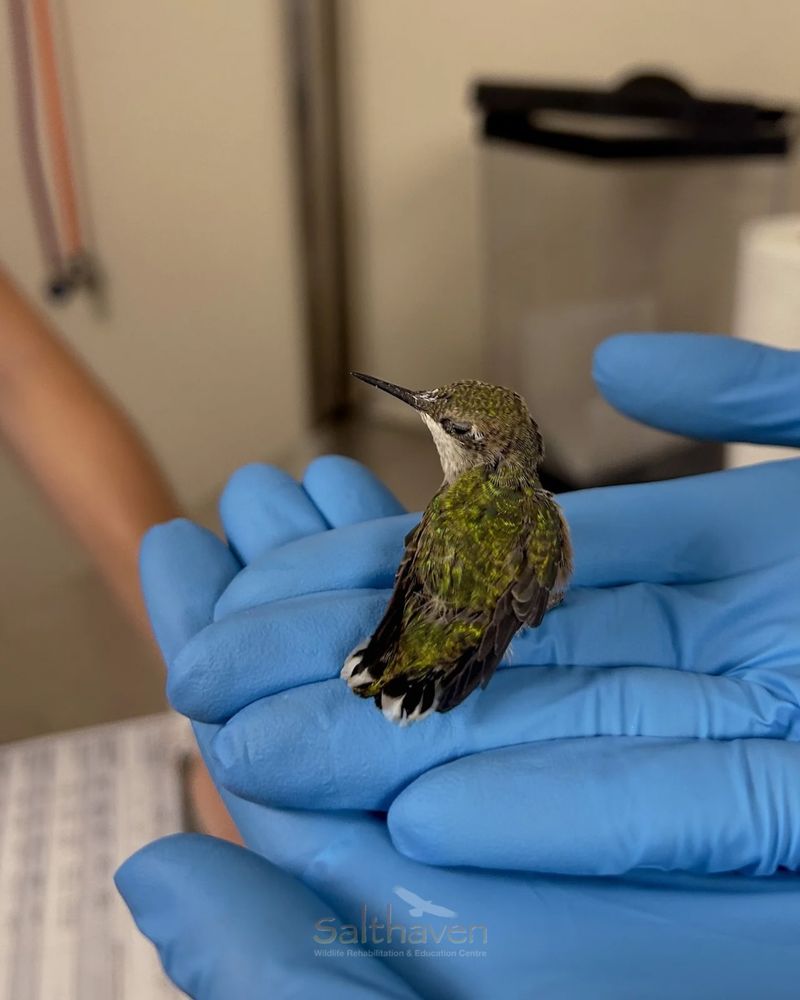
Occasionally a hummingbird near a feeder will behave in a way that signals something is wrong. A bird sitting unusually still on a perch for a long time, appearing puffed up, or struggling to feed or fly is showing signs that warrant attention.
These behaviors have many possible causes, and a backyard observer cannot diagnose the problem from a distance.
The most important thing to know is that casual handling is not the right response. Cornell’s summer bird feeding guidance warns that handling sick wild birds can stress them significantly and can also expose people to pathogens.
A bird that appears ill needs professional evaluation, not a well-intentioned attempt at home care.
The practical steps for a homeowner are straightforward: take the feeder down, empty and clean it thoroughly, and do not put it back up until it has been properly scrubbed and refilled with fresh nectar. This removes a potential hygiene source from the yard regardless of whether the feeder was the cause of the bird’s condition.
Then contact a licensed wildlife rehabilitator in your area. California has a network of permitted rehabilitators trained to handle hummingbirds and other wild birds, and they can advise on whether the bird needs to be collected for care.
Fungal mouth infections in hummingbirds have been documented in association with contaminated feeders. A USGS National Wildlife Health Center case report on presumptive Candida stomatitis in a hummingbird illustrates how fungal infections can affect the mouth and throat of these small birds.
How often this occurs in backyard settings and what role feeders play in transmission is not fully established, but it is another reason to take feeder hygiene seriously and to seek professional help rather than attempting to treat a sick bird at home.
Keep the feeder optional and the batch small
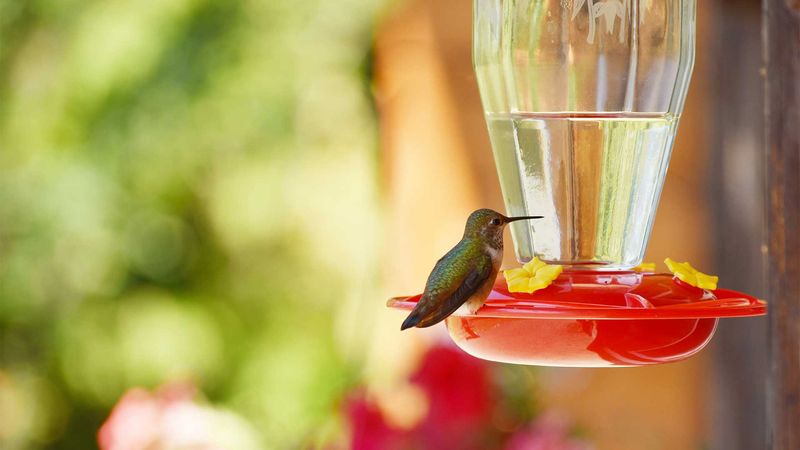
Maintaining a feeder through California’s late summer comes down to a straightforward decision: keep one only if you can provide fresh nectar, a shaded or filtered-light location, consistent replacement, and thorough cleaning each time you refill. If the schedule feels unmanageable during a busy week or a vacation, taking the feeder down temporarily is a better choice than leaving stale nectar in the heat.
Cornell’s hummingbird feeding guidance recommends smaller feeders when bird traffic is light, precisely because they reduce the amount of nectar sitting unused between visits. Pairing that with Audubon’s advice to empty and clean every day or every other day in hot weather gives you a simple framework: small batch, shaded spot, frequent refresh, clean feeder every time.
Anna’s Hummingbirds are resilient, year-round California residents that forage across a wide territory and are well adapted to finding natural food sources. A feeder that goes down for a few days while you are traveling does not leave them stranded.
What matters most over the long term is the quality of the habitat around your home: flowers that bloom through the dry season, minimal pesticide use, and enough insect life to support the birds’ full nutritional needs. A well-maintained feeder is a welcome addition to that kind of yard.
Less sugar water sitting in the heat is simply a cleaner, lower-risk version of the same good intention.