
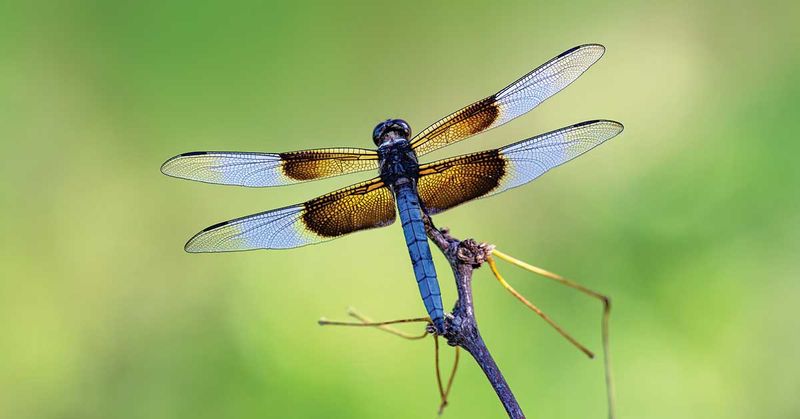
Dragonflies have been patrolling Texas waterways and backyards long before air conditioning made summer bearable for the rest of us. Central Texas is home to dozens of species, and warm-season sightings at ponds, rivers, and even suburban yards are genuinely common when the right conditions are in place.
The good news is that a few repeatable yard habits can improve the odds of seeing these predators visit your garden more often throughout the summer. No habit guarantees a steady parade of dragonflies, but the steps below give them better reasons to stop by.
Set a realistic summer goal for Central Texas
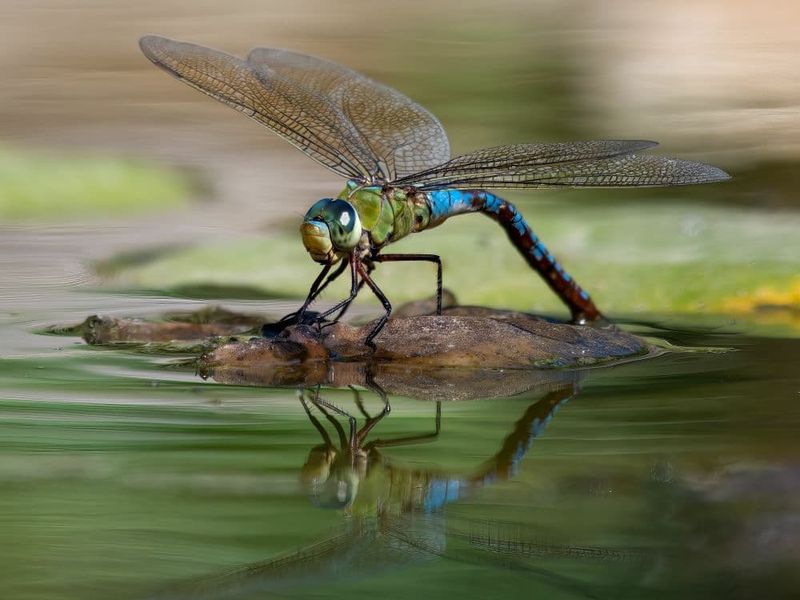
Central Texas gives dragonfly watchers a lot to work with. Texas Parks and Wildlife documents dragonfly and damselfly activity at Austin-area freshwater sites, including the East Austin Loop wildlife trail, where seasonal wetlands and slow-moving water support a variety of odonates during the warm months.
The Hill Country’s spring-fed creeks, river corridors, and stock tanks add even more habitat to the regional picture, giving resident adults plenty of territory to patrol beyond any single backyard.
Warm-season visits to suburban yards are plausible, especially when a yard sits within flying range of a creek, pond, or drainage feature. Species differ in their water preferences, temperature tolerance, and willingness to travel far from breeding habitat, so the mix you see can shift week to week depending on weather, water levels, and what’s emerging nearby.
Hill Country wildlife trail documentation confirms that dragonfly activity at Texas sites varies with season and conditions rather than running at a constant level all summer.
The honest goal here is a yard that dragonflies are more likely to visit and, where conditions allow, use for reproduction. The Xerces Society’s backyard pond guidelines put it plainly: habitat improvements can raise the probability of visits, but results depend on regional species, nearby water, habitat quality, and whether a yard can support the aquatic life stage.
Recurring visits throughout the summer are a realistic target; constant, wall-to-wall dragonfly activity is not something any yard habit can reliably deliver.
Freshwater habitat matters more than a decorative dish
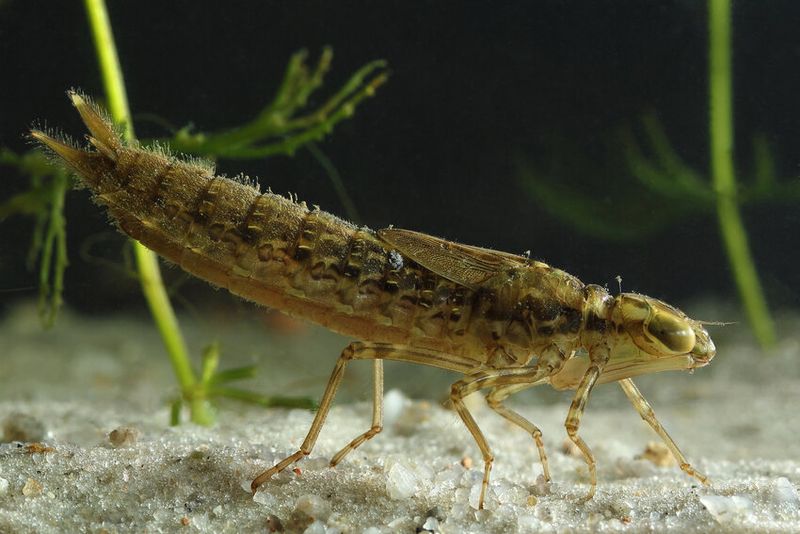
Most of a dragonfly’s life happens underwater. After mating, females deposit eggs on or near the water surface, on submerged vegetation, or into aquatic plant tissue.
The eggs hatch into nymphs that live, hunt, and grow in freshwater for weeks to years depending on the species, molting repeatedly before climbing an emergent stem to shed their final skin and take flight as adults. That underwater chapter is why the type of water feature in your yard matters so much.
A birdbath or shallow decorative dish holds too little water, dries too fast in the Texas heat, and offers no submerged habitat for nymphs. A wildlife pond or water garden, by contrast, can support multiple life stages directly: nymphs hunting among submerged plants, eggs attached to aquatic stems, and adults returning to the same site to mate and lay again.
Xerces Society pond guidelines identify freshwater habitat as the most meaningful improvement a gardener can make because it addresses the full life cycle rather than just adult behavior.
Not every yard has room for a pond, and that is fine. Adults are capable fliers and will sometimes hunt over yards that have no water at all, especially when a creek, drainage channel, or neighbor’s pond sits within a short distance.
Penn State Extension’s dragonfly pond resource notes that adults may visit pondless yards when suitable water and habitat exist nearby, so improving surrounding habitat still adds value even if adding a pond is not an option right now.
The practical takeaway is to match your investment to your site. A well-designed pond raises the ceiling on what your yard can offer.
A pondless yard with good perch structure, reduced pesticide use, and proximity to natural water can still attract hunting adults on a regular basis.
Design a wildlife pond with varied edges and depths
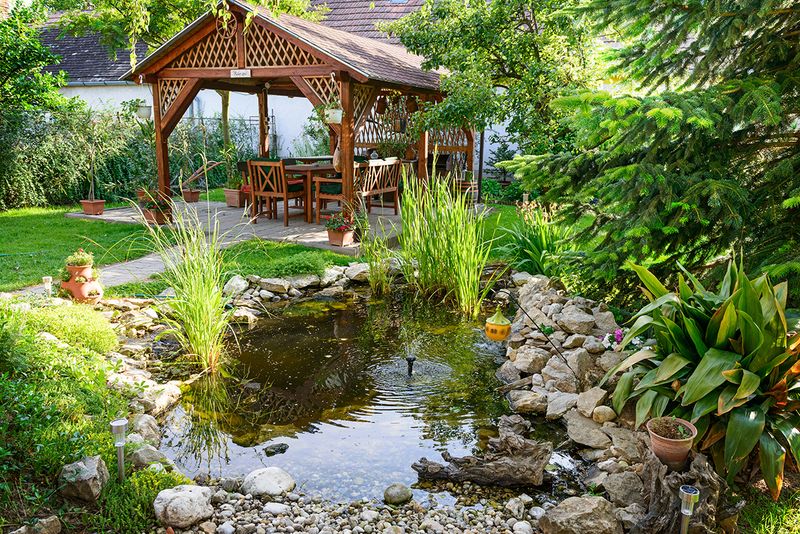
Pond shape and structure matter more than pond size. A small basin with vertical concrete or plastic sides acts more like a trap than a habitat: animals that fall in cannot climb out, nymphs have no shallow zone to hunt in, and emergent plants have nowhere to take root near the water’s edge.
A wildlife pond built with gently sloped margins, at least one shallow shelf or terrace, and a gradual transition from bank to water solves all three problems at once.
The Xerces Society’s backyard pond habitat technical guide recommends varying the depth across the pond floor rather than digging a uniform bowl. Shallow zones, mid-depth areas, and a deeper section give different dragonfly species the conditions they prefer and keep the pond functional through Texas evaporation cycles.
Stable, gently sloped edges also serve as escape routes for frogs, toads, small mammals, and birds that come to drink, and they reduce the fall risk for children and pets compared to a vertical-sided basin.
Texas A&M AgriLife Extension’s ornamental ponds and water gardens guidance reinforces the value of thoughtful edge design for Central Texas conditions. The region’s intense summer heat accelerates evaporation and can stress both plants and aquatic organisms, so building in shallow margins that allow water levels to drop gradually without stranding nymphs or exposing roots is a practical design priority.
A pond liner or compacted clay base helps retain water during dry stretches, but any pond in Central Texas should be sized and sited with realistic expectations about top-off needs during drought.
Before you dig, consider safety, sunlight, and drainage. A location that receives at least six hours of direct sun each day supports the warm water temperatures and photosynthetic activity that aquatic plants need.
Avoid low spots that collect storm runoff carrying fertilizer, herbicide, or petroleum residue from driveways. Adapt your design to verified local guidance and actual site conditions rather than treating any published measurement as a universal requirement.
Layer aquatic plants while keeping open sunny water
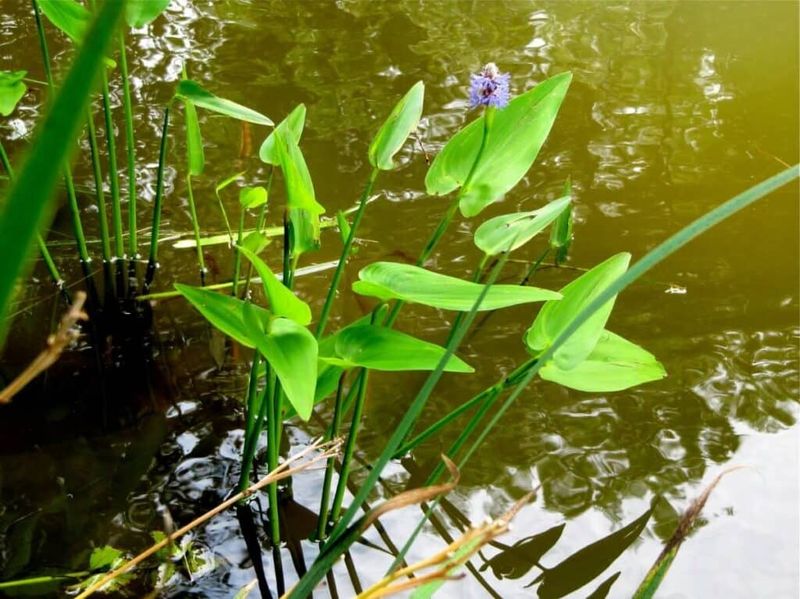
Aquatic plants do several jobs at once in a dragonfly pond. Submerged species oxygenate the water and give nymphs places to hide and ambush prey.
Floating-leaf plants like native water lilies shade portions of the water surface, moderating temperature and reducing algae competition. Emergent plants, those that root underwater but grow stems and leaves above the surface, are especially important: females of many species lay eggs directly on emergent stems or the water surface near them, and nymphs use those same stems as the ladder they climb during emergence.
Bank-side grasses and shrubs extend the habitat by providing perches, shade, and shelter for newly emerged adults whose wings are still drying.
Penn State Extension’s dragonfly pond guide recommends including all four vegetation zones and notes that native aquatic plants are preferred because nonnative species can escape into nearby waterways and outcompete local flora. In Texas, that concern is real: some popular pond plants sold at nurseries are listed as invasive in Texas waterways, so verifying a plant’s legal status and regional suitability before purchase is not optional.
Texas sources list several species worth researching for Central Texas ponds, including pickerelweed, arrowhead, American lotus, native water lilies, bulrush, and coontail. The Texas A&M beneficial native aquatic plants reference identifies a range of native and beneficial pond plants, but availability, growth habit, and suitability vary by region and pond conditions.
Treat any plant list as a starting point for your own research rather than a ready-to-plant prescription, and confirm each species with a local Texas extension office or native-plant nursery before adding it to your pond.
One rule applies regardless of which plants you choose: leave a meaningful section of open, sunny water. Adults bask in the sun to regulate body temperature and patrol open water when hunting.
A pond choked with vegetation from edge to edge loses much of its value for adult dragonflies. Aim for a balance where roughly half the surface stays clear, and let plants occupy the margins and shelves where they can do the most structural work without crowding out the open water that adults depend on.
Make the rest of the yard useful for hunting and resting
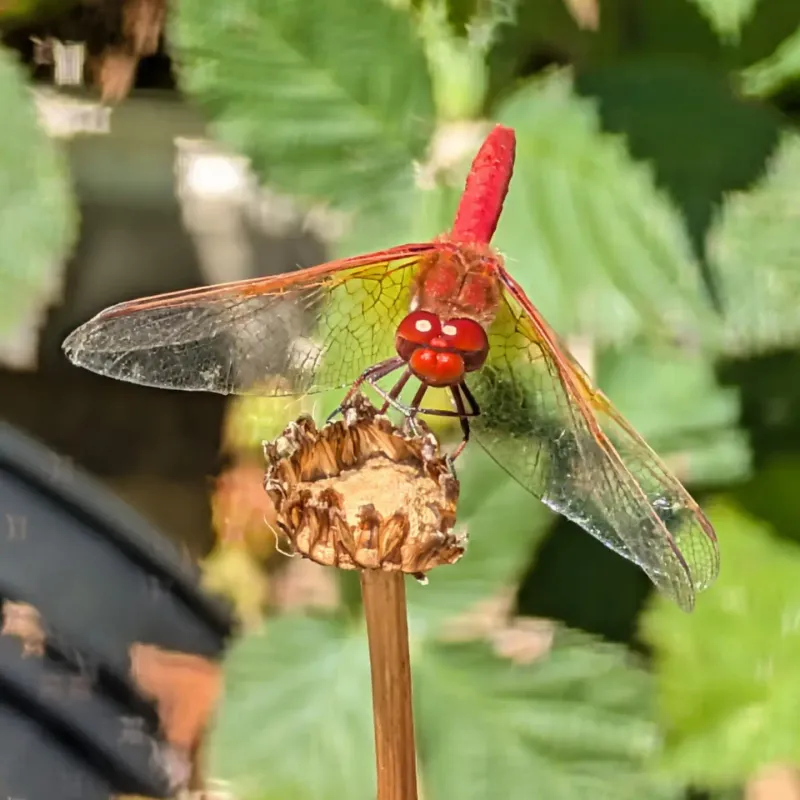
Adult dragonflies spend a lot of time doing two things: hunting and perching. Both behaviors depend on yard conditions that have nothing to do with a pond.
Open, sunny areas near water give adults the thermal environment they need to stay active, while vertical structures, stems, sticks, shrubs, fence posts, and garden stakes give them places to rest between hunts and hold territory. A yard that is all dense shade or all mowed lawn offers neither.
Retaining native grasses, ornamental grasses, and shrubby plantings along sunny borders adds perch structure without requiring any special purchases. A handful of bamboo stakes or unpainted wooden dowels pushed into a garden bed near a pond or sunny border can serve as artificial perches that adults will actually use.
Penn State Extension’s dragonfly pond resource specifically recommends stems, grasses, and nearby structures as resting and territorial perch sites, and notes that open water adjacent to these features is particularly attractive to hunting adults.
Reducing broad-spectrum pesticide use across the yard is one of the most practical steps a gardener can take, and it benefits dragonflies in two ways. First, it protects the small flies, midges, gnats, and other soft-bodied insects that make up much of an adult dragonfly’s prey.
Second, it reduces the risk of pesticide-contaminated runoff reaching a pond and harming aquatic nymphs or the invertebrates they eat. The EPA’s ecological risk assessment overview for pesticides explains how runoff and drift can affect nontarget aquatic organisms, reinforcing the value of targeted, minimal-use approaches when treatment is genuinely necessary.
None of these yard improvements guarantee that dragonflies will appear on any given afternoon. What they do is raise the habitat value of your property so that adults passing through have more reasons to slow down, perch, and return.
That incremental improvement, repeated across a neighborhood, is exactly how suburban yards become part of a larger dragonfly-friendly landscape.
Manage heat, drought, mosquitoes, and pond maintenance
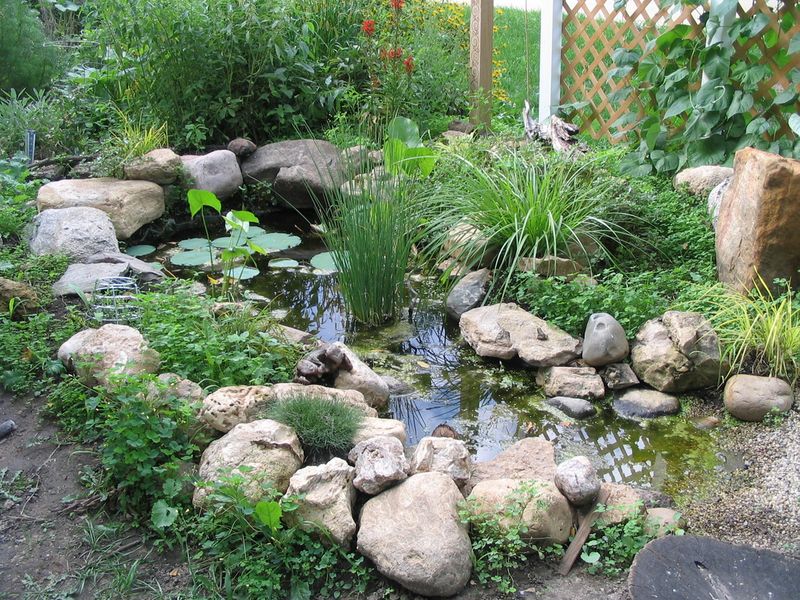
A wildlife pond in Central Texas is not a set-and-forget feature. Summer heat pushes water temperatures up, accelerates evaporation, and stresses aquatic plants that are not well-matched to local conditions.
Regular monitoring, at minimum a weekly check during the hottest months, helps you catch problems before they cascade. Watch for sudden changes in water clarity, unusual algae blooms, wilting emergent plants, and the presence of mosquito larvae near the surface.
Texas A&M AgriLife’s ornamental ponds and water gardens guidance recommends monitoring water temperature, clarity, and vegetation condition throughout the warm season and testing water quality at least once a year.
Evaporation in a Central Texas summer can drop pond levels noticeably within days. Before topping off with tap water, check your municipality’s current water-use rules.
The Texas Water Development Board’s drought FAQ explains that restrictions are managed locally, so what is allowed in one city may be prohibited in another. Captured rainwater or roof runoff can supplement a pond where legally and practically appropriate, but any collection system must be covered or screened to prevent mosquito breeding.
Mosquito management deserves its own plan, separate from dragonfly habitat. Dragonfly and damselfly nymphs do prey on mosquito larvae, and a 2023 meta-analysis in the Journal of Animal Ecology found strong experimental predation by nymphs averaging roughly 40 larvae per nymph per day in container studies.
That result does not translate into guaranteed yard-level mosquito control, and a wildlife pond should never be positioned as a replacement for standard source reduction. CDC guidance on home mosquito control is clear: empty or remove small water-holding containers at least once a week, cover rain barrels, and keep window and door screens in good repair.
When mosquito larvae appear in a pond that cannot be drained or covered, labeled larvicides are one option, but they require careful thought in a wildlife pond. EPA information on Bti for mosquito control describes it as a targeted biological larvicide, but research has found that repeated Bti treatments can reduce certain aquatic food organisms and decrease dragonfly emergence in experimental pond systems.
Any treatment should be need-based, applied strictly according to label directions, and evaluated against the pond’s wildlife goals. CDC larvicide guidance reinforces that label compliance is non-negotiable.
Fish are another option some pond owners consider, but fish may eat dragonfly nymphs and alter the pond food web in ways that reduce habitat value, so stocking decisions require careful species selection and water-quality planning rather than a casual addition.
Measure success by habitat, not constant activity
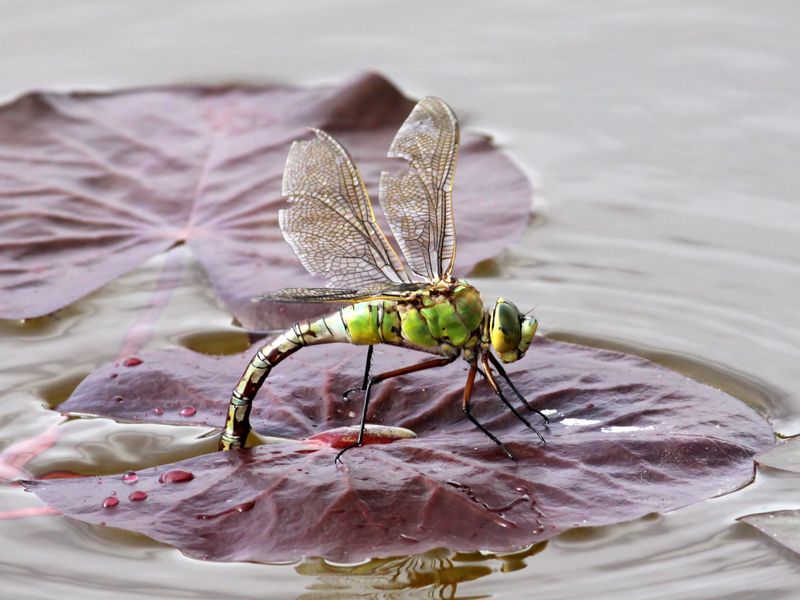
A practical decision path helps keep expectations grounded. Start with what you can control right now: reduce broad-spectrum pesticide use, preserve sunny open areas, and add natural or simple artificial perches near any water source within or adjacent to your property.
If your site allows it, add a properly designed wildlife pond with gently sloped edges, varied depths, and a mix of locally verified native aquatic plants. Then maintain that pond responsibly through the heat, monitoring water condition and mosquito activity rather than treating either as a background concern.
Recurring dragonfly visits are a useful sign that your yard offers something worth returning to, but they do not confirm successful breeding on your property. Reproduction requires suitable aquatic habitat, tolerable water quality, and enough time for nymphs to complete their development, a process that can span months.
Xerces Society pond guidelines and Penn State Extension’s dragonfly pond resource both frame habitat improvement as a way to raise the probability of visits and potential reproduction, not as a guarantee of either. Recurring visits also do not prove mosquito reduction; standard CDC mosquito prevention steps remain necessary regardless of how many dragonflies pass through.
The clearest measure of success is a yard that functions better as freshwater wildlife habitat: cleaner water, more structural variety, fewer chemical inputs, and a healthier mix of insects at every level of the food web. Dragonflies are a good indicator species precisely because they respond to all of those conditions together.
A yard that earns repeat visits from these predators is almost certainly a healthier place for a long list of other creatures too, and that is a goal worth working toward on its own terms.