
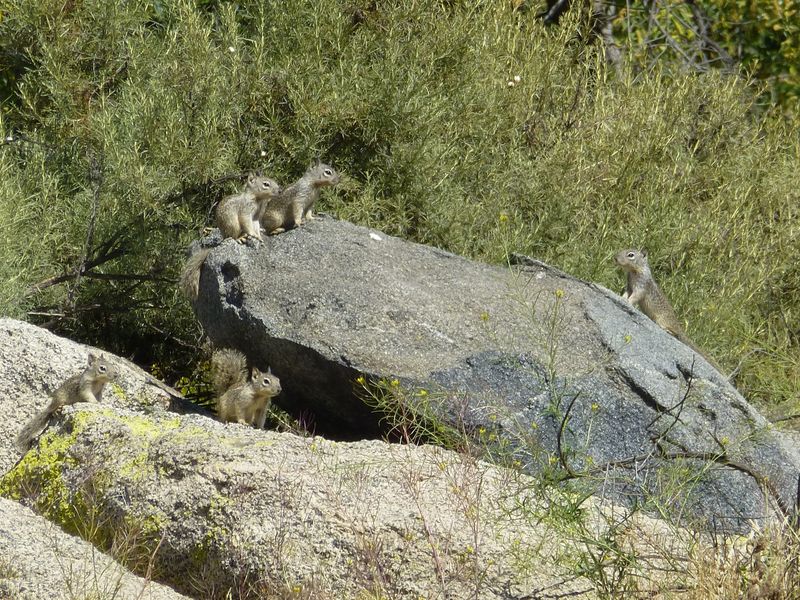
Ground squirrels have a way of appearing in California yards without much warning, and most homeowners are left wondering whether to shoo them off or leave them alone. The honest answer is more layered than either instinct suggests.
These are native animals with a real role in the California landscape, but that role plays out mostly beyond your garden fence. Knowing what they actually do, and where the line between tolerance and action sits, puts you in a much better position than guessing.
The squirrel in your yard is usually a California ground squirrel
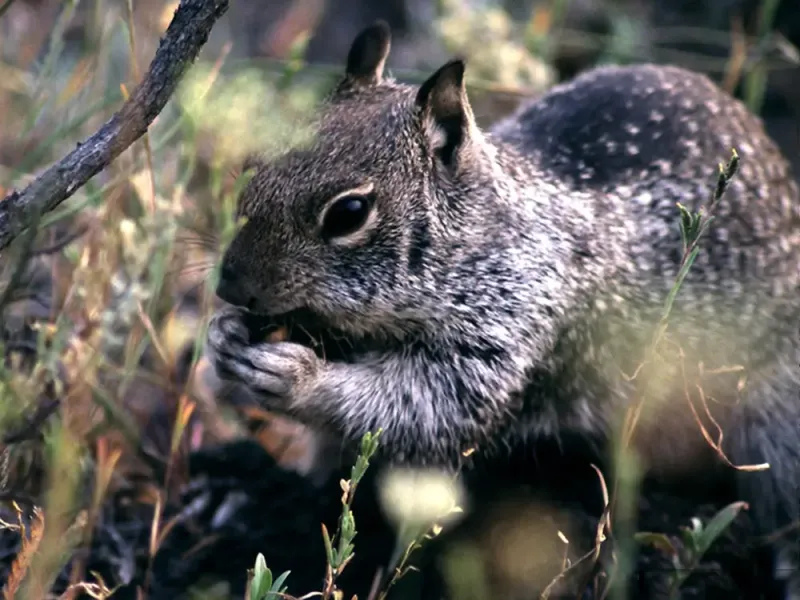
Spotting a squirrel near the base of a fence or scrambling across an open patch of lawn, most California homeowners assume they know what they are looking at. The animal in the yard is most likely the California ground squirrel, Otospermophilus beecheyi, the species that shows up most commonly around suburban and semi-rural properties across the state.
UC IPM’s ground squirrel profile describes it as mottled brown or gray with lighter flecking across the back, a moderately bushy tail that is noticeably less full than a tree squirrel’s, and a strong habit of retreating underground when startled.
That retreat is one of the clearest identification clues. Tree squirrels bolt upward into branches; ground squirrels disappear into the earth.
They also live in colonies, so one animal foraging in the open usually means a burrow system is nearby, and other squirrels are likely using it. A single visible animal is rarely a lone resident.
Accurate identification matters more in California than many homeowners realize. The state has several ground squirrel species, and not all of them carry the same legal status.
The Mohave ground squirrel is a threatened species, and the San Joaquin antelope squirrel is also protected under California law. Homeowners in desert regions or the San Joaquin Valley should take extra care to confirm which animal they have before taking any action.
Even in more typical suburban settings, confirming the species before moving toward control is a reasonable first step, not an unnecessary one.
California Department of Fish and Wildlife guidance on squirrels reinforces that identification should come before management decisions, particularly when protected species may be present in the area. When in doubt, a licensed wildlife professional or local UC Cooperative Extension office can help confirm what you are dealing with.
What the colony is doing beneath the surface
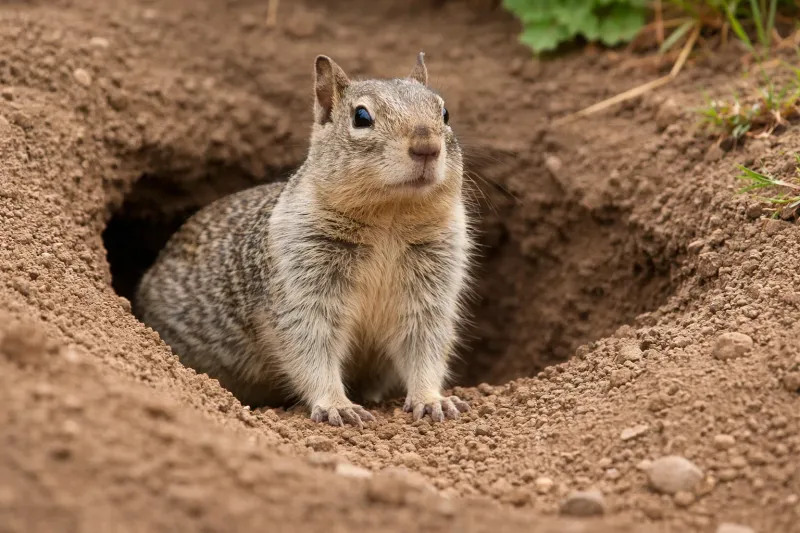
Ground squirrels spend a surprising portion of their lives underground, and that underground activity is what connects them to both their ecological value and their potential for yard damage. Burrow systems serve multiple functions: shelter from heat and cold, nesting space for raising young, storage for food, and a fast escape route from predators.
UC IPM reports that typical burrow systems run roughly 5 to 30 feet in length, usually within 2 to 3 feet of the surface, though deeper sections can occur. A colony that has occupied a site for several seasons may have an extensive network of interconnected tunnels.
The California ground squirrel life history account from CDFW notes that diet shifts considerably through the year. In late winter and spring, squirrels feed heavily on green grasses and herbaceous plants.
As the dry season sets in and vegetation dries out, they shift toward seeds, grains, fruit, and nuts. They can also consume insects, eggs, carrion, and, given the opportunity, pet food or unsecured trash.
That seasonal foraging pattern explains several types of yard damage that homeowners notice at different times of year. Seedlings and young plants are most vulnerable in spring.
Fruit and nut crops face pressure in summer and fall. Gnawing on irrigation components, girdling of young trees, and disappearing vegetable garden harvests can all be traced back to a colony working through its annual food cycle.
Below ground, the physical disturbance created by digging does not automatically benefit garden soil. Tunnel construction can disrupt root systems, increase the risk of localized erosion, and undermine the stability of hardscape elements above.
Mounded soil at burrow entrances signals active excavation, but the damage may not be fully visible until a paver shifts or a tree starts showing stress. Watching for fresh digging near foundations, along retaining walls, and under raised beds gives the clearest early picture of what a colony is doing.
Their most useful work happens in the wider ecosystem
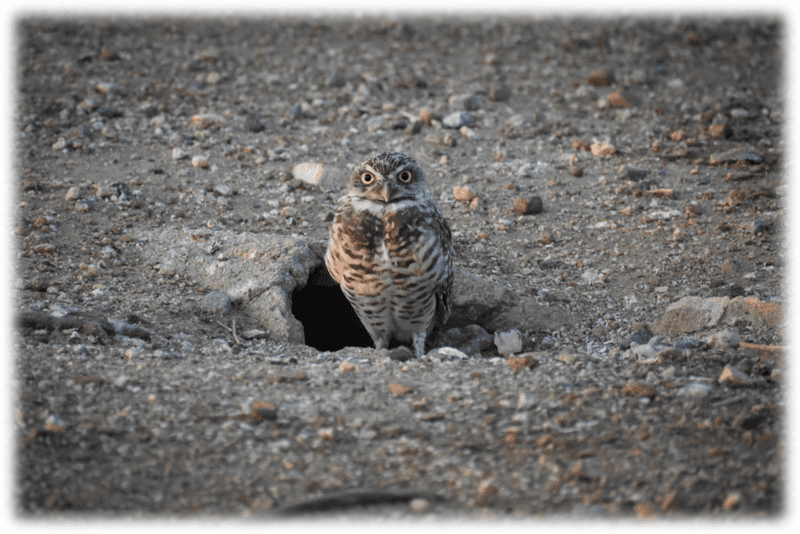
Ground squirrels earn their strongest ecological marks not in residential gardens but in California’s grasslands, rangelands, and open wildlife habitat. Their burrows function as ready-made infrastructure for dozens of other species that cannot dig their own shelters efficiently.
A CDFW staff report on burrowing owl mitigation describes how burrowing owls depend heavily on existing burrow systems for nesting and shelter, making ground squirrel colonies a direct driver of owl habitat availability.
The list of beneficiaries extends well beyond owls. A 2023 review published in the Wildlife-Watchers Journal identified 74 species with an obligatory association with California ground squirrel burrow systems and 76 species with a facultative association, meaning they use burrows when available.
That list includes reptiles, amphibians, invertebrates, California tiger salamanders, and San Joaquin kit foxes. The review frames ground squirrels as important habitat creators, though that “keystone species” characterization reflects the authors’ interpretation of the evidence rather than a settled consensus across the broader scientific community.
San Joaquin kit foxes add a layer of complexity worth understanding. Research comparing California ground squirrel burrows and San Joaquin kit fox dens found meaningful overlap in burrow characteristics, meaning kit foxes actively use or convert ground squirrel burrows as dens.
That relationship matters for conservation, and it also matters for anyone considering burrow-focused control in kit fox range.
Ground squirrels also function as prey, feeding raptors, coyotes, badgers, and other predators that move through California landscapes. A study published in Global Ecology and Conservation found greater bird abundance and diversity associated with ground squirrel colonies in some grassland settings, connecting colony presence to broader wildlife activity.
These benefits are real, but they belong to a landscape context, not to a backyard vegetable bed or an ornamental garden.
Ecological benefits come with trade-offs
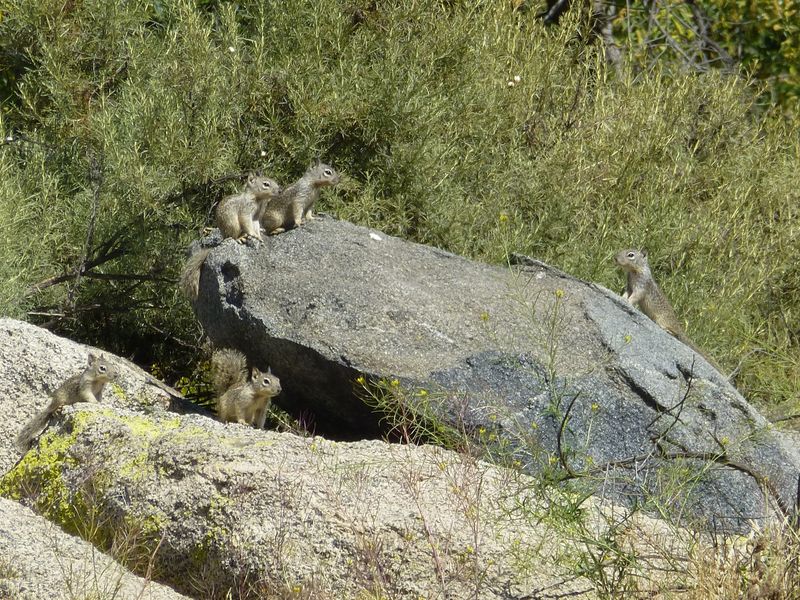
Ground squirrel colonies reshape the areas they occupy, and that reshaping cuts in more than one direction. The open, patchy ground created by digging and grazing can benefit certain bird species and burrow-dependent wildlife, but the same disturbance tends to reduce plant diversity, lower the amount of residual vegetation, and shift conditions in ways that some small mammals find less hospitable.
Lenihan’s dissertation on the ecological role of the California ground squirrel found higher bird richness, diversity, and abundance on colony sites compared to adjacent areas, while also documenting lower plant diversity and reduced small-mammal diversity in those same locations. That combination describes a habitat mosaic, not a universal improvement.
Some species gain; others lose ground, sometimes literally.
Rangeland research published in a peer-reviewed journal notes that increased soil fertility and plant production around ground squirrel colonies have been proposed as possible benefits, but acknowledges that the idea has not been rigorously assessed. Stating that ground squirrels aerate, fertilize, or improve garden soil goes beyond what the evidence currently supports.
Soil disturbance from burrowing is real, but its effects in a residential yard setting are more likely to include root disruption, localized erosion, and irrigation damage than any measurable fertility boost.
The broader ecological picture also does not transfer cleanly to suburban yards. A study showing higher bird diversity around a grassland colony tells you something meaningful about wildlife habitat.
It does not tell you that a colony working through a raised vegetable bed or tunneling under a concrete patio is improving your garden. The settings are too different for the findings to carry over without significant qualification.
Homeowners who recognize this distinction are better positioned to make decisions based on what is actually happening in their specific yard rather than on a generalized ecological narrative.
Damage changes the question from tolerance to protection
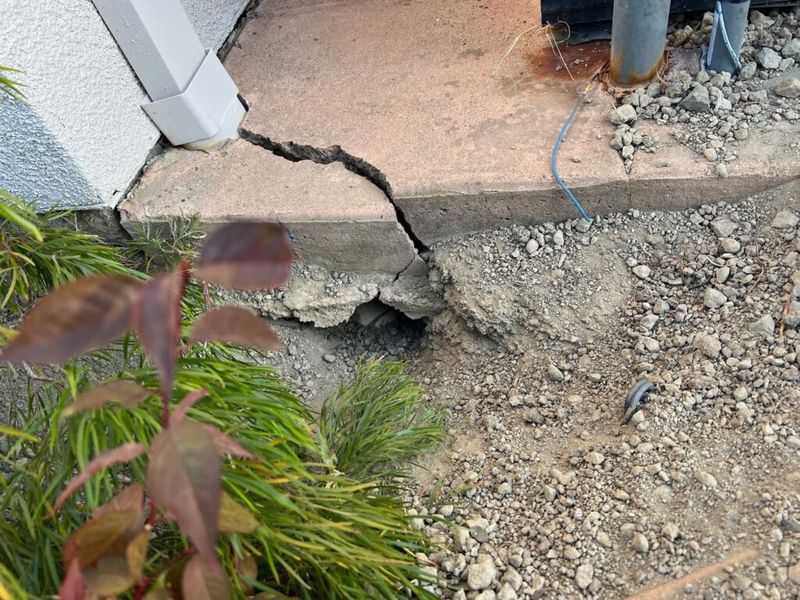
A ground squirrel sitting on a fence post is a different situation from one tunneling under a concrete retaining wall. The presence of the animal is not itself the threshold for action; the location and behavior of the colony determine whether a hands-off approach is reasonable or whether the yard needs active protection.
UC IPM recommends beginning management promptly when new activity appears, because small populations are easier and less expensive to address than established colonies. Fresh soil mounded at new burrow entrances near a house foundation, a retaining wall, or an irrigation line is a practical signal to pay attention.
Burrow expansion under hardscape can compromise the stability of pavers, pathways, and walls over time, sometimes without obvious surface signs until the damage is already significant.
Plant-related damage follows predictable patterns once you know what to look for. Seedlings disappear overnight in spring.
Young fruit trees show gnawing or girdling at the base, which can kill the tree if the damage circles the trunk completely. Missing fruit, nuts, or vegetable harvests that seem to vanish before ripening often point to ground squirrel activity rather than insects or birds.
Root disturbance from tunneling can stress established plants in ways that are easy to misread as a watering or soil problem.
Safety considerations also belong in this picture. Burrow entrances near paths, play areas, or lawn spaces used by children and older adults create genuine trip hazards.
California Department of Fish and Wildlife guidance acknowledges that ground squirrel activity around homes carries both property and safety implications that homeowners are right to take seriously.
A single squirrel foraging at the yard’s edge does not require an immediate response. A colony actively working beneath a structure, undermining an irrigation system, or running through a vegetable garden is a different situation, and treating it as such is not an overreaction.
How to coexist without feeding a colony
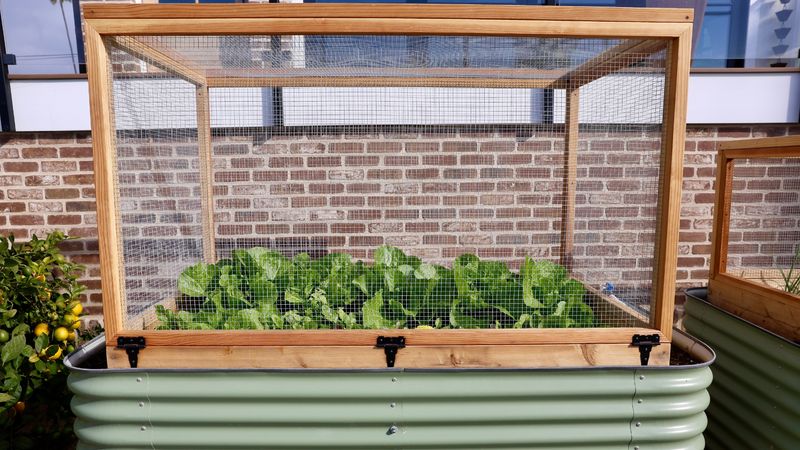
Choosing to tolerate a small, non-damaging ground squirrel presence is a reasonable decision for some California homeowners, particularly when the colony is at the property’s edge and not encroaching on structures, irrigation, or plantings. Making that choice work over time requires a few deliberate habits, starting with the most important one: do not feed them.
California Department of Fish and Wildlife advises against feeding wild ground squirrels for several practical reasons. Feeding concentrates animals around the house, makes individual squirrels bolder and less likely to maintain a cautious distance, and attracts other wildlife that may create separate problems.
It can also increase the chances of disease or parasite contact, since animals clustering around a food source are in closer proximity to each other and to people and pets. The same logic applies to leaving pet food outside, allowing fruit to accumulate on the ground, or failing to secure compost and trash.
Protecting valued plantings through physical exclusion is more reliable than hoping the colony will avoid them. UC Master Gardeners of San Luis Obispo County recommend secure fencing that extends below ground, since ground squirrels are capable diggers and a fence that stops at the soil surface offers limited protection.
Hardware cloth barriers around raised beds, with the mesh extending several inches below the soil line, can block burrowing access. Napa County Master Gardener guidance reinforces that mesh size and installation method should match the specific situation, since gaps that seem small can still allow access for young squirrels.
Reducing cover near vulnerable areas can also help. Brush piles, wood stacks, and debris close to the house or garden give squirrels places to shelter and hide from predators, which makes those spots more attractive as colony territory.
UC IPM notes that habitat modification alone has limited effectiveness because ground squirrels are adaptable and can reoccupy cleared areas, but removing dense cover near the places you most want to protect is still a worthwhile step. Combining exclusion with habitat reduction gives a better result than either approach on its own.
California’s dry summers and fire-season conditions add another reason to clear brush and debris near structures, making this a dual-purpose task for homeowners in wildland-interface communities.
Escalation requires species awareness and legal caution
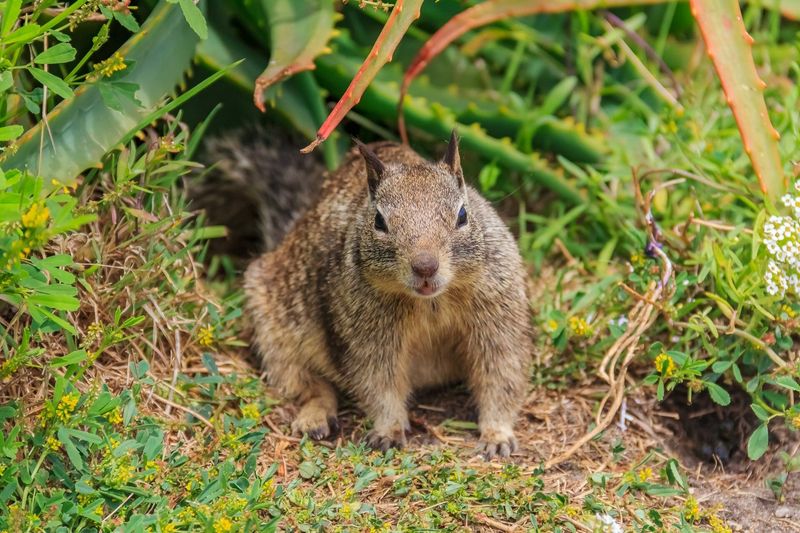
When a colony is causing real damage and coexistence strategies are not enough, the path forward requires care on several fronts at once. The first is species confirmation.
Not every ground squirrel in California can be legally managed the same way, and acting without knowing which animal you have can create serious legal exposure. The Mohave ground squirrel is listed as threatened under California law, and the San Joaquin antelope squirrel carries its own protected status.
Identification is not a formality; it is a prerequisite.
Burrow-focused control carries a specific complication that many homeowners do not anticipate. California Fish and Wildlife researchers have documented meaningful overlap between California ground squirrel burrow systems and San Joaquin kit fox dens.
A burrow that looks like a squirrel entrance may be an active kit fox den. Fumigation or lethal control applied to a misidentified burrow could injure or kill a protected species, carrying consequences that go well beyond a yard management mistake.
Casual filling of active burrows is also not a safe shortcut. Ground squirrels can reopen packed tunnels, and any wildlife currently using the system may be harmed in the process.
UC IPM is direct on this point: off-property relocation of live-captured ground squirrels is illegal in California without a permit. Trapping, fumigation, and lethal control methods are subject to current state rules, product label requirements, local ordinances, and fire-season restrictions that change over time.
Gas cartridges, for example, pose a fire hazard in dry conditions and are restricted or prohibited in some urban settings. Checking current regulations before acting, not after, is the only safe approach.
Disease risk deserves an honest mention without sensationalizing it. California Department of Public Health describes plague as rare, with greater concern in rural and mountainous areas than in typical urban environments.
CDC guidance on plague transmission recommends avoiding contact with wild rodents, carcasses, burrows, and fleas. Keeping pets away from sick or dead wildlife is a reasonable precaution in any area where ground squirrels are present.
CDFW’s nuisance wildlife guidance and UC IPM both point toward licensed professionals for situations involving fumigation, population-level control, or any setting where protected species may be nearby. That referral is not overly cautious; it reflects the genuine complexity of ground squirrel management under California’s current regulatory framework.
The right verdict depends on where the squirrels are working
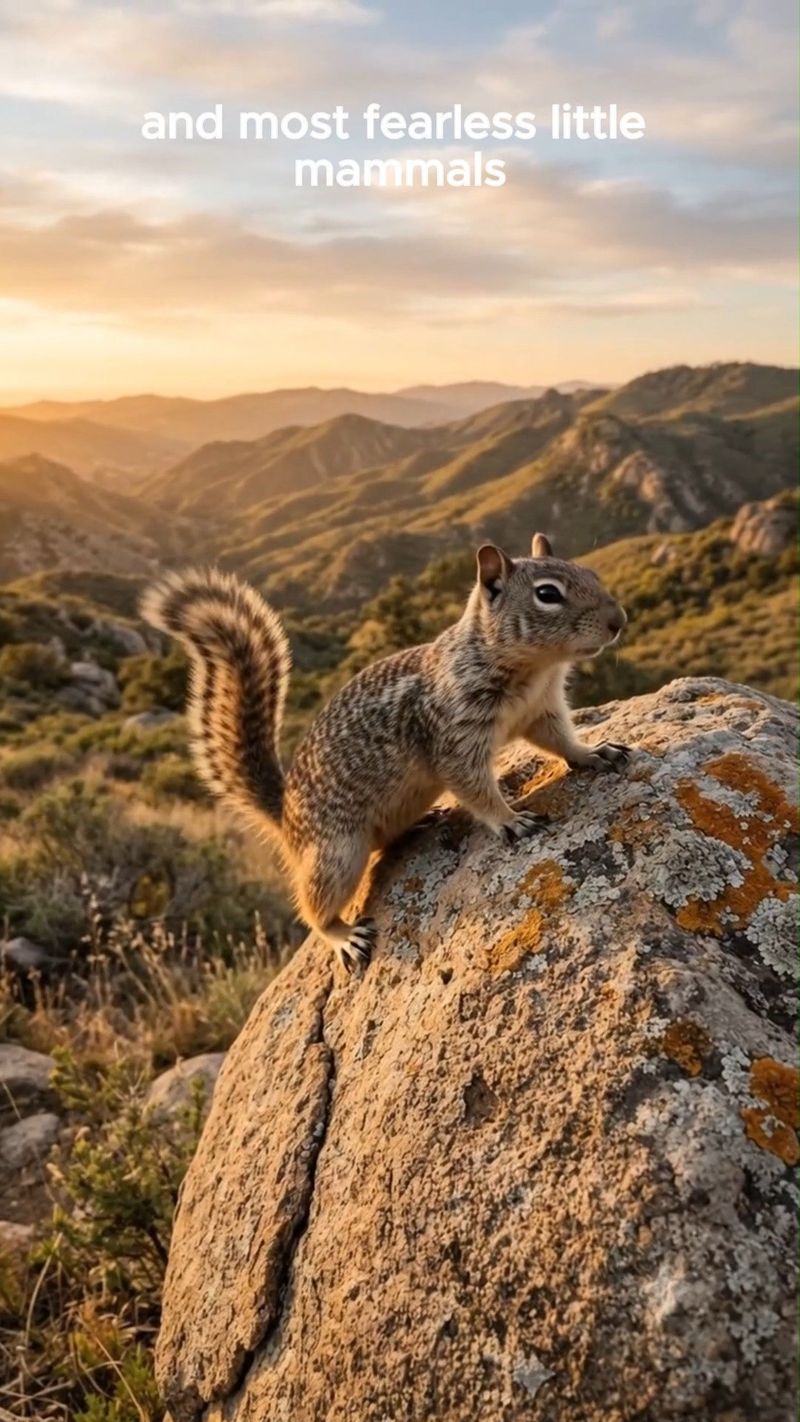
Location is the clearest guide to the right response. A small colony at the property’s edge, not digging near structures, not reaching the vegetable garden, and not creating trip hazards, represents a manageable presence in a state where native wildlife and suburban yards share a lot of the same ground.
Tolerating that presence, while keeping an eye on whether it grows or shifts toward vulnerable areas, is a reasonable choice.
Where the colony is actively undermining a foundation, damaging irrigation, girdling trees, or creating safety hazards, the calculation changes. UC IPM’s guidance supports prompt attention to new damage, combined with exclusion of valued plantings and structures before the population expands.
CDFW’s homeowner resources reinforce that managing a conflict with native wildlife is legitimate when real damage is occurring, provided the response follows current California rules.
The burrow systems themselves, as the kit fox den research makes plain, may be sheltering more than ground squirrels. That possibility does not make control off-limits, but it does make accurate assessment essential before any burrow-focused action.
Ground squirrels are neither garden helpers worth cultivating nor pests that require automatic elimination. They are native animals doing what native animals do, and the homeowner’s job is to observe carefully, protect what genuinely needs protecting, and manage lawfully when the situation calls for it.
A yard that makes room for wildlife without surrendering its function is exactly the kind of balance California’s landscape rewards.