
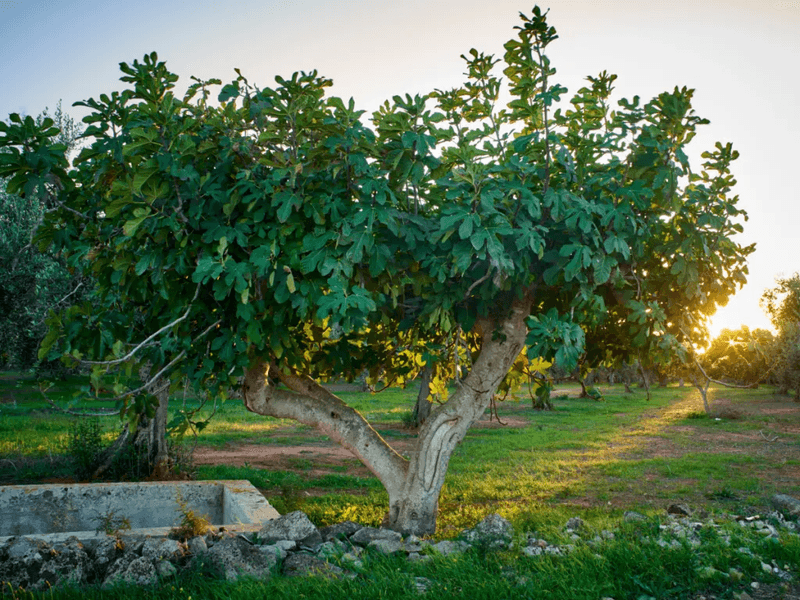
Your fig tree may already have fruit on it right now, and August heat is working against every one of those figs. Hot, dry stretches in Central Texas can push a tree into drought stress fast, and once that happens, fruit drops before it ever ripens.
A few targeted steps taken this week can reduce those losses and give the crop still on the tree a real shot at making it to your kitchen.
Give the tree steady moisture, not a last-minute rescue
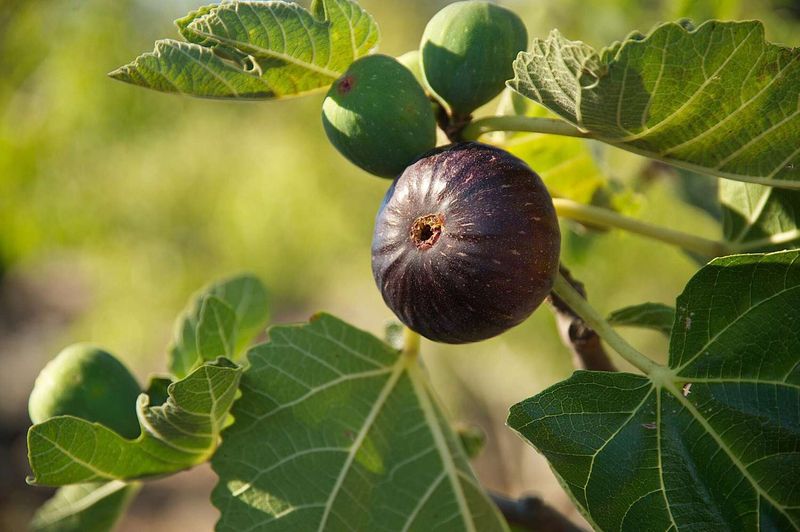
Figs have shallow roots that dry out faster than most fruit trees, and that vulnerability becomes urgent once Central Texas temperatures climb past 100 degrees. Texas A&M AgriLife Extension guidance on Texas figs describes the crop as drought-sensitive, and the University of Georgia Cooperative Extension reports that hot, dry periods before ripening can lead to poor fruit quality and premature drop.
The goal of watering now is not to force new fruit onto the tree but to support the crop that has already formed.
Fruit setting and fruit ripening are two separate events. A tree may have finished setting its late crop weeks ago, and what heat and drought do now is threaten the size, quality, and retention of fruit that is already there.
Consistent soil moisture can reduce drought-related drop and help the remaining figs develop properly, but no single watering session reverses stress that has been building for weeks.
Realistic expectations matter here. Adequate moisture may reduce losses, but Georgia Extension specifically notes that even well-cared-for trees can drop fruit prematurely in hot weather, depending on the cultivar.
Heat is one factor among several, including drought, overfertilization, root problems, and disease. Acting now with steady, appropriate watering is worth doing because it lowers the risk of avoidable losses, not because it guarantees a full harvest through the hottest weeks of a Central Texas summer.
Check the root zone before you water
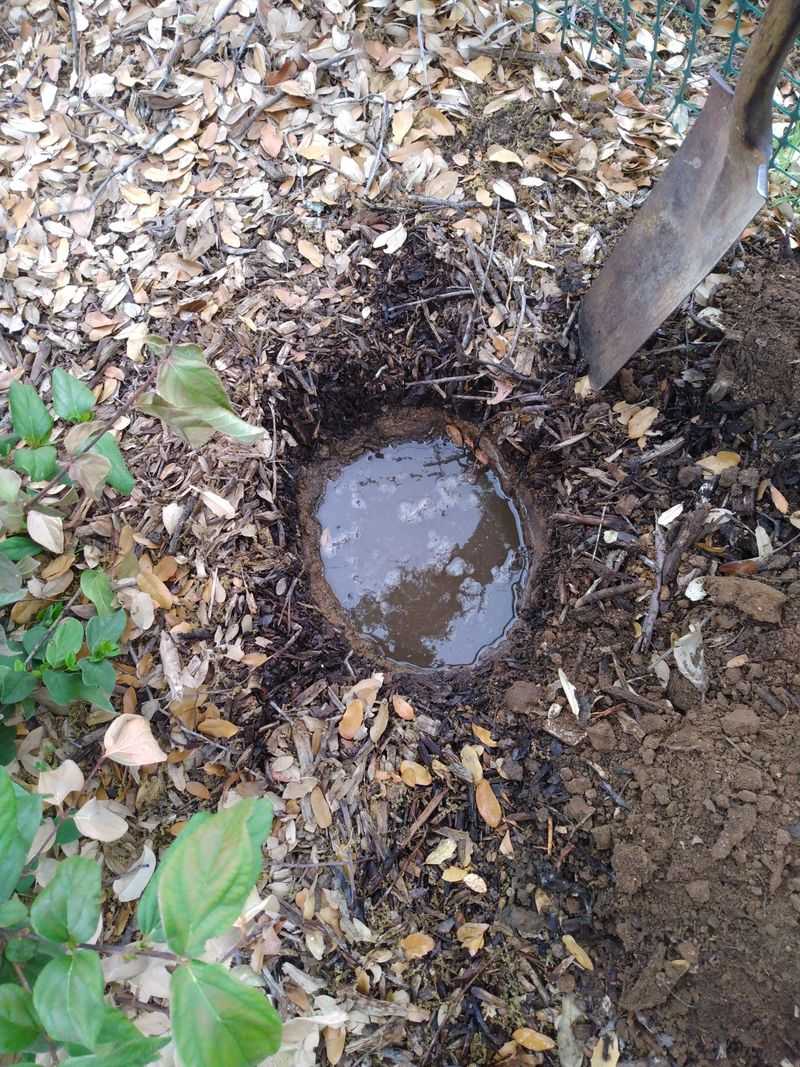
Before turning on a hose or drip line, spend two minutes actually checking the soil. Push a finger or a wooden dowel two to three inches into the ground beneath the outer edge of the canopy, which is roughly where fig roots concentrate.
If the soil feels dry or barely damp at that depth, the tree needs water. If it still feels moist and cool, hold off and check again in a day or two.
Watering on a fixed calendar regardless of actual soil conditions is one of the easiest ways to either underwater or overwater an established tree. University of Georgia Cooperative Extension home fig guidance offers a broad benchmark of about 1 to 1.5 inches of water per week from rain and irrigation combined, but that figure is a starting reference, not a prescription.
Central Texas clay soils hold moisture differently than sandy loam, and a tree growing in heavy clay on a shaded north-facing slope needs far less supplemental water than one sitting in full sun on a west-facing slope with fast-draining soil.
Wind, canopy size, recent rainfall, and how the irrigation water is delivered all change the picture. A slow drip system that keeps water in the root zone loses far less to evaporation than a sprinkler running in the afternoon heat.
Texas A&M describes fig roots as shallow, which means they respond quickly to surface drying but also means they can become waterlogged if irrigation is applied too aggressively.
For established, in-ground trees, the goal is to rewet the root zone thoroughly when it dries, then let it approach dryness again before the next cycle. Daily irrigation is rarely appropriate for a mature fig unless the tree is in extremely fast-draining soil during an exceptional heat event.
Chronically saturated soil is its own problem, reducing oxygen to the roots and creating conditions favorable to root disease.
Water slowly across the broad root system
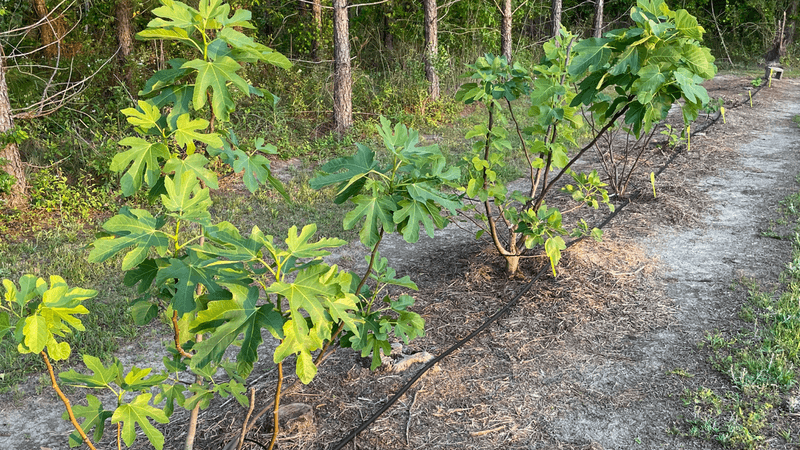
Where the water lands matters as much as how much you apply. Fig roots spread broadly and stay shallow, so wetting only the soil right at the trunk does almost nothing for a tree under drought stress.
Water needs to reach the entire root zone, which typically extends out to the drip line of the canopy and sometimes beyond.
Slow application is the key technique here. A drip system, a soaker hose laid in a wide ring, or a tree bubbler set at low flow allows water to move down into the soil rather than sheeting off the surface.
Central Texas clay is particularly prone to runoff when water hits faster than the ground can absorb it, which is why a cycle-and-soak approach works well: water for a set period, pause to let the moisture infiltrate, then run the cycle again. Austin Water’s conservation guidance recommends drip irrigation for trees and watering during cooler parts of the day to reduce evaporation loss.
Early morning is generally better than midday or early evening.
Austin residents need to reconcile watering decisions with current municipal schedules before running any automated system. Austin Water’s watering day lookup tool shows which days automatic irrigation and hose-end sprinklers are allowed for your address, while hand-held hoses and tree bubblers are currently permitted at any time.
The Austin irrigation runtime calculator can help estimate how long to run a drip zone to deliver meaningful moisture without overwatering.
If you live elsewhere in Central Texas, your utility may have different schedules and restrictions. Checking directly with your water provider before setting a new irrigation routine avoids fines and keeps you on the right side of drought-stage rules that can change quickly in a dry summer.
Use mulch to slow moisture loss
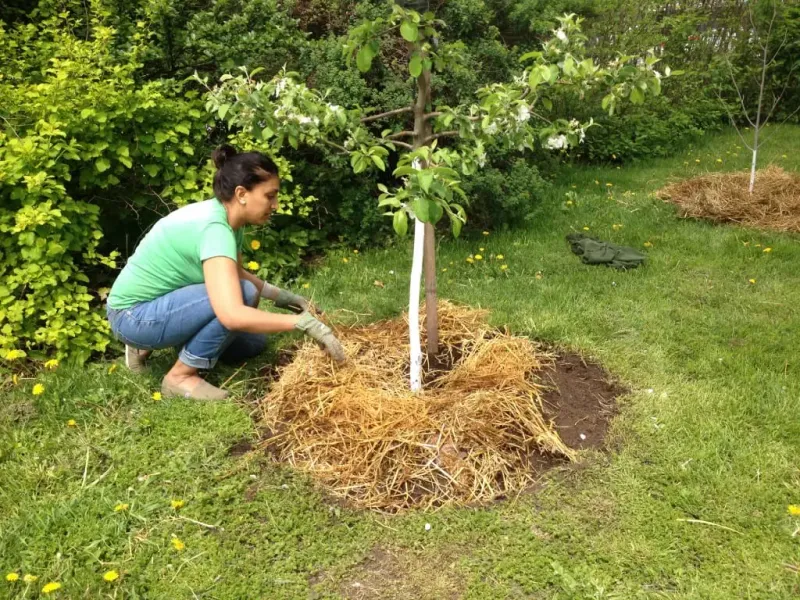
Organic mulch is one of the most reliable tools available to a Central Texas gardener in late summer, and it works around the clock without any additional effort after application. Spread over the root zone, mulch slows evaporation from the soil surface, moderates soil temperature swings, and gradually improves soil structure as it breaks down.
Texas A&M AgriLife Extension’s fig production guidance specifically recommends organic mulch as a moisture conservation practice for Texas fig trees.
The application rule that matters most: keep mulch on the soil surface and away from the trunk. Piling mulch against the bark traps moisture against the wood, which can encourage rot and create habitat for insects.
Aim for a layer three to four inches deep, starting a few inches out from the base of the trunk and extending to the drip line of the canopy. Wood chips, shredded bark, and compost all work well.
Texas A&M water conservation guidance notes that unmulched soil can lose significantly more moisture through evaporation than well-mulched soil, which translates directly to fewer emergency waterings during a heat stretch.
Mulch does its job by buffering the root zone, but it cannot fix every problem a stressed fig tree faces. If the tree is dealing with fig rust, root-knot nematodes, or a cultivar that drops fruit in hot weather regardless of soil conditions, mulch alone will not change the outcome.
Think of it as a companion to deep watering rather than a substitute for it, and as one layer of protection for a crop that still depends on the overall health of the tree.
Skip late fertilizer and major summer pruning
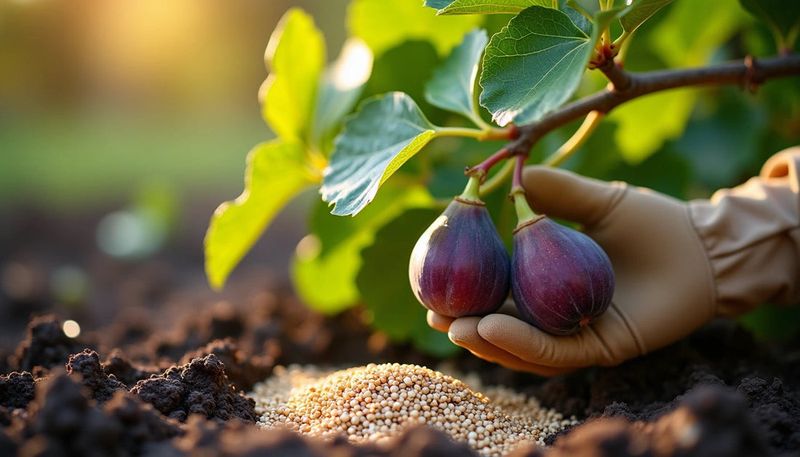
When figs start dropping, the instinct to do something extra is understandable. Two interventions that feel productive but often backfire are adding nitrogen fertilizer and reaching for the pruning shears.
Both can make the situation worse rather than better.
Extra fertilizer, especially a nitrogen-heavy blend, pushes the tree toward leafy vegetative growth at the expense of the fruit it is already carrying. University of Georgia Cooperative Extension’s home fig guide lists young, excessively vigorous, and over-fertilized plants among the common causes of premature fruit drop.
Beyond the immediate crop, late-season fertilization encourages a flush of tender new growth heading into fall, and that soft tissue is more vulnerable to freeze damage when Central Texas gets a cold snap. A tree that pushes new leaves in September because of an August fertilizer application may pay for it the following winter.
UF/IFAS Extension’s fig production guide similarly warns that excess fertilization produces excessive vegetative growth and low fruit yield. If the tree received a balanced fertilizer application earlier in the season, it does not need more now.
If it received nothing, a light, balanced feeding after harvest is a safer time to act.
Major pruning carries its own risk during an active crop. Texas A&M’s fig guidance reports that heavy pruning of mature Celeste trees reduces the crop, and UF/IFAS notes that pruning late-maturing cultivars can significantly reduce the following year’s yield as well.
Removing productive wood now means losing fruit that might have ripened in the next few weeks. Any pruning that is genuinely needed, such as removing dead or crossing branches, is better deferred until after harvest when the tree has finished its seasonal work.
Inspect leaves and roots when watering is not enough
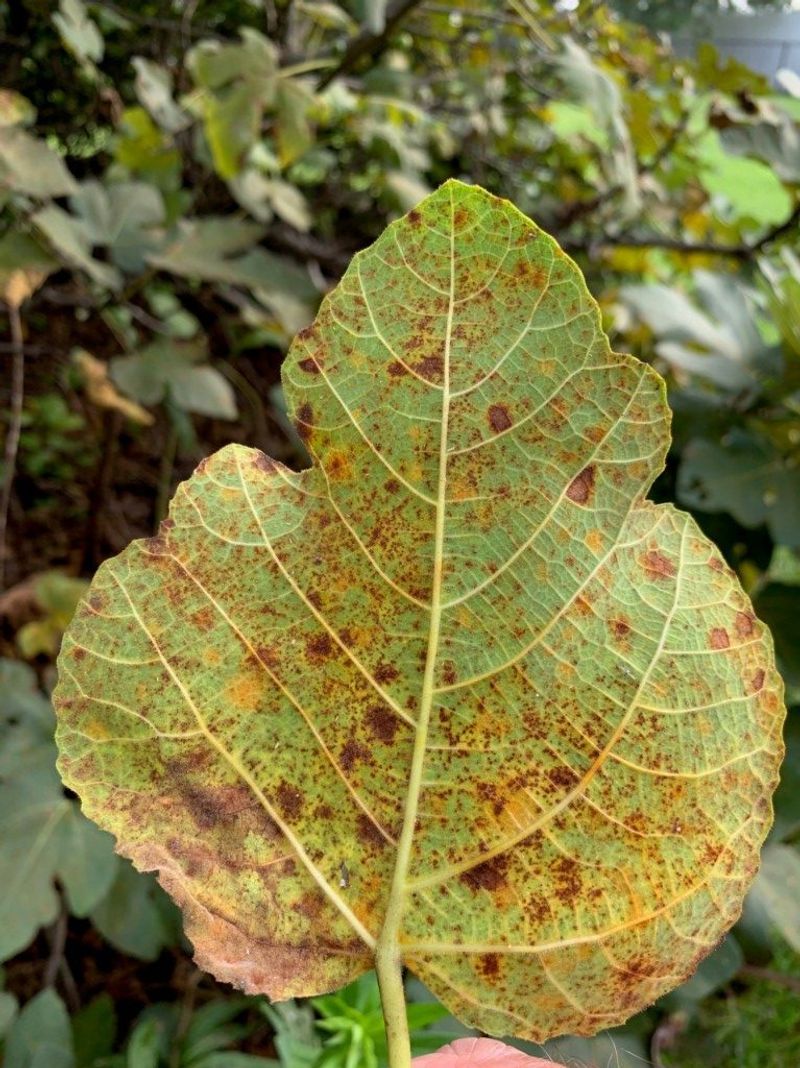
Steady watering and mulch cover the most common cause of late-summer fig stress, but they cannot solve every problem. If the tree continues dropping fruit or losing leaves despite adequate soil moisture, the next step is a closer look at the foliage and, if needed, the roots.
Start with the leaves. Texas A&M identifies fig rust as the greatest disease threat to Texas fig production.
Rust shows up as small orange-yellow spots on the upper leaf surface with corresponding orange pustules underneath. A badly infected tree can shed leaves prematurely, which strips away the photosynthetic capacity the tree needs to ripen its remaining fruit.
The most useful sanitation step is raking up and disposing of fallen infected leaves rather than leaving them on the soil surface where spores can spread. Bagging and discarding them, rather than composting, limits reinoculation.
Root problems are harder to spot but worth investigating when the tree looks consistently stressed despite reasonable care. Root-knot nematodes interfere with water and nutrient uptake and can contribute to premature fruit drop.
Texas A&M notes the issue is especially common in sandy soils. To check, carefully expose a few small roots near the drip line and look for characteristic swellings or galls.
Galls suggest nematode activity, but they are a clue rather than a definitive diagnosis, and a soil or root sample sent to a diagnostic lab provides more reliable information.
Not every dropped fig points to disease or pests. Some drop results from heat, drought, cultivar behavior, crop overload, or natural failure of individual fruit to mature.
Jumping to pesticide applications before identifying a specific problem wastes money and can disrupt beneficial insects. UF/IFAS notes that insecticide application is seldom warranted in home fig plantings, and the focus should stay on sanitation, soil health, and cultural practices rather than a default spray response.
Let the cultivar set realistic late-summer expectations
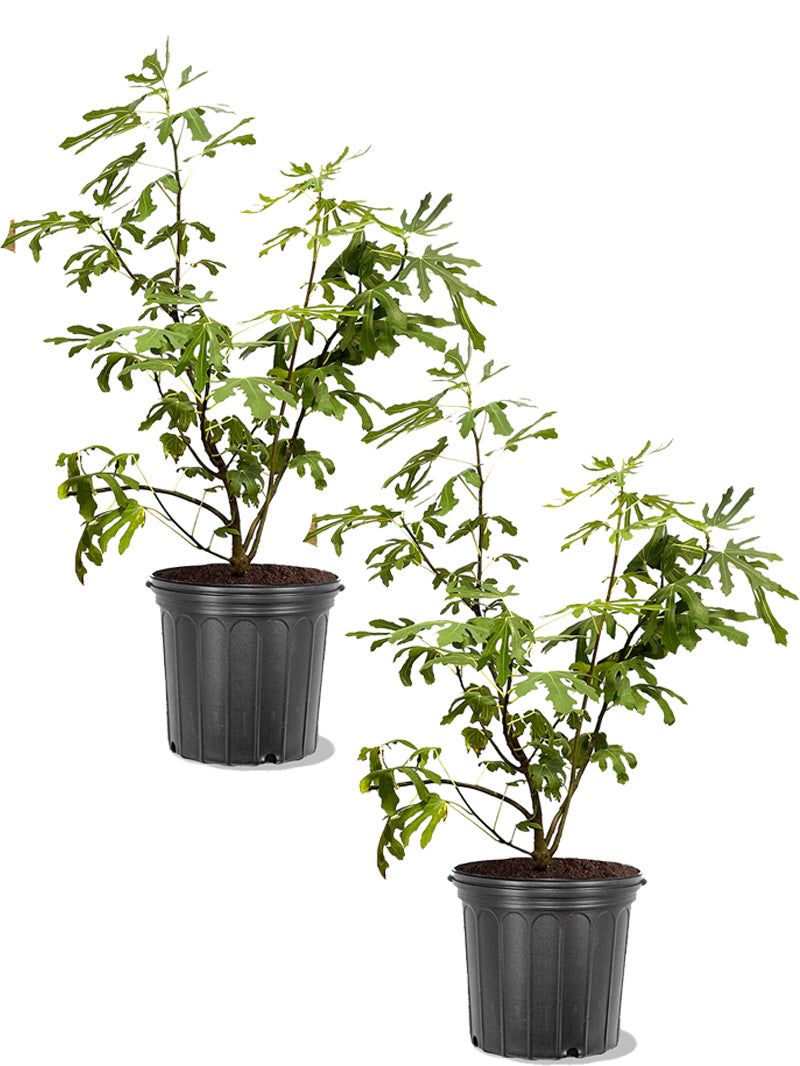
Two fig trees growing side by side in the same Austin yard, receiving the same water and care, can behave very differently in August. The reason is often cultivar, and understanding that difference protects you from misreading normal tree behavior as a problem you caused.
According to Texas A&M AgriLife Extension, Texas Everbearing, also sold under the names Brown Turkey and Ramsey, is considered one of the more reliable producers for Texas conditions. Its fruit ripens over an extended window that stretches from June through August, which is why it tends to keep delivering through the heat.
If your tree is a Texas Everbearing and it still has fruit developing in late July or early August, that is the cultivar doing what it is known to do.
Celeste is a different story. Texas A&M describes it as highly productive and broadly adapted, but its main harvest is typically concentrated in mid- to late June.
By August, a Celeste that appears to be dropping fruit may simply be finishing its normal crop cycle rather than responding to any particular failure in care. Georgia Extension adds another layer: Celeste can drop fruit prematurely in hot weather even when the tree is otherwise healthy, which makes it particularly difficult to distinguish cultivar behavior from heat stress.
Winter damage also shifts the timeline. A tree that suffered freeze injury in a cold Central Texas winter may produce later than usual or carry a lighter crop, regardless of how well it is watered in summer.
Good late-summer care can reduce stress-related losses and support the fruit that is there, but it cannot change a cultivar’s normal harvest calendar or prompt new fruit to set after the tree’s natural setting window has closed.
Harvest ripe figs before heat, rain, and insects take them
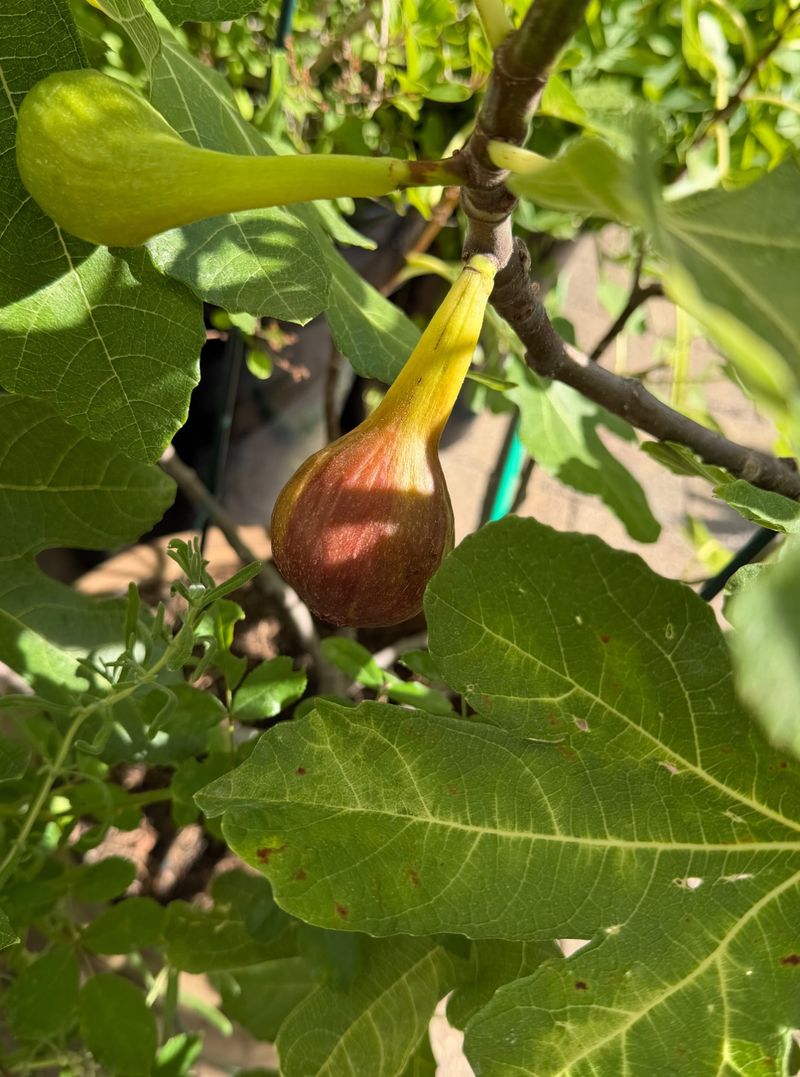
All the watering and mulching in the world cannot help a fig that stays on the tree past its moment. Figs do not ripen off the tree the way peaches or tomatoes do, so picking early is never the answer.
But leaving ripe fruit hanging in August heat invites a quick sequence of problems: softening accelerates, the skin splits, insects move in, and a perfectly good fig becomes waste within a day or two.
Texas A&M’s fig production guidance emphasizes that figs are highly perishable and must ripen fully on the tree before harvest. Check the tree every day or every other day during peak ripening.
A ripe fig will feel soft when gently pressed, the neck just below the stem will droop slightly, and the skin color will have shifted toward the mature tone for that cultivar, whether that is brown, purple, yellow-green, or another shade depending on what you are growing.
Cultivar choice affects how much protection the fruit has while it waits to be picked. UF/IFAS Extension notes that open-eye cultivars are more vulnerable to insects, rain-related spoilage, and some diseases than closed-eye types, because the opening at the base of the fruit gives pests and moisture an entry point.
If fruit spoilage or dried fruit beetle damage is a recurring problem, a closed-eye cultivar is worth considering for future planting. For now, prompt picking is the most practical protection available.
Harvesting ripe figs quickly is not just about avoiding waste. Every fruit you bring in is a direct return on the care you have put into the tree all season, and in a year when heat and drought have already reduced the crop, protecting what made it to full ripeness matters more than ever.
Aim for a steadier crop, not a heat-proof tree
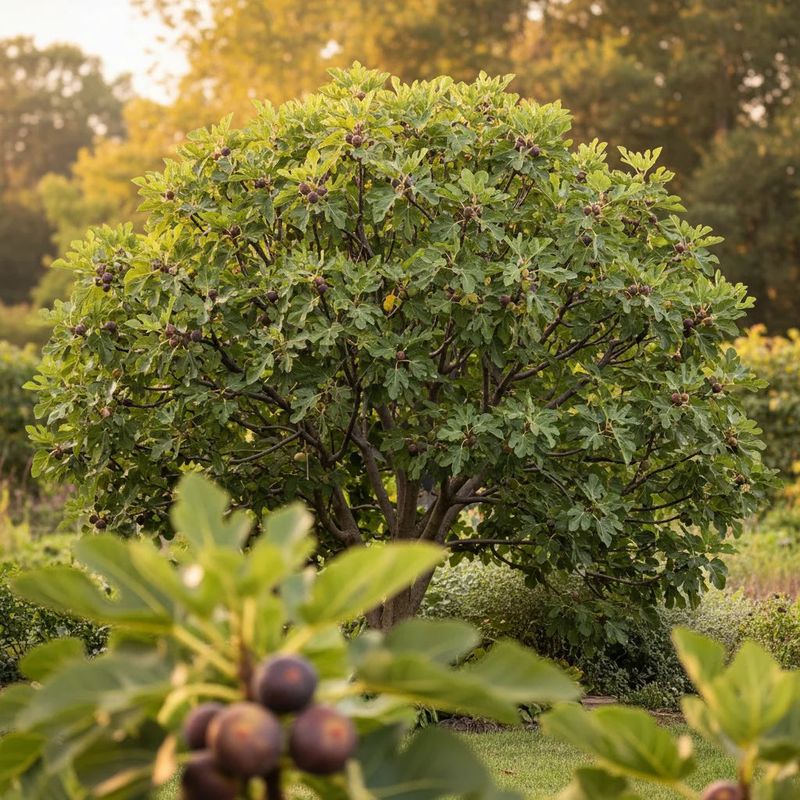
The routine that gives a fruiting fig tree its best chance in late-summer heat comes down to a short list of repeatable actions. Check the shallow root zone for dryness before watering.
When it is dry, apply water slowly and deeply across the full spread of the roots, not just at the trunk. Cover the soil with organic mulch, keep it away from the bark, and refresh it if the layer has thinned.
Hold off on nitrogen fertilizer and any significant pruning until after the harvest window closes. If fruit drop continues despite adequate moisture, inspect the leaves for rust and consider the roots if the tree shows broader signs of decline.
Pick ripe figs promptly, every day or two during peak ripening.
Following through on these steps can reduce drought-related stress and support fruit size and quality, but the outcome still depends on factors outside any gardener’s control. Cultivar behavior, extreme heat, existing disease pressure, root health, and the stress the tree was already carrying before summer peaked all shape how much fruit survives to harvest.
Texas A&M AgriLife Extension and University of Georgia Cooperative Extension both frame consistent moisture and mulch as risk-reduction practices rather than guarantees. A well-tended fig tree in Central Texas may not beat the August heat entirely, but it carries and ripens more of its remaining crop than one left to manage the stress alone.