
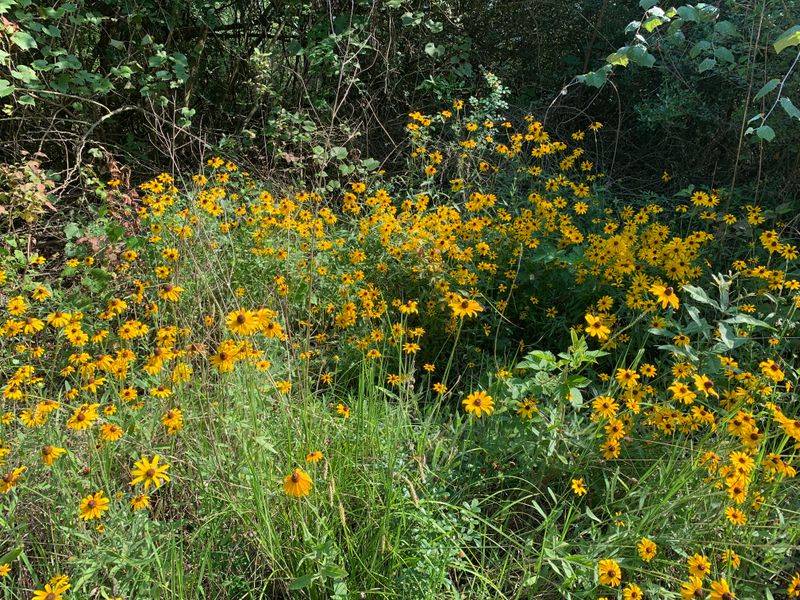
Black-eyed Susan is one of those wildflowers that looks like it belongs in a Texas summer, bright yellow petals fanned around a dark center disk, drawing in bees on hot mornings when other plants have already given up. You may have seen the claim that it feeds over 17 bee species and keeps a garden buzzing all season, and the truth behind that number is worth understanding before you plan your beds.
The real story is still a good one: this native wildflower can provide genuine warm-season forage for bees, but it works best as part of a thoughtfully planted yard rather than as a solo act.
What the 17-bee number actually measures
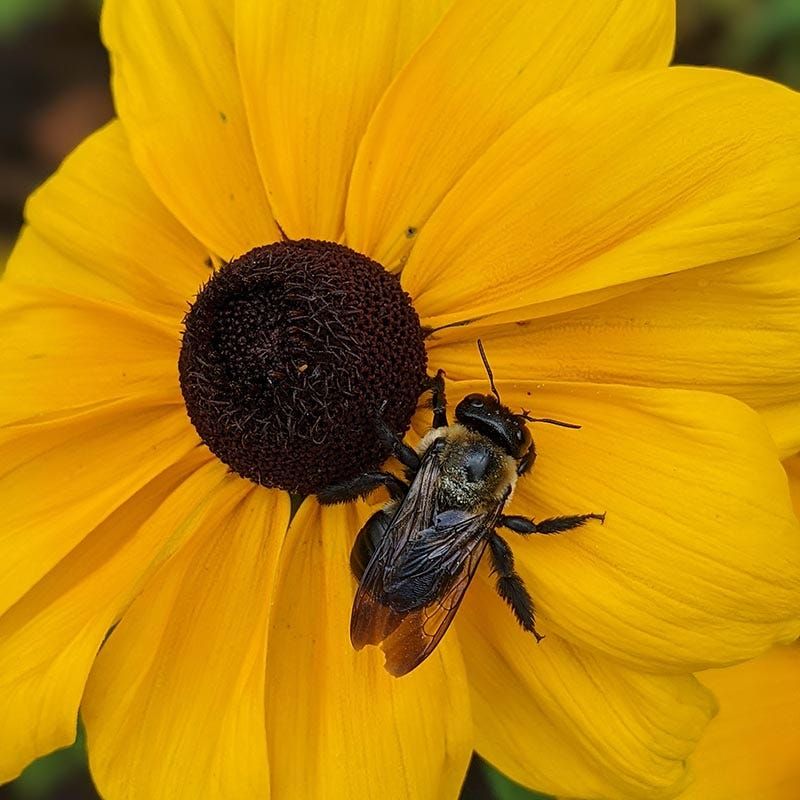
Black-eyed Susan, known botanically as Rudbeckia hirta, is the plant behind a striking statistic that has circulated widely in gardening circles. The number comes from a real source, but its meaning is narrower than most headlines suggest, and getting it right actually makes the plant more useful to you, not less.
The National Wildlife Federation publishes a keystone-plant list organized by ecoregion. That NWF Northern Forests ecoregion dataset associates 17 pollen-specialist bee species with the Rudbeckia genus as a whole.
Black-eyed Susan appears in the list as one representative example of the genus, alongside green-headed coneflower (Rudbeckia laciniata) and other relatives. The figure is not a count of bees observed visiting one plant in one Texas yard.
Pollen-specialist bees are a distinct category. These are bee species that rely on pollen from a particular plant genus to provision their larvae, meaning the plant is a genuine dependency for them rather than just one stop among many.
Seventeen specialist species associated with a genus is a meaningful ecological signal, but it is a genus-level figure drawn from a Northern Forests dataset, not a Texas-specific field observation.
Translating that number directly into “one Texas black-eyed Susan feeds 17 bee species” skips several important steps. Not all 17 associated species necessarily occur throughout Texas.
The figure does not come from a garden experiment or a bee-visitor survey in Texas. And a plant can be on a specialist list without guaranteeing that all associated specialists will show up in any given yard.
The defensible claim, and the genuinely useful one for Texas gardeners, is that black-eyed Susan can provide summer-to-early-fall forage for bees and other pollinators. That is a real benefit.
Understanding where the 17-species number comes from just keeps expectations grounded so you can plan a garden that actually delivers.
Black-eyed Susan has a Texas foothold
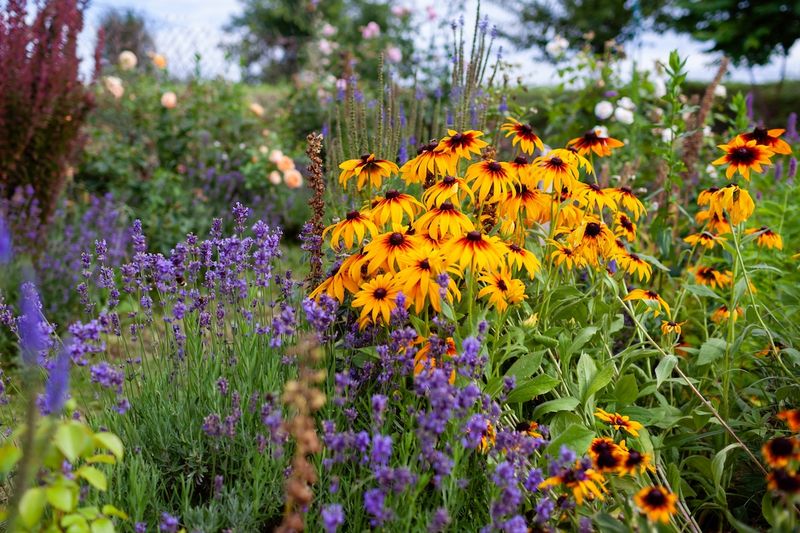
Rudbeckia hirta belongs to the sunflower family, and its most recognizable features are the ones that catch your eye from across the yard: yellow ray flowers radiating outward from a dark, dome-shaped central disk, on stems that typically grow somewhere between one and three feet tall. The whole plant has a slightly rough, hairy texture that gives it a sturdy, wildflower character rather than a cultivated look.
Texas gardeners have solid botanical footing here. The USDA plant guide for Rudbeckia hirta lists the variety Rudbeckia hirta var. angustifolia as occurring in Texas and across the southeastern United States.
That regional variety is not a marketing label; it reflects genuine geographic distribution, which matters when you are choosing plants for a climate as demanding as Texas summers.
One thing worth knowing before you buy: black-eyed Susan does not always behave the same way from one climate or variety to the next. Depending on growing conditions, the plant may act as an annual that completes its life cycle in one season, a biennial that spends its first year as a rosette and blooms in its second, or a short-lived perennial that persists for a few years before declining.
Texas heat and soil conditions can push it toward the shorter end of that range.
Choosing locally appropriate seed or nursery stock is a practical step that pays off. Plants or seeds grown from Texas-region stock are more likely to be adapted to local soils, rainfall patterns, and temperature swings than material sourced from a distant growing region.
Before purchasing a named cultivar, check whether it is the straight species or a bred variety. Highly modified cultivars, especially double-flowered forms, may differ meaningfully from the straight species in pollen accessibility and overall ecological value for bees.
Its flowers offer a realistic summer payoff
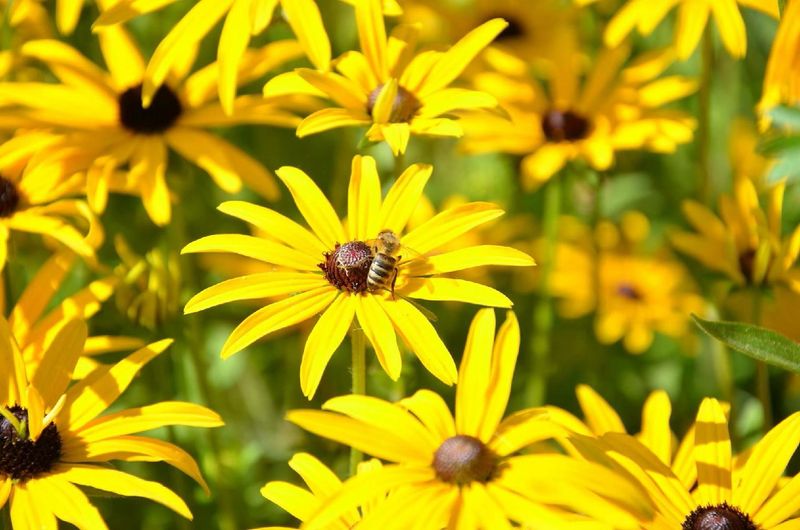
For Texas gardeners, the most useful way to think about black-eyed Susan is as a warm-season workhorse. Texas A&M AgriLife Extension lists black-eyed Susan as a bee-friendly plant for Austin with a bloom period of approximately June through August.
The USDA describes flowering from summer through early fall more broadly. Either way, the plant delivers color and forage during the hottest stretch of the year, when many gardeners are running out of reliable blooming options.
Not every bee interacts with black-eyed Susan the same way. Pollen-specialist bees, the ones the NWF keystone dataset counts, may depend on Rudbeckia pollen to feed their larvae.
Generalist bees, including common bumble bees and sweat bees, may visit the flowers for nectar or pollen without relying on the genus specifically. Both types of visits can benefit your garden, but the nature of the relationship differs.
The UF/IFAS Florida bee-garden database lists leafcutter, long-horned, and sweat bees among the groups particularly attracted to black-eyed Susan, with a Florida bloom window running June through October. That is useful regional context, but Florida timing and Texas timing are not identical, and conditions in your specific yard will shape what you actually see.
Visible bee activity is not guaranteed on any schedule. Weather, time of day, surrounding floral resources, nesting habitat nearby, and local bee populations all influence how many bees show up and when.
A patch of black-eyed Susan that draws a dozen bees on a calm, warm morning in July may look quiet on a windy afternoon or during a heat spike. Observing the plant at different times of day gives a more accurate picture than a single glance.
The NWF genus-level data reinforces that Rudbeckia has real ecological value, but the honest Texas promise is summer color and a seasonal source of forage, not a continuous all-season display from a single species.
Treat its bee appeal as useful, not unrivaled
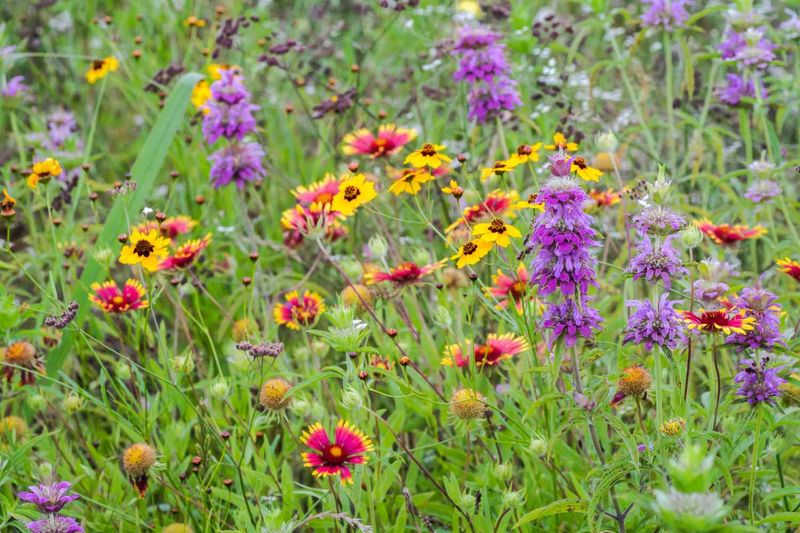
Calling black-eyed Susan the best or most attractive bee plant in Texas would go further than the evidence supports. A 2024 experiment conducted in the southeastern United States put that assumption to a direct test.
That study, published in Ecological Solutions and Evidence, found that Rudbeckia hirta attracted lower bee richness than several other tested native species, including butterfly weed (Asclepias tuberosa) and clasping vervain (Verbena clasping). Black-eyed Susan was not among the highest-performing plants in that particular experiment.
The researchers worked in a specific experimental setting, so the results should not be read as a universal ranking of every plant in every Texas garden. Soil type, surrounding vegetation, local bee communities, and other variables all shift outcomes.
What the finding does support is a practical planting philosophy: black-eyed Susan earns its place in a pollinator garden, but it works better as one contributor in a diverse mix than as the centerpiece of a strategy built around a single species. Pairing it with plants that outperformed it in the southeastern study, or with other Texas natives that bloom in different windows, adds resilience that one species alone cannot provide.
The takeaway is not that black-eyed Susan is a poor choice. Its warm-season bloom period, Texas-relevant native status, and real association with specialist bees at the genus level all make it worth planting.
The point is simply that “useful native” and “unrivaled performer” are different claims, and only the first one holds across the available evidence.
Give it sun, drainage, and establishment water
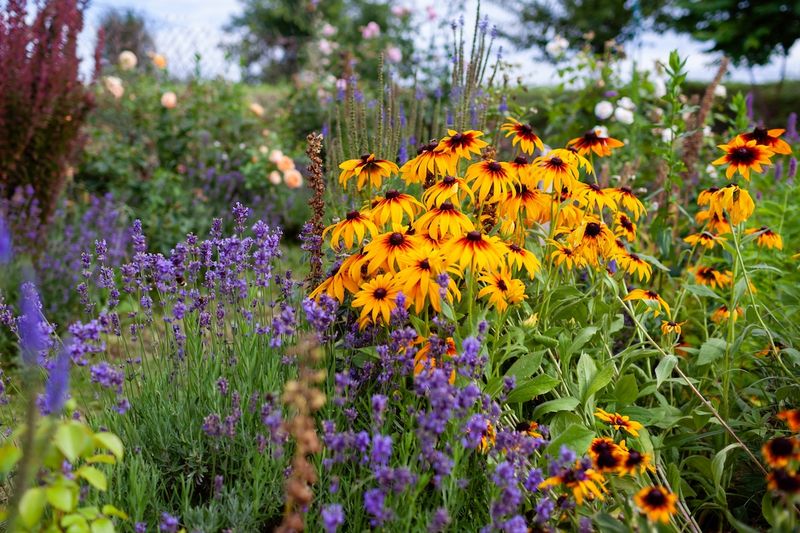
Turning an interest in black-eyed Susan into a thriving planting starts with matching the plant to the conditions it actually prefers. Full sun is the safest recommendation: the plant is built for open, exposed sites and tends to stretch or underperform in significant shade.
Well-drained soil matters just as much. Standing water after rain is one of the fastest ways to lose a planting.
The good news for Texas gardeners dealing with varied soil types is that the USDA plant guide reports black-eyed Susan adapting to clay, loam, and sandy soils, with a preference for slightly moist to moderately dry conditions. That range covers a lot of Texas ground, from heavy clay in North Texas to sandy soils along parts of the Gulf Coast.
Slightly moist to moderately dry is the sweet spot; consistently wet roots are a problem regardless of soil type.
Drought tolerance is one of the plant’s genuine strengths, but it applies to established plants, not seedlings or fresh transplants. UF/IFAS extension guidance notes that black-eyed Susan can be direct-seeded outdoors, with germination occurring in roughly five to ten days under suitable temperatures.
During that germination window and through the early weeks of root development, consistent moisture is essential, especially in Texas heat where soil surfaces can dry out rapidly between waterings.
Once roots are established, you can back off and let the plant’s natural drought tolerance take over. For spacing, a range of twelve to twenty-four inches works depending on whether you want a dense, mass-planted look or more room for each plant to spread.
Closer spacing fills in faster; wider spacing gives individual plants more airflow, which can reduce disease pressure in humid conditions. Either way, placing plants where they get at least six hours of direct sun each day gives them the best chance to bloom through the full summer window.
Manage self-seeding instead of assuming it stays contained
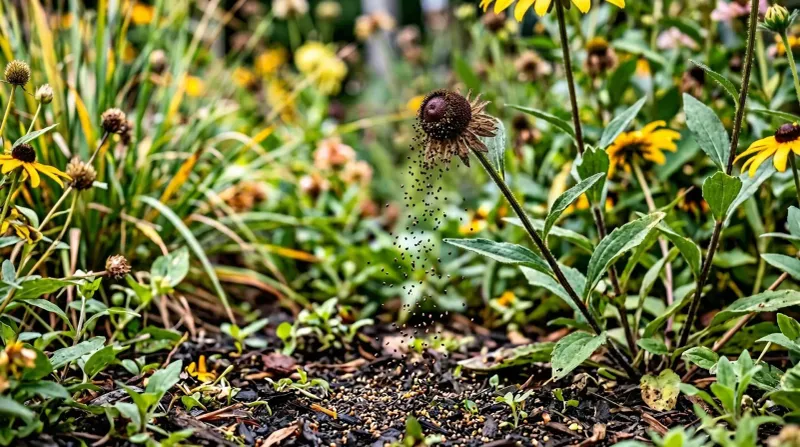
One of black-eyed Susan’s most talked-about features is its ability to reseed and come back year after year without replanting. That can be a genuine benefit, but it is not the same as a plant that manages itself without any attention.
Removing faded flowers before seeds mature encourages the plant to redirect energy into new blooms, extending the display through the summer window. UF/IFAS extension guidance confirms that deadheading spent flowers can promote additional blooming while also keeping the planting looking tidy.
If extending the bloom period matters to you, regular deadheading during peak summer is worth the effort.
Leaving some seed heads intact is a legitimate choice too. Seeds that remain on the plant through late summer and fall provide food for birds, and seeds that drop can produce new plants the following season, which is useful if you want to naturalize an area or fill in gaps without buying more plants.
That same UF/IFAS resource notes that seeds germinate readily, which is the detail that requires honest attention: readily germinating seeds do not stay where you planted them.
Black-eyed Susan can spread into nearby beds, lawn edges, or paths when seeds move with rain, wind, or foot traffic. Calling it non-invasive or problem-free would misrepresent what reliable sources document.
If your garden has defined beds where you want to control what grows, deadhead consistently and monitor the edges of the planting each spring. If you have a wilder area or a meadow-style planting where naturalization is welcome, selective deadheading lets you encourage spread in some spots while containing it in others.
Managing self-seeding is a choice, not an afterthought.
Build season-long forage with a mix of plants
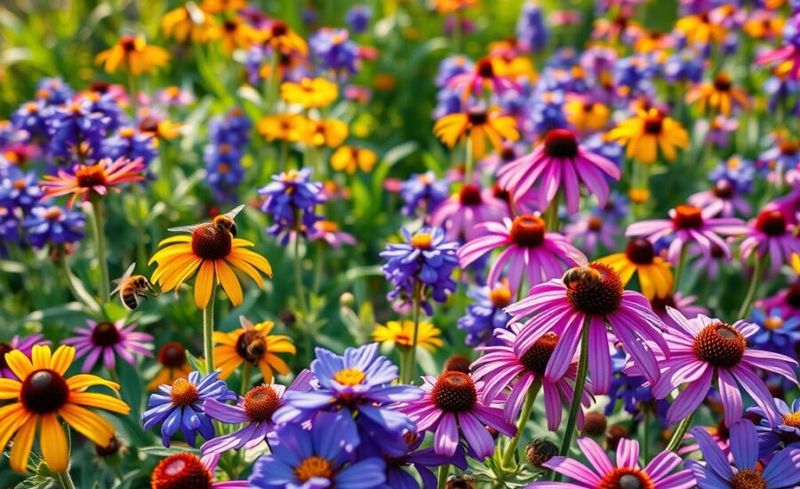
Black-eyed Susan covers a real gap in the warm-season calendar, but no single species covers the whole growing season. Texas has a long gardening window, and bees need forage from early spring through late fall to support colony health and successful reproduction.
Relying on one plant to carry that entire load sets up both the plant and the bees for a shortfall.
Texas Parks and Wildlife recommends planting native flowers that stagger bloom periods across spring, summer, and fall, with roughly three flowering species in each season as a practical planning benchmark. That adds up to around nine species across the growing season, which sounds like a lot until you realize that many Texas natives are compact enough to fit together in a modest bed.
The goal is overlapping bloom windows so there is always something open when bees are foraging.
Black-eyed Susan slots in as a summer anchor, covering the June-through-August window that Texas A&M identifies for Austin. Spring-blooming natives like bluebonnets or spiderwort can carry early-season forage before black-eyed Susan opens, and fall bloomers like goldenrod or frostweed extend the supply after it fades.
The specific species that work best will vary by region: what thrives in Austin may differ from what performs on the Gulf Coast or in the Hill Country.
The three-per-season benchmark from Texas Parks and Wildlife is a planning tool, not a rigid formula. Some gardeners will plant more, some less, depending on space.
The underlying principle is what matters: staggered blooms from multiple native species provide more reliable forage than any single plant, however well-chosen, can offer on its own. Black-eyed Susan earns its summer slot; the plants flanking it determine whether bees have somewhere to go before and after.
Protect the nesting places and flowers bees need
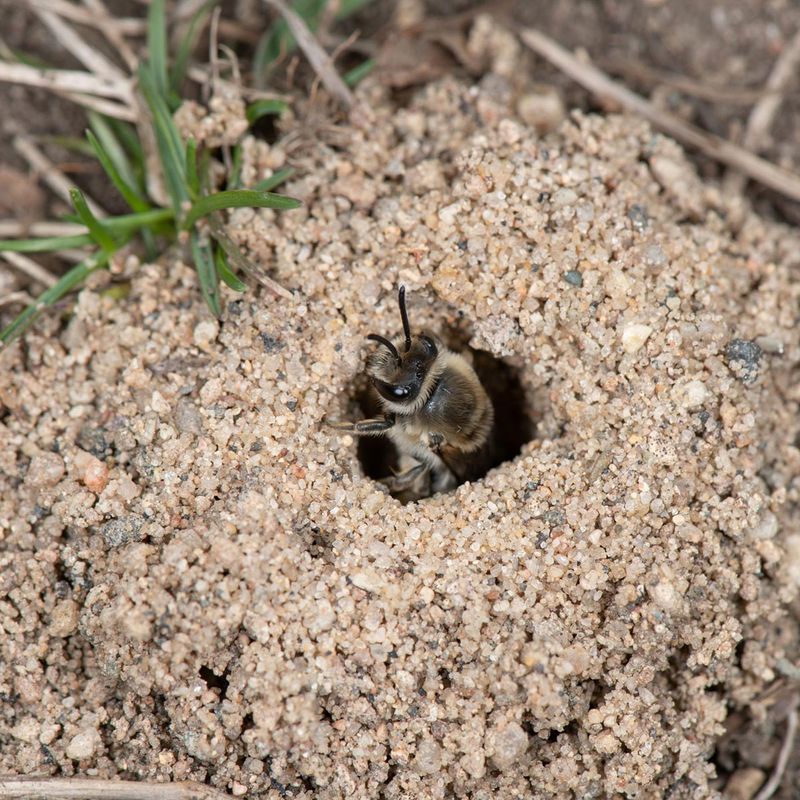
Flowers alone do not make a complete pollinator garden. Bees need places to nest and raise young just as much as they need food, and the nesting requirements of native bees are more varied than most gardeners expect.
A large share of native bee species nest in the ground, preferring bare, well-drained soil in sunny spots. Texas Parks and Wildlife guidance on identifying and protecting native bee habitat points to the importance of leaving some suitable areas undisturbed rather than covering every bed with heavy mulch.
A thick, continuous layer of wood-chip mulch blocks ground-nesting bees from reaching the soil they need. Leaving some patches of bare, compacted, or lightly covered ground near sunny flower beds costs nothing and can make a real difference.
Other native bees use dead wood, hollow stems, grass thatch, or existing cavities. Texas Parks and Wildlife’s broader native bee needs resource reinforces that habitat diversity matters alongside floral diversity.
Leaving standing dead stems from last season’s perennials through winter gives cavity-nesting bees a place to overwinter and raises young in spring.
Pesticide practices shape the outcome as much as any planting choice. EPA guidance on pollinator protection recommends avoiding pesticide applications when bees are actively foraging, following bloom-time restrictions on product labels, and reducing spray drift toward flowering plants.
University of Minnesota Extension also notes that systemic insecticides can persist in plant tissues and later appear in nectar or pollen, reaching bees even when no spray is directly applied to flowers.
Organic pesticide products deserve the same scrutiny as conventional ones. The Xerces Society cautions that organic products can still harm pollinators; the label, timing, and application method matter regardless of whether the active ingredient is synthetic or naturally derived.
Reading the label and avoiding applications during bloom periods is the standard that applies across all product categories.
Make black-eyed Susan your seasonal anchor
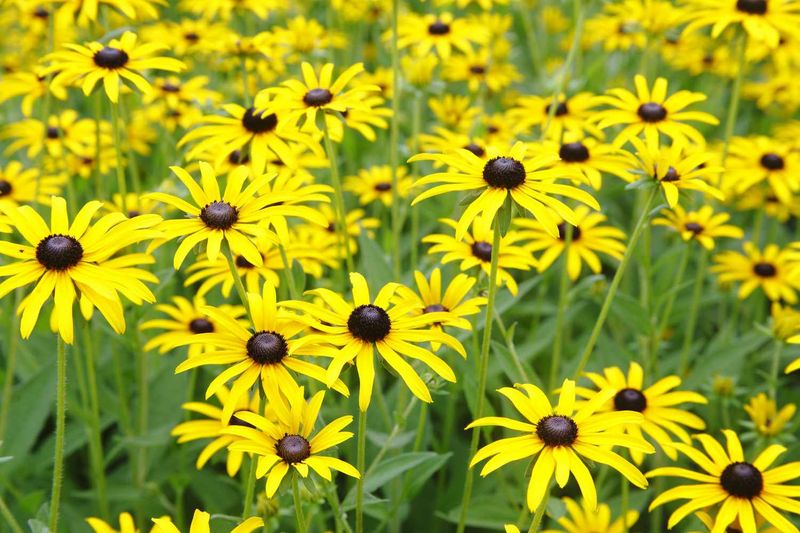
Putting this all together comes down to a clear set of decisions. Choose a regionally appropriate Rudbeckia hirta, either the straight species or a cultivar you have confirmed retains open, accessible flowers.
The USDA plant guide confirms Texas-occurring varieties, so locally sourced seed or nursery stock from a Texas grower is a practical starting point.
Plant it in full sun with well-drained soil, and water consistently through germination and early establishment before stepping back and letting the plant’s drought tolerance carry it through summer. Manage seed heads according to your space: deadhead where you want containment, leave some intact where naturalization or bird feeding is welcome.
Texas A&M AgriLife Extension places the Austin bloom window at June through August, which is the realistic Texas payoff to plan around.
The 17-bee figure describes pollen-specialist bees associated with the Rudbeckia genus in a Northern Forests ecoregion dataset, not a guaranteed count of visitors to your yard. The dependable Texas benefit is warm-season color and a genuine seasonal source of forage for bees that visit during the summer window.
Pair it with spring and fall bloomers following Texas Parks and Wildlife’s staggered-season approach, add some undisturbed nesting ground, and apply pesticides only when bees are not foraging. Black-eyed Susan will not keep every garden buzzing all season by itself, but as one well-chosen piece of a thoughtfully planted Texas yard, it earns its place every summer.