
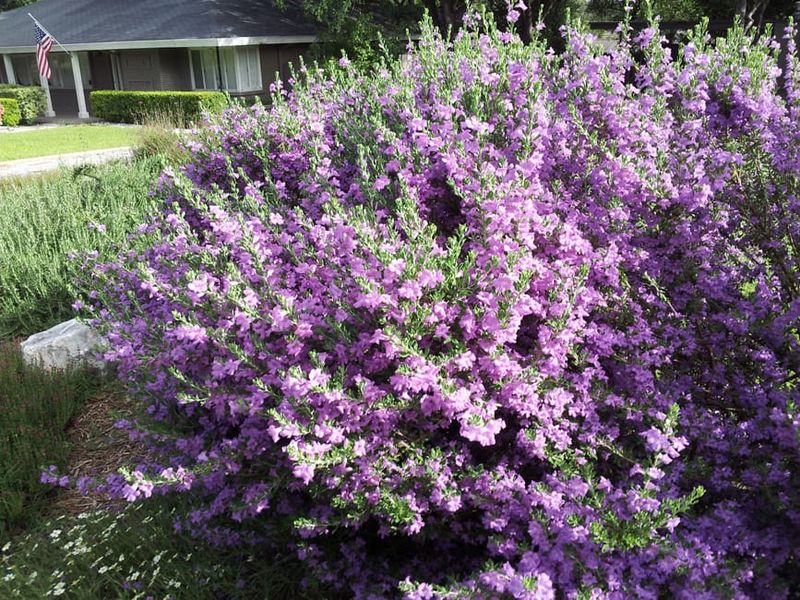
A silvery-leafed shrub native to parts of Texas can flush with lavender, pink, or purple blooms after rain or a shift in humidity, turning an ordinary yard into something people stop to look at. That shrub is cenizo, and fall can be one of the better times to get it in the ground in suitable Texas regions.
If you have a sunny, fast-draining spot and live in South Texas, the Trans-Pecos, or the Edwards Plateau area, cenizo may be exactly the low-water plant your landscape has been missing.
Meet cenizo, the Texas-native shrub behind the names
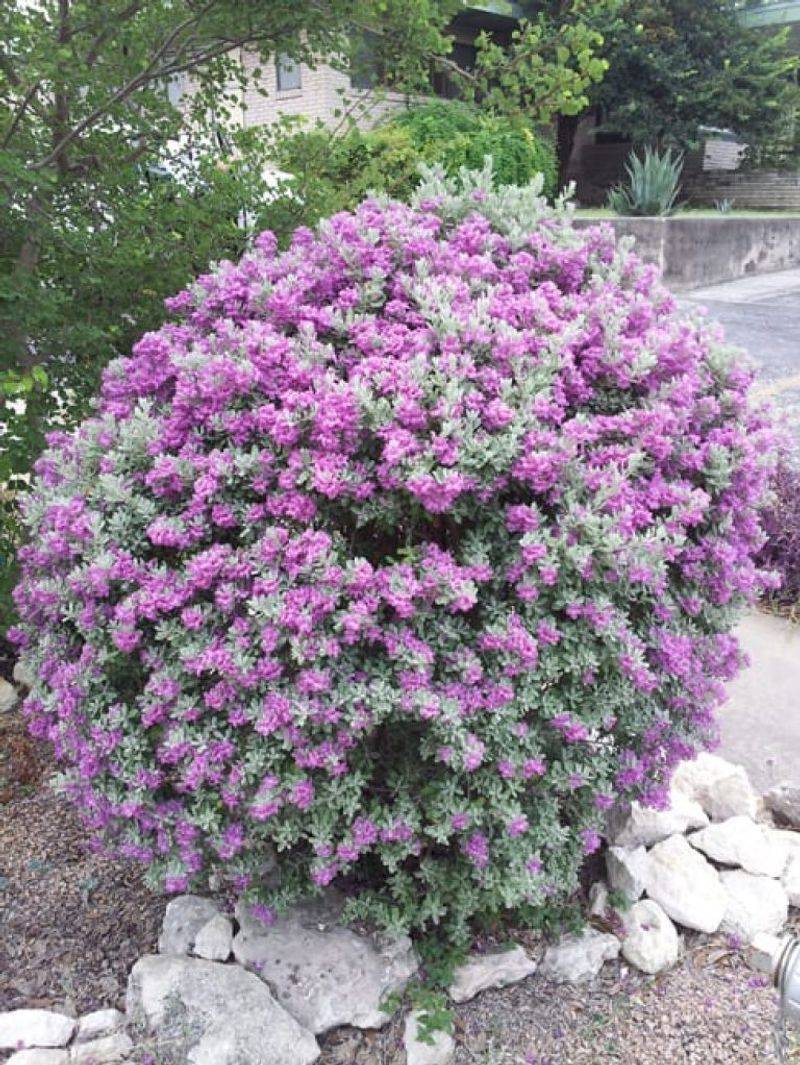
Cenizo goes by several names depending on who you ask. You might see it labeled Texas ranger, Texas silverleaf, barometer bush, or most commonly Texas sage at a local nursery.
That last name can trip people up because cenizo is not a sage at all. Texas Tech University Plant Resources confirms that the plant belongs to the figwort family, not the genus Salvia, which contains true culinary and botanical sages.
Texas also has a separate plant called Texas sage, Salvia texana, so using the scientific name Leucophyllum frutescens clears up any confusion right away.
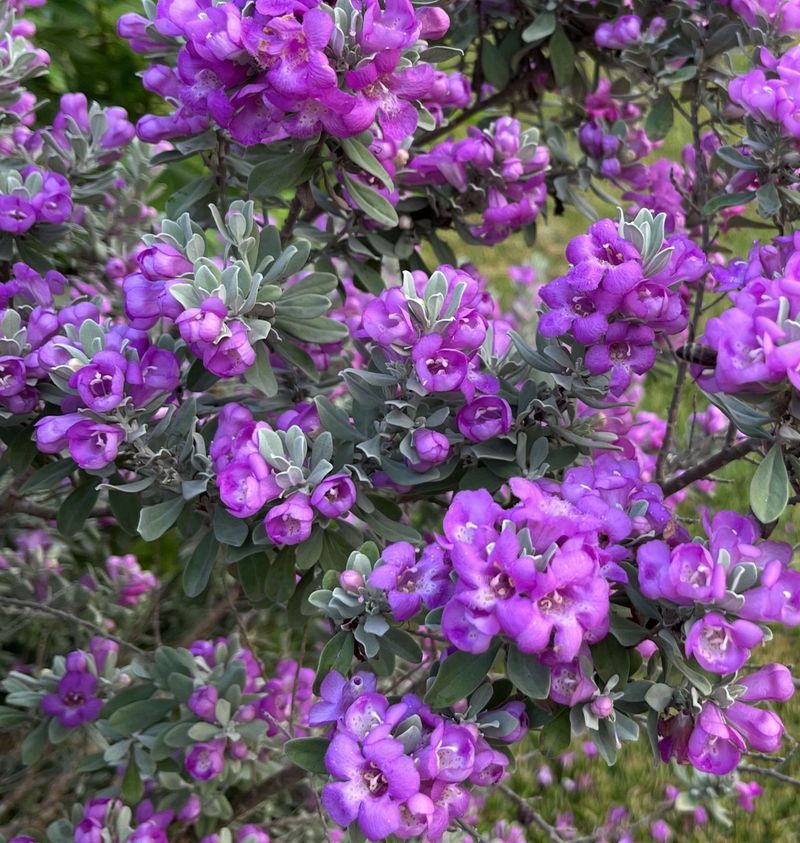
The appearance of cenizo is part of its appeal. Its leaves are small, soft, and covered in fine hairs that give the foliage a silvery or gray-green color that holds up through intense Texas heat.
Bell-shaped flowers appear in lavender, purple, pink, or occasionally white, creating a striking contrast against the pale foliage when the shrub is in bloom.
Mature plants commonly reach about 6 to 8 feet tall and equally wide, though cultivars vary considerably in size. Texas A&M AgriLife Research places cenizo’s native Texas range in South Texas, the Trans-Pecos, and parts of the Edwards Plateau, as well as northern Mexico.
That regional detail matters: cenizo is a Texas native, but it is not equally at home in every corner of the state. Gardeners in East Texas, the Gulf Coast, the Panhandle, or North Texas should research local conditions and cultivar hardiness before assuming any cenizo will perform as expected.
Cenizo produces conspicuous flower flushes when moisture conditions change
The bloom behavior that earns cenizo the nickname barometer bush is real, though it is not quite the weather oracle the name implies. Texas A&M AgriLife Research describes cenizo as a shrub that often flowers after rainfall, and the pattern is noticeable enough that longtime Texans have learned to watch for it.
Flushes of lavender or pink blooms can appear seemingly overnight, painting the shrub with color that was barely visible the day before.
The trigger is broader than rain alone. UC Davis Arboretum notes that flowering can also follow irrigation or a shift in humidity, which means the plant may respond to a deep watering session or a period of rising atmospheric moisture rather than an actual rainstorm.
A cenizo in a well-irrigated border might bloom on a different schedule than one growing on a dry slope nearby, even within the same yard.
That variability is worth understanding before planting. Blooms arrive in episodes rather than as a steady stream, and not every plant responds at the same moment or with the same intensity.
Fall can bring several of these flushes if moisture conditions shift repeatedly, but cenizo will not necessarily stay covered in flowers from September through December. The bloom response is the plant’s most visually dramatic quality, and it is genuinely distinctive, but gardeners who expect continuous color may be surprised by the quiet intervals between flushes.
Cenizo earns its place in a landscape through that combination of silvery texture year-round and sudden, vivid color when conditions cooperate.
Match cenizo to sun, drainage, and regional conditions
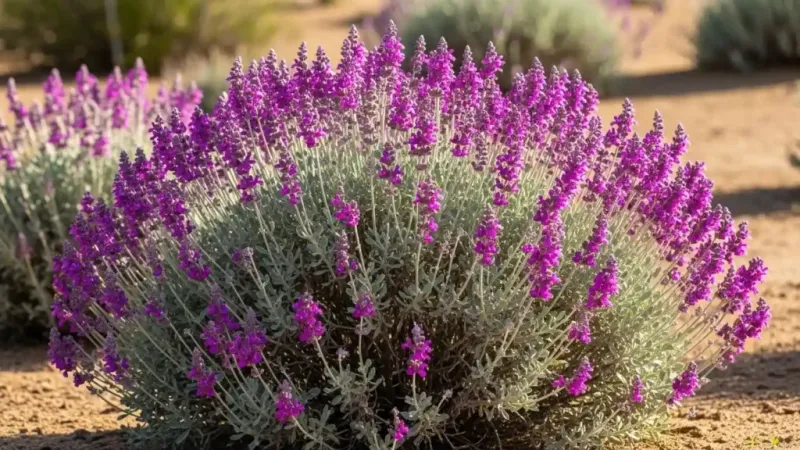
Before buying cenizo, walk your planting site on a sunny afternoon and be honest about two things: how much direct sun it gets and how quickly the soil drains after rain. Full sun, generally at least six hours of unfiltered direct light per day, is the safest condition for compact growth and reliable blooming.
UC Davis Arboretum recommends full sun for best performance, and a shaded or partly shaded spot is likely to produce a looser, less floriferous plant.
Drainage matters just as much as light. Cenizo is strongly associated with rocky, calcareous, and alkaline soils, the kinds of conditions found naturally across much of South Texas and the Trans-Pecos.
Texas A&M AgriLife Research highlights that the plant is well adapted to these lean, dry conditions. Beds that stay wet after rain, clay-heavy soils that hold moisture for days, or low spots where water pools are the wrong home for cenizo.
Poor drainage and persistent wetness can cause far more damage than Texas heat.
Regional fit is the third filter. Texas Tech University describes cenizo as well suited to xeric, dry-site landscaping, which aligns with its native range in South Texas, the Trans-Pecos, and the Edwards Plateau.
Gardeners in East Texas face heavier soils, higher humidity, and more rainfall than cenizo typically wants. The Gulf Coast adds drainage challenges and salt exposure.
North Texas and the Panhandle bring colder winters that may stress certain cultivars. Each of those regions demands cultivar research and site preparation before planting.
Outside Texas, UF/IFAS Florida-Friendly Plant guidance includes cenizo as an option for some hot, dry Florida sites, but the plant is not native to Florida, and humid or poorly drained locations there may be just as problematic as they are in East Texas.
Use the fall planting window without following the calendar blindly

Fall can be a genuinely useful planting season for woody shrubs in Texas, and cenizo is a reasonable candidate for that window. Texas Master Gardener fall planting guidance identifies September through December as a period when cooling air temperatures can reduce transplant stress while soil may remain warm enough to encourage root growth before winter slows things down.
Roots that spread during fall give a shrub a head start on the following spring.
The problem with treating any single date as the starting gun is that Texas does not cool down on a uniform schedule. Brazos County Extension monthly gardening guidance notes that September can remain hot and dry across much of Texas, particularly in Central and South Texas where cenizo grows best.
Planting into parched, still-hot soil and then leaving a newly placed shrub to fend for itself through a dry stretch is a setup for failure, not establishment.
A more useful approach is to watch local conditions rather than the calendar. When daytime highs drop consistently into the 80s or lower, soil moisture is reasonable, and you can commit to checking the plant and watering it through any dry spells that follow, that is your window.
The September-through-December range is a general guide, not a guarantee that any day within it is automatically right for your site.
Fall planting creates an opportunity, not a certainty. Success depends on plant quality when you buy it, how carefully the root ball is handled during planting, how reliably you water during dry periods afterward, and how much time remains before a hard freeze arrives.
Treat the fall window as a favorable season to work with, not a deadline to race against.
Install the root ball to protect cenizo from wet soil
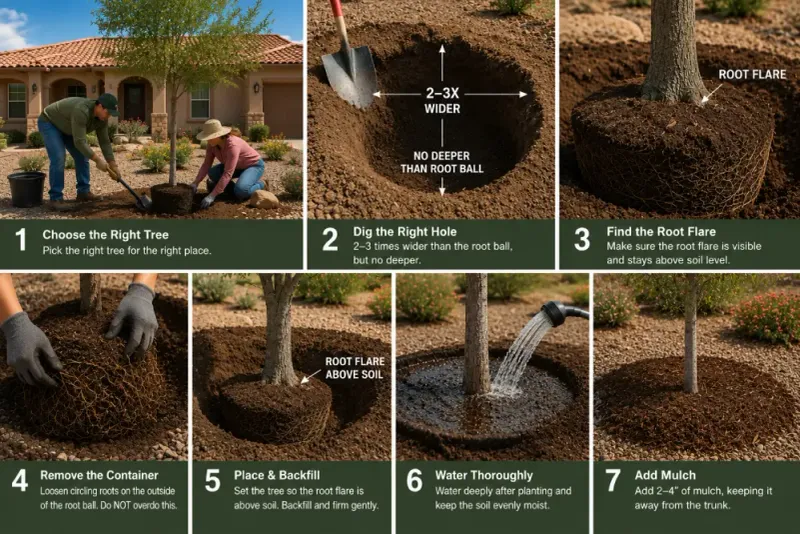
Cenizo’s sensitivity to poor drainage starts the moment you set it in the ground, so planting depth and hole shape matter more here than with many other shrubs. USU Extension planting guidance recommends digging a hole no deeper than the root ball itself and several times wider.
A hole dug too deep encourages the plant to settle below grade, where water can pool around the crown and roots lose access to oxygen.
Set the root ball so the original soil line sits level with or very slightly above the surrounding grade. Backfill with the native soil you removed rather than amended or imported mixes, which can create drainage barriers at the hole’s edge.
Firm the soil gently to remove large air pockets, but avoid compacting it heavily.
Water thoroughly right after planting. A slow, deep soak helps the soil make full contact with the root ball and settles any remaining air gaps.
Texas A&M AgriLife Research notes that cenizo’s roots need oxygen, and a soggy hole deprives them of it, so this initial watering should be generous but not repeated before the surface begins to dry.
Mulch is the finishing step. USU Extension water-wise mulch guidance recommends a layer of roughly 3 to 4 inches of organic mulch extending out from the plant to reduce evaporation and moderate soil temperature swings.
Pull the mulch back so there is a bare gap of a few inches around the stem at ground level. Mulch piled against the stem traps moisture against the bark and can invite rot or disease, which is the opposite of the dry, airy conditions cenizo prefers.
Let drought tolerance develop through measured aftercare
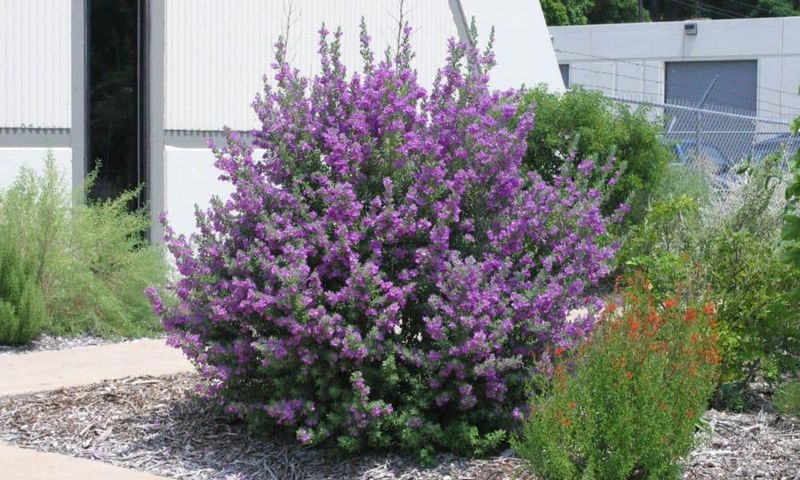
Cenizo’s reputation as a drought-tolerant plant is well earned, but that tolerance develops over time rather than arriving at the nursery. Newly planted shrubs have a limited root zone and can dry out quickly during warm, dry stretches, which are common in Texas even in fall.
Check the root ball regularly during the first several months by pressing a finger a few inches into the soil near the plant’s base. If it feels dry, water deeply and then wait for the surface to dry before watering again.
USU Extension guidance on plant establishment warns that saturated soil deprives roots of oxygen and can contribute to root disease. Frequent shallow watering and constantly wet soil are as harmful to cenizo as neglect during a dry spell.
The goal is consistent moisture in the root zone without waterlogging, a balance that gets easier to read after a few weeks of observation.
Fertilizer is one input cenizo rarely needs. Texas Superstar documentation on cenizo specifically cautions against overwatering, and Texas Tech University notes that cenizo does not tolerate overfertilization.
A lean native soil suits this plant far better than a heavily amended, fertilized bed. Once established, cenizo can handle extended dry periods and performs well in low-water landscapes, but even mature plants may benefit from supplemental irrigation during an unusually severe or prolonged drought.
Low-water after establishment does not mean waterproof in every circumstance.
Choose a cultivar for the space and prune for natural form
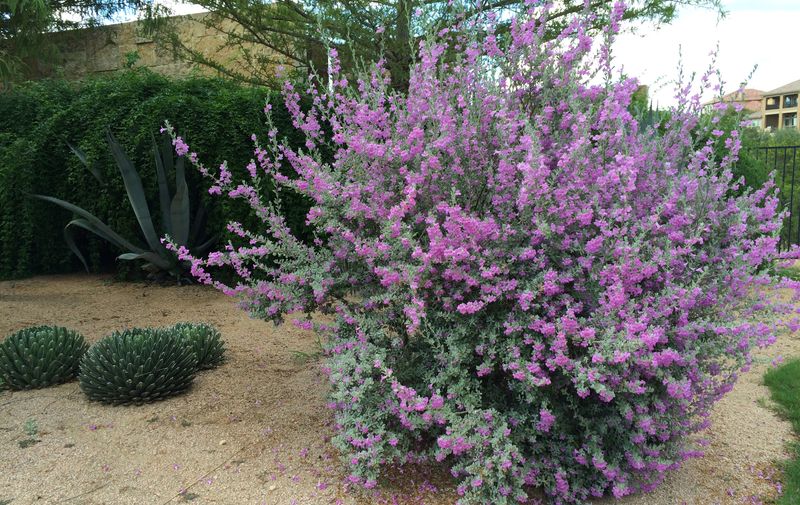
Species cenizo commonly reaches about 6 to 8 feet tall and wide at maturity, which fits a background hedge or large border but can overwhelm a small entry planting or a narrow bed. Cultivars offer real choices in that department.
Flower color, foliage tone, mature size, and bloom frequency all vary across available selections, so matching the cultivar to the space before planting saves considerable effort later.
Texas Superstar’s documentation on Lynn’s Legacy cenizo describes a selection that grows to roughly 5 feet tall and wide, flowers more frequently than many other cenizo selections, and relies less on humidity changes to trigger blooming. For gardeners who want more consistent color rather than unpredictable flushes tied strictly to weather events, that kind of cultivar difference is worth asking about at the nursery.
Pruning strategy shapes how long a cenizo stays healthy and attractive. University of Arizona Campus Arboretum guidance warns that routine hedge shearing, the kind done with electric trimmers to produce a tight geometric shape, can create bare interior holes as the outer shell thickens and blocks light.
Sheared plants also tend to use more water and have shorter useful lives than those allowed to hold their natural rounded form. If a plant is outgrowing its space, selective hand pruning to remove the longest stems is a better approach than blanket shearing.
Major size reduction, when genuinely needed, is better timed to early spring rather than fall. Texas A&M AgriLife Research notes that cenizo is generally considered semi-evergreen, but severe freezes and drought stress can cause foliage loss or dieback.
Late-season hard pruning can stimulate tender new growth just before cold weather arrives, leaving that growth exposed to frost damage.
Make the planting decision around site fit, not weather folklore
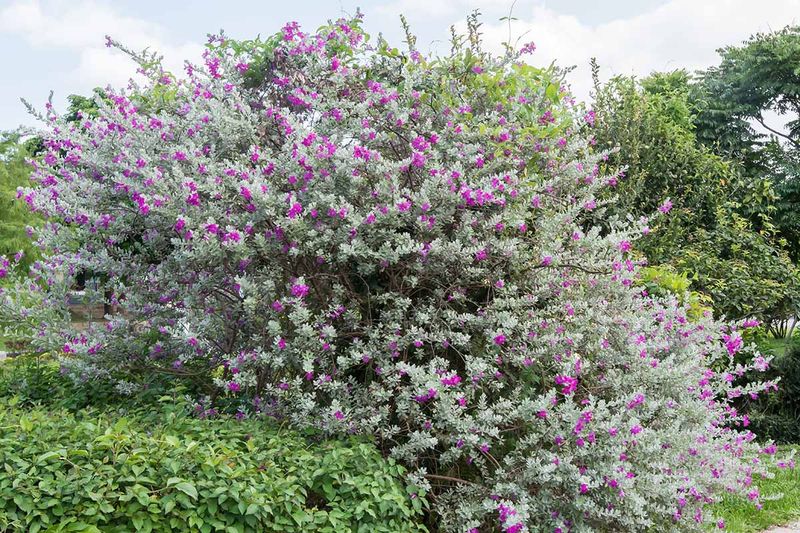
A well-sited cenizo brings together several practical benefits: year-round silver foliage that holds its color through Texas heat, episodic flower flushes after rain or moisture changes, and a structure dense enough to provide cover and potential nesting habitat for birds. Texas Parks and Wildlife lists the flowers as attractive to insects, and the shrub’s thick branching supports bird cover in South Texas landscapes.
The decision rule is straightforward. Choose cenizo for a site in a regionally appropriate part of Texas, with full sun and excellent drainage, and select a cultivar sized for the available space and the bloom pattern you prefer.
Texas A&M AgriLife Research and UC Davis Arboretum both support full sun and fast drainage as the foundation of a successful planting. Skip cenizo if your site is shaded, stays wet, or sits in a region where heavy soils and high humidity dominate.
The barometer bush nickname captures something real about cenizo’s character, but the plant is not a weather instrument and will not bloom continuously through fall or guarantee rain after every flush. What it will do, on the right site with reasonable establishment care, is grow into a heat-tough, low-water shrub that occasionally stops passersby in their tracks.
That is a reasonable payoff for a well-matched Texas landscape.