
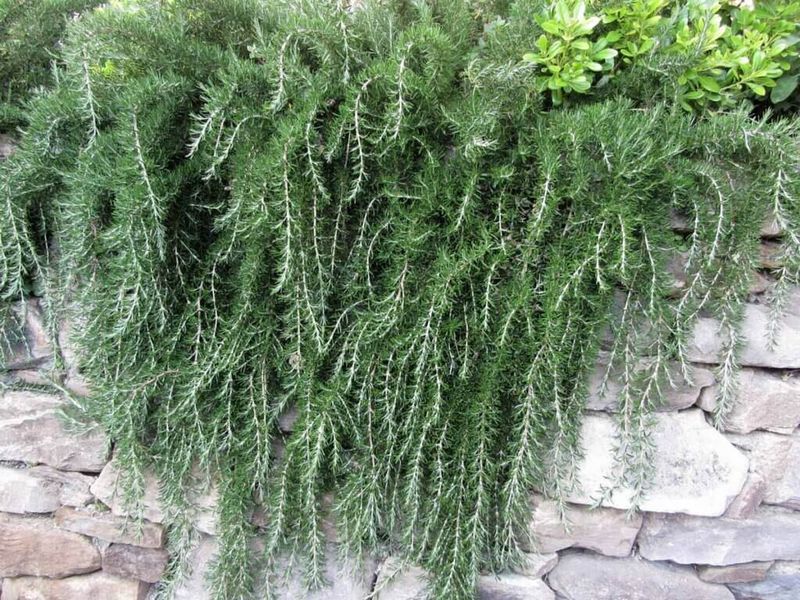
Bare mulch along a house foundation gets the job done, but it rarely turns heads or fills the air with anything memorable. Prostrate rosemary, the low-spreading form of the familiar kitchen herb, offers Texas homeowners a fragrant, evergreen alternative worth considering for sunny, well-drained foundation beds.
The plant brings gray-green foliage, a clean herbal scent, and a polished edge to spots where upright shrubs would crowd a walkway or block a window. Before buying a single plant, though, it pays to understand exactly where prostrate rosemary works, where it falls short, and how to keep the bed both attractive and house-safe.
Prostrate rosemary offers a fragrant living edge

Prostrate rosemary, sold most often under the cultivar name ‘Prostratus,’ is the spreading relative of the upright culinary rosemary most people grow in pots. Where the standard kitchen type climbs to four or even six feet, ‘Prostratus’ hugs the ground and fans outward, rarely exceeding two feet in height while reaching two to four feet across.
That horizontal habit makes it a genuinely useful design tool for a narrow foundation bed.
The foliage is evergreen, needle-thin, and a distinctive gray-green that catches light differently than most landscape plants. Brush a stem or step near the bed on a warm afternoon and the resinous herbal scent releases immediately, which is a sensory detail no bag of wood chips can match.
Texas A&M’s Earth-Kind plant selection guidance identifies rosemary as a fragrant, gray-green landscape plant suited to sunny Texas sites, and the Easy Gardening series lists ‘Prostratus’ specifically among varieties recommended for Texas landscapes.
Choosing the prostrate form over a standard upright variety matters more than many gardeners expect. An unlabeled rosemary from a big-box garden center may be an upright type that eventually crowds the bed, leans against siding, or blocks inspection access entirely.
Buying a named spreading cultivar gives a more predictable finished size and a genuinely low profile.
The case for prostrate rosemary in a foundation bed rests on its combination of traits: evergreen structure, drought tolerance, low spread, and fragrance. What it does not promise is a complete substitute for every function that mulch provides, and the sections below address that distinction directly.
Think of it as a designed living edge that can complement a thoughtful bed, not a single-ingredient fix for every foundation-planting challenge.
Fragrance improves the landscape but does not control pests
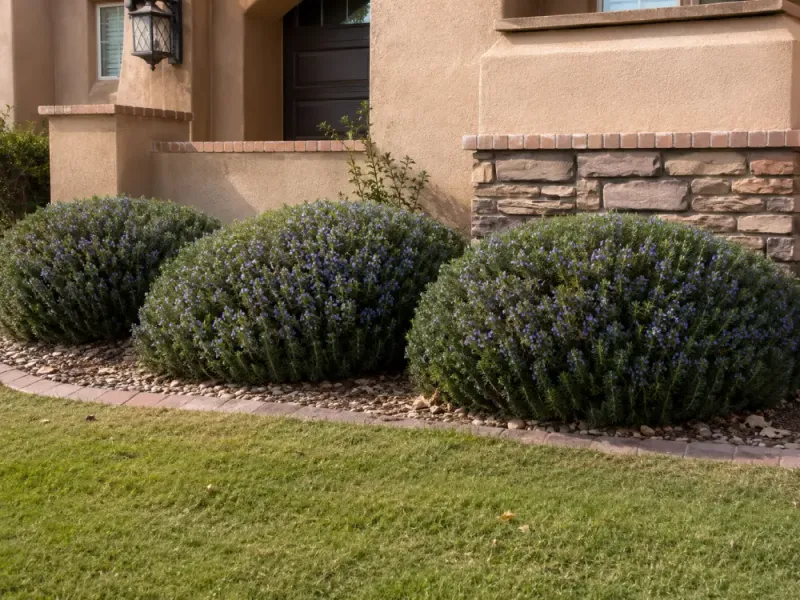
One of the most appealing qualities of prostrate rosemary is the scent it releases whenever wind, rain, or a passing hand disturbs the foliage. That fragrance is genuine and persistent, and it gives a foundation bed a sensory dimension that plain mulch simply cannot provide.
Texas A&M’s Easy Gardening rosemary guide highlights the herb’s aromatic quality as one of its standout landscape traits, alongside its evergreen foliage and drought tolerance.
Beyond fragrance, the plant adds real visual structure. The gray-green needle foliage holds color year-round, small blue flowers appear seasonally, and the low spreading form creates a finished, intentional-looking edge.
Those are legitimate landscape benefits worth planting for.
Where the case for rosemary gets overstated is pest control. Some gardeners assume the strong scent keeps termites, ants, mosquitoes, scorpions, or other household pests away.
That assumption does not hold up under scrutiny. A laboratory study found rosemary oil affected aphid behavior in controlled conditions, but a live plant growing beside a house is a very different situation from a concentrated oil applied directly to insects.
EPA guidance on smart pest control directs homeowners toward registered products and integrated pest management strategies rather than relying on plant fragrance as a dependable treatment for structural or disease-vector pests.
Rosemary belongs in a foundation bed for its looks and its scent, not as a pest barrier. Homeowners dealing with active termite pressure, scorpion activity, or mosquito problems should contact a licensed pest-management professional and follow evidence-based treatment plans.
The herb can make a bed more pleasant without doing the job that a professional pest program does.
Sun and drainage determine whether rosemary will thrive
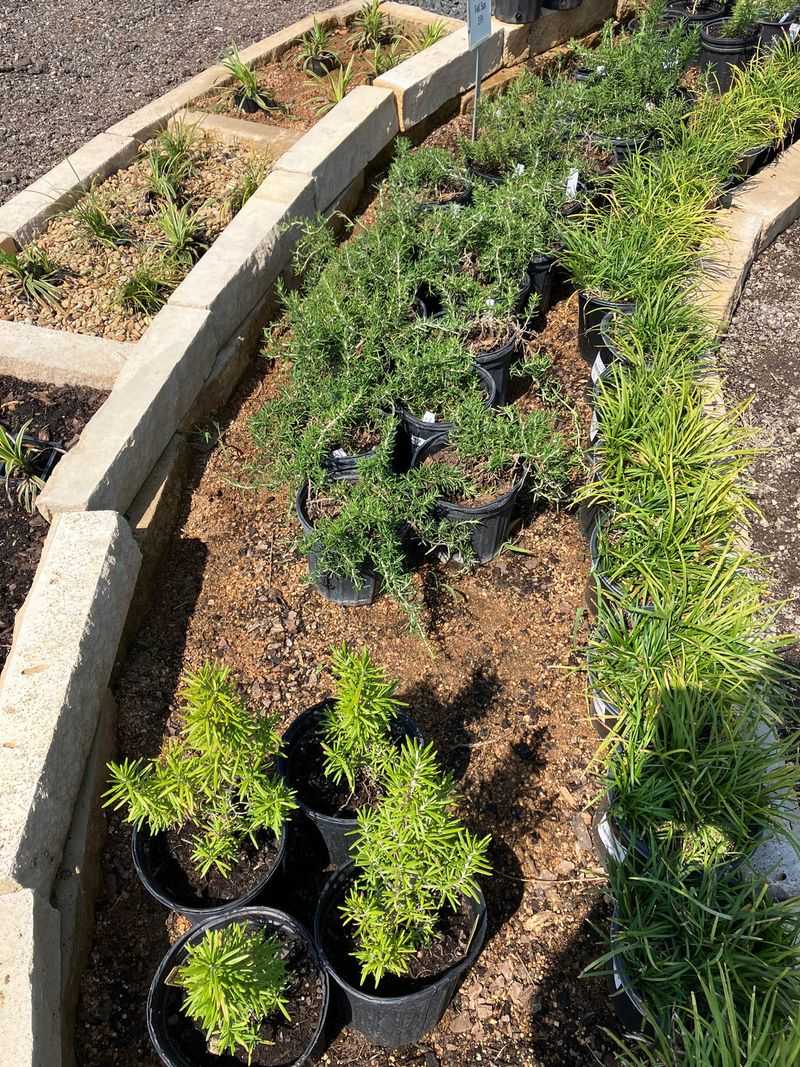
Before thinking about plant spacing or mulch choices, run a quick site test on the foundation bed itself. Rosemary needs at least six hours of direct sun each day, and it performs best in full sun.
A bed that spends most of the afternoon in shade from a large tree or an overhanging eave is not a good candidate, regardless of how attractive the design looks on paper.
Soil drainage matters just as much as light. Texas A&M’s Easy Gardening rosemary guide is direct on this point: rosemary grows best in well-drained soil, and the guide recommends raised or slightly mounded beds where drainage is poor.
If a spot stays soggy for more than a few hours after rain or irrigation, rosemary is the wrong plant for it. Root rot sets in quickly in persistently wet conditions, and no amount of sun will compensate for waterlogged roots.
Heavy clay soils common across many Texas regions present a particular challenge. Clay holds moisture long after a storm passes, and a flat bed in clay may look dry on the surface while staying saturated a few inches down.
Mounding the bed four to six inches above grade, or amending the planting area with coarse sand and decomposed granite, can improve drainage enough to make rosemary viable where it would otherwise fail.
The Texas A&M Herbs for Texas Landscapes guide recommends watering rosemary at ground level and keeping the foliage mostly dry. Drip irrigation or a soaker hose laid along the soil line satisfies the plant’s water needs during establishment without wetting stems and leaves repeatedly.
Gravel spread around the base of the plants can improve drainage further, help wet foliage dry faster after rain, and reduce the risk of stem rot at the crown, though it does not make a chronically wet site suitable for rosemary.
Build a setback bed instead of planting against the house

A foundation bed with prostrate rosemary should look intentional and house-safe, which means keeping soil, mulch, and plant stems away from the wall rather than pressing them against it. UF/IFAS extension guidance on termite prevention and control recommends maintaining at least six inches of visible clearance between wall siding and the soil or mulch line.
That gap allows for airflow, reduces moisture buildup against the structure, and keeps the area accessible for routine inspections.
Weep holes, vents, and exposed wood at the base of a wall must stay uncovered. Soil or mulch piled against those features traps moisture, creates harborage for insects, and can accelerate wood decay.
The same principle applies to rosemary itself: even a low-growing cultivar should not be allowed to spread until stems or foliage rest directly against siding or cover any structural opening.
UF/IFAS landscaping guidance for pest prevention advises positioning landscape plants far enough from the foundation to reduce moisture near the home and to accommodate mature growth without crowding the wall. For prostrate rosemary, that means planning the bed width so that a fully grown plant sits with its outermost stems still a comfortable distance from the house, with room to reach in for pruning or inspection without disturbing the structure.
Grading and irrigation management complete the picture. EPA guidance on termite identification and control emphasizes keeping wood, soil, and moisture away from the foundation, and Building America Solution Center guidance on termite-resistant foundations reinforces that drainage and inspection access are the primary protective factors.
Downspout extensions should carry roof runoff well past the bed. Irrigation heads should be aimed away from the wall and adjusted so water does not pool against the foundation.
The bed itself should slope gently away from the house so rain drains outward rather than collecting near the footing.
Let rosemary complement mulch instead of replacing it
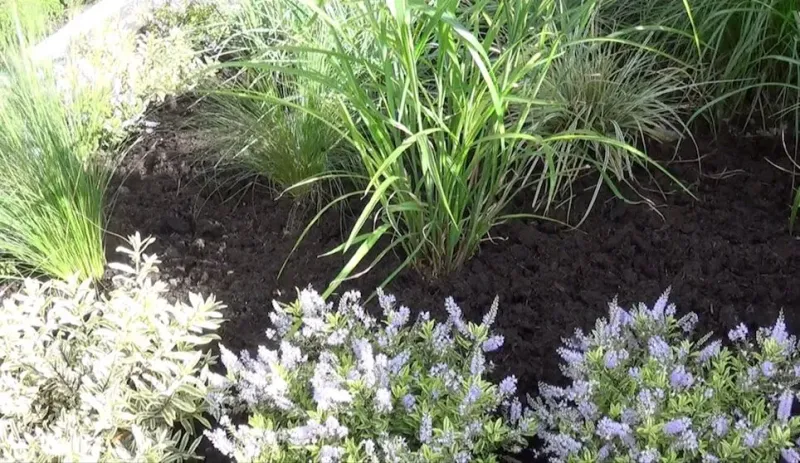
Mulch is not simply a filler material. Texas A&M’s Herbs for Texas Landscapes guide describes the key functions a mulch layer provides: weed suppression, reduced evaporation, moderated soil temperature, and gradual organic matter contribution as the material decomposes.
A living plant, however attractive, does not automatically deliver all of those outcomes.
Young prostrate rosemary plants leave significant open soil between them during the first season or two. That exposed soil grows weeds, loses moisture faster, and heats up more than a well-mulched surface would.
Pulling weeds by hand or with a hoe while the plants fill in is a routine part of the establishment period, not an optional task.
The practical approach treats rosemary and mulch as partners rather than competitors. A layer of fine gravel or bark mulch covering the soil between newly planted rosemary and the house wall handles weed suppression and moisture retention while the plants grow into their space.
Over time, as the rosemary spreads and fills the outer portion of the bed, the mulch zone may shrink, but it rarely disappears entirely. UF/IFAS guidance reminds homeowners to keep that mulch layer pulled back from siding and weep holes, maintaining the same six-inch clearance that applies to soil.
What rosemary genuinely adds to the bed is fragrance, year-round foliage, a polished finished edge, and some soil shading once the canopy fills in. Those are meaningful improvements over bare mulch alone.
The honest framing is a designed bed where rosemary anchors the visible outer edge and appropriate ground cover handles the area between the plants and the wall. That combination looks better, smells better, and still does the functional work that mulch was doing before.
Plan for Texas freezes and mature plant size
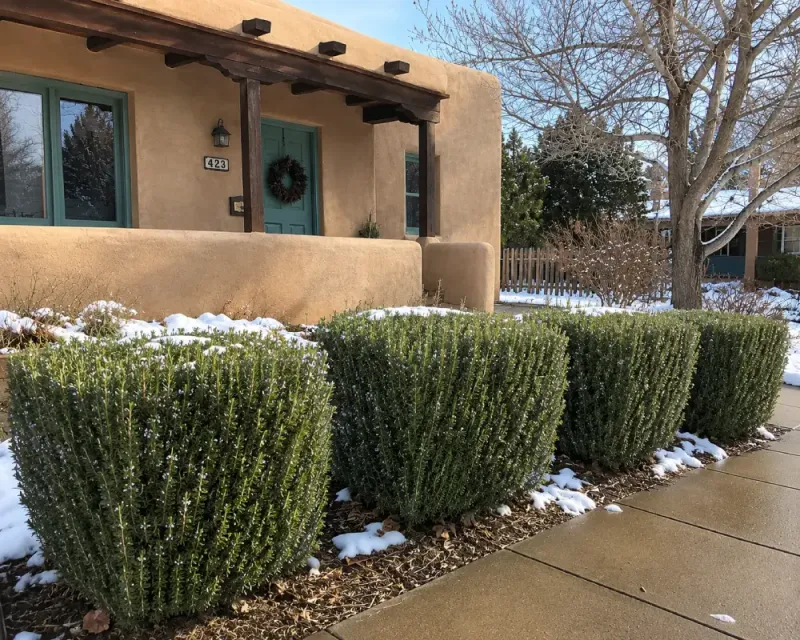
Rosemary performs reliably across a wide swath of Texas, but the state’s climate is not uniform, and honest planning accounts for that. Texas A&M’s Easy Gardening rosemary guide describes rosemary as perennial through most of the state’s warmer zones, which correspond broadly to USDA Zone 7 and above.
That covers Central Texas, the Hill Country, San Antonio, Austin, Houston, and most of the Gulf Coast corridor.
North Texas and the Panhandle present a different picture. A Texas A&M herb guide cautions that established rosemary plants can die when temperatures fall below approximately 10 degrees Fahrenheit.
Exposed sites, low-lying areas that collect cold air, and winters with extended hard freezes push that risk higher. The February 2021 freeze demonstrated how quickly a plant that seems reliably perennial can be killed outright in an unusually severe event.
Gardeners in colder Texas regions should choose the most cold-tolerant spreading cultivars available, consider temporary frost cloth during extreme cold snaps, and budget for possible replacement rather than treating the planting as permanent.
Mature plant size is the other planning variable that surprises homeowners. The ‘Prostratus’ form stays relatively low, but ordinary rosemary sold without a cultivar name can reach four to six feet tall and nearly as wide.
Placing an unlabeled plant near a wall or walkway without confirming its habit risks ending up with a shrub that blocks a window, crowds siding, or requires aggressive pruning to keep in bounds.
Measure the available bed width before buying. A spreading cultivar that matures at three feet across needs at least that much room between the house wall clearance zone and the bed’s outer edge.
Crowding plants to fill space faster will create a maintenance problem within two or three seasons, and heavy pruning of mature woody rosemary is not a reliable recovery strategy.
Maintain the edge with restrained pruning and smart watering

Getting rosemary established takes more active attention than the plant’s drought-tolerant reputation might suggest. During the first season, water at the soil line every few days in summer heat, gradually spacing irrigation further apart as roots develop.
Texas A&M’s Herbs for Texas Landscapes guide recommends ground-level watering specifically and notes that rosemary grows best when its foliage stays mostly dry. Overhead sprinklers that routinely soak the stems and leaves invite fungal problems and stem rot, particularly when drainage is marginal.
Weed control during establishment is non-negotiable. Young rosemary plants cannot compete with fast-growing Texas weeds, and a neglected bed can lose new transplants to competition before they ever have a chance to spread.
Pull weeds by hand close to the plant crowns and hoe between plants until the rosemary canopy starts to shade the soil on its own.
Pruning should be light and frequent rather than infrequent and severe. Texas A&M’s herb pruning guidance warns that cutting deeply into old, leafless, woody growth can kill rosemary outright.
The plant does not reliably regenerate from bare wood the way many shrubs do. Trimming just the soft green tips after flowering, or shaping the outer edge lightly two or three times a year, keeps the bed tidy without putting the plant at risk.
Homeowners in wildfire-prone areas of Texas need one additional step. Dry, dead, or accumulated woody material in a rosemary planting can add fuel near a structure.
USDA Climate Hubs guidance on wildfire risk reduction and USDA Forest Service firewise plant research both emphasize plant spacing, removal of dead material, and adherence to local defensible-space requirements. Rosemary is not fireproof by virtue of being drought tolerant.
Removing dead stems, keeping the planting thinned, and following local fire-safe landscaping rules are the appropriate responses in high-risk zones.
Use rosemary as a designed edge, not a foundation cure
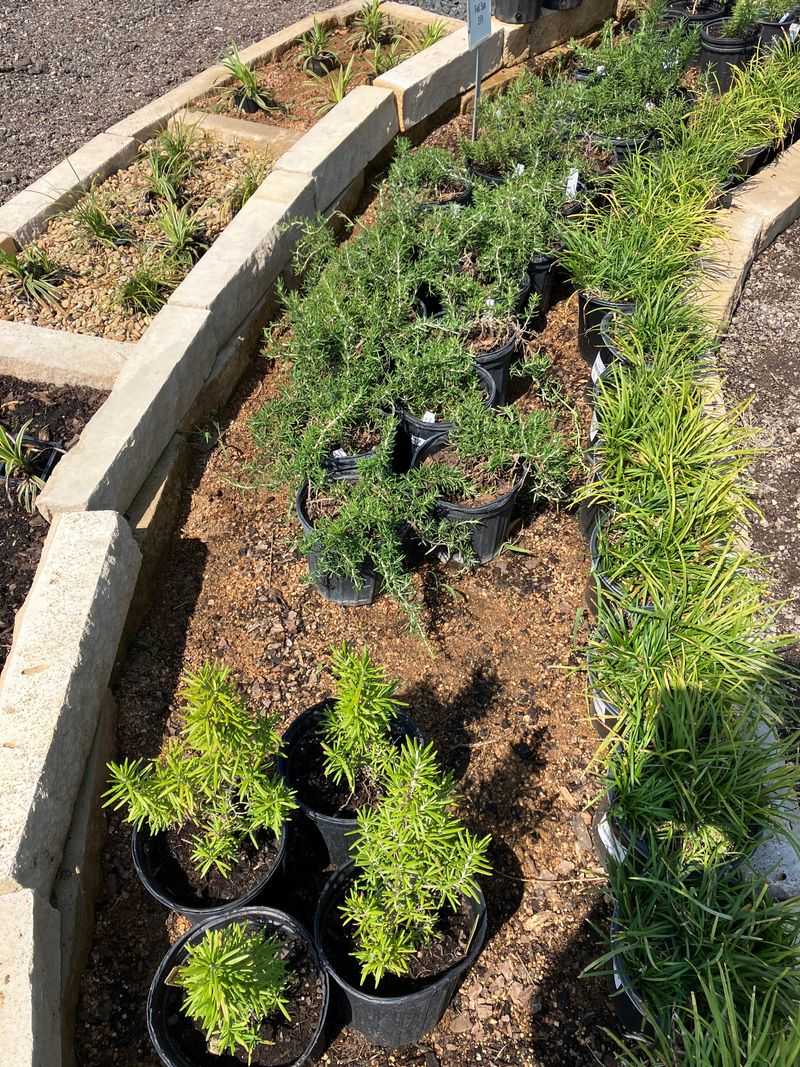
Prostrate rosemary earns its place in a foundation bed when the site actually suits it. The checklist is short: strong direct sun for at least six hours a day, soil that drains quickly after rain, a bed wide enough to keep mature plants clear of siding and inspection zones, and a climate where Zone 7 or warmer conditions apply most winters.
Check those boxes and the plant is a genuinely attractive, low-maintenance addition that brings fragrance and year-round structure to a space that would otherwise hold only mulch.
Where the site falls short on any of those requirements, the honest answer is to choose a different plant. Texas A&M’s Easy Gardening rosemary guide and the Herbs for Texas Landscapes guide together make clear that rosemary is a site-dependent recommendation, not a universal solution.
Shady beds, poorly drained clay, and cold-exposed North Texas sites will likely end in a dead or struggling plant rather than a handsome edge.
Rosemary will not protect the foundation from cracking, shifting, or moisture problems. It will not replace the weed-suppression and temperature-moderating functions that mulch provides.
UF/IFAS guidance places foundation protection squarely on grading, drainage, irrigation management, and inspection access, and those factors should be addressed before any planting decision is made. Before buying plants, walk the bed and confirm sun exposure, probe drainage after the next rain, measure the clearance from the wall, and confirm the grade slopes away from the house.
A fragrant, well-placed rosemary edge is a genuine landscape upgrade; the site conditions are what make it possible.