
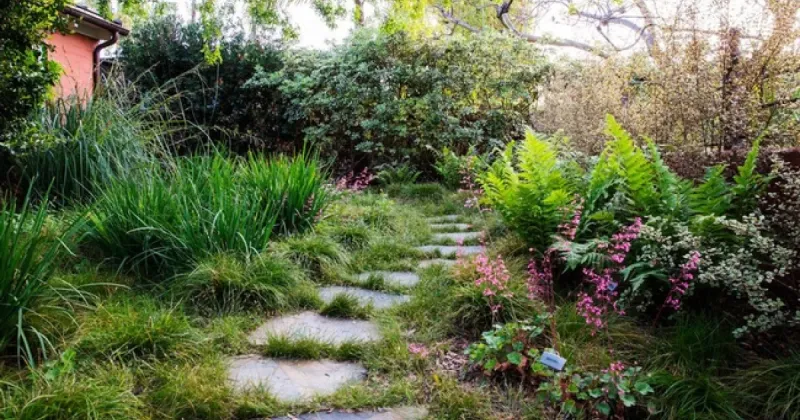
That skinny strip of dirt along your fence or the shadowy patch behind a wall is usually where plants go to die. It stays dry because the wall blocks the rain, and it stays dark because the sun barely reaches it.
But some California-friendly plants actually love those tough spots and will fill them with green without begging for water. Here are nine plants that turn those forgotten corners into the easiest part of your yard.
1. Coral Bells (Heuchera maxima)
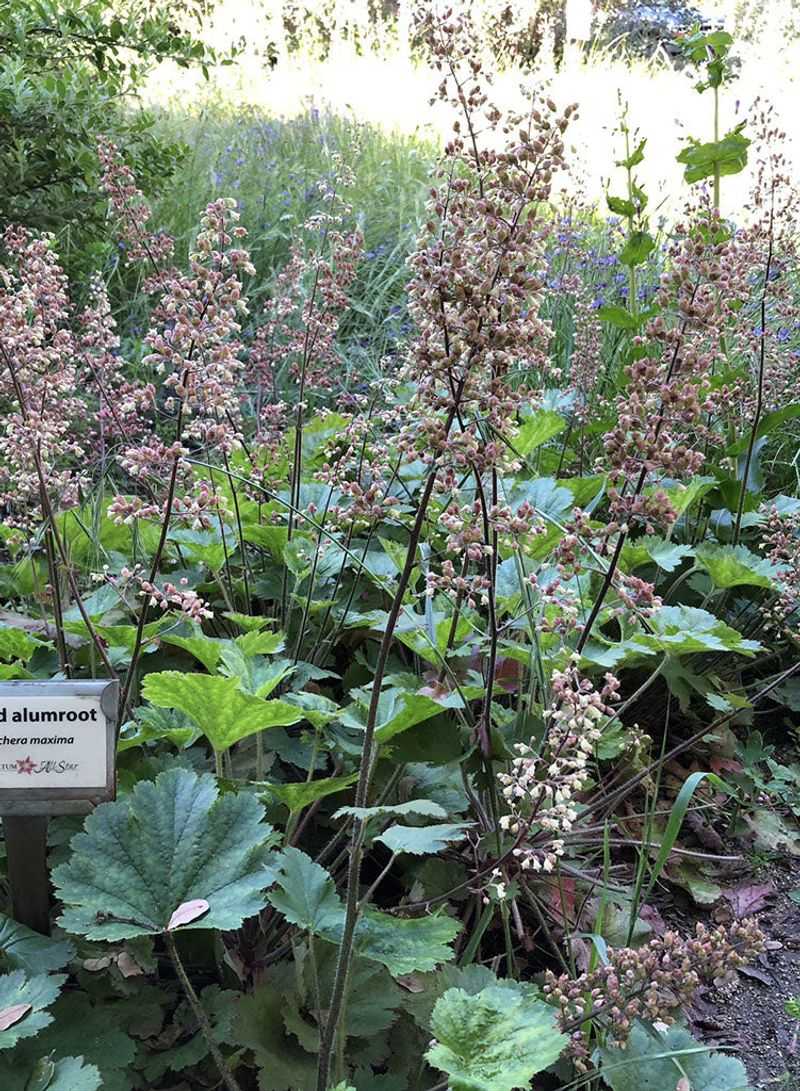
Native to the Channel Islands off the California coast, this coral bells shrugs off deep shade like it was made for it, because it basically was. Its rounded, scalloped leaves form a lush mound even when the sun never quite gets there.
Come late winter and spring, tall stalks of tiny pinkish flowers rise above the leaves and pull in hummingbirds and native bees. That makes it a quiet win for the wildlife-friendly yard many California homeowners are chasing.
Once established, it needs very little summer water, which fits right in with drought and water-restriction realities across the state. Tuck it along a north-facing fence or the shady base of a wall and it will settle in without fuss.
2. Western Sword Fern (Polystichum munitum)
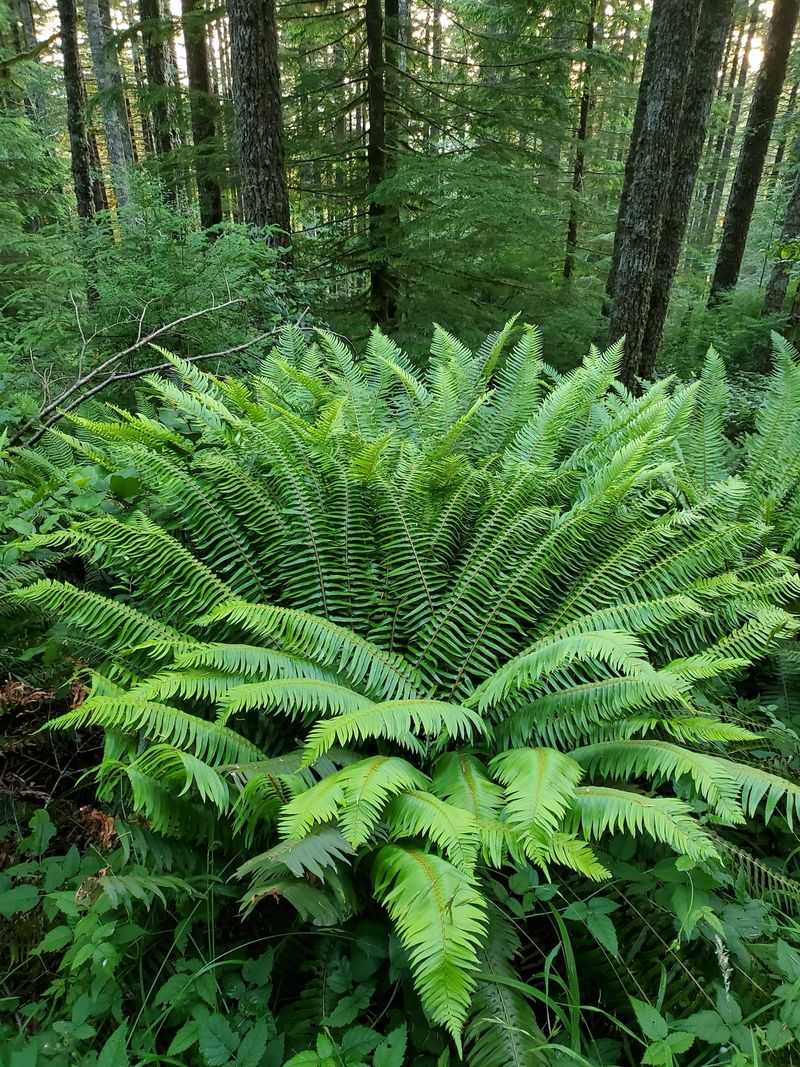
Walk through a shady coastal California canyon and you will spot sword ferns thriving where almost nothing else bothers to grow. Those bold, upright fronds bring a woodland feel to the gloomiest corner of a yard.
What surprises people is how tough it becomes once its roots take hold. After the first year or two it tolerates dry summer shade with only occasional deep watering.
Plant it in a run along the base of a fence and you get instant texture that stays evergreen year-round. It pairs beautifully with coral bells and other native shade lovers for a layered, natural look.
3. Douglas Iris (Iris douglasiana)
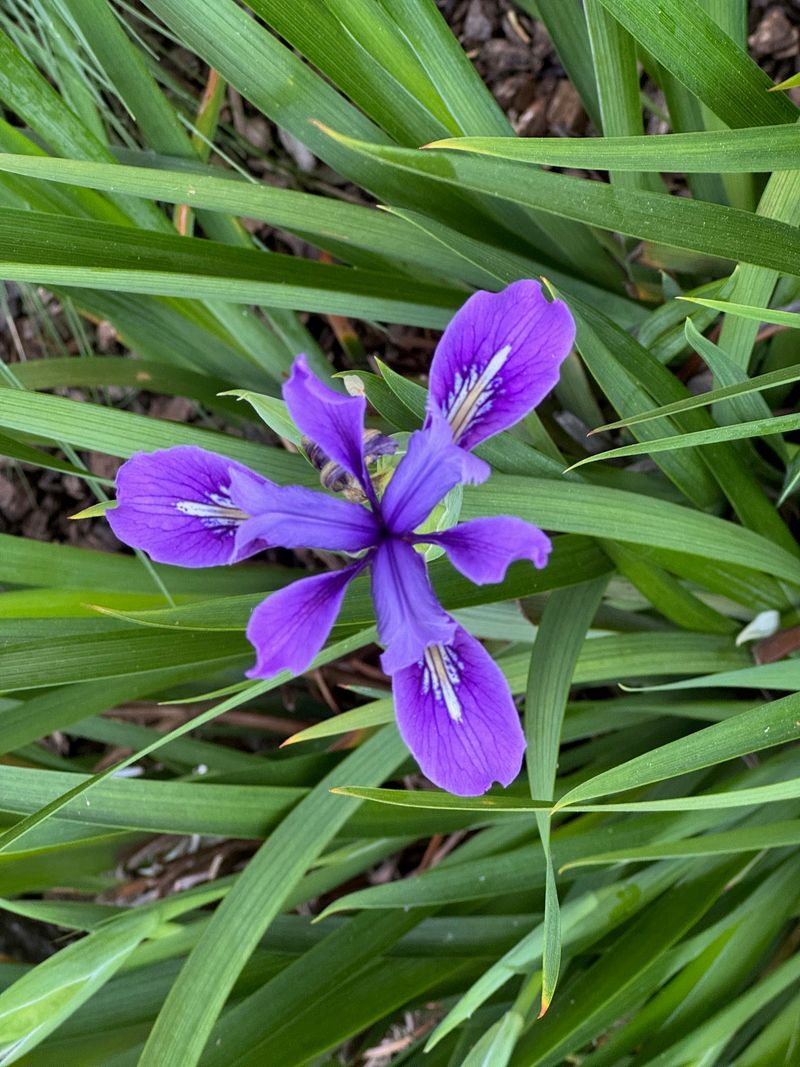
Few plants deliver flowers this pretty while asking for so little. The Douglas iris is a California native that grows happily in the part-shade strip most gardeners write off as hopeless.
Its grassy clumps stay green and tidy, then throw up purple, blue, or cream flowers in spring that look almost too delicate for such a stubborn survivor. Bees and other pollinators appreciate the early blooms.
It handles coastal fog, inland heat, and the long dry summer without constant watering once it settles in. A word of caution for pet owners: the plant is toxic if eaten, so place it where curious dogs cannot dig in.
4. Heavenly Bamboo Alternative: Coffeeberry (Frangula californica)
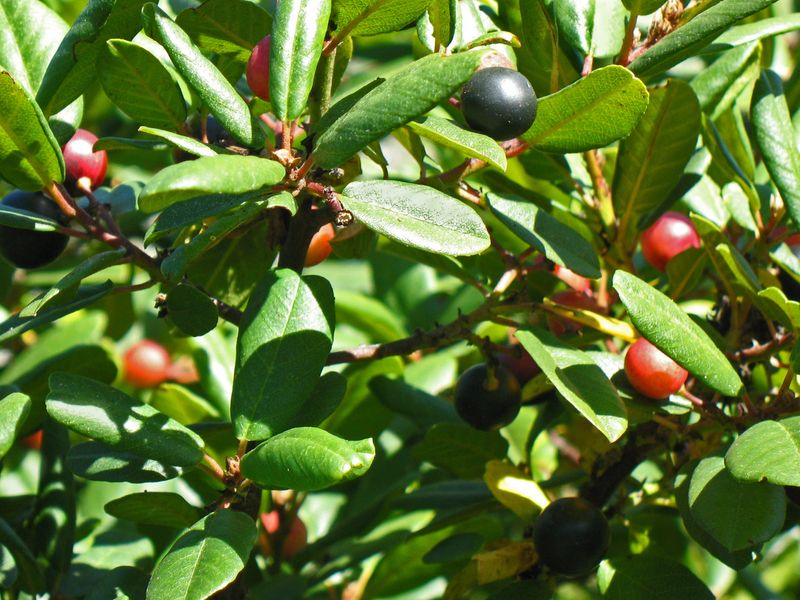
Looking for a shrub that fills a shady fence line and feeds birds at the same time? Coffeeberry does both without complaint, which is why so many California native gardens lean on it.
The glossy leaves stay evergreen, and small berries ripen from red to black, drawing in mockingbirds, thrashers, and other backyard visitors. It is a genuinely useful pick for anyone who wants an alive, wildlife-friendly yard.
Coffeeberry is famously easygoing about soil and light, thriving in full sun or dry shade. It also plays nicely with defensible-space goals, since it can be kept low and tidy near structures in fire-prone areas.
5. Wood Strawberry (Fragaria vesca)
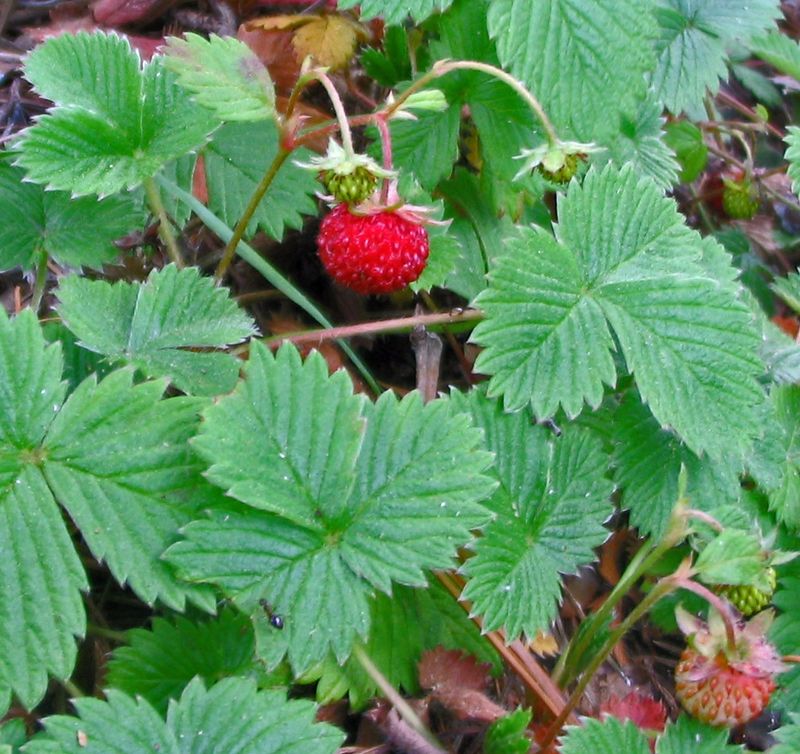
Here is a groundcover that carpets bare dirt and hands you a snack while doing it. Wood strawberry spreads across shady ground where lawn refuses to survive, knitting the soil together with low green leaves.
Little white flowers appear in spring, followed by tiny, intensely flavored strawberries that birds and kids both raid. It is a charming way to soften the base of a fence.
Fun bit of trivia: these wild strawberries are the ancestors of the giant grocery-store kind, but the small ones often taste sweeter. Give it dappled shade and light water and it quietly does the rest.
6. Hummingbird Sage (Salvia spathacea)
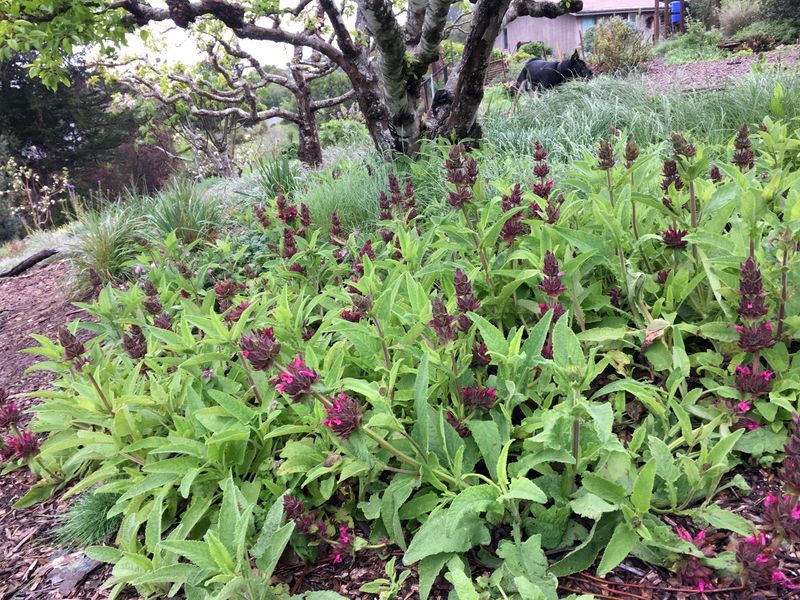
Crush a leaf of hummingbird sage and you get a fruity, almost tropical scent that lingers on your fingers. It is one of the few salvias that actually prefers shade, making it perfect for those dim spots under trees, fences, and walls.
Tall magenta flower spikes rise in spring and, true to the name, hummingbirds line up for the nectar. It spreads gently by underground runners to fill in an area over time.
Because it tolerates dry summer shade and needs little supplemental water, it fits the water-wise mindset most California gardeners are working toward. Plant it once and enjoy the scent and the bird traffic for years.
7. Yerba Buena (Clinopodium douglasii)
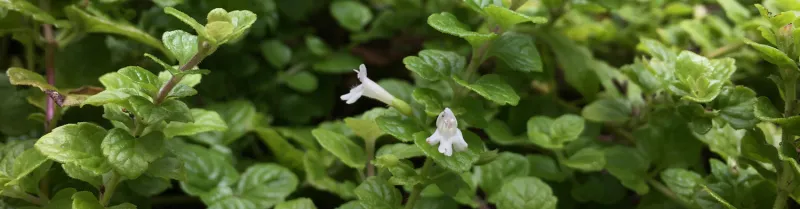
San Francisco was originally named after this humble little plant, which tells you it has been quietly thriving in California shade for a very long time. Yerba buena trails along the ground with small, mint-scented leaves that release a fresh aroma when brushed.
It is a low, spreading native that fills gaps under fences and beside walls where taller plants struggle. The tiny white flowers are modest but attract small pollinators.
Traditionally the leaves were steeped into a mild tea, so there is a bit of history growing right at your feet. Give it partial shade and occasional water and it forms a soft green mat with almost no effort.
8. Redwood Sorrel (Oxalis oregana)
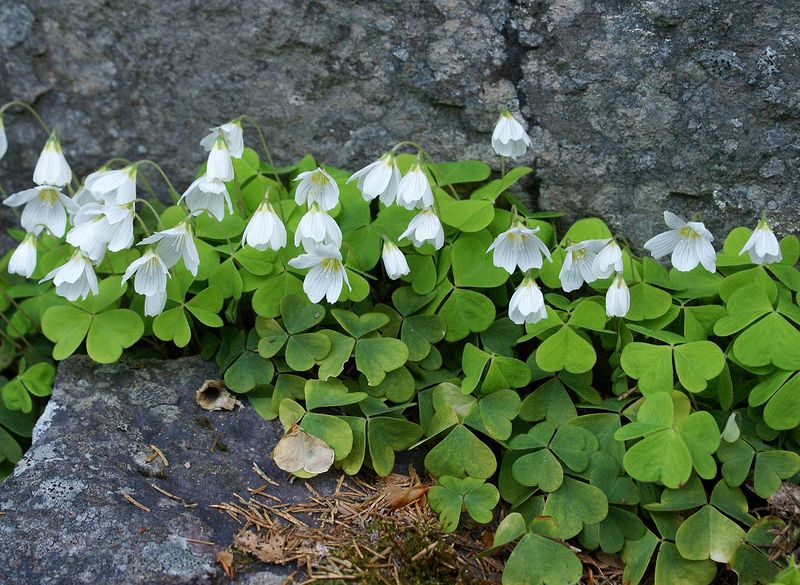
If your fence line looks more like a cave than a garden bed, redwood sorrel is built for it. This shamrock-leaved native evolved under the deep shade of coastal redwoods, so ordinary yard shadows feel positively bright to it.
The clover-shaped leaves fold up when hit by direct sun, a neat little trick that shows how adapted it is to darkness. Soft pink or white flowers appear scattered across the green mat.
It works best in the coastal and cooler parts of California where the soil stays a bit moister, though it handles dry shade once rooted. For a lush, forest-floor look in a spot nothing else will take, it is hard to beat.
9. California Fescue (Festuca californica)
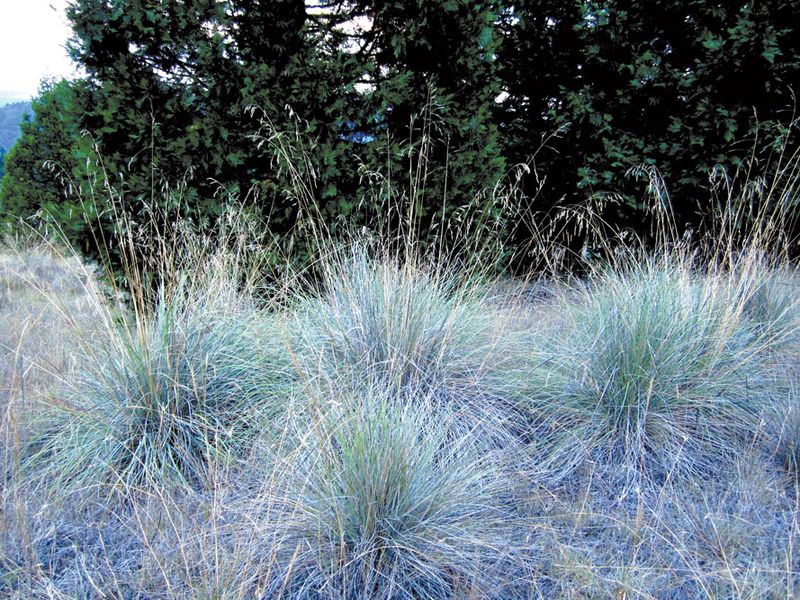
Grass in the shade sounds like a losing battle, until you meet California fescue. This clumping native bunchgrass forms graceful, arching mounds of blue-green blades in exactly the dry, shady spots turf lawns can never handle.
Airy flower stalks wave above the foliage in late spring and add movement to an otherwise still corner. It offers cover for ground-feeding birds and beneficial insects, which supports the wildlife-friendly yard goal.
As a lawn alternative along a fence, it means no mowing and very little water once established. Space several clumps out and let them knit into a low, natural meadow look that stays handsome through the long dry summer.