
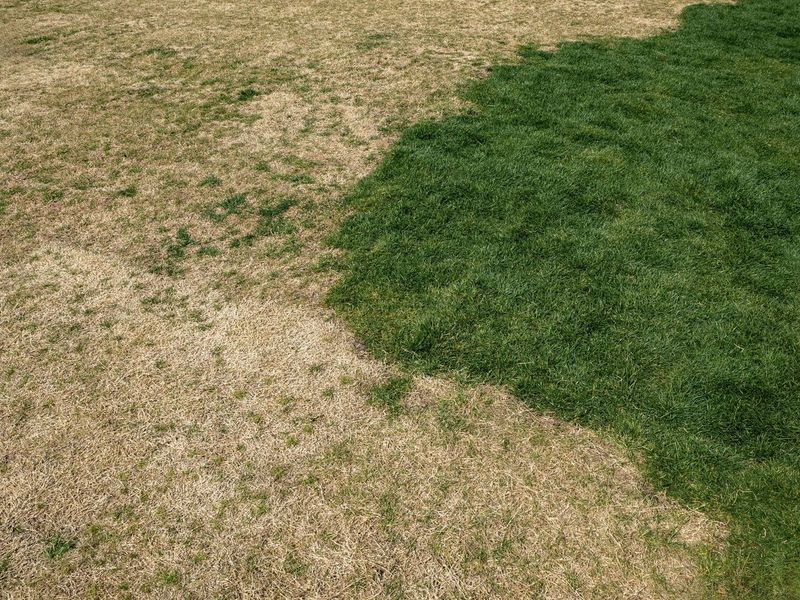
Late-summer heat can turn a once-green lawn into something that looks like straw, and the urge to fix it fast is completely understandable. Before you reach for the sprinkler dial or the fertilizer bag, though, the action you take next matters more than most people realize.
Brown grass after a heat wave is not automatically dead or even damaged beyond recovery – warm-season turf has built-in survival strategies that a well-meaning rescue attempt can actually interrupt. Knowing what your lawn is telling you before you act is the difference between a lawn that bounces back and one that gets worse.
Brown grass needs a diagnosis before it needs water
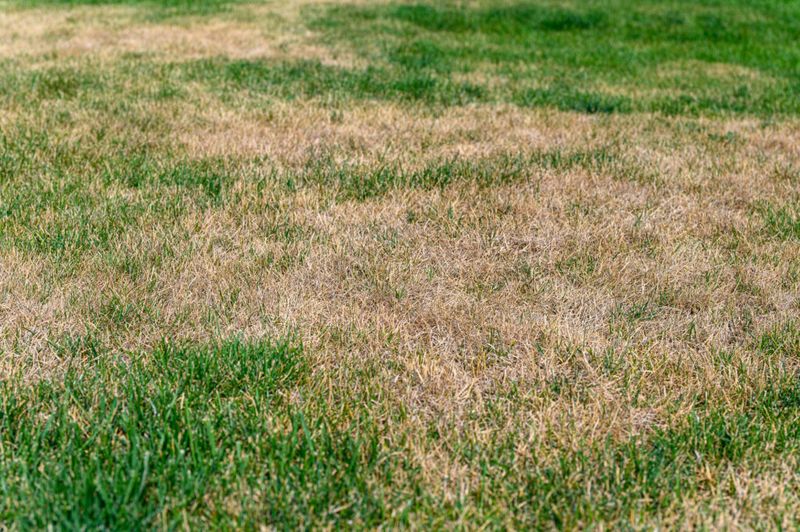
Scorched-looking turf is a symptom, not a sentence. Warm-season grasses like bermudagrass, St. Augustinegrass, zoysia, and centipedegrass are built to survive summer heat by slowing growth or entering a temporary dormancy.
A lawn that has turned tan or brown after a stretch of extreme temperatures may simply be resting, not dying.
The situation changes when the browning does not fit that pattern. Persistent bare areas, patches that keep spreading after rainfall, stolons that pull away from the soil easily, or a complete absence of any green tissue at the crown are signals that something beyond ordinary dormancy may be at work.
UF/IFAS extension research on turfgrass browning identifies multiple possible causes, including insects, disease, irrigation failure, soil compaction, mowing injury, shade, and nutrient problems, all of which can produce a scorched appearance similar to heat stress.
For St. Augustinegrass and bermudagrass lawns in Florida and Texas, Texas A&M AgriLife St. Augustinegrass guidance and the bermudagrass management calendar both emphasize reading the whole picture before intervening. The overwatering caution in the sections that follow applies specifically to established lawns already receiving automatic irrigation without clear signs of drought stress – not to every brown lawn in every situation.
The obvious fix can create a deeper root problem
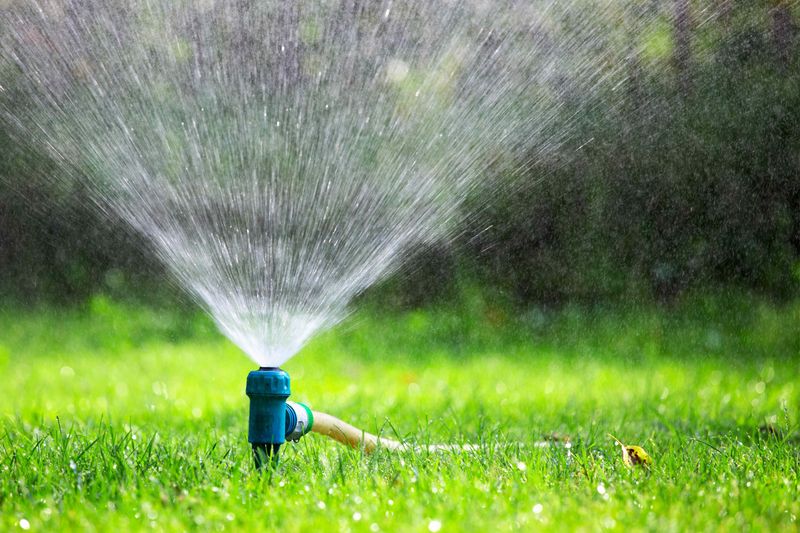
Turning the sprinkler up is the most instinctive response to a brown lawn, and for a genuinely drought-stressed turf it can be the right call. The problem arrives when that impulse runs ahead of any real diagnosis, especially when an automatic system is already running on a fixed daily schedule regardless of recent rainfall or actual soil moisture.
According to UF/IFAS summer lawn and irrigation guidance, improper irrigation damages more Florida lawns than any other single cultural practice. Frequent, shallow watering trains grass roots to stay near the surface because moisture never penetrates deeply enough to reward downward growth.
That shallow root system then becomes more vulnerable to the next heat wave, not less.
Beyond root depth, excessive, poorly timed, or poorly calibrated irrigation can create conditions favorable to disease, weeds, and thatch buildup under particular site conditions – especially on soils with limited drainage or in areas that already receive regular rainfall. Texas A&M AgriLife irrigation cycling guidance and UF/IFAS homeowner best management practices both recommend applying water in response to actual turf stress and site conditions rather than running the system because it is a scheduled watering day.
Correct, measured irrigation remains the solution for turf that is genuinely drought-stressed – the target is unnecessary or uncalibrated watering, not all watering.
Three signs can indicate drought stress
Before adding any water, walk across the lawn and look carefully at the turf. Three signs can indicate that grass may be experiencing genuine drought stress rather than dormancy or another problem.
The first is leaf blades folding or rolling lengthwise, which happens as grass conserves moisture by reducing the surface area exposed to heat.
The second sign is a bluish-gray or silvery cast across the turf instead of the normal green. The third is footprints that remain clearly visible for several minutes after you walk across the grass, because stressed blades lack the turgor pressure to spring back.
UF/IFAS drought-tolerance guidance and UF/IFAS homeowner best management practices describe these three indicators and recommend considering irrigation when roughly 30 to 50 percent of the lawn shows them.
That 30-to-50-percent threshold is a useful starting point for many Florida lawns, but it is not a universal trigger. Grass species matters: bermudagrass tolerates more stress before needing water than centipedegrass does, for example.
Recent rainfall, your irrigation system’s known coverage, any forecast rain, local watering restrictions, and other visible symptoms all belong in the decision. These signs should be read alongside the full picture, not as a standalone command to water immediately.
A catch-can test replaces timer guesswork
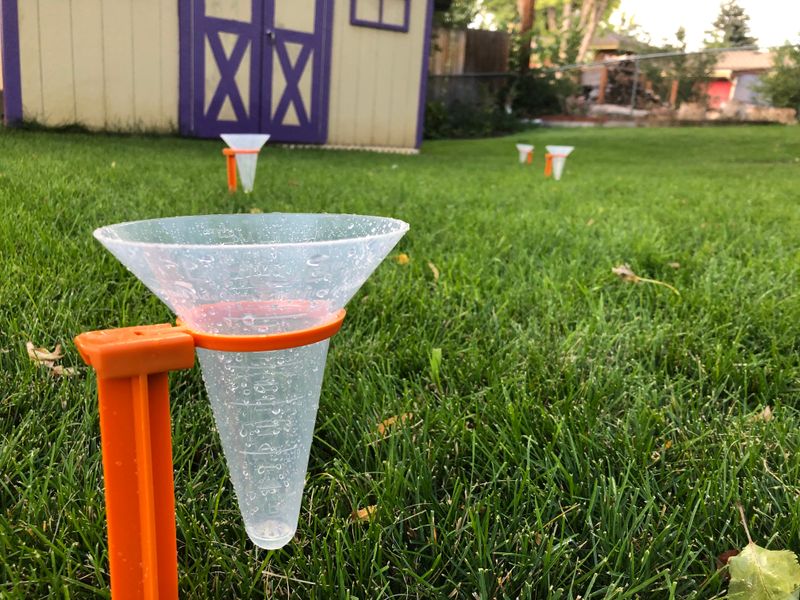
Most homeowners have no idea how much water their irrigation system actually delivers. Timer minutes are not a reliable measure because different sprinkler head types, worn nozzles, water pressure variations, and zone sizes all affect output.
Two zones running for the same number of minutes can deliver very different amounts of water to very different parts of the lawn.
A catch-can test solves that problem with equipment already in most kitchens. Place straight-sided containers – tuna cans work well – throughout each irrigation zone, spacing them to cover the full area.
Run the system for a typical cycle, then measure the depth of water collected in each can. The variation you find between cans often explains why one section of the lawn looks healthy while another stays brown despite identical timer settings.
UF/IFAS summer irrigation guidance and UF/IFAS best management practices both recommend this test before adjusting run times.
For many Florida lawns, applying approximately 1/2 to 3/4 inch per irrigation event is a reasonable regional target, though sandy soils, clay soils, slope, and shade all affect how much a specific site can absorb without runoff. Texas conditions vary even more widely.
Texas A&M’s bermudagrass calendar recommends using turf stress signals and evapotranspiration data rather than a fixed schedule. Texas readers can also use the Water My Yard program and the TexasET Network for site-specific irrigation guidance calibrated to local weather and grass type.
Mowing can compound heat stress
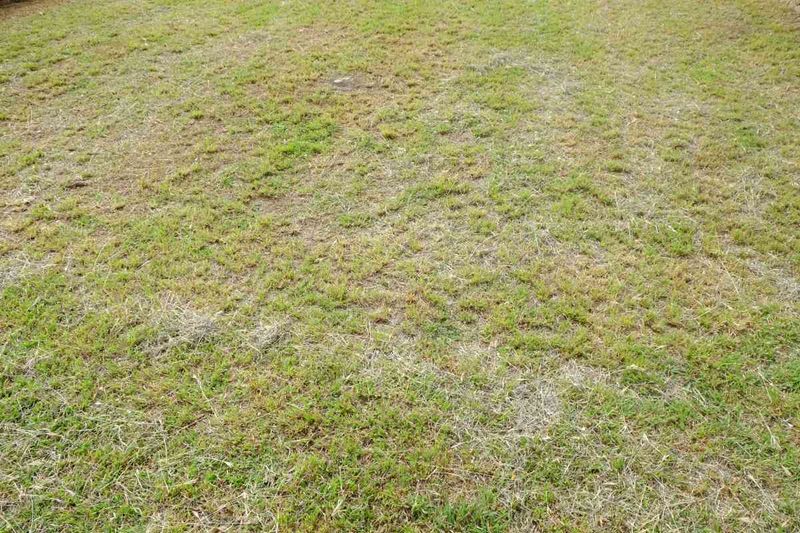
Once irrigation is addressed, mowing habits deserve a close look. Grass blades are the primary surface for photosynthesis, and removing too much of that tissue at once leaves the plant with less capacity to produce energy precisely when heat is already limiting recovery.
The general rule for any grass type is to remove no more than one-third of the blade height in a single mowing session.
Browning that appears immediately after mowing can warn that too much photosynthetic tissue may have been removed, though that symptom alone is not conclusive – other factors including disease, soil problems, or pre-existing stress can produce a similar result. Texas A&M AgriLife’s bermudagrass calendar and University of Georgia turfgrass guidance both recommend raising mowing height during hot, dry periods to preserve the leaf tissue the plant needs to survive.
When a lawn is under severe drought or heat stress, Virginia Cooperative Extension drought recovery advice suggests reducing mowing frequency and, when conditions are extreme, staying off the turf entirely until stress eases. A taller cut helps protect the crown and retain soil moisture, but raising the mower deck is not a guaranteed fix on its own – it works best as part of a broader approach that also addresses water and timing.
Fertilizer is not a color-restoration button
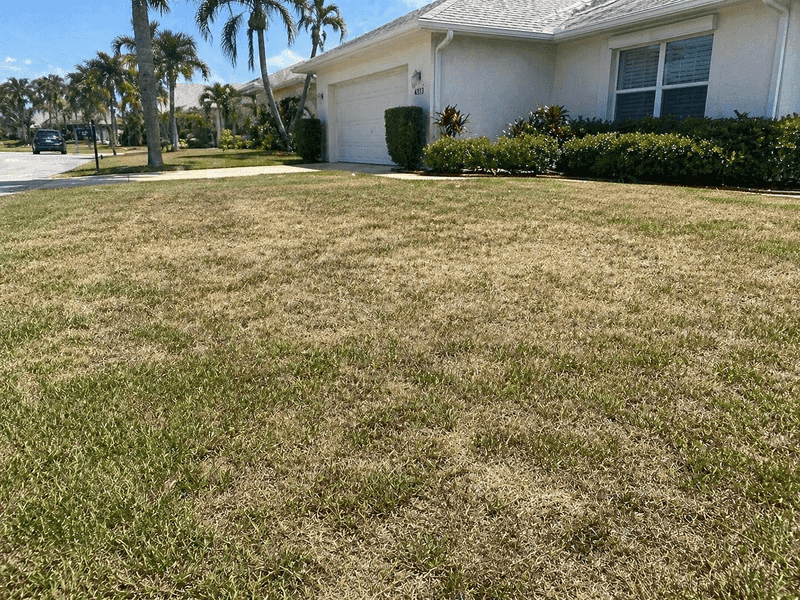
When a lawn turns brown, the second instinct after watering is often to feed it. Fertilizer feels like a logical rescue tool because green color is associated with healthy, well-fed turf.
Under late-summer heat and drought conditions, however, applying nitrogen fertilizer to stressed grass can make things considerably worse rather than better.
Texas A&M AgriLife’s bermudagrass management calendar advises against fertilizing during hot, dry late-summer periods when soil moisture is limiting. Nitrogen promotes new leaf growth, but that growth requires water and energy the plant may not have available.
The result can be weak, thin tissue that is more susceptible to disease and insect pressure, not a healthier lawn. UF/IFAS guidance on summer lawn mistakes identifies excessive summer nitrogen as a contributor to weak growth, thatch buildup, and increased pest and disease problems.
Fertilizer is not permanently off the table – it may be appropriate when turf is actively growing, adequately watered, and supported by a soil test or regional recommendation. When the time is right, follow label rates carefully, keep granules off hard surfaces, and prevent runoff into storm drains.
EPA nutrient pollution guidance notes that over-fertilizing and overwatering together increase the risk of nutrient runoff into local waterways. Florida homeowners should also check local rules: fertilizer blackout periods vary by county and municipality, so consult your county Extension office, city, or water management district.
UF/IFAS urban fertilizer ordinance information and Sarasota County fertilizer management guidance are useful starting points for understanding how local rules may affect your timing.
Patch patterns can point away from drought
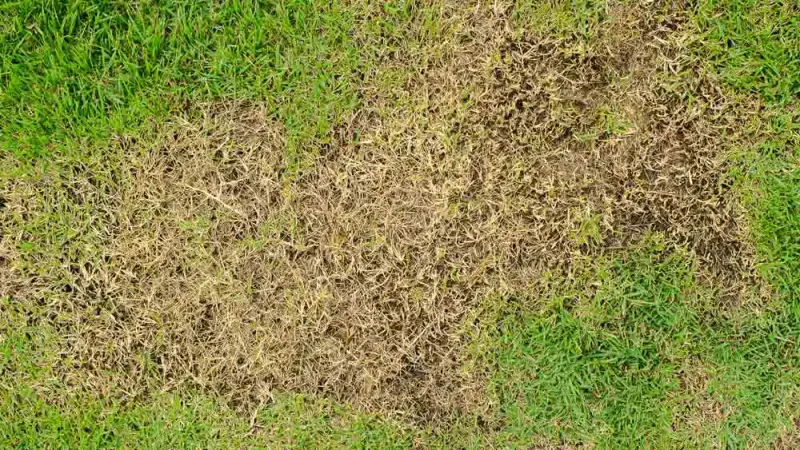
Not all brown patches are created equal. Broad, uniform discoloration across a lawn during a heat wave fits the profile of heat stress or dormancy.
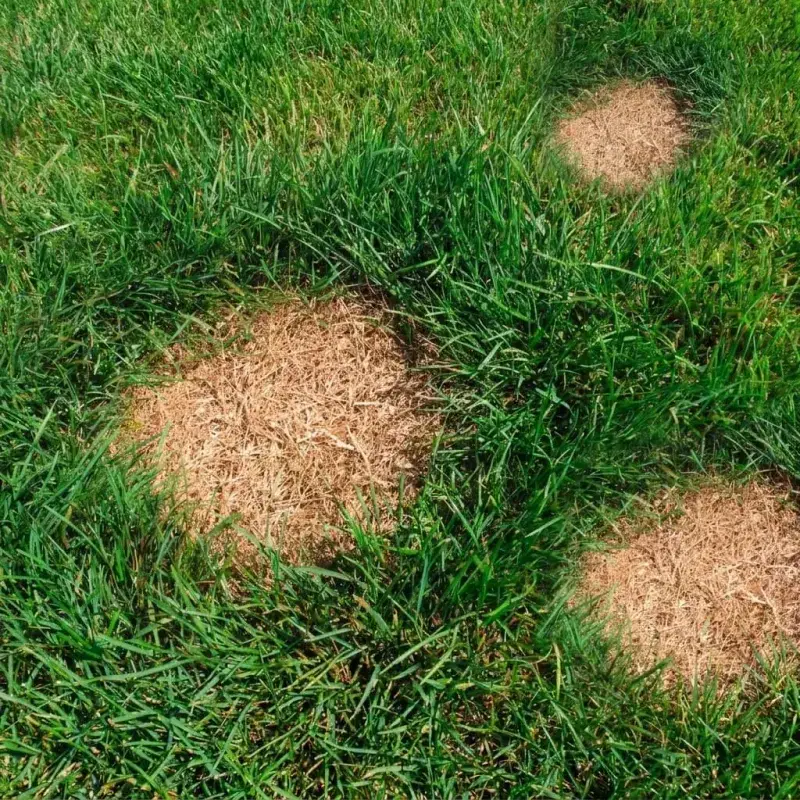
Patches that are irregular in shape, keep expanding outward even after rainfall or irrigation, or show a distinct pattern – rings, arcs, or sharp edges – are pointing toward something else entirely.
In St. Augustinegrass lawns across Florida and Texas, chinch bugs are a common culprit that closely mimics drought damage. Texas A&M AgriLife chinch bug guidance explains that infestations typically appear as expanding, irregular patches in sunny areas during hot, dry weather – exactly the conditions that also produce drought stress.
Watering more in response to chinch bug damage does not help the grass and may actually favor the pest. St. Augustinegrass lawn management guidance from Texas A&M recommends inspecting the turf closely at the edge of affected areas for the insects themselves before deciding on a response.
Disease can also produce circular or semicircular patterns, and compaction, shade changes, or irrigation head failures tend to create repeating geometric zones that align with system coverage rather than rainfall patterns. UF/IFAS turfgrass browning research reinforces that color alone cannot distinguish between these causes.
When patches do not respond to measured, appropriate watering within a reasonable period, contact your county Extension office for a species-specific diagnosis rather than adding more water or chemicals.
Use a measured recovery plan instead of a rescue routine
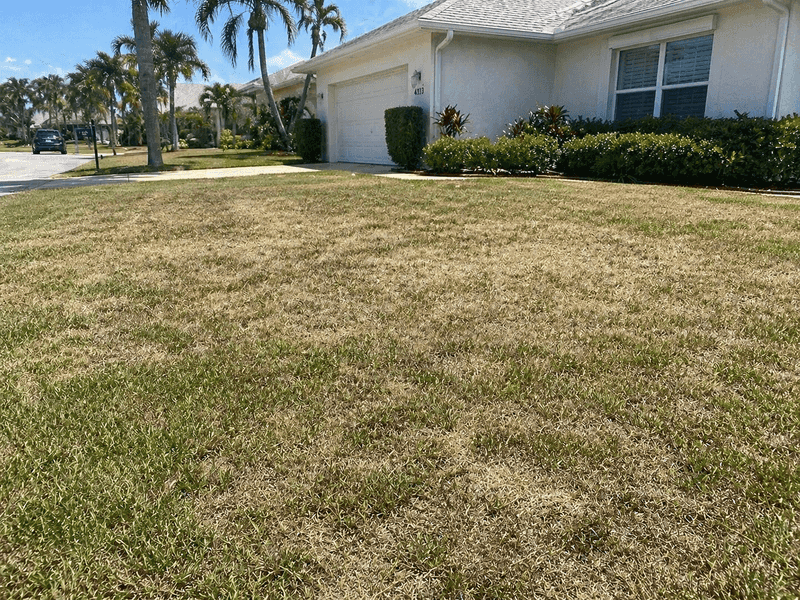
Putting the right recovery sequence into practice starts with two basic questions: what type of grass do you have, and what pattern does the browning follow? A warm-season lawn showing broad, uniform discoloration after a heat wave is a different situation than one with spreading irregular patches or areas that stay bare after rain returns.
Check for the three possible drought-stress indicators – folded blades, a bluish-gray cast, and lingering footprints – before adjusting irrigation. If those signs are present across a meaningful portion of the lawn, run a catch-can test to find out what the system actually delivers, then water according to site conditions and any local restrictions rather than a fixed daily schedule.
UF/IFAS homeowner best management practices and Texas A&M’s bermudagrass calendar both support a stress-signal approach over a calendar-based one.
Keep the mower deck high and reduce mowing frequency while the lawn recovers. Hold off on fertilizer unless the turf is actively growing, adequately watered, and supported by a soil test or regional recommendation.
Virginia Cooperative Extension drought recovery guidance reinforces the value of patience: some warm-season grasses need weeks rather than days to show visible improvement after stress eases. The goal is not to withhold all care, but to stop substituting urgency for observation – a lawn that gets the right amount of water at the right time, and nothing more, usually recovers on its own schedule.