
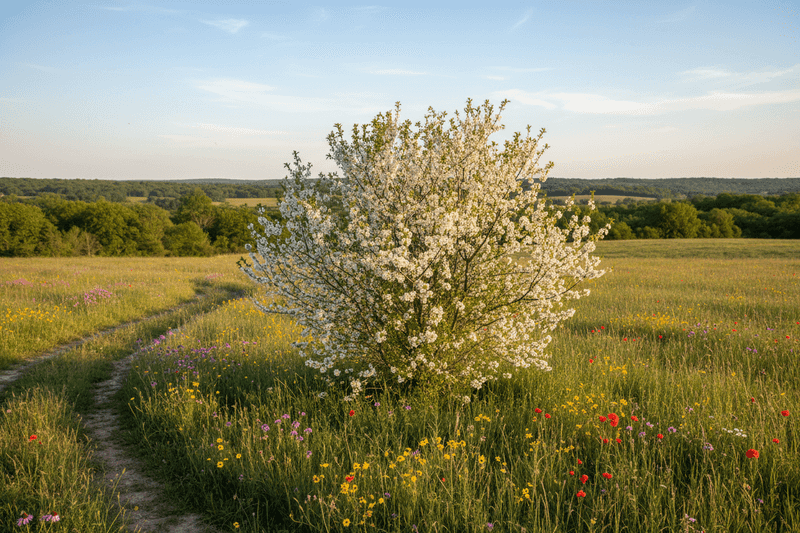
A driveway lined with small trees can make the whole yard look planned, even when the planting is simple. Florida natives can bring that same polished look with spring flowers, bright berries, interesting bark, or green leaves that last all year.
The trick is choosing a tree that fits your part of Florida and has room to grow beside pavement. These nine options offer different ways to replace crape myrtles without making your entrance look like an afterthought.
1. White Fringetree
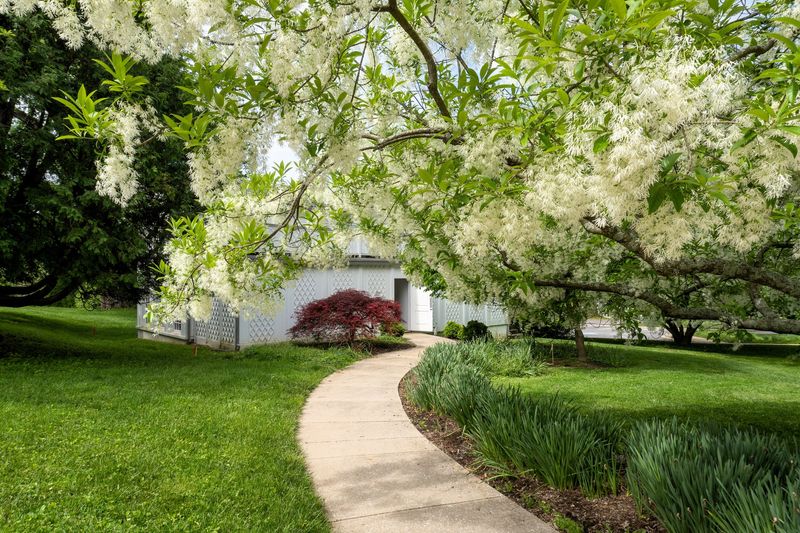
For a few weeks in spring, white flowers hang from the branches like loose threads of cotton. White fringetree, Chionanthus virginicus, gives a driveway a clear seasonal highlight without copying a crape myrtle’s summer flower display.
Expect a slow-growing small tree, commonly around 12 to 20 feet tall in landscapes, with a rounded or somewhat open crown. It is best suited to North and Central Florida, where its winter leaf drop feels natural rather than disappointing.
Plant it in sun or partial shade with acidic, well-drained soil that holds some moisture. A dry strip surrounded by pavement is a harder assignment, especially while the roots are getting established.
For a deliberate look, repeat the same tree on either side of a generous entrance, leaving room for its mature spread. Keep nearby plants low so the flowers and branching remain visible.
Female trees can produce blue-black fruit when pollinated, attracting birds. Place those trees over a mulched bed rather than directly above parked cars, and prune lightly instead of forcing a tight, formal shape.
2. Chickasaw Plum
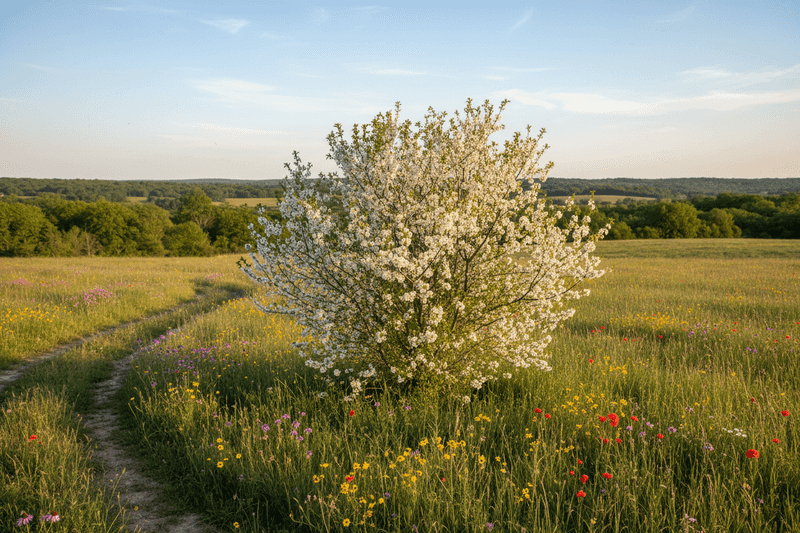
Before many trees have fully leafed out, a Chickasaw plum can turn into a cloud of small white flowers. That early show makes it a strong choice for a driveway entrance that needs a memorable spring moment.
Prunus angustifolia is especially useful in North and Central Florida on sunny, well-drained sites. It often stays around 12 to 20 feet tall, though its width and habit depend on growing conditions.
The catch is its urge to spread by root suckers. Give it a broad planting island where you can remove unwanted shoots, rather than squeezing it into a narrow ribbon between concrete and lawn.
Its small plums feed wildlife, and the flowers supply early food for visiting insects. Fallen fruit also means it belongs beside the parking area, not hanging over the spot where you step out of your car.
Use one as a focal tree with a crisp bed edge and a low groundcover beneath it. That tidy frame makes the naturally loose branching look intentional, while regular sucker removal keeps the planting from becoming a thicket.
3. Flatwoods Plum
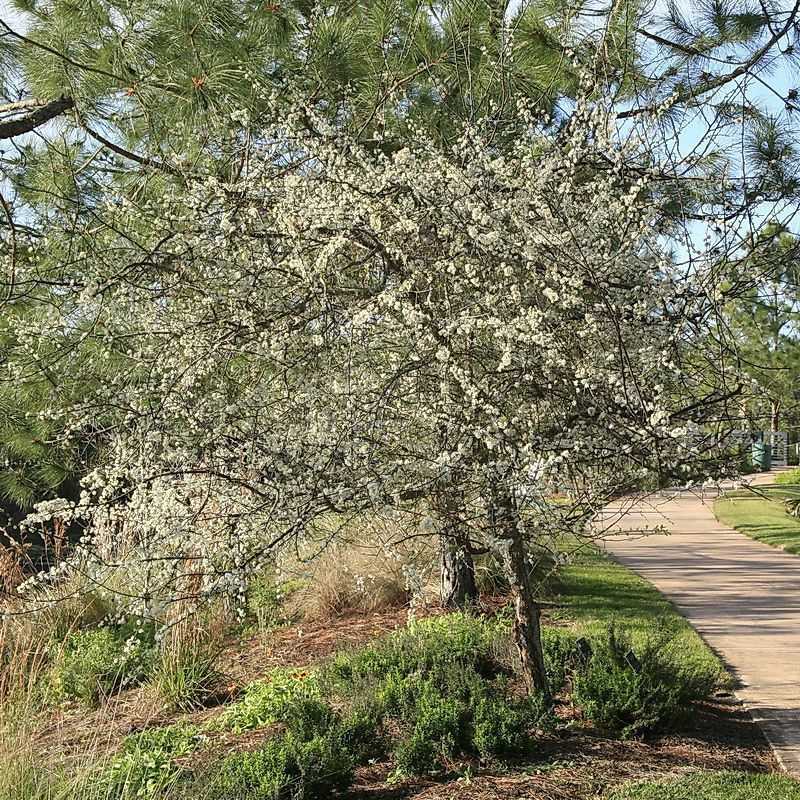
A small tree does not need a huge flower show to give an entrance character. Flatwoods plum offers white spring blossoms, a modest canopy, and a softer woodland look that works well with simple Florida homes.
Known botanically as Prunus umbellata, it commonly reaches about 12 to 20 feet tall. It is often a better choice than Chickasaw plum when you want a more tree-like specimen, though occasional suckers may still need attention.
Choose a sunny to partly shaded location with well-drained soil. North and Central Florida gardeners are especially well placed to use it, and established trees can handle dry periods better than many moisture-loving flowering trees.
Small fruits support wildlife, but fruit drop deserves a place in your layout. Set the canopy over a planting bed instead of a heavily used walking route or parking space.
Try a pair at a wide driveway entrance, with matching bed shapes rather than heavy pruning to create symmetry. Ask a Florida native nursery for the botanical name, since common plum names can lead to very different plants.
4. Dahoon Holly
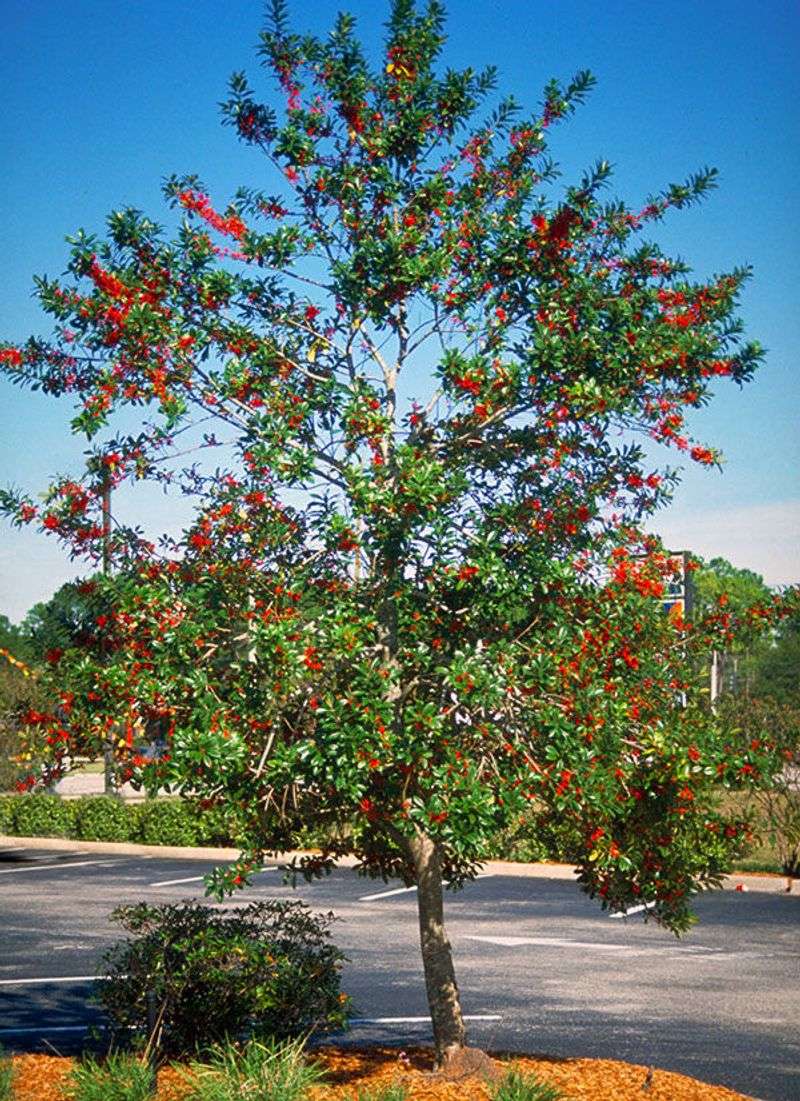
Have a low spot beside the driveway that stays damp after rain? Dahoon holly brings evergreen structure to the kind of moist ground that frustrates many small flowering trees.
Ilex cassine typically grows about 20 to 30 feet tall, sometimes taller, so think of it as a lasting landscape tree rather than a compact accent. Its upright form can frame a long driveway without needing a broad, spreading crown.
It grows across much of Florida and prefers moist, acidic soil in sun or partial shade. Although established plants tolerate some dryness, a hot, unirrigated strip of sand is not its strongest setting.
Female trees produce red berries when a compatible male provides pollen nearby. Buy a known female if berries are part of your plan, and ask the nursery about pollination rather than assuming every holly will fruit.
Place the trunk far enough from pavement to accommodate its mature size and future trunk growth. A repeated row with generous spacing looks composed, while selective pruning can maintain lower-branch clearance without turning the trees into rigid columns.
5. Yaupon Holly
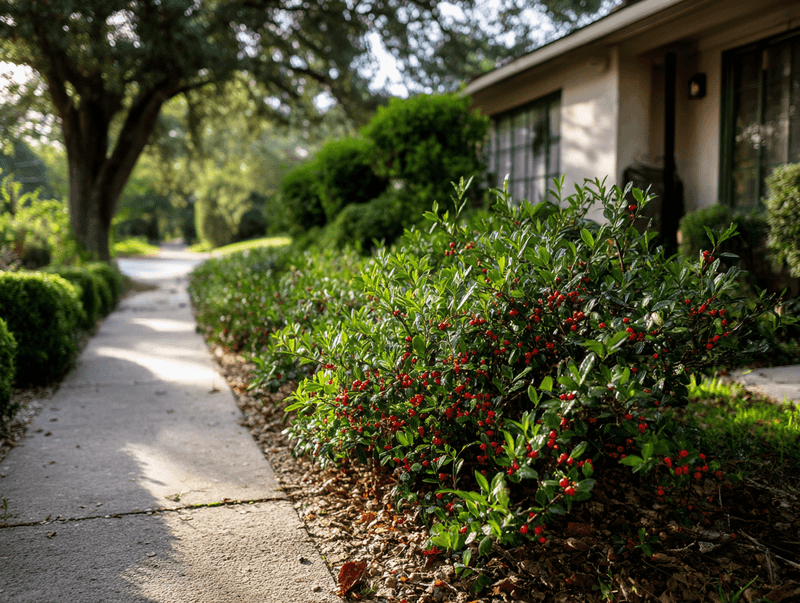
Clean lines are easier to keep when the plant already has small leaves and a naturally dense canopy. Yaupon holly delivers that neat appearance without requiring the flower power of a crape myrtle.
Ilex vomitoria is a useful evergreen choice for many North and Central Florida sites. Standard forms often reach 15 to 25 feet tall, while dwarf cultivars remain shrubs and will not provide the same overhead shape.
Sun or partial shade works, and established plants tolerate drought and a range of soils. That flexibility makes yaupon worth considering where reflected driveway heat and sandy ground limit fussier choices.
Choose a tree-form specimen with a sound branch structure, then remove unwanted basal shoots as needed. Avoid repeated shearing if your goal is a small tree with visible trunks and a relaxed crown.
Female plants can carry bright berries when pollinated by a compatible male. For the strongest design, repeat one selected form along the drive and keep the lower planting consistent, leaving clear sightlines wherever vehicles meet the street.
6. Simpson’s Stopper
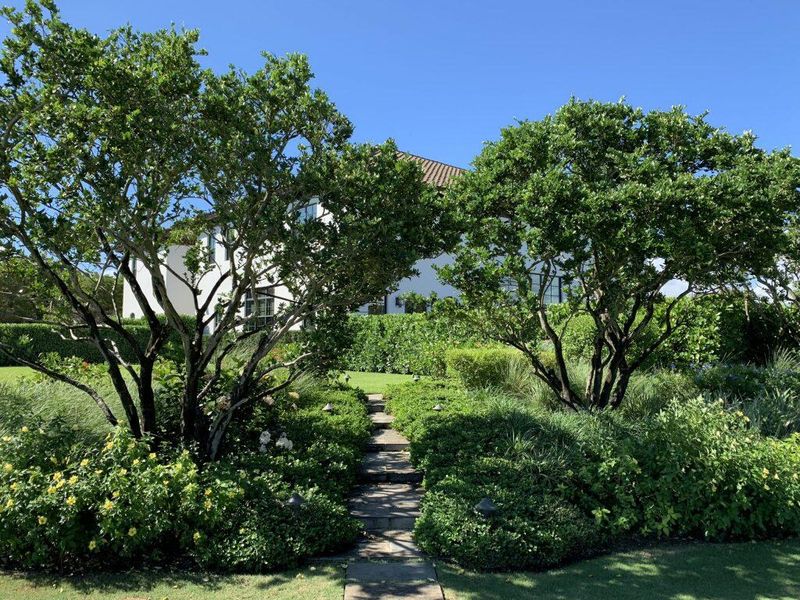
Peeling bark gives the eye something to enjoy even when no flowers are open. Simpson’s stopper combines that trunk detail with evergreen foliage, fragrant white blooms, and colorful fruit in a package that suits warm Florida yards.
Myrcianthes fragrans is especially useful in Central and South Florida within its local cold tolerance. It commonly grows 10 to 20 feet tall in landscapes, although older plants can become larger under favorable conditions.
Give it sun or partial shade and well-drained soil. Once established, it handles dry periods, but new plants still need steady attention to watering while roots spread into the surrounding ground.
A nursery-grown tree form makes a strong driveway accent because the exposed trunks create a finished look right away. Keep its natural outline and remove only selected branches instead of clipping the crown into a ball.
Birds visit the orange-red fruits, so position it where the canopy sits mostly over mulch. Repeating two or three specimens in a roomy bed creates a coordinated entrance without needing every tree to be identical.
7. Florida Fiddlewood
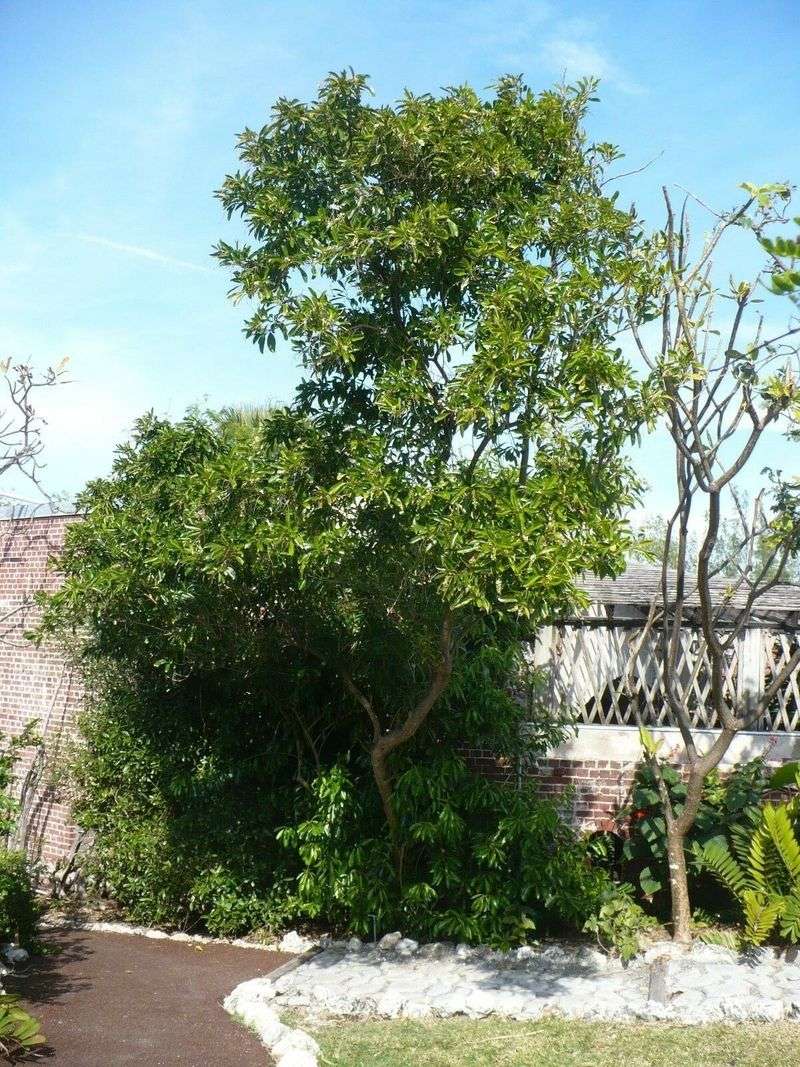
A little fragrance near the place you arrive home can make an ordinary driveway feel more welcoming. Florida fiddlewood offers clusters of small white flowers with a sweet scent, plus glossy foliage that keeps the planting looking full.
The native plant sold as Citharexylum spinosum, also listed as Citharexylum fruticosum, belongs in South Florida and other suitably warm locations. It can reach roughly 15 to 25 feet tall, with enough width to need a real bed rather than a pavement cutout.
Sun to partial shade and well-drained soil suit it best. Established plants tolerate some drought, but cold exposure makes it a poor statewide substitute for crape myrtle.
Its growth can be shrubby, so select a well-shaped nursery tree if an open trunk is important to the design. Light training while young is easier than removing large limbs later.
Flowers attract pollinators, and birds use the dark fruits. Set it a little back from the main parking zone, then pair it with restrained, low planting so its loose crown reads as graceful rather than crowded.
8. Geiger Tree
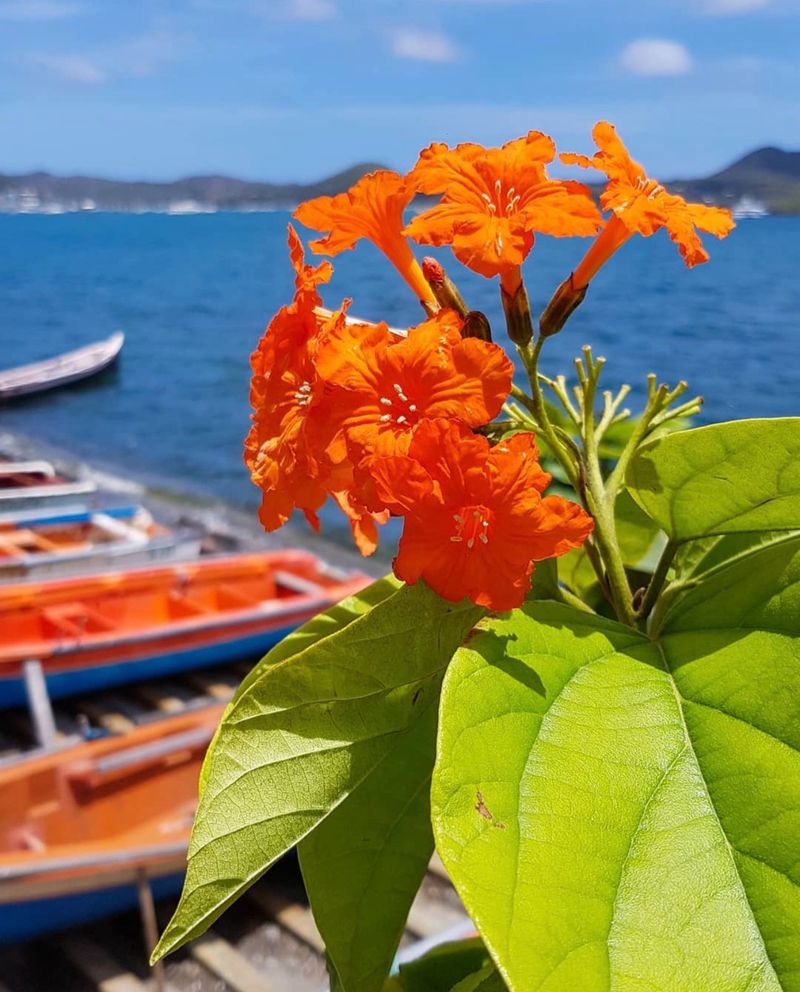
Orange flowers change the mood of an entrance immediately. Geiger tree brings a bold, tropical display that feels right beside a South Florida home, especially where a pale driveway or simple house color lets the blooms stand out.
Cordia sebestena is native to the Florida Keys and is best reserved for frost-free or nearly frost-free South Florida locations. It commonly reaches about 15 to 25 feet tall, with a rounded canopy and large, rough-textured leaves.
Full sun and good drainage are key. Its tolerance of coastal conditions makes it useful near the shore, but neither salt tolerance nor drought tolerance means a newly planted tree can go without establishment watering.
Leave space between the crown and vehicles because fallen flowers, leaves, and fruit create cleanup. Geiger tortoise beetles can also chew the foliage, sometimes heavily, so expect occasional cosmetic damage rather than a flawless canopy.
Use it as a single focal point at a broad entrance instead of crowding several into a narrow border. The vivid bloom color already makes a strong design statement without extra decoration.
9. Sweetbay Magnolia
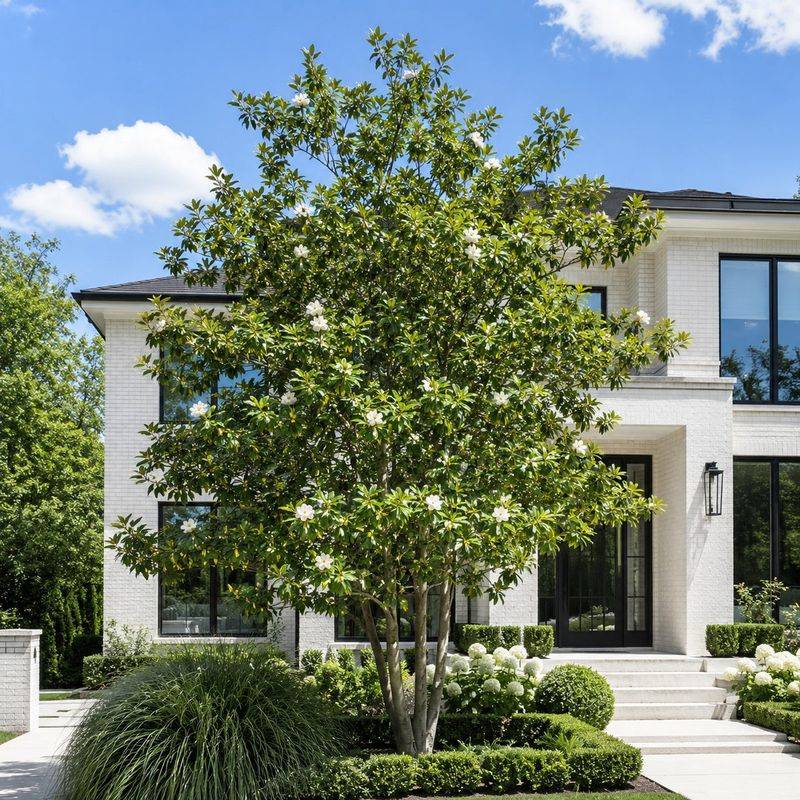
When the breeze turns the leaves, silvery undersides give sweetbay magnolia a quiet shimmer. Creamy white, lemon-scented flowers add another layer of interest without the heavy visual weight of a southern magnolia.
Magnolia virginiana needs more room than many crape myrtle replacements. Florida trees often reach 30 to 50 feet tall, sometimes more, making this a choice for a broad driveway landscape rather than a narrow frontage.
Its strongest setting is moist, acidic soil in sun or partial shade. A generous planting area that receives runoff can work well, provided it is not a compacted pocket surrounded by pavement.
Foliage may be evergreen or partly deciduous depending on location and weather. Plan for some leaf litter, and keep the tree away from overhead utilities and places where its eventual canopy would force harsh pruning.
On a large property, a loose row can create a calm, park-like arrival. Before buying, measure the available space, check underground utilities, and confirm local suitability with your county Extension office so the mature tree remains an asset.