
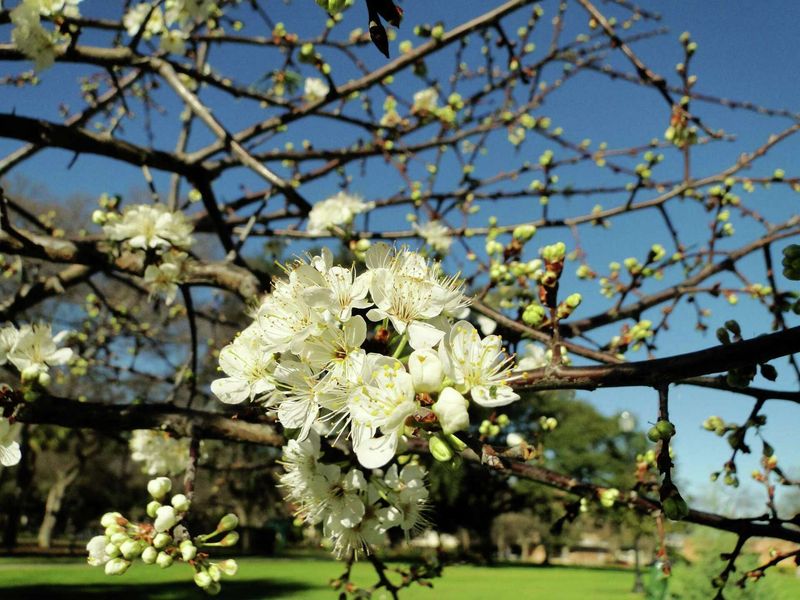
Most Texas yards have at least one crape myrtle, and that tree works hard through summer. But if you want a single native tree that delivers spring nectar, later fruit for birds, and food-web value that crape myrtle simply cannot match, Mexican plum deserves a serious look.
Prunus mexicana grows across much of Central and North Texas, fits smaller yards, and puts on a wildlife show that unfolds across the entire growing season.
Mexican plum offers a different kind of ornamental payoff
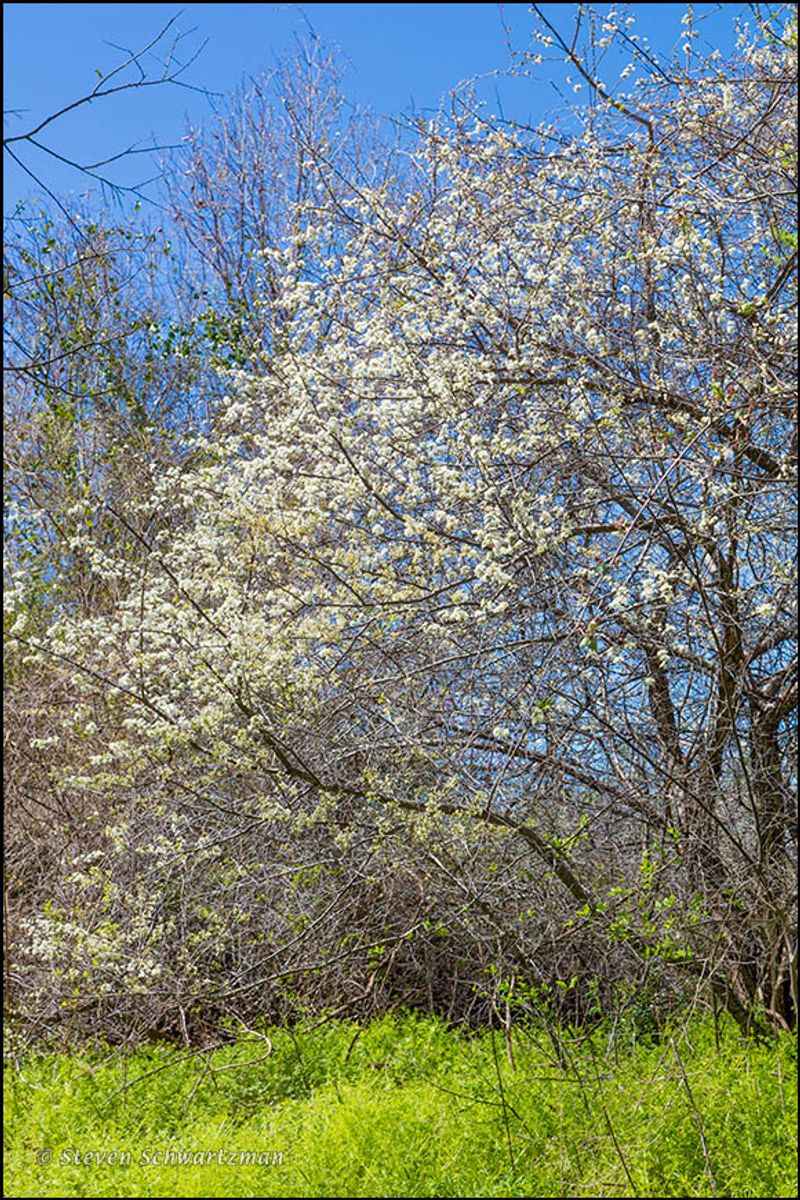
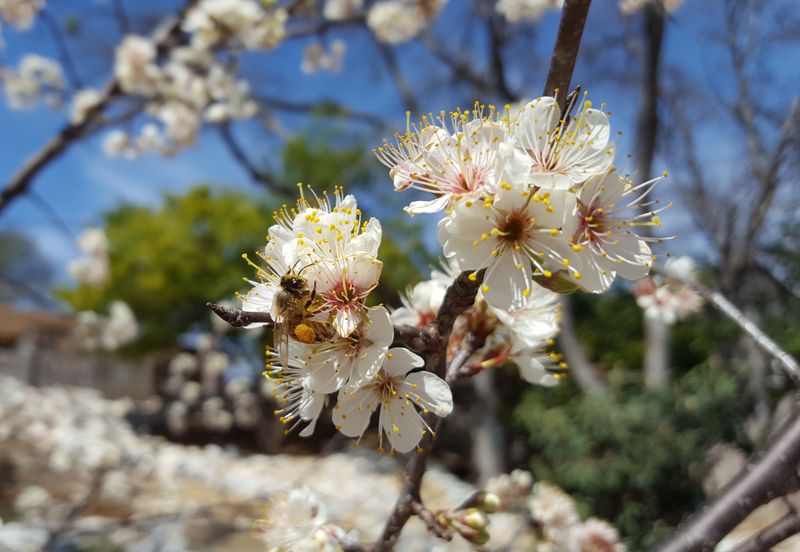
Prunus mexicana earns its place in a Texas yard through four separate seasons of interest rather than one long flush of summer color. According to the Texas A&M Texas Tree Selector, Mexican plum grows roughly 15 to 35 feet tall with a broad, spreading crown, fragrant white flowers that open in late winter to early spring, red-purple fruit that ripens later in the season, and peeling or flaky bark that adds texture year-round.
Fall foliage shifts from yellow to red or purple before the leaves drop, giving the tree a final visual note after the fruit is gone.
That seasonal sequence is genuinely different from what crape myrtle delivers. Crape myrtle is a reliable summer performer with showy pink, red, lavender, or white blooms that stretch across weeks of hot weather, and University of Georgia crape myrtle culture guidance confirms its ornamental staying power in Southern landscapes.
Mexican plum does not duplicate that long summer display, so readers should picture it as a different kind of ornamental trade-off rather than a visual copy.
What Mexican plum adds is a broader documented combination of native food-web functions. The Texas Parks and Wildlife Wildscapes Plant List identifies its flowers as nectar sources for bees, butterflies, and moths, and its fruit as food for gamebirds, songbirds, and mammals.
Crape myrtle flowers do attract pollinators, including native bees, and University of Georgia research on bee preferences for crape myrtle cultivars documented visits from honey bees, carpenter bees, and bumble bees. The honest comparison is not that crape myrtle has no wildlife value, but that Mexican plum stacks more documented native resources into one ornamental tree.
Its wildlife value unfolds from flowers to fruit
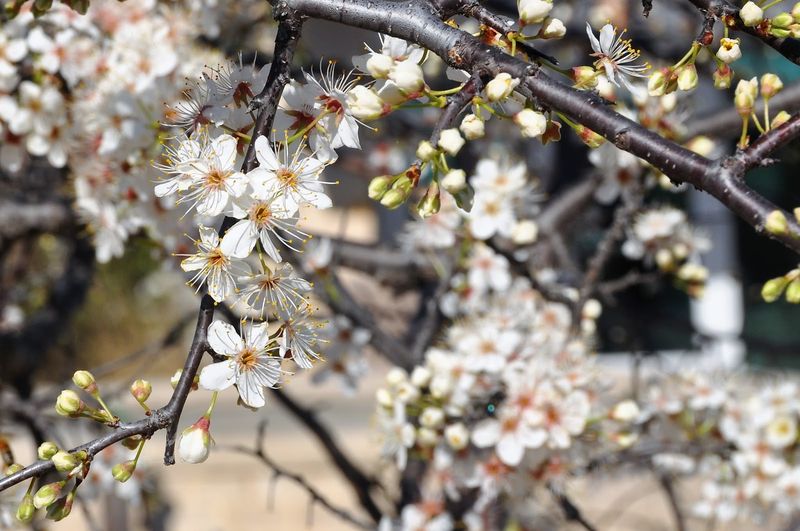
Few small Texas trees pack as much seasonal wildlife potential into one calendar year as Mexican plum. The flowers arrive in late winter or very early spring, often before the leaves unfurl, making them one of the earliest nectar sources available to bees and butterflies emerging after winter.
The Texas Parks and Wildlife Wildscapes Plant List specifically identifies Mexican plum’s fragrant flowers as nectar sources for bees, butterflies, and moths, meaning the tree can serve pollinators at a time when few other woody plants are blooming.
Later in the season, the red-purple fruit becomes the main attraction for a different set of visitors. Gamebirds, songbirds, and mammals are among the wildlife groups documented using Mexican plum fruit, according to the same TPWD wildscape material.
That late-season fruit resource is something crape myrtle does not offer in a comparable way, and it means the tree’s wildlife value does not end when the flowers drop.
Mexican plum also carries a role that many gardeners overlook entirely: it serves as a larval host plant for the eastern tiger swallowtail. The Texas A&M Texas Tree Selector profile for Mexican plum confirms this larval-host connection, which means the tree can support butterfly reproduction, not just adult nectar foraging.
These wildlife interactions are documented possibilities rather than guarantees. Actual use depends on tree age, nearby habitat, regional wildlife populations, pesticide exposure, and weather, so results will vary from yard to yard and season to season.
The practical takeaway is that the tree’s wildlife calendar has two distinct peaks: spring flowers for pollinators and late-season fruit for birds and mammals. Planting Mexican plum means choosing a tree whose wildlife payoff shifts with the season rather than arriving all at once.
Native-rich landscapes can add food-web resources
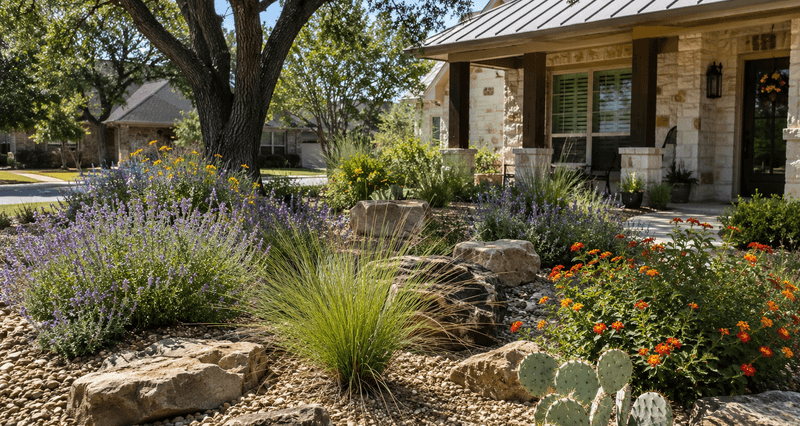
One tree’s wildlife value does not exist in isolation; it reflects the landscape around it. Texas Parks and Wildlife habitat guidance explains that native plants provide birds with insects, seeds, fruits, nuts, nectar, and shelter, while many introduced ornamentals offer little or none of that integrated food-web support.
That distinction matters when comparing a native like Mexican plum to a non-native ornamental like crape myrtle.
The strongest peer-reviewed evidence on this question comes from suburban landscape research. A study by Burghardt, Tallamy, and Shriver on native plants and bird and butterfly biodiversity in suburban landscapes found that properties with native-dominated plantings supported significantly more caterpillars and showed greater bird abundance, diversity, species richness, biomass, and breeding-pair numbers than conventionally landscaped properties.
That association between native landscaping and richer wildlife metrics is meaningful, but it describes a landscape-level pattern, not a controlled Mexican-plum-versus-crape-myrtle experiment.
Crape myrtle does contribute something to the pollinator picture. University of Georgia research confirmed that crape myrtle flowers attract multiple bee groups, including native bees, honey bees, carpenter bees, and bumble bees.
The defensible comparison is not that crape myrtle is worthless, but that Mexican plum offers a broader combination of documented native food-web functions: early nectar, later fruit, and larval-host value for butterflies.
Much of the strongest bird benefit from native trees may actually be indirect. Smithsonian-affiliated research on native plants and insectivorous birds highlights that native trees can support more insects and caterpillars, which are critical protein sources for nesting birds even when the tree’s own fruit is not the primary draw.
Mexican plum’s value to birds may be as much about what lives in and around it as about the fruit itself.
Check the site before you buy the tree

Mexican plum is well-suited to many Central and North Texas yards, but that does not mean it belongs in every Texas landscape. Texas covers roughly 10 distinct ecoregions with major differences in rainfall, soil type, drainage, and cold exposure, and a tree native to one part of the state may not perform well in another.
Before purchasing, verify that Mexican plum is a good regional fit by checking the Texas A&M Earth-Kind Plant Selector or contacting your county Extension office.
The Texas A&M Texas Tree Selector profile confirms that Mexican plum prefers full sun or part shade, tolerates alkaline soils, and carries documented drought tolerance once established. Those traits make it relevant to many Central and North Texas yards where clay-heavy or rocky alkaline soils challenge other ornamentals.
Part shade tolerance also gives it flexibility for sites that receive afternoon shade from a house or fence.
Drainage is the factor that catches gardeners off guard most often. Texas A&M’s tree-selection soil guidance describes a simple drainage test: dig a hole about 16 inches deep, fill it with water, and watch how fast it drains.
Water that clears within roughly an hour indicates good drainage; water that remains after a full day points to slow drainage that can suffocate roots over time. Mexican plum does not tolerate wet feet, so a site that stays soggy after rain is a poor match regardless of how appealing the rest of the yard looks.
For gardeners who want to take an extra step toward regional accuracy, Texas Parks and Wildlife Wildscapes certification resources encourage sourcing locally adapted, nursery-propagated native plants. A locally sourced Mexican plum is more likely to carry the genetic traits suited to your specific corner of the state than one grown far outside your ecoregion.
Planting and establishment care shape the first years

Getting Mexican plum into the ground correctly matters more than almost anything else you will do for the tree. The root collar, the point where the trunk transitions to roots, must sit at or just above the finished soil surface.
Burying it even a few inches can cause long-term decline. Texas A&M AgriLife February 2026 tree-planting guidance emphasizes that proper planting depth and appropriate watering at installation are more important than adding fertilizer when you plant.
After setting the tree at the right depth, water thoroughly to settle the soil around the roots and eliminate air pockets. Spread a 2- to 3-inch layer of mulch over the root zone, but keep it pulled back several inches from the trunk.
Mulch piled against the bark traps moisture and invites rot and pest problems. TreesAreGood planting guidance reinforces that a mulch-free collar around the base is a basic protection step that many gardeners skip.
Drought tolerance is a long-term trait, not an immediate one. The Texas A&M Tree Selector profile for Mexican plum lists drought tolerance, but that characteristic applies after the root system has expanded into surrounding soil.
A newly planted tree in a Texas summer can stress and die without supplemental water, especially during hot, dry, or windy stretches. Plan to water regularly through the first growing season and monitor the tree closely during heat events rather than assuming it can fend for itself from day one.
Plan for size, fruit, thorns, and seasonal differences
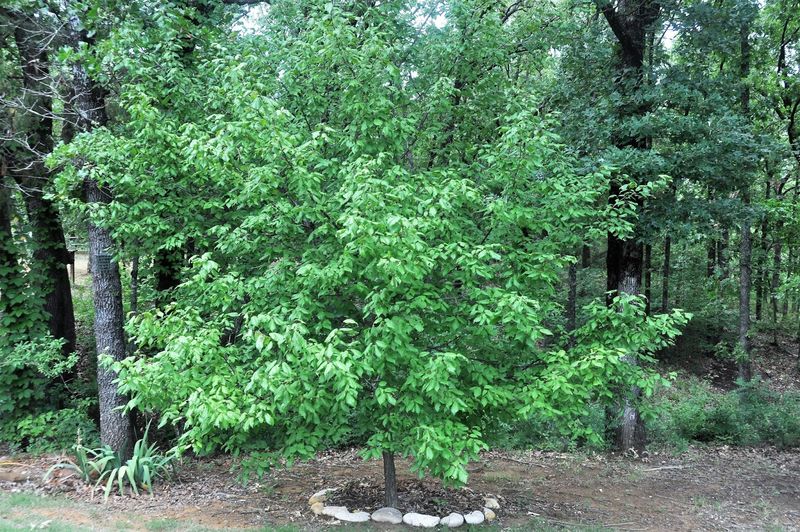
Knowing what Mexican plum looks like at maturity saves a lot of regret later. At roughly 15 to 35 feet tall with a broad crown, it needs more horizontal and vertical space than many gardeners expect when they buy a young nursery tree.
Placing it too close to a fence, driveway, or structure creates problems in a few years that are expensive to correct. Give it room to spread, and treat that open space as an asset rather than wasted ground.
Fruit is the feature that surprises people most. The red-purple plums are genuinely attractive and genuinely useful to wildlife, but they also fall.
Dropped fruit can stain pavement, attract insects, and create slippery surfaces. According to the Texas A&M Texas Tree Selector, Mexican plum also has some thorns and may be susceptible to borers attacking the trunk.
Siting the tree away from high-traffic walkways, patios, and play areas addresses both the thorn concern and the fallen-fruit mess at one time.
The ornamental trade-off with crape myrtle is real and worth naming plainly. University of Georgia crape myrtle culture information underscores that crape myrtle delivers weeks of showy summer color in pink, red, lavender, and white tones that Mexican plum simply does not replicate.
Mexican plum’s ornamental appeal is concentrated in spring bloom, peeling bark texture, late-season fruit color, and fall foliage rather than a long midsummer flowering window. For gardeners who rely on crape myrtle to carry the yard through July and August, Mexican plum is a complement or a trade-off, not a visual copy.
Choosing it means accepting a different seasonal rhythm in exchange for a richer wildlife resource mix.
Build the surrounding habitat for a stronger result

A single tree, no matter how well chosen, cannot supply every resource that birds and pollinators need across a full season. Mexican plum’s spring flowers and late-season fruit cover two important windows, but the gaps in between matter too.
Surrounding the tree with native shrubs, flowering perennials, and ornamental grasses creates a layered habitat that provides shelter, nesting material, and a longer succession of food resources than any one plant can deliver on its own.
Texas Parks and Wildlife Wildscapes certification guidance encourages gardeners to plan for water, shelter, and a variety of food sources rather than treating a single plant as a complete habitat solution. That layered approach is what allows a yard to support different wildlife groups at different life stages throughout the year.
TPWD Bird City Texas habitat resources reinforce that native plants working together provide insects, seeds, fruits, nuts, nectar, and cover in ways that isolated ornamentals cannot.
Pollinators need a continuous supply of blooms from early spring through fall, not a single flowering event. Texas Parks and Wildlife native bee guidance recommends planting a succession of native annuals, perennials, shrubs, and trees that keeps something in bloom across the entire active season.
Mexican plum handles early spring; other plants need to carry pollinators through summer and fall.
Pesticide choices affect everything in this picture. Routine broad-spectrum sprays applied around a flowering tree can eliminate the very insects the tree is meant to support.
TPWD warns that pesticides harm native pollinator communities, and Texas A&M AgriLife scale insect guidance recommends least-toxic methods and strict label compliance when treatment is genuinely necessary. Wildlife use of any planting, including Mexican plum, varies with tree age, weather, nearby habitat diversity, and pesticide exposure, so the habitat context around the tree shapes the outcome as much as the tree itself does.
Choose the broader resource mix, not a perfect crape myrtle duplicate
Mexican plum stands out as a strong candidate for Texas gardeners who want one native ornamental tree with documented spring nectar, later fruit for birds and mammals, larval-host value for butterflies, and seasonal ornamental interest. On well-drained sites in Central and North Texas especially, the Texas A&M Tree Selector and TPWD Wildscapes plant documentation together support a broader combination of native food-web resources than crape myrtle provides.
Before planting, verify regional fit using local Extension resources, confirm good drainage, set the root collar at grade, and plan for regular establishment watering through the first season. Add surrounding native plantings and a water source to extend the wildlife value beyond what one tree alone can offer.
Check the Texas Wildscapes certification program for plant-list and habitat-design guidance tailored to your region.
Mexican plum will not replace crape myrtle’s long summer bloom, and wildlife activity is never guaranteed by a single planting. What it can do is shift a yard’s seasonal resource mix toward something that native bees, butterflies, birds, and mammals are more likely to find useful across the whole year.
That is a different kind of ornamental payoff, and for many Texas yards, it is the more rewarding one.