
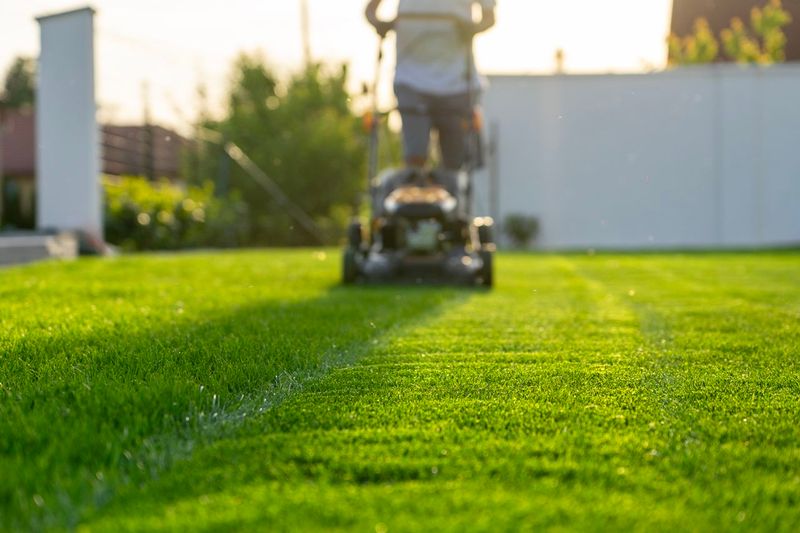
Mowing the lawn seems simple enough – wait until the grass looks shaggy, grab the mower, and get it done. But a common habit quietly works against the health of Southern lawns, and it has less to do with the clock than with what the grass and soil are doing at the moment you start.
Knowing what conditions to check before you pull the starter cord can mean the difference between a clean, healthy cut and one that stresses the turf, clogs your equipment, or leaves the lawn more vulnerable to disease. A few quick observations before each mow can protect your grass through Florida and Texas summers far more reliably than any fixed schedule.
The real mistake is mowing through moisture
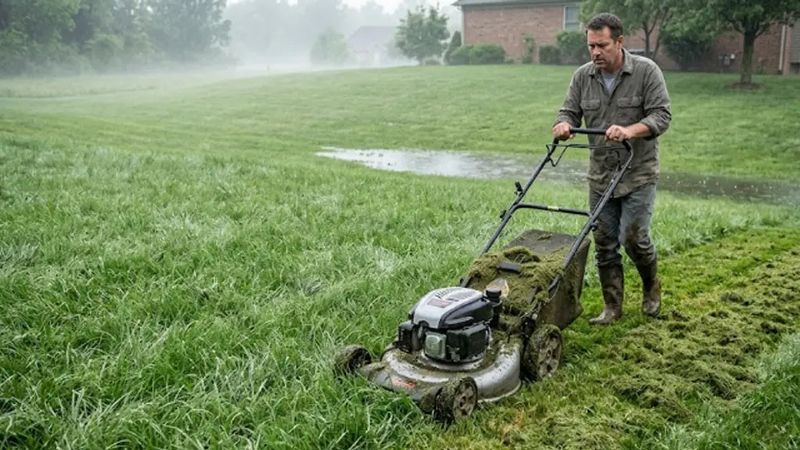
Plenty of gardeners pick a mowing day based on how long the grass looks rather than how dry it feels. That habit is where trouble starts.
The practical mistake is not the time on the clock but the moisture still clinging to the lawn when the mower rolls out.
Wet and dry are two separate conditions worth checking before you begin. Dew or recent irrigation can soak the leaf blades while the soil underneath stays firm.
On the other hand, a lawn can look surface-dry after a heavy overnight rain while the soil remains too soft to handle a mower without damage. Both conditions matter, but they call for different responses, so checking one without the other gives you only half the picture.
When foliage is still damp, UF/IFAS lawn guidance advises waiting until the grass has dried before mowing. Wet blades tend to clump rather than scatter evenly, which can shade the turf beneath and produce an uneven cut.
Damp clippings also stick to the mower deck and clog the discharge chute. Texas A&M AgriLife mowing guidance notes that mowing through moisture can contribute to ruts and soil compaction, while a University of Georgia turf specialist points out that moving mower equipment across wet grass can spread disease-causing organisms from one area to another.
Disease is not guaranteed from a single damp mow, but the conditions that favor it become easier to avoid when you wait for the lawn to dry.
Mid-morning gives most Southern lawns a strong starting point

Once the dew has burned off and the day has not yet reached its peak heat, a useful mowing window opens for most Southern lawns. Mid-morning tends to combine two favorable conditions at once: the foliage has had time to dry, and temperatures have not yet climbed to the point where the turf is already under heat stress before the mower even touches it.
A University of Georgia extension turfgrass specialist specifically identifies mid-morning, after dew has evaporated, as a reliable window even in the humid Southeast. That qualifier matters in states like Florida and Texas, where morning humidity lingers well past sunrise and visible dew may still be present at 7 or even 8 a.m. on still, muggy days.
Targeting a fixed hour is less useful than stepping outside and checking whether the blades are actually dry.
Iowa State University Extension similarly recommends cooler conditions for mowing, noting that letting the lawn dry first protects both the turf and the cut quality. Rather than setting an alarm for a specific time, build the habit of doing a quick check: run your hand across the grass blades before you mow.
If they feel damp or cool to the touch, give the lawn another 30 to 60 minutes. Texas A&M AgriLife reinforces that waiting for the canopy to dry is one of the simplest steps a homeowner can take to protect a warm-season lawn during the growing season.
Check the soil as well as the grass blades
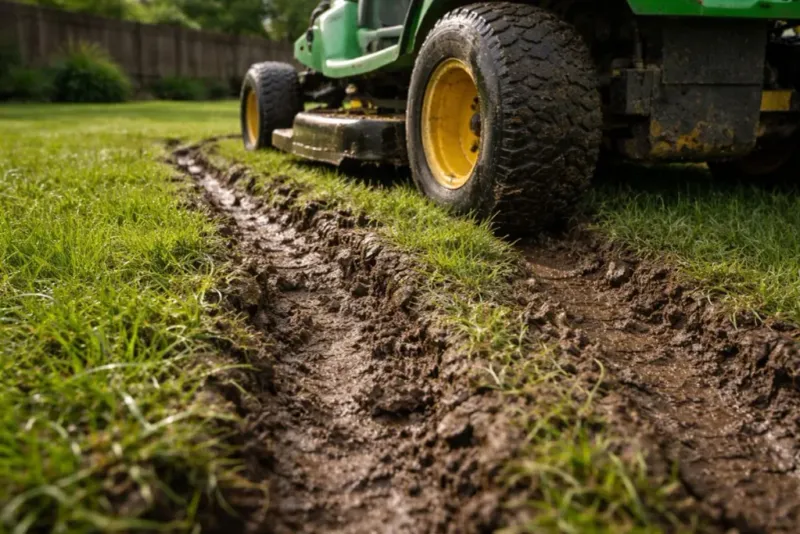
Dry-looking grass blades do not always mean the lawn is ready for the mower. After a heavy rain or a long irrigation cycle, the soil below the surface can stay saturated for hours even when the foliage appears fine from the curb.
Running a riding mower over that soft ground forces the tires to sink, leaving ruts that compact the soil and create low spots that drain poorly for weeks afterward.
Texas A&M AgriLife mowing recommendations advise waiting until excess water has drained and the soil can support equipment without visible damage. A simple test works well here: walk across the area you plan to mow and see whether your footsteps leave noticeable impressions.
If the ground gives noticeably under your weight, the soil is telling you to wait.
The reverse situation is just as worth knowing. Iowa State Extension notes that dew forms on the grass canopy from overnight humidity, which means the leaf blades can be wet while the soil underneath remains perfectly firm.
In that case, the soil is not the problem – waiting for the foliage to dry is the only adjustment needed. Checking both conditions separately gives you a clearer picture than looking at the lawn from a distance and making a single judgment call.
Avoid peak heat and severe turf stress
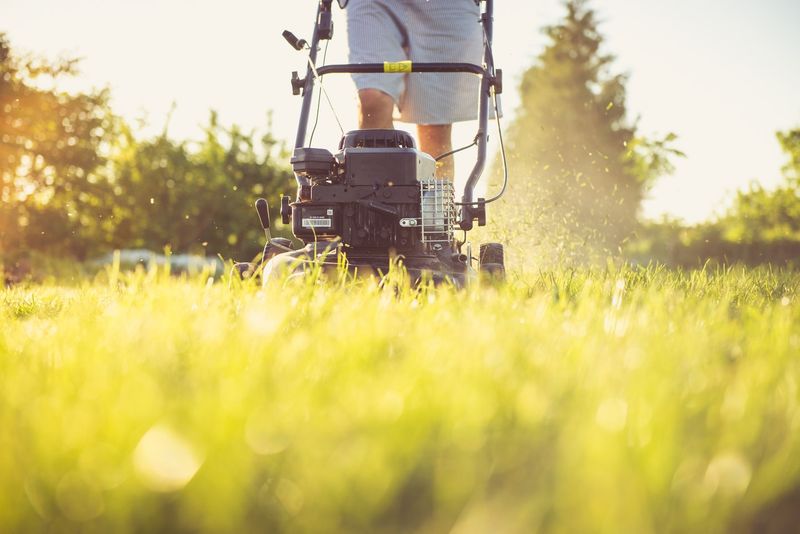
Heat is the second timing filter to apply before starting the mower. When temperatures push toward or above 90 degrees Fahrenheit and the lawn is already dry or showing signs of stress, mowing adds another burden on top of what the turf is already managing.
Iowa State University Extension recommends cooler morning or evening conditions specifically because midday mowing can compound turf stress on hot days.
Purdue and University of Illinois extension turfgrass guidance advises avoiding midday mowing when temperatures exceed roughly 90 degrees and the soil is dry. That said, a healthy lawn mowed at the correct height during a warm but not extreme midday period is not going to collapse from one session.
The concern is cumulative stress, especially for turf that is already struggling with dry conditions or has not been watered recently.
A more serious concern is severely drought-stressed or dormant grass. Iowa State summer lawn care guidance advises against mowing dormant lawns because foot traffic and mower weight can damage crowns that are no longer actively growing.
In Southern states, warm-season grasses like St. Augustine and bermudagrass may go partially dormant during extended drought or in winter. UF/IFAS Florida turfgrass guidance similarly cautions against mowing severely stressed turf.
Brown, inactive grass is not the same as a healthy lawn in summer heat – when the turf has gone dormant or is severely drought-stressed, postponing the mow protects the plant rather than neglecting the yard.
Use late afternoon only while conditions stay dry
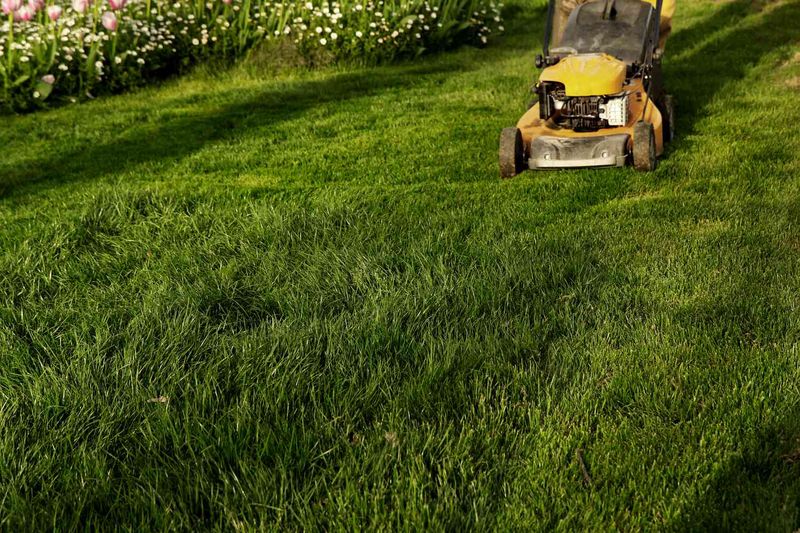
Late afternoon is a legitimate second option for Southern lawns, and it deserves a fair look rather than a blanket warning. After the day’s peak heat passes, temperatures ease and the turf has a chance to recover from the stress of the afternoon sun.
The University of Georgia turf specialist who recommends mid-morning after dew dries also identifies approximately 5:30 to 6 p.m. as a workable alternative when conditions remain dry – which shows that late afternoon is not a compromise, just a different window.
The key distinction is between late afternoon and late evening. In humid Southern climates, dew can begin forming well before dark during summer months, particularly when overnight lows are high and the air holds moisture.
Mowing into that window, or finishing so late that the canopy stays wet overnight, removes much of the benefit. The goal is to complete the job while the grass is still dry and before evening moisture settles in.
Iowa State Extension frames the choice around conditions rather than a fixed hour, which is the right approach for Florida and Texas gardeners dealing with unpredictable afternoon storms and high humidity. Whether you mow at mid-morning or late afternoon, the priority order stays the same: dry grass blades, firm soil, and manageable temperature take precedence over what the clock says.
Set height and frequency for the grass you grow
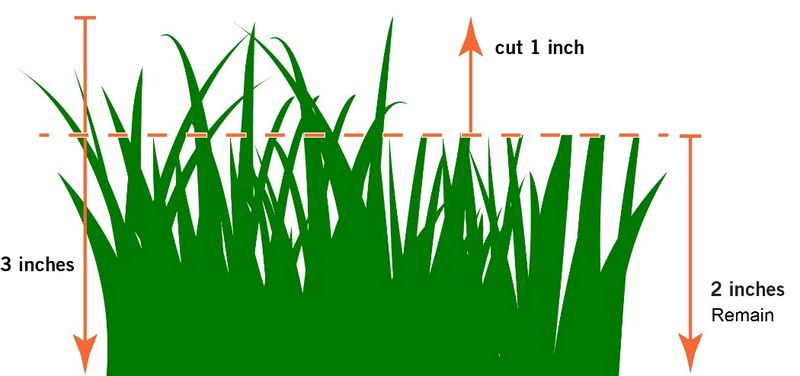
Timing matters, but mowing height and frequency have a larger effect on turf health than the hour you choose. UF/IFAS guidance on mowing Florida lawns outlines the one-third rule as a core standard: remove no more than one-third of the grass blade’s green height in a single mowing.
If the lawn has grown significantly taller than its target range – after a vacation, a rainy stretch, or a skipped week – raise the mower deck and bring the height down gradually over several sessions rather than cutting it all at once.
Scalping, meaning cutting far below the appropriate height in one pass, removes most of the leaf area the plant uses to produce energy. Texas A&M AgriLife recommends maintaining warm-season turf toward the higher end of its recommended range during summer heat, because a taller canopy supports deeper roots and improves tolerance of heat and drought.
Cutting short before a heat wave is the opposite of what the grass needs.
Height ranges vary meaningfully by species and cultivar. Texas A&M St. Augustinegrass management guidance places that species generally in the 2 to 4 inch range, with variation by cultivar.
UF/IFAS Florida turfgrass recommendations put bahiagrass at roughly 3 to 4 inches and centipedegrass closer to 1.5 to 2.5 inches. Bermudagrass home lawn guidance from Texas A&M places common bermudagrass at roughly 1 to 2 inches for most home settings, while the AgriLife mowing height chart shows coarse zoysiagrass in a range of roughly 1 to 2.5 inches depending on cultivar.
These are ranges, not universal prescriptions – local extension recommendations and your specific cultivar should guide the final setting.
Run a pre-mow check before starting the machine
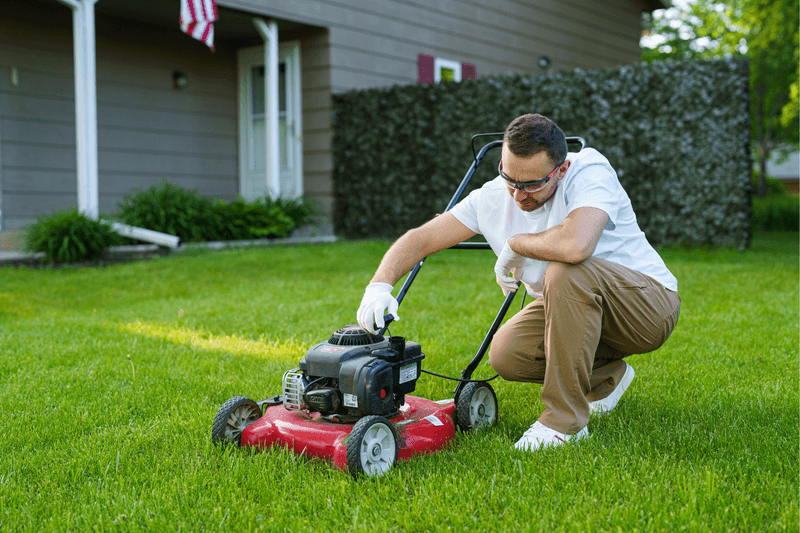
Building a short pre-mow routine takes less than five minutes and catches most of the conditions that lead to a poor cut or equipment trouble. Start by walking the area you plan to mow: check whether the grass blades are visibly dry, press your foot into the soil to confirm it can support the mower without compressing, and look for any signs of heat or drought stress in the turf.
If the lawn is actively browning from drought rather than simply dormant from winter cool, postpone the session.
Before you set the deck height, verify that the planned cut will remove no more than one-third of the current blade height. If the grass has gotten away from you, raise the deck and plan to make two or three passes over the following week rather than taking it all down at once.
Texas A&M AgriLife notes that dull blades shred and bruise the leaf tips instead of making a clean cut, which can increase susceptibility to disease and worsen the turf’s response to heat or drought. Inspect the blade before each mow and sharpen it when the cut edges look torn rather than clean.
For blade maintenance on gasoline-powered mowers, shut off the engine completely and follow the manufacturer’s instructions – which typically include removing or disconnecting the spark plug before reaching under the deck. Electric and battery-powered mowers do not have spark plugs, but the same principle applies: confirm the machine is fully off and follow the manufacturer’s safety steps before any blade work.
UF/IFAS mowing guidance supports returning fine, evenly distributed clippings to the lawn, where they decompose and recycle nutrients. Thick clumps that shade the turf should be dispersed or removed, and clippings from areas with active disease or mature weed seed heads are better bagged.
UF/IFAS homeowner lawn management guidance recommends heavy, closed-toe shoes and eye protection every time you mow.
Choose the window that fits your lawn’s conditions
A workable mowing routine for a Southern lawn comes down to four checks, not one magic hour. Confirm the grass blades are dry, press on the soil to verify it is firm enough to support the mower, note whether the temperature is manageable or already extreme, and make sure the planned cut stays within the one-third limit for your grass species.
When those conditions line up in the morning, mow then. When mid-morning does not work, a dry late afternoon is a reasonable substitute – provided you can finish before evening moisture develops.
Iowa State Extension, University of Georgia turfgrass guidance, and Texas A&M AgriLife all point toward the same conclusion: conditions matter more than the clock. A lawn mowed at the right height under reasonable conditions will always outperform one mowed at the textbook hour but cut too short or rolled over wet soil.
The best mowing schedule is the one built around what the lawn is actually doing that day.