
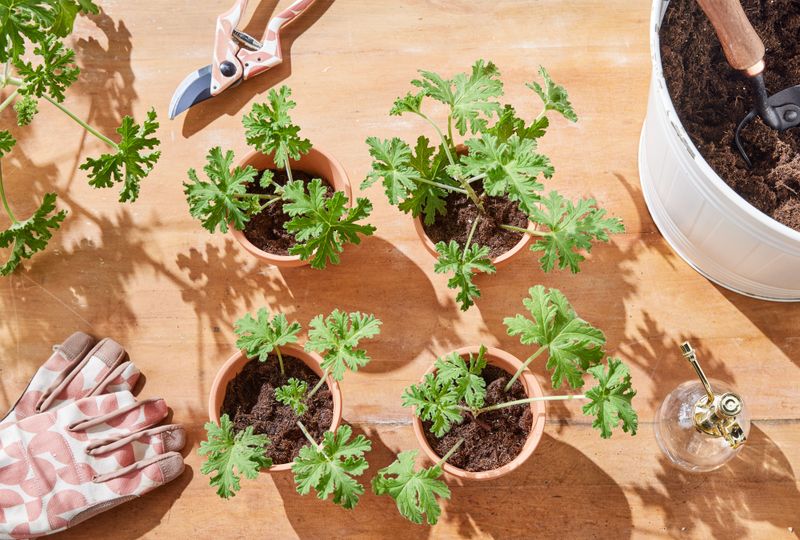
Those bedding geraniums that looked so good all summer do not have to end up in the compost pile. A few stem cuttings can turn one plant into several, and you may be able to skip some replacement shopping next year.
Timing is different in Florida, Texas, and the rest of the South, so you will need to follow your own local weather. Here is how to give cuttings a fair chance, and what to expect along the way.
First, make sure your geranium is a Pelargonium
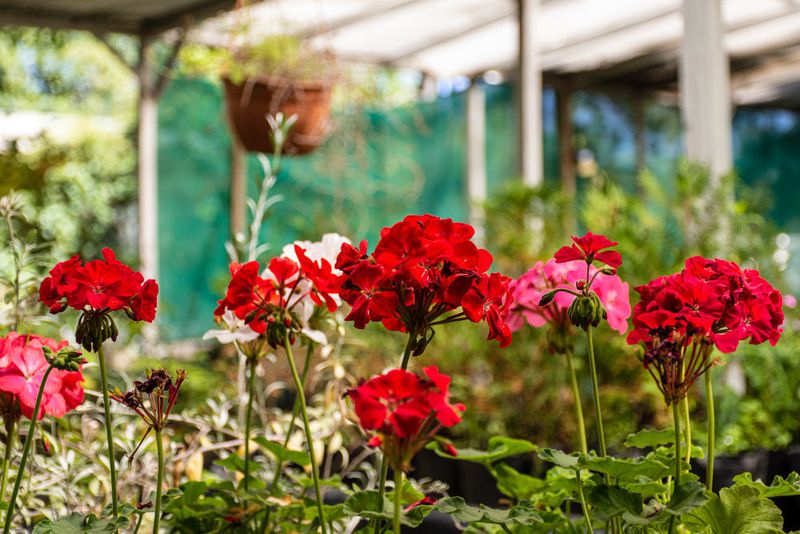
Walk through any garden center and you will see two very different plants sharing one common name. The showy, round-leafed plants in porch pots and summer beds are Pelargonium, and Clemson Extension explains that they are frost-tender, while hardy geraniums, also called cranesbills, are true Geraniums.
This guide is only for the first group. Cranesbills are perennials meant to stay outdoors, so there is no reason to take indoor cuttings from them.
Why bother with cuttings at all? University of Georgia Extension notes that most cultivated geraniums root easily, and that a cutting preserves the parent plant’s traits, such as flower color, scent, and leaf pattern.
If you have a favorite coral bloom or a leaf with a bold dark ring, a cutting is a way to keep it.
One caution: not every geranium at the store started as a cutting. Many bedding types are grown from seed, so a seed-grown variety may not come out identical if you try to repeat it another way.
Cuttings from your own healthy plant, though, copy that plant.
Choose cutting time for your local climate
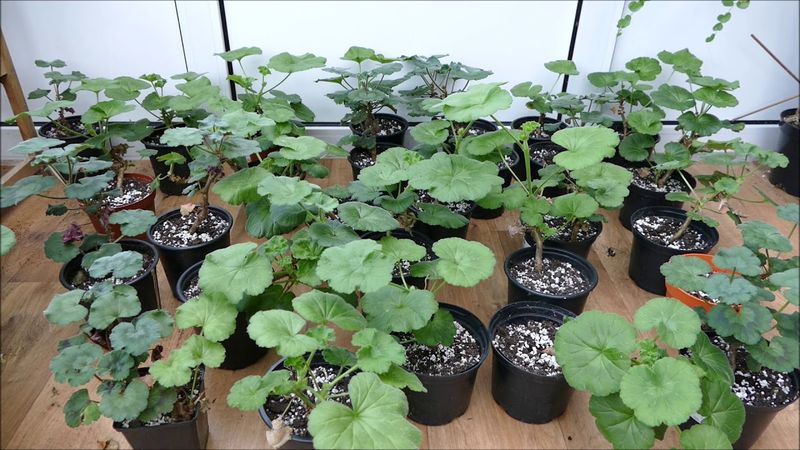
Plenty of advice says to take cuttings before the first fall frost, and Iowa State Extension does recommend that for its cold winters. The South runs on a different clock, so treat that advice as a reminder to act before conditions threaten the plants you want to keep, not as a fixed date.
Florida shows how much the timing can shift. According to UF/IFAS, geraniums in south and central Florida can go outdoors from about October to March, while north and western Florida plant after frost danger has passed.
A Miami gardener and a Pensacola gardener will not share a schedule.
Texas gardeners have another cue. Texas A&M describes taking tip cuttings in summer, which means you can start well before cold weather if your plants are tired from the heat.
A practical approach is to watch your own forecast and your plants. Take cuttings while the parent is still healthy and growing, rather than waiting for a date on a calendar.
Build each cutting from a healthy stem
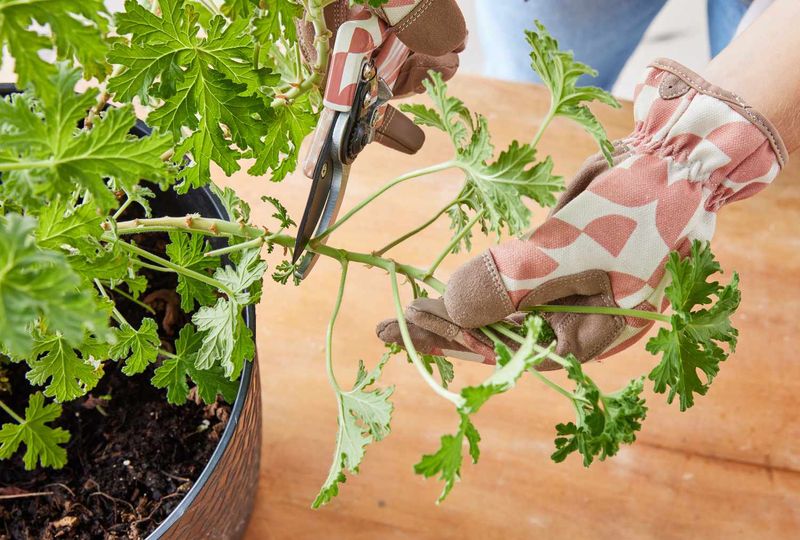
Start by picking a parent plant that looks vigorous, with no spotting, wilting, or soft stems. Wipe your pruners or knife with rubbing alcohol so you are not carrying disease from one plant to another.
Cut a tip section about 3 to 4 inches long and strip off the lower leaves. UGA Extension suggests setting the cutting about 1 inch deep in a well-aerated medium.
UF/IFAS recommends cuttings with at least three nodes and lists vermiculite as a suitable medium. Treat these as solid guidelines rather than strict rules.
Rooting hormone is where the experts disagree. Iowa State advises dipping cuttings, while Chicago Botanic Garden says to skip it for Pelargonium.
Since both approaches have worked for gardeners, you can leave it out without worry.
Remove any flowers or buds from the cutting so its energy can go toward roots.
Keep the rooting medium moist, not soggy
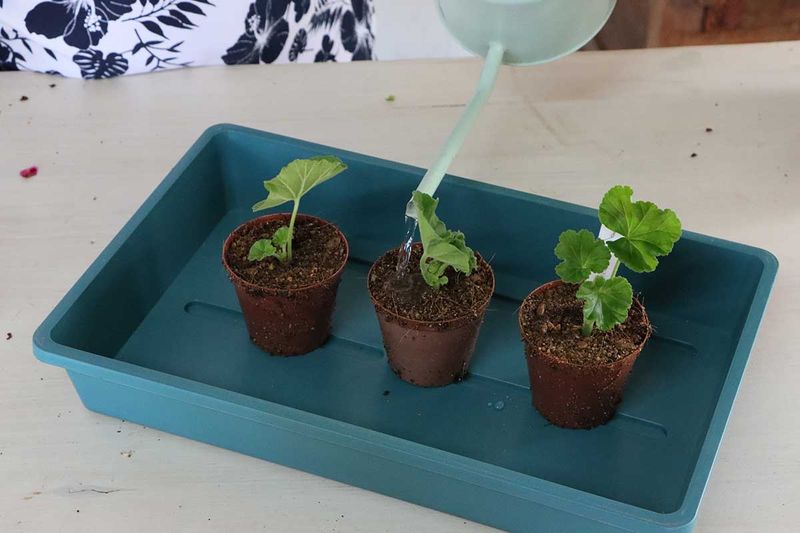
Moisture is a balancing act. Cuttings have no roots yet, so they cannot drink much, and a soggy mix leaves them sitting in conditions where rot thrives.
UF/IFAS warns that cuttings can develop stem rot or blackleg, and recommends healthy cuttings and sterile media. The Oregon State disease handbook adds that contaminated media, reused containers, and diseased stock raise the risk, and that too much misting and wet conditions can contribute to failure.
So use fresh, clean pots and a light mix that drains well. Water so the medium feels slightly damp, like a wrung-out sponge, and skip the daily spray bottle.
The goal is to keep cuttings from drying out, as UGA points out, without drowning them.
Place them in bright, indirect light rather than harsh sun. Rooting takes several weeks, with UGA citing 3 to 4 weeks and Iowa State citing 6 to 8.
A gentle tug that meets resistance is a good sign. A blackened, mushy stem base means that cutting is lost, so remove it before it affects its neighbors.
Give rooted cuttings bright indoor light
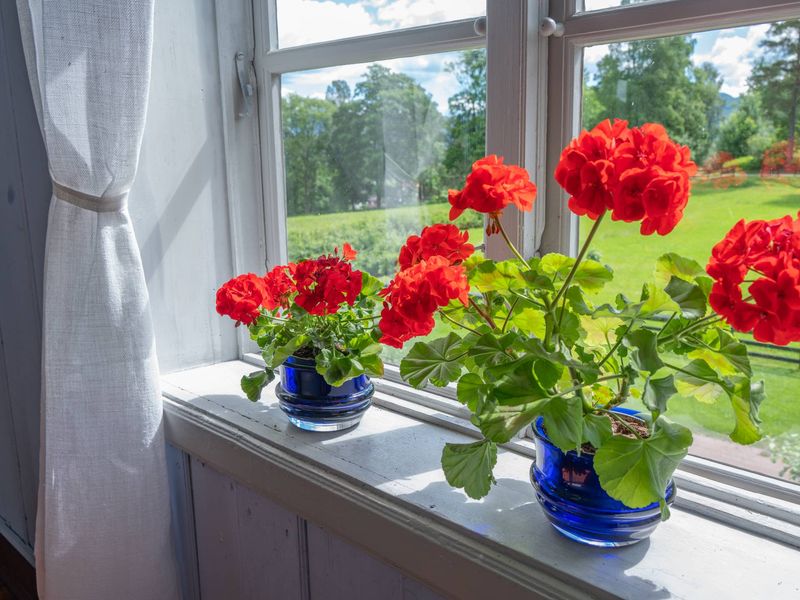
Once roots have formed, move each cutting into its own small pot with fresh potting mix. Individual pots give roots room and make it easier to spot a struggling plant.
Light matters most from here. Iowa State recommends a sunny window or artificial lighting for overwintering plants.
A windowsill is only as good as the light it receives. Texas A&M says geraniums need at least four hours of direct sun daily to flower well.
A shaded north window or a spot behind a deep porch overhang may keep a plant alive but produce stretched stems, pale leaves, and few buds.
If your best window falls short, a simple grow light on a timer can fill the gap. Check the soil before watering and let the surface dry slightly between drinks.
A leggy plant leaning toward the glass is your clue that it wants more light.
Treat spring blooms as a possibility, not a promise
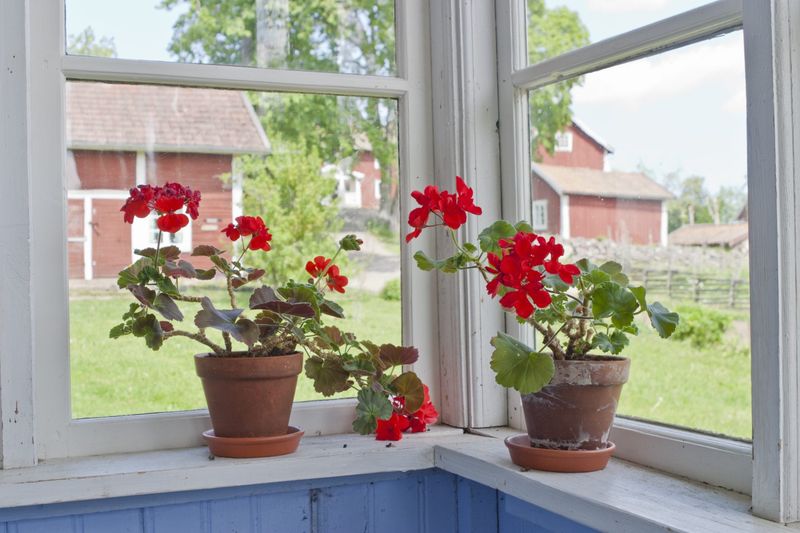
If your cuttings root and grow well, you may have plants ready to set outdoors once your local weather allows. That can reduce how many replacements you buy, though you may still spend money on pots, mix, and lights.
Results vary. Some cuttings will fail, and flowering by spring depends on light, plus the health of the cuttings and the care they get, so a slow winter is normal.
Even a few survivors give you a head start. A leafy young plant today can be next summer’s showpiece.