
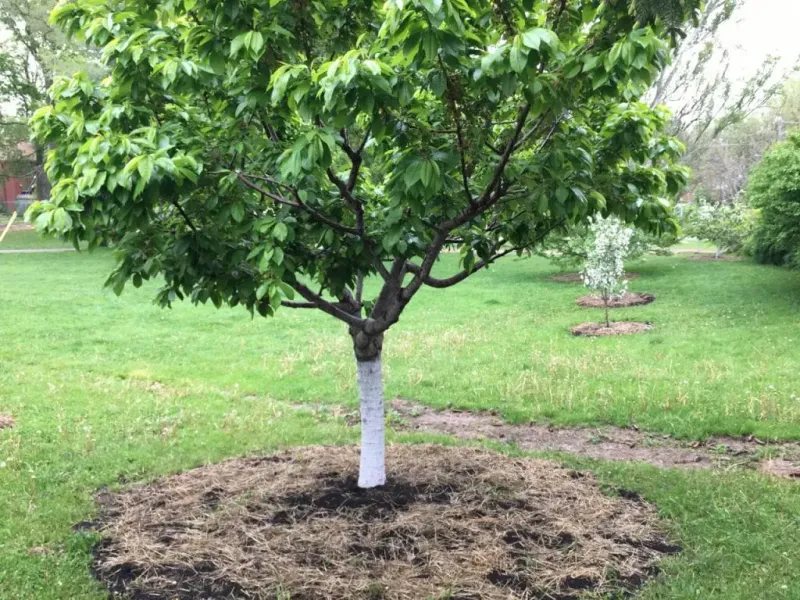
Tidying up around a fruit tree usually means adding mulch, and it is easy to leave that mulch right against the trunk. Up close, that cozy blanket can also be a sheltered spot for small rodents called voles.
Voles do not visit every yard, but where they live, bark can become a target. A few simple checks and a little mulch spacing can lower the risk for your trees.
Mulch can shelter voles, but damage is not inevitable
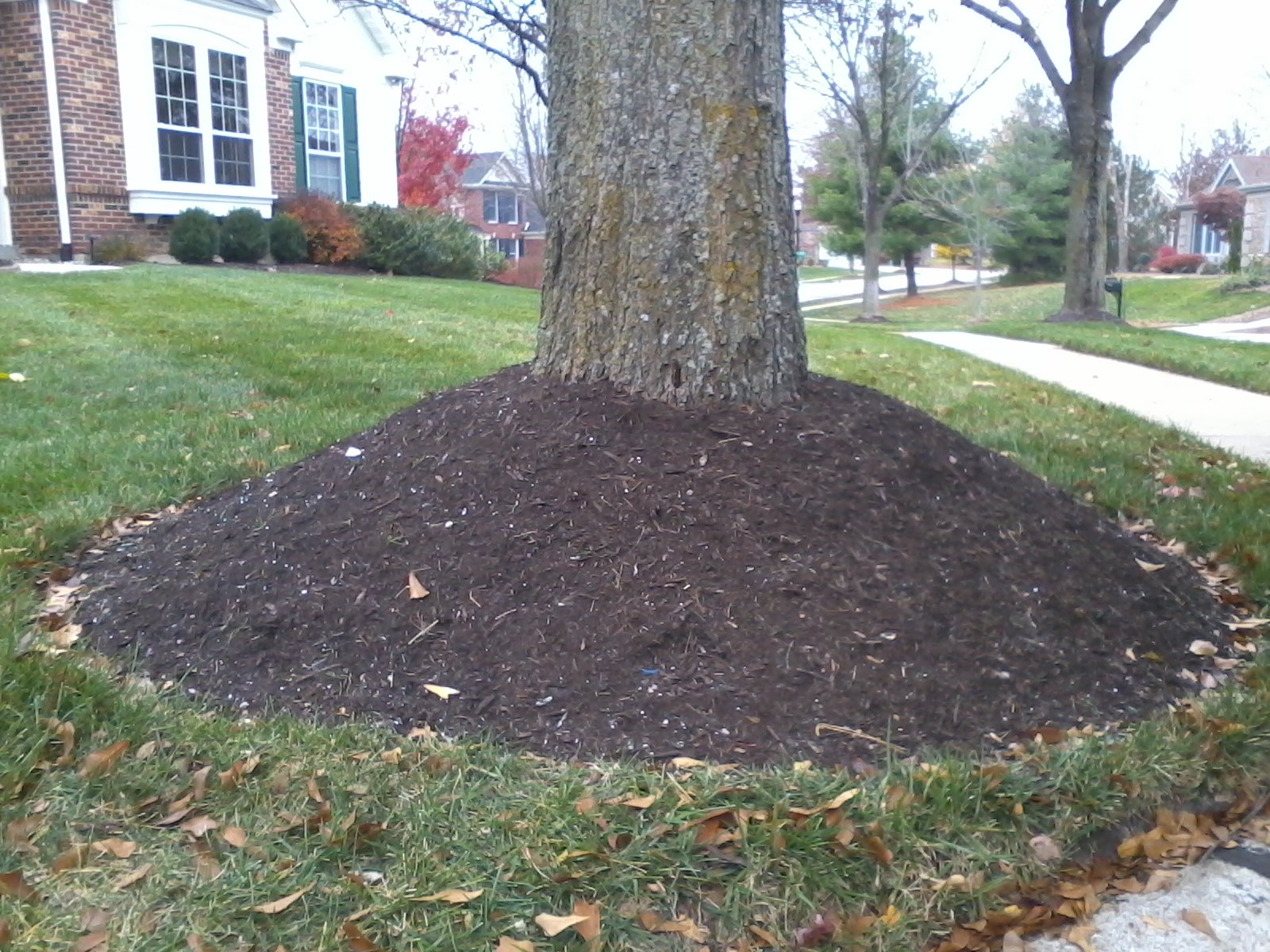
Voles like places where they can move around without being seen. UC IPM guidance on voles explains that dense ground cover and heavy mulch can give them shelter, and that cover near a tree can raise the chance of damage.
That is a risk factor, not a promise. Last summer’s mulch will not automatically turn into a den, and plenty of mulched trees never see a vole.
What matters is how deep the mulch is, whether it touches the trunk, and whether thick cover surrounds the tree.
Extension writers also note that rodents may overwinter in mulch, which is why Iowa State guidance on winter animal damage suggests keeping wood mulch back from trunks.
Think of reducing cover as prevention. It can lower the odds of trouble, but it cannot guarantee that voles or bark damage will never show up.
Bark feeding can put young trees at greater risk
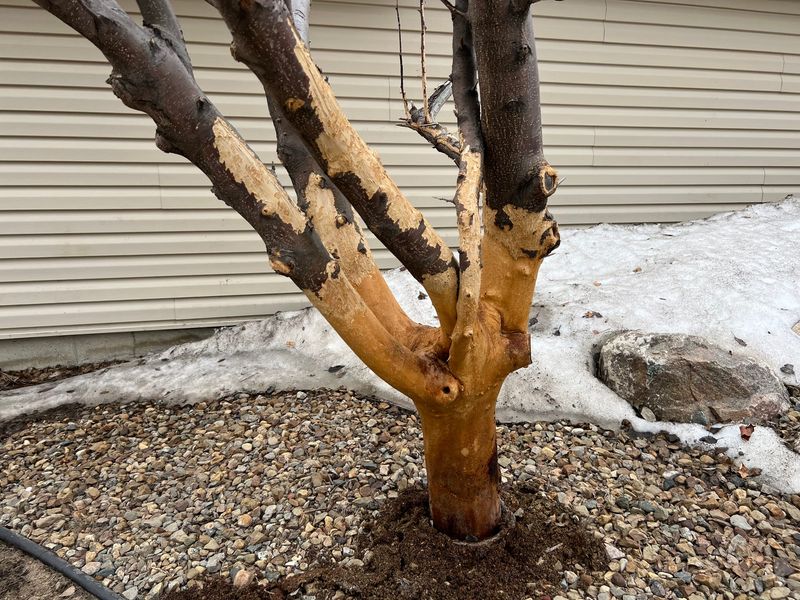
Fruit-tree owners care about this because voles may feed on bark and on roots. Just under the bark lies the tissue that moves water and nutrients through the tree.
If chewing goes all the way around a trunk or a main root, the tree can no longer move those supplies, and it may die. Penn State orchard vole management describes this kind of girdling as a serious orchard concern.
Young trees are especially vulnerable because their trunks are thin and a small amount of chewing can cover the full circumference. UC IPM also points out that damage can happen below ground, where it is easy to miss.
A scrape or two does not doom a tree. The real worry is chewing that wraps around the trunk or roots, so catching early signs matters.
What signs point to voles?
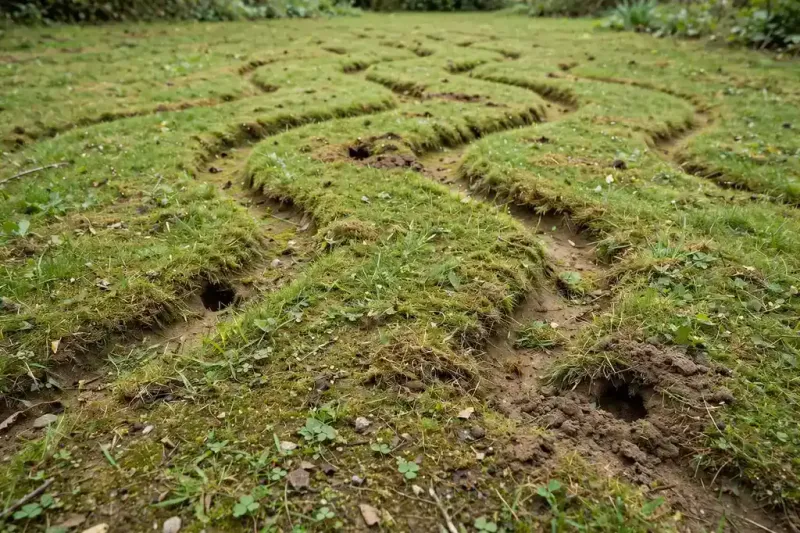
Before blaming voles, take a slow walk around the tree. Look near the soil line for small, irregular gnaw marks, and check the surrounding grass and mulch for narrow runways, small burrow openings, and droppings, as described by Illinois Extension.
If those clues are present, carefully brush back the soil or mulch and look at the root crown. UC IPM notes that some feeding happens partly below ground.
Trunk marks alone are not enough for a diagnosis. Rabbits and other rodents also chew bark, and Penn State Extension suggests checking runways, burrows, and the pattern and location of tooth marks first.
Small, scattered marks low on the trunk, paired with runways nearby, point more toward voles. Gnawing higher up or with a different pattern may mean another animal.
How far should mulch sit from the trunk?
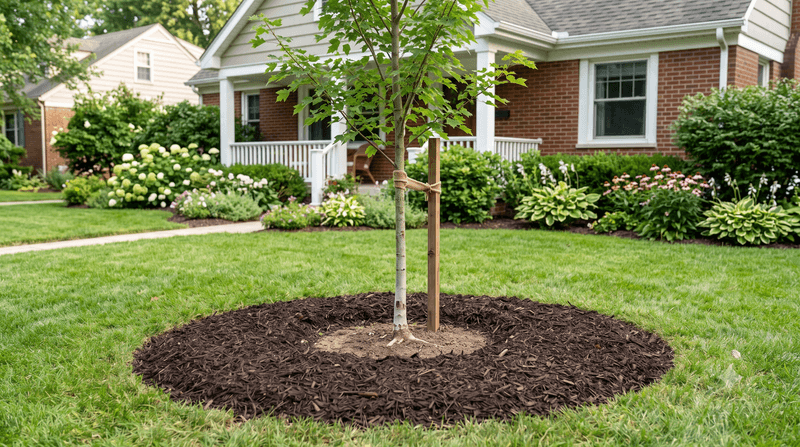
Start with the basic rule: never pile mulch against the trunk. After that, the right distance depends on the source and on your situation, so there is no single magic number.
Iowa State recommends keeping wood mulch at least 6 inches from trunks. UF/IFAS suggests mulch no deeper than 3 inches and about 1 foot clear around large trees.
Where voles are a concern, the numbers grow. A UF/IFAS fruit-production publication suggests raking mulch 18 to 24 inches away in fall, and Penn State recommends clearing 2 feet or more if voles are damaging trees.
Move the mulch back from the trunk rather than stripping the whole root zone bare. UF/IFAS also says old mulch does not need digging out just because it has decomposed.
A hardware-cloth guard can protect a vulnerable young tree
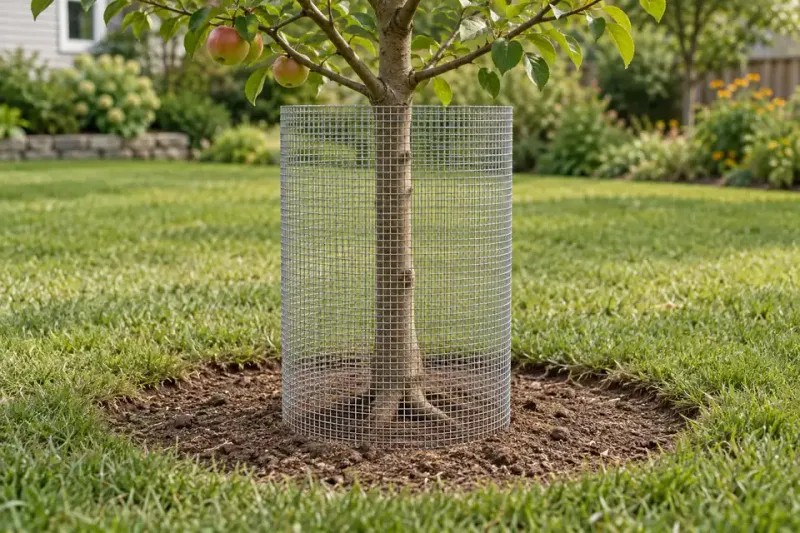
When a young tree faces vole risk, a physical barrier is an extra layer of protection. It works alongside inspecting the trunk base, not in place of it.
Both Iowa State and UC IPM describe cylinders of quarter-inch hardware cloth as a way to keep voles off the bark.
Fit matters. Make the cylinder loose, leaving room for the trunk to grow.
Bury the bottom edge a few inches to discourage tunneling underneath.
Then check the guard from time to time. A vole that slips inside can chew in protected comfort, so look for runways, droppings, or fresh gnawing within the cylinder.
Keep the trunk base open and inspect as conditions change
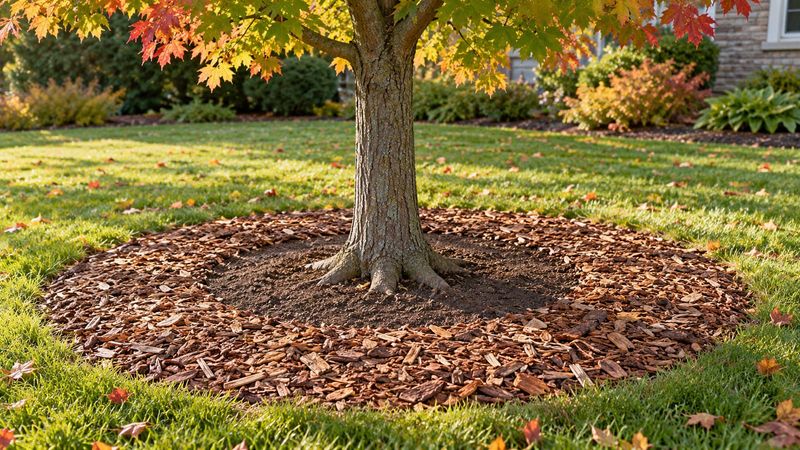
Keep mulch off the trunk, look for evidence before assuming voles are the culprit, and add protection when a tree’s age and the signs you find call for it.
UC IPM says bark feeding usually shows up in fall or winter, though damage can happen year-round. Vole pressure also varies by place.
Texas Tech describes the woodland vole as localized and not common in eastern and central Texas.
A quick look at the trunk base each season is cheap insurance for a tree you have worked hard to grow.