
Rose leaves turning yellow in late summer can send even experienced California gardeners straight to the fertilizer bag or the spray bottle, and both moves can backfire badly. Yellow leaves on a rose are a symptom, not a self-explanatory diagnosis, and the cause varies from plant to plant and yard to yard.
Getting the fix right starts with a quick look at what the leaves actually show, not a guess based on the calendar or the weather.
Yellow leaves are a clue, not a diagnosis
Grab a magnifying glass before you grab anything else. Late-summer yellowing on a rose can look similar whether the cause is water stress, spider mites, salt injury, poor drainage, disease, chemical drift, or a nutrient problem, and the appearance of the leaves is often the only way to tell those possibilities apart.
Heat can raise water loss and add stress to an already struggling plant, but it rarely acts as the single, direct cause of every yellow leaf you find.
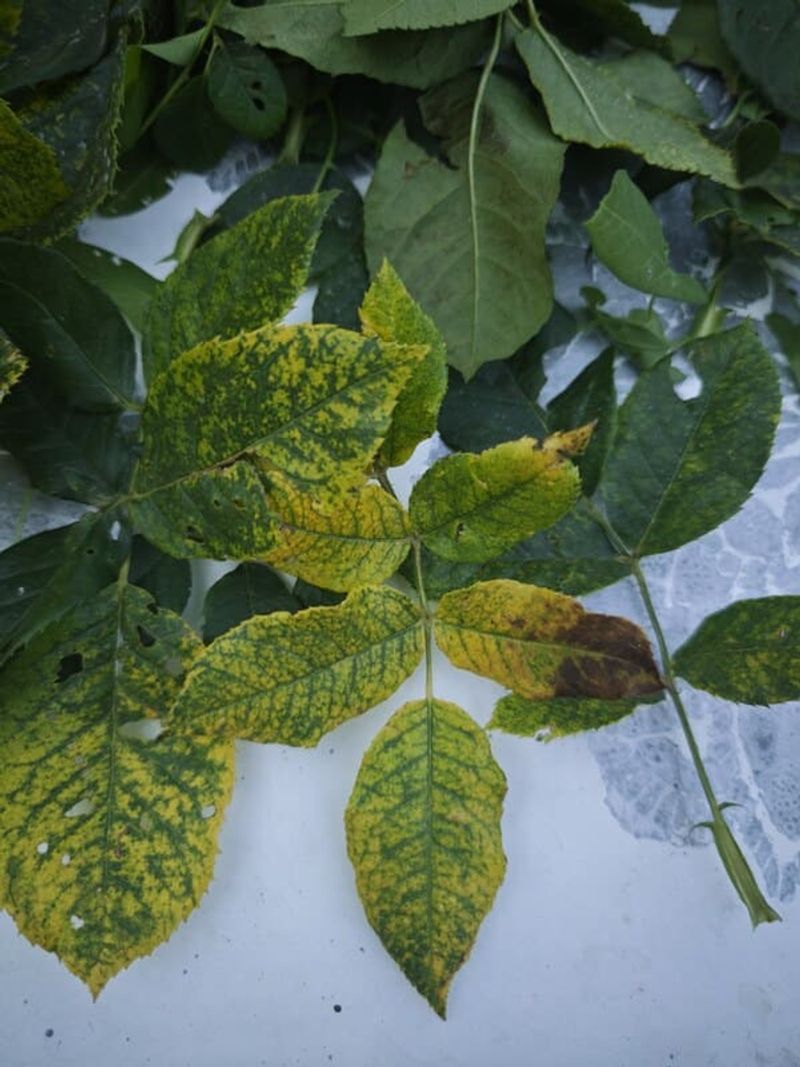
Uniform yellowing of older, lower, or interior leaves often points toward water issues, natural leaf cycling, or nitrogen and magnesium problems. Fine pale speckling scattered across the leaf surface suggests something is feeding on the tissue, and spider mites are the first thing to check in hot, dry conditions.
Interveinal chlorosis, where the tissue between the leaf veins turns pale or yellow while the veins stay darker green, is more consistent with an iron or micronutrient issue, and it tends to show up on younger growth first.
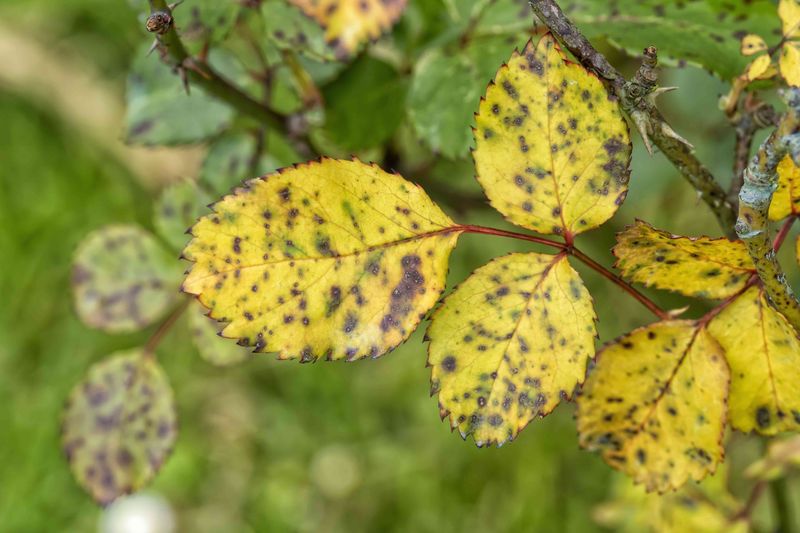
Yellow halos or rings surrounding distinct dark spots point toward a fungal disease rather than a pest or a watering problem. Crispy brown margins that curl inward suggest salt injury, fertilizer burn, or severe drought stress rather than mite activity.
UC IPM’s rose disease and abiotic disorder guide lists powdery mildew, rust, downy mildew, viruses, and herbicide drift alongside physical stressors as possible explanations for yellow or mottled foliage, a reminder that no single pattern fits every situation.
A helpful diagnostic habit is to look at leaf age and position as well as color. University of Minnesota Extension’s rose leaf discoloration guide notes that the affected leaf’s position on the stem, whether spots or pustules are present, and whether veins remain green all help narrow the possibilities.
Picking the right remedy depends on reading those clues carefully rather than reacting to the color alone.
Heat can create conditions for spider mites
Hot, dry, and dusty conditions in a California garden create an environment where spider mites can thrive. When temperatures climb and humidity drops, the tiny mites that live on rose foliage reproduce faster, and natural enemies that normally keep populations in check become less effective.
Water-stressed roses are especially vulnerable because a plant already struggling to move moisture through its tissues has fewer resources to tolerate the additional damage that mite feeding causes.
The symptom sequence tied to mite activity tends to follow a recognizable path. Early feeding shows up as fine, pale stippling across the upper leaf surface, as if the tissue has been lightly peppered.
As feeding continues, stippled leaves may shift toward a dull yellow or bronze tone, then begin to dry out and drop prematurely. UC IPM’s guide on roses, insects, and mites describes this progression clearly and notes that damage tends to be most severe during hot, dusty weather and on plants that are already under water stress.
Heat acts more as an indirect contributor than a direct cause of the yellowing itself. The high temperature raises the rate at which leaves lose water and stresses the plant, but the visible damage to the leaf tissue usually comes from mite feeding rather than from temperature alone.
That distinction matters because it shapes the response: cooling the leaf surface and improving hydration may slow mite activity, but the mites themselves still need to be confirmed before treatment makes sense.
UC IPM’s spider mite overview notes that mites are not always obvious to the naked eye and that dusty conditions near roads, paths, or bare soil tend to favor outbreaks by interfering with natural predators. Keeping foliage clean and well-irrigated is part of prevention, but mites are only one possibility to check, not an assumed explanation for every case of summer yellowing.
Inspect the leaves and root zone before treating
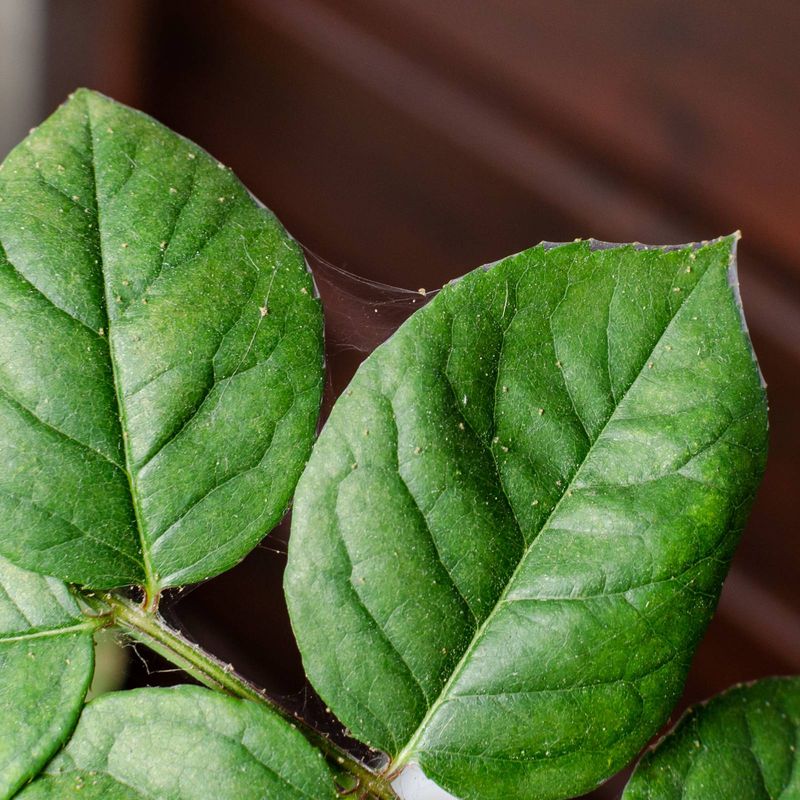
Reaching for a treatment before confirming the cause is how a manageable problem becomes a bigger one. A short inspection of the leaves and the soil takes only a few minutes and can save a plant from a remedy that makes its actual problem worse.
Start at the leaves, not the shelf.
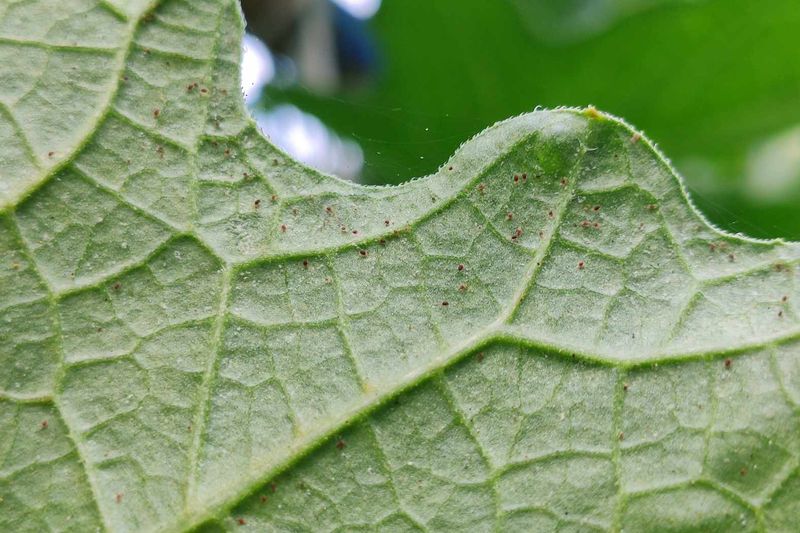
Turn a few affected leaves over and look at the undersides with a hand lens or a strong magnifier. Spider mites are tiny, often smaller than a pinhead, and they may be present in meaningful numbers before any webbing becomes visible.
A practical field test described by UC IPM’s spider mite guide involves holding a sheet of white paper beneath a suspect leaf and tapping or shaking the leaf sharply. If small specks fall onto the paper and begin to move, mites are likely present.
Specks that do not move may be debris or other particles, so watch carefully for a moment before concluding anything.
After the leaf check, move to the root zone. Push a finger or a thin wooden dowel several inches into the soil near the base of the plant.
A dry surface does not always mean the deeper root zone is also dry, particularly in clay soil or beds covered with a thick layer of mulch. Clay holds moisture longer and releases it more slowly than sandy soil, so the top inch can look and feel dry while the roots are still sitting in adequate moisture.
Conversely, soil that feels wet or smells musty at depth may be draining poorly, and adding more water to that situation will not help the plant.
UC IPM’s rose cultural practices guide recommends assessing available soil moisture rather than following a fixed watering calendar, because site conditions vary too much across California for one schedule to apply everywhere. Look for genuine dryness in the root zone before increasing irrigation, and assess drainage before assuming the plant needs more water.
The inspection, not the calendar, is where the decision should start.
Automatic fertilizer can worsen a heat-stressed rose
Fertilizer feels like a logical response to a plant with yellow leaves, but applying it during a heat wave or when the root zone is already stressed can cause more damage than the yellowing itself. The instinct to feed a struggling plant is understandable, but the timing and the cause of the stress matter more than the color of the leaves.
UC Master Gardener guidance on watering during drought recommends reducing or stopping fertilizer while plants are struggling in intense summer heat. The reasoning is straightforward: fertilizer stimulates new growth, and new growth demands more water.
A rose already working hard to stay hydrated does not need the additional burden of pushing out tender new shoots that will wilt or scorch faster than established foliage.
Excess fertilizer salts create a second, related problem. When salt concentrations in the root zone build up, whether from repeated applications, slow drainage, or poor water quality, roots have a harder time pulling moisture from the soil.
The visible result is often crispy brown leaf margins, marginal scorch, or stunted growth rather than uniform yellowing. UC Master Gardener Fresno advice on summer rose care notes that excess fertilizer can damage roots and intensify the symptoms that gardeners are already trying to fix.
Fertilizer is not always the wrong choice. If a true nutrient deficiency is confirmed through a consistent symptom pattern, appropriate soil conditions, or soil testing, targeted feeding at the right time and rate can help.
UC IPM’s rose abiotic disorder resource distinguishes between salt or fertilizer injury and genuine nutrient deficiency, a distinction worth making before opening the bag. Yellow leaves on their own, without a clearer pattern pointing to a specific deficiency, are not enough evidence to justify fertilizing a plant that is already under heat or drought stress.
Correct irrigation without creating a root problem
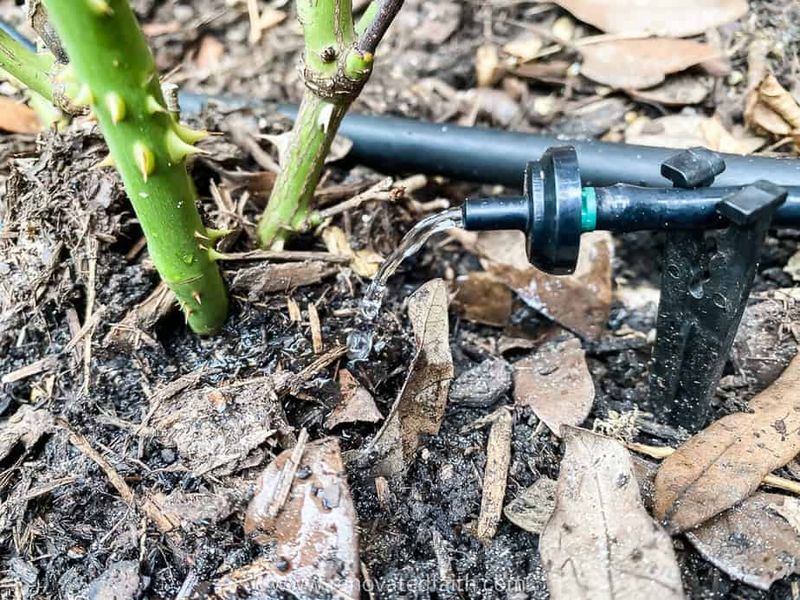
When the root zone is genuinely dry, the right response is to water slowly and deeply, then reassess rather than locking into a new daily schedule. Watering deeply encourages roots to grow downward where soil moisture is more stable, while frequent shallow watering keeps roots near the surface where they are more exposed to heat and drought stress.
UC IPM’s rose cultural practices guide notes that daily irrigation is generally not necessary even in warmer California regions, and that landscape roses are often watered roughly twice a week as a starting point, with frequency adjusted for soil type, sun exposure, plant size, and current weather. That twice-weekly figure is a baseline, not a statewide prescription.
A rose growing in sandy soil in the Central Valley needs water more often than one growing in clay soil in a shaded coastal yard, and a container rose dries out far faster than one planted in the ground.
Saturated or poorly draining soil is a separate risk that is easy to overlook when the plant looks thirsty. Roots sitting in waterlogged soil can develop rot, and a rose with damaged roots cannot take up moisture or nutrients efficiently regardless of how much water is applied.
If the soil stays wet for more than a day or two after watering, drainage may need to be addressed before irrigation frequency is increased.
UC Master Gardener guidance on drought watering also recommends applying a thick layer of organic mulch around the dripline to reduce evaporation and moderate soil temperature. Keep the mulch a few inches away from the base of the canes and the crown of the plant to reduce the risk of rot and disease at the soil line.
Mulch is one of the simplest and most effective tools available for helping a heat-stressed rose hold onto moisture between waterings.
Treat confirmed mites without destroying their predators
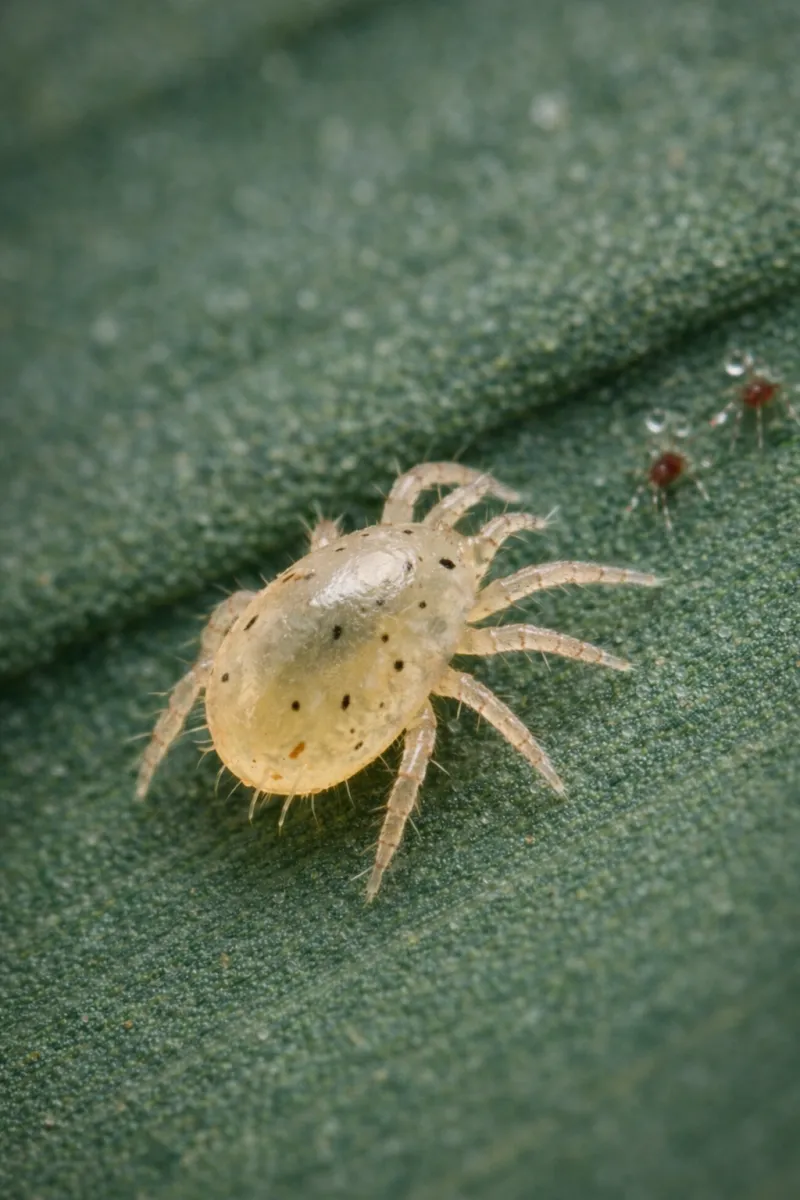
Once inspection confirms mite activity on a rose, the least disruptive response is also one of the most effective. Start by improving the plant’s hydration and reducing dust around the leaves.
Dusty conditions near paths, driveways, or bare soil patches are a known factor in mite outbreaks because dust settles on foliage and interferes with the small predatory insects and mites that naturally keep spider-mite populations in check.
A firm spray of water directed at the undersides of leaves in the morning can dislodge mites and reduce their numbers without any chemical input. Morning timing matters: water applied during the day gives foliage time to dry before evening, which helps avoid the wet nighttime conditions that favor black spot and other fungal diseases.
UC IPM’s rose insect and mite guide recommends this approach alongside monitoring as a first response before considering any spray product.
Reaching for a broad-spectrum insecticide without confirming mites first is a separate conditional mistake worth avoiding. These products can kill predatory mites and other beneficial organisms that naturally suppress spider-mite populations.
When the natural enemies are gone, mite numbers can rebound faster and in greater numbers than before the spray was applied. UC IPM’s spider mite resource specifically identifies broad-spectrum insecticide use as a common trigger for mite outbreaks, making it a poor first response even when mites are present.
If water sprays and improved hydration are not enough, insecticidal soap or horticultural oil are possibilities listed in UC guidance, but both require careful conditions. UC IPM’s rose abiotic disorder guidance warns against applying oils to water-stressed plants, and other UC sources note that horticultural oil can burn foliage during extreme heat.
Always read the product label for temperature limits, check that the plant is not drought-stressed before applying, and test the product on a small area of foliage first if the label permits. Protecting the predators that already live in the garden is a faster and safer path to mite control than any product applied in haste.
Use spot patterns to separate disease from mite damage
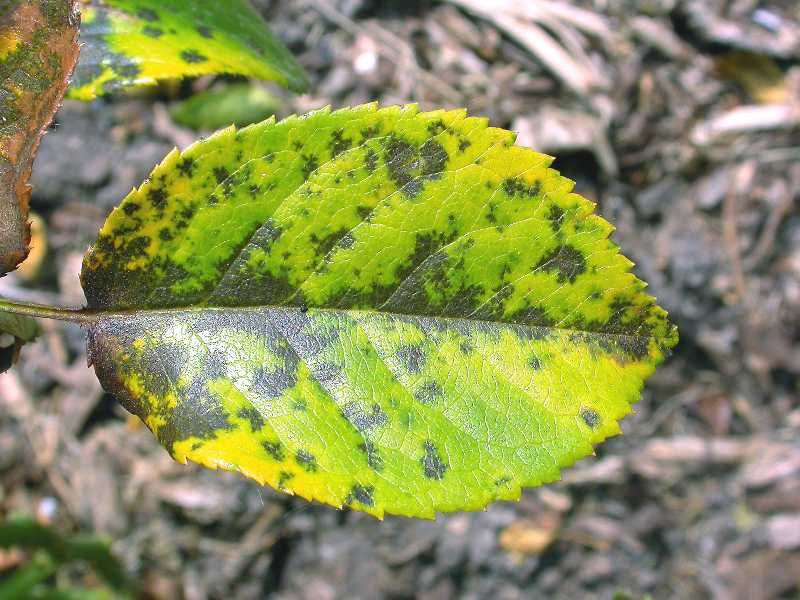
When the foliage shows something other than fine stippling, disease or a different type of stress is worth considering before any treatment is chosen. The pattern of color change, the presence or absence of spots, and the location of damage on the plant all help narrow the list of possibilities.
Black spot is the most common fungal disease on roses in California and produces a recognizable pattern: roughly circular dark spots with feathery or fringed edges, usually surrounded by yellow tissue that eventually causes the leaf to drop. UC IPM’s black spot guide notes that the disease is more common in foggy or humid coastal areas than in hot, dry interior regions, though it can appear anywhere that foliage stays wet overnight.
Evening or nighttime irrigation from overhead sprinklers creates exactly those conditions, even in drier inland climates.
Other diseases and disorders produce their own patterns. Powdery mildew coats young leaves and shoots with a white or gray powdery layer and can cause distortion before any yellowing appears.
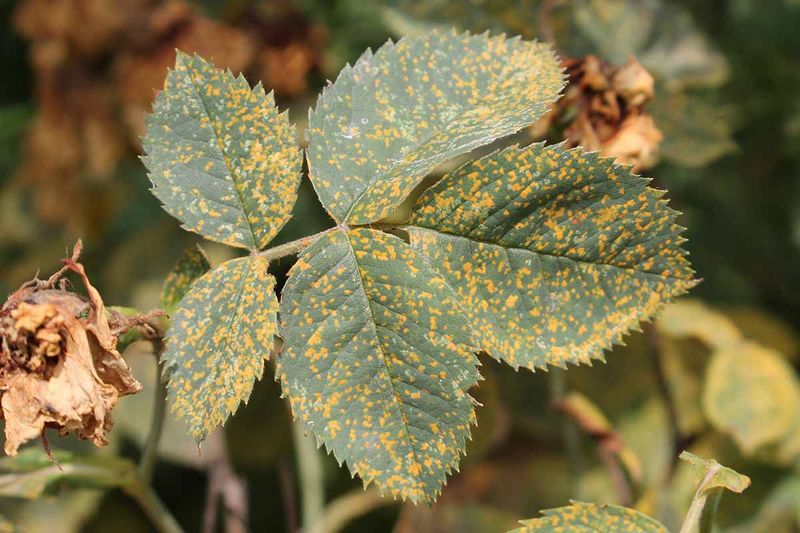
Rust produces orange or rust-colored pustules on the undersides of leaves, usually visible before the upper surface shows damage. Downy mildew creates angular yellow patches on upper leaf surfaces with a grayish growth beneath, and it tends to appear during cool, wet weather rather than in summer heat.
UC IPM’s rose disease resource also lists viruses and herbicide drift as causes of mottled, distorted, or mosaic-patterned foliage that can be mistaken for nutrient problems.
Salt injury and fertilizer burn tend to show up as brown, crispy margins on otherwise green or yellowing leaves, sometimes with a visible crust on the soil surface near the plant’s base. Iron deficiency, by contrast, typically appears as interveinal chlorosis on younger leaves, where the tissue between the veins turns pale while the veins themselves stay green.
University of Minnesota Extension’s rose leaf discoloration tool ties each symptom pattern to leaf age, position, and associated signs, making it a useful cross-reference for gardeners trying to match what they see to a likely cause before choosing a response.
Judge recovery by healthier new growth
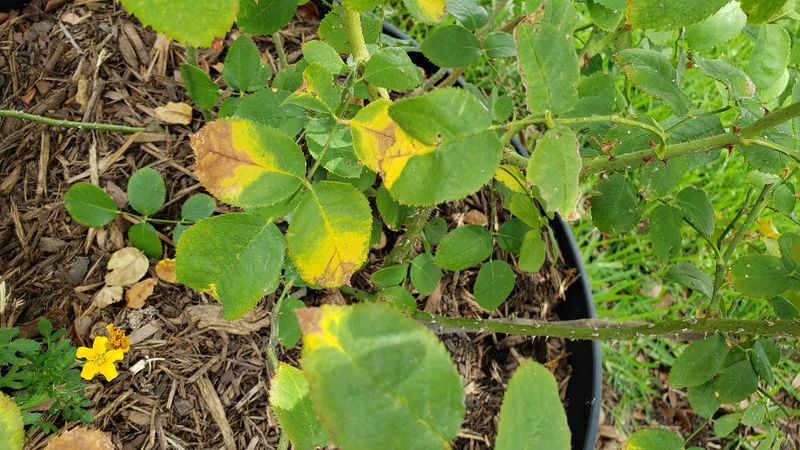
Yellow or damaged leaves that are already on the plant will not turn green again once the tissue has been affected by mite feeding, heat, salt, or disease. The practical goal during and after a stressful late-summer period is not to rescue individual leaves but to stabilize the root zone, reduce ongoing stress, and protect the canes and remaining healthy foliage so the plant can produce better growth when conditions improve.
UC Master Gardener Fresno summer rose guidance frames the recovery standard clearly: look for healthier new growth after temperatures moderate rather than expecting damaged leaves to reverse. Keeping the root zone consistently moist but not waterlogged, maintaining mulch around the dripline, and reducing dust near the plant all support that outcome without adding new stressors.
Some leaf drop during summer is a normal part of how roses manage heat and drought, and a modest amount of thinning on the interior or lower portions of the plant does not necessarily signal a serious problem. UC Master Gardeners of Tulare and Kings Counties note that extensive, rapid, or repeated defoliation is a different matter and warrants a closer look at pests, disease, irrigation, or possible chemical injury.
The extent, speed, and recurrence of leaf loss are more meaningful indicators than the presence of a few yellow leaves on their own.
UC IPM’s rose cultural practices resource supports the same sequence: inspect first, address the demonstrated stress, and hold off on fertilizer or pesticide applications until the evidence actually calls for them. A rose that gets the right correction at the right time often recovers on its own schedule, and new growth emerging after the heat breaks is the clearest sign that the plant is moving in the right direction.