
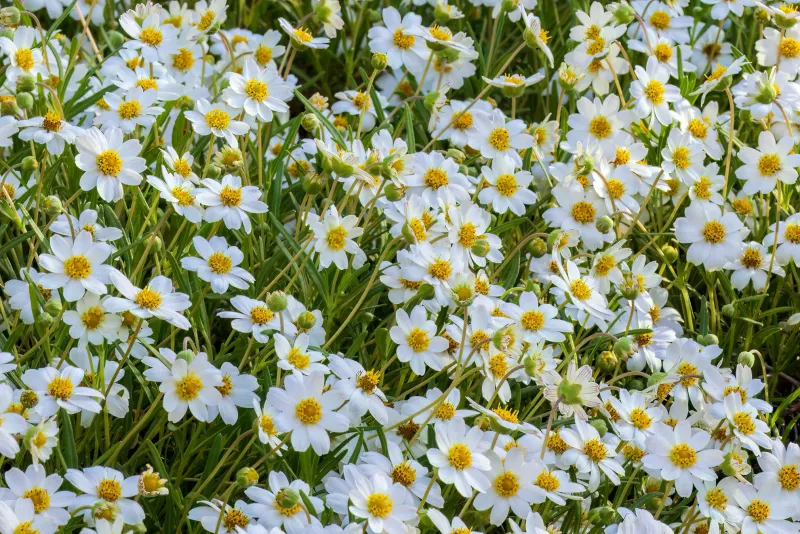
Blackfoot daisy is a compact Texas native that keeps producing cheerful white flowers through the kind of brutal summer heat that stops most garden plants cold. For Central Texas gardeners dealing with triple-digit temperatures and water restrictions, finding a perennial that earns its spot in a sunny, dry bed without constant care is a real win.
This little plant forms a tidy mound covered in small white blooms with yellow centers, and it can often stay in flower through late summer and into fall when conditions suit it. Knowing where and how to grow it makes all the difference.
Blackfoot daisy fits the front edge of a sunny Texas bed
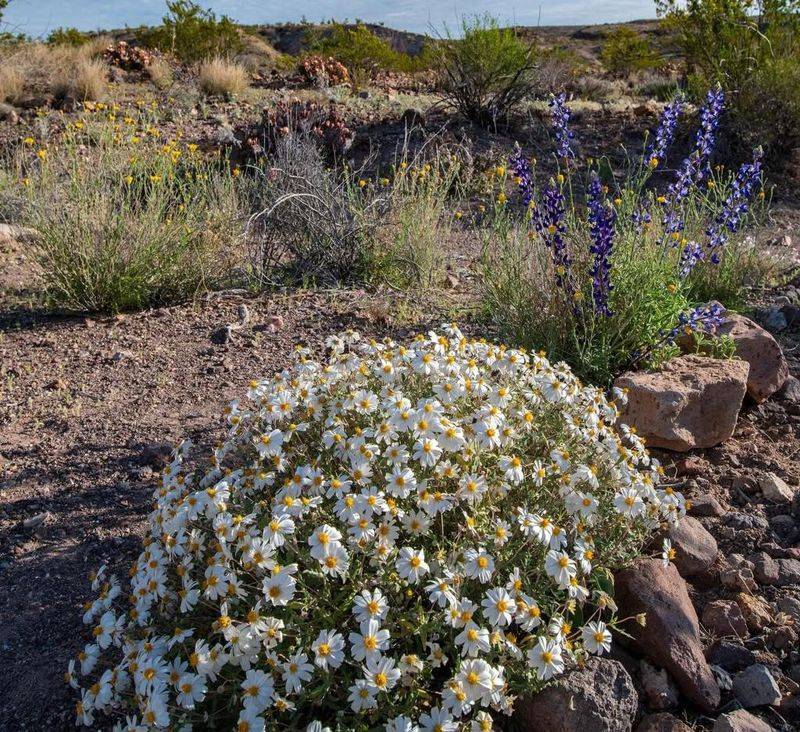
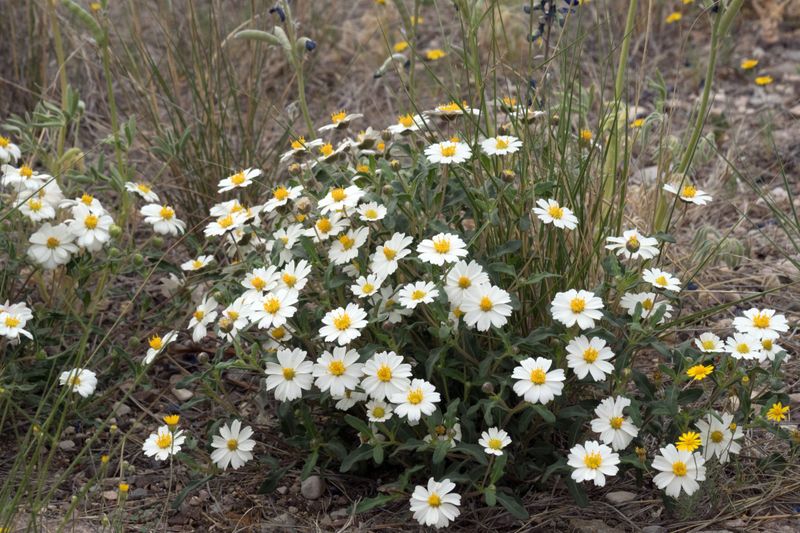
Melampodium leucanthum, commonly called blackfoot daisy or rock daisy, is a Texas-native perennial that earns a place in water-conscious Central Texas beds based on a straightforward set of qualities. Texas Tech University’s plant resources database identifies it as a Texas native perennial with small white daisy-like flowers and yellow centers that may carry a faint honey-like fragrance.
The blooms are modest in size but produced in quantity across a long season, which gives the plant a bright, cheerful look even on days when the rest of the bed looks heat-tired.
The plant’s physical form shapes where it works best. The City of Austin’s plant guide describes it as a compact, rounded mound generally about 6 to 12 inches tall, with a spread that can reach roughly 12 to 24 inches depending on growing conditions.
That low profile is exactly why it belongs at the front of a sunny border, tucked into a rock garden, or placed in the gaps between stones rather than at the back of a bed where it would disappear behind taller neighbors.
Planted in groups of three or more, the repeating white mounds read clearly along a dry border and fill space without crowding out nearby plants. Its low- or very-low-water classification makes it a reasonable candidate for a Central Texas summer bed, though that reputation applies mainly after the plant has settled in.
The case for growing it rests on documented site suitability, not on a claim that it outperforms every other Texas native in summer heat.
Its flowering season can carry white color through late summer
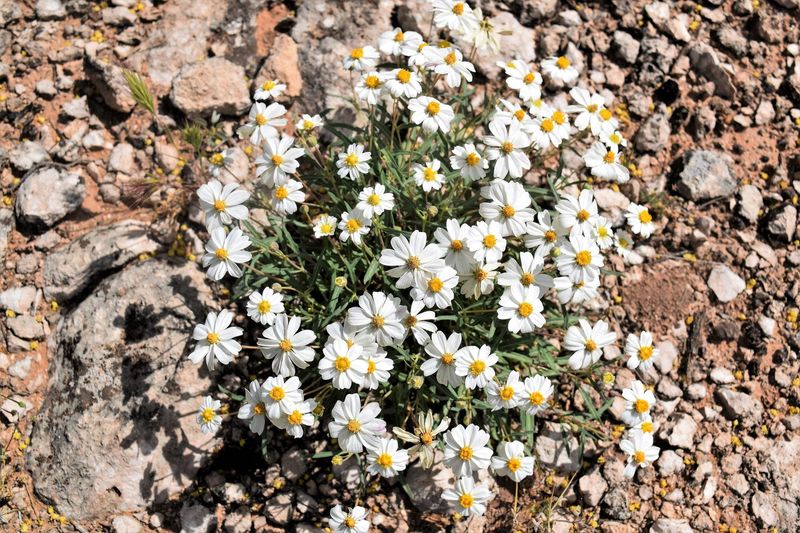
One of the most useful things about blackfoot daisy for a Central Texas gardener is the length of its bloom window. Regional references vary slightly in how they describe it, but the overall picture is consistent: flowering starts in spring and continues through summer, with some sources extending the window into fall.
Texas Tech’s plant database lists bloom time as spring, summer, and fall, while the City of Austin’s plant guide notes spring through summer as the primary seasonal interest window.
The safest way to think about it: blackfoot daisy can often stay in flower through late summer in a sunny, well-drained Central Texas setting, and it may continue into fall when conditions favor it. That is a strong performance description, not a guarantee of uninterrupted bloom for every plant in every yard.
Timing and continuity can shift depending on the specific site, rainfall patterns, soil drainage, and the intensity of the heat in any given season.
It also helps to keep the framing honest about what else is blooming. The Native Plant Society of Texas notes that other regional natives, including salvias, Texas lantana, and frogfruit, can also carry color through summer or into fall.
Blackfoot daisy is a well-supported choice for sustained white color in a dry, sunny bed, but it is not the only Texas plant flowering when the calendar turns to August. What sets it apart for this particular use is the combination of white blooms, compact size, and dry-site adaptability working together in a Central Texas setting.
Good drainage matters more than a particular soil label
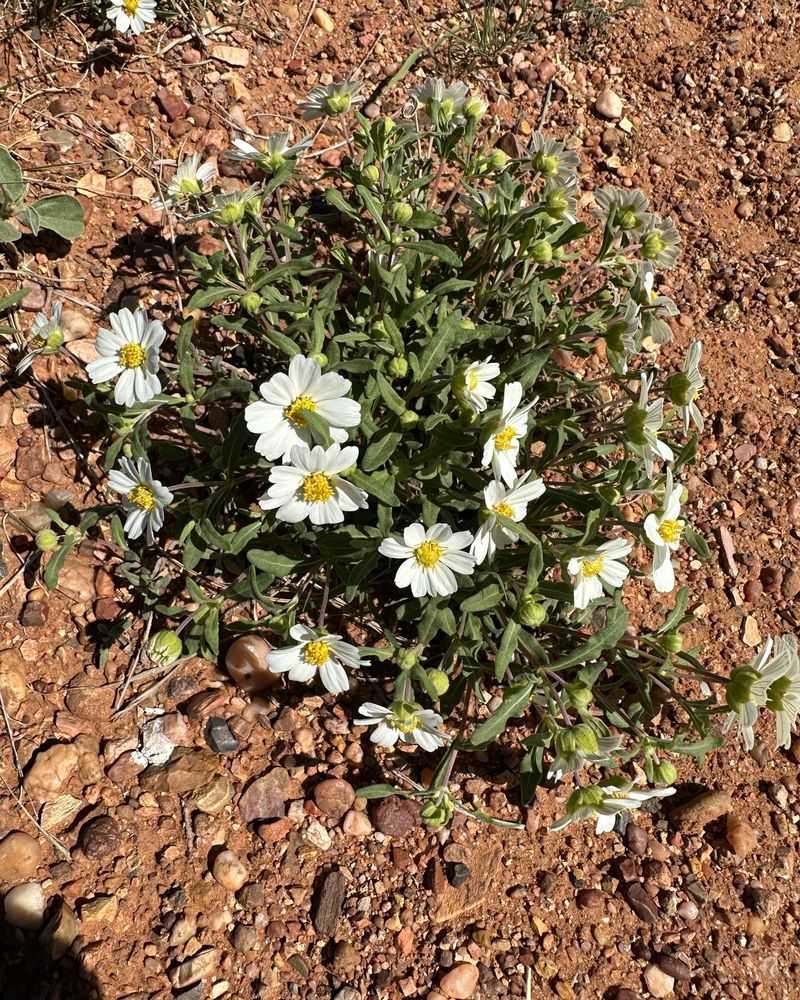
Before picking a spot for blackfoot daisy, the single most important question is whether that spot drains well. Dry, well-drained conditions are the foundation of this plant’s documented site requirements, and no other factor substitutes for them.
Rocky, sandy, limestone, caliche, and gravelly settings are examples of environments that can provide a suitable home, but the key is the drainage those soils tend to offer rather than a specific label on the soil bag or a test kit reading.
North Carolina State University Extension’s plant profile confirms that full sun is a firm requirement, defining full sun as at least six hours of direct sunlight daily. Shade from a fence, a large shrub, or a building overhang can reduce flowering and weaken the plant’s overall performance, so choose a location with genuinely open sky exposure.
The Texas Tech plant resources sheet lists rocky, sandy, and limestone-based soils as documented matches, which lines up with the kind of terrain common across much of Central Texas.
Low spots that collect water after rain, beds where moisture pools for more than an hour or two, heavy clay that stays consistently wet, and any area hit regularly by lawn sprinkler heads are all poor fits. The City of Austin plant guide points to well-drained conditions as a repeated requirement, and the Native Plant Society of Texas specifically warns against sprinkler-irrigated locations.
Persistently moist soil is one of the fastest ways to lose a blackfoot daisy that looked healthy at planting.
Dry-site suitability, built up through adaptation to lean, fast-draining ground, underlies the plant’s drought-tolerant reputation. That is a practical observation based on where it thrives, not a formula that guarantees continued flowering under any set of conditions.
Match the site first, and the plant’s natural tendencies have room to work.
Drought tolerance begins after establishment
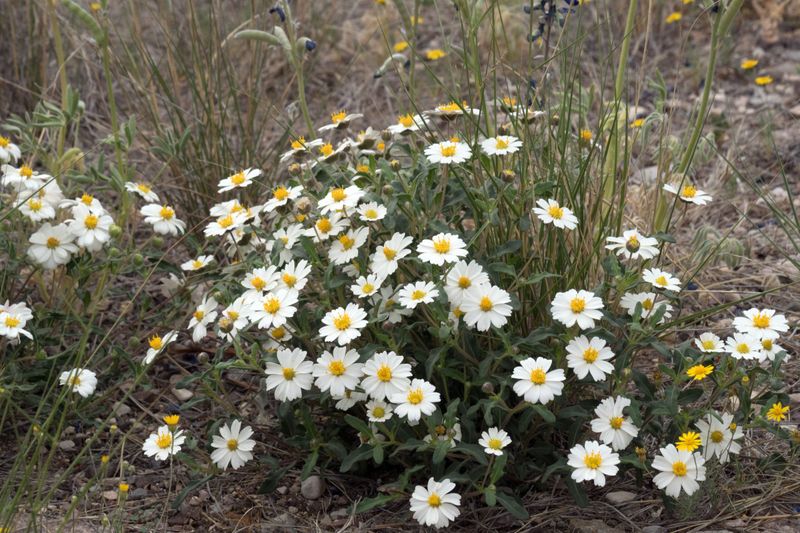
Drought tolerance is a real trait of blackfoot daisy, but it applies mainly to plants that have had time to push roots into the surrounding soil. A freshly planted transplant has not reached that point yet, and treating it like an already-established specimen is one of the more common ways to lose it in the first season.
New plants need more consistent moisture while roots develop, and that early care window matters more than almost any other decision a gardener makes with this plant.
Texas Water Resources Institute guidance on summer landscape survival recommends watering deeply but less frequently once plants are established, and allowing the soil to dry somewhat between watering events rather than keeping it consistently moist. That rhythm suits blackfoot daisy well after establishment.
Before that point, check the soil regularly, water when the top inch or two feels dry, and do not let a new plant wilt and stress repeatedly during its first summer.
Even a well-established blackfoot daisy can benefit from supplemental water during a prolonged stretch of extreme heat or an unusually dry spell. Regional water-wise plant guidance makes clear that drought-tolerant does not mean never water, and rigid watering schedules miss the point entirely.
Factors like plant age, recent rainfall, soil drainage, and current heat intensity all influence when a plant actually needs a drink. Checking the soil is more useful than following a fixed calendar.
Grouping blackfoot daisy with other low-water natives in the same bed makes irrigation decisions simpler and reduces the risk of accidentally overwatering. Texas A&M water-wise planting advice recommends putting plants with similar water needs together and keeping low-water natives off turfgrass sprinkler zones, which cycle too frequently and apply too much water for this plant’s needs.
Drip irrigation can be a useful option for delivering water directly to the root zone without wetting the foliage repeatedly, though it is one approach among several rather than a strict requirement.
A light trim keeps the mound compact without demanding constant care
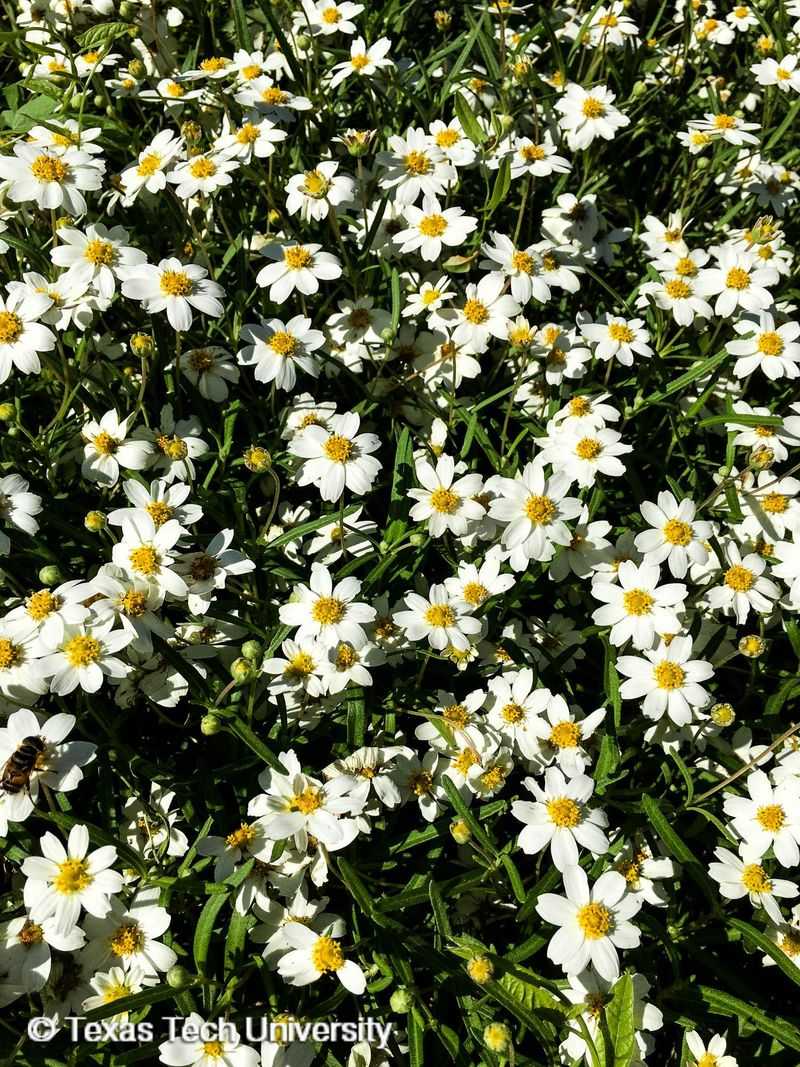
Blackfoot daisy is not a plant that asks for much attention once it is in the ground and settled. That said, low maintenance does not mean zero maintenance, and a little seasonal attention can make a real difference in how the plant looks and performs over time.
The most useful task is cutting an older plant back by about half before spring growth kicks in. The Native Plant Society of Texas recommends this light shearing as a way to help older plants maintain a compact, full shape rather than becoming woody and open in the center.
Removing spent flowers can also encourage additional blooming, though deadheading is not essential for the plant’s basic health or survival. Think of it as an optional step for gardeners who want to push the flowering season a bit further rather than a weekly chore.
Skipping it occasionally will not cause the plant to fail, but staying on top of it during peak bloom periods may keep the display looking fresher.
Weeds compete for the same dry, open soil that blackfoot daisy favors, so checking the bed periodically and pulling intruders before they get established protects the plant’s space without much effort. Beyond that, the maintenance routine is genuinely light.
No heavy fertilization is needed, and applying rich amendments or keeping the soil constantly moist in the hope of boosting flower production tends to work against the plant’s long-term performance rather than helping it. Keep the care simple, stay attentive during the establishment period, and the plant handles most of the rest on its own.
Repeat the low mound along a dry border
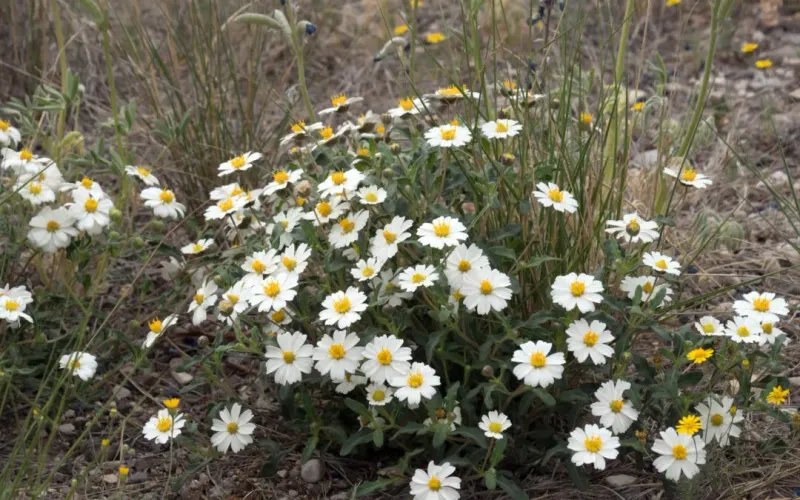
Size and flower color together make blackfoot daisy a reliable design element in a dry, sunny Texas bed. At 6 to 12 inches tall and up to about 24 inches wide, the plant stays low enough to anchor the front of a border without blocking anything planted behind it.
The City of Austin plant guide recommends it for rock gardens, dry borders, sunny beds, and spaces between rocks, all settings where its compact form and dry-site preferences make practical sense.
White flowers with yellow centers read clearly against warm-toned stone, dry mulch, or bare caliche soil, and that contrast becomes more noticeable in late summer when many surrounding plants have pulled back their color. Repeating the same plant in groups or spaced pockets along a border creates a visual rhythm that looks intentional without requiring a complex design plan.
Pairing it with other low-water natives of varying heights, such as compact salvias or other drought-adapted species, lets each plant’s texture and form show while keeping irrigation simple.
The wildlife side of blackfoot daisy is modest but worth noting. Native Plant Society of Texas guidance associates the flowers with bees, butterflies, and other insects, and the seeds may attract birds.
A National Park Service Texas pollinator resource includes blackfoot daisy among fall native options for supporting pollinators. These are genuine benefits without being the primary reason to grow it.
The plant is not indispensable to any particular pollinator, but a bed full of blooming blackfoot daisies in August is a more active place than a bed with nothing open at all. That alone is worth factoring into the design.
Poorly matched sites can undo its drought tolerance
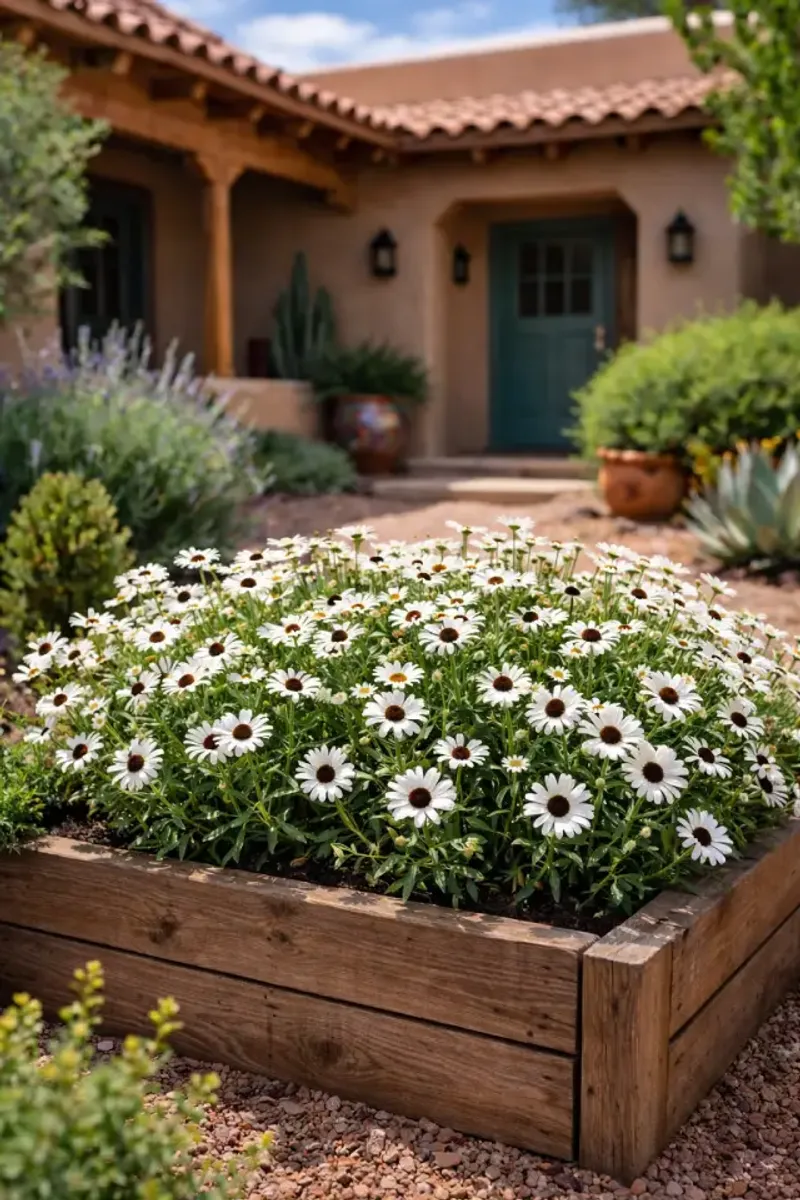
Planting blackfoot daisy in the wrong spot is one of the most reliable ways to watch it fail, and the warning signs from the guidance are specific enough to act on before the plant goes in the ground. Overwatering and poor drainage are among the most important site- and care-related failure risks documented by regional sources.
The Native Plant Society of Texas explicitly warns that overwatering can kill blackfoot daisy and advises against placing it in sprinkler-irrigated zones, where irrigation cycles designed for turf apply far more water than this plant can tolerate.
Heavy or persistently wet soil creates the same problem even without active irrigation. A bed that stays moist after rain, a low spot that collects runoff, or a clay-heavy site that drains slowly all create conditions that conflict with the plant’s documented requirements.
The City of Austin plant guide consistently emphasizes well-drained, dry conditions as the baseline, not an optional preference. Inadequate sun is another documented concern; a location that gets fewer than six hours of direct sun daily reduces flowering and weakens the plant over time.
Insufficient transplant care during the establishment period can also undermine a plant that would otherwise thrive. A new blackfoot daisy that dries out repeatedly before its roots are established may never recover the vigor it would have built with consistent early watering.
Texas Water Resources Institute summer landscape guidance notes that even drought-tolerant plants need appropriate care during their first season.
The Central Texas dry-site evidence that supports this plant should not be read as a promise for humid, rainy, coastal, or poorly drained conditions. Gardeners in those settings may need to build a raised bed, amend with gritty material, or choose a different plant entirely.
NC State Extension’s plant profile reinforces that rich, consistently moist soil can reduce longevity rather than improve it. The recommendation here describes strong suitability for the right conditions, not universal summer-bloom performance across every Texas landscape.
Choose blackfoot daisy for the site, not for a promise
The decision to grow blackfoot daisy comes down to a site match, not a performance guarantee. The City of Austin’s plant guide and Texas Tech’s plant resources database both point to the same conditions: full sun, dry soil, and good drainage.
Put it in a bed that meets those requirements, give new transplants consistent water while roots develop, then ease back toward deep, infrequent watering as the plant settles in.
When conditions suit it, blackfoot daisy can maintain a cheerful white presence through late summer and may carry that color into fall, which is a meaningful contribution to a heat-stressed Central Texas bed. Texas Water Resources Institute guidance reinforces that low-water plants perform best when matched to conditions rather than forced through irrigation or rich soil amendments.
Match the sunlight, drainage, and water availability first, and let the plant’s natural tendencies take it from there. A well-placed blackfoot daisy does not need much help to do what it does best.