
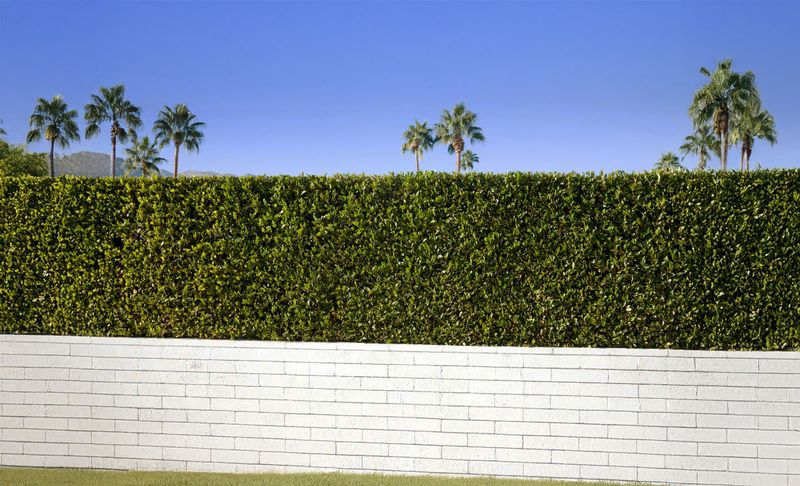
Bamboo promises a fast green wall, but in California yards it often escapes its bed and marches into your neighbor’s lawn, cracking patios and roots along the way. The good news is you can get the same living screen without the takeover headache.
These shrubs handle our long dry summers, sip less water, and many of them feed pollinators and birds while blocking the view. Here are seven well-behaved plants that give you privacy without the regret.
1. Toyon (Heteromeles arbutifolia)
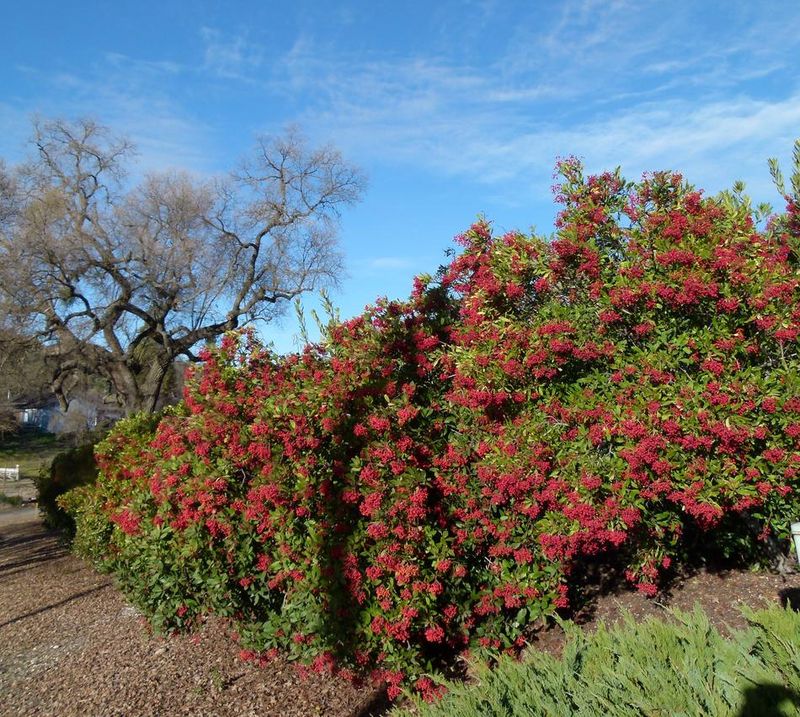
Native to California hillsides and famous for helping name Hollywood, toyon earns its spot as the screen that also throws a wildlife party. Its clusters of red winter berries pull in robins, cedar waxwings, and mockingbirds when little else is fruiting.
Left alone it grows tall and dense, easily reaching 8 to 15 feet, which makes a solid year-round wall. Because it is a true California native, it shrugs off summer drought once established and asks for almost nothing.
Plant it in full sun to part shade in inland or coastal zones. It also carries a reputation as a firewise choice when kept pruned and hydrated, so it can work near defensible-space areas better than oily bamboo.
2. Pacific Wax Myrtle (Morella californica)
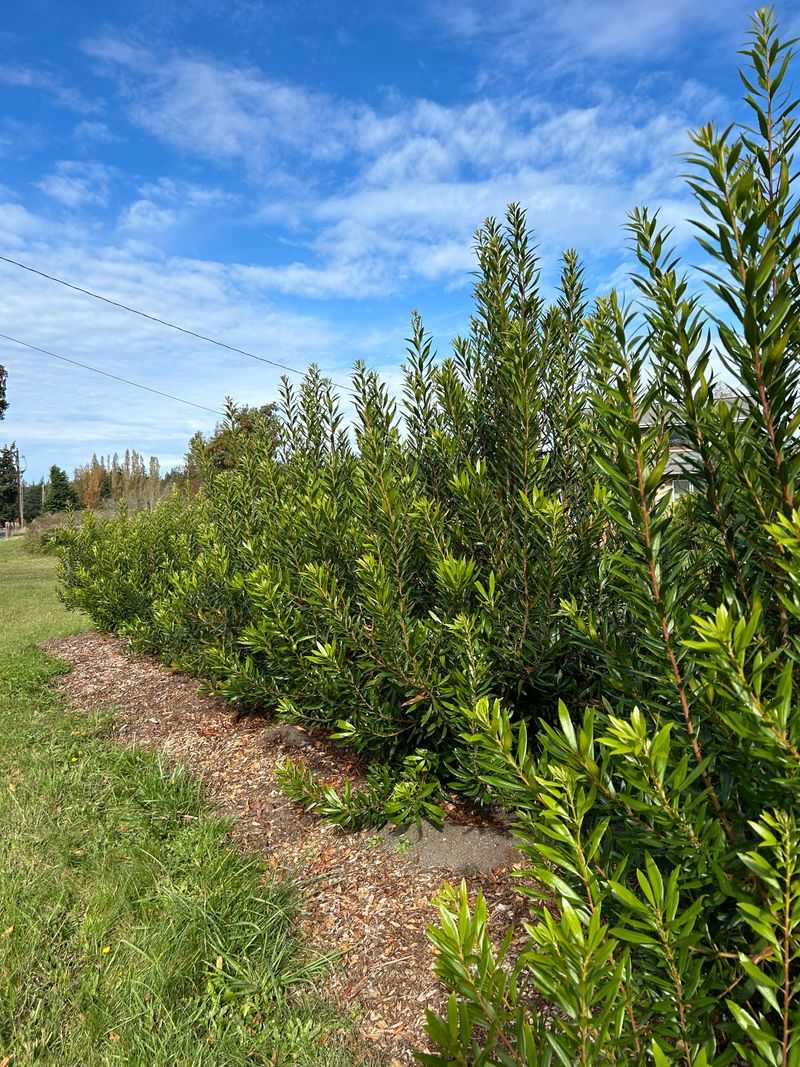
If you want fast without the invasive baggage, Pacific wax myrtle grows quickly and fills in like a curtain. The narrow, slightly aromatic leaves stay green all year and knit together into a screen that hides fences, AC units, and nosy sightlines.
Coastal gardeners love it because it tolerates wind, salt spray, and lean soil. It can reach 10 to 20 feet, and a light trim keeps it as a tidy hedge instead of a small tree.
Birds nibble its waxy berries, and the roots actually help fix nitrogen in the soil. Unlike bamboo, it stays where you plant it and never sends runners under the sidewalk.
3. Coffeeberry (Frangula californica)
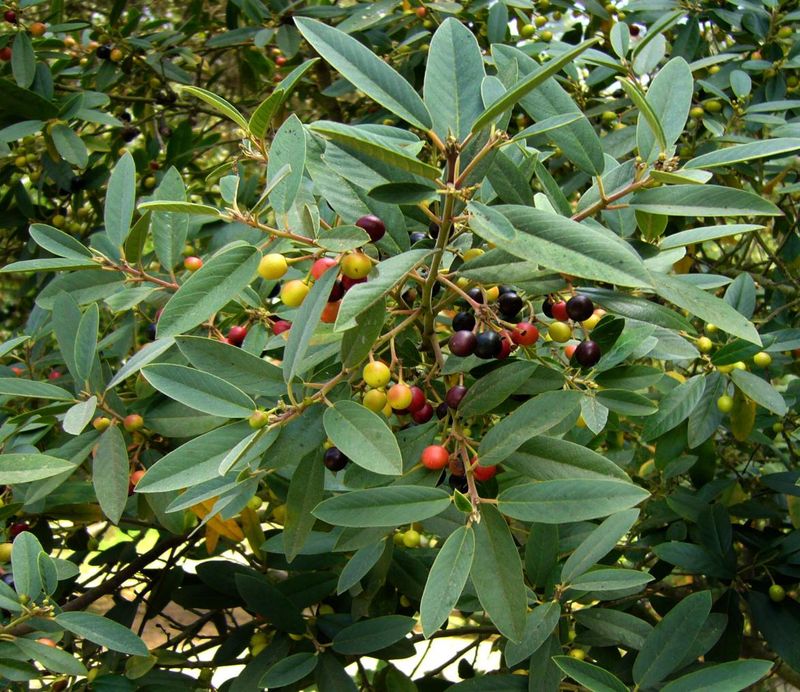
Quietly one of the toughest natives around, coffeeberry handles sun, part shade, clay, and months without a drink. Cultivars like ‘Eve Case’ and ‘Mound San Bruno’ stay compact and rounded, giving you a screen that never bullies its neighbors.
Its berries ripen from green to red to nearly black, and birds work them over all season long. Native bees visit the tiny spring flowers too, so it pulls double duty as habitat.
Expect a mature height of 6 to 12 feet depending on the variety. For a spot where you want privacy but not a maintenance chore, this one asks for very little once it settles in.
4. Hopseed Bush (Dodonaea viscosa)
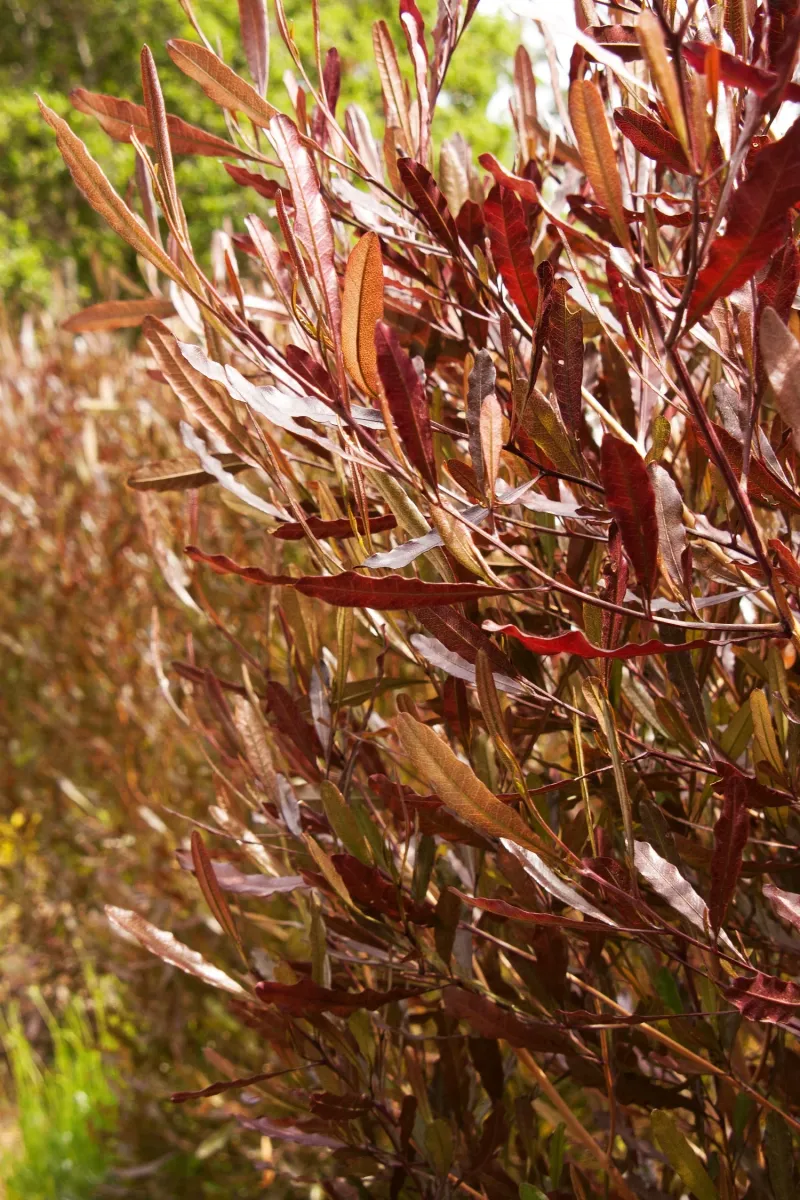
Gardeners reaching for quick vertical cover often land on hopseed bush, and for good reason. It shoots up fast, holds narrow willow-like leaves, and the purple-leaved form (‘Purpurea’) adds moody color to a plain fence line.
Heat and drought barely register with this shrub, making it a natural for hot inland valleys and low-water designs. Prune it into a formal hedge or let it grow loose and airy at 10 to 15 feet.
It stays put with a clumping habit and no aggressive runners. For homeowners who want the speed people chase bamboo for, without the regret later, hopseed is a smart swap.
5. Lemonade Berry (Rhus integrifolia)
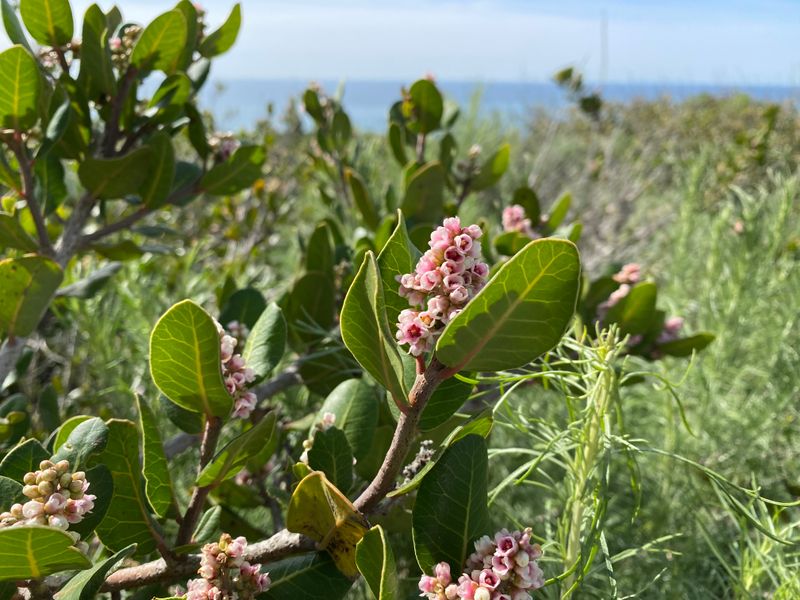
Along Southern California’s coast and canyons, lemonade berry has been holding hillsides together for ages. Its thick, leathery leaves form a dense evergreen mass that blocks views and softens wind at the same time.
The pinkish spring flowers give way to sticky, tart red berries that native peoples once soaked to make a lemonade-like drink, hence the name. Pollinators and birds both find something to like.
It thrives in coastal sun and sandy soil, tolerates salt air, and can be kept as a 6 to 10 foot hedge. Because it holds slopes so well, it is a favorite for hillside homes wanting privacy plus erosion control.
6. Manzanita (Arctostaphylos ‘Howard McMinn’)
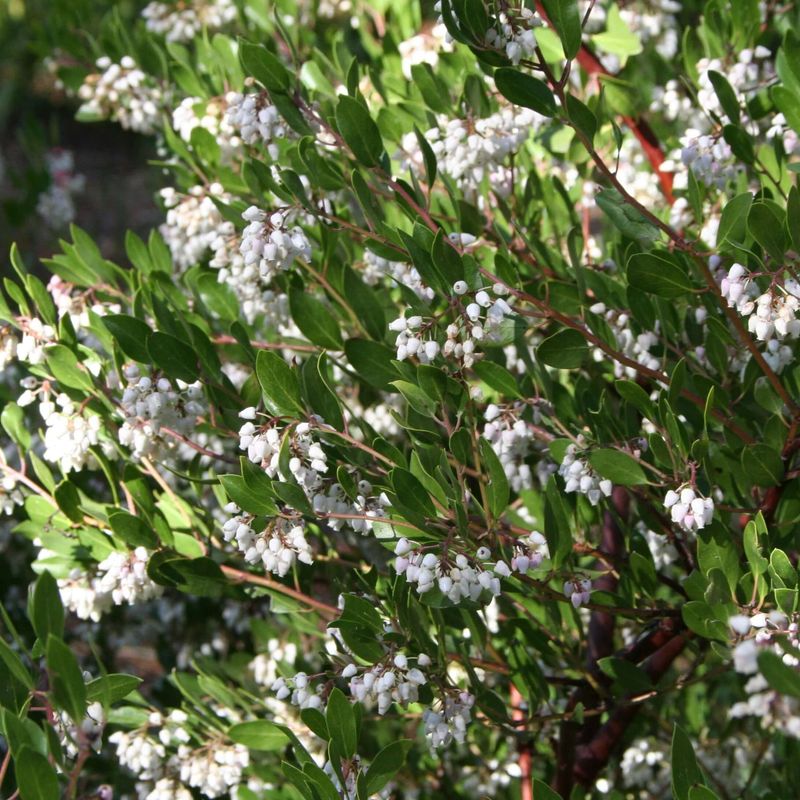
Few plants show off like a mature manzanita, with its smooth mahogany bark glowing against silvery-green leaves. The variety ‘Howard McMinn’ is a garden workhorse, forgiving of clay and summer water in ways many manzanitas are not.
Little pink urn-shaped flowers appear in late winter, feeding hummingbirds and early bees when the yard is otherwise quiet. It mounds up to 6 to 8 feet wide and tall, making a sculptural, slow-and-steady screen.
Once rooted in, it wants almost no water and rewards you with structure year-round. If you crave a privacy plant that doubles as a living piece of art, this is it.
7. Catalina Cherry (Prunus ilicifolia ssp. lyonii)
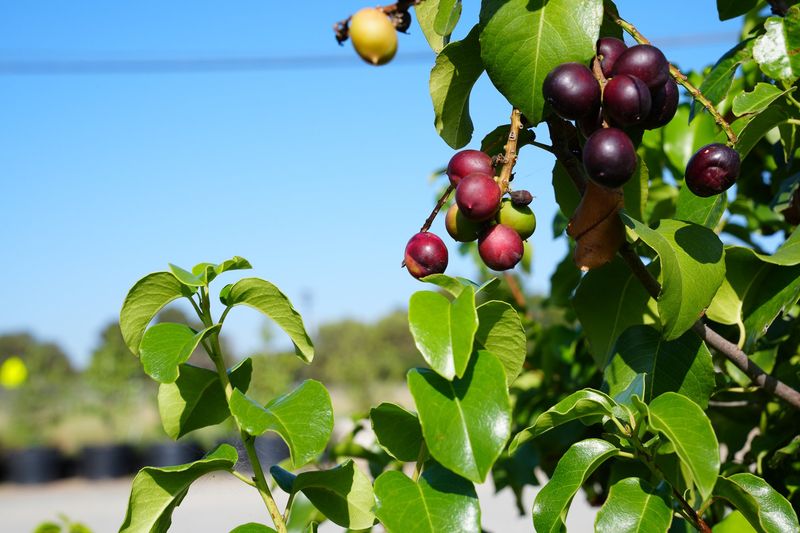
Think of Catalina cherry as the polished, formal option on this list. Its glossy dark leaves and dense growth make it look like an expensive nursery hedge, yet it is a tough California native at heart.
Creamy flower spikes in spring draw bees, and the dark cherries that follow feed birds and even native wildlife. It can climb to 15 feet or more, or you can shear it into a crisp privacy wall along a property line.
Drought-tolerant once established and evergreen all year, it gives you the tidy look people want from formal hedging without the thirst. Plant it where you want elegance and screening in the same shrub.