
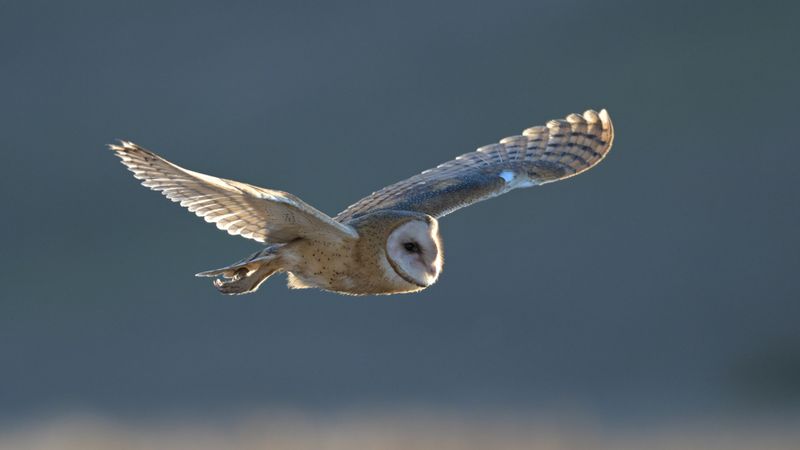
Spotting an owl gliding past your fence line after dark is one of those backyard moments that sticks with you. Many California homeowners immediately wonder whether the bird showed up because their property has a rat problem, but the real answer is more layered than that.
Understanding what actually draws owls to a yard at night can help you protect a useful wild neighbor, assess your home more accurately, and take the right steps if rodents genuinely are a concern.
An Owl at Night Signals Habitat Before It Signals Rats
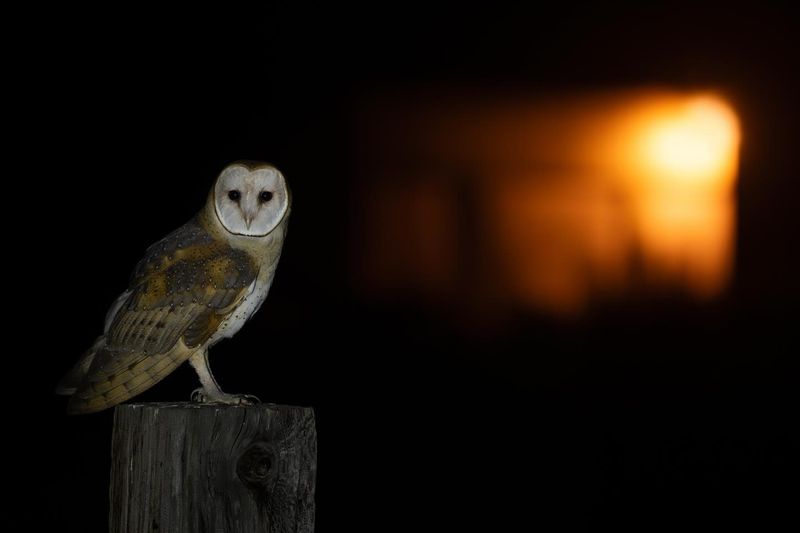
Repeated nighttime owl activity near a California home most often tells you something about the property itself: it offers a useful hunting route, a safe perch, roosting cover, a potential nest site, or access to open ground where prey moves at night. Before concluding that a rat problem drew the bird, consider that owls range across large territories and may cross your yard as part of a regular circuit that spans multiple blocks, a nearby creek corridor, an orchard, or an open field.
An owl can fly low along a fence line, skim over garden beds, or circle near a roofline without hunting anything connected to your house at all. Cornell Lab of Ornithology’s Barn Owl life history notes that these birds hunt primarily over open land and use exceptional hearing to locate small mammals moving through grass or leaf litter, not necessarily through walls or crawlspaces.
A neighboring vacant lot, a drainage channel, or even a block of mature street trees can be enough to anchor a regular hunting flight over your property.
Rodents are certainly one prey category that attracts owls, and a property with accessible food waste, overgrown vegetation, or unsealed gaps may host mice or rats that a hunting owl detects. But the sighting alone is not a diagnosis.
California Department of Pesticide Regulation guidance on biological pest management frames owls as one component of a broader management approach rather than a reliable indicator of infestation severity.
The practical takeaway is straightforward: treat an owl sighting as a reason to do a careful walkthrough of your property, not as confirmation that you have a rodent problem inside or under your home. Look for physical evidence before drawing conclusions, and appreciate that the owl may simply find your yard a convenient corridor in a landscape it covers every night.
The Pale, Low-Flying Hunter May Be an American Barn Owl
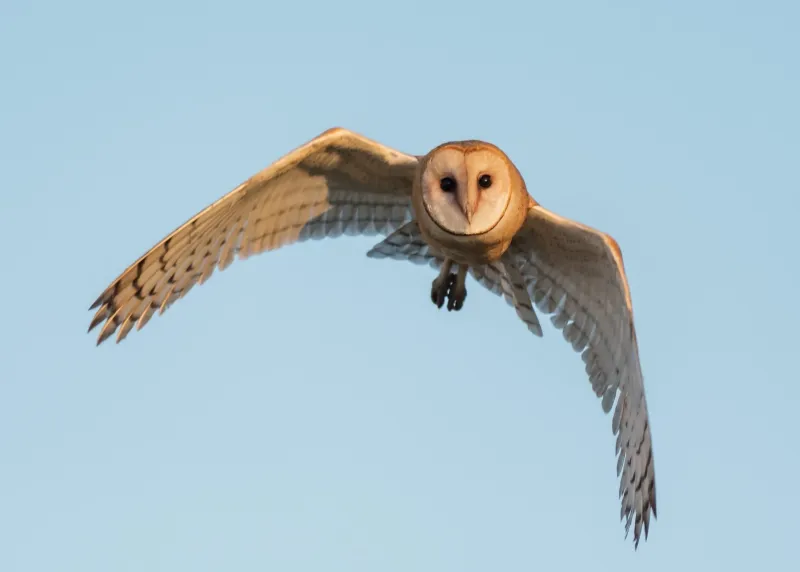
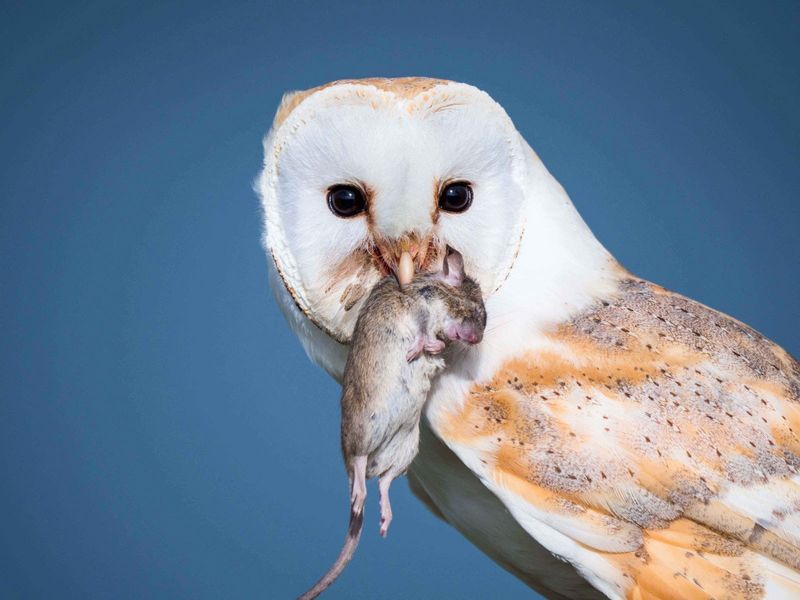
When a California homeowner describes a ghostly pale bird flying low and silently over open ground after dark, the American Barn Owl is a reasonable candidate to consider. Its plumage is distinctive: the face is heart-shaped and white, the back and upper wings are a warm golden-buff mixed with gray, and the underparts are pale, often appearing almost white in low light.
That combination can look genuinely eerie against a dark sky, which is part of why barn owl sightings generate so much curiosity.
Cornell Lab’s Barn Owl life history describes the species as a bird of open and semi-open country, including suburbs, agricultural edges, grasslands, and areas near marshes or fields. It hunts primarily at night using extraordinary low-frequency hearing that can locate a mouse moving through dense grass in complete darkness.
Its diet centers on rats, mice, voles, shrews, and other small mammals, which is why it has a reputation as a natural rodent controller in farming communities.
The call is another useful clue. Barn Owls do not hoot.
Instead, they produce a long, raspy screech that sounds more like a drawn-out hiss than anything melodic. Hearing that sound near your property on multiple nights, combined with a pale, buoyant, moth-like flight low over open ground, makes a Barn Owl a plausible identification.
Even so, these clues support only a tentative conclusion. A brief nighttime glimpse from a window rarely gives enough detail to confirm species, and several other California owls share some of these features.
The presence of a pale, low-flying owl suggests a bird adapted to open-country hunting, but it does not establish that the owl is targeting rodents at your specific home rather than moving through the wider landscape on a familiar route.
Other California Owls Can Make the Same Yard Visit
Not every owl that crosses a California yard after dark is a Barn Owl. Two other species are common enough around suburban properties that homeowners should know them before settling on an identification from a quick nighttime look.
The Great Horned Owl is one of the most widespread raptors in North America, and Cornell Lab’s Great Horned Owl life history confirms it regularly uses suburbs, parks, orchards, and cities across California. It is a large, heavy-bodied bird with prominent feathered ear tufts on either side of a broad, rounded head.
Its call is the classic deep, resonant hoot most people associate with owls. Its diet is notably broad: mice, rats, voles, gophers, squirrels, rabbits, birds, reptiles, and other prey all appear on the menu.
A large owl with tufts and a hooting call is almost certainly a Great Horned Owl, not a Barn Owl.
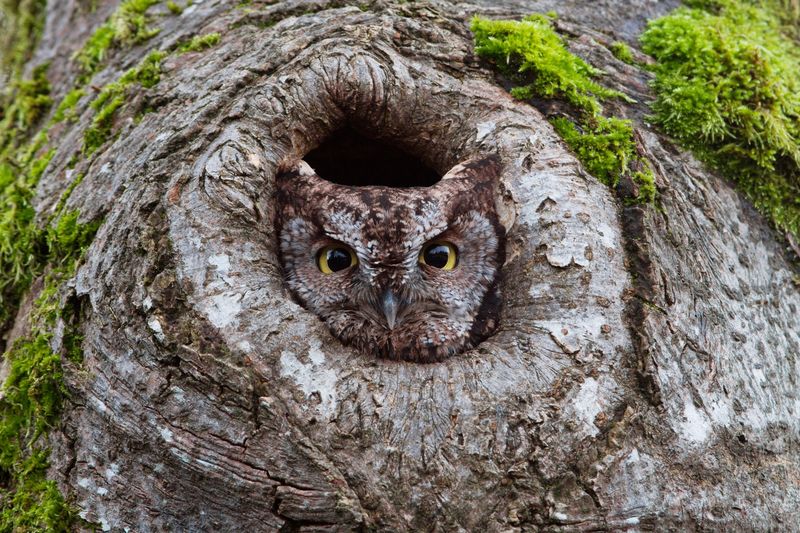
The Western Screech-Owl is smaller, roughly the size of a robin, with cryptic gray-brown streaked plumage that makes it nearly invisible against bark. It is strictly nocturnal, cavity-nesting, and reasonably tolerant of people, so it may turn up in forested suburbs, parks, or yards with mature trees and suitable cavities.
Its call is a descending whinny or a series of short whistled hoots, quite different from the Barn Owl’s screech or the Great Horned Owl’s deep hooting.
Size, silhouette, ear-tuft presence or absence, flight style, and call are the most useful field marks at night, but a brief glimpse from a porch or window often leaves real uncertainty. Resist the urge to commit to a species from a single sighting.
Watching on multiple nights, listening carefully for calls, and noting whether the bird flies low over open ground or perches high in trees will give you a much more reliable picture of which owl is actually visiting.
What Owl Hunting Can—and Cannot—Do for Rodent Control
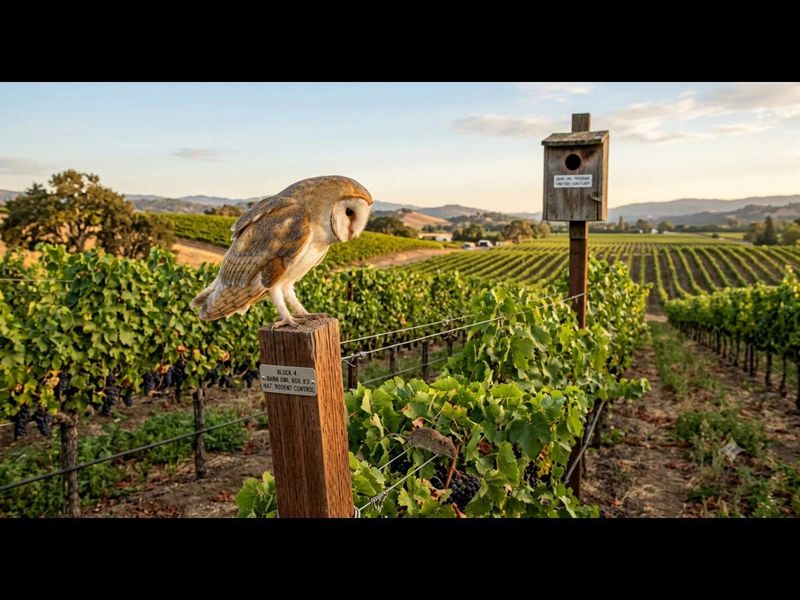
Barn Owls do consume meaningful numbers of small mammals. A single adult hunting through a productive season can take hundreds of mice, voles, and rats, and a nesting pair feeding growing chicks covers even more ground.
That consumption is real, and it is part of why farmers in California have installed nest box programs for decades.
The strongest recent evidence for a measurable effect comes from managed vineyards, not from suburban backyards. A 2026 peer-reviewed study on Barn Owl predation in Napa Valley found that higher owl hunting pressure was associated with a reported 38 to 52 percent reduction in measured rodent abundance.
That is a meaningful association, but the study involved occupied nest boxes, managed agricultural habitat, and vineyard-scale open terrain where owls could hunt efficiently. The researchers found an association consistent with substantial suppression in that specific setting, and the study’s design does not allow a direct causal claim that owls alone produced the entire reduction.
Suburban yards, roof spaces, wall cavities, and garages are a different environment entirely. An owl hunting along your fence line cannot reach rodents living inside a wall void, nesting under a concrete slab, or moving through an attic.
Roof rats, in particular, are agile climbers that spend much of their time in elevated, enclosed spaces that a low-flying owl cannot access. California DPR guidance is direct on this point: owls alone will not eliminate a rodent problem, and they work best as one component of integrated pest management alongside exclusion, sanitation, and trapping.
UC IPM’s rat management guidance adds that natural predators often cannot keep rodent populations below damaging levels once an infestation is established. An owl is a welcome ecological partner in the landscape, but expecting it to diagnose or fix a household rodent problem places more weight on the bird than the evidence supports.
Inspect for Rodent Evidence Instead of Reading the Owl as a Diagnosis
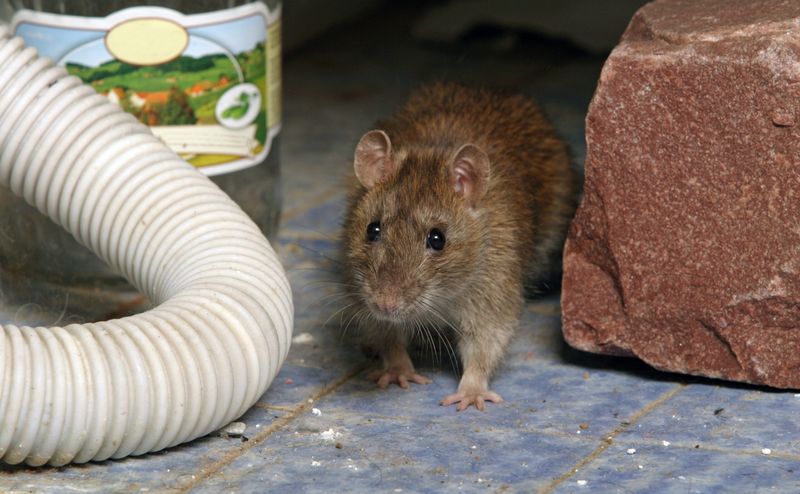
An owl overhead is a reason to look more carefully at your property, not a verdict about what is living inside it. The most useful next step is a methodical walkthrough focused on physical evidence that rodents actually leave behind.
UC IPM’s guidance on rats describes the clearest signs: dark, capsule-shaped droppings along walls, in cabinets, or near food storage; gnaw marks on wood, plastic, or wiring; greasy rub marks along baseboards or entry points; nests made of shredded paper, insulation, or plant material; and burrows in soil near foundations or compost areas. For mice, UC IPM’s house mouse page notes that droppings are smaller and pointed at both ends, and activity often concentrates in kitchen cabinets, wall voids, and areas near food.
Outside, check for damaged citrus or other fruit with bite marks, disturbed soil around garden beds or compost bins, and any openings where pipes, cables, or vents enter the structure. Evidence concentrated near or inside the building matters far more than the number of times you have seen an owl overhead.
Before reaching for any control product, consider what you are actually dealing with. California Department of Fish and Wildlife notes that native small rodents, including kangaroo rats, deer mice in wild settings, and ground squirrels in appropriate habitats, provide important ecosystem functions and serve as food for predators.
They should not be indiscriminately poisoned or removed. The rodents that cause household problems are primarily non-native commensal species: Norway rats, roof rats, and house mice.
Confirming which animal you are dealing with before acting protects both your home and the native wildlife sharing your landscape.
Use Exclusion, Sanitation, and Trapping as the Home-Control Plan
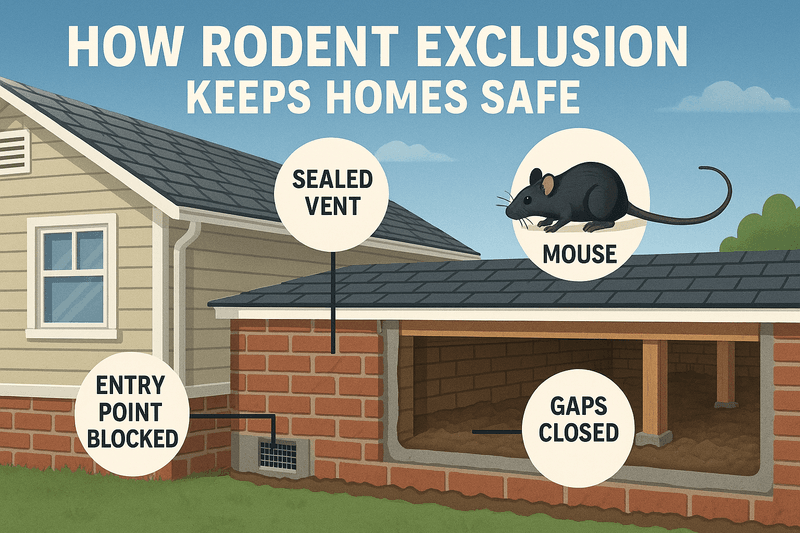
Once you have confirmed signs of rodent activity around your home, three practical categories of action form the core of an effective response: remove what attracts rodents, close off what lets them in, and control the population that is already present. A passing owl can help suppress rodents in the surrounding landscape, but it cannot do any of these three things for you.
Sanitation is the foundation. Secure pet food in sealed containers and bring bowls indoors at night.
Store birdseed in metal bins with tight lids, or move feeders away from the house if activity appears beneath them. Collect fallen fruit promptly, manage compost in a rodent-resistant bin, and keep garbage in cans with secure lids.
Dense ground cover, wood piles, and debris stacked against a structure give rodents both shelter and a pathway inside, so reducing those where practical removes harborage near the building.
Exclusion addresses entry points directly. CDC guidance on sealing homes against rodents recommends closing any opening larger than one-quarter inch for mice, and any gap larger than one-half inch for rats.
Steel wool, hardware cloth, sheet metal, and expanding foam rated for pest exclusion are appropriate materials depending on the location. Pay particular attention to where utility lines, pipes, and vents penetrate walls, as well as gaps around doors, windows, and the roofline.
UC IPM recommends snap traps as the preferred population-control method around homes and structures. They work quickly, allow you to confirm a catch, and leave no poisoned rodent carcass that could harm a predator.
Use a rat-sized snap trap for rats and a mouse-sized trap for mice; the wrong size reduces effectiveness. Place traps perpendicular to walls or along active runways where you have found droppings or rub marks, and check them daily.
Keep all traps inside tamper-resistant stations or positioned where children and pets cannot reach them. These measures address the actual problem at its source, and they complement rather than compete with the owl’s role in the broader landscape around your home.
Protect the Owl by Rethinking Outdoor Poison
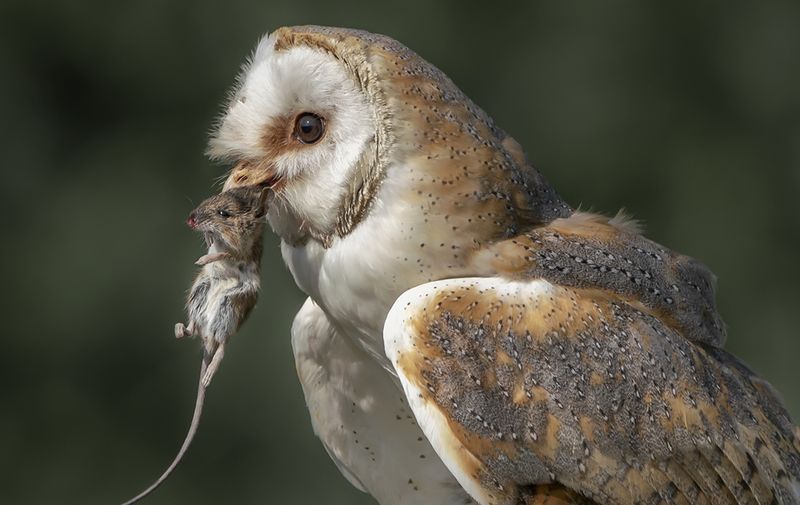
Trying to attract or support rodent-hunting owls while simultaneously leaving poison bait stations outdoors creates a direct conflict. Owls and other predators that catch a rodent weakened or killed by a rodenticide can absorb the same compound through the food they eat, a pathway called secondary exposure.
California Department of Fish and Wildlife’s avian investigations program has found exposure to second-generation anticoagulant rodenticides in roughly 70 to 90 percent of the raptors tested in California monitoring efforts. That figure describes detected exposure in the birds that were tested, not the proportion of all California raptors that have been poisoned, and detected exposure is not the same as confirmed illness or death.
Even so, the pattern is consistent enough that wildlife managers treat it as a serious conservation concern for hawks, owls, and other predators that hunt rodents across the state.
California DPR guidance specifically recommends that owls eat rodents that have not consumed poison bait, and advises discontinuing outdoor rodenticide use before installing a Barn Owl nest box. California has placed restrictions on certain second-generation anticoagulant rodenticides available to consumers, and those rules can change.
Always check current California Department of Pesticide Regulation requirements and read product labels carefully before using any rodenticide outdoors, since what is legally available and how it must be applied may differ from what you find described online.
UC IPM’s rodent guidance positions exclusion, sanitation, and snap trapping as the safer first-line approach around homes precisely because they eliminate the risk of leaving poisoned prey in the environment. If an owl is hunting your yard, keeping the food chain free of rodenticides is one of the most direct ways to support that bird’s continued presence and health.
A Nest Box Supports Habitat, Not a Guaranteed Pest-Free Yard
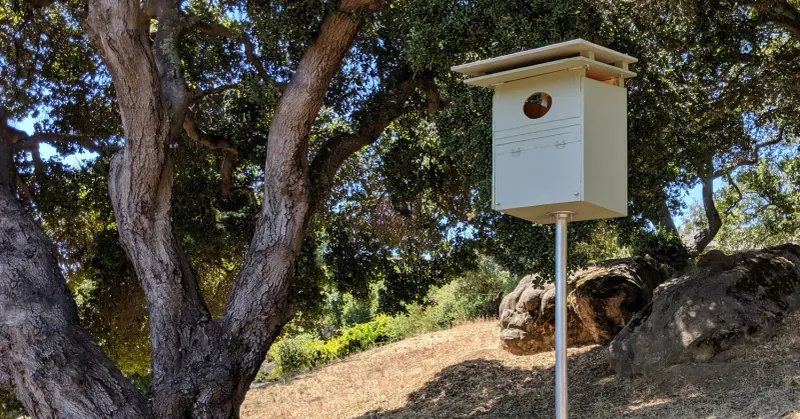
Installing a Barn Owl nest box is a legitimate way to support local wildlife habitat, but approaching it as a plug-and-play pest control device will likely lead to frustration. Occupancy is never guaranteed, and UC ANR’s Barn Owl guidance notes that boxes may go unoccupied for multiple seasons and that evidence for reliable rodent suppression has historically been variable, particularly outside large open habitats.
Placement matters enormously. California DPR guidelines recommend siting a box in an open location that receives afternoon shade, is protected from prevailing winds, and sits at a practical height of around 10 to 12 feet on a pole fitted with a predator baffle.
The box should be safely accessible for annual cleaning, which DPR recommends completing between mid-August and November while wearing gloves and a mask. Keep the box away from busy roads, where owls hunting nearby face a higher collision risk.
UC ANR is clear that boxes should generally be kept away from bedrooms, patios, and high-traffic areas around the home. Barn Owl nestlings can be remarkably noisy when adults return with prey, and the area beneath an occupied box will accumulate pellets, prey remains, droppings, and occasional blood or gut stains.
These are not deal-breakers, but they are real maintenance obligations that homeowners should anticipate before installing a box near a bedroom window or driveway.
Nest box design is also species-specific. A box built for a Barn Owl has different entrance dimensions and interior proportions than one suited to a Western Screech-Owl, and neither is appropriate for a Great Horned Owl, which does not use enclosed cavities.
If you find an owl on the ground that appears injured, sick, or disoriented, do not attempt to handle, feed, or move it. California Department of Fish and Wildlife advises contacting a licensed wildlife rehabilitator or a CDFW office, since approaching or handling wild raptors can cause additional stress and injury to the bird and carries risk to the person as well.
Let the Owl Be a Clue, Then Manage the Cause
An owl circling your California yard after dark is most likely responding to something the landscape offers, whether that is open hunting ground, a familiar route between foraging areas, or prey moving through nearby vegetation. That sighting is worth taking seriously as a prompt to inspect your property, but it is not confirmation that rats or mice are living inside your home.
The practical path forward is methodical: identify the bird as carefully as the light allows, look for physical rodent evidence around and inside the structure, remove attractants, seal entry points larger than one-quarter inch, and use correctly sized snap traps where activity is confirmed. California DPR’s biological pest management guidance and UC IPM’s rat management resources both position these steps as the reliable foundation, with owls contributing to suppression in the surrounding landscape rather than replacing structural controls.
Keeping outdoor poison out of the equation protects the owl and every other predator in your neighborhood, and it keeps the food chain intact in a way that supports long-term natural rodent pressure. A yard that offers safe hunting habitat, no poison risk, and appropriate cover is genuinely more attractive to owls than one loaded with bait stations.
The bird hunting your fence line is already doing its part; the rest is up to you.