
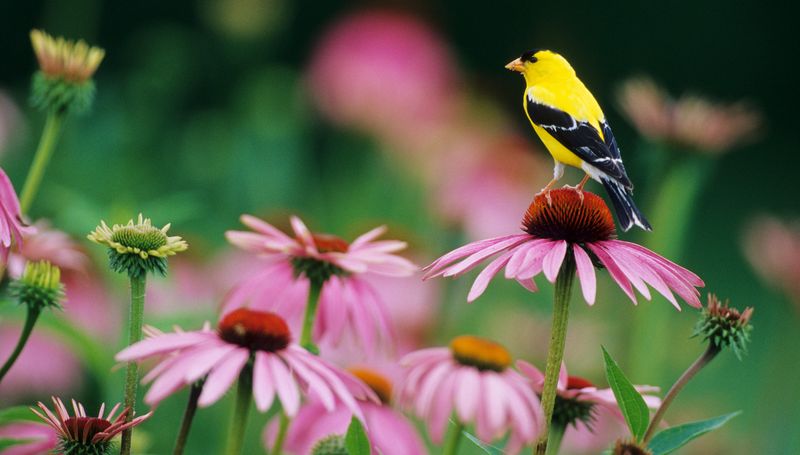
Eastern purple coneflower, known by its scientific name Echinacea purpurea, is one of North Carolina’s most reliable native perennials for supporting backyard wildlife across the growing season. Starting in early summer, its bold purple blooms draw in bees and butterflies, and as those petals fade, the spiky central cones slowly dry into seed heads that goldfinches may visit later in the season.
Planting this species is not a guarantee of daily bird activity, but it can build a meaningful seasonal food source right in your own yard. Understanding what the plant actually offers, and how to manage it with birds in mind, makes all the difference.
A Strong Native Choice for Seasonal Goldfinch Forage
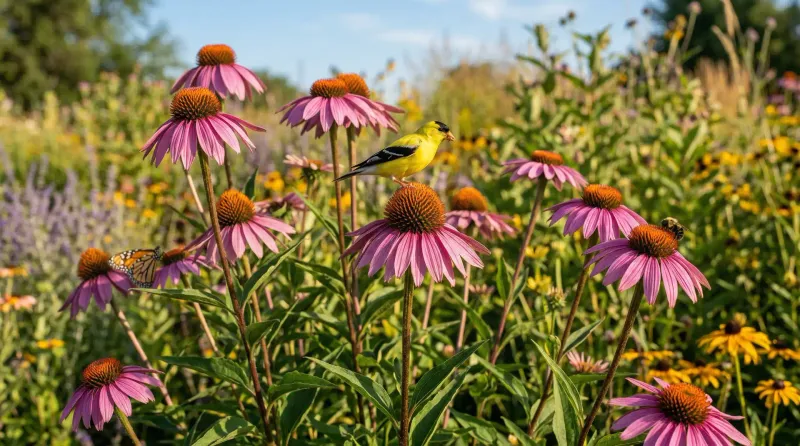
Eastern purple coneflower earns its place in North Carolina yards not because it guarantees goldfinches but because it genuinely delivers two different kinds of wildlife value across one growing season. From early summer through mid-fall, NC State Extension documents it as a native perennial with summer-to-mid-fall flowers that later produce bird-attracting seed heads, recommending that gardeners leave those heads standing after flowering ends.
That two-part sequence, flowers first and seed heads later, is the honest version of the promise. Pollinators get the bloom, and birds like American goldfinches get a potential food source once the cones mature and dry.
Whether goldfinches actually show up depends on how many birds are in your area, what other food sources are nearby, and whether you leave the plant intact long enough for seeds to become accessible.
Purple coneflower is native across North Carolina’s Coastal Plain, Piedmont, and Mountain regions, so it fits yards statewide rather than just one corner of the state. Think of it as one strong seasonal resource, not a single-plant solution that keeps goldfinches present every day from July through October.
Cornell Lab of Ornithology notes that goldfinches eat seeds from many plants in the sunflower family, so their visits reflect the full landscape around your yard, not just one plant in your bed.
How Goldfinches Use Mature Coneflower Seeds
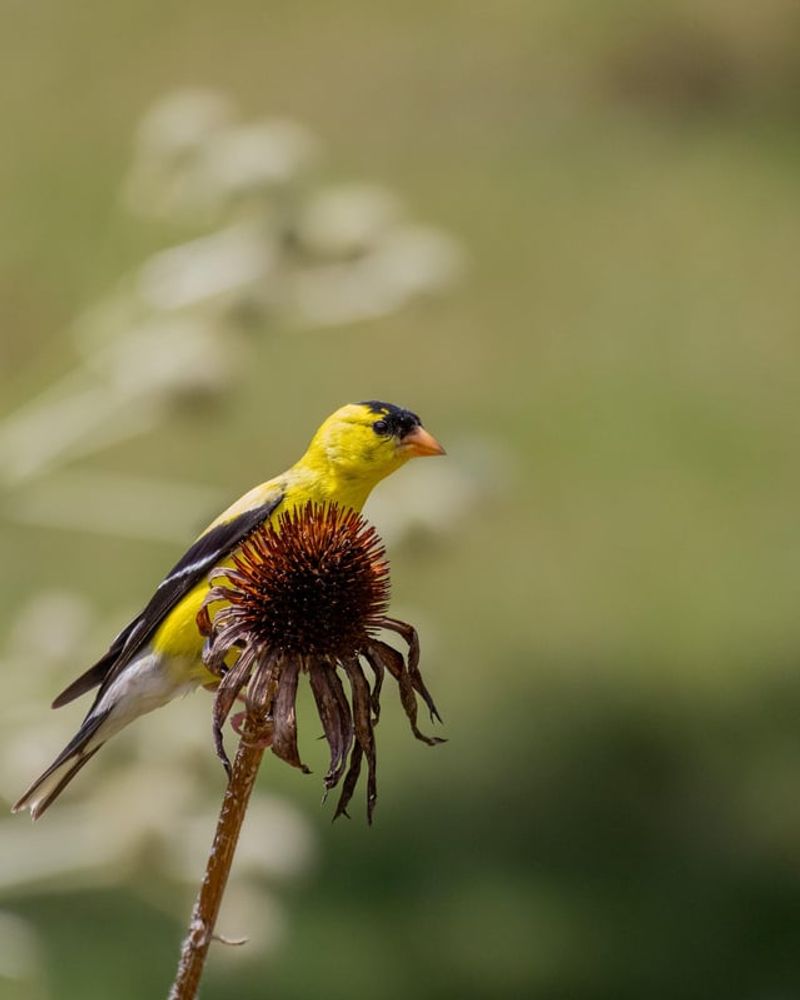
American goldfinches are among the most seed-dependent songbirds in North America. Unlike many backyard birds that switch between insects and seeds depending on the season, goldfinches rely on seeds almost exclusively, and their breeding season begins relatively late, around midsummer, timed to coincide with the period when many plants have started producing seed.
Cornell Lab of Ornithology describes goldfinches as birds that commonly balance on seed heads and use their bills to extract individual seeds, feeding on plants in the sunflower family including thistles, asters, sunflowers, coneflowers, and other seed producers.
Purple coneflower fits naturally into that food web once its central cone has had time to dry and harden. NC State Extension’s plant documentation includes a photograph of an American goldfinch eating from a purple coneflower seed head in Haywood County, North Carolina, in late fall, which puts the bird-plant connection squarely on record for this state.
That said, documented consumption is not the same as preferred foraging, and no single plant pulls goldfinches reliably into every yard.
Local bird numbers, the availability of competing food sources, and whether the seed heads are actually mature enough to yield seeds all shape whether a visit happens. A yard with one small patch of coneflower surrounded by closely mowed lawn offers less overall foraging appeal than one that pairs coneflower with other seed-producing natives.
Treat the plant as one useful thread in a larger food web rather than a guaranteed draw, and the seasonal timing tends to work in your favor.
What “Midsummer Into Fall” Actually Means
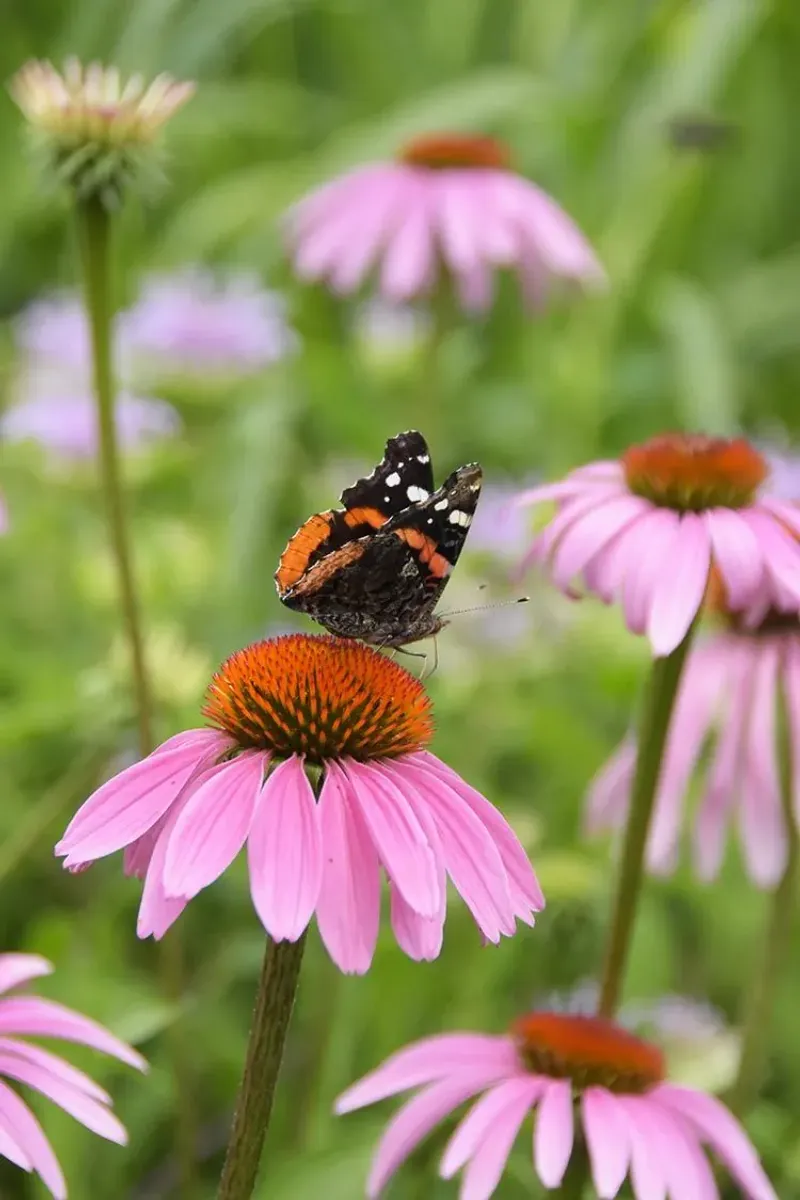
The phrase “midsummer into fall” describes a progression, not a continuous event. Purple coneflower opens its first blooms in early summer, and those flowers can persist through mid-fall depending on the growing season and site conditions.
During that flowering window, the plant’s primary value is to pollinators: native bees, bumblebees, and butterflies work the blooms steadily while petals are fresh and pollen is available.
As individual flowers age, the petals droop and eventually fall away, leaving behind the spiky central cone. That cone gradually dries and hardens through late summer and into fall, and the seeds inside become progressively more accessible to birds as the structure matures.
NC State Extension recommends leaving coneflower heads standing after flowering specifically so birds can use them, which confirms that the seed-head stage is where the bird value actually lives.
This means the goldfinch-feeding window sits later in the season than the plant’s showiest period. Expect pollinators in June and July, fading blooms through August, and drying cones that may attract seed-eating birds from late summer into fall and even early winter.
Weather, local bird populations, and competing food sources all affect whether goldfinches arrive on any given day. A plant that blooms early and sets seed by late summer in the Piedmont may run on a slightly different schedule than one in the mountains, so the timing is a general guide rather than a fixed calendar.
Give Coneflower Sun, Space, and Drainage
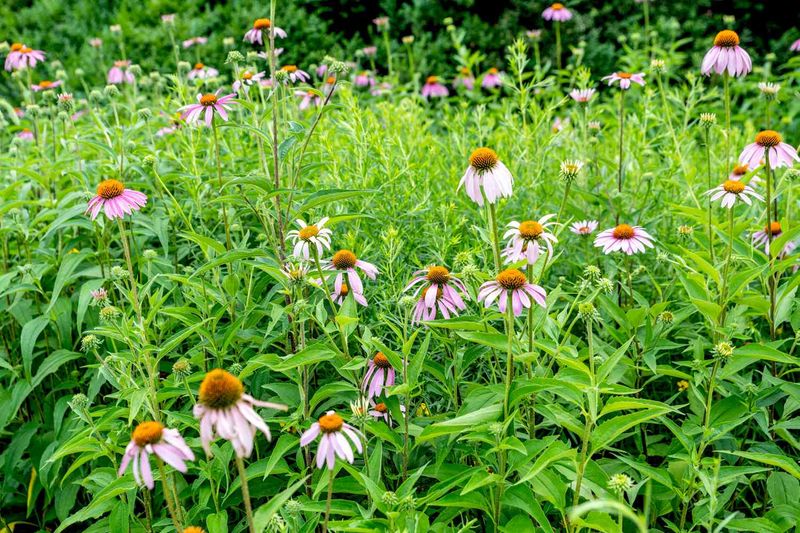
Purple coneflower rewards gardeners who put it in the right spot from the start. Full sun is the ideal situation, meaning at least six hours of direct sunlight per day, though the plant handles partial shade reasonably well.
North Carolina yards that offer a sunny south- or west-facing border, a meadow edge, or an open bed away from large shade trees give the plant the light it needs to bloom well and produce healthy seed heads.
Soil flexibility is one of this species’ genuine strengths. NC State Extension notes that purple coneflower tolerates clay, loam, sand, shallow rocky soil, occasional dryness, and a range of neutral soil conditions, which covers a wide variety of North Carolina yard types from the red clay of the Piedmont to the sandier soils common near the coast.
Good drainage matters more than soil texture, so avoid low spots where water pools after rain.
Height is worth thinking through before you plant. Purple coneflower can reach roughly three to four feet tall at maturity, which makes it a natural fit for the middle or back of a border, a grouped bed of three or more plants, a meadow edge, or a naturalized area that doesn’t require a tidy, clipped look.
Placing it at the front of a low foundation bed often leads to disappointment once the plants hit their full height.
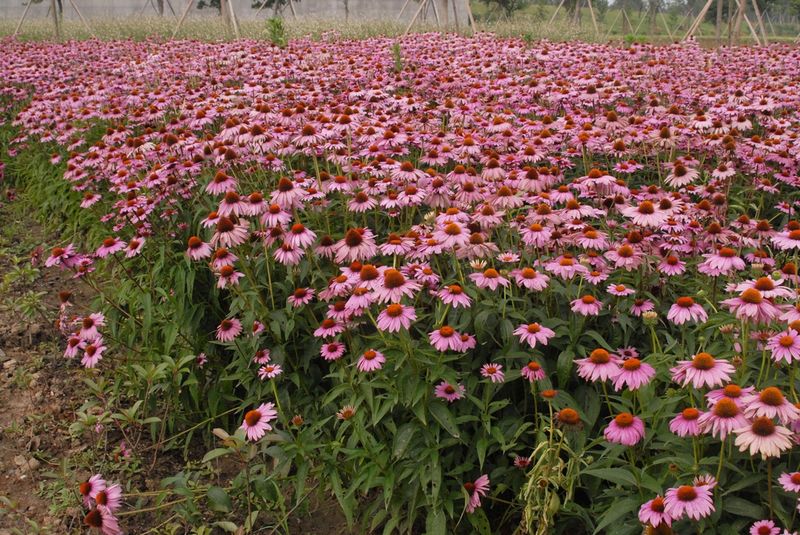
Grouping several plants together also increases the visual impact and creates a larger seed-head cluster that is easier for birds to find and use. A single plant in an otherwise bare bed is better than nothing, but a patch of five or more gives goldfinches more reason to land and stay.
Preserve Seed Heads Instead of Deadheading Everything
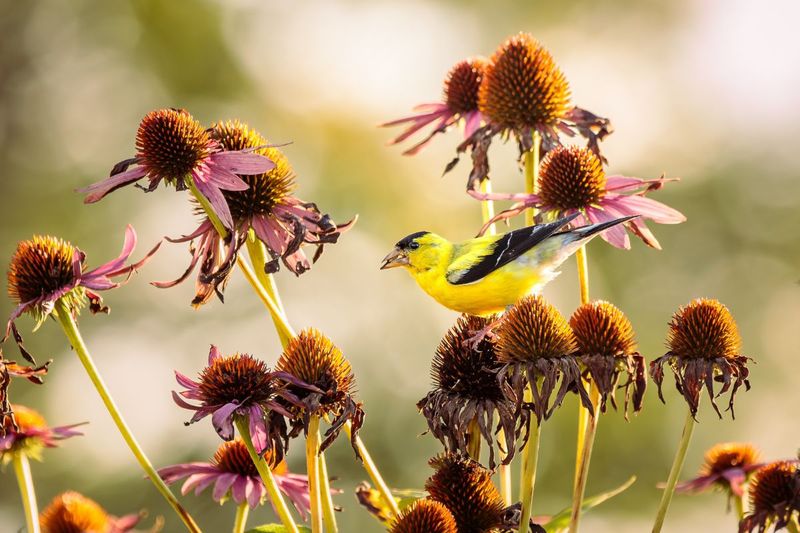
Deadheading, removing spent flower heads before they fully dry, is a standard garden practice for many ornamentals because it keeps beds looking tidy and can encourage some plants to rebloom. For purple coneflower, that habit works against the wildlife objective.
Removing seed heads before they mature eliminates the very resource that makes the plant useful to goldfinches and other seed-eating birds later in the season.
A practical middle ground works well for most yards. NC State Extension recommends leaving at least some mature coneflower heads standing through fall and winter for birds, while also noting that cutting dead stems to about 12 to 24 inches and leaving them in place until they naturally break down supports stem-nesting bees that use hollow or pithy stems as nesting sites.
You can deadhead a portion of the plant early in the season if rebloom or appearance matters to you, but leave the bulk of developing cones untouched from late summer onward. Those late-season heads are the ones most likely to attract goldfinches as seeds mature inside the drying structure.
Standing stems also add winter interest to the garden and provide structure through the months when most other perennials have died back completely. If you garden with neighbors in mind, a small sign or a naturalistic bed design can help frame the intentional “messy” look as wildlife stewardship rather than neglect.
Resisting the urge to cut everything down in fall is genuinely one of the most useful things you can do for backyard birds in North Carolina.
Plan for Establishment and Ordinary Garden Care
Native status gives purple coneflower a head start in North Carolina conditions, but it does not make the plant care-free during its first growing season. Newly planted coneflowers need consistent moisture while their root systems establish, particularly during dry spells.
Once roots are well settled, usually after the first full growing season, the plant becomes notably drought-tolerant and requires far less supplemental watering.
Timing the planting well makes establishment easier. NC State Extension advises that fall generally works best for planting most native species in North Carolina because cooler temperatures and seasonal rainfall reduce transplant stress compared to planting in the heat of summer.
Early fall planting gives roots several months to settle before the following summer’s heat arrives.
Reseeding is worth factoring into your long-term plan. Purple coneflower can self-seed and spread naturally, which is a benefit if you want a larger, more bird-friendly patch over time.
Gardeners who prefer a tidy, genetically uniform bed may want to remove volunteer seedlings as they appear, or deadhead a portion of the plant before seeds drop. NC State’s plant documentation also flags occasional pest and disease issues to watch for, including Japanese beetles, leaf spot fungal disease, and aster yellows, a condition spread by leafhoppers that distorts plant growth.
None of these problems are guaranteed, and many gardeners grow purple coneflower for years without serious trouble. Monitoring plants through the season and removing heavily infected material promptly keeps problems from spreading and helps the plant stay productive through the seed-head stage when birds need it most.
Treat Cultivar Differences as an Open Question
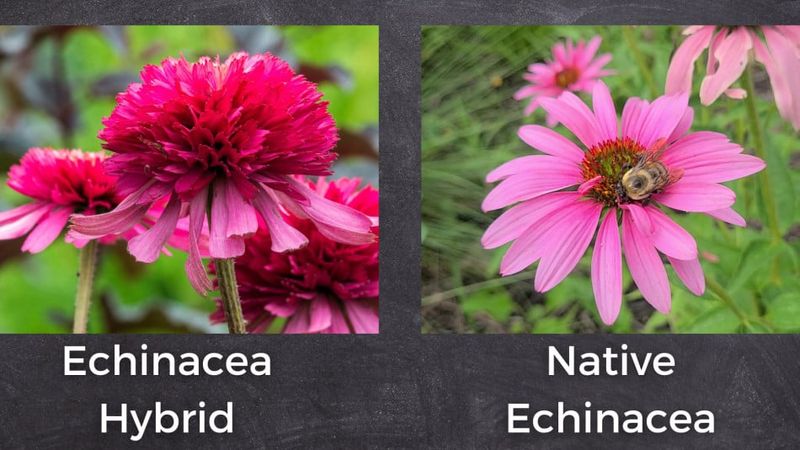
Walk through any garden center in North Carolina from May through July and you will find far more named coneflower cultivars than straight species plants. Breeders have developed selections in coral, yellow, orange, white, and deep red, along with compact forms for smaller spaces and double-flowered types with extra layers of petals.
These cultivars can be genuinely attractive and are widely sold as purple coneflower relatives, but they are not identical to the native species in form or necessarily in function.
The evidence most directly supporting goldfinch use of purple coneflower seed heads comes from the straight species, Echinacea purpurea, and from plants documented as producing accessible seed heads. NC State Extension’s plant toolbox covers the species directly, and the photographed goldfinch feeding in Haywood County involved the species form rather than a named cultivar.
Whether double-flowered, compact, or unusually colored cultivars provide equivalent seed production and bird forage is not something the available evidence settles definitively. Double-flowered forms in particular may have altered seed-head structures, but asserting that they always produce less accessible seed than the species goes beyond what the sources actually demonstrate.
The practical takeaway for wildlife-focused buyers is straightforward: when you can find the straight species or a simple, single-flowered cultivar documented as a seed producer, that is the most evidence-backed choice. If a cultivar is your only option, check whether it produces a normal-looking central cone and avoid assuming it performs identically to the species without verifying its characteristics first.
Build a Broader Goldfinch-Friendly Planting
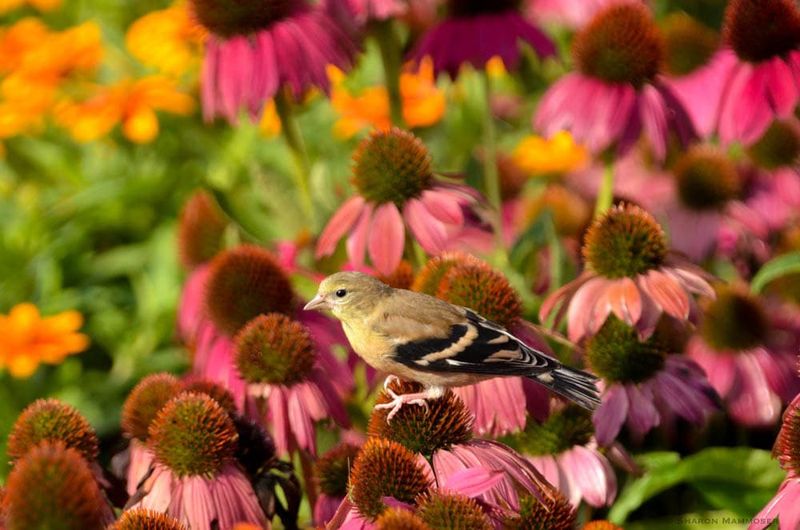
Purple coneflower can be a genuinely useful part of a North Carolina yard designed with birds in mind, but goldfinches draw on a wide range of seed-producing plants throughout the season. Cornell Lab of Ornithology confirms that goldfinches use thistles, asters, sunflowers, coreopsis, grasses, and other members of the sunflower family in addition to coneflowers, so a yard with several native seed producers offers more varied and extended resources than a single-species planting.
Orange coneflower, Rudbeckia fulgida, is worth adding to the mix. NC State Extension’s wildlife landscaping publication specifically notes that American goldfinches commonly feed on orange coneflower seeds in fall and winter, making it a companion plant with its own documented North Carolina track record.
NC State’s orange coneflower plant page also recommends leaving its seed heads standing for birds, echoing the same guidance that applies to purple coneflower.
Native asters, sunflowers, coreopsis, and warm-season grasses round out a planting that can provide seeds from late summer well into winter. Eastern purple coneflower contributes real seasonal value when gardeners let it set seed and leave some heads standing, but no single plant feeds goldfinches every day or guarantees their presence.
The yard that attracts birds most reliably is one that offers multiple native food sources in close enough proximity that a foraging goldfinch has good reasons to keep coming back.